Quick Answer: Beauty Samples OPP Header Bags Lead Time Review
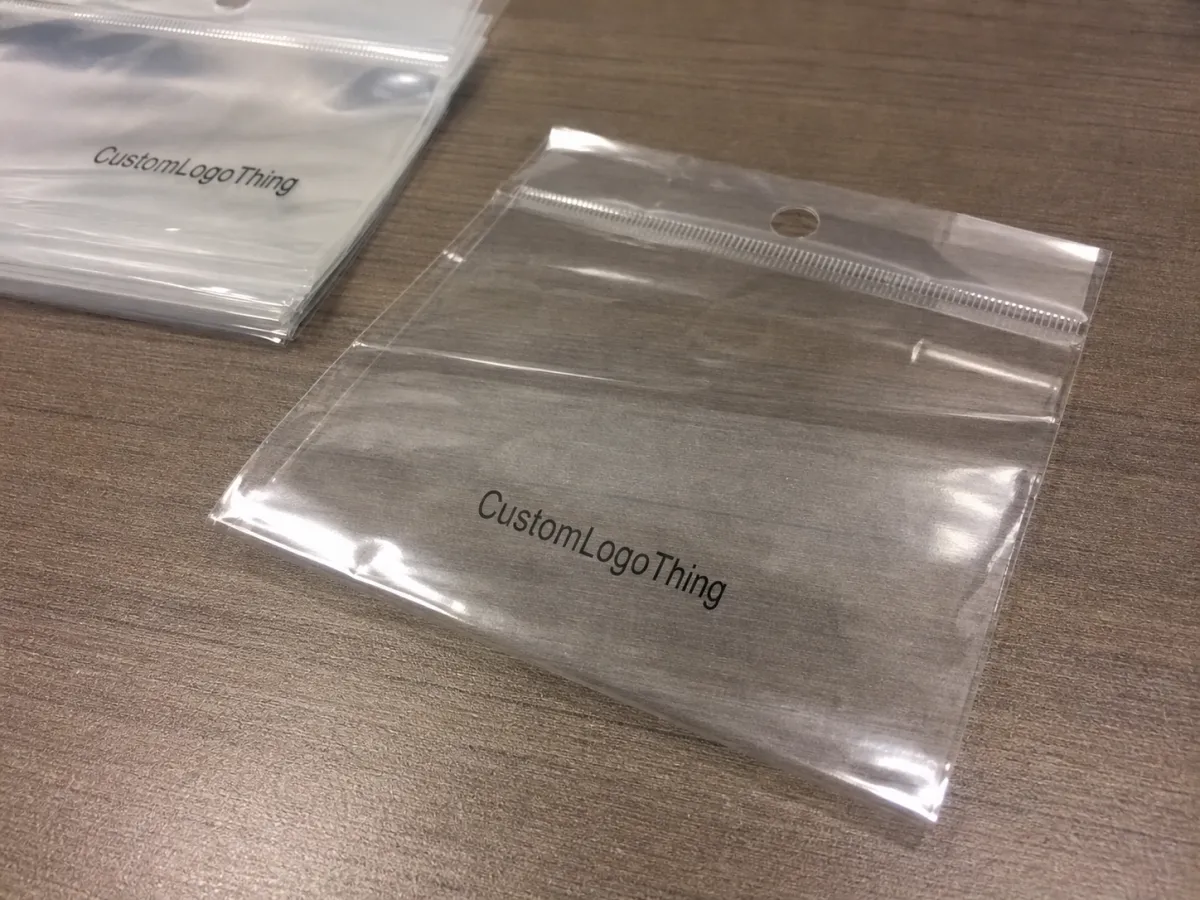
A beauty samples opp header bags Lead Time Review usually starts with a small but costly scheduling problem: the serum sachets are ready, the launch calendar is fixed, and the bags are still waiting behind artwork approval, header punching, or a larger print run. That gap is more common than many buyers expect. Cosmetic sample packaging looks simple, yet it can stall a campaign if the order depends on custom print, nonstandard sizing, or a proof that is approved too late.
The practical answer is straightforward. Stock-size clear OPP Header Bags are the fastest option. Custom header-card bags sit in the middle because the transparent bag can remain standard while the printed card carries the brand message. Fully custom printed OPP bags need the most planning, since film, artwork, ink coverage, registration, hole placement, and final packing all have to line up before the job moves cleanly through production.
Beauty sampling is less forgiving than many other packaging categories. Influencer mailers have send dates. Retail sample drops are tied to planograms, seasonal resets, or launch weeks. Event teams cannot wait for bags that arrive two days after the booth opens. A brand may be able to absorb a delay on an outer carton or a secondary insert, but the sample bag that holds the product, the usage copy, and the first visual impression has to be available when fulfillment begins.
Speed is only one part of the review. The better buying decision also checks film clarity, seal reliability, header-card fit, hang-hole alignment, print consistency, MOQ flexibility, and the difference between production lead time and door-to-door delivery. OPP gives cosmetic samples a crisp, clear, low-cost presentation, but it is not a magic material. It can crease if the gauge is too light, wrinkle if the pack is overfilled, and look cheap if the header proportions are wrong.
For urgent sample work, use plain or lightly customized OPP Header Bags. Move to full custom print only when the artwork is final, the quantity is predictable, and the calendar has at least one buffer week beyond the supplier’s stated production time. That buffer is not padding; it is protection against proof revisions, freight delays, and small production corrections that rarely appear on a first quote.
Top OPP Header Bag Options Compared for Beauty Sample Packs
Most cosmetic sample programs fall into one of four packaging paths. Stock clear OPP header bags are the quickest. Custom header-card bags add branding without requiring a fully printed film order. Custom printed OPP bags create a more retail-ready presentation. Reinforced boutique-style sample bags help when the product is heavier, handled repeatedly, or expected to hang neatly for more than a short promotion.
| Option | Best use case | Typical MOQ behavior | Speed | Branding strength | Risk level |
|---|---|---|---|---|---|
| Stock clear OPP header bags | Sampling tests, event giveaways, fast replenishment | Lowest | Fastest | Low | Low |
| Custom header-card bags | Launch kits, influencer mailers, light retail display | Moderate | Middle | Medium | Medium |
| Custom printed OPP bags | Retail-ready sample packs, subscription boxes, counter display | Higher | Slower | High | Medium to high |
| Reinforced boutique-grade sample bags | Heavier samples, repeated handling, premium presentation | Varies | Moderate | Medium to high | Lower on structure, higher on cost |
Stock clear bags win on lead time because there is no print plate, no color matching, and no extended proof cycle. The material is already made, the sizes are standardized, and the order often becomes a pull-pack-ship job. For market tests, short event runs, sampling inserts, or emergency replenishment, that simplicity is hard to beat.
The limitation is branding. A plain clear bag can make a cosmetic sample feel clean and honest, but it does not carry much shelf communication on its own. If the sachet or vial already has strong artwork, that may be enough. If the sample needs instructions, claims, shade names, warning copy, barcode space, or a brand story, the bag needs a header card, label, or printed panel.
Custom header cards are the most useful compromise for many beauty brands. The sample remains visible through the OPP body, while the header carries the logo, product name, shade or variant, usage direction, and any small compliance details. Because the clear bag can often remain a standard size, the production risk is lower than a fully printed custom bag. The header still needs careful proofing, but the job is not as dependent on custom film conversion.
Fully printed OPP bags make sense when the sample is expected to sell visually before anyone touches it. Retail counters, subscription programs, discovery sets, and premium PR kits can justify the extra setup, particularly when the artwork is stable and repeat orders are likely. The danger is treating all printed OPP quotes as equivalent. Two suppliers may quote the same finished size but differ in film gauge, ink coverage limits, header reinforcement, carton packing, inspection method, and whether proofing time is counted in the lead time.
Reinforced or boutique-grade bags are not always necessary, but they solve specific problems. A mini bottle with a cap, a fragrance vial, a small tube, or a sample paired with an insert can pull against the header and hang hole more than a flat sachet does. A stronger header area, better gauge control, or a wider seal can prevent the pack from twisting, tearing, or looking tired after repeated handling.
One practical detail often gets missed: a bag can be technically functional and still display poorly. Header depth, punch position, seal width, and product weight decide whether the sample hangs straight on a peg or leans off-center. In beauty packaging, that small visual tilt can make a neat product look careless.
Detailed Reviews: Clarity, Seals, Header Fit, and Shelf Presentation
Clarity is the main reason OPP is so popular for cosmetic sample bags. A clear, glossy film lets the customer see the actual sachet, tube, applicator card, vial, or mini bottle instead of hiding it behind a cloudy surface. That visibility matters. Beauty samples are often small, and a clean view helps the product feel intentional rather than disposable.
Film gauge should be discussed early. OPP used for small header bags is often selected for crispness and transparency, but thinner gauges crease more easily during kitting, carton loading, and mailer insertion. Thicker film improves handling feel and shape retention, though it may raise the unit cost and slightly change how the pack folds or seals. If a supplier only says “standard thickness,” ask for the actual gauge in microns or mils and confirm whether that gauge applies to the full run.
Seal performance is the next checkpoint. Adhesive-strip closures should close flat without wrinkling, lifting, or catching dust along the exposed glue. Heat-sealed formats need enough seal width to survive fulfillment and transport, especially when the bag is packed with cards, coupons, or folded inserts. A narrow seal can look acceptable in a sample photo but fail once boxes are stacked, shifted, or handled at speed.
Header-card fit deserves more attention than it usually receives. Too little header depth crowds the logo and makes the pack feel cramped. Too much header depth makes a small beauty sample look lost inside its own packaging. The right proportion frames the product, leaves room for required copy, and keeps the pack balanced on a display hook.
Hang-hole placement has real consequences. A punch that is even slightly off-center can cause the sample to lean on a peg wall, trade-show board, or counter display. For very lightweight samples, the lean is easy to see because the bag has little mass to correct itself. If the pack will be displayed publicly, ask for a physical sample or at least a production photo showing the filled bag hanging from the selected hole style.
“The proof can look correct on screen, while the filled sample hangs slightly off-center. That small alignment issue changes the whole presentation.”
The product itself also affects quality. A flat foil sachet behaves differently from a mini dropper, capped vial, or tube with a raised shoulder. Raised seals, sharp blister edges, droppers, pumps, and crimped ends all need clearance. If the bag is sized only from the product’s flat length and width, the real packed sample may bulge, twist, or stress the closure.
Residue is another concern in beauty sampling. Oils, creams, and fragrance products should be sealed in their primary container before they ever reach the OPP bag. OPP header bags are presentation and containment packaging, not leakproof liquid pouches. Even a small amount of oily residue inside the clear film can make the sample look mishandled, and that is difficult to correct once fulfillment has started.
Common failure points repeat across sample programs: overfilled sachets, caps pressing against narrow seams, labels placed over fold lines, film creasing from tight carton packing, header cards cut slightly short, and adhesive strips exposed to dust during manual assembly. None of these problems requires a dramatic production failure. They are small errors that accumulate until the finished kit looks less polished than the brand intended.
For any order tied to retail presentation, PR gifting, or paid sampling, request a pre-production sample or a short sizing run. A sample check can confirm whether the bag closes cleanly, whether the header looks proportional, whether the product shifts too much, and whether the pack hangs straight. It is one of the simplest ways to protect a campaign before the full run is packed.
Lead Time and Production Steps That Actually Affect Delivery
Lead time is not a single number. It is a chain of separate steps: inquiry, sizing confirmation, material selection, artwork proofing, sample approval when required, print or header production, converting, punching, quality inspection, packing, and shipping. A delay in any one of those stages pushes the schedule, even if the actual bag-making step is fast.
The most common misunderstanding is the difference between production time and door-to-door time. Production days often begin only after deposit, final artwork, and proof approval. They may not include weekends, holidays, supplier queues, export paperwork, freight transit, customs clearance, or last-mile delivery. A quote that lists “12 production days” can easily turn into three calendar weeks before boxes reach the buyer.
Stock OPP header bags move quickly because the material and size already exist. Once the order is confirmed, the supplier can check inventory, pack cartons, and ship. Custom work introduces more stopping points. Artwork must fit the header or film area. Colors may need review. A die or punching pattern may require setup. The seal and fold alignment may need adjustment if the bag size is not standard.
Beauty sample orders also carry category-specific delays. There may be many SKUs, each with its own shade name, claim language, barcode, or regulatory mark. Marketing may approve the look, while operations checks packing counts and compliance reviews warning copy or ingredient references. A small header bag can end up being reviewed by three teams, which means late edits are common unless the buyer locks the copy before requesting the final proof.
To keep the schedule realistic, send a complete request at the start: finished product dimensions, thickness at the widest point, target delivery date, quantity, artwork files, SKU count, packing method, closure preference, hang-hole requirement, and whether a physical sample is needed. Every missing detail creates another email loop. Those loops are where short timelines quietly disappear.
Freight choice matters as much as factory speed. Air freight can protect a launch date but may erase the savings of a low unit price. Sea freight can reduce landed cost but only works with enough planning time. Courier service may be practical for small urgent orders, while palletized shipments require more coordination. A Lead Time Review that ignores freight is incomplete.
For planning, use three timeline buckets. Stock clear bags may be suitable for urgent orders if inventory is available. Header-card orders usually require time for print proofing and card production. Fully printed custom OPP bags need the longest runway because proof approval, print setup, converting, inspection, and packing all sit before freight. The exact number of days will vary by supplier, quantity, and season, so ask when the clock starts and what events pause it.
A sensible buffer is especially important for retail pegs, influencer kits, and any beauty sample involving liquids. Screen approvals cannot show how static, product weight, closure stress, and carton pressure behave in real handling. Build in time to test one filled sample before the full order becomes irreversible.
Cost, Pricing, MOQ, and Unit Cost Signals to Check
Price in OPP header bags is driven by several small choices rather than one large one. Finished size, film gauge, print coverage, number of colors, header-card stock, adhesive strip quality, punching style, carton packing, inspection requirements, and order quantity all influence the final number. A unit price without those details is not enough for comparison.
One-time charges deserve close review. Artwork setup, plate or screen charges, die fees, digital proofing, physical samples, and sample shipping should be listed clearly. If those costs are hidden inside a broad total, it becomes difficult to compare suppliers. Cosmetic packaging buyers often get caught by a low headline unit price that looks attractive until setup and freight are added.
MOQ behavior is predictable. Stock bags usually allow smaller purchases because there is little or no setup cost. Custom printing, special sizing, unusual punching, and heavy ink coverage generally require higher minimums. The supplier needs enough volume to justify machine setup, material allocation, and waste at startup. Asking for three price breaks—a trial run, a launch run, and a reorder run—will show whether the order becomes economically sensible at scale.
The better pricing metric is landed cost per usable bag. Not quoted bag. Usable bag. Misprints, size errors, crushed cartons, weak seals, and bags that cannot fit the product create waste that still belongs in the campaign budget. A cheaper order with a high rejection rate can cost more than a slightly higher quote with cleaner production controls.
Ask what the price includes. Does it include the header card inserted or only supplied separately? Are adhesive strips included? Is the hanging hole punched? Are the bags packed flat, bundled, sleeved, or counted into inner cartons? Are cartons marked by SKU? These operational details affect labor at fulfillment, and labor is part of the real packaging cost even if it does not appear on the bag supplier’s invoice.
Shipping assumptions can also distort the quote. Sea freight, consolidated shipment, slower production slots, or larger batching can make the price look better. Those choices may be perfectly reasonable for a planned retail program, but they are poor fits for a launch kit with a fixed mailing date. The lowest quote is only useful if the timing works.
Quality controls should be visible in the cost discussion. At minimum, buyers should expect checks for finished size, seal integrity, header-card fit, hole position, print registration, carton count, and visible defects such as wrinkles, contamination, or scuffed film. For higher-value beauty programs, a pre-shipment photo report or retained production sample is worth requesting.
For broader packaging context, industry resources such as packaging.org can help buyers understand market terminology, while organizations such as ISTA provide useful reference points for transport testing when samples must survive mailers, cartons, and distribution handling.
How to Choose the Right OPP Header Bag for Beauty Samples
The right bag starts with the sample format. Foil sachets, mini bottles, ampoules, fragrance vials, lip cards, applicator packets, and skincare tubes do not sit the same way inside a clear header bag. Measure the product at its thickest point, including caps, crimped seals, raised blister edges, and any label overlap. Then allow enough clearance for filling and closure without forcing the film tight around the product.
Match the bag to the campaign. For market tests, event giveaways, quick replenishment, and last-minute PR mailers, speed usually matters more than elaborate branding. Stock bags or simple header-card formats keep the work moving. For retail displays, paid sampling, subscription boxes, and influencer presentation kits, the packaging needs to carry more of the selling job, so custom print, stronger headers, and tighter presentation standards may be justified.
Compliance and information space are easy to underestimate. Ingredient notes, caution statements, batch references, recycling marks, barcode zones, shade names, and usage directions can consume more header area than the design team expects. A header that looks clean in a mockup may fail once the required text is added at a readable size. Cosmetic packaging lives between marketing and technical information, and both need enough room to do their work.
Closure choice should follow product behavior. A resealable adhesive strip may be convenient for assembly and customer handling, especially with flat samples. Heat sealing can create a cleaner, more tamper-evident presentation, but it requires the right equipment and enough seal area. If the product is heavy, oily on the outside, or irregularly shaped, test the closure under real packing conditions before assuming it will hold.
Ask the supplier specific questions before approving the order:
- What is the OPP film gauge, and is that gauge consistent across the run?
- What closure or seal method is used, and how wide is the seal area?
- What tolerance applies to finished size, seal position, and punch placement?
- What header depth is recommended for the product weight and artwork area?
- How many bags are packed per bundle, inner carton, and master carton?
- Can a physical sizing sample or pre-production sample be supplied before full production?
- Does the application require any material declaration, recycling information, or cosmetic contact suitability statement?
- Will the supplier photograph or document the filled presentation before shipment if samples are provided?
The decision filter can be simple. If the sample will be touched once, inserted into a mailer, and discarded quickly, keep the bag clean and economical. If the sample has to sell from a peg hook, sit in a premium kit, or survive repeated handling, invest in stronger structure, better print control, and a more deliberate header design. The difference is visible immediately in the finished pack.
Recommendation Before You Place an Order
The buying path should be tiered, not emotional. Use stock clear OPP header bags for urgent beauty sample drops and short tests. Use custom header-card bags when the program needs stronger branding but cannot absorb the schedule of a fully printed film order. Reserve custom printed OPP bags for planned retail programs, large launches, subscription boxes, or campaigns where artwork is final and repeat orders are likely.
Before ordering, request a quote package that includes finished size, film thickness, header dimensions, closure type, hang-hole style, MOQ, quantity breaks, proofing time, production days, shipping method, carton packing, and total landed cost. That list may sound basic, but incomplete quotes are common. Missing details are where timelines stretch and budgets shift.
Order a sizing sample before committing to a large run, especially if the product has a cap, dropper, vial, blister, crimped edge, or raised seal. A sample packet can show whether the bag closes properly, whether the product sits straight, whether the seal survives light pressure, and whether the header looks balanced when hanging. A screen proof cannot answer those questions.
Use this pre-order checklist:
- Confirm product measurements at the thickest point.
- Count every SKU, shade, variant, and artwork version.
- Lock final copy before proofing begins.
- Choose the header depth and hang-hole style.
- Confirm closure method and seal width.
- Decide how bags should be bundled, counted, and carton-packed.
- Set a real in-hands date, including freight time.
- Approve proofs quickly, but only after checking dimensions and required copy.
Ask the supplier to identify anything that could lengthen the schedule before the deposit is paid. Custom film, special punching, multiple artwork versions, heavy ink coverage, nonstandard cartons, and physical sample approval can all add time. A careful supplier will flag those items early. A weak process reveals them only after the timeline is already under pressure.
The bottom line: compare quotes on the same specifications, test one filled sample, and choose the option that protects both launch timing and presentation. In beauty sampling, those two goals are tied together. A bag that arrives late fails the campaign, and a bag that arrives on time but looks poorly fitted still weakens the product impression.
What is a realistic lead time for beauty sample OPP header bags?
Stock clear OPP header bags are usually the fastest because no custom print setup is required, assuming inventory is available. Custom header cards and fully printed OPP bags take longer because proofing, print scheduling, punching, converting, inspection, and packing are added. Always ask whether the quoted lead time starts after payment, artwork approval, or physical sample approval.
How do I compare pricing for OPP header bags for cosmetic samples?
Compare landed cost per usable bag rather than only the quoted unit price. Ask for setup fees, MOQ, quantity breaks, freight, sample charges, packing details, and carton counts in writing. Confirm whether the price includes printing, header punching, adhesive strip, header-card insertion, inner packaging, and master cartons.
Are OPP header bags good for beauty samples with liquids or oils?
They can work well for sealed sachets, vials, tubes, and mini bottles, but the primary product container must prevent leaks. OPP header bags are mainly presentation and containment packaging, not liquid-barrier pouches. Test for residue, puncture risk, seal stress, and product movement before approving a large order.
What MOQ should I expect for custom beauty sample header bags?
Stock sizes usually have lower MOQs than custom printed or custom-sized bags. MOQ rises when the order requires special sizing, multi-color printing, custom header cards, unusual hole punching, or separate artwork versions. Ask for trial-run, launch-run, and reorder-run pricing so the cost curve is clear.
What details should I send to get an accurate OPP header bag quote?
Send product length, width, thickness, quantity, target delivery date, artwork files, preferred closure, header size, hanging requirements, SKU count, and packing instructions. Include whether the bags will be used for retail pegs, mailers, influencer kits, subscription boxes, or event giveaways. Mention compliance icons, barcode needs, warning copy, and variant changes before the quote is finalized.


