Quick Answer: Fitness Brands Soft Touch Poly Mailers Lead Time Review
A gymwear brand can get the hoodie weight right, tune the fit through three samples, shoot the launch cleanly, then ship the order in a shiny bargain mailer that looks like it belongs around a phone charger. The product may be premium, but the first physical touchpoint says otherwise.
This fitness brands soft touch Poly Mailers Lead Time Review is written for apparel, athleisure, supplement, and merch teams trying to balance feel, print quality, margin, and delivery dates. Soft Touch Poly Mailers are a strong fit for mid-to-premium fitness products where the customer notices the package before they touch the garment. They are not always the cheapest choice, and they are not always the fastest.
Blank stock soft touch mailers can often ship in 2-5 business days. Stock mailers with logo labels usually need 4-10 business days. Fully custom printed Soft Touch Poly Mailers commonly take 10-25 business days after proof approval, depending on size, artwork, quantity, print method, finish, and freight. Overseas production can lower the unit cost at higher volume, but the calendar becomes less forgiving once customs, port congestion, freight bookings, and holiday closures enter the picture.
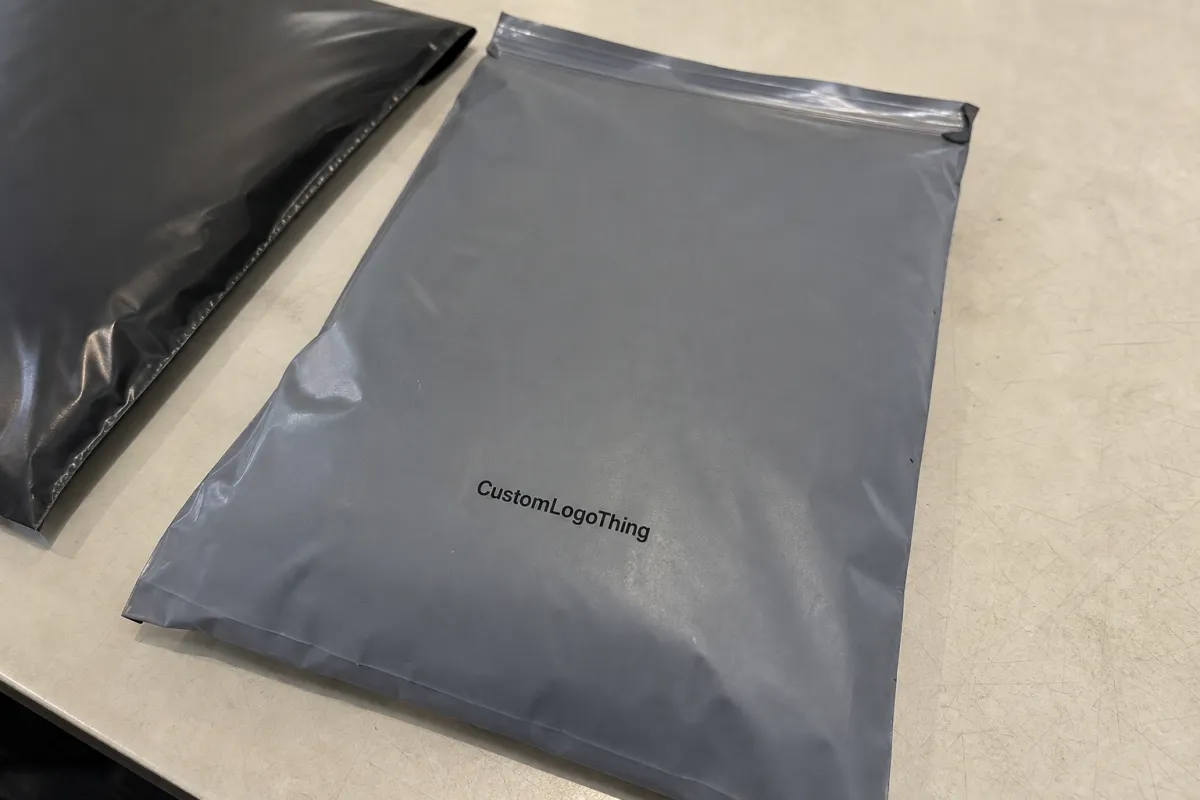
The tradeoff is simple. Matte soft touch looks cleaner, calmer, and more expensive than glossy poly. It also shows scuffs, handling marks, and warehouse abrasion more easily. A super-matte black mailer can look beautiful in a product flat lay and less perfect after riding under stacked cartons in a carrier truck. That does not make it a bad package; it means the finish has to be chosen with shipping reality in mind.
Best use cases include leggings, sports bras, recovery apparel, influencer kits, limited drops, premium membership merch, hoodies, matching sets, and subscription fitness apparel. Weak use cases include shoes, bottles, sharp accessories, bulk supplement tubs, rigid boxed products without inner protection, and anything heavy enough to stress the seams.
The useful buying criteria are concrete: tactile feel, opacity, seal strength, print sharpness, minimum order quantity, unit cost, production timeline, reorder reliability, and label performance. A pretty flat sample is only the first check. A packed, labeled, stacked, and opened sample tells you much more.
Top Soft Touch Mailer Options Compared for Fitness Brands
The best mailer depends on what you ship, how soon you need it, and whether the customer paid $18 or $118. Packaging should match the order value. A $90 compression set deserves better than crinkly gray poly. A clearance tank top does not need luxury film and a three-color flood print.
| Option | Best Use Case | Typical MOQ | Typical Lead Time | Rough Unit Cost | Branding Impact | Durability |
|---|---|---|---|---|---|---|
| Custom printed soft touch poly mailers | DTC apparel, premium drops, repeat buyers | 500-1,000+ | 10-25 business days after proof approval | $0.25-$1.20 | High | Good for soft goods |
| Stock soft touch mailers with labels | Fast launches, small tests, uncertain sizing | 100-500 | 4-10 business days | $0.18-$0.60 including label | Medium | Good, label adhesive must be tested |
| Recycled-content matte poly mailers | Eco-positioned apparel brands | 500-2,500+ | 10-30 business days | $0.28-$1.30 | Medium to high | Varies by recycled film blend |
| Luxury soft touch bubble mailers | Accessories, small boxed items, recovery tools | 250-1,000+ | 7-25 business days | $0.65-$2.20 | High | Best cushioning |
Best overall: custom printed soft touch poly mailers. They create the strongest brand impression, especially for direct-to-consumer apparel brands with repeat customers. If your unboxing appears in Instagram Stories, TikTok hauls, or customer review photos, the outside of the package has more value than a spreadsheet may suggest.
Fastest to ship: stock soft touch mailers with logo labels. They are not as polished as full custom printing because the label edge and color mismatch can reveal the shortcut, but they work well for urgent drops and product-line tests.
Best budget option: stock matte or soft touch mailers with simple black labels. You keep the tactile upgrade without paying for custom print setup or committing to a larger run before sizing is proven.
Best premium option: custom printed soft touch mailers with strong opacity, clean typography, and one to three ink colors. Restrained design usually wins on matte film. Dense all-over artwork can work, but it needs better proofing and tighter production control.
Best for fragile accessories: soft touch bubble mailers. Resistance bands with hardware, grips, wraps, jump rope components, boxed supplements, compact sensors, and recovery tools benefit from padding. Leggings, tees, and sports bras usually do not. Do not pay to ship air unless the product actually needs cushioning.
The common buying mistake is choosing the prettiest swatch and never testing it with a packed garment, shipping label, and real closure pressure. A mailer has one job: survive the trip while making the brand look intentional. If it fails at either, the sample was decoration.
Detailed Reviews: Feel, Print Quality, Strength, and Shipping Reality
Custom printed soft touch poly mailers are the strongest option for brand impression. The hand-feel is smoother and less plasticky than standard glossy poly, and the matte surface gives apparel orders a more considered look. For a $55 pair of leggings or a $72 hoodie, that matters. The customer has already paid for a brand promise; the package should not contradict it.
Print performance is best with bold logos, simple typography, clear contrast, and limited color counts. One-color black or white ink can look sharp. Two or three brand colors can work well if registration and ink density are controlled. Tiny gradients, hairline patterns, low-contrast tonal art, and complicated full-coverage layouts are more likely to disappoint because matte film softens visual contrast compared with gloss.
For strength, review six things before approving a volume order: rub resistance, seam strength, adhesive closure, puncture resistance, opacity with dark garments inside, and wrinkle behavior after packing. A good 2.5-3.0 mil mailer should handle normal apparel shipping without splitting at the side seam. Heavier film improves opacity and hand-feel, but it raises cost and may feel stiffer at the packing station. Thinner film saves money, but black garments can shadow through if opacity is weak.
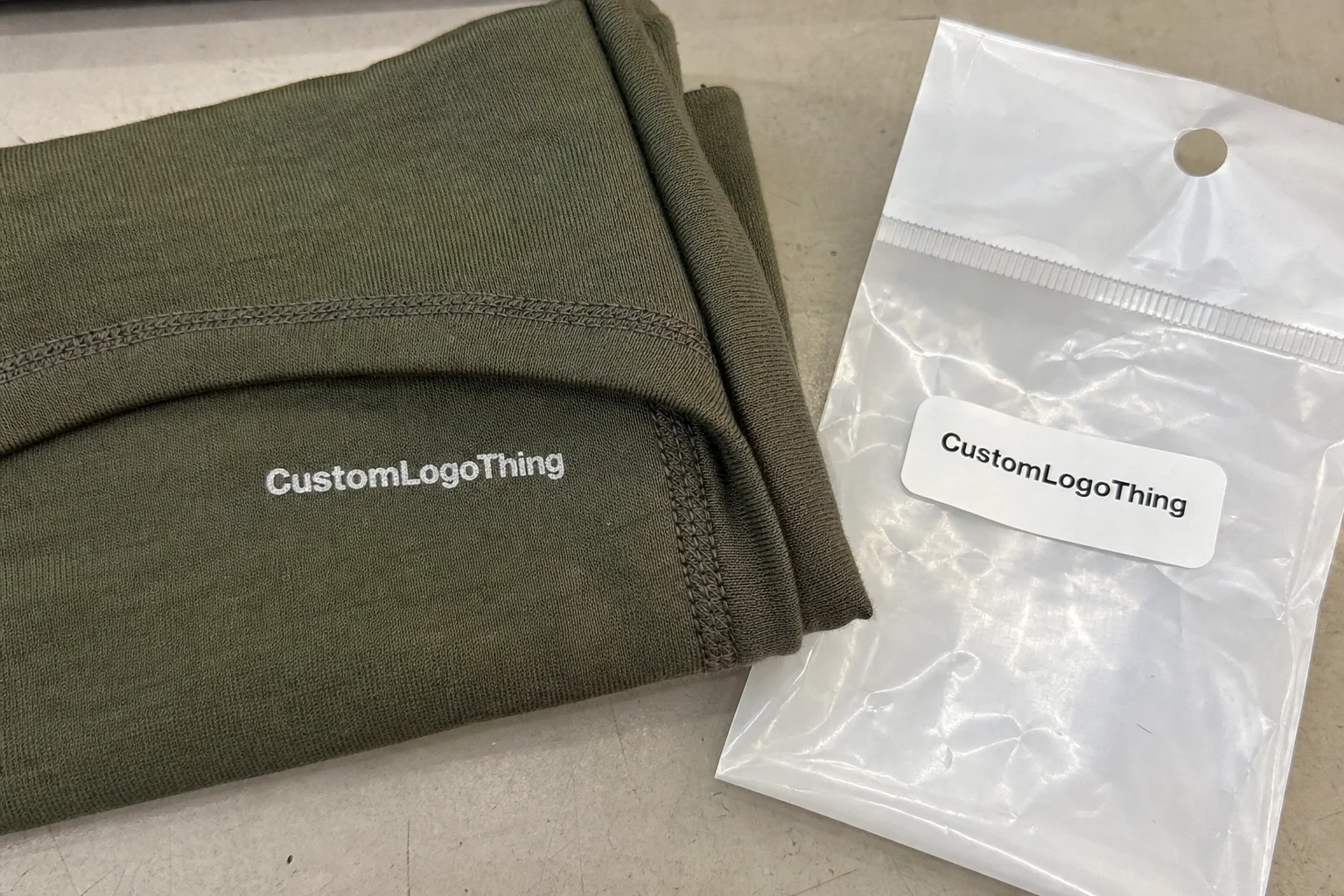
Stock soft touch Mailers with Branded labels are a practical bridge. They look better than plain shiny poly and can get a launch moving quickly. The downside is visible: label edges, possible color mismatch, and a slightly less finished presentation. If you use this route, test the label adhesive on the actual mailer finish, not on a random office envelope. Some super-matte films need compatible labels or firmer application pressure so corners do not lift during handling.
Recycled-content Matte Poly Mailers are the compromise choice for brands that want a premium surface and a sustainability message. Request samples before buying because recycled film can vary in color tone, smoothness, opacity, and stiffness between batches. If sustainability claims matter to your customer, keep the language precise. Do not imply compostability if the mailer is recycled-content polyethylene. The EPA recycling guidance is a useful reference for avoiding vague claims and customer confusion.
Soft touch bubble mailers are useful for accessory-heavy fitness brands. They protect rigid items better than flat mailers: resistance bands with metal clips, recovery tools, lifting grips, wraps, small boxes, sensors, or compact tech items. They cost more, store bulkier, and consume shelf space fast. A carton of bubble mailers can be surprisingly awkward in a small fulfillment room, so reserve them for products that need the cushioning.
Packaging reality: if the order value is usually above $40-$75, soft touch packaging can support the brand promise. For $9 clearance tees, the smarter spend may be inventory accuracy, faster picking, or a cleaner return process.
A serious review also has to include shipping label behavior. Some matte finishes resist label adhesion more than glossy poly. Thermal labels may need stronger adhesive, firm application pressure, or a larger label surface. If the corner lifts, carrier equipment can catch it, wrinkle it, or make the barcode harder to scan. That is not a branding issue; it is an operations issue.
For brands evaluating Custom Poly Mailers, ask for blank samples and pack them like real orders. Put in one sports bra, two leggings, a hoodie, a matching set, and a bundle with insert cards. Then wrinkle them, label them, stack them, and open them. That small test catches more problems than a long quote thread.
Lead Time and Production Steps Before You Place the Order
Production does not start the second someone emails a logo. The lead time clock usually starts after specs are confirmed, artwork is usable, and the proof is approved. If a supplier quotes “two weeks” but receives a blurry PNG pulled from a social profile, that two weeks becomes an optimistic placeholder.
- Confirm specs. Size, film thickness, finish, quantity, print colors, adhesive style, shipping destination, and target in-hand date. Missing specs slow quotes and create bad assumptions.
- Check artwork and issue a digital proof. Clean vector art speeds approvals. Low-resolution PNGs, screenshots, and poorly exported design files create delays.
- Approve sample or pre-production details. For tight launches, brands sometimes skip physical proofing. That saves days but raises risk, especially on color, opacity, and print placement.
- Run production. Film conversion, printing, curing, seam forming, adhesive application, quality checks, carton packing, and freight pickup all take time.
- Receive and inspect. Freight is part of the real schedule. So is warehouse receiving. Boxes sitting unopened for three days still count against the launch.
Realistic ranges are better than cheerful guessing. Blank stock soft touch mailers often ship in 2-5 business days. Labeled stock mailers usually need 4-10 business days. Fully Custom Printed Mailers often take 10-25 business days after proof approval. Overseas production may run 4-8 weeks door-to-door once freight and customs are included, though the unit cost can be attractive at 10,000 pieces and above.
Rush orders are possible, but they come with tradeoffs: rush fees, fewer material choices, fewer print options, limited sampling, and less time to catch mistakes. A rushed black-on-black soft touch mailer with the logo printed 15 mm too low is still wrong. It just arrived faster.
Reorders should be easier. Save dielines, Pantone references, approved proofs, carton specs, packing counts, supplier notes, and freight preferences. Keep one approved production sample in a file, not buried in a supply closet. If you reorder every 6-8 weeks, ask about standing production slots or quantity breaks.
Peak ecommerce periods, holidays, port delays, and last-minute artwork edits are the usual lead time killers. If the launch date is fixed, build at least one extra week into the packaging schedule. If the product is also delayed, keep emergency stock mailers on hand. Plain but shipped beats beautiful and unavailable.
Cost, MOQ, and Unit Pricing for Soft Touch Poly Mailers
Cost depends on size, film thickness, finish, print coverage, number of colors, order quantity, recycled content, adhesive style, and freight. Any universal price for all soft touch mailers is oversimplified because a small one-color apparel mailer and a large full-coverage bubble mailer are not the same product.
Stock soft touch mailers may land around $0.12-$0.45 each, depending on size and quantity. Add branded labels and the real packed cost may move to $0.18-$0.60 each. Custom printed soft touch poly mailers often range around $0.25-$1.20 each. Premium bubble versions can run $0.65-$2.20 each or more because of material, shipping volume, and storage bulk.
| Option | Typical MOQ | Estimated Unit Range | Setup Cost Likelihood | Best Fit | Buyer Warning |
|---|---|---|---|---|---|
| Stock soft touch mailers | 100-500 | $0.12-$0.45 | Low | New launches and emergency stock | Limited colors and sizes |
| Stock mailers with logo labels | 100-500 | $0.18-$0.60 | Low to medium | Urgent drops and small tests | Label adhesion must be tested |
| Custom printed soft touch mailers | 500-1,000+ | $0.25-$1.20 | Medium | Growing apparel brands | Proof approval controls timing |
| Recycled-content matte mailers | 500-2,500+ | $0.28-$1.30 | Medium | Sustainability-led brands | Film tone can vary |
| Soft touch bubble mailers | 250-1,000+ | $0.65-$2.20 | Medium | Accessories and boxed items | Storage and freight get bulky |
MOQ reality is not glamorous. Stock mailers can sometimes be purchased by the hundred. Custom printed runs often start around 500-1,000 pieces, with better pricing at 2,500, 5,000, and 10,000+. If you are still changing logo lockups, sizing, or product mix every month, do not buy 20,000 mailers just to shave eight cents off the unit cost. Inventory carrying cost is real, and packaging mistakes are bulky.
Watch for setup charges, plate fees, proof fees, overrun policies, underrun policies, carton handling, and freight. These line items can make the “cheap” quote less cheap. A $0.22 mailer with weak seams and late delivery can cost more than a $0.34 mailer that arrives correct and passes packing tests.
New fitness launches should consider stock plus labels or a small custom run. Growing DTC brands can move into custom printed soft touch mailers once order volume and sizes stabilize. Established brands should negotiate volume pricing, reorder schedules, and backup stock for peak weeks.
For broader packaging planning, Custom Logo Things lists related formats under Custom Packaging Products, which helps if you need poly mailers, boxes, tissue, inserts, and labels to feel like one system rather than five unrelated purchases.
How to Choose the Right Mailer Size, Finish, and Supplier
Start with product fit, not mood board appeal. A beautiful mailer that barely closes is an expensive failure point. If the adhesive strip lands on a bulky hoodie fold, the closure may fail. If the mailer is oversized, it looks sloppy, slows packing, and may create avoidable inefficiency at the station.
Test actual packed orders. Build samples for one sports bra, two leggings, one hoodie, a matching set, a bundle order, and any common insert cards or thank-you notes. Leave enough room for easy packing and adhesive closure, but avoid excess dead space. For apparel, many brands use two core sizes: one for single-item orders and one for bundles or hoodies. That keeps purchasing and storage manageable.
Thickness matters. Thinner film is cheaper and flexible, often around 2.0-2.5 mil. Heavier film, around 2.5-3.5 mil, improves opacity, hand-feel, and puncture resistance. If you ship black leggings, dark fleece, or textured apparel, request opacity testing. The customer should not see the outline or color of the garment before opening the bag.
Finish should match the brand and the warehouse environment. Soft touch matte fits premium apparel. Satin matte offers a cleaner middle ground and may show scuffs less aggressively. Glossy poly is brighter and can make saturated colors pop, but it lacks the same tactile value. For print design, simple marks, strong contrast, limited ink coverage, and repeatable brand colors usually outperform busy all-over art.
Ask suppliers direct questions before approving an order:
- What is the MOQ by size and print method?
- Does lead time start after quote, deposit, or proof approval?
- What is the color tolerance on matte film?
- Can you provide blank samples or packed samples?
- What is the overrun or underrun policy?
- How many mailers are packed per carton?
- What adhesive is used, and is a return strip available?
- Are dielines and reorder files stored for future runs?
- Can recycled content be documented?
For durability planning, larger brands often borrow distribution-testing concepts from groups like ISTA, especially for packed-product performance. You may not need a full lab test for leggings, but the mindset is useful: test the package as shipped, not as a flat sample on a desk.
| Priority | Recommended Choice | Reason |
|---|---|---|
| Fastest launch | Stock soft touch mailers with labels | Lowest proofing burden and quick sourcing |
| Lowest cost | Stock matte mailers | No custom print setup and lower MOQ |
| Best unboxing | Custom printed soft touch mailers | Highest brand control and strongest visual impact |
| Best durability | Heavier film or bubble mailer | Better puncture resistance and cushioning |
| Best sustainability positioning | Recycled-content matte mailers | Supports recycled material messaging if documented |
| Easiest reorder | Custom printed mailer with saved dieline | Repeat specs reduce approval time |
A good fitness brands soft touch poly mailers lead time review should push buyers toward samples, not just swatches. Request a packed sample if possible. If that is not available, order blanks and run your own packing, labeling, stacking, and opening test before approving 5,000 units.
Recommendation Before Ordering
Custom printed soft touch poly mailers are the best fit for fitness brands selling premium apparel, subscription kits, influencer bundles, or repeat-purchase merchandise where packaging supports perceived value. They are especially strong for leggings, sports bras, hoodies, matching sets, and limited drops with order values above roughly $40-$75.
Stock soft touch mailers with logo labels are the right move for urgent launches, uncertain sizing needs, and small first runs. They are not perfect, but they are fast and practical. Recycled Matte Poly Mailers make sense when sustainability messaging is central, but only after sample approval for color, texture, opacity, and claim accuracy. Soft touch bubble mailers should be reserved for products needing padding: resistance bands with hardware, small recovery tools, boxed accessories, grips, wraps, or tech-enabled fitness items.
Use this ordering checklist before sending money:
- Confirm three common order profiles, such as single legging, hoodie, and bundle.
- Choose one or two mailer sizes based on actual packed products.
- Request blank or printed samples before approving volume.
- Finalize vector artwork, preferably AI, EPS, or print-ready PDF.
- Approve a digital proof with logo placement, size, color notes, and orientation checked.
- Confirm carton count, carton dimensions, and storage space.
- Build at least one week of buffer into the launch calendar.
For reorders, track usage per week and reorder when 40%-50% of inventory remains. Keep emergency stock mailers for spikes, freight delays, or sudden influencer-driven order surges. The backup mailer may not be your ideal packaging, but it beats delaying shipments because the perfect custom run is sitting on a truck.
To get a clean quote from Custom Logo Things, send dimensions, quantity breaks, print colors, finish preference, shipping ZIP or destination, target in-hand date, and artwork file. If you want to compare how brands handle packaging upgrades across categories, review the Case Studies for practical examples of packaging decisions and tradeoffs.
The honest conclusion from this fitness brands soft touch poly mailers lead time review: buy the nicest mailer your margin and launch calendar can support, test it packed, and do not confuse a beautiful sample with a reliable shipping package.
FAQs
What is the typical lead time for fitness brand soft touch poly mailers?
Stock blank soft touch mailers can often ship in 2-5 business days. Stock mailers with branded labels usually take about 4-10 business days. Fully custom printed soft touch poly mailers commonly need 10-25 business days after proof approval. Artwork delays, sample approvals, holidays, and freight method can stretch the timeline.
Are soft touch poly mailers worth it for fitness apparel brands?
Yes, if the product has enough margin and premium positioning to justify the packaging cost. They work especially well for leggings, sports bras, hoodies, matching sets, and influencer kits. They may not be worth it for very low-cost clearance items or purely functional shipments. The best test is whether the mailer supports the perceived value of the order.
How much do custom soft touch poly mailers cost for fitness brands?
Stock soft touch mailers may cost roughly $0.12-$0.45 each, depending on size and volume. Custom printed soft touch poly mailers often range around $0.25-$1.20 each. Bubble or specialty versions can cost more because of material and storage volume. Setup fees, freight, print coverage, and MOQ can change the final landed cost.
What MOQ should I expect for custom soft touch poly mailers?
Stock mailers can often be ordered in smaller quantities, sometimes by the hundred. Custom printed runs usually start around 500-1,000 pieces, depending on supplier and print method. Better unit pricing typically appears at 2,500, 5,000, and 10,000+ pieces. New brands should avoid overbuying until mailer size, logo, and product mix are stable.
What should I review before approving a soft touch poly mailer proof?
Check logo placement, size, spelling, brand colors, print orientation, and seam location. Confirm the mailer dimensions against actual packed products, not just flat garment measurements. Ask about color tolerance because matte film can make ink look slightly softer. Verify that lead time starts after proof approval, not when the quote is first requested.