Candle Brands OPP Header Bags MOQ Guide: What You’re Really Buying
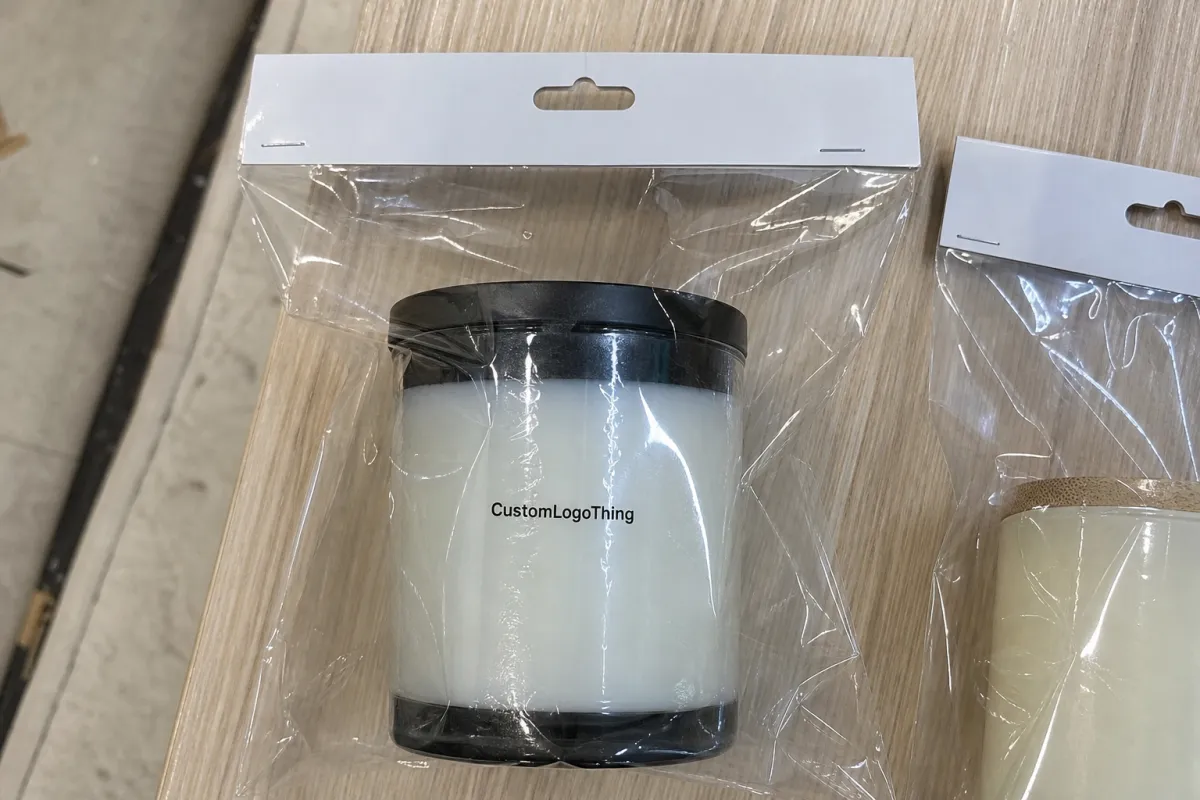
A candle brands OPP Header Bags MOQ guide usually starts with a practical problem, not a packaging trend: a candle maker has wax melts, tealight bundles, mini tins, or sample sets ready for retail, and the bag choice will decide whether the finished product looks disciplined or improvised. Scent earns the repeat purchase. The first purchase is often won by clarity, proportion, and shelf presentation.
That is the blunt truth of small-format candle retail. A shopper may care deeply about sandalwood, vanilla bean, fig, sea salt, amber, or fir needle, but before the fragrance is tested, the eye has already judged the package. A clear OPP header bag lets the buyer see the wax color, cube shape, tealight arrangement, tin finish, wick placement, or accessory bundle without opening anything.
OPP Header Bags are not glamorous in the way rigid boxes are glamorous. They are useful. They combine a transparent product compartment, a printable branding area, optional hang-hole merchandising, and a lower unit cost than many folding cartons, rigid boxes, or specialty gift packs. For small candle SKUs with tight margins, that combination carries real weight.
These bags are common for wax melts, votive pairs, tealight multipacks, mini candle tins, sample sets, sachet-style fragrance products, refill packs, match bundles, wick trimmers, and compact gift add-ons. The product stays visible, the brand has a defined place to speak, and retailers can hang or bin the item without handling loose pieces.
Compared with folding cartons, OPP Header Bags show more product. Compared with kraft sleeves, they provide more retail structure. Compared with plain poly bags, they look more intentional and display-ready. Compared with rigid boxes, they are usually lighter to ship and easier to store by the thousand.
Buyer reality: MOQ is not just a factory rule. It affects print method, film selection, cost per piece, storage space, reorder timing, and how quickly a candle brand can test a new scent collection without burying cash in unused packaging.
The useful question is not simply, “What is the minimum?” A better question is, “What quantity gives me the right balance of price, flexibility, storage, and risk?” A seasonal fragrance may justify a smaller run. A year-round bestseller may deserve a higher quantity if the price break is meaningful and the artwork will not change next month.
When OPP Header Bags Make Sense for Candle Retail Packaging
An OPP header bag is a clear oriented polypropylene bag with a top header area. The header may be printed or blank. It is typically sealed above the product compartment and can include a round hang hole, sombrero hole, euro slot, or no hole, depending on how the item will be displayed.
The retail logic is straightforward. The header carries the brand name, scent name, barcode, warning copy, net weight, promotional claim, or social handle. The clear body lets the product do some of the selling. That split is why these bags work so well for small fragrance products: branding at the top, proof below.
A 2.5 oz wax melt, for example, may only need a compact clear body and a 1.5 to 2.5 inch header, depending on barcode size and required copy. A tealight multipack may need more width and a stronger seal. A mini tin may need extra clearance because depth consumes film and can make a bag feel tight even when the front dimensions look correct.
Merchandising is a major advantage. Header bags can hang on peg displays, stand in bins, travel inside subscription boxes, or be added to gift sets without the bulk of a small carton. If a retailer wants 24 or 48 units displayed on a peg wall, flexible packaging often uses space more efficiently than boxes.
Protection has limits. OPP helps with dust control, handling, presentation, and light retail abrasion. It is not crush-proof. A glass votive in a header bag still needs a shipping carton, dividers, padding, or other protective Packaging for Ecommerce delivery. Wax melts also need sensible hot-weather planning; the bag is not thermal protection.
Scent behavior deserves testing before a large order. OPP provides a clean retail barrier, but highly fragrant wax melts can behave differently depending on fragrance load, oil chemistry, seal quality, product temperature, and storage conditions. Cinnamon, citrus, pine, and resin-heavy fragrances can be more demanding than light florals or softer vanillas. Test odor transfer, print rub, seal performance, and shelf appearance before committing to thousands of bags.
Choose OPP Header Bags when the product benefits from visibility, is light enough for flexible packaging, and does not need the structural protection of a rigid box. Be careful with environmental claims. A lighter flexible pack may use less material than a carton, but recyclability depends on local recovery systems and material guidance from sources such as the U.S. EPA recycling resources.
Material, Size, Closure, and Print Specifications to Confirm
A reliable quote needs more than “small bag with logo.” The packaging team needs bag width, bag height, header height, product depth, film thickness, closure style, hang hole type, print colors, print sides, and order quantity. Missing one of those details can turn a same-day estimate into a string of follow-up emails.
OPP film is known for glossy clarity, a crisp hand feel, and strong product visibility. It prints cleanly for simple logos, scent names, batch icons, and basic product graphics. Many lightweight retail header bags fall around 30 to 50 microns, though the right thickness depends on product weight, shape, sharp corners, and how the bag will be packed. Heavier products or rigid tins may call for a thicker film than a flat wax melt bar.
Measure the candle product at its widest, tallest, and deepest points. Then add clearance for insertion, sealing, and variation between production batches. A wax melt measuring 3 inches wide, 4 inches tall, and 0.75 inches deep may require a wider bag than the front face suggests, because depth pulls material from the sides and can tighten the fit.
Header height should be planned, not guessed. A 1 inch header may hold a small logo and scent name. A 2 to 3 inch header can carry more: logo, SKU, fragrance name, barcode, warning copy, net weight, website, and a short selling line. The tradeoff is material use and proportion. A taller header can look premium if balanced well, but it can overpower a small product if the body looks too short beneath it.
Closure style affects labor as much as appearance. A self-adhesive flap is convenient for hand packing small batches and works well when staff need to insert products quickly without heat-sealing equipment. Heat sealing can look cleaner and feel more secure, but it requires equipment, repeatable technique, and enough room in the package design to seal consistently. Open-ended structures may suit certain fulfillment workflows, especially if another closure method or secondary label is used.
Hang holes are functional details. Round holes work for many standard pegs. Sombrero holes and euro slots help on wider retail hooks and can make the hanging position more stable. No-hole bags may be better for subscription boxes, mailer inserts, countertop bins, or gift sets where a hole adds no value and interrupts the header design.
| Specification | Typical Options | Buyer Impact |
|---|---|---|
| Film thickness | About 30–50 microns for many light retail uses | Affects clarity, strength, feel, and cost per piece |
| Header height | About 1–3 inches depending on artwork | Controls branding space, barcode fit, copy space, and material usage |
| Closure | Self-adhesive flap, heat seal, open end | Changes packing speed, appearance, labor, and equipment needs |
| Hang hole | Round, sombrero, euro slot, none | Must match the display method and product weight |
| Print method | Spot color or full-color process | Drives setup charges, artwork prep, proofing, and visual detail |
Spot color printing works well for clean logos, simple brand marks, and economical header layouts. Full-color process printing fits detailed scent imagery, gradients, seasonal graphics, or illustrated collections, but it can increase setup charges and proofing complexity. If the bag carries warning language, net weight, barcode, batch information, or fragrance claims, proof every line carefully. Once production begins, a small copy error becomes expensive plastic.
MOQ, Pricing, and Unit Cost Drivers for Custom Header Bags
MOQ depends on bag size, material thickness, print method, color count, artwork complexity, and whether the buyer needs a standard-size bag or a fully custom structure. That sounds dry, but it is where many candle packaging budgets are decided.
Lower MOQs usually carry higher unit costs because fixed work is spread across fewer pieces. Plates or print setup, machine time, proofing, material waste, color checks, and quality review still happen whether the order is 1,000 bags or 25,000 bags. That is the math behind tooling fees, setup charges, and the price difference between a test run and a production run.
A smaller first order can be smart for a new wax melt line, trial retailer, limited scent drop, or holiday assortment with uncertain demand. It validates fit, shelf response, barcode scanning, and packing speed before cash is tied up in inventory. A larger run makes more sense for proven SKUs that reorder monthly or quarterly, especially if the brand can store finished bags away from heat, moisture, dust, and crushing.
As a planning reference, a simple standard-size printed OPP header bag might fall around $0.12 to $0.30 per piece at several thousand units, depending on dimensions, film thickness, print coverage, packing method, and freight. Short custom runs can sit higher. Larger repeat orders may drop lower. These ranges are not universal quotes; they are useful guardrails for budgeting and for spotting when a specification is pushing the job into a more expensive category.
Major pricing levers include bag width and height, micron thickness, header size, print coverage, number of printed sides, adhesive strip, hang hole type, finished-bag bundling, carton packing, freight route, and destination. Two suppliers can both say “5,000 MOQ” and still quote very different numbers if one includes thicker film, full-color print, specialty holes, and counted inner bundles while the other is quoting a simpler structure.
Ask for tiered pricing rather than one number. For example: 2,500, 5,000, and 10,000 pieces. The cost curve often reveals whether the lowest quantity is actually the best business choice or whether one step up reduces the unit cost enough to justify the added inventory.
Candle brands can often lower cost without making the package look cheaper. Simplify artwork. Standardize one bag size across several scents. Use a shared printed header and apply variable scent labels. Consolidate seasonal orders instead of placing three small rush orders. Avoid overspecifying thickness when the product does not require it. Bulk pricing rewards clean planning.
A quote becomes more accurate when the buyer provides product dimensions, artwork files, target quantity, number of SKUs, packing method, ship-to location, and desired in-hands date. That is not administrative friction. It is the information needed to estimate material, production time, freight, and practical MOQ without guessing.
Process and Timeline From Artwork File to Delivered Bags
The ordering path should follow a clear sequence: initial consultation, specification confirmation, artwork review, quote approval, digital proof, pre-production setup, printing, converting, quality inspection, packing, and shipping. Skip a step, and the project starts relying on assumptions.
During artwork review, the team checks logo resolution, color requirements, bleed, safe zones, barcode readability, and whether mandatory candle information fits the header. Vector logo files are preferred for clean print edges. High-resolution CMYK artwork is easier to evaluate than a flattened social media image, website graphic, or screenshot.
Proofing is the buyer’s last controlled checkpoint. Review spelling, scent names, net weight, dimensions, print placement, hang hole position, barcode numbers, and warning copy. Proof approval typically locks the production file. A typo in “lavender,” one wrong UPC digit, or a hole placed through a logo can create waste quickly.
Lead times vary by print complexity, material availability, order volume, proof revision speed, shipping method, and seasonal production load. Straightforward repeat orders can move faster than first orders. New custom sizes, full-color print, and multiple SKU versions usually add time. As a practical planning range, many custom flexible packaging projects need multiple business weeks from final proof approval to delivery, especially when freight distance or import timing is involved.
The fastest orders arrive with confirmed dimensions, final artwork, approved payment, and no late scent changes. The slowest ones start with “same as our old bag,” then reveal that the product size changed, the barcode changed, the retailer wants a different hang hole, and the launch date is already close.
Sampling can prevent expensive mistakes. Physical samples are useful for fit testing mini tins, wax melts, clamshell alternatives, and accessory kits with uneven depth. Digital proofs are faster for repeat structures where fit has already been proven. If the product is unusually oily, strongly scented, or sharp-edged, physical testing is the safer path.
Quality inspection should cover bag clarity, seal strength, header alignment, print registration, hang hole accuracy, adhesive performance, and quantity count before dispatch. For transport performance, evaluate outer packaging separately. Standards from groups such as ISTA are more relevant to shipping tests than a retail header bag specification by itself.
Build extra time for first orders, especially if the bags must arrive before a wholesale shipment, holiday market, subscription box packing date, or retailer reset. Rush production may be possible, but rushed approvals are where defects hide. A careful proof review costs less than remaking thousands of printed bags.
Common Ordering Mistakes That Raise Cost or Delay Production
Most packaging delays start before manufacturing, with missing specifications, incomplete artwork, unclear product dimensions, or late SKU changes. Production often gets blamed for problems that began at the quoting desk.
Mistake one: measuring only the front face. A candle tin or wax melt may look like it needs a 3 inch wide bag, but product depth can distort the film, tighten the fit, and pull the header forward. Measure width, height, and depth, then allow insertion clearance.
Mistake two: choosing a header that is too short. A barcode, warning line, logo, scent name, net weight, and website do not fit elegantly into a tiny space. If retail compliance requires scannable barcodes, leave enough white space and quiet zone. Crowded header artwork often looks less premium than a simpler design with breathing room.
Mistake three: creating a custom size for every scent. Separate bag sizes multiply inventory, complicate reorders, and raise cost. One shared bag size with variable scent labels often works better for cash flow, storage, and production control, especially for brands carrying many fragrances.
Mistake four: sending low-resolution logos. RGB artwork pulled from a website may look fine on screen and fail in print. Production usually needs print-ready vector files or properly prepared CMYK assets. If the file history is unclear, send the source file and ask for review before quote approval.
Mistake five: treating the bag as shipping protection. OPP header bags improve retail presentation. They do not replace mailer boxes, dividers, void fill, corner protection, or shipping cartons. A glass candle jar inside a clear bag is still glass, and a wax melt exposed to summer heat is still vulnerable to softening.
Mistake six: chasing the lowest MOQ without calculating landed cost. The lowest opening quantity can be sensible for a test. It can also trigger frequent reorders, repeated freight, stockout risk, and higher total spend. MOQ should be judged alongside reorder timing, storage limits, seasonal artwork life, and retail deadlines.
Mistake seven: approving copy without checking regulations and retailer requirements. Candle and wax melt labeling may involve warning language, net weight, barcode format, and claim wording. Packaging suppliers can help with placement and printability, but brand owners should verify the actual content requirements for their market and sales channel.
The corrective framework is short: confirm product fit first, retail display second, print requirements third, order quantity fourth, and delivery deadline fifth. That sequence reduces revision loops. For general ordering questions, Custom Logo Things also maintains an FAQ that can help buyers prepare before requesting a quote.
Next Steps to Get a Fast, Accurate Custom Bag Quote
If you want a fast quote from Custom Logo Things, prepare the facts before reaching out. A good packaging quote is not built from adjectives like “premium,” “cute,” or “boutique.” It is built from measurements, quantities, files, display method, and deadline.
Use this checklist:
- Product type: wax melt, tealight bundle, mini tin, votive pair, sample set, accessory kit, or refill.
- Product dimensions: width, height, and depth at the widest points.
- Preferred bag size: if already known from a previous package.
- Target quantity: include your lowest workable quantity and ideal reorder quantity.
- Number of SKUs: scents, seasonal variations, or retailer-specific versions.
- Print colors: one-color logo, two-color branding, or full-color artwork.
- Header copy: logo, scent name, barcode, net weight, warnings, website, and claims.
- Hang hole requirement: round, sombrero, euro slot, or none.
- Closure style: self-adhesive flap, heat seal, or open end.
- Ship-to location: ZIP code or country for freight evaluation.
- Deadline: requested in-hands date, not just the event date.
Photos help. Send one photo of the candle product next to a ruler and another photo inside current packaging if you have it. Those two images can reveal fit problems faster than a written description. If the product is deep, irregular, oily, strongly scented, fragile, or temperature-sensitive, mention that early.
Also identify the sales channel. Boutique retail, craft fairs, subscription boxes, ecommerce inserts, wholesale displays, and gift sets do not all need the same structure. A peg-display bag needs a reliable hang hole and balanced header. A subscription insert may need no hole, tighter packing, and more careful scent containment testing.
Ask for two or three quantity tiers rather than one number. That gives you visibility into MOQ, bulk pricing, cash flow, and unit cost. A buyer asking only for “the cheapest option” may miss the more rational choice one tier higher.
First-time buyers should approve artwork slowly and fit test when timing allows. Repeat buyers can move faster because the structure is already proven. If you want to see how other custom packaging decisions are framed, the Case Studies page is a useful reference point for thinking through specs, quantities, and presentation goals.
The cleanest path is direct: send Custom Logo Things your product dimensions, artwork, quantity target, sales channel, ship-to location, and deadline. With those details, the discussion can move beyond a vague minimum order question and into the decisions that matter: fit, MOQ, cost per piece, production timing, and how the finished package will behave on the shelf.
FAQ
What is a typical MOQ for candle brands ordering OPP header bags?
MOQ varies by size, print method, film thickness, color count, and customization level. Standard-size or lightly customized bags usually have lower MOQ potential than fully custom printed structures. Ask for tiered pricing so you can compare the lowest practical order against better unit costs at higher quantities.
Can OPP header bags be used for wax melts as well as candles?
Yes. They are commonly used for wax melts, tealight bundles, mini tins, votives, and fragrance sample sets. Fit testing still matters because wax shape, fragrance load, and product depth affect bag size and seal performance. Highly scented products should be tested for odor transfer and storage behavior before a large run.
What details do I need for an accurate OPP header bag quote?
Provide bag dimensions or product dimensions, order quantity, print colors, artwork files, header requirements, closure style, hang hole preference, and delivery location. Include photos or a sample if the correct size is uncertain. Share your deadline early so production and shipping options can be evaluated realistically.
How do custom printed OPP header bags affect unit cost?
Unit cost is influenced by bag size, material thickness, print coverage, number of colors, setup requirements, quantity, packing method, and freight. Larger orders usually reduce unit cost because fixed setup expenses are spread across more bags. Using one shared bag size across multiple candle scents can often lower cost and simplify inventory.
Are OPP header bags protective enough for shipping candles?
They protect against dust, handling, and light retail presentation damage, but they are not designed to prevent crushing or impact damage in transit. For ecommerce shipping, pair OPP header bags with mailer boxes, dividers, void fill, or other protective outer packaging. Treat the header bag as branded retail packaging, not the only shipping protection.


