Buyer Fit Snapshot
| Best fit | biodegradable window boxes compared for packaging buyers comparing material specs, print proof, MOQ, unit cost, freight, and repeat-order risk where brand print, material, artwork control, and repeat-order consistency matter. |
|---|---|
| Quote inputs | Share finished size, material target, print colors, finish, packing count, annual reorder estimate, and delivery region. |
| Proofing check | Approve dieline scale, logo placement, barcode or warning zones, color tolerance, and any recyclable or compostable wording before bulk production. |
| Main risk | Vague material claims, crowded artwork, or missing packing details can create delays even when the unit price looks attractive. |
Fast answer: Biodegradable Window Boxes Compared: Claims, Protection, MOQ, and Cost should be specified like a repeatable production item. The safest quote includes material, print method, finish, artwork proof, carton packing, and reorder notes in one written spec.
What to confirm before approving the packaging proof
Check the product dimensions against the actual filled item, not only the sales mockup. Ask for tolerance on folds, seals, hang holes, label areas, and retail display edges. If the package carries a logo, QR code, warning copy, or legal claim, reserve that space before decorative graphics fill the panel.
How to compare quotes without losing quality
Compare board or film grade, print process, finish, sampling route, tooling charges, carton quantity, and freight assumptions side by side. A lower quote is only useful if the supplier can repeat the same color, closure quality, and packing count on the next order.
Custom Logo Things
Best Biodegradable Window Boxes Review: Top Picks Compared
The best biodegradable window boxes review starts with a plain reality I’ve seen play out in sampling rooms and on retail floors: a carton can look premium and still miss the sustainability mark if the clear window is doing the wrong job. A glossy film patch may help the product sell in the moment, but if that patch cannot support the claim on the outer pack, the whole story gets shaky. That split shows up fast once a buyer starts asking what the window is made from, what the glue is, and whether the board and film can be separated or composted under the same end-of-life path.
This best biodegradable window boxes review takes a packaging-first view, not a sales-sheet view. Board stiffness matters. Window clarity matters. Scuff resistance matters. Folding accuracy matters. So does print quality, adhesive choice, and whether the material story still holds after the box has been handled, stacked, and rubbed against other cartons in transit. I’ve seen excellent mockups fail because the score lines cracked on the first fold or the window patch hazed under store lighting. That kind of detail is where the real difference lives.
For a practical answer, kraft board with a cellulose window is the strongest all-around pick for natural brands, bakery items, soaps, candles, and small gifts. Recycled white board with a compostable window works better when the shelf needs a cleaner presentation and sharper print detail. Premium white paperboard with a smaller window fits cosmetics or gift sets that need a brighter, more polished look. The best biodegradable window boxes review is not about one universal winner; it is about matching carton, product, shelf, and environmental claim without forcing any one of them to pretend.
Best Biodegradable Window Boxes Review: Quick Answer
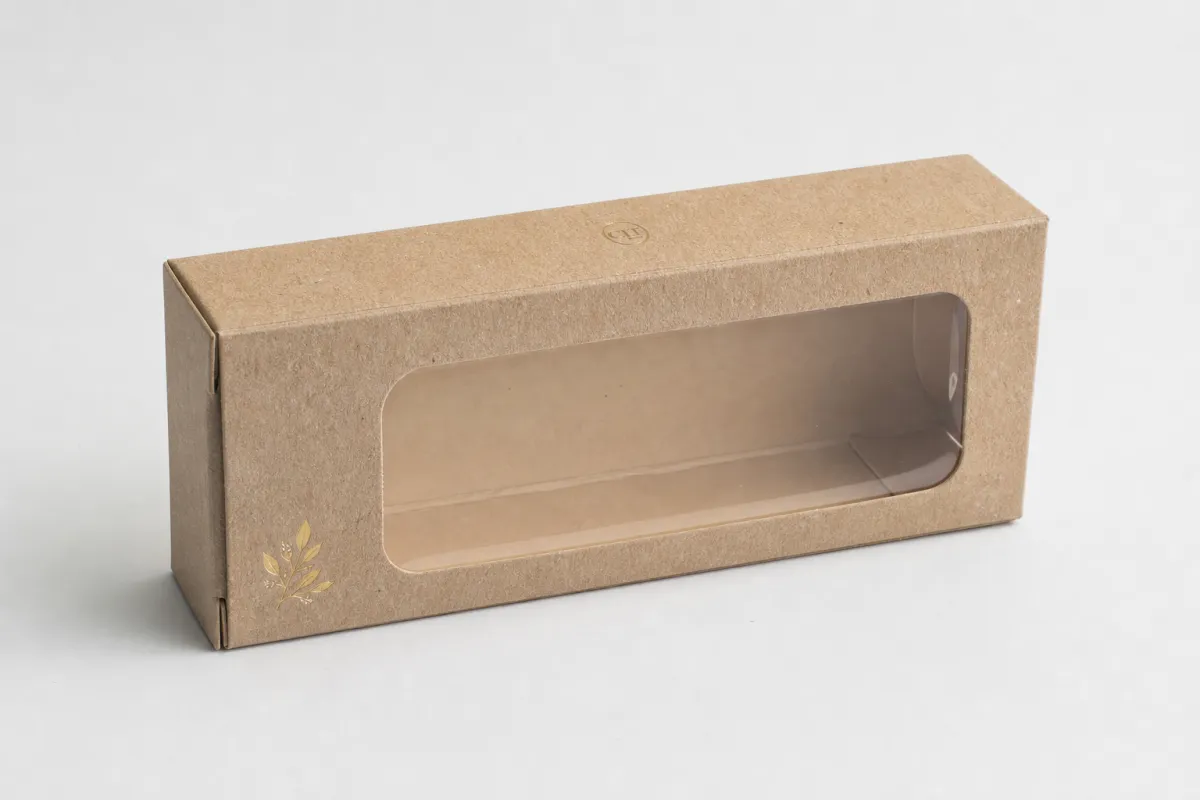
Short version of this best biodegradable window boxes review: if you want an eco story that feels believable and still looks good on shelf, choose kraft paperboard with a cellulose window and water-based inks. If you want a more refined premium face, use recycled white paperboard with restrained print coverage and a compostable or bio-based window film. If the goal is low-cost retail visibility, keep the window modest and the structure simple so the unit price does not outrun the product value. That sounds almost too neat, but in production it usually holds up.
The most common mistake is treating the window like decoration instead of a structural choice. A wide opening weakens the panel, reduces stacking strength, and invites scuffing around the cut edge, especially in transit or on a crowded shelf. In this best biodegradable window boxes review, the strongest options are the ones that use the window with precision rather than excess. Bigger is not automatically better, and that lesson saves money more often than buyers expect.
- Best for retail display: recycled white board with a compostable window and crisp typography.
- Best for natural brands: kraft board with a cellulose window and minimal ink coverage.
- Best for gift sets: premium white board, small window, and controlled print contrast.
- Best for lightweight subscription products: simple kraft board with a modest die-cut opening and no heavy coatings.
The review criteria matter because mockups lie more often than people admit. A board in the 300gsm to 400gsm range usually works well for lighter products. A window needs to stay clear without rippling. Score lines should fold cleanly. Glue should not creep or stain around the patch. The sustainability claim needs to survive basic scrutiny too. FSC fiber sourcing helps on the board side, and compostable structures should align with recognized guidance such as FSC certification standards and the appropriate compostability path for the material set.
A box can be eco-friendly in theory and awkward in hand. The better version looks sharp, protects the product, and explains itself honestly on the shelf.
Buyers comparing suppliers should ask for the exact window material, adhesive type, and finish. A useful quote names the film clearly, whether cellulose, PLA-based, or another compostable option. It also states whether the board is virgin, recycled, or FSC-certified. That level of detail saves time later and keeps the best biodegradable window boxes review useful as a buying tool rather than a brand statement.
Top Options Compared for Biodegradable Window Boxes
The strongest lesson from this best biodegradable window boxes review is that material choice changes everything. Kraft board gives the warmest, most natural look. Recycled white board gives a cleaner face for graphics. Premium coated board can elevate print quality, but once glossy coatings or a non-compostable window enter the build, the environmental story gets weaker fast. The more polished the package needs to look, the more disciplined the structure has to be.
The table below reflects what usually matters in production and on shelf. The numbers are practical ranges, not fantasy pricing. Final quotes still depend on size, board grade, window size, print coverage, and how much hand work the design asks for.
| Option | Visual Look | Biodegradability Fit | Best For | Typical Unit Cost at 5,000 |
|---|---|---|---|---|
| Kraft board + cellulose window | Warm, natural, understated | Strong, if inks and glue match the claim | Soap, candles, bakery items, artisan goods | $0.18-$0.32 |
| Recycled white board + compostable window | Clean, retail-ready, sharper graphics | Strong, with the right film and adhesive | Cosmetics, small gift sets, premium samples | $0.22-$0.38 |
| Premium white board + minimal window | Bright, polished, higher-end | Moderate to strong, depending on finish | Beauty, luxury food, curated sets | $0.28-$0.45 |
| Heavy print coverage + cellulose window | Bold, branded, shelf-forward | Depends on ink system and coating choice | Promotions, retail launches, display boxes | $0.26-$0.48 |
In this best biodegradable window boxes review, kraft plus cellulose is the easiest combination to explain to a customer. It reads naturally, feels honest, and usually keeps the cost under control. Recycled white board is the better choice if the brand relies on color contrast, small type, or a cleaner beauty and wellness look. Premium white board is the option I would reserve for products whose margin can support it, because it looks strong but can become an expensive way to frame a very small item.
The design angle matters too. Kraft board supports minimalist layouts, warm neutrals, and bold typography without looking crowded. Recycled white paperboard handles more color and more detail, which helps when a retail range needs a tighter visual system. In the best biodegradable window boxes review, that means the best option is not simply the most compostable one in theory. It is the one that prints cleanly at your run size and still looks right for the product category.
Window size changes the whole structure. A smaller opening keeps the panel stiff, protects the edges from dents, and improves stacking behavior in transit. A larger opening improves product visibility, but it also softens the carton and raises the risk of corner crush. That tradeoff appears again and again in the best biodegradable window boxes review. A lot of packages fail right there, not because the material is bad, but because the opening was designed like a photo frame instead of a structural cutout.
If you want to compare styles against a wider packaging range, it helps to look at other structural options too. The die-cut logic, insert choices, and print finishes used across Custom Packaging Products can make the window-box decision much clearer because you compare the package to the product instead of guessing from a render.
Best Biodegradable Window Boxes Review: Detailed Reviews
This part of the best biodegradable window boxes review is where the differences become visible. Two boxes can share the same outside dimensions and still behave very differently once they go through folding, gluing, packing, and retail handling. I look at how the board feels at the score line, whether the window patch stays flat, how the print holds under light scuffing, and whether the carton still looks orderly after a few units are stacked and moved around. That’s the real-world test, not the glamour shot.
Kraft Board with Cellulose Window
This is the most convincing natural option in the best biodegradable window boxes review. The board usually has a solid feel, especially at 350gsm to 400gsm, and the cellulose window gives enough clarity for the product to show without turning the front into a glossy display. I like this style for soap bars, small baked goods, candles, and handmade items because the carton and the product feel like they belong to the same story.
The appeal is honesty. Kraft does not pretend to be luxury in the shiny sense; it looks premium through restraint. Very dark artwork can sink a little deeper into the fiber texture than some buyers expect, and the box is not the right choice if the item needs a bright showroom appearance. Still, in a best biodegradable window boxes review, this one often wins on credibility and on plain visual warmth.
Water-based inks and one- or two-color layouts work especially well here. Heavy flood coverage can hide the fiber character, though that is not always the goal. If the product is artisanal, the texture is part of the experience. Glue around the window should stay thin and even; when adhesive beads up, the edge telegraphs through the film and makes the panel look messy under retail lighting. I’ve seen buyers reject an otherwise good run for exactly that reason.
Recycled White Board with Compostable Window
This is the box I reach for when the brand needs a tidier, more controlled retail face. In the best biodegradable window boxes review, recycled white board earns a strong position because it prints cleaner than kraft, especially for fine logos, product names, and nutritional details. The window still gives visibility, but the white face keeps the package from leaning rustic when that is not the direction.
The tradeoff is scuff visibility. White board can show wear quickly on corners and folds, particularly when cartons are shipped loose or handled often by retail staff. A matte varnish or a carefully chosen protective finish may help, but not every finish aligns with a biodegradability claim. That is why this option deserves a serious review in the best biodegradable window boxes review rather than an automatic pass. A beautiful white carton that turns grey around the scores after a week is not a win.
Best uses include cosmetics, sample kits, herbal supplements, and premium snack packs. The carton can carry more graphic structure without feeling crowded, which supports layouts with clean typography, a strong logo position, and a clear product window. For brands that want to look modern without looking glossy, this is one of the better-balanced choices.
Premium White Board with Minimal Window
Premium white board is the polish choice in the best biodegradable window boxes review. It fits when the product value is high enough to justify the carton, or when the box is part of a giftable retail presentation that needs a brighter face and tight print registration. On shelf, this type can look very sharp, especially if the artwork uses disciplined color fields and leaves enough breathing room around the window.
Cost is the weakness. The cleaner appearance comes at a price, and a special coating or a more complex die-cut can push that number up fast. I also think this style works best with a modest window rather than a giant opening. The product should feel revealed, not exposed. In the best biodegradable window boxes review, that distinction matters because a large window can make the package feel less stable even when the graphics are strong.
This is a smart fit for curated beauty kits, candles in gift packaging, and specialty food items that need a polished presentation. It is less forgiving in rough shipping routes or humid environments, so if the cartons will travel far before reaching a shelf, I would ask for sample units and inspect them after a few days in real conditions.
Large Window Display Style
Large window designs sell visibility extremely well, which is why they keep appearing in the best biodegradable window boxes review. They are strong on shelf appeal and useful for items whose color, shape, or texture does the selling. The problem is simple: the larger the cutout, the more the board has to work. Stacking strength drops, edge damage becomes easier to spot, and the carton can start looking tired if the film is not flat and properly glued.
I would use this style only when the product justifies the exposure. Bakery items, decorative soaps, and small apparel pieces can work well, but the structure needs close attention. Clean dielines matter. Brittle board does not. Score lines need to stay crisp so the box folds without cracking. A poor fold on a large-window box is easy to see and hard to hide, which is why it earns a careful place in the best biodegradable window boxes review.
Brands that want strong shelf visibility without giving up the eco story usually do better with a smaller window and stronger side-panel graphics. Visibility and sustainability do not have to fight each other, but the design has to be deliberate. A wide opening can be useful, sure, but only if the rest of the structure is built to carry it.
Packaging buyers who want a broader technical reference can also compare transit behavior against recognized guidance from ISTA testing standards, especially if the box will be shipped rather than handed across a counter. A beautiful carton that fails in distribution is still a failed carton.
Cost, MOQ, and Quote Comparison
The commercial side of the best biodegradable window boxes review is where many buyers underestimate the real cost. Board grade is only part of the price. Window material, print coverage, coating choice, insert complexity, and die-cut size all move the number, sometimes more than expected. A carton that looks simple on screen can still require careful die-cutting, patching, and folding, and that hand work shows up in the quote. You can feel that in the budget before you ever feel it in the box.
For many programs, a straightforward kraft-and-cellulose window box at 5,000 units might land around $0.18-$0.32 per unit. A more polished recycled white board version with a compostable window may sit closer to $0.22-$0.38. Premium white board or heavy ink coverage can push the figure to $0.28-$0.45 or higher. In the best biodegradable window boxes review, those numbers matter because they let you compare packaging categories without pretending every carton costs the same.
MOQ realities matter too. A custom size, a specialty window film, or a more complex structure usually raises the minimum. Small runs can be made, but they rarely look cheap because setup time gets spread across fewer pieces. That is why a 500-piece order can feel expensive next to a 5,000-piece run even when the design is simple. The best biodegradable window boxes review should always be read alongside order quantity, not apart from it.
Buyers often miss the hidden line items. Tooling, sample charges, freight, proof corrections, and extra certification paperwork can appear after the first estimate if they were not stated clearly. If a supplier claims FSC fiber or compostable components, ask for plain-language documentation rather than vague wording. The box may still be a strong value, but the quote should show exactly what you are paying for.
Here is the cleanest way to request apples-to-apples pricing in the best biodegradable window boxes review sense:
- Fix the external dimensions and product fit.
- Specify board thickness or gsm.
- State the window size and shape clearly.
- Note the print coverage and any special finish.
- Confirm whether inserts, glue notes, or certification documents are included.
If you send every supplier the same spec sheet, the comparison gets sharper and the surprises get smaller. That matters even more for biodegradable window packaging, where the word biodegradable can hide several different material systems. A good supplier should tell you whether the window, the adhesive, and the board all support the same end-of-life claim. That is one of the places where this best biodegradable window boxes review becomes a buying filter instead of a generic article.
Process, Timeline, and Lead Time
The schedule side of the best biodegradable window boxes review usually begins with dieline setup. Once the box dimensions are locked, the artwork has to fit the cut path, the window, and any folds or glue tabs that could interfere with logos or copy. A shaped window takes longer to proof because placement has to be checked against the product itself, not just the flat layout. There’s not much room for guesswork there.
Sample approval is often the step that decides whether the project stays on time. A sample lets you check board stiffness, window alignment, fold accuracy, and the way the carton feels in the hand. If the sample shows a weak panel or a window that distorts the product too much, you want to know that before production starts. In the best biodegradable window boxes review, that early sample is worth more than a polished rendering.
Lead time depends on three things: factory workload, material availability, and the complexity of the window stock. If the cellulose film or specialty board is not already in inventory, sourcing adds days. A simple run may move in about 12-15 business days after proof approval, while a more complex structure with revision cycles can take longer. That is a realistic range, not a promise, and a good supplier should say so plainly.
A few choices keep the schedule moving. Finalize dimensions early. Approve artwork quickly. Avoid changing the window placement after the sample unless the change is truly necessary. Late edits can force a new dieline, a new patch, or a new cutting path, and that can push the whole order back. The best biodegradable window boxes review only helps if the production process stays disciplined enough to deliver the box you approved.
If the box is tied to a launch date or seasonal campaign, ask for milestone dates in writing: sample ready, sample approved, production start, packing completion, and shipment window. That keeps everyone aligned and prevents the usual vague promise of “it should be ready soon.” For biodegradable window packaging, clarity matters because sustainability questions often trigger extra approval steps, and those steps need room in the timeline.
From a buyer’s point of view, the smarter question is not “How fast can you make it?” It is “What has to be true for this schedule to hold?” That question often exposes weak links in the plan. In this best biodegradable window boxes review, the best suppliers are the ones who answer in stages instead of hiding behind a single lead-time number.
How to Choose the Right Biodegradable Window Boxes
Choosing the Right package starts with the product, not the carton. In the best biodegradable window boxes review, the first question is always weight and fragility. A lightweight soap bar can live comfortably in a thinner carton, while a candle jar or bakery item may need stronger board, tighter folds, or a better insert. If the product shifts inside the box, the window may showcase damage instead of presentation. Nobody wants that tradeoff.
Moisture comes next. Biodegradable does not mean waterproof, and it does not mean every finish is safe for food or cosmetics. Bakery packaging may need extra attention around grease resistance and shelf life, while some gift boxes can stay dry and simple. If a product will be handled in a damp room or cooled display case, ask for samples and inspect the board after exposure. That kind of practical test belongs in every best biodegradable window boxes review.
Brand fit matters too. Kraft tells a different story than bright white board. Kraft feels earthy, handmade, and close to the material. White board feels cleaner, more retail-forward, and more controlled. Textured stocks can add a boutique feel, but they also affect print registration and cost. The strongest choice is the one that matches the product story without trying too hard. The best biodegradable window boxes review makes that tradeoff visible instead of hiding it behind a nice rendering.
Sustainability claims deserve a hard look. Ask whether the board is FSC-certified, whether the window is cellulose or another compostable film, whether the adhesive is compatible with the same end-of-life claim, and whether any coating changes the disposal path. A carton that mixes compostable and non-compostable components may still be useful, but it should not be sold as if every part disappears the same way. Buyers who want a clean claim should ask for a written breakdown of each layer and finish. That’s the part that keeps the word biodegradable from becoming marketing fog.
For compliance and transit, sample testing under real conditions is the safest move. Put the carton under retail lighting, stack it in shipping orientation, and run a few units through the handling your product will actually face. If you want a stronger technical base, review transport guidance and testing expectations through ISTA and fiber sourcing standards through FSC. That combination of practical testing and standard-based checking is exactly what keeps the best biodegradable window boxes review grounded.
One final rule: do not choose the window size for looks alone. The bigger the cutout, the more the structure changes. A wide opening can weaken the panel and make the box feel soft in the hand, while a smaller opening often gives you better stiffness and cleaner stacking. The best package is the one that shows enough product to sell it and enough board to protect it. That balance is kinda the whole game.
Our Recommendation and Next Steps
Here is the practical ending to the best biodegradable window boxes review: if you want the strongest all-around option, choose kraft board with a cellulose window. If you want the best premium retail presentation, choose recycled white board with a compostable window and restrained print coverage. If you want the most polished gift-ready look, choose premium white board but keep the window size modest and the structure well reinforced. If the sustainability claim is the deciding factor, ask for a full material breakdown before you approve anything.
For most buyers, the smartest next step is to shortlist two or three material combinations and compare physical samples side by side. Renders hide haze, curve, scuffing, and glue marks. Samples show the real thing. In the best biodegradable window boxes review, that is the point where opinion becomes evidence.
If you are preparing a quote request, use a simple spec sheet and keep it consistent across suppliers. Measure the product, define the board thickness, note the desired print coverage, and set the window dimensions before you start talking price. If you need inserts, make that clear too. Then ask each supplier to state the window material, adhesive type, expected lead time, and any tooling or sample costs in plain language. That makes the comparison far more useful than a stack of rough estimates.
For Custom Logo Things readers, I would start with the box style that supports the product story before chasing the cheapest number. A low unit cost helps, but a box that looks off-brand or fails the sustainability check can cost more later in lost trust and reorders. That is why the best biodegradable window boxes review ends with a simple rule: choose the structure that gives you honest material proof, solid shelf presence, and enough strength to survive the trip from packing bench to customer hand.
If you want one clear decision rule from the best biodegradable window boxes review, use this: pick the lightest structure that still protects the product, print only as much as the brand needs, and demand exact material specifications for the board, window, and adhesive before production begins. That one step does more for the final pack than any fancy mockup ever will.
FAQs
Are biodegradable window boxes really compostable if they have a clear window?
Only if the window film is compostable or bio-based and the board, ink, and adhesive system also support the same claim. In the best biodegradable window boxes review, the safest move is to ask for exact material specs rather than relying on broad marketing language, because many cartons use a compostable board with a window that does not match. That mismatch is common enough to check twice.
What is the best material for the best biodegradable window boxes review winner?
Kraft paperboard with a cellulose window is often the best balance of natural appearance, clarity, and sustainability. It is the option I would pick most often in a best biodegradable window boxes review for artisan goods, soap, candles, and bakery packaging. If the brand needs a cleaner premium look, recycled white board can also work well as long as the film and glue stay aligned with the eco goal.
How do I compare pricing for biodegradable window boxes without missing hidden costs?
Compare the same size, board thickness, print coverage, and window dimensions across every quote. Ask whether tooling, samples, freight, and revision charges are included so the unit price does not hide extra expense. That approach keeps the best biodegradable window boxes review useful for real budgeting instead of just opening a round of guesswork.
What lead time should I expect for custom biodegradable window boxes?
Lead time usually depends on whether the size is custom, whether the window material is in stock, and how fast artwork is approved. Build in extra time for samples and revisions if the box has a complex window shape or special finishing. In a practical best biodegradable window boxes review, I would plan for more cushion whenever the box has a new die-cut or a compostable film that needs separate sourcing.
Can biodegradable window boxes be printed in full color and still look premium?
Yes, but the print method and ink system matter, because heavy coverage or glossy finishes can change both the look and the sustainability profile. A strong design often uses clean typography, controlled color fields, and a window size that supports the product instead of overpowering it. That is one reason the best biodegradable window boxes review favors thoughtful design over packed artwork.