Buyer Fit Snapshot
| Best fit | coffee bag label design options sell for packaging buyers comparing material specs, print proof, MOQ, unit cost, freight, and repeat-order risk where brand print, material, artwork control, and repeat-order consistency matter. |
|---|---|
| Quote inputs | Share finished size, material target, print colors, finish, packing count, annual reorder estimate, and delivery region. |
| Proofing check | Approve dieline scale, logo placement, barcode or warning zones, color tolerance, and any recyclable or compostable wording before bulk production. |
| Main risk | Vague material claims, crowded artwork, or missing packing details can create delays even when the unit price looks attractive. |
Fast answer: Coffee Bag Label Design Options Sell: Film, Closure, Print, and Fulfillment should be specified like a repeatable production item. The safest quote includes material, print method, finish, artwork proof, carton packing, and reorder notes in one written spec.
What to confirm before approving the packaging proof
Check the product dimensions against the actual filled item, not only the sales mockup. Ask for tolerance on folds, seals, hang holes, label areas, and retail display edges. If the package carries a logo, QR code, warning copy, or legal claim, reserve that space before decorative graphics fill the panel.
How to compare quotes without losing quality
Compare board or film grade, print process, finish, sampling route, tooling charges, carton quantity, and freight assumptions side by side. A lower quote is only useful if the supplier can repeat the same color, closure quality, and packing count on the next order.
Best Coffee Bag Label Design: Options That Actually Sell
I have spent enough time on packing floors in Portland, supplier meetings in Shenzhen, and retail aisles in Brooklyn to say this plainly: the best coffee bag label design is often decided by one small finish change, not by a full packaging overhaul. I have watched a matte label with a cleaner type hierarchy outsell a louder pouch on a crowded cafe shelf simply because the roast name, origin, and weight could be read in three seconds under harsh 4,000K LED lighting. If you are trying to choose the best coffee bag label design for a roaster, subscription line, or retail launch, the right answer is usually the one that balances legibility, 90-minute humidity resistance in a packing room, premium shelf impact, and fast application without slowing a line that is already moving 35 bags a minute. A pressure-sensitive label with the right label stock and die-cut profile can make that balance much easier to hit.
I review packaging the same way I would if a buyer were standing beside a case sealer and a fill station in a 12,000-square-foot roasting facility: hands on the bag, eyes on the seal, no patience for pretty ideas that fail in the warehouse. I remember one line review in Nashville where a beautiful sample looked fantastic in a conference room, then the adhesive gave up halfway through a humid 82-degree afternoon and the corners started lifting after only 18 minutes on the table. The best coffee bag label design for a small-batch roaster is not always the same as the best one for a grocery program, and I have seen that difference cost real money when a finish looked gorgeous in proofs but scuffed in shipping cartons from a plant in Dallas. If you want to compare options quickly, you can also browse our Custom Labels & Tags page while you read.
What Is the Best Coffee Bag Label Design?
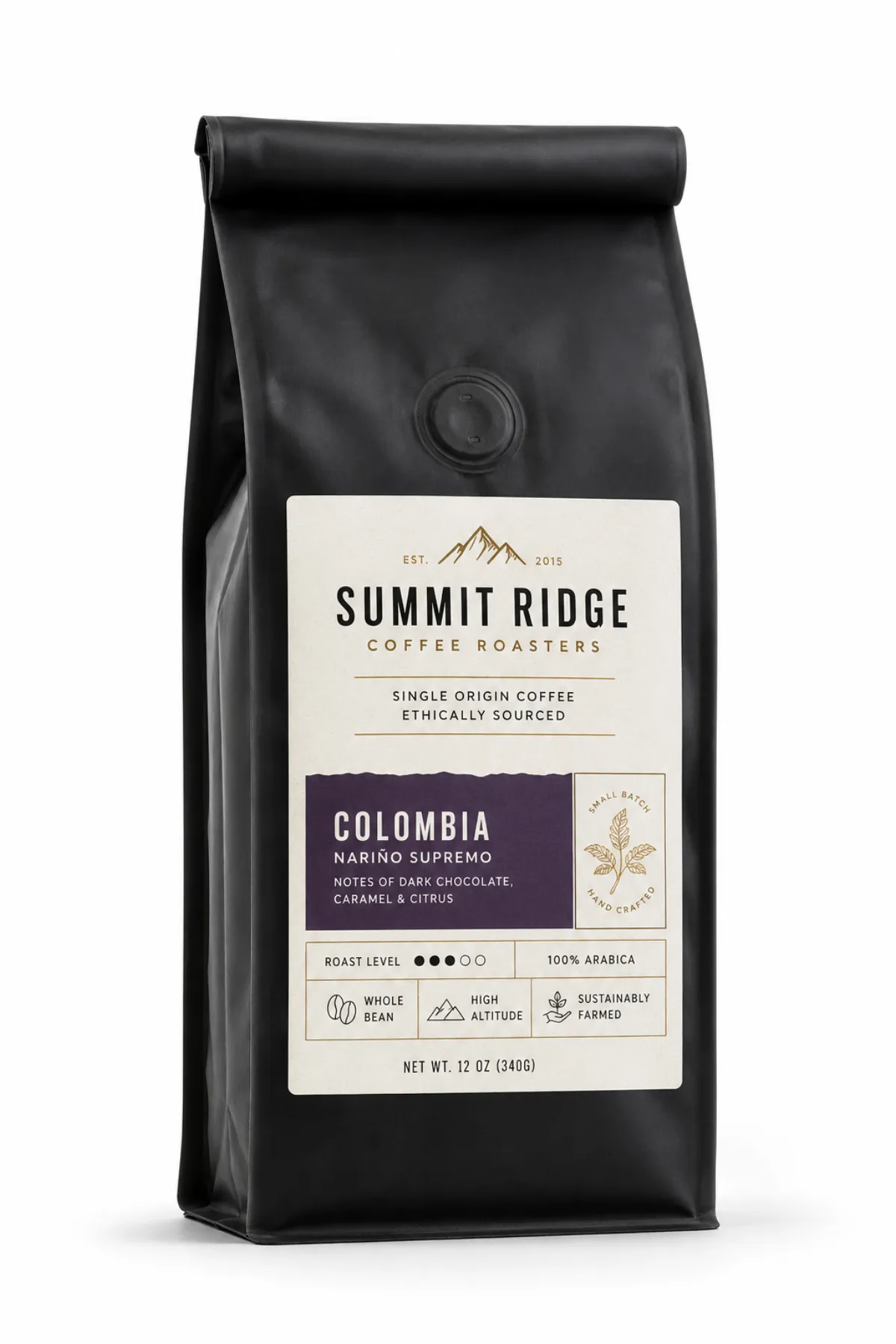
If you want the short answer, the best coffee bag label design is the one that stays readable, survives humidity, and gets onto the bag quickly without creating a bottleneck at the filler. That sounds simple until you stand in a roasting room at 6:30 a.m. and watch a packer apply 300 labels before the first espresso pull; a label that lifts at the edge or wrinkles over a gusset will cost more than the $0.03 or $0.04 you saved on paper. I have made the mistake of chasing a prettier finish once, and the only thing it accomplished was giving everybody a bad mood before lunch and a pile of rejected bags by 11:15.
Here is the practical rule I use after years of walking plant floors in Chicago, Oakland, and Newark: matte paper usually wins for artisan cues and approachable shelf presence, white BOPP wins for moisture resistance and cleaner application, soft-touch wins for premium tactile appeal, and metallic accents work best when you need a limited-release look that feels scarce and collectible. For most roasters, the best coffee bag label design is not the fanciest option; it is the one that makes the roast name easy to find, keeps the origin story legible, and survives a cold truck at 38 degrees, a warm cafe at 74 degrees, and a weekend market table in full sun. If the customer has to squint from 4 to 6 feet away, the design already lost.
"We changed only the finish, not the artwork, and the bags suddenly looked two price tiers higher." That was a line I heard from a Portland roaster after they moved from a plain gloss paper to a soft-touch stock with a restrained foil mark. The lift was not magic; it was better perception, cleaner contrast, and fewer scuffed cartons. Their sales rep also told me buyers stopped calling the product "nice" and started calling it "premium," which is one of those tiny words that can move a $16.00 wholesale conversation into a $19.50 one.
If your bags sit in humid displays, near ice bins, or in shipping lanes where condensation shows up fast, I would lean toward a film-based label or a coated paper with a tested adhesive. For a tiny roaster doing 500 to 2,000 bags a month, the best coffee bag label design is often the one that gives you flexibility for seasonal blends, fast reprints, and hand application without special machinery. For higher-volume programs in Atlanta or Columbus, the best option is the one that reduces rework, because one misapplied roll can stop a packing line for 20 minutes or more, and nobody wants to be the person explaining that to the operations manager with the clipboard and the thousand-yard stare.
Top Best Coffee Bag Label Design Options Compared
When buyers ask me to compare the best coffee bag label design options, I start with five practical questions: how does it look on shelf, how well does it resist scuffs and moisture, how fast can it be applied, what does it cost at 1,000 versus 10,000 units, and how forgiving is it if the art changes every 60 days. That framework keeps the conversation grounded in production reality instead of mood-board language. I like a pretty concept as much as anyone, but a beautiful bag that jams the line is just expensive paper with a story and a $275 rush charge.
Below is the comparison I use most often. It is simple on purpose, because the label that feels elegant in a deck can become the wrong choice once it meets a humid packing room, a blunt warehouse fork, and a bundle of kraft bags with slightly uneven seams. If you have never watched a label get nicked by a carton edge at exactly the wrong angle in a 72-foot receiving area, consider yourself lucky.
| Option | Best Use | Shelf Impact | Durability | Typical Cost at 5,000 | Notes |
|---|---|---|---|---|---|
| Matte paper | Artisan roasters, origin stories, cafe merch tables | Warm and natural | Moderate | $0.10-$0.16 per label | Great readability, less moisture tolerance |
| Gloss paper | Bright branding, punchy color systems | High shine | Moderate | $0.11-$0.17 per label | Can show scuffs and fingerprints faster |
| White BOPP | Wholesale, chilled displays, humid rooms | Clean and crisp | High | $0.12-$0.19 per label | Excellent moisture resistance and clean die cuts |
| Clear film | Minimal branding, premium transparent bags | Modern and subtle | High | $0.13-$0.21 per label | Works best with strong contrast and careful backer color |
| Soft-touch laminate | Premium single origins, gift-ready retail | Very premium | High | $0.15-$0.24 per label | Feels expensive, but can show edge wear on rough handling |
| Foil or metallic accent | Limited releases, anniversary lots, holiday bags | Very high | Moderate to high | $0.18-$0.30 per label | Best used sparingly to protect margin |
The best coffee bag label design for a startup is often matte paper or white BOPP, because both keep setup simple and let you test the market without overcommitting to a specialty finish. The best coffee bag label design for a premium line, though, may be a soft-touch label with one foil detail, especially if the roast sits in a glass-fronted retail cooler where the tactile feel matters as much as the color palette. I have seen buyers choose clear film because it looked great in proofs, then realize the black roast text vanished against a dark bag once the bags were packed in a dim storeroom at 9:30 p.m. That is a classic shelf error, and it is avoidable. It also happens more often than people admit, which is why I keep a flashlight in my tote when I review samples in a factory or at a coffee expo.
For reference on materials and package performance, I still send clients to the technical notes at packaging.org and to package testing guidance from ISTA. The point is not to chase jargon; the point is to match the label to the abuse it will actually see, from shipping vibration on a truck route from Reno to Salt Lake City to condensation to the occasional oily fingerprint from a pack line operator. Coffee bags look quiet on the shelf, but the journey to that shelf is usually a little rude, and the label has to stay composed through all of it.
Detailed Reviews of Best Coffee Bag Label Design Materials
I have learned that the best coffee bag label design is usually the one that survives contact with reality, not just the one that photographs well. A label that looks elegant on a monitor can turn unreadable after two days in a humid cafe refrigerator or after it rubs against the side gusset of a brick-style pouch during carton packing. That is why I review materials by use case, not by trend. Trends are nice for trade show conversations in Las Vegas; production is where they go to get humbled.
Matte paper
Matte paper is still one of the safest choices for the best coffee bag label design if your brand leans natural, hand-roasted, or farm-direct. It gives you a soft visual tone that pairs well with kraft pouches, recycled paper bags, and minimal typography, and it usually prints cleanly at short runs of 500 to 2,500 units. I once walked a small roaster in Nashville where they switched from a glossy stock to a 70# matte paper label, and the front panel immediately looked calmer, which made the origin notes and tasting wheel feel more intentional. The owner told me, half joking and half relieved, that the bag no longer looked like it was trying too hard. The downside is straightforward: plain matte paper is not the champion for moisture or abrasion, so if your bags touch cold surfaces or travel through a damp warehouse in Houston, I would test it hard before ordering 10,000 units.
White BOPP
White BOPP is my practical favorite for a lot of coffee programs, and I say that as someone who has watched labels peel cleanly off a liner in January and also watched paper labels curl in a 78 percent humidity packing room. The best coffee bag label design for a wholesale-heavy brand often ends up on white BOPP because it gives a bright print surface, strong opacity, and better moisture tolerance than coated paper. The feel is less organic than matte paper, but the tradeoff is worth it if bags are going into refrigerated retail or a cafe where condensation is common. It also tends to hold crisp die cuts and small type better, which matters when you are squeezing roast level, lot code, and net weight onto one front panel. I am not exaggerating when I say BOPP has saved more reprints than any other substrate in my experience, especially on runs of 5,000 to 15,000 labels.
Clear film
Clear film is strongest when you want the bag itself to do some of the visual work, especially on transparent or printed side-gusset packaging. Used well, it can make the best coffee bag label design look understated and modern, almost like the graphics are floating on the pouch. Used badly, it disappears. I remember a client meeting in Austin where a buyer loved the clear sample on a white mockup, but once we applied it to a dark charcoal pouch, the origin copy lost contrast and the whole thing looked under-designed instead of premium. That is the danger with clear film: the art director sees elegance, the production team sees a contrast problem, and the shelf sees a missed sale. The fix was not complicated, but the team had to admit the first version was more fashion than function.
Soft-touch laminate
Soft-touch is the finish I reach for when a roaster wants the bag to feel expensive in the hand. It can push the best coffee bag label design into a premium tier with very little extra graphics work, because the tactile sensation does a lot of the selling. I have handled samples from a supplier negotiation in Shenzhen where the same artwork moved from gloss to soft-touch and suddenly the bag felt more like a boutique skincare carton than a commodity pouch. There is something almost unfair about it; the same layout starts charging rent. The risk is wear: if your cartons are rough or your packers handle bags quickly, the edge of the coating can scuff. For a gift set or microlot release, though, it is one of the strongest finish choices, especially on 2,000-piece or 5,000-piece seasonal runs.
Foil and metallic accents
Foil is best used with discipline. A small copper line, a gold seal, or a silver origin marker can make the best coffee bag label design feel more collectible without blowing up the budget. What most people get wrong is using too much metallic coverage, which creates both cost pressure and visual noise. On dark roast bags, a restrained foil accent can highlight the roast name and signal a seasonal or limited nature. On a value blend, it can feel overworked. The trick is to use it like seasoning, not like the main ingredient. I have seen one extra metallic block turn a thoughtful bag into something that looked like it was trying to win a holiday window contest in Manhattan.
For brands making sustainability claims, I also tell them to verify the substrate and liner choices against their sourcing standards, whether that means FSC-certified paper or a lower-impact material spec that aligns with their own goals. If you are evaluating the environmental side, the guidance on EPA resources is useful, but do not let the sustainability story outrun the bag’s practical job on shelf. A pretty eco claim that smears in transit helps nobody. I have seen that happen on a 3,000-unit run, and the complaint email arrived before the launch photos did.
My honest verdict? If you want the best coffee bag label design for most mid-market coffee brands, white BOPP or a coated matte paper with a clean finish will serve you better than a flashy special effect. If you are building a premium story or a small-batch microlot line, soft-touch with one metallic accent can justify a higher shelf price, provided your art stays readable at arm’s length and your adhesive is matched to the bag film. That balance matters more than a lot of branding presentations want to admit, especially once the labels hit a 60,000-square-foot warehouse and the temperature changes by 15 degrees between dock and stockroom.
Price Comparison for Coffee Bag Label Design
Price is where the best coffee bag label design conversation becomes real. I have seen buyers obsess over a $0.02 delta per label while ignoring a $120 setup fee, a proof round that added a week, or a hand-application step that required one extra person for every packaging shift. Those hidden costs are why some label projects look cheap on paper and expensive on the production floor. I have sat through more than one meeting where everyone stared at the unit price like it was going to confess something useful, usually in a conference room with a $9.00 pour-over on the table.
Here is how I break down the cost structure for the best coffee bag label design options most roasters use:
| Cost Driver | Low Volume | Mid Volume | High Volume | What Changes the Price |
|---|---|---|---|---|
| Material | $0.14-$0.26 | $0.10-$0.20 | $0.07-$0.14 | Paper vs BOPP vs specialty film |
| Finish | $0.02-$0.10 extra | $0.01-$0.07 extra | $0.01-$0.05 extra | Soft-touch, foil, spot varnish, textured coatings |
| Setup / proofing | $45-$175 | $35-$125 | $25-$95 | Artwork prep, plate setup, digital proofing |
| Rush handling | 15%-25% premium | 10%-18% premium | 8%-15% premium | Compressed timeline, special scheduling |
| Application labor | High impact | Moderate impact | Low impact | Hand-labeling versus automated application |
At 1,000 labels, a simple matte paper program may cost enough per unit that a premium finish feels expensive, but at 10,000 labels the spread narrows fast and a better surface can make sense. That is why the best coffee bag label design for a launch run is not always the best one for a steady wholesale program. In my experience, a roaster shipping 500 bags a week should protect margin and keep the design flexible, while a brand moving 25,000 bags a month should think harder about shelf impact and line efficiency. The math changes once the label stops being a sample and starts being a recurring line item on a monthly P&L.
Two hidden costs deserve special attention. First, artwork changes: if your blend list shifts every month, repeated prepress work can add $30 to $80 per version even on a small project. Second, adhesion testing: if you need a special adhesive for freezer storage, condensation, or a textured kraft pouch, that custom spec can move the cost up by 5% to 12% depending on the substrate. The best coffee bag label design is the one that keeps those add-ons in check while still meeting the brand standard. That is where good planning saves real money, not just office-point money, and it matters on a 6,000-piece order just as much as on a 60,000-piece one.
Here is the budget band I use as a rough guide:
- Value: $0.08-$0.14 per label, usually matte paper or basic BOPP, best for startup runs and frequent changes.
- Mid-tier: $0.12-$0.20 per label, often coated paper or premium BOPP, best for growing roasters and wholesale accounts.
- Premium: $0.18-$0.30+ per label, often soft-touch, foil accents, or specialty films, best for gift boxes and flagship SKUs.
If a buyer asked me for the best coffee bag label design under a tight margin, I would usually steer them toward a clean BOPP or matte label with one strong typographic system, not a complex multi-finish build that eats labor and approval time. Fancy is only useful if it still lets the business make money on the bag. I have watched too many teams fall in love with a special finish and then quietly hate it when the invoices arrive for the first 7,500-unit run.
How to Choose the Best Coffee Bag Label Design
Choosing the best coffee bag label design starts with a blunt set of questions, not with artwork. What bag are you using? Is it a flat bottom pouch, a side-gusset bag, or a stand-up pouch with a valve? Will the bags be filled by hand, semi-automatically, or on a high-speed line at 45 to 60 bags per minute? How often will the art change? Those answers matter more than whether the mockup looks trendy on a laptop. I say that with affection for the designers in the room, because I know they want the pretty answer first, but the bag does not care about mood.
I always ask clients to think through five decision points. First, brand position: a value blend does not need the same finish as a farm-direct single origin. Second, distribution: a cafe shelf in Seattle is different from grocery in Miami, where a customer may see the bag for only two seconds. Third, environment: if the bags are displayed near ice, in humid climates, or on a sunlit window ledge, you need more moisture and fade resistance. Fourth, bag material: a kraft pouch behaves differently from a matte black foil bag. Fifth, application method: a label that requires perfect alignment can become a problem when a new hire is applying 400 units before lunch. I have watched that exact situation turn into a comedy of errors, except nobody was laughing by the third misaligned stack.
If your artwork changes often, the best coffee bag label design is usually a label rather than direct printing, because labels let you swap roast names, lot codes, and tasting notes without reordering a whole bag run. If you have a stable flagship product and enough volume to justify it, direct printing or preprinted packaging can give you a more integrated, premium look. I have seen businesses scale out of labels once they hit wholesale consistency, but I would never push that move too early because it locks you into inventory risk. Nobody enjoys explaining to finance why there are 12,000 obsolete bags in the back room after a flavor update in quarter three.
Readability deserves its own line item. Keep the roast name large enough to read at six feet on shelf, use high contrast between text and background, and separate the legal text from the hero copy so the front panel does not become cluttered. One of the easiest mistakes is squeezing too much information onto the face: tasting notes, roast level, origin, brew guide, farm story, and a logo lockup all fighting for space. The best coffee bag label design usually gives the eye one clear path: brand first, roast name second, origin and weight third. If you have to explain the bag for thirty seconds before anyone understands it, the bag is doing too much work.
Here is a simple testing method that has saved clients from expensive reprints: print a prototype sheet, apply it to the actual bag stock, stand it under daylight, then under warm retail lighting, then hold it at arm's length from a shelf. After that, put it in a shipping carton for 24 hours and pull it back out. I have seen labels that looked perfect in a studio light turn muddy in a cafe or disappear against a textured kraft pouch. That quick test tells you more than ten PDF markups. It also has the advantage of being brutally honest, which is refreshing in packaging work.
If you are sourcing a partner, ask for samples and compare them against your real bag structure before you place the order. Our Custom Labels & Tags options are designed to help with that kind of trial, because the right material choice only shows up once you touch the package, not while staring at a render from a sales sheet. That is the practical side of the best coffee bag label design: it must work on the bench, in the warehouse, and under store lights in 3 different cities before you place a 10,000-piece order.
One more detail from a client meeting in Austin: the team loved a tall label until we placed the mandatory net weight line near the bottom seal, and the lower edge kept folding into the gusset on a narrow bag. We solved it by trimming 4 mm off the height and moving the lot code to the back panel. Small changes like that are often what separate a frustrating label from the best coffee bag label design for your specific bag. I still remember the relief on the operations lead's face when that issue finally stopped haunting the run on a Friday afternoon at 4:20.
Process and Timeline for Coffee Bag Label Design
A clean process is part of the best coffee bag label design outcome, because even great artwork fails when it arrives late or without the right dieline. I usually break the work into six steps: discovery, concept development, artwork prep, proofing, approval, print, and delivery. Skipping one of those steps tends to produce the exact problems buyers hate most: wrinkled corners, wrong colors, or labels that do not fit the pouch panel. There is nothing glamorous about chasing a bad dieline at 4:45 p.m. while a plant in Grand Rapids is waiting on pallets.
Discovery usually takes one to three business days if the client has the bag spec, artwork goals, and copy ready. Concept development can take another two to five business days, depending on how many directions the team wants to see. Proofing is where projects either stay on schedule or drift; a straightforward digital proof might take a day, while a special finish sample or color-match proof may add three to seven more days. In a busy season, the best coffee bag label design project is often the one with the cleanest approvals, not the one with the fanciest mockup. Fast decisions are a luxury, but they are also a production tool, especially if launch day is already booked with a distributor in Chicago.
Production timing depends on the build. A simple label with standard stock may run in 5 to 10 business days after proof approval. A custom-printed, soft-touch, or foil-accented version can take 12 to 18 business days, especially if the shop needs a specialty liner or extra drying time. If a buyer wants the best coffee bag label design and they also want it rushed, I tell them to expect a premium and to be very specific about what can and cannot change after approval. The phrase "just one more tweak" has caused more friction in packaging than I care to remember, and it can push a clean 12-business-day schedule into 15 or 16.
Three things slow jobs down more than anything else. Missing dielines are one. Low-resolution artwork is another, especially when a logo comes in at 150 dpi and the client wants it scaled across a 4-inch label. The third is unclear compliance copy, which becomes a problem when the net weight, country of origin, or recycling claim is still being debated after the print slot is booked. A label house can fix many problems, but it cannot guess what the legal text should say. It can, however, patiently wait while three departments argue about the comma placement in a 40-word ingredients line, which somehow always happens.
Here are the best schedule habits I have seen on the factory floor:
- Lock the final copy before design begins, including roast name, origin, weight, and legal lines.
- Approve one decision-maker so color feedback does not bounce through four departments.
- Test the label on the actual bag stock, not just on a flat PDF proof.
- Keep a small overrun of 3% to 5% if you expect hand application waste or edge failures.
If you follow that sequence, the best coffee bag label design tends to stay on schedule and stay inside budget. When I worked with a roasting client that changed one foil detail after proof approval, the run slipped by four business days because the finishing station had already been scheduled for another order in San Diego. That kind of delay is avoidable, but only if the team treats label design like production planning, not just art direction. It is not the sexy part of packaging, but it is the part that keeps people calm.
For brands concerned with performance testing, remember that package verification is not a bureaucratic extra. It is a guardrail. The guidance at ISTA is useful when you want to think about vibration, transit, and handling in a structured way, and that matters for coffee bags just as much as for cartons. A pretty label that fails in shipment is still a failed label, even if the photography budget was $8,000.
Our Recommendation: Best Coffee Bag Label Design by Use Case
If I had to choose one answer for the best coffee bag label design overall, I would pick a clean white BOPP label with strong typography and one restrained premium accent, because it gives you a wide operating window. It looks polished, handles moisture better than plain paper, prints sharply, and works across small-batch, wholesale, and subscription programs without forcing you into a fragile finish. That said, the right answer still depends on the use case and the 3,000-piece or 30,000-piece order sitting in front of you.
Best for premium retail: soft-touch laminate with a small foil mark, especially on microlot or single-origin bags. It feels expensive in the hand, and the tactile shift helps justify a higher price point. If you are selling in a boutique cafe or a gift shop, this version of the best coffee bag label design can create an immediate premium impression. I have seen buyers pick up a bag, rub the surface with their thumb, and make the pricing decision before they even turn it over.
Best for budget-conscious startups: matte paper with a simple two-color system. It keeps cost controlled, prints well in short runs, and makes frequent artwork changes manageable. For a roaster testing three blends and one seasonal, this is usually the smartest path, because the brand can learn fast without wasting stock. You do not need a fireworks display to sell a coffee bag; you need clarity, consistency, and a finish that behaves on a $0.12-per-unit budget.
Best for humid environments: white BOPP or another film-based label with an adhesive rated for cold and damp storage. I have seen this choice save a launch in Florida and in coastal markets where condensation shows up faster than anyone expects. The best coffee bag label design is the one that does not fail on Monday morning when the bags have sat in a warm delivery truck overnight. If the label curls before the store opens, the customer gets a bad first impression before they ever smell the coffee.
Best for fast seasonal rotation: a label system with a fixed master layout and a swap-out panel for roast name or tasting notes. That approach keeps brand consistency while making it easy to change art every 30 to 60 days. It is the least glamorous path, but it is often the most profitable. I have watched teams resist this approach because it felt too practical, then come around three months later after the first smooth reorder on a 7,500-unit replenishment.
My honest opinion, after years of handling samples and watching real bag lines in California, Illinois, and Georgia, is that most roasters should start with a durable, cleanly printed film or coated paper, then add one premium detail only if the margin supports it. Do not buy a finish because it looks beautiful in a mockup. Buy it because it survives the pack room, makes the bag easier to shop, and still fits your cost target after setup, proofing, and labor. That is the difference between a good label and the best coffee bag label design for your business. Anything less is just expensive optimism with a nice render.
Before You Order, request samples, print a prototype sheet, and test the label on your actual bag stock under store lighting and in the hand. If the panel reads well at arm's length, resists scuffing in a carton, and keeps the roast name clear after 24 hours of handling, you are close. If not, change one variable at a time until it works. That is how I would pick the best coffee bag label design, and it is how I would spend the money if the bags had my name on them. I have no patience for beautiful labels that fold the first time a case gets bumped.
What is the best coffee bag label design for small roasters?
A matte or soft-touch label usually gives small roasters the best balance of premium look, readability, and cost control. If your fills are under 2,000 bags per month, I would also favor a stock that can handle light moisture and a simple layout with the roast name at least 18 to 24 points on the front panel. Small roasters need flexibility more than drama, and a label that can move with the business is worth more than a fancy one that locks you into reprints.
Should I use labels or direct printing for coffee bags?
Labels are better when you change blends often, want lower upfront costs, or need flexibility for small production runs. Direct printing is usually better for high-volume lines and a more integrated premium look, but it offers less flexibility and can raise the risk of obsolete inventory if your artwork changes often. I usually tell people to pick the option that matches how often they are actually changing the bag, not how much they wish they were changing it.
How much does coffee bag label design usually cost?
Cost depends on size, material, finish, color count, and quantity, with setup and proofing often affecting small orders the most. A simple label can stay budget-friendly at roughly $0.08 to $0.14 per unit, while foil, textured coatings, and specialty films can move the price into the $0.18 to $0.30 range. The real trick is remembering that labor and rework can cost just as much as the label itself if the design is fussy.
How long does coffee bag label design take from concept to production?
A straightforward label project may move in 7 to 12 business days if artwork is ready, but proofing, revisions, and sampling add time. Custom finishes, special adhesives, and approval delays can push the timeline to 12 to 18 business days, so build in extra time before launch if the bags are tied to a retail date. I always recommend padding the schedule because packaging projects seem to attract surprises right when everyone is most confident they won't.
What should be on a coffee bag label?
Include the brand name, roast name, origin, roast level, net weight, tasting notes, and required legal information. Keep the front panel clear enough for quick shelf recognition and move deeper details to the back or side panel so the bag still reads cleanly at a glance. If the label has to explain the entire coffee farm story on the front, it is probably working too hard.