Buyer Fit Snapshot
| Best fit | recycled glass packaging options for modern brands for packaging buyers comparing material specs, print proof, MOQ, unit cost, freight, and repeat-order risk where brand print, material, artwork control, and repeat-order consistency matter. |
|---|---|
| Quote inputs | Share finished size, material target, print colors, finish, packing count, annual reorder estimate, and delivery region. |
| Proofing check | Approve dieline scale, logo placement, barcode or warning zones, color tolerance, and any recyclable or compostable wording before bulk production. |
| Main risk | Vague material claims, crowded artwork, or missing packing details can create delays even when the unit price looks attractive. |
Fast answer: Recycled Glass Packaging Options for Modern Brands: Claims, Protection, MOQ, and Cost should be specified like a repeatable production item. The safest quote includes material, print method, finish, artwork proof, carton packing, and reorder notes in one written spec.
What to confirm before approving the packaging proof
Check the product dimensions against the actual filled item, not only the sales mockup. Ask for tolerance on folds, seals, hang holes, label areas, and retail display edges. If the package carries a logo, QR code, warning copy, or legal claim, reserve that space before decorative graphics fill the panel.
How to compare quotes without losing quality
Compare board or film grade, print process, finish, sampling route, tooling charges, carton quantity, and freight assumptions side by side. A lower quote is only useful if the supplier can repeat the same color, closure quality, and packing count on the next order.
I still remember a factory visit in Shenzhen, Guangdong, where a supplier held a “recycled” jar under the inspection lights like it was a trophy from a trade fair. From a couple of meters away, the glass looked fine. Up close, the claim did not. Once I asked for the post-consumer percentage, the breakage report, and the 58-400 neck finish spec, the shine dropped right out of the room. That is exactly why I judge the best recycled glass packaging options by numbers first, not by a sustainability deck with a leaf icon and a few polished adjectives. Glass tells the truth if you ask for the furnace record, the cullet mix, and the pallet report.
Here is the blunt version: the best recycled glass packaging options are usually the plain ones that ship cleanly, seal correctly, and survive ISTA-style pallet testing without turning your margin into dust. For most brands, that means a stock jar, a stock bottle, or a heavy-wall format that already has a proven mold and a known closure fit. If you need companion cartons or inserts, I usually point teams toward Custom Packaging Products so the outer packaging supports the bottle story instead of fighting it, often with a 350gsm C1S artboard carton and an E-flute insert that can be die-cut in Dongguan within 10 to 12 business days after proof approval.
I have sat in client meetings where everyone fell for a custom silhouette, then the freight quote landed from Ningbo and the room went quiet. Glass does that. It rewards discipline and punishes vanity with a very straight face. The best recycled glass packaging options balance recycled content, breakage rate, MOQ, decoration cost, and landed cost. Anything else is expensive theater wearing a green label, and I have seen plenty of that theater between Shenzhen, Shaoxing, and Xuzhou.
Quick Answer: Best Recycled Glass Packaging Options
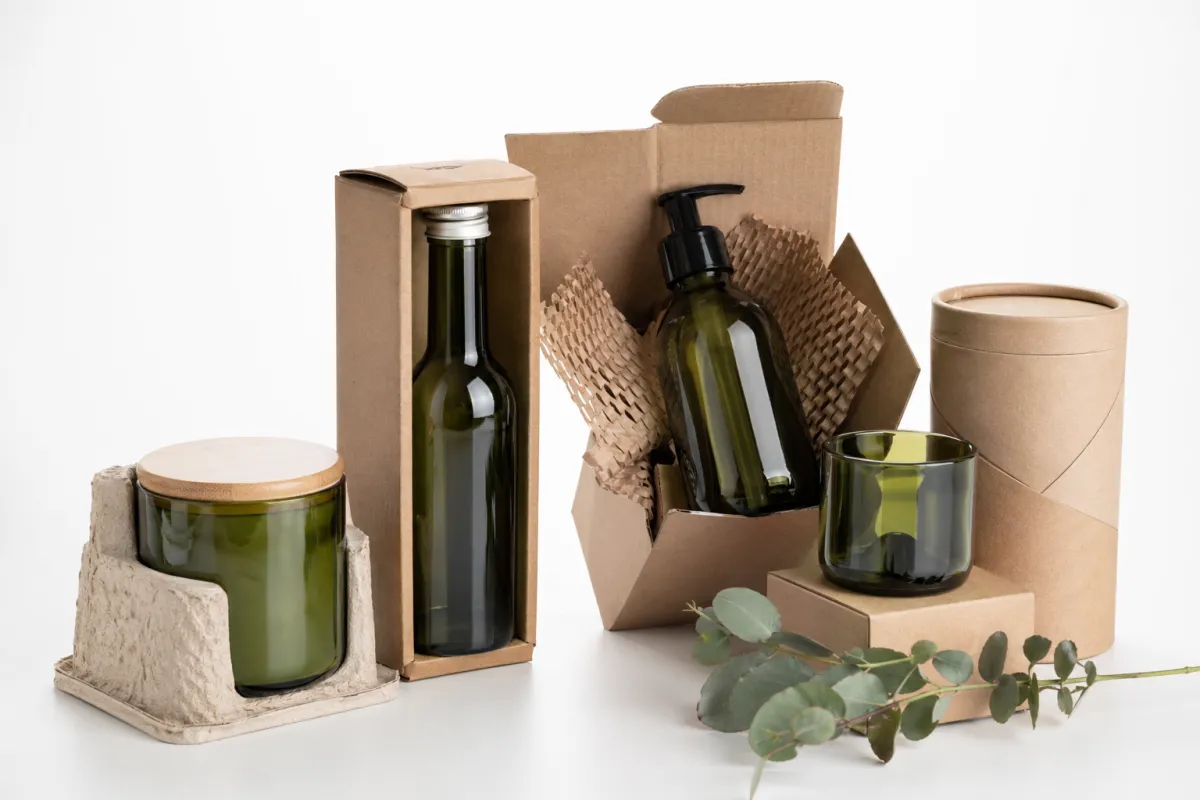
Quick verdict: if you sell food or beauty, the best recycled glass packaging options are usually stock recycled glass jars because they are easier to source, easier to seal, and less likely to stall a launch. For beverages, oils, tinctures, and liquid skincare, stock bottles usually win because the neck finish is already standardized and the fill line can handle them without drama. For premium candles, heavy-wall jars carry the shelf presence buyers expect, although the shipping bill from Guangzhou to Los Angeles will remind you that heavy glass is still heavy.
On a factory floor in Guangdong, I once watched a sales rep pitch a recycled glass line like it was a miracle product. The furnace man beside him just shrugged and said, “The glass is only part of the story.” He was right, and I have quoted him more than once since then. The best recycled glass packaging options depend on actual recycled content, not vague eco-language, and they depend on whether the supplier can keep chips, cracks, and ovality under control to within 0.5 mm. A supplier who cannot explain the cullet ratio or the inspection routine is not ready for your order, no matter how good the brochure looks.
My working rule is simple: start with a proven stock shape, verify the closure, then test decoration. That is the commercial path, and it saves a lot of foolishness. The best recycled glass packaging options are rarely the first thing a brand dreams up in a mood board; they are the result of a clean spec sheet, a decent sample, and a production line that does not hate your product packaging. I wish I could say there was a more glamorous formula, but there really is not, especially once you are comparing 1,000-unit samples against a 10,000-unit production run.
“I do not care if it is 70 percent recycled if it shows up chipped,” one buyer told me after losing 4.6 percent of a 12,000-unit shipment to corner damage in transit from Hebei. He was annoyed, and honestly, he had a point.
If you want the short list: stock recycled glass jars are the safest entry point, stock bottles are the strongest choice for liquids, heavy-wall candle jars are the best premium play, and custom-molded glass only makes sense once volume justifies tooling. That is the honest answer, even if it is less glamorous than a glossy pitch deck. The best recycled glass packaging options are the ones that hold up in production, not the ones that look expensive in a render from a design studio in Shanghai.
What Are the Best Recycled Glass Packaging Options for Your Product?
The best recycled glass packaging options depend on what you are filling, how you are sealing it, and what the freight lane will tolerate. For food and beauty, stock jars usually make the cleanest starting point. For liquids, recycled glass bottles with standard neck finishes give you fewer surprises at the filler. For candles and other premium home fragrance products, heavy-wall formats can justify their weight if the shelf story and margin both support them.
If the launch timeline is tight, I always push teams toward stock formats first. That route gives you a quicker sample cycle, a more predictable closure fit, and fewer tooling variables. If the product needs a signature silhouette, custom can still make sense, but only after the base economics are proven. In practice, the best recycled glass packaging options are the ones that fit the product, the line, and the profit target at the same time.
One reason I keep coming back to stock formats is simple: they are easier to verify. A 58-400 jar from Xuzhou, a 24-410 bottle from Zhejiang, or a standard candle vessel from a Guangzhou broker is not exciting, but it gives you a real baseline. You can test the closure, measure the finish, compare the tare weight, and see whether the glass surface will take a silk-screen or a paper label without fighting you. That is the kind of work that keeps a launch from drifting into chaos.
Top Recycled Glass Packaging Options Compared
There is no universal winner. I wish there were, because that would make procurement easier and save everyone from five rounds of sample approvals and two “urgent” calls from the freight forwarder in Ningbo. The best recycled glass packaging options each solve a different problem: jars work for broad compatibility, bottles work for controlled dispensing, vials suit small-format beauty or lab products, and custom shapes are about brand ownership, not convenience. Once you accept that, the decision gets much less noisy, and the quote comparisons start making sense.
When I toured supplier floors that worked with major European and Asian glass producers, the language was always the same: furnace yield, cullet ratio, finish tolerance, and pallet stability. Nobody serious was bragging about “green vibes.” That is the real market. The best recycled glass packaging options come from mature stock lines, not from one-off craft claims that collapse under a MOQ conversation in week 2. I trust the plant manager who talks about tolerance windows more than the person who keeps saying “artisanal” with a straight face.
| Format | Best For | Typical Unit Price | Typical Lead Time | Main Advantage | Main Tradeoff |
|---|---|---|---|---|---|
| Straight-sided recycled glass jar | Jams, sauces, creams, scrubs | $0.18-$0.42 at 5,000-20,000 units | 2-6 weeks | Easy sourcing and broad closure fit | Not the most distinctive shelf shape |
| Heritage-style recycled glass jar | Premium food, candles, gift sets | $0.24-$0.58 at 5,000-20,000 units | 3-6 weeks | Strong shelf presence | More weight, more freight |
| Recycled glass bottle | Juice, spirits, oils, serums | $0.22-$0.55 at 5,000-20,000 units | 3-6 weeks | Cleaner pour and tighter sealing | Higher breakage risk if overpacked poorly |
| Heavy-wall candle jar | Luxury candles and home fragrance | $0.35-$0.90 at 5,000-20,000 units | 4-8 weeks | Premium feel and stable base | Shipping cost can climb fast |
| Custom-molded recycled glass | Brand-owned shapes and launch signatures | $0.28-$1.10+ depending on spec | 8-16+ weeks | Distinctive package branding | Tooling and approval cost |
The table looks simple because the decision really is that simple once the hype is stripped away. The best recycled glass packaging options for a startup food brand are not the same as the best recycled glass packaging options for a premium candle label trying to justify a $42 retail price. A 250 mL straight-sided jar with a 58-400 finish behaves very differently from a thick custom bottle with a narrow neck and decorative embossing. One is a workhorse. The other is a branding statement that may or may not survive the freight lane from Tianjin to Texas.
If you are checking performance claims, I like to anchor transit testing to industry standards rather than guessing. The packaging team at ISTA publishes practical guidance for distribution testing, and that matters more than a glossy mockup when you are shipping glass in 24-unit inner cartons. If the supplier also uses secondary cartons made from certified paperboard, FSC certification gives your retail packaging story more credibility than a generic “eco” badge ever will, especially if the carton is built from 350gsm C1S artboard with a 1.5 mm corrugated insert.
Detailed Reviews of the Best Recycled Glass Packaging Options
Recycled Glass Jars
Recycled glass jars are the best recycled glass packaging options for most brands because they keep the sourcing process sane. I have seen them used for sauces, face creams, body scrubs, and candles with equal success, and the reason is simple: stock jar molds are common, closure compatibility is broad, and decorators already know how to print, frost, and label them. If your product needs a 53-400, 58-400, or 70 mm lug closure, a stock jar usually gets you there without a special tool charge, and many factories in Xuzhou can supply those formats with recycled content ranging from 30 percent to 70 percent.
They are not perfect. Weight creep is real, especially on thick-walled versions that look premium but add freight cost by the pallet. I once watched a client in a packaging design meeting choose a heavier jar because it “felt nicer” in hand, then we had to rework the carton insert because the first ship test showed corner rub and a 3.2 percent chip rate. That is why the best recycled glass packaging options are the ones that survive the actual line, not just the trade-show table. A handsome jar that fails in transit from Zhejiang to Chicago is just a very expensive apology.
Recycled Glass Bottles
Recycled glass bottles are the best recycled glass packaging options for liquids that need a clean pour and a dependable seal. Think juice, cold brew, olive oil, tinctures, serum, or cleaning products. If the bottle uses a standard finish like 24-410, 28-400, or a crown neck, your closures and pumps become much easier to source. That sounds boring. It is. Boring is often the thing that keeps the filler moving at 45 bottles per minute and the customer from emailing about leaks, which is a kind of excitement I can live without.
I once negotiated a bottle order where the supplier wanted to sell us a “premium” shoulder shape that added 18 grams per unit. Eighteen grams sounds harmless until you multiply it by 50,000 units and then add air freight because the launch date slipped by 9 days. The best recycled glass packaging options do not punish you for wanting to make money. A packaging format should help the product earn its keep, not make every shipment feel like a punishment from the freight gods.
Heavy-Wall Candle Jars
Heavy-wall candle jars are the best recycled glass packaging options if your brand sells atmosphere as much as wax. They make shelves look expensive, and they help with thermal stability if the wax blend and wick sizing are dialed in. I like them for premium home fragrance lines because the visual weight supports a higher retail price, especially when the label system and outer carton are equally intentional. There is a reason shoppers pick them up: they feel like they mean business, and a 10 oz candle in a 4 mm wall jar can carry that message well.
The downside is obvious if you have ever stood next to a pallet of them. Heavy-wall glass is a freight problem wearing a nice outfit. A candle client I worked with insisted on a wide, thick base, then came back after the first freight quote and asked whether “the pallet could be compressed.” No. Physics does not negotiate, even when the branding team is very persuasive. If your margin can absorb the weight, the best recycled glass packaging options in this category look fantastic. If not, the bottle budget will eat your markup alive and ask for dessert.
Custom-Molded Recycled Glass Packs
Custom-molded glass is one of the best recycled glass packaging options only when the package itself is part of the brand story. I am talking about a silhouette that people recognize from across a shelf, a neck finish that supports a unique closure, or embossing that doubles as package branding. If you are launching a flagship spirits line or a hero beauty SKU, custom can make sense. If you are testing product-market fit, it usually does not. Too many brands jump to custom because they want a trophy before they have a business, and they discover tooling is only the first invoice.
The hidden cost is never just tooling. It is artwork revision, dimensional approval, decoration coordination, and the extra week you lose every time someone on the brand team says, “Can we make the shoulder a little softer?” I have heard that sentence enough to know what it costs, both in time and in patience. The best recycled glass packaging options are rarely the prettiest ones on paper; they are the ones that still look good after the first production run and the first freight claim. A mold can be beautiful and still be a terrible idea if the plant in Shaoxing cannot hold the finish tolerance within 0.3 mm.
For recycled content claims, ask the supplier to separate post-consumer recycled content from internal cullet. They are not the same thing. Cullet is factory scrap that goes back into the furnace. PCR is material that already lived a previous life with consumers. A decent supplier should explain the difference without hiding behind a polished brochure or a vague “sustainable by nature” line. That is where the real trust starts, and where the nonsense stops, especially if the audit report is coming from a facility in Hebei or Anhui.
I also ask for the quality-control sheet, not just the sales sheet. A supplier can say 60 percent recycled content all day long, but I still want to see defect rates, finish checks, and the method used to confirm the numbers. If they hesitate, I slow down. That simple habit has saved me from a few messy orders, and honestly, it is kinda the whole game when you are buying glass at scale.
Price Comparison: What Recycled Glass Really Costs
Most people obsess over the unit price and then act surprised when the truck bill shows up. That is how glass goes. The best recycled glass packaging options are not just cheap on paper; they are efficient to palletize, easier to decorate, and less likely to break in transit. A jar that costs $0.06 less per unit can become more expensive the moment it needs a stronger carton, extra inserts, or a higher breakage allowance. I have seen that trick play out more than once, and it never feels as clever as it looked in the spreadsheet.
Here is the cost stack I use when I am reviewing quotes. First is the unit price. Second is decoration, which can add anywhere from $0.04 for a simple label to $0.20 or more for frosting, silk screening, or hot stamping. Third is tooling, which for custom glass can start around $2,000 and climb past $15,000 depending on cavity count, embossing, and finish complexity. Fourth is freight, which is where heavy recycled glass turns into a budgeting lesson. The best recycled glass packaging options keep all four buckets under control instead of pretending two of them do not exist.
I have seen sample rounds cost $75 to $200 before freight, and that is normal if you are requesting two or three finishes, a decorated sample, and a closure check. If a supplier offers a “free sample” but charges you later in the quote, that is not generosity. That is packaging sales theater, and it always makes me a little tired. The best recycled glass packaging options come from suppliers who are upfront about the sample cost, the freight method, and the approval path, whether the samples are dispatched from Shenzhen, Xiamen, or Ningbo.
One thing brands miss is landed cost. A bottle that leaves the factory at $0.24 may land at $0.39 once you add freight, breakage reserve, and a decent outer carton. Another bottle at $0.28 can land cheaper if the pallet pattern is tighter and the breakage rate is lower. I have watched that exact math change a sourcing decision in one meeting because the team finally counted the labels, closures, and secondary packaging instead of pretending they were free. They were not free. Nothing is free, not even the “simple” option.
If you want a helpful benchmark from the broader packaging industry, the EPA recycling guidance is useful for checking how material recovery claims are framed in the U.S. It will not price your jar for you, but it will keep a supplier from getting too cute with sustainability language. That matters if your branded packaging needs to hold up under buyer scrutiny in a retailer review that might last 15 minutes and include a note about material mix.
Process and Timeline: From Sample to Shipment
The actual buying sequence is not glamorous, but it saves money. Start with a spec sheet, request recycled content documentation, order samples, test closure fit, approve artwork, lock production, and then confirm transit windows. That is how the best recycled glass packaging options get purchased by serious brands. Everything else is a shortcut to a surprise later, and surprises in packaging are usually expensive, especially once cartons are packed at 16 units per case and the truck is already scheduled.
- Send the product spec: size, fill volume, finish, target recycled content, decoration method, and MOQ.
- Request samples: plain glass first, decorated sample second, closure compatibility third.
- Test performance: leak resistance, torque, drop behavior, and label adhesion.
- Approve the production proof: confirm color, dimensions, artwork placement, and carton count.
- Run QC: visual checks, dimensional checks, pallet stability, and transit testing.
- Release shipment: book freight, verify counts, and keep a breakage allowance in the budget.
For stock items, I usually see a 2 to 6 week window if the supplier has inventory and the closure is standard. For custom projects, 8 to 16+ weeks is a more honest estimate once tooling, sampling, decoration, and corrections are included. A brand team once told me they wanted a custom jar “fast,” then took eleven days to approve the art file. That delay was not the factory’s fault. The best recycled glass packaging options still need a decision-maker on your side who can turn comments around in a day, not a week, or the schedule will drift like a pallet in monsoon season.
The other thing that slows projects is sloppy information. If the neck finish is not defined, the supplier will guess. If the carton spec is missing, the pallet plan will be wrong. If the decoration file is a blurry PDF, the printed line will look rough. I have seen all three, sometimes in the same project, and I wish I were making that up. The best recycled glass packaging options are often lost by bad handoffs, not bad manufacturing. The factory in Dongguan can only build what it can understand.
For validation, I like to ask for ISTA-style transit testing or at least a distribution test plan tied to the actual route. If the product is going by ocean freight, the vibration and compression profile matters more than a neat render. For retail packaging and product packaging, the first cracked case is the one that changes everyone’s opinion. That is why I push teams to test early, not after launch, when everybody is already emotionally attached to the design and nobody wants to be the person who says, “We should have checked that sooner.”
If you can only afford one extra checkpoint, make it the closure fit test. I have seen more launches stumble on a pump, cap, or liner mismatch than on the glass itself. That is a small detail until it is not, and then it becomes the whole project.
How to Choose the Best Recycled Glass Packaging Options
Start with the product, not the trend. Food, beverage, beauty, and home fragrance all have different seal requirements, and the best recycled glass packaging options for one category can be a headache in another. A candle jar can tolerate a wide mouth and a heavy wall. A facial oil bottle needs a tight closure and a clean pour. A jam jar needs heat and transport tolerance. If you ignore that, the package will tell you the truth the hard way, usually right when the shipment arrives and everyone is standing around pretending not to panic.
Next, check the claim. Ask for the actual post-consumer recycled percentage in writing. Ask how it is measured. Ask whether the supplier is quoting PCR, cullet, or both. I have lost count of the times a salesperson tossed around “eco-friendly” like it was a technical term. It is not. The best recycled glass packaging options come with documentation, not just nice words and a confident smile, and a serious mill in Zhejiang will hand you the paperwork before you even ask twice.
Then compare performance, not just visuals. Closure torque, leak resistance, thermal shock, chip risk, label adhesion, and carton fit all matter. I have seen a beautiful cosmetic bottle fail because the neck finish was off by a hair and the pump never seated correctly. That tiny mistake made the whole run miserable. The best recycled glass packaging options are the ones that disappear into the operation and let the product do the talking. If your operations team forgets the package exists, that is usually a good sign.
Brand teams also forget freight math. A thicker wall and a heavier base can help the shelf story, but they can also raise emissions and shipping cost if the design is overbuilt. That is why I push for honest package branding, not empty styling. If the glass is doing the work of the label, carton, and sales pitch all by itself, somebody will pay for it later. Usually the margin does, and it does so without any applause, especially on a lane that runs from Foshan to Rotterdam.
I also pay attention to supplier transparency on MOQ, replenishment timing, decoration methods, and fill-line compatibility. If a supplier cannot tell me whether a bottle runs clean on a semi-automatic filler or whether a jar works with a standard induction seal, I treat that as a warning. The best recycled glass packaging options come from suppliers who understand production, not just quoting. That distinction saves a lot of headaches and a few embarrassing emails at 7:45 a.m. on a launch week.
One more practical point: if you are building a full retail packaging system, make the glass, the label, and the outer carton work together. A recycled jar in a flimsy printed sleeve looks cheap. A standard bottle in a well-built carton with clear branded packaging can look more premium than a heavier glass format that was chosen only because it sounded sustainable in a meeting. I have seen both outcomes, and the better one is not always the most expensive. Sometimes it is just the one designed by people who actually watched the line run and specified the insert depth to the millimeter.
In my experience, the right sourcing conversation happens fast once the brand has a one-page spec sheet. Size, finish, target fill volume, decoration, MOQ, timeline, and recycled content target are enough to stop the guessing. Without that, everyone is arguing about vibes. With it, the best recycled glass packaging options become visible in a day or two, and everybody breathes a little easier, including the factory team in Jiangsu that would otherwise spend 3 extra days revising the quote.
Our Recommendation: Best Next Steps for Buyers
For most brands, the smartest move is to start with a stock recycled glass jar or bottle, test two to three closures, and pick one decoration method before you think about custom tooling. That path gets you to market faster and leaves room in the budget for better labels, stronger cartons, and a cleaner launch. The best recycled glass packaging options usually reward restraint, even if restraint is not the flashiest word in a branding meeting in Los Angeles or Munich.
If you are building a premium line and the shelf presence really matters, a heavier format can be worth it. I said “can,” not “is.” The difference is the margin math. If the retail price is $18 and the jar weight pushes freight up enough to erase your contribution margin, the pretty bottle becomes an expensive mistake. The best recycled glass packaging options should support the price you plan to charge, not just the picture you want to post or the presentation slide you want to show.
For value-minded buyers, I would request quotes from at least two suppliers and compare landed cost, not just ex-works price. Ask each supplier for the exact recycled content documentation, breakage assumption, and packaging spec in writing. Then compare them line by line. If one quote looks cheaper but hides freight, decoration, or pallet count, it is not cheaper. It is simply better dressed, which is a sneaky kind of expensive when the shipment is 8,400 units and the carton spec is off by 5 mm.
I also like to build the package system around the product story. If the glass is doing part of the sustainability messaging, use a carton and label system that backs it up. That is where Custom Packaging Products can help, especially if you need custom printed boxes, inserts, or a clean secondary pack that keeps the shipping loss rate down. A good outer carton does not get applause. It just quietly saves money and keeps everyone from having a very loud Monday, particularly when the pack uses 350gsm C1S artboard and a water-based varnish instead of a fragile soft-touch finish.
My honest recommendation: do not chase the fanciest mold first. The best recycled glass packaging options are the ones that survive testing, pricing, and production without forcing your team into constant exceptions. I have seen too many brands buy a beautiful bottle and then spend the next three months apologizing to operations. That is not branding. That is self-inflicted pain with a polished label on it, and it usually starts with a factory in Guangdong promising “easy production” before the proof file is even approved.
If you want one sentence to keep on your desk, here it is: pick the best recycled glass packaging options that your product can fill, seal, ship, and sell at a profit. Anything else is decoration with a freight charge.
FAQ
What recycled glass packaging options are best for food products?
Stock jars are usually the best starting point because they are widely available, easier to seal, and simpler to price than custom shapes. For food, I would also check food-contact compliance, closure fit, and whether the jar survives your hot-fill or cold-pack process without chips. For many buyers, the best recycled glass packaging options for food are the ones that keep the filler running at 30 to 60 cases an hour without the QA team chasing leaks, especially when the jars are packed 12 to a case with dividers that are cut cleanly in 1.5 mm corrugated board.
Is recycled glass packaging more expensive than regular glass?
Not always. The unit price can be similar, but freight, breakage, and decoration often decide the final number. A heavier or more customized option usually costs more once you count tooling and shipping. That is why the best recycled glass packaging options should always be judged on landed cost, not just the quote line that looks nice in an email. I have watched a quote with a lower sticker price become the expensive one after freight, inserts, and a 2 percent breakage reserve were added back in.
How much recycled content should I ask for in glass packaging?
Ask for the exact percentage of post-consumer recycled content and how the supplier measures it. Do not settle for vague sustainability language. I like written specs, and if the supplier can provide test reports or a documented quality process, even better. The best recycled glass packaging options are transparent about what is in the furnace and what is marketing copy. That distinction matters more than the color of the label, and it matters even more if the factory is quoting from Yixing, Xuzhou, or Foshan.
How long does custom recycled glass packaging take to produce?
Stock items can move in a few weeks, but custom projects often need 8 to 16+ weeks once sampling, tooling, and decoration are included. Special colors, embossing, or compliance checks can push that out further. If a supplier promises custom glass in a very short window, I would ask to see the production schedule twice. The best recycled glass packaging options are reliable before they are fast, and reliable is what keeps a launch from wobbling, especially when the mold is cut in Hebei and the artwork is approved in stages over 6 to 8 days.
What should I test before ordering recycled glass packaging at scale?
Test closure fit, leak resistance, drop performance, label adhesion, and pallet stability before you commit. If you are shipping liquids, add fill-line testing and transit testing so the savings do not disappear in damage claims. I have watched a project save $0.03 on the bottle and lose $0.11 on avoidable breakage. That is why the best recycled glass packaging options always earn their place in a real test plan. If the package cannot survive the basic abuse test, it is not ready, full stop, and a 1-meter drop onto a corner seam will usually prove it.
If you are still narrowing the field, start with samples, not theory, and compare the best recycled glass packaging options against your actual product, your actual freight lane, and your actual margin. That is the only version of this decision that matters, whether your shipment leaves Ningbo on a 20-foot container or moves by truck to a domestic co-packer in California.
Takeaway: start with a stock recycled jar or bottle, demand written proof of PCR content, test the closure and transit performance, and only move to custom glass if the landed cost still protects your margin. That sequence is the shortest path to the best recycled glass packaging options without getting trapped in expensive guesswork.


