Buyer Fit Snapshot
| Best fit | Biodegradable Gift Bags Wholesale for Sustainable Brands projects where brand print, material claims, artwork control, MOQ, and repeat-order consistency need to be specified before quoting. |
|---|---|
| Quote inputs | Share finished size, material target, print colors, finish, packing count, annual reorder estimate, ship-to region, and any compliance wording. |
| Proofing check | Approve dieline scale, logo placement, barcode or warning zones, color tolerance, closure strength, and carton packing before bulk production. |
| Main risk | Vague material claims, crowded artwork, missing packing details, or unclear freight terms can make a low unit price expensive after revisions. |
Fast answer: Biodegradable Gift Bags Wholesale for Sustainable Brands should be specified like a repeatable production item. The safest quote records material, print method, finish, artwork proof, packing count, and reorder notes in one written spec.
Production checks before approval
Compare the actual filled-product size with the drawing, then confirm tolerance on folds, seals, hang holes, label areas, and retail display edges. Reserve space for logos, QR codes, warning copy, and material claims before decorative graphics fill the panel.
Quote comparison points
Review material grade, print process, finish, sampling route, tooling charges, carton quantity, and freight assumptions side by side. A quote is only useful when the supplier can repeat the same color, closure quality, and packing count on the next order.
A gift bag often spends more time in a trash bin than in a customer’s hand. That makes biodegradable Gift Bags Wholesale a buying decision worth thinking through instead of tossing into the “looks nice” pile. Material, print method, handle design, and size all affect waste, strength, and presentation. Pick badly and you get extra cost, extra breakage, and a bag that disappoints the moment it leaves the counter.
Brands, retailers, event teams, and hospitality groups usually buy wholesale for one simple reason: control. One approved spec can support store openings, holiday runs, client gifting, and repeat reorders without rebuilding the package every time. Fewer surprises. Fewer color shifts. Fewer awkward conversations about why the “same” bag suddenly looks different in the next shipment. A good wholesale program gives you a package that behaves the same way again and again.
There is another reason buyers keep asking for biodegradable options. Customers notice packaging. Internal sustainability targets notice packaging. Policy teams definitely notice packaging. But a bag still has to hold weight, survive transit, print cleanly, and dispose in the way the supplier claims. If it only looks green and falls apart in use, the environmental benefit is mostly marketing fluff.
A bag that fails on the sales floor is not sustainable in practice, no matter how nice the mockup looks.
The real question is straightforward: how do you choose a bag style that fits the product weight, the brand image, and the reorder plan without getting trapped in vague claims or expensive guesswork? A clean spec sheet helps. So does a wholesale partner who can turn a brand idea into production-ready details through Wholesale Programs.
Why biodegradable gift bags wholesale make more sense than single-use extras
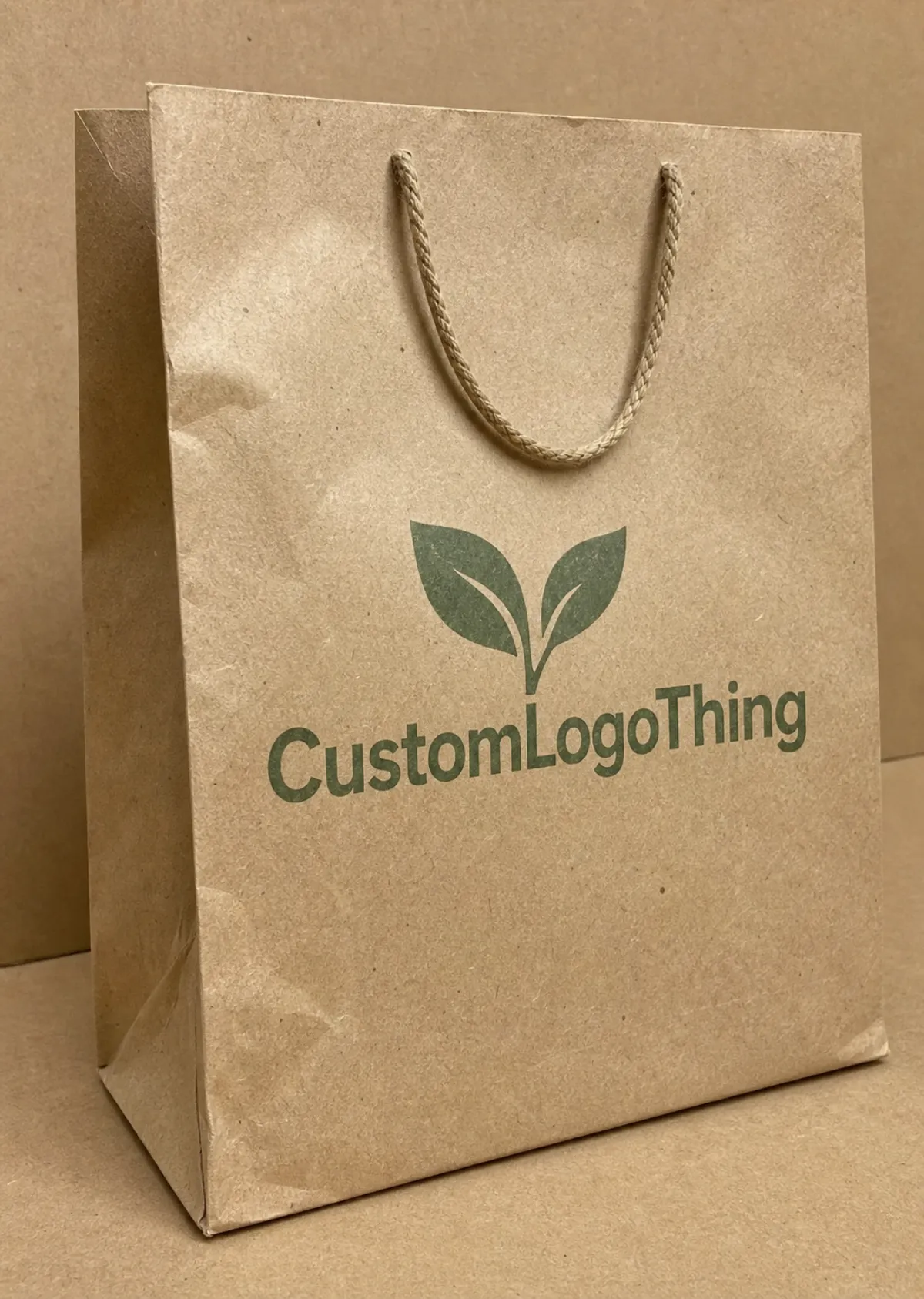
Single-use extras vanish fast. A bag can go from shelf to customer to bin in minutes, which makes the material choice matter more than decorative fluff. Wholesale buying solves a second problem at the same time: lower unit cost, consistent branding, and a packaging spec that does not change every time someone opens a new campaign.
Consistency matters because packaging is part of the product experience. One batch feels sturdy. The next feels limp. Customers do not care that the logo is identical if the bag itself feels off. Wholesale orders let the supplier hold closer to the same paper stock, handle construction, ink coverage, and packing method. That makes the carry-out moment feel deliberate instead of improvised.
Buyers usually ask for biodegradable packaging for three reasons: waste concerns, customer perception, and policy compliance. Those are not the same thing, so they should not be treated like they are. A boutique might want a natural kraft look that fits its brand story. A corporate gifting team might need a restrained package that avoids unnecessary coating. A retailer might simply need a standard bag that fits internal sustainability language and survives daily use.
The word biodegradable sounds reassuring, but it is not a magic stamp. Disposal depends on the substrate, inks, adhesives, coatings, and local recovery systems. A fiber-based bag can be a smart choice. The finish still matters. The handle material still matters. The adhesive still matters. Buyers who skip those details end up approving packaging that sounds responsible and behaves unpredictably.
Wholesale also changes the math. A bag that costs a little more but arrives on time, prints cleanly, and prevents damaged goods can be the better deal. A cheap bag that buckles under a boxed candle or a heavy retail insert ends up costing more in replacements, staff time, and customer complaints. Real value comes from a bag that fits the use case, not from the lowest number on a quote.
There is a practical buyer scenario hiding in that math. A retail manager ordering 2,000 bags for a product launch does not need the fanciest bag on the market. They need something that stacks flat, opens fast, and survives a rushed checkout line on a Friday afternoon. A hospitality buyer shipping welcome kits wants the same thing in a different costume: consistency, presentation, and no ugly surprises in the box.
If you are sourcing for retail shelves, gifting programs, or event handouts, the cleanest frame is simple: choose a bag that fits the product weight, fits the brand image, and fits the disposal story you are willing to stand behind. That is where biodegradable gift bags wholesale earns its place in a packaging program.
Product details: materials, construction, and branding options
The material choice usually decides the whole project. Common options for gift bags include kraft paper, recycled paper, and other fiber-based substrates picked for appearance and recovery profile. These are practical choices because they print well, stack neatly, and do not confuse retail staff. The claim still depends on the full build, so ask for a written material spec instead of relying on a cheerful sales line.
Kraft paper is often the starting point. It gives a natural look and takes printing cleanly. Recycled paper can suit brands that want a more textured, lower-processed appearance, though the surface may vary more from run to run. Some programs use a fiber blend or specialty paper to improve stiffness, tear resistance, or sheet consistency. The right grade depends on the job. A lightweight boutique bag and a bag carrying boxed merchandise are not the same request.
Construction details matter just as much as the paper. Handle style changes comfort and presentation. Twisted paper handles are common because they are simple, cost-effective, and easy to pair with a paper-based bag. Flat paper handles feel cleaner and less fussy. Rope handles or ribbon-style handles can make the bag feel more premium, but they also shift the pricing and can complicate the disposal story. Gusset depth affects expansion. Base construction affects whether the bag sits upright or slumps under load like it has had a long day.
Branding usually comes down to one-color logo placement, spot color printing, or fuller graphics. A minimal logo can look sharp on kraft stock, especially when the paper tone itself carries part of the brand identity. Full-coverage artwork can create a stronger visual punch, but it also adds ink coverage, setup complexity, and cost. Foil accents and specialty finishes can look polished, yet they should be used carefully if recycling or compostability is part of the brief. Mixed materials and heavy coatings have a way of making “eco” claims awkward.
Overbuilding is a common mistake. More lamination, more coating, and more decorative extras do not automatically make the bag better. Sometimes they just make it busier and harder to dispose of. A strong paper stock, a clean logo, and a sensible handle choice often do more for presentation than a bag dressed up like it is headed to a red-carpet event. The useful question is blunt: does this detail improve performance, or does it just add noise?
Sizing should follow the product, not a guess. Small bags usually fit jewelry, candles, cosmetics, small apparel items, and sample kits. Mid-size bags work for gift sets, books, specialty food items, and accessories. Large formats are better for clothing, boxed gifts, and event giveaways. Heavier items need stronger board or reinforced handle attachment points. Bags are not meant to be optimistic. They are meant to carry things.
Sample checks save headaches. Ask for a physical sample when the print has to stay sharp, the paper tone has to match a brand standard, or the handle feel matters to the customer experience. A digital proof can show artwork placement. It cannot tell you how the stock feels in the hand or how the color behaves on the surface. For visible retail programs, that extra step is usually cheap insurance.
For teams comparing sustainable options, the claim source matters too. The EPA’s composting guidance is a useful reminder that material composition and local facilities both shape the result. A bag can be described one way and behave very differently depending on coatings, adhesives, and available processing systems. If the bag is meant to be compostable, the buyer should confirm what conditions are actually required and whether the target markets have those facilities.
Common material and structure choices
- Kraft paper for a natural look, direct printing, and broad retail use.
- Recycled paper for buyers who want a post-consumer feel and a quieter visual tone.
- Twisted paper handles for everyday carry strength and cost control.
- Flat handles for a cleaner, lighter retail presentation.
- Reinforced bases for boxed gifts, candles, and heavier merchandise.
If the order needs a repeatable supply plan, it helps to tie the design back to a reorder-friendly format through Wholesale Programs. That keeps the spec stable instead of rebuilding the package every season.
Specifications to compare before you place an order
A good quote starts with a good spec sheet. Asking for a “custom bag” without dimensions, material, handle type, and print coverage is how projects get muddy. A practical buying list should include width, gusset, and height; paper thickness or basis weight; handle style; print area; packing format; and whether the order is stock size, modified standard, or fully custom. Those details shape cost, timing, and fit.
Load requirements should be decided early. A lightweight bag for a scarf or gift card program may only need modest board strength. A bag carrying a boxed candle or a rigid gift set needs a sturdier structure and often a more secure handle attachment. Buyers get better results when they ask for a real-use recommendation instead of defaulting to the biggest or thickest option. Bigger is not always better. Sometimes it is just more expensive.
Finish choice affects presentation too. Natural kraft gives a warm, organic look and usually reads honest under retail lighting. Bleached or brighter stock can make logos pop harder and may fit beauty or luxury brands better. Neither is automatically right. The choice depends on the space, the product, and the feeling the brand wants to leave behind.
Claim language deserves care. Biodegradable, compostable, recyclable, and recycled are not interchangeable. A bag made from recycled fiber is not automatically compostable. A compostable bag may require industrial conditions and a specific certification route. A recyclable bag still depends on what local recovery systems accept. Buyers should ask for written material details and, when needed, certification references before approving artwork or packaging copy.
That distinction matters in practice. A procurement team might need a bag that meets a retailer’s sustainability policy, while a brand manager might only need a bag that avoids glossy lamination and uses paper-based components. Those are different standards. Treating them as one is how packaging specs get messy and claims get overstated.
Packaging standards matter when shipping enters the picture. If bags are packed for warehouse distribution or shipped long distances, carton strength and transit handling can affect damage rates. Many teams borrow the logic of ISTA transport testing standards when they want a realistic picture of how packaged goods will hold up in distribution. That matters even more when the bag is part of a larger retail kit or event bundle.
Before final approval, ask whether the bag is a stock fit, a modified standard, or a true custom tool. Stock dimensions usually move faster and carry lower setup cost. A modified standard can work well if the change is minor. Fully custom formats give the most control, but they often add tooling, proof time, and a higher minimum order. Buyers should see that tradeoff before the quote is accepted, not after artwork has already been signed off.
| Bag format | Common material | Best use | Typical MOQ | Planning price per unit |
|---|---|---|---|---|
| Small kraft gift bag | Standard kraft paper, twisted paper handles | Jewelry, candles, sample kits | 500-1,000 pieces | $0.32-$0.58 |
| Mid-size retail bag | Recycled paper or kraft paper with one-color print | Cosmetics, accessories, gift sets | 1,000-2,500 pieces | $0.40-$0.72 |
| Large apparel bag | Heavier paper stock with reinforced base | Clothing, boxed merchandise, events | 2,500+ pieces | $0.55-$1.05 |
| Premium branded bag | Higher basis weight paper, specialty print or accent finish | Luxury gifting, launches, corporate programs | 2,500+ pieces | $0.85-$1.60 |
Those numbers are planning ranges, not fixed quotes. Size, print coverage, freight, and finish selection can move the final price in either direction. They still help buyers compare programs with a realistic budget and avoid the classic mistake of judging packaging by unit price alone.
When teams build the spec this way, the quote gets sharper. If the supplier knows the size, the handle, the weight target, and the artwork complexity, the proposal usually arrives cleaner and the revision cycle gets shorter. That is one reason buyers move faster when they come in prepared through a clear wholesale request path such as Wholesale Programs.
Cost, pricing, MOQ, and what drives unit cost
Wholesale pricing depends on more than bag size. Material grade, print coverage, handle style, structure reinforcement, packing method, and quantity all affect the final number. A 1-color logo on a stock-size kraft bag is a very different production job from a custom-sized bag with full-coverage graphics, reinforced handles, and a special base. Buyers who understand those drivers usually get better quotes because they can compare options on equal footing.
Minimum order quantity, or MOQ, is one of the biggest levers. Lower MOQ helps smaller brands, seasonal promotions, and limited event programs because it keeps inventory risk manageable. Higher MOQ usually improves unit economics, which matters for national retail chains, recurring gifting programs, and wholesale buyers who reorder on a predictable schedule. There is no universal right MOQ. There is only the MOQ that fits the brand’s rhythm, storage space, and cash flow.
The most common quote structure includes the per-unit price, any setup or plate charges, a sampling or proof fee if applicable, freight, and any special packing request. Some buyers look only at the piece price and then wonder why the total spend landed higher than expected. Shipping, extra packaging, and custom setup can move the number fast. Total landed cost is the number that matters, because that is the real budget.
Several practical factors push unit cost up. Heavier board usually costs more. More print colors usually cost more. Specialty inks, foil accents, and tight registration add production complexity. Custom sizing can require tooling or extra setup. If the bag has to be packed in a specific retail-ready format, labor can rise too. None of these choices are wrong. They just need to be priced honestly so the buyer knows what they are paying for.
One useful strategy is to decide the bag size first, then the print requirement, then the acceptable MOQ. That sequence keeps the quote focused. If the size is still undecided, the supplier may have to price several options from scratch. That slows everything down and makes comparison harder. A buyer who already knows whether the bag needs to hold a small candle, a sweater, or a boxed gift will usually get a cleaner estimate faster.
Reorders matter too. If the artwork and size stay stable, repeat runs are easier to manage and usually take less back-and-forth to approve. Many businesses lock in a standard format once they find a bag that works. The savings show up in unit cost, sure. They also show up in internal time, fewer errors, and less packaging drift from one season to the next.
Sampling is another place where buyers can waste money or save it. A visual proof is useful for layout and type placement. A physical sample is better when paper tone, handle feel, or construction need to be judged in hand. Paying for the right sample at the right time is usually cheaper than correcting a bad decision after thousands of bags are already in motion.
For small teams, the temptation is to approve the first quote that looks close enough. That usually costs more later. One revised dieline, one color adjustment, or one handle change can turn a “cheap” order into a slow one. The better move is to compare a few formats up front and choose the spec that fits the actual use, not the prettiest spreadsheet cell.
Process and timeline: from quote request to delivery
A clear process keeps packaging projects moving. The usual workflow starts with inquiry and spec confirmation, then moves to artwork review, quote approval, proofing or sampling, production, quality check, packing, and shipment. When each step is documented cleanly, the order tends to move faster and with less rework. When one step is vague, the schedule starts wobbling.
Artwork review matters more than many first-time buyers expect. Logos need the right file type, the right resolution, and the right color information. A clean vector file helps because it gives the press operator a better starting point. Fine lines, small text, and gradients deserve extra care because they do not always reproduce well on every stock. For color-sensitive brands, a physical sample or detailed press proof is usually the safer route.
Lead time depends on a few simple variables: order size, material availability, print method, and whether the job uses stock dimensions or custom tooling. A small stock-size run with straightforward printing can move faster than a fully custom order with heavy coverage and multiple proof revisions. Seasonal timing matters too. Once a holiday window or launch date gets close, freight and production delays become less forgiving, so good buyers leave a buffer instead of planning to the last minute.
A clean, approved order often moves through proofing faster than an order that starts with unfinished artwork and a vague spec sheet. Teams that can answer these questions on day one usually get better results:
- What product will the bag carry?
- What is the estimated weight and package size?
- How many colors are in the logo or artwork?
- What quantity is needed now, and what is likely to reorder later?
- When does the first shipment need to arrive?
That information gives the supplier a realistic path to quote, proof, and production planning. It also reduces the chance that the order will need to be rebuilt halfway through the process. For buyers who need repeatable wholesale packaging support, that kind of predictability is just as valuable as unit price. Often more valuable, if we are being honest.
For event launches, store openings, or promotional calendars, a simple rule helps: place the order earlier than the latest acceptable date. That leaves room for proof revisions, material backorders, and freight changes. A well-run packaging plan should absorb a few small delays without threatening the launch.
One more practical point: ask who owns the timeline at each stage. If the customer is responsible for artwork approval and the supplier is responsible for production booking, that split should be clear before the order starts. It avoids the classic back-and-forth where everyone thinks someone else is holding the schedule together.
Why choose Custom Logo Things for wholesale packaging support
Custom Logo Things is a strong fit for buyers who want packaging guidance grounded in actual production realities. The value is not in overselling the project. It is in helping customers choose a bag that matches the product, the print requirement, and the disposal expectations without dragging the order into unnecessary complexity. That matters because the wrong bag spec can waste budget, while the right one can work across retail, gifting, and event use for a long stretch of orders.
Technical guidance helps when a buyer is comparing material options or deciding how far to push branding. A paper bag can look elegant with a restrained logo. It can also turn into clutter if the artwork is forced into a format that does not suit the substrate. A knowledgeable supplier sorts out those choices before production starts, which reduces rework and makes approvals easier for brand teams, purchasing managers, and marketing coordinators.
Wholesale buyers also benefit from consistency. Once a bag spec is approved, it should be possible to reorder with confidence, knowing that the size, print placement, and handling characteristics will stay close to the original approval. That consistency keeps a packaging program stable over time. It also explains why many customers prefer to anchor repeat jobs through a structured wholesale process rather than renegotiating each order from scratch.
There is a real advantage to working with a supplier that treats fit, function, and disposal as one decision instead of three separate arguments. A bag may need to look premium, carry well, and still use a material structure that makes sense for the end user. Balancing those requirements is not about hype. It is about understanding how paper weight, handle style, ink coverage, and packing format affect the final package that ends up in the customer’s hand.
If you need a partner for recurring packaging orders, the cleanest path is still the simplest one: define the use case, set the quantity range, and compare the material choices before artwork is finalized. That approach helps the team make a decision based on production constraints instead of a glossy rendering that ignores real handling load. It is the same practical mindset that helps a Wholesale Programs page turn into an order plan people can actually use.
For brands that want biodegradable gift bags wholesale without the usual confusion around size, print, and lead time, a supplier that communicates clearly saves a lot of back-and-forth. Clarity is worth money. It keeps the packaging program aligned with the product and the schedule, which is the whole point.
It also helps to work with a supplier that is willing to say no when a request does not fit the material. That is not bad service. That is the opposite. A paper bag with a heavy foil build and a weak handle attachment is a bad idea, and pretending otherwise only creates problems later. Honest guidance tends to save the buyer more than optimism ever does.
Next steps: build the right quote and sample plan
The next step is simple: gather the information that helps the quote reflect the real job. Start with bag size, estimated product weight, desired print coverage, quantity range, and target delivery date. If those five details are clear, the supplier can usually narrow the options quickly and avoid unnecessary revisions. If the bag must fit a very specific box or retail insert, include those dimensions too. Guesswork is expensive.
It also makes sense to request two quote paths when the project is still flexible. One can use a stock-size format, and the other can use a custom-size option. That side-by-side comparison shows how much cost and lead time shift when the format changes. In many cases, the stock option becomes the practical choice for speed, while the custom option stays on deck if the brand needs a tighter fit or a stronger presentation.
Sampling deserves real attention before a large order is placed. A proof can confirm artwork placement, but a sample tells a fuller story about handle feel, paper stiffness, upright behavior, and how the finish looks under store lighting. For print-heavy programs or premium gifting, that extra step rarely wastes time. It usually saves time by catching the wrong choice before production starts.
A final checklist keeps the order honest:
- Confirm the exact material claim in writing.
- Approve the artwork file and color treatment.
- Review freight terms and packing format.
- Check the MOQ against reorder needs.
- Align the production window with your launch date or event date.
If there is one useful rule here, it is this: compare the bag on performance first and sustainability claim second, then confirm the claim in writing. That sequence cuts through a lot of confusion. It also keeps you from approving a package that sounds responsible but does not actually fit the job.
That is the most reliable way to buy packaging well. Not by chasing the lowest number on the page, but by matching the bag to the product, the budget, and the timeline in a way that will hold up in real use. For many brands, that is exactly what biodegradable gift bags wholesale should deliver: a cleaner material choice, a clear print plan, and a reorder path that keeps the packaging program steady from one campaign to the next.
FAQ
What materials are common for biodegradable gift bags wholesale orders?
Most wholesale orders use kraft paper, recycled paper, or other fiber-based structures chosen for appearance and disposal profile. The exact biodegradability claim depends on the specific material and any inks, coatings, or additives used in production. In some cases, a bag may be fiber-based but still not qualify for a compostable claim if the finish or adhesive changes the end-of-life path.
What MOQ should I expect for biodegradable gift bags wholesale?
MOQ varies by size, printing method, and whether the bag is stock or fully custom. Higher quantities usually improve unit cost, while lower minimums work better for testing designs or limited promotions. If the bag needs a custom size or a more complex print setup, the MOQ often rises with it.
Can I print my logo on biodegradable gift bags wholesale?
Yes, most wholesale programs support logo printing, custom colors, and brand messaging. Artwork complexity can affect setup time, cost, and the best printing method for the job. A simple one-color logo usually keeps the project more economical than full-coverage artwork or specialty finishes.
How long does production usually take for biodegradable gift bags wholesale?
Timing depends on proof approval, material availability, order size, and shipping method. A clear specification sheet and approved artwork help move the order through production faster. Peak seasons, special finishes, and custom tooling can add time, so buyers should build in a cushion rather than planning to the last possible day.
Are biodegradable and compostable gift bags the same thing?
No, the terms are related but not identical, and the disposal path can differ by material and local facility access. Buyers should request written material details so they understand exactly what the bag is made to do. If compostability is required, ask whether the bag is designed for industrial composting or another specific recovery stream.

