event merch ribbon handle paper bags Unit Cost Review starts with a simple reality: handle style, print setup, and finishing usually affect price more than the paper itself. For VIP kits, sponsor giveaways, launch-day merch drops, and retail-style handoffs, the bag is often the first branded object a guest touches, so the build needs to feel deliberate without adding avoidable cost.
The buyer question is not just “How much does the bag cost?” It is “What does it need to carry, how polished should it look, and where can I control the cost per piece without weakening the presentation?”
Why ribbon-handle bags can change event merch spend fast
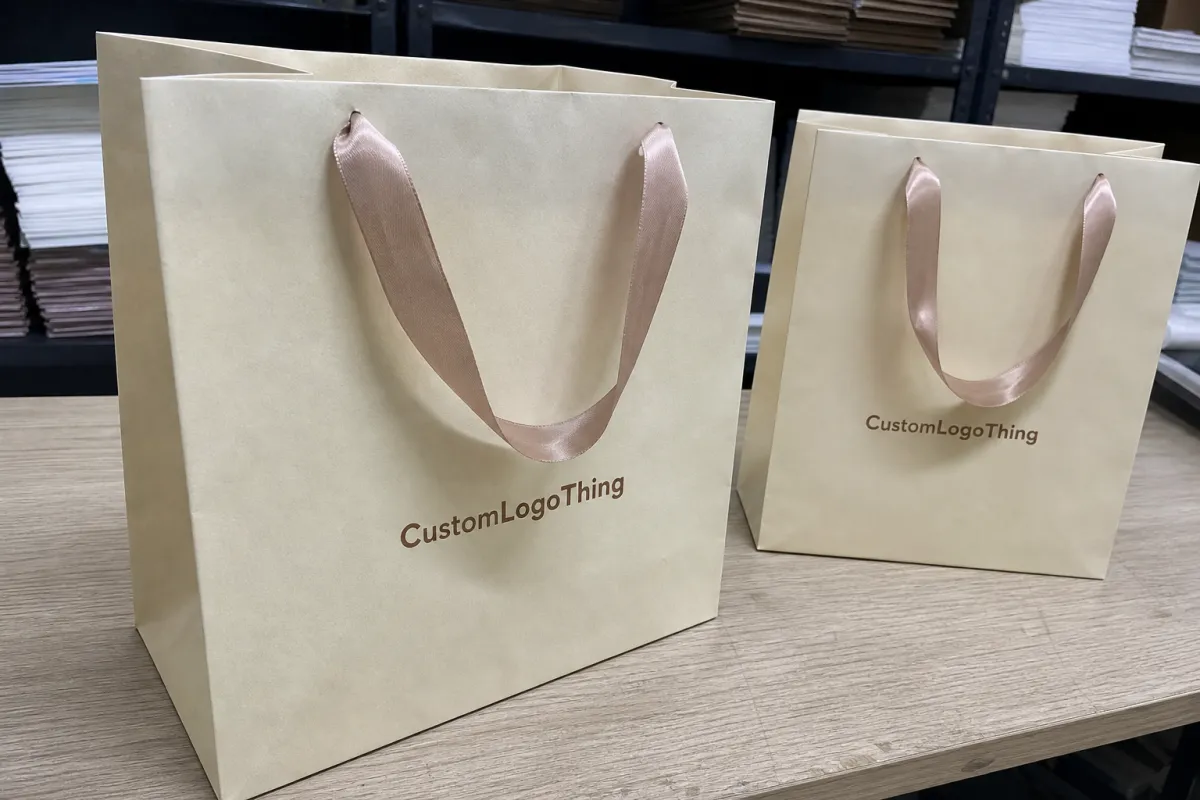
Ribbon-Handle Paper Bags sit between a plain shopping bag and a gift box. They look more refined than basic kraft, but they do not have to behave like luxury packaging. That middle ground is why they are common in event merchandising: a clean ribbon handle, a focused logo, and a sturdy paper structure can lift perceived value without pushing the whole order into a premium tier.
Small decisions add up quickly. A wider ribbon, reinforced top edge, full-bleed print, or soft-touch finish may seem minor on its own, yet each one changes the unit cost. A simple one-color logo with a standard ribbon can land in a very different price band from the same bag with foil accents and custom handle matching.
“We thought the bag was a small line item, then the handle spec and finish choices showed up in the quote.” That reaction usually marks the point where packaging becomes part of the merch strategy, not an afterthought.
For event merch, the bag carries presentation, brand memory, and logistics. If the contents are lightweight, a simpler build may be enough. If the bag holds apparel, a catalog, or a boxed item, the structure has to keep shape in hand and protect the contents as guests move through the venue.
A useful event merch ribbon handle paper bags Unit Cost Review begins with the use case, not the first quote. Buyers who define contents, audience, and distribution method early usually get a cleaner spec, fewer revisions, and a more reliable landed cost.
Paper stock, ribbon handles, and print areas explained
A ribbon-handle paper bag is built from a few parts that each affect performance and pricing. The body is usually kraft, white kraft, or coated board; the shape comes from side gussets and a folded base; the top edge may be reinforced to support the handle; and the exterior panels are where the branding has to do its work.
Natural kraft gives a sturdy, grounded look and pairs well with a one-color logo or restrained artwork. A smoother coated stock supports sharper type, cleaner solids, and richer color reproduction, which helps when the event calls for a more polished finish. Neither is automatically better; the right choice depends on the contents, the visual tone, and how much print coverage is actually needed.
Handle choice changes both comfort and appearance. A narrow satin ribbon reads delicate and gift-like; a wider grosgrain ribbon feels more substantial and often looks better on bags carrying heavier merch. Color matching is another lever. A handle that echoes the logo color can make the piece feel coordinated, while black, white, or natural tones keep the design quieter and can reduce delays tied to special matching.
If sustainability claims matter, ask for documentation early. For paper sourcing, FSC certification can be useful, but only if the supplier can support it with the correct material and chain-of-custody records. Buyers often get tripped up when the art calls for an FSC mark but the paper spec was never tied to it in the quote.
- Front panel: best for the primary logo and event name.
- Back panel: useful for sponsor marks, URL, or a short message.
- Gussets: worth printing only if the bag will be highly visible in motion or in event photos.
Simple layouts usually age better than crowded ones. A focused print area, one strong logo placement, and a clean handle color often produce a stronger result than trying to use every available square inch.
Size, strength, and finish specs that affect performance
Before anyone asks for a quote, the bag size needs to be set. Length, width, and gusset depth define what fits inside and how the bag stands in hand. A compact 8 x 4 x 10 inch bag may work for a folded T-shirt and a card, but a merch bundle with apparel, a catalog, and a boxed add-on needs more depth and better base support. Paper weight or board stiffness matters too, because a lighter sheet can feel fine empty and then collapse once loaded.
Strength should follow the contents, not the logo. If the bag is expected to hold one lightweight giveaway item, a simple build may be enough. If it will hold a hoodie, a notebook, and a bottle, the handle attachment, top fold, and base structure need to be specified like a working package. Good suppliers ask about load expectations because that one answer can change the recommendation entirely.
Finish decisions shape both the look and the production cost. Matte coatings soften the appearance and reduce glare in photos. Gloss coatings sharpen color and make solids pop. Soft-touch lamination feels upscale, but it adds cost and can slow production. Foil stamping and spot UV can stand out, yet they should be used carefully on event bags because the effect is strongest when the design is disciplined.
For transit and event handling, packaging format matters after production too. Most bags ship flat or nested in inner packs, often 50, 100, or 200 per bundle depending on size and assembly. That affects carton count, warehouse space, and the speed of on-site distribution. If the bags are going straight to a venue, ask how they will be packed and whether the cartons can be staged near the activation area without being crushed or rehandled too many times.
- Measure the contents first: apparel, booklets, boxes, and inserts all change the required footprint.
- Match strength to load: ribbon style and paper weight should follow the heaviest expected fill.
- Choose finish with purpose: matte, gloss, soft-touch, and foil each have different cost and handling impacts.
Event merch ribbon handle paper bags unit cost, MOQ, and quote math
This is where buyers usually find out whether the idea is easy or expensive. The biggest price drivers are quantity, paper stock, bag size, number of print colors, handle style, finishing steps, and any custom assembly needed for the ribbon attachment or reinforced top edge. In plain terms, a larger run spreads setup charges and labor across more units, while a short run keeps more of those costs on each bag.
MOQ matters because it sets the floor for how efficiently the job can be produced. Some suppliers will accept shorter runs, but the bulk pricing advantage usually shows up once the order reaches a point where printing and assembly can run in steadier batches. If you are comparing quotes, ask for at least two or three quantity breaks so you can see where the cost per piece starts to flatten.
| Build | Typical MOQ | Indicative unit cost at 5,000 pcs | Best fit | Notes |
|---|---|---|---|---|
| Natural kraft, 1-color print, standard ribbon | 1,000-2,500 | $0.78-$1.18 | Simple sponsor handouts and welcome kits | Good value when the design is clean and the load is light to medium |
| White coated stock, 2-color print, matching ribbon | 1,500-3,000 | $1.05-$1.65 | Sharper logos, retail-style event merch, press drops | Better print clarity, slightly higher setup and finishing cost |
| Premium stock, lamination, foil accent, upgraded ribbon | 2,500+ | $1.85-$3.25 | VIP kits and high-visibility gifting | More labor, more finishing steps, and more inspection time |
These numbers are planning bands, not fixed price tags. Freight, packaging, proofing, and carton handling can change the landed cost in ways that do not appear in a headline quote. Compare quotes on the same basis: same size, same paper, same print count, same handle style, and same shipping assumption. If one quote includes freight and another does not, the lower number is not actually lower.
Tooling fees can also appear if the bag needs a unique size, a custom die line, or a special attachment method. In some plants that is a die charge; in others it is folded into setup. The key is to ask early. A quote that looks strong at first can become less attractive once setup charges, plate fees, or custom assembly steps are added later.
A practical buyer move is to ask for the same bag quoted at 2,500, 5,000, and 10,000 pieces. Even if you do not need the largest number, the step change shows whether you are paying for a one-time setup penalty or for an efficient production run.
Production steps, proofing, and lead time from art to shipment
The cleanest jobs follow the same path: spec confirmation, artwork review, proof approval, production, inspection, packing, and shipment planning. If one of those steps is rushed, the whole timeline gets shaky. A good supplier will want exact dimensions, handle color, print count, and expected contents before sending a formal proof, because those details decide whether the layout works on the finished bag.
Artwork quality matters more than many teams expect. Vector files with clear line weights and outlined fonts reduce the chance of a last-minute correction. If the logo has to sit near the handle attachment or align with a trim line, the artwork should include clear placement notes. Otherwise, even a simple order can stall while the proof is rebuilt.
Lead time depends on complexity, but a straightforward ribbon-handle paper bag run often lands in the 12-18 business day range after proof approval, plus transit. Add time if the job includes foil, soft-touch lamination, custom ribbon colors, or tight color matching. Shipping method matters too. A truck shipment that arrives at a distribution center gives more control than a tight parcel delivery window with no buffer at the venue.
If the bags are part of a larger event program, ask how the cartons will be staged and whether any transit testing is relevant. For loaded kits or sensitive print finishes, the thinking behind ISTA distribution testing is useful because it reminds everyone that the package has to survive more than one move. That is especially true if the bags are nested, repacked, or sent to multiple destinations.
- Request the quote with final size, quantity, handle color, and print count.
- Review the proof for logo placement, panel orientation, and finish callouts.
- Approve production only after the spec sheet matches the event plan.
- Lock transit timing so the bags arrive before setup starts, not during it.
What a packaging partner should check before release
The right supplier does more than receive an order. They check whether the bag structure fits the contents, whether the art will print cleanly, and whether the handle attachment can support the intended load without awkward pulling or edge failure. Those checks are what keep an event from turning into rushed repacks at the loading dock.
Quality control should focus on the details that guests will feel and see: print registration, glue lines, handle attachment strength, edge finishing, panel squareness, and consistent bundle counts. One crooked stack is a nuisance; a batch with loose handles is a real problem. Buyers do not always see those issues in a proof, which is why a strong packaging partner verifies the physical spec before release.
Communication matters commercially as much as it does technically. Event schedules leave very little room for rework, and a slow answer on a proof can be the difference between an on-time handoff and an expensive rush shipment. A practical partner should tell you early if your target budget is tight, if a requested finish will push the timeline, or if a handle color choice will increase the MOQ.
- Spec validation: size, paper weight, handle length, and load target.
- Artwork check: bleed, safe area, logo orientation, and color expectations.
- Production control: print consistency, glue integrity, and handle attachment.
- Dispatch planning: carton counts, packing method, and delivery window.
That is the kind of direct help Custom Logo Things should provide for event buyers: straight answers on materials, budgets, and production limits.
What to send for a fast quote and a clean handoff
If you want a clean quote, send the exact bag size, quantity, paper preference, handle color, print count, delivery location, and event deadline in one message. The more complete the first request is, the less back-and-forth you will have later. Even a small missing detail, like whether the bag needs to hold folded apparel or a boxed kit, can change the recommendation and the pricing.
Artwork should be sent early, ideally in vector format, with clear brand color notes and a note on where the logo should sit on the front panel. If the design needs to align with a ribbon attachment or a gusset fold, say so plainly. That saves time during proofing and reduces the chance of a layout correction after the job has already been scheduled.
A simple approval sequence keeps the order moving: review the quote, confirm the proof, lock the quantity, and approve production release. If you are comparing options, ask for the same spec across two or three quantity levels so the budget conversation stays tied to real numbers, not guesswork.
For event merch, the best bag is usually the one that fits the contents cleanly, presents the brand with restraint, and stays inside budget without hidden surprises. If you keep the specs tight, check the proof carefully, and compare pricing at more than one quantity break, you can make a confident purchase and avoid the last-minute pressure that comes with event deadlines.
What drives event merch ribbon handle paper bag unit cost the most?
Quantity is usually the biggest lever because setup costs spread out as the run gets larger. Paper stock, handle style, and print complexity also move the price quickly, and freight should always be checked so the true landed cost is clear.
What MOQ should I expect for custom ribbon handle paper bags for events?
MOQ depends on the bag size, print method, and finishing requirements. Smaller quantities are possible, but the unit cost is usually higher on short runs, so it helps to request price breaks at a few volumes and compare the efficiency point.
How long is the turnaround for merch paper bags with ribbon handles?
Lead time starts after artwork and proof approval, not when the first quote is sent. Simple orders move faster than jobs with special finishes or custom handle colors, and shipping time should be built in so the bags arrive before event setup begins.
Which paper stock works best for premium event merch bags?
A smoother stock supports sharper printing and a cleaner premium look. Kraft stock gives a sturdier, more natural presentation and often pairs well with simple branding, so the best choice depends on the contents as much as on the appearance.
Can I approve a proof before the ribbon handle paper bag run starts?
Yes, proof approval should happen before production begins. Check logo placement, panel orientation, handle color, and quantity details carefully, because approval is the best place to catch mistakes that would be costly after printing.


