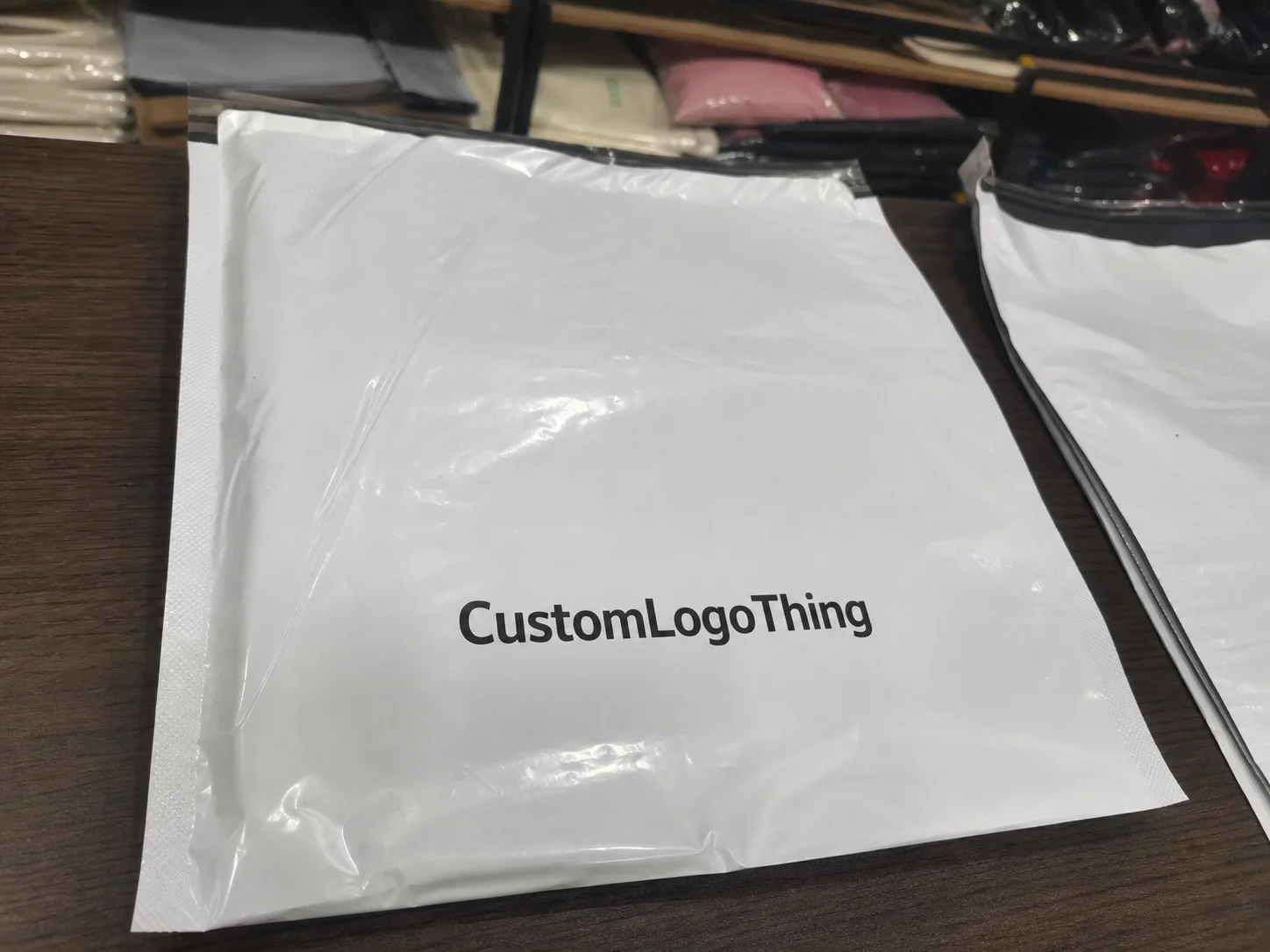
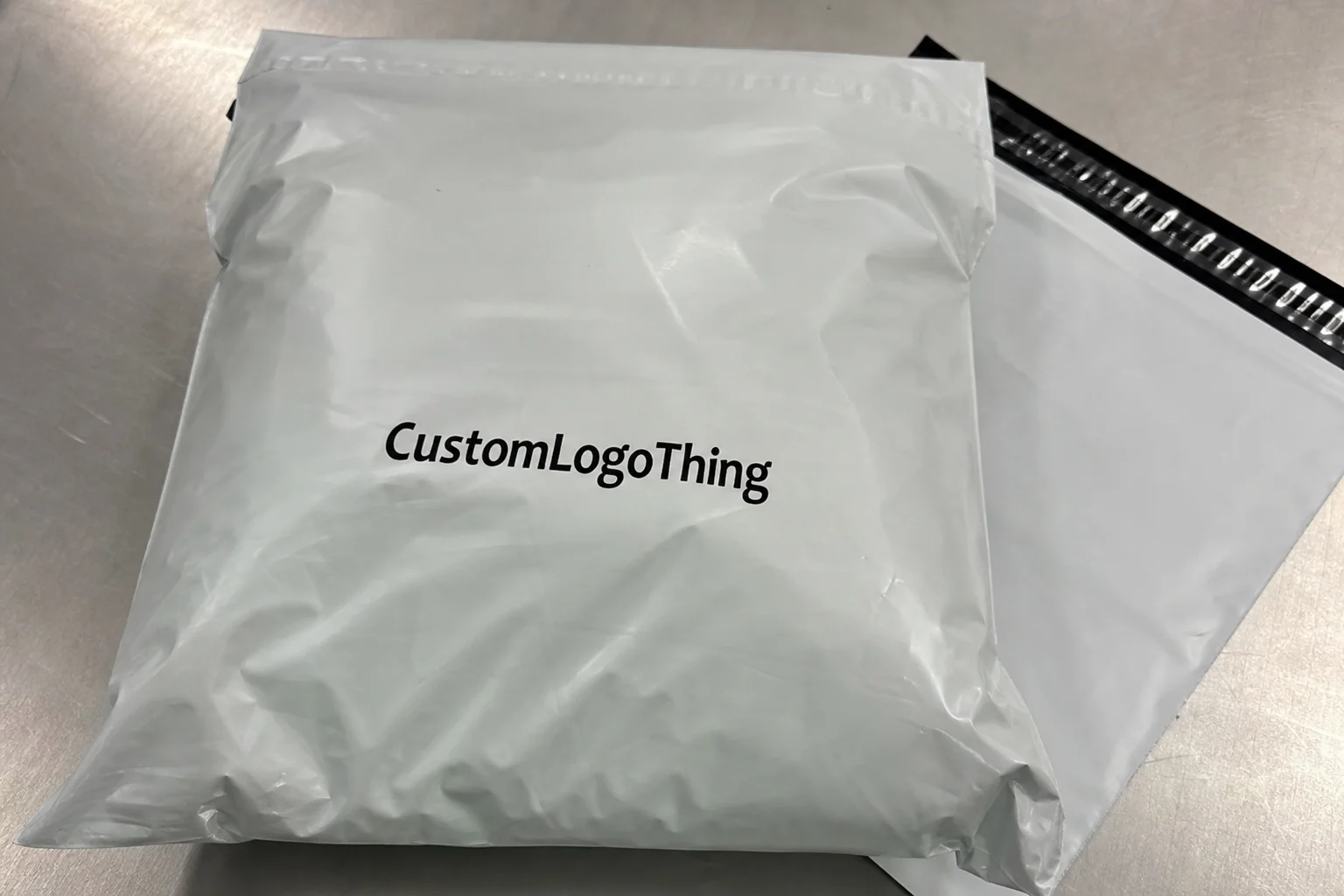
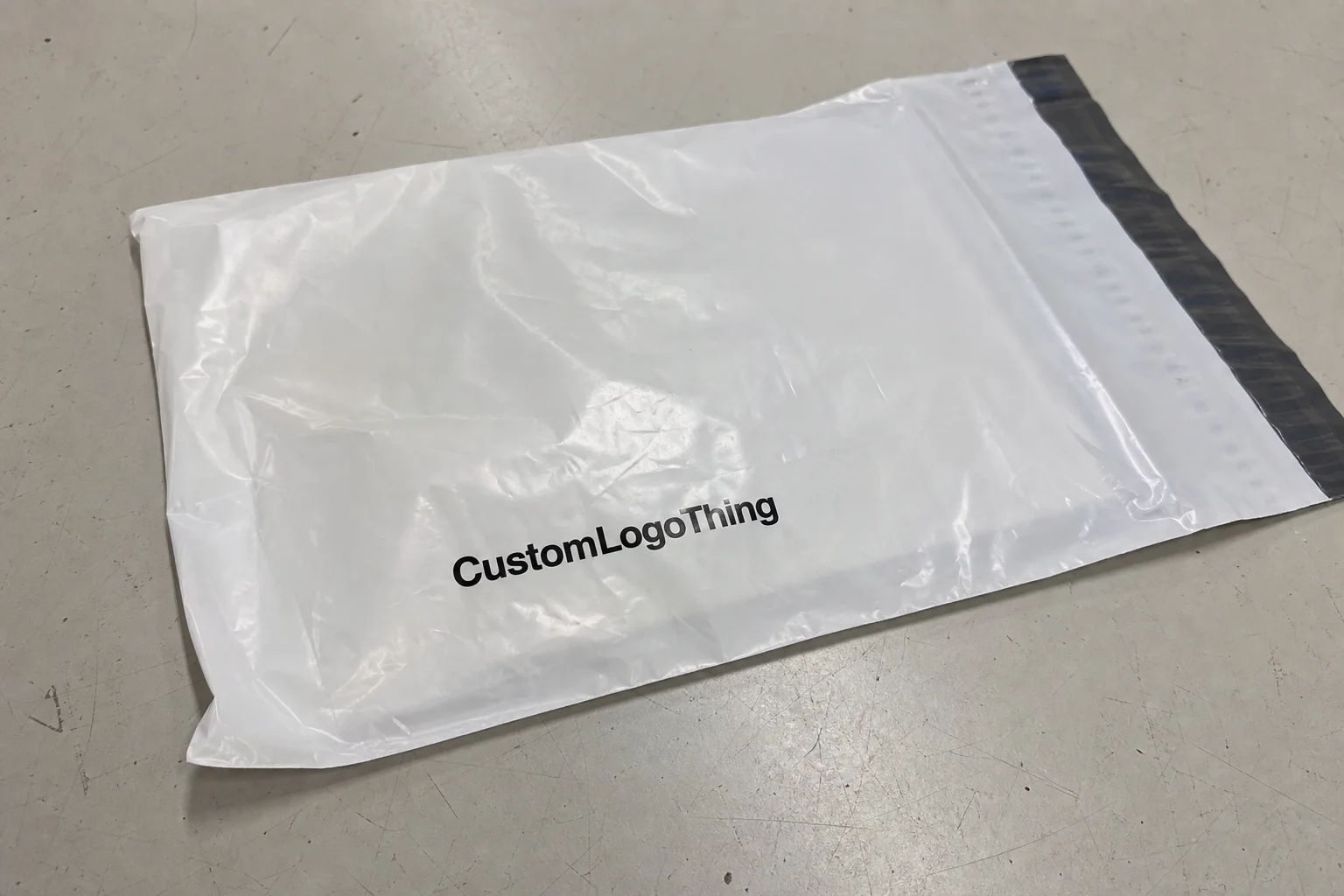
Buyer Fit Snapshot
| Best fit | Biodegradable Mailer Boxes for Small Business projects where brand print, material claims, artwork control, MOQ, and repeat-order consistency need to be specified before quoting. |
|---|---|
| Quote inputs | Share finished size, material target, print colors, finish, packing count, annual reorder estimate, ship-to region, and any compliance wording. |
| Proofing check | Approve dieline scale, logo placement, barcode or warning zones, color tolerance, closure strength, and carton packing before bulk production. |
| Main risk | Vague material claims, crowded artwork, missing packing details, or unclear freight terms can make a low unit price expensive after revisions. |
Fast answer: Biodegradable Mailer Boxes for Small Business: Film, Print, MOQ, and Carton Packing should be specified like a repeatable production item. The safest quote records material, print method, finish, artwork proof, packing count, and reorder notes in one written spec.
Production checks before approval
Compare the actual filled-product size with the drawing, then confirm tolerance on folds, seals, hang holes, label areas, and retail display edges. Reserve space for logos, QR codes, warning copy, and material claims before decorative graphics fill the panel.
Quote comparison points
Review material grade, print process, finish, sampling route, tooling charges, carton quantity, and freight assumptions side by side. A quote is only useful when the supplier can repeat the same color, closure quality, and packing count on the next order.
Biodegradable Mailer Boxes for Small Business can sound straightforward until you are standing over sample cartons in a warehouse and the difference between “eco-looking” and “actually suitable” hits you in the face. I’ve handled boxes with green claims that were mostly decoration: nice paper, vague language, and not much substance once you started asking about gsm, coatings, or what happens after disposal. If you want biodegradable mailer boxes for small business that protect products, photograph well, and protect margins too, the label alone won’t do the job. A 350gsm C1S artboard mailer with a water-based coating behaves very differently from a 250gsm recycled board sleeve, and the pricing can swing just as fast.
A lot of small brands get tripped up because they assume every eco package performs the same way. It doesn’t. A 300gsm kraft mailer with a water-based coating is a different beast from a molded fiber shipper, and both differ again from a standard mailer with a thin recycled-content claim printed on the face. Biodegradable mailer boxes for small business can be a smart move, but only if the material, structure, and shipping reality line up. That sounds dry, I know, but packaging has a talent for being both boring and expensive at the same time, especially when a $0.15 unit price turns into $0.46 after inserts, freight, and a 1,000-piece MOQ.
Biodegradable Mailer Boxes for Small Business: What They Are and Why They Matter
I still remember a visit to a converting line in Dongguan, Guangdong, where a sales rep tapped a brown box and said, “biodegradable.” I asked for the material spec. He handed me a sheet with no FSC number, no coating details, and no end-of-life guidance. That’s the packaging equivalent of calling a car “fast” without saying whether it has a 1.2L engine or a turbo V6. Biodegradable mailer boxes for small business should mean something measurable, not just “it looks earthy.” For a quote to be useful, I want to see board type, thickness, ink system, and the city of manufacture, whether that’s Dongguan, Ningbo, or Taicang.
Here’s the practical definition: biodegradable mailer boxes for small business are shipping or product mailers made from materials that can break down through natural biological processes over time. That can include kraft board, molded fiber, certain paper-based corrugated structures, and some plant-based or water-based coatings. “Biodegradable” is not the same as “vanishes in nature.” Heat, moisture, oxygen, microbes, and time all matter. Packaging is not magic. A box sitting in a dry closet in Chicago or Manchester is not going anywhere quickly. If a supplier promises biodegradation, ask for the testing basis, the expected environment, and the exact coating used.
These buzzwords get tossed around like confetti, so the differences deserve a clean breakdown.
- Biodegradable: Can break down by biological activity, but conditions matter and timelines vary.
- Compostable: Designed to break down into compost under specific conditions. Industrial composting is often required.
- Recyclable: Can be processed through a recycling stream if the local system accepts it.
- Paper-based with coatings: Still paper-based, but certain barrier layers can complicate recycling depending on the municipality.
That distinction matters because customers like simple labels, but municipalities do not care about your brand story. A paper mailer with a plastic-laminate coating may feel eco in hand, yet it may not fit a standard paper recycling stream in Seattle, Toronto, or Birmingham. I’ve seen brands pay for premium green claims only to discover their customers had no idea whether to toss the box in recycling, compost, or regular trash. That’s not branding. That’s confusion with a logo, and it gets worse when the box cost $0.88 per unit and the disposal instruction is still a guess.
For small businesses, biodegradable mailer boxes for small business do more than carry products. They shape the unboxing experience, reinforce trust, and signal that your brand pays attention. That matters for DTC apparel, subscription kits, candles, indie skincare, gifts, books, and handmade goods. Customers notice packaging before they read your origin story. A clean kraft mailer with sharp print and a precise fit can make a $24 product feel closer to a $48 one, especially if the box uses 2-color flexo on 350gsm board and closes with a 0.5-inch tab that actually holds.
Structure matters just as much as the label. I’ve seen a beautifully printed eco mailer collapse because the board was too thin, the locking tabs were too loose, or the crease lines were scored badly. If the box opens in transit or crushes at the corner, nobody cares that it was made from “natural fibers.” They care that the product arrived dented. I’ve rejected samples that looked perfect in photos but failed after three drops from 30 inches and a 24-hour compression test at 22 psi.
For brands building a broader packaging system, I often suggest pairing biodegradable mailer boxes for small business with other formats from Custom Packaging Products when the product mix changes by SKU. Some products need a rigid shipper. Some need a lighter mailer. One size does not solve everything, despite what optimistic sales decks pretend. A candle line in 8 oz jars may need a different insert than a 12-piece soap set, and a 10 x 8 x 3 inch mailer won’t always cover both without wasted space.
“The box was cute, but the lid popped open twice in testing. We fixed the tab design before we spent $9,600 on the full run. That saved the client from a very expensive mistake.” — my note from a Shenzhen sampling review
How Biodegradable Mailer Boxes for Small Business Work in Real Shipping Conditions
Biodegradable mailer boxes for small business are only useful if they survive the trip from warehouse to doorstep. That means compression, humidity, vibration, and the occasional box drop that would make any founder wince. In the real world, your packaging is not sitting in a lab with a clipboard. It’s riding in a truck, getting stacked under heavier cartons, and maybe sitting near a damp loading dock for 48 hours in Houston, Miami, or Liverpool. If the board only survives a clean, dry sample room, it is not ready for shipping.
Biodegradation itself happens over time, not instantly. A box needs the right environment to break down: heat, oxygen, moisture, and microbial activity. If you bury a paper-based mailer in a dry closet, it is not going to disappear like a movie prop. If you send a compostable mailer to a landfill, the result can be very different from what the label implied. That is why I always tell clients to ask for actual disposal guidance and certification rather than assuming every green claim means the same thing. A supplier in Xiamen might say “compostable,” but if the material is only certified for industrial composting, your customer needs to know that before they buy.
For performance, a few design choices matter more than people expect:
- Fold strength: Weak fold lines lead to tearing after repeated opening and closing.
- Locking tabs: Tabs that are too loose can open in transit; tabs that are too tight can shred the board.
- Board thickness: 1.5mm, 2.0mm, and 3.0mm structures behave very differently under pressure.
- Grease resistance: Important for candles, soaps, snacks, and beauty products.
- Print coverage: Heavy ink coverage can affect recyclability and sometimes the feel of the material.
I visited a packaging plant near Dongguan where a customer wanted full-bleed dark green graphics on kraft board. Pretty idea. Bad fit for the finish they expected. The heavy coverage showed fiber texture unevenly, and the ink rub was weak on the first batch. We changed the design to a two-color layout with a stronger logo lockup and saved them about $0.06 per unit on print complexity. Small number? Sure. On 20,000 pieces, that’s $1,200. Suddenly the “simple” design looks clever, especially when the original quote had a 14-day production window and the revised art file still shipped on time.
Biodegradable mailer boxes for small business can absolutely protect lightweight and premium items. They work well for apparel, candles, beauty products, books, and accessories. For fragile items like glass jars or ceramics, you usually need inserts, inner sleeves, or a stronger board grade. I’d never recommend a thin eco mailer for a 1.8 lb ceramic mug unless the transit test passed and the insert design actually held the item in place. For reference, a 3.0mm structure with a molded pulp insert performs far better than a 250gsm fold-flat sleeve when the parcel is handled roughly.
Moisture resistance is another place where brands get too optimistic. Kraft board with a water-based coating can do a decent job against short exposure, but it is not waterproof. If your fulfillment center operates in a humid climate, or your product might sit near cold-chain items, you need to test for scuffing, edge swell, and surface warp. That does not mean avoiding biodegradable mailer boxes for small business. It means testing them like your margins depend on it. Because they do. A 5% damage rate on 4,000 monthly orders is 200 replacements, and even at $7.50 per reship, that is $1,500 gone before you count labor.
For print, eco materials usually pair best with water-based inks, soy-based inks, or restrained spot-color printing. If you want a premium feel without wrecking the material story, keep the artwork smart. A clean logo, one accent color, and a strong type hierarchy often beat a busy design with six shades and a metallic effect that can’t be composted cleanly. If you need a plastic mailer for a certain product line, you might compare the sustainability and cost tradeoffs against Custom Poly Mailers before deciding where biodegradable makes sense and where it doesn’t. Sometimes the right answer is not “green everywhere,” but “right material for each SKU.”
For brands that care about formal testing, I like to reference general standards such as ISTA protocols for transit simulation and EPA recycling guidance for end-of-life considerations. Those don’t solve everything, but they give you a less dreamy way to evaluate packaging claims. A box that survives ISTA 3A-style handling in a 2,000-mile lane is a lot more convincing than a supplier promise typed into a PDF.
What to Compare Before You Buy
Biodegradable mailer boxes for small business look similar on a quote sheet until you start comparing specs line by line. Then the hidden costs show up like surprise guests. Unit price, setup fees, sampling, insert pricing, freight, and duty all behave differently depending on who you buy from and where the box is made. A supplier in Shenzhen may quote you $0.18 per unit for 5,000 pieces, while a domestic printer in Ohio may quote you $0.61 per unit for the same board and size, with a 7-business-day turnaround and no ocean freight. Those differences are not cosmetic.
Here’s the basic pricing anatomy I use when reviewing quotes:
- Material cost: kraft board, molded fiber, or coated paperboard.
- Printing method: flexo, offset, digital, or screen.
- MOQ: a 1,000-piece run can cost more per unit than 10,000 pieces by a wide margin.
- Dieline setup: some suppliers charge $50 to $180 for custom die tooling or file prep.
- Sampling: $35 to $120 for prototypes, plus shipping.
- Freight: often the sneaky line item that wrecks the “cheap” quote.
For example, I’ve seen biodegradable mailer boxes for small business priced at about $0.42/unit for 3,000 plain kraft pieces, $0.68/unit for 5,000 custom-printed pieces, and $1.05/unit for smaller runs with two-color print and inserts. Those numbers swing based on board thickness and destination. If the supplier says “best price” without your exact dimensions, stock type, print count, and ship-to ZIP code, that quote is basically decorative. A 10 x 8 x 2.5 inch mailer in 350gsm kraft board will not price the same as a 12 x 10 x 3 inch version in 400gsm recycled board, even before you add matte coating.
Lead time matters just as much. Domestic production may give you 7-12 business days after proof approval, while overseas production can land in the 20-35 business day range before freight. Sampling can take 3-10 business days, and revisions can add another week if your artwork file is messy. I’ve had clients lose two weeks because they submitted a 96dpi logo exported from a social media post. Painful. Totally avoidable. If the supplier is in Ningbo or Wenzhou, ask whether the quoted timeline includes plate making, proofing, and carton assembly, because “production” often means different things depending on who is talking.
Below is a simple comparison I often use with founders trying to decide how to buy biodegradable mailer boxes for small business.
| Option | Typical Unit Cost | Best For | Watch-Outs |
|---|---|---|---|
| Plain kraft stock mailer | $0.35–$0.60 | Early-stage testing, low-budget shipping | Limited branding, basic finish |
| Custom printed biodegradable mailer | $0.55–$1.10 | DTC brands, subscription boxes, premium unboxing | Higher MOQ, more artwork prep |
| Mailer with insert or divider | $0.85–$1.60 | Fragile or bundled products | More material, more freight weight |
| Molded fiber shipper | $0.90–$2.00 | Protective eco presentation | Heavier, sometimes pricier to mold |
Sizing strategy saves money fast. If your product is 8.25 x 5.5 x 1.2 inches, don’t order a box that is 10 x 7 x 3 inches because it “feels safer.” That extra void drives up material, void fill, and shipping weight. I’ve watched a client move from a box 30% larger than needed to one that fit within a 0.25-inch tolerance. Their outbound shipping cost dropped by $0.28 per order. On 8,000 orders, that is $2,240. No miracle. Just math, and a much better fit for a 350gsm board made in Taicang.
Branding also matters on kraft stock. Your logo will not look identical to what you see on white SBS board. Brown paper changes color perception. Soft neutrals, dark greens, deep black, and muted terracotta often look strongest. Metallics can work, but they get expensive and sometimes conflict with the sustainability story. If your design must stay premium, consider simple line art, blind embossing, or a matte one-color print that lets the texture do the talking. A 1-color print on 5,000 pieces can save around $0.09 per box compared with full-coverage art, which is a real difference when your margin is only 18%.
The cleanest quotes include exact dimensions, material grade, print colors, finish type, insert requirements, and destination. I’m picky about this because unclear specs are where small businesses lose money. Ask for line-item pricing, not just a single total. A supplier in Ningbo once quoted one client $4,900 for a run that looked cheap until we noticed shipping was not included and the insert board was a different thickness than requested. Cute trick. Not uncommon. Ask for the board spec in writing, such as 350gsm C1S artboard, E-flute, or 2.0mm greyboard, and make sure it matches the sample in hand.
Step-by-Step Process to Source Biodegradable Mailer Boxes for Small Business
Biodegradable mailer boxes for small business are easiest to source when you treat packaging like a process, not a panic purchase. I’ve seen brands wait until launch week, then scramble for boxes, then pay rush freight, then approve artwork at 11:43 p.m. because the founder is staring at a warehouse full of inventory. That is not strategy. That is adrenaline with a PO number. If you build in 3 weeks for sampling and 12-15 business days from proof approval for production, you have room to fix problems before they cost money.
Start with your product measurements. Measure the item with packaging already around it if you use tissue, sleeves, or inserts. Record length, width, height, and weight. If the product shifts during transit, note the amount of movement you can tolerate. For biodegradable mailer boxes for small business, even 0.25 inch can matter when you are trying to avoid a sloppy fit and keep postage efficient. A box that fits a 7.75 x 5.25 x 1.1 inch candle kit tightly can often shave 1 to 2 ounces off the parcel compared with a box that is a full inch larger in each dimension.
- Define the packaging goal: protection, branding, sustainability claims, or all three.
- List product specs: dimensions, weight, fragility, moisture sensitivity, and finish.
- Choose the right structure: mailer box, sleeve, tuck-top, molded fiber, or insert combo.
- Request 2-3 supplier quotes: same specs, same quantity, same destination.
- Review certifications: FSC, compostability claims, and material disclosures.
- Approve a sample: fit, print, strength, and customer experience.
- Test before scaling: drop test, stacking test, and moisture check.
Here’s a realistic timeline I’ve used with clients buying biodegradable mailer Boxes for Small Business: 2-4 days for quoting, 3-10 days for sampling, 2-5 days for revisions, 7-15 business days for production on a domestic run, and 20-35 business days plus freight if the order is overseas. If artwork needs resizing, dieline cleanup, or barcode fixes, add a few more days. I’d rather underpromise and ship early than give a fantasy date and then explain delays over email like a clown in a blazer. A factory in Shenzhen may tell you “two weeks,” but if the proof is not approved until Friday and the board is on backorder, that clock changes fast.
Quote requests should be precise. Don’t ask for “eco boxes.” Ask for 10 x 8 x 3 inch biodegradable mailer boxes for small business, 350gsm kraft board, water-based black print, one-color exterior, no interior print, 2,000 units, ship to 90210. That level of detail gets you real pricing. It also exposes weak suppliers fast. The ones who know what they’re doing will respond with a dieline, MOQ, sampling fee, lead time, and freight estimate. The vague ones will answer with “We can do custom.” Yes, obviously. So can my toaster, and it won’t tell me whether the unit price is $0.23 or $0.89.
Testing is where you protect yourself. A decent test plan includes a basic drop test from 24 to 36 inches, a fit check after the box is filled, and a moisture exposure review if your fulfillment area is humid. If you are shipping to customers, do a small pilot batch and ask 10 to 20 recipients for feedback. I care a lot about the opening experience because a customer can forgive a brown box if it feels intentional. They won’t forgive a box that arrives bent, scuffed, or impossible to open without tearing the flap. A pilot run of 200 to 500 units is often enough to catch the tab issue that would have wrecked 5,000 pieces.
One more thing: ask for certification documents if the supplier claims FSC or compostable materials. If they can’t produce paperwork, I assume the claim is soft until proven otherwise. I’ve been in enough factories to know that a sales brochure is not a certification file. If a supplier mentions FSC, ask for the certificate number and scope. That protects your brand if you ever need to substantiate your packaging claims, especially in the UK, EU, or California where sustainability language gets scrutinized quickly.
Common Mistakes Small Businesses Make with Eco Mailers
The biggest mistake I see with biodegradable mailer boxes for small business is buying the greenest-sounding option instead of the right one. Brands will chase “home compostable” or “plastic-free” claims without checking whether the package actually survives shipping. A box that fails transit is waste, no matter how noble the label sounds. A carton that crushes under 28 lb of top load in a warehouse is not helping the planet; it is just creating another replacement order.
Another common problem is ordering too early, too large, or too fancy. I once had a client spend $12,400 on a Custom Printed Mailer before they had validated their best-selling SKU. Half the inventory sat in storage for eight months because the product line changed. Ouch. If your monthly order volume is not stable, start with a lower MOQ or a modular design that works across multiple products. A 1,000-piece order can be sensible for testing, while 5,000 pieces only makes sense if the SKU has already proven itself.
Vague sustainability claims create trouble, too. If you say “compostable” on the box, your customer may expect home composting. If the material requires industrial composting, you need to be honest. That’s not just a legal risk. It’s a trust issue. Small businesses depend on trust more than huge brands do, because every box is part of your reputation. I’d rather see a clear line like “recyclable paper-based mailer, made in Dongguan” than a glossy claim with no disposal guidance.
Oversized boxes are another classic waste leak. They add material cost, increase void fill, and make the parcel look less premium. I’ve seen a subscription brand trim box dimensions by 0.75 inch in one direction and save enough on both corrugate and shipping that their per-order packaging cost dropped by $0.19. It doesn’t sound sexy. It’s still real money, and over 6,000 shipments that adds up to $1,140 before you count the smaller storage footprint.
- Do not choose a box size “just in case.”
- Do not approve artwork from a low-resolution Instagram logo.
- Do not assume a green coating equals compostable performance.
- Do not skip sample testing because the quote looked nice.
There’s also the branding mistake of making eco packaging look accidental. If the box has a dull logo, poor alignment, and too many fonts, it reads cheap. Natural material is not a pass for poor design. Biodegradable mailer boxes for small business can look premium with a restrained typeface, one strong icon, and precise print placement. Customers do not reward chaos because it was sustainably sourced. They notice the difference between a box that looks designed and one that looks assembled in a hurry at a facility in Ningbo.
Expert Tips for Better Branding, Better Costs, and Better Results
If I were optimizing biodegradable mailer boxes for small business for a client starting from scratch, I’d simplify the print first. Two colors usually get you 80% of the impact for a fraction of the cost. A full-coverage design can add setup complexity, proofing time, and print variation. Your logo does not need six effects to look expensive. It needs good spacing, strong contrast, and a box that closes properly. On a 5,000-piece run, moving from four-color print to two-color print can shave $0.11 to $0.17 per unit depending on the supplier and the city of production.
Standardize sizes whenever possible. One dieline that works for three SKUs can save you inventory headaches and negotiate better pricing. I’ve done runs where a client used one mailer size for a candle, a soap set, and a small apparel item with only an insert change. That approach lowered tooling complexity and kept their warehouse from turning into a nesting doll problem. A 9 x 6 x 2 inch box may serve better than three different boxes if your products vary by only half an inch in height.
Negotiate more than the unit price. Ask for sample credits, freight terms, and volume breaks. A supplier may shave only $0.02 off the unit price, but if they include sampling or reduce shipping by consolidating cartons, your total landed cost improves more than the headline number suggests. Landed cost is the only number I respect when we’re talking about actual profitability. A quote from Shenzhen at $0.31 per unit can still lose to a quote from Los Angeles at $0.39 per unit if freight, duty, and delays are lower.
For a polished look, texture helps. Kraft board has a natural warmth that can feel premium if you let it breathe. Use bold but simple typography. Keep the logo placement consistent. Match the box tone to the rest of your brand system. A matte black logo on unbleached kraft can look sophisticated without screaming for attention. And yes, this is a place where less really does do more. Rare for packaging, but there it is. A 350gsm C1S artboard with a matte aqueous coat can feel surprisingly upscale when the print is aligned within 1 mm.
One manufacturer in Shenzhen showed me a run of biodegradable mailer boxes for small business with a soft-touch water-based coating. The sample felt excellent, but the coating added cost and required tighter QC on scuff resistance. The client decided to use a plain matte kraft finish instead and put the budget into a better insert. Smart call. The box looked less “luxury brochure,” sure. The product arrived safer. Customers remembered the experience, not the coating chemistry, and the move saved about $0.08 per unit on a 4,000-piece run.
Here’s a quick decision shortcut I give founders:
- If the product is light and sturdy, choose a simple mailer.
- If the product is fragile, add an insert or stronger board.
- If branding matters most, simplify print and improve structure.
- If cost matters most, standardize sizes and reduce colors.
- If sustainability claims matter, verify material specs and disposal guidance.
Biodegradable mailer boxes for small business should work with your operation, not fight it. If your fulfillment team needs three extra folds, two extra inserts, and a prayer to close the carton, you picked the wrong style. The best packaging is the kind your team can pack quickly and your customer can open without damage. A 12-second packing process is better than a 27-second one if you are shipping 3,000 orders a month.
What to Do Next: Build a Packaging Plan That Actually Works
If you want biodegradable mailer boxes for small business that actually earn their keep, start by measuring what you ship now. List the product dimensions, the current box size, the shipping pain points, and the budget range you can tolerate per unit. I like seeing at least two or three reference packaging photos too, because “premium” means different things to different founders. To one person it means black on kraft. To another it means a molded fiber cradle and zero plastic tape. Add the SKU weight in grams, because a 280g product and a 980g product do not belong in the same box plan.
Then ask suppliers for quotes with exact numbers: quantity, dimensions, material, print colors, finish, destination ZIP or postal code, and whether inserts are required. If you leave out even one of those, the quote will drift. Then everyone gets annoyed. Then someone says the supplier misquoted, when really the brief was mushy. I’ve negotiated enough packaging deals to know the brief is half the battle. If your supplier is manufacturing in Dongguan or Yiwu, ask for the carton packing ratio too, because freight efficiency can swing the final landed price by more than $0.10 per unit.
Build a small test order plan. Start with a sample, move to a pilot run of 200-500 units, then expand only after you confirm fit, durability, and customer feedback. Track three things: damage rate, packing speed, and customer comments. If the box looks beautiful but doubles packing time, that is a problem. If it ships well but the unboxing feels flat, that is also a problem. Packaging has to do both. A pilot batch approved on Tuesday and shipped by the following Friday can tell you more than a polished mockup ever will.
For businesses that need broader packaging support, I’d keep the larger system in view. Biodegradable mailer boxes for small business may be the hero for some SKUs, while other products need alternative formats from Custom Packaging Products or even a different shipping approach entirely. A good packaging plan is not one box. It’s a set of choices that fit your products, your margins, and your warehouse reality. If your candle line ships from Ohio and your apparel line ships from California, the best box may differ by region.
Use biodegradable mailer boxes for small business to strengthen the brand story, not to decorate a bad logistics setup. If you Choose the Right structure, the right material, and the right supplier, you can get protection, presentation, and a cleaner footprint without paying for nonsense. That’s the sweet spot. And yes, it is possible. Just not if you buy based on a pretty sample and a vague promise. A supplier who can quote 5,000 pieces at $0.21 per unit, with proof approval-to-production in 12-15 business days, is worth more than a supplier with a nicer brochure.
One last note from my own experience: the best packaging decisions are usually boring in the spreadsheet and excellent in the customer’s hands. That’s the goal. Biodegradable mailer boxes for small business should make your operation simpler, your brand sharper, and your shipping less wasteful. If they do all three, you picked well. If the box is 350gsm, the print is restrained, and the freight from Ningbo lands on time, that is a better win than any glossy claim could ever be.
FAQs
Are biodegradable mailer boxes for small business actually compostable at home?
Not always. Some materials need industrial composting conditions, while others may only be biodegradable under specific environments. Always ask the supplier for certification, material specs, and disposal guidance before promising home compostability to customers. If they can’t show documentation, treat the claim carefully. A supplier should be able to tell you whether the board is 300gsm kraft, molded fiber, or a coated paper structure and where it was made, such as Dongguan or Xiamen.
How much do biodegradable mailer boxes for small business usually cost?
Pricing depends on size, material, print coverage, MOQ, and finish. Small custom runs often cost more per unit than plain stock boxes. Ask for quotes with the same dimensions and specs so you can compare real numbers, not marketing fluff. For many brands, the landed cost matters more than the unit price alone. As a rough example, 5,000 custom-printed pieces may come in at $0.15 per unit for plain stock and closer to $0.55 to $0.90 per unit once printing, inserts, and freight are included.
What products are best packed in biodegradable mailer boxes?
They work well for apparel, accessories, candles, skincare, books, and lightweight premium goods. For heavy or breakable items, you may need reinforced structure or inserts. Always test fit and transit durability before rolling out the packaging widely, especially if your product weight is above 1 lb. A 2.0mm or 3.0mm board with a molded pulp insert often performs better than a thin fold-flat mailer for glass, ceramics, or mixed bundles.
How long does it take to order biodegradable mailer boxes for small business?
Sampling can take several days to a couple of weeks depending on complexity and supplier location. Production and freight can add more time, especially for custom printed orders. Build in extra time for design approval, revisions, and testing so you do not pay rush fees or accept a box that has not been fully checked. In many cases, it is typical to see 12-15 business days from proof approval for domestic production and 20-35 business days for overseas manufacturing before freight.
How do I make my biodegradable mailer boxes still look premium?
Use clean typography, strong logo placement, and intentional color choices. Keep the design simple so the natural material does part of the branding work for you. Focus on structure and unboxing experience, because premium packaging is not just print; it is the whole presentation, from closure strength to the first 5 seconds after opening. A matte finish on 350gsm C1S artboard or a well-printed kraft board often looks more refined than a crowded design with too many effects.