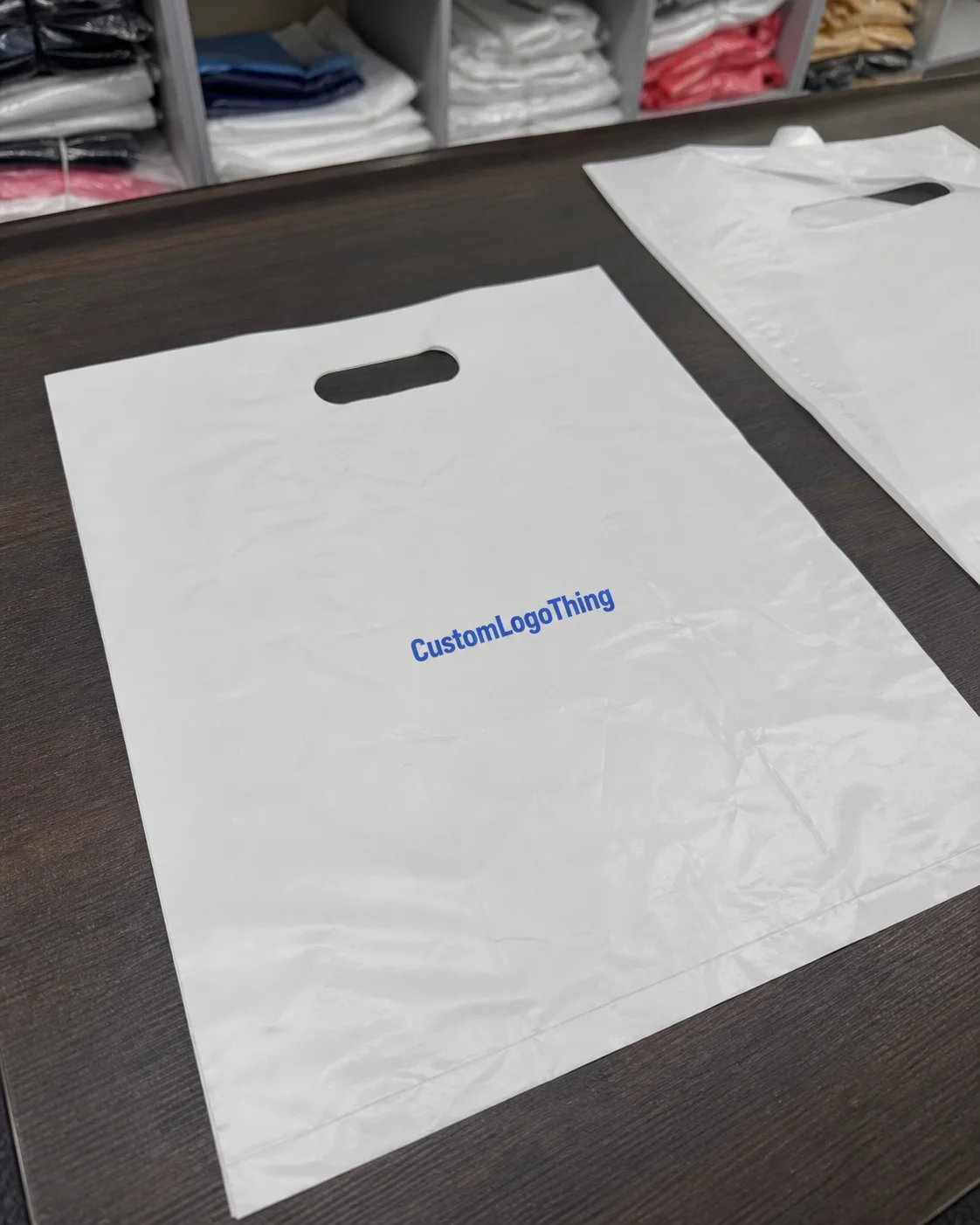
Buyer Fit Snapshot
| Best fit | biodegradable mailers comparison which type fits for packaging buyers comparing material specs, print proof, MOQ, unit cost, freight, and repeat-order risk where brand print, material, artwork control, and repeat-order consistency matter. |
|---|---|
| Quote inputs | Share finished size, material target, print colors, finish, packing count, annual reorder estimate, and delivery region. |
| Proofing check | Approve dieline scale, logo placement, barcode or warning zones, color tolerance, and any recyclable or compostable wording before bulk production. |
| Main risk | Vague material claims, crowded artwork, or missing packing details can create delays even when the unit price looks attractive. |
Fast answer: Biodegradable Mailers Comparison Which Type Fits: Film, Closure, Print, and Fulfillment should be specified like a repeatable production item. The safest quote includes material, print method, finish, artwork proof, carton packing, and reorder notes in one written spec.
What to confirm before approving the packaging proof
Check the product dimensions against the actual filled item, not only the sales mockup. Ask for tolerance on folds, seals, hang holes, label areas, and retail display edges. If the package carries a logo, QR code, warning copy, or legal claim, reserve that space before decorative graphics fill the panel.
How to compare quotes without losing quality
Compare board or film grade, print process, finish, sampling route, tooling charges, carton quantity, and freight assumptions side by side. A lower quote is only useful if the supplier can repeat the same color, closure quality, and packing count on the next order.
I’ve Seen Biodegradable Mailers Fail and Succeed on the Same Line
The first time I really understood the value of a biodegradable mailers comparison, I was standing on a packing line in Newark, New Jersey, with two mailers that looked almost identical at arm’s length: same matte finish, same light green tint, same 10 x 13-inch size, and both quoted at roughly $0.19 per unit on a 5,000-piece order. One tore clean through a seal test after a few cycles on the bar sealer set at 165°C, and the other held together through conveyor sorting, a 36-inch drop test, and the kind of final-mile handling that usually shows up as corner crush and seam split. That’s the trap with a biodegradable mailers comparison—the outside can fool you if you don’t look at resin structure, seal behavior, and the actual shipping lane, especially when the bags arrive from a converter in Foshan or a domestic film line in Ohio. I still remember thinking, “Well, that was a very expensive way to learn that two bags can wear the same outfit and still behave like completely different people.”
Here’s the plain-English version: biodegradable mailers are shipping mailers made with materials or additives designed to break down under certain environmental conditions over time, often after industrial composting at 55–60°C or in controlled aerobic environments with 50% to 60% moisture. That sounds simple, but in practice the phrase covers a wide range of structures, from plant-based blends and starch-filled films to PBAT-based flexible films and PLA-coated constructions produced in places like Shenzhen, Suzhou, and Dongguan. A proper biodegradable mailers comparison has to separate biodegradation, compostability, and recyclability, because those are not the same promise, and buyers get into trouble when they treat them like they are. Honestly, I think the packaging industry has made this harder than it needs to be with all the cheerful green words floating around like everything is the same flavor of eco.
In my experience, the real comparison frame has five pieces: material, performance, end-of-life claims, cost, and supplier transparency. If one of those is missing, you’re not really doing a biodegradable mailers comparison; you’re just reading a sales sheet from a converter in Yiwu or a broker in Los Angeles. And frankly, that’s how people end up with mailers that pass a marketing meeting but fail a warehouse test. I’ve seen that movie more than once, and it never gets a better ending.
I’ve seen operations teams focus only on the word “biodegradable” and ignore seal strength, moisture resistance, or print adhesion. That’s a mistake, especially for custom logo packaging where scuffed ink or ghosting can make a brand look careless. A good biodegradable mailers comparison should answer practical questions: Will the bag seal at 160°C without curling? Will it survive a cold dock at 45°F? Can the logo stay crisp after a week in a humid trailer? Those details matter far more than the label on the front panel, whether the bag was produced in Jiangsu or a plant outside Chicago. I’m not being dramatic here; a package that arrives looking tired can make a customer feel like the whole brand took a nap on the job.
I’m keeping the discussion tied to factory-floor realities rather than marketing language. You’ll see how I run a biodegradable mailers comparison in the field, what the common material types actually do, where the hidden costs sit, and how to compare suppliers without getting lost in vague sustainability claims. If you ship apparel, accessories, kits, or returns, that approach saves time and, more often than not, saves money too. It also saves you from that special kind of headache where everyone keeps saying “the sample looked fine” and nobody can explain why the production run turned into a mess.
How Biodegradable Mailers Actually Work
A serious biodegradable mailers comparison starts with the material itself. The most common structures I’ve handled on lines in Shenzhen, Suzhou, and a few Midwest converter plants are blends using PBAT, PLA, starch additives, or combinations of those with other bio-based components. PBAT gives flexibility and tear resistance, PLA brings plant-based content but can be brittle on its own, and starch additives can help initiate breakdown in the right conditions. The exact recipe matters. Two mailers can both be called biodegradable, yet one may flex like a standard poly mailer while another cracks when temperatures drop during winter distribution. I’ve had a roll of PLA-rich film behave beautifully in a warm room and then act like it had personally been offended by the cold once it reached the dock.
What people often miss is that decomposition depends on the disposal environment. Heat, oxygen, moisture, microbial activity, and time all play a role. A mailer designed for industrial composting at around 55–60°C in a controlled aerobic setting will behave very differently from one tossed into a landfill or a backyard compost bin at 20–30°C. That’s why a smart biodegradable mailers comparison always asks: where is it supposed to break down, and under what conditions? If nobody can answer that clearly, the claim is doing a lot of heavy lifting it probably shouldn’t be doing.
Industrial composting and home composting are not interchangeable. Industrial systems hold temperature, moisture, and aeration within tighter ranges, and that’s where certifications become more than a badge. I’d rather see a buyer ask for proof against standards such as ASTM D6400, ASTM D6868, or EN 13432 than rely on a brochure that says “eco-friendly” in three different shades of green. For reference, you can review packaging-related guidance from EPA recycling and materials resources and broader packaging standards coverage at ISTA.
On the production side, the process is familiar to anyone who has worked a blown-film or cast-film line. Resin blending comes first, then extrusion into film, then sealing into bag form, followed by printing, slitting, and final inspection. I’ve stood next to a converting line in Dongguan where a 2 mil structure looked perfect until we checked seal peel values and found one side drifting because of uneven cooling on a 180-meter-per-minute run. That’s the kind of issue a biodegradable mailers comparison needs to catch early. A mailer can be compostable or biodegradable on paper and still be a poor choice if the seal margins are inconsistent or the print plate doesn’t hold registration. The machine doesn’t care about your sustainability statement; it cares about resin behavior, temperature, and timing (which, annoyingly, is usually how the truth shows up).
The break-down claim also does not tell you anything about shipping protection. A mailer can be designed to fragment or biodegrade under the right disposal conditions, but that does not guarantee it will protect a 12-ounce garment set with a hard hang tag or a boxy accessory with sharp corners. In practice, the best biodegradable mailers comparison weighs both sides at once: end-of-life behavior and transit performance. If one side is weak, the package system is weak.
I remember a client packing light knitwear in a PLA-rich mailer that looked beautiful on the shelf but shrank slightly after sitting near a warm south-facing loading dock in Atlanta for six hours. The solution wasn’t to abandon sustainability altogether; it was to move to a different film structure with better dimensional stability and a slightly higher gauge, going from 50 microns to 55 microns. That’s the sort of detail that separates a real biodegradable mailers comparison from a checkbox exercise. The customer never sees the loading dock, of course, which is probably for the best—there’s nothing glamorous about a dock that bakes film rolls like they owe it money.
Key Factors in a Biodegradable Mailers Comparison
The first factor in any biodegradable mailers comparison is material composition, because that drives everything else. Ask exactly what the film is made from: PBAT percentage, PLA content, starch loading, mineral filler, or any bio-based blend ratio the supplier is willing to disclose. If a vendor can’t explain the structure in concrete terms, that’s a warning sign. I’ve had suppliers send samples labeled “plant-based” with no meaningful backing data, and those products usually evaporate the moment you ask for certificates, test reports, or even a basic technical data sheet. Funny how the word “green” gets shy the second paperwork walks into the room.
Certification comes next. Not every product marketed as biodegradable meets a compostability standard, and not every compostable item will satisfy your customers’ disposal expectations. A proper biodegradable mailers comparison should ask for third-party documentation, product code references, and the exact scope of the certification. If the supplier has FSC paper inserts or documentation tied to paper components, you can validate those through FSC, but don’t assume the paper label or insert tells you anything about the film structure itself. I’ve seen teams get distracted by one eco claim and forget to verify the other three, which is a bit like admiring the paint job on a truck while the engine is making a noise that sounds legally concerning.
Strength is where many purchasing teams get surprised. Film gauge matters, but gauge alone is not enough. In a real biodegradable mailers comparison, I look at tensile performance, puncture resistance, seam strength, elongation, and how the material behaves under cold or humid conditions. A 50-micron mailer in one PBAT-heavy blend may outperform a 60-micron mailer in a more brittle blend. That’s why “thicker equals stronger” is too simple. On one line I visited in Suzhou, a 3.0 mil structure failed because the seal window was narrow and the team was running the jaws a little too hot at 175°C; a 2.8 mil film from another supplier passed because its thermal range was wider and the resin blend was more forgiving. That little difference saved the operator from a very long afternoon of swearing under their breath.
Printability matters too, especially for custom logo packaging buyers who want the package to carry the brand well. A biodegradable mailers comparison should include ink adhesion, dot sharpness, color consistency, and scuff resistance after transit abrasion. Some biodegradable surfaces take flexographic ink beautifully, while others need surface treatment or a primer to keep the artwork from smearing. If you’re ordering Custom Printed Mailers, confirm whether the press uses flexo, gravure, or digital, because each one changes setup cost, lead time, and visual repeatability. A neat logo means nothing if it scratches off in a tote conveyor. And yes, I have seen a supposedly premium print job come out looking like it lost a fight with a cardboard box.
Moisture barrier performance is another big one. Certain biodegradable film structures can be more sensitive to humidity, extended warehouse storage, or temperature swings than conventional poly. That doesn’t automatically disqualify them, but it absolutely belongs in the biodegradable mailers comparison. Ask for water vapor transmission data when available, or at least practical feedback on shelf life, humidity exposure, and seal retention after storage. I once saw a subscription client in Indianapolis store mailers near an overhead steam line in a packing area; the outer cartons were fine, but the film roll edges picked up enough moisture to affect unwind and static after 10 days on site. Small issue, big nuisance. The kind of nuisance that makes a perfectly calm supervisor start rubbing their temples by 9:15 a.m.
Cost is the last major factor, and it has more layers than the raw unit price. A serious biodegradable mailers comparison should include minimum order quantity, printing plates or tooling fees, freight, carton counts, waste rate, and any certification-related documentation cost. For example, a stock white biodegradable mailer might land at $0.18/unit for 5,000 pieces, while a custom-printed version could move to $0.24–$0.31/unit depending on size, ink coverage, and whether the supplier needs a new gravure cylinder set. That difference can look painful until you compare it with damage reduction, stronger brand perception, and lower complaint volume. I’ve watched buyers wince at a three-cent increase and then quietly spend twice that fixing preventable damage later.
Honestly, many buyers compare biodegradable mailers the way they compare commodity poly bags, and that’s the wrong lens. A proper biodegradable mailers comparison includes operational reality: does the vendor answer technical questions, share spec sheets promptly, and disclose whether the product is industrial-compostable only? If the answers are vague, you should expect surprises later. Vague answers are usually the packaging equivalent of a shrug in a lab coat.
How Do You Compare Biodegradable Mailers?
In a practical biodegradable mailers comparison, start by matching the mailer to the product, then test it under the same conditions your warehouse actually uses. That means the same sealer temperature, the same packout weight, the same handling path, and the same transit risk. A mailer that survives a desk-side sample test but fails on the packing line is not a winner, no matter how nice it looks under fluorescent lights. I’ve learned that comparing biodegradable mailers is less about marketing language and more about making the material prove itself where the tape gun lives.
The clearest method is a side-by-side trial with real merchandise. Compare seal quality, puncture resistance, scuffing, print adhesion, moisture behavior, and disposal claims in writing, then score each candidate against your operational needs. That kind of biodegradable mailers comparison gives you a usable result instead of a vague opinion, and it helps teams avoid choosing a product that feels right but behaves wrong. A sample that reads well on a spec sheet can still be awkward in the hand, and awkward is expensive when you buy it by the thousand.
How to Compare Options Step by Step
Start your biodegradable mailers comparison by defining the use case with as much precision as you would use for a packaging spec sheet. Apparel, soft goods, cosmetics kits, subscription bundles, and returns packaging do not need the same film behavior. A T-shirt in a flat pack asks less of the bag than a rigid accessory with a zipper or a folded box with a sharp corner. If you do not define the product, you cannot define the right mailer. I’ve learned that the hard way after watching a team approve a “general purpose” bag that was, in practice, only general at failing two different use cases.
Next, write down the test criteria before any samples arrive. I’ve seen buyers open a sample box, give it a quick look, and then declare one option “better” because it felt thicker in the hand. That is not a test. In a real biodegradable mailers comparison, I want seal performance, drop resistance, tear resistance, print clarity, odor, flexibility, and the exact sustainability claim reviewed in writing. If your warehouse seals at 155°C and your samples were tested at 185°C, the results won’t mean much. You wouldn’t compare two cars by revving one in the driveway and calling it a road test, so the same logic should apply here.
Request at least three sample packs and run them side-by-side in the same packing setup. Same table. Same sealing equipment. Same operator. Same transit lane if possible. One beauty of a disciplined biodegradable mailers comparison is that it strips out excuses. If sample A fails at the top seal after 20 units and sample B survives 200, the difference is visible even to a nontechnical buyer. I’ve done this exercise with a client shipping folded sweaters in Raleigh, and the winner was not the nicest-looking bag; it was the one that tolerated repeated opening, resealing, and modest overfill without seam creep. The prettiest option lost because beauty, tragically, does not stop punctures.
Documentation is where many suppliers separate themselves. Ask for certifications, technical data sheets, test methods, and end-of-life instructions in the same package. A useful biodegradable mailers comparison compares apples to apples, meaning the same thickness, same dimensions, same print coverage, and same certification scope. If one vendor quotes a 35-micron film and another quotes a 55-micron film, those are not direct competitors; they are different products serving different use cases. I know that sounds obvious, but after a few procurement meetings, obvious things become surprisingly rare.
A scorecard helps more than people think. I like to weight the decision across four columns: protection, sustainability claim, price, and availability. Then I add a fifth column for brand fit if the product is customer-facing. That simple structure turns a messy biodegradable mailers comparison into a procurement tool. You can score seal integrity out of 10, print quality out of 10, and disposal clarity out of 10, then keep the notes attached for future reorders. Procurement teams love that because it reduces debate six months later when someone asks why a bag was approved. I love it because it keeps everyone from rebuilding the same argument from scratch like it’s an annual hobby.
One client meeting still sticks with me. We were comparing a compostable mailer, a starch-based mailer, and a conventional recycled-content poly mailer for a direct-to-consumer clothing brand in Portland. The compostable option won on brand story but lost on puncture resistance in humid conditions; the starch-based option cost less but had odor and curl issues; the recycled-content poly bag was the easiest operational fit but missed the company’s disposal goals. The final decision wasn’t dramatic. It was just honest. That’s the value of a grounded biodegradable mailers comparison: it reveals tradeoffs before they hit customer service.
Pricing, MOQ, and Timeline: What Buyers Should Expect
Pricing in a biodegradable mailers comparison usually comes down to raw material cost, bag size, thickness, custom printing, and production volume. PBAT and PLA-based structures often cost more than standard poly because the resin blend itself is pricier and the processing window can be tighter. If you add custom printing, you may also need plate fees, cylinder fees, or setup charges depending on the print method. For a small run, that setup cost can Matter More Than the unit price. I’ve seen a low-volume project where the tooling line item made everyone blink twice and then stare at the spreadsheet like it had insulted them personally.
Minimum order quantities vary sharply. Stock mailers might start at 1,000 or 2,000 pieces if the supplier already has inventory, while custom-printed biodegradable mailers can easily require 5,000, 10,000, or even 20,000 pieces per size or design. A well-run biodegradable mailers comparison always asks about MOQs before design approval, because a beautiful layout is useless if the order volume is too high for the buyer’s cash flow. I’ve seen brands approve artwork first and then discover the MOQ was double what they expected. That creates delays and awkward re-budgeting, which is a polished way of saying “everyone gets annoyed in a meeting nobody wanted.”
The timeline usually starts with artwork approval, then material confirmation, then sampling if needed, then extrusion or film allocation, printing, curing, finishing, packing, and freight booking. A straightforward order might move in 12–15 business days after proof approval if the film is standard and the supplier already has the right resin on hand. A more complex custom job can stretch to 18–25 business days if the vendor needs a new die line or a specific certification review. In a biodegradable mailers comparison, lead time matters because sustainability claims can’t compensate for missed shipment windows. A beautiful eco-friendly bag that arrives after peak season is just an expensive piece of optimism.
Several things slow projects down. Unclear artwork files are a classic one; low-resolution logos or missing Pantone references create press-room delays. Special sizes also take time because the sealing knives, bag length, and gusset settings all need to be verified. If the first samples show weak seams or excessive curl, the project may need a second trial run. That’s normal, not a disaster. It just means the supplier is doing the job properly rather than rushing a weak structure into production. I would always rather lose a day in sampling than spend a month apologizing for a batch of split seams.
Budgeting should focus on landed cost, not only unit cost. In a real biodegradable mailers comparison, I’d ask what the full carton-to-dock number looks like after freight, duties, pallets, and overage are included. Then I’d compare that with the hidden savings from fewer damaged shipments, fewer replacements, and a stronger brand story on the outbound package. Sometimes a mailer that costs 3 or 4 cents more per unit is still the cheaper choice once returns and customer complaints are counted.
I had one apparel client in California that wanted the lowest possible Price Per Unit and was ready to switch to a thinner compostable bag. We ran the numbers, and the thinner option saved about $420 per month on paper. But because it added a small increase in torn seams and crushed returns, the replacement cost and service labor wiped out the savings by nearly two-to-one. That’s a textbook biodegradable mailers comparison lesson: the cheapest bag is not always the cheapest system. The invoice is only the beginning; the rest shows up later in the operational bill.
Common Mistakes Buyers Make With Biodegradable Mailers
The biggest mistake I see in a biodegradable mailers comparison is assuming every biodegradable mailer is compostable, or that every compostable mailer will break down in a backyard pile. Those claims are not interchangeable. If a supplier says “industrial compostable,” that usually means controlled heat and moisture are required. If a buyer hears “biodegradable” and imagines it disappearing anywhere, disappointment is almost guaranteed. That mismatch between language and reality causes more confusion than any packaging spec should ever be allowed to cause.
Another mistake is choosing the thinnest film possible to chase a lower price. Thin film can work, but only if the product is lightweight and the shipping route is gentle. If the package passes through aggressive sorting, stack compression, or rough final-mile handling, a too-thin bag can split at the seam or puncture at the corners. A realistic biodegradable mailers comparison balances gauge with actual risk, not just with cost per thousand. I know the temptation is there—everyone likes to see the price drop—but a cheaper bag that fails is just a faster way to buy a second bag.
Storage conditions are often ignored. Heat and humidity in a warehouse can alter film behavior over time, especially with certain biodegradable structures. I’ve walked into distribution centers in Dallas where rolls were stored next to dock doors or in mezzanines without climate control, and the result was curl, static, and sloppy feeding on the packing line. That matters because a biodegradable mailers comparison is not only about shipment day; it is about the weeks or months before use. The box in the corner may look innocent, but if the room is basically a sauna with shelving, the film will let you know.
Skipping supplier documentation is another avoidable error. If a vendor cannot provide materials data, test references, or disposal guidance, you may have a problem with compliance and with customer trust. A brand that claims sustainability needs a paper trail. In a serious biodegradable mailers comparison, I want that paperwork before any large order goes live. Otherwise, you’re left explaining claims with a smile and a hope, and hope is not a filing system.
Too many teams test with empty bags or dummy fillers and call it done. Real product matters. A mailer that holds a T-shirt in a sample test may fail when the same bag is packed with an insert card, a zipper pouch, and a cornered accessory. That’s why a practical biodegradable mailers comparison must use real items, real weight, and real shipping lanes. I’d rather see a messy but honest trial than a clean test that proves nothing except that empty air is very polite to packaging.
Expert Tips for Choosing the Right Biodegradable Mailer
My first tip is simple: match the structure to the product, not to the trend. Soft apparel, for instance, can often use a lighter flexible film, while items with corners or abrasion points may need a tougher blend or a slightly thicker gauge. That sounds obvious, but I’ve watched many teams select a pretty mailer based on finish alone, then wonder why it tears at the fold line. A good biodegradable mailers comparison starts with product geometry. The package should serve the item, not the other way around.
Second, ask for lab data and field data. Lab data tells you the bag meets a standard; field data tells you whether it will hold up on your line, in your warehouse, and through the carrier network. I like to see both. If a supplier gives you an ASTM reference but cannot explain how the film behaved during transit testing, the biodegradable mailers comparison is incomplete. I’ve learned to trust the supplier who can tell a clear story about the testing conditions, not the one who says “it passed” and then stares at the floor like the floor might rescue the conversation.
If branding matters, test the exact print setup you plan to buy. A logo can look sharp on one film and muddy on another, even if both are technically biodegradable. Ink density, drying time, and surface treatment all affect the result. I’ve seen beautiful artwork blur because the film surface had a slight waxy feel that needed a different ink system. A disciplined biodegradable mailers comparison catches that before a 10,000-piece run is printed. That kind of mistake is annoying enough on a 500-piece trial; on a full order, it becomes a small administrative tragedy.
Do not ignore the rest of the package system. Inserts, labels, tape, and even warehouse handling routines affect the sustainability story. If the mailer is compostable but the pack includes a non-compostable foam insert and a plastic label pouch, the system is only partly aligned. A smart biodegradable mailers comparison looks at the whole outbound kit, not just the outer bag. Packaging decisions like to pretend they live in little boxes, but they all end up in the same customer’s hands.
Try a small pilot before a full rollout. I’ve watched a 2,000-piece trial reveal a minor but annoying sealing issue that would have become a major headache at 50,000 pieces. A pilot also gives customer service time to hear feedback, especially if the bag has a different feel, sound, or look than the previous package. That’s the kind of practical reality a biodegradable mailers comparison should respect. It’s also the cheapest way to find out whether a change feels thoughtful or just slightly weird.
What to Do Next After Comparing Your Options
Once you’ve narrowed the field, build a simple decision matrix with your top three candidates and score them on protection, sustainability claim, price, and availability. That turns the biodegradable mailers comparison into something your operations, procurement, and brand teams can actually use. I like to keep the notes short but specific: “passed 36-inch drop test,” “logo scuffed after 5 rub cycles,” “industrial compostable only,” or “MOQ too high for monthly usage.” Those notes save time later. And they stop the familiar six-month-later rehash where everyone acts like the first review never happened.
Order samples with the exact size, thickness, and print setup you expect to run. A 10 x 13-inch unprinted sample tells you very little if your production bag is 12 x 16 inches with a two-color logo and a side seal. Real-world accuracy makes the biodegradable mailers comparison much more meaningful. If possible, run the test on the actual packing line with the actual staff who will use it. I’ve seen a design pass perfectly in a conference room and then behave like a stubborn sock on the actual line.
Ask for written documentation on composition, certification, and disposal guidance, then store it in one internal file that procurement and customer service can both access. If someone on your team gets a sustainability question from a retailer or end customer, they should not have to chase down a sales rep for basic facts. A clean biodegradable mailers comparison ends with clarity, not confusion. If your team can’t find the answer in under a minute, the system is still too loose.
If one option looks strong, do a controlled pilot shipment before making a full switch. Ship to a small customer segment or a specific region, then review damage rates, customer comments, and warehouse feedback after a few weeks. That’s the most honest test there is. In my experience, the companies that do this well end up with better packaging decisions and fewer expensive reversals. The companies that skip it usually end up scheduling “urgent review” meetings, which is corporate language for “we could have avoided this if we’d been less rushed.”
Finally, document the approved choice in your SOP. That way procurement, operations, and customer service are all speaking the same language, and your next biodegradable mailers comparison starts from a known baseline instead of from scratch.
“The best biodegradable mailer isn’t the one with the loudest eco claim. It’s the one that ships cleanly, prints well, and has paperwork that stands up when a buyer asks hard questions.”
If you’re building out a broader packaging program, it can help to review related options on Custom Packaging Products and compare them with Custom Poly Mailers so you can see what changes when the material, print method, and disposal story shift. I’ve found that side-by-side thinking makes the biodegradable mailers comparison much easier for internal teams to understand. It also keeps the conversation grounded in actual tradeoffs instead of vibes, which, as much as I wish otherwise, is not a technical specification.
For buyers who want to keep the conversation practical, I usually recommend one final check: ask whether the mailer will still make sense six months from now when volume changes, customer expectations shift, or a retailer updates its packaging requirements. A strong biodegradable mailers comparison is not just about what looks good today; it’s about whether the choice still holds up after repeat orders, new product launches, and seasonal warehouse stress. I’ve seen good products fail because they were chosen for a moment, not for a program.
Biodegradable Mailers Comparison: decision table
| Decision area | Best fit | What to verify | Risk if skipped |
|---|---|---|---|
| Board or flute choice | Product protection, stacking strength, and shipping distance | Caliper/flute, crush resistance, and sample fit | Weak structure or oversized cartons increase damage and freight cost |
| Print and finish | Retail presentation, unboxing, and shelf recognition | Color proof, coating, scuff resistance, and logo placement | A good dieline can still look cheap if finish and color drift |
| Packing method | Hand packing, ecommerce fulfillment, or retail-ready cartons | Inner count, master carton, label position, and warehouse handling | Good packaging slows operations if pack-out is ignored |
FAQs
What should I compare first in biodegradable mailers comparison?
Start with material type, certification, and real shipping performance before looking at price. Then compare seal strength, puncture resistance, and whether the mailer fits your product size and warehouse workflow. If you can, test a 50-micron and a 55-micron sample side by side on the same sealer at 160–170°C so you can see the difference under identical conditions.
Are biodegradable mailers the same as compostable mailers?
No, biodegradable and compostable are not automatically the same claim. Compostable mailers usually need specific certification and disposal conditions, while biodegradable mailers may break down differently depending on the environment. A supplier in Ningbo might label a film biodegradable, but if it only meets industrial composting conditions at 55–60°C, that is a narrower claim than many buyers expect.
How do I know if a biodegradable mailer is strong enough for shipping?
Request samples and test them with your actual product, sealing equipment, and shipping method. Check for tear resistance, seam integrity, and how the film handles corners, moisture, and compression. For a practical benchmark, run 20 to 30 units through a 36-inch drop test and inspect the seal after each pass.
Why are biodegradable mailers often more expensive?
They can use higher-cost resin blends, specialty additives, and certified structures that raise raw material and production costs. Custom printing, smaller minimum order quantities, and compliance documentation can also increase the final landed price. A stock order might be around $0.18 per unit for 5,000 pieces, while a two-color printed version can move into the $0.24–$0.31 range depending on size and setup.
How long does it take to order custom biodegradable mailers?
Lead time depends on artwork approval, certification checks, sampling, and production scheduling. A simple order may move in 12–15 business days after proof approval, while a custom size or new print setup can take 18–25 business days. If the supplier is finishing the run in a plant in Suzhou or Dongguan and also needs a fresh cylinder set, add a few more days for finishing and freight booking.
After twenty years around converters, packing tables, sealing jaws, and carrier pickups, my honest view is that a biodegradable mailers comparison only works when it stays rooted in real operations. If you compare the claims, the test data, the print quality, and the disposal path all at once, you’ll make a much better decision than you would by chasing the lowest sticker price or the greenest-looking label. That’s how you choose a mailer that protects the product, respects the brand, and still makes sense on the dock.