A poly mailer looks simple until the calendar gets tight. Stationery poly mailers lead time matters when a brand is timing a product launch, subscription shipment, school supply drop, influencer kit, office stationery restock, or seasonal paper goods release. The bag is not just a bag at that point. It is one piece in a chain of print setup, material scheduling, converting, packing, freight, receiving, and warehouse staging.
Stationery poly mailers are lightweight polyethylene shipping bags used for notebooks, planners, greeting cards, stickers, branded paper goods, small office supplies, and other flat products that need moisture resistance without adding much outbound shipping weight. A 2.5 mil to 3 mil mailer often works well for paper goods when the fit is right, the seams are strong, and the adhesive closes consistently. Push the fit too tight, though, and sharp notebook corners will find every weak point.
Lead time usually means the working time from approved artwork and confirmed order details to finished goods ready to ship. Total delivery time is broader. It includes quoting, sampling, payment, production queue, freight transit, customs if applicable, receiving, and internal movement to the packing area. That distinction prevents a surprising number of missed launch dates.
Why Stationery Poly Mailers Lead Time Catches Buyers Off Guard
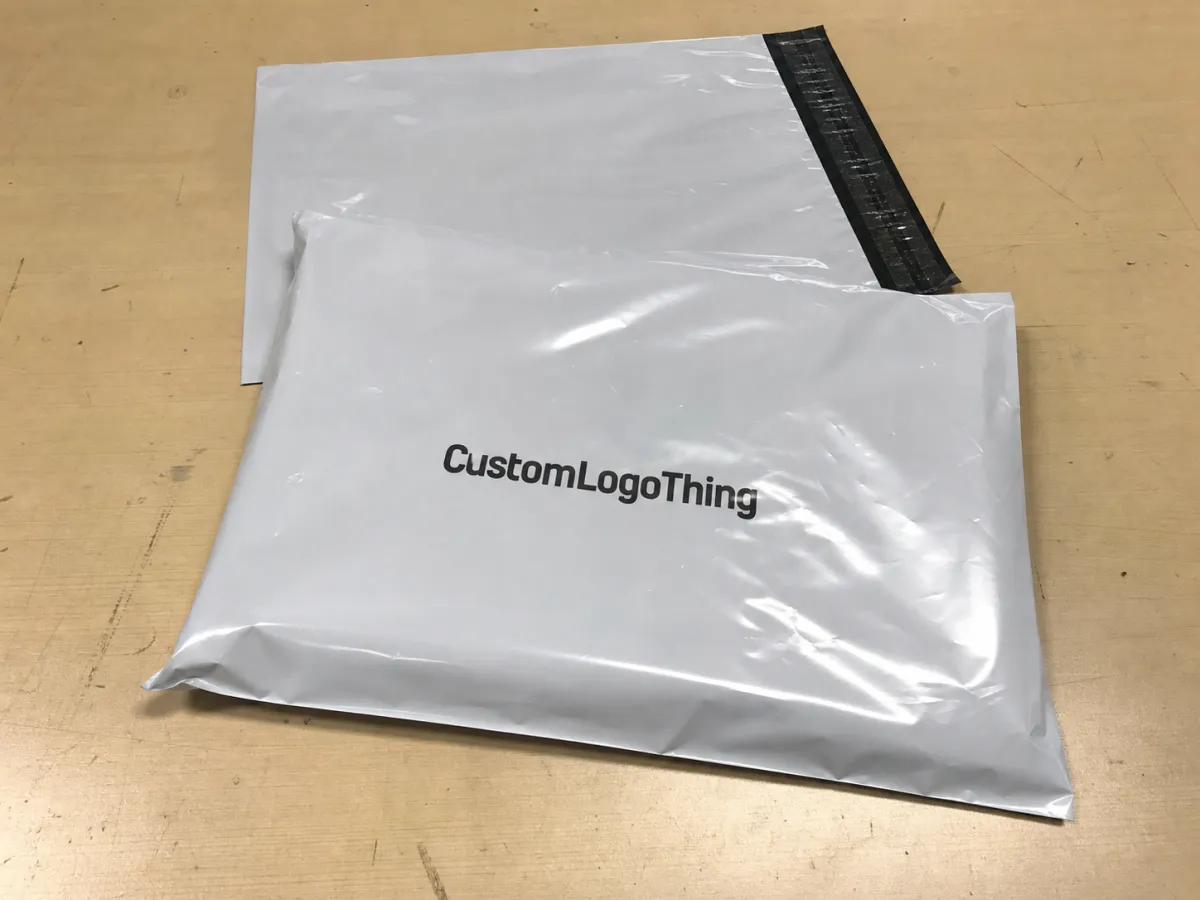
Buyers often expect custom mailers to behave like stock packing supplies. Pick a size, add a logo, place the order. Actual production is less tidy. A printed mailer is a small manufacturing job with gates: artwork approval, film availability, print setup, ink drying or curing, converting, packing, final inspection, and freight booking.
The machine time may be fast. The coordination around the machine is usually where the schedule slips.
A one-color repeat order on an approved dieline can move quickly. A first order with a new Pantone target, full-coverage artwork, a return strip, and recycled-content film may need extra review before it reaches the production schedule. That difference is not supplier drama; it is risk control.
Here is the detail many teams miss: they count from the day they Request a Quote. A supplier usually counts stationery poly mailers lead time from the point where the order is clean enough to schedule. That means the size, gauge, closure, quantity, print file, carton marks, ship-to address, and payment terms are confirmed.
Practical rule: treat custom poly mailers as a print-and-convert job, not a simple bag purchase. Small decisions made early can protect a launch date; small unanswered questions can quietly add three to five business days.
If your team needs mailers on the packing table by a fixed date, build the schedule backward from that in-hand date. Include receiving, opening cartons, inspection, and internal distribution. A shipment that arrives at the dock late Friday may not help a Monday morning packing run.
How Custom Poly Mailer Production Works From Film to Finished Bag
Custom mailer production usually starts with polyethylene film. The supplier may extrude film from resin or use pre-made film rolls, depending on order size, color, gauge, and print method. LDPE is common because it has a soft, flexible hand feel. Co-extruded film can improve strength, opacity, and puncture resistance without making the bag feel overly rigid.
For stationery, common gauges often fall around 2.5 mil to 3.5 mil, though the right choice depends on product weight, corner sharpness, privacy needs, and fulfillment handling. A stack of greeting cards behaves differently from a spiral-bound planner with wire edges. Film color matters too: white gives clean print contrast, gray or black improves privacy, and custom-tinted film may require higher minimums or longer material scheduling.
Printing comes next. Flexographic printing is widely used for larger custom runs because it is efficient once plates are made. Gravure can suit very high-volume work where image consistency across long runs matters. Digital or short-run printing, where available, may help lower quantities or test runs, but not every supplier offers it for every size, film structure, or adhesive format.
The film surface is typically treated so ink can adhere properly. After printing, the material moves into converting, where it is cut, sealed, folded, and packed. Features such as self-seal adhesive strips, perforated tear strips, double adhesive for returns, side gussets, suffocation warnings, writable panels, barcode zones, and high-slip surfaces all add steps. Some add only a little time. Others require different material, tooling, or quality checks.
A clean spec sheet prevents the factory from pausing the job to confirm basics. Include finished width and length, usable inside dimensions, flap depth, film gauge, print orientation, closure type, carton pack count, case weight target, and whether the mailer must run through automated fulfillment equipment.
For buyers comparing formats, Custom Poly Mailers can be a useful starting point because the same core bag structure can be adjusted for office stationery, ecommerce paper goods, kits, or flat retail merchandise.
Key Factors That Change Turnaround Before You Approve the Order
Several factors can stretch or tighten the schedule before the order is even approved. Quantity, bag size, film thickness, print coverage, number of ink colors, repeat artwork, special closures, sampling requirements, production queue, packing format, and freight method all matter. They do not matter equally, which is why vague quotes are risky.
Artwork quality deserves special attention. Vector logos, Pantone or CMYK references, bleed, safe zones, barcode clearance, and correct print direction help prepress move quickly. Screenshots, flattened low-resolution files, or unclear color targets can create two or three proof rounds before anyone is comfortable releasing production.
Color can slow the job as well. A dense flood coat, metallic-looking effect, bright brand color on dark film, or heavy black coverage may require an ink drawdown or a different film choice. Polyethylene is not coated paper. Ink sits differently, opacity changes under light, and surface treatment affects the final result.
A repeat order is usually faster because plates, dielines, artwork history, and packing instructions may already be confirmed. Usually. Change the size from 10 x 13 inches to 12 x 15.5 inches, move from one adhesive strip to a returnable double strip, or switch from 2.5 mil to 3.5 mil film, and the reorder may need a fresh production review.
Capacity matters in plain terms. Launch calendars, holiday fulfillment, back-to-school stationery drops, and end-of-quarter purchasing can tighten schedules. Waiting until inventory is nearly gone leaves little room for proofing, freight delays, or a quality hold.
Process and Timeline: What Happens Week by Week
A realistic timeline is better than a vague promise. The flow usually runs like this: inquiry, spec confirmation, quote, artwork review, proof approval, deposit or purchase order, material scheduling, print setup, production, converting, quality checks, packing, final balance if required, shipping, and receiving.
For quoting, the supplier needs the bag size, usable inside dimensions, film gauge, quantity, print colors, closure type, destination, and any compliance or sustainability preference. If recycled content is requested, ask whether the supplier can document the percentage and whether the film appearance changes. Recycled-content blends can show slight color or speckle variation, depending on source and structure.
Proofing can be simple or involved. An electronic proof may be enough for a repeat one-color logo. A pre-production sample or color drawdown may be worth the extra time for premium stationery brands where the mailer is part of the customer’s first impression. For packaged goods sold through formal distribution, standards such as ISTA test procedures may also influence how the total shipping pack is validated, even if the mailer itself is only one component.
| Stage | Typical Time Range | What Can Slow It Down | Buyer Control Point |
|---|---|---|---|
| Quote and spec review | 1-3 business days | Missing size, gauge, quantity, or destination | Send packed product dimensions and target in-hand date |
| Artwork proofing | 2-7 business days | Low-resolution files, unclear colors, late revisions | Provide vector artwork and Pantone or CMYK references |
| Sampling or drawdown | 5-15 business days | Exact color matching or new film structure | Use samples where color, fit, or opacity risk is high |
| Production and converting | 10-25 business days after approval | Heavy print coverage, special closures, peak capacity | Freeze specs before plates or setup are released |
| Freight and receiving | 2 days to several weeks | Slow freight method, customs, split deliveries | Compare landed cost against the in-hand deadline |
Delays often enter through small gaps: incomplete dielines, undecided quantity breaks, missing shipping addresses, unconfirmed carton labeling, payment holds, or changes after plates are made. A buyer may approve a proof and still miss the practical detail that the logo is upside down for the way staff load the mailer on the packing bench.
The safest schedule is built backward from the day the mailers must be used. If a subscription drop packs on a Monday, receiving cartons late Friday is not comfortable. Give yourself time to open cases, inspect print, confirm adhesive performance, and stage inventory where packers can actually reach it.
Cost, MOQ, and Unit Pricing Tradeoffs for Stationery Mailers
Unit cost is shaped by material weight, size, film gauge, print method, number of colors, ink coverage, order volume, closure style, packing requirements, setup costs, and freight. The cheapest-looking per-bag number is not always the lowest landed cost once cartons, pallets, split shipments, and storage are included.
Minimum order quantities exist for a reason. Printing plates, machine setup, material rolls, color matching, and startup waste need to be spread across enough bags to make production efficient. Very small custom runs carry a higher unit cost because the setup work is nearly the same whether the run is 1,000 bags or 10,000 bags.
As a rough planning range, a simple one-color custom mailer around 10 x 13 inches might land near $0.18-$0.28 per unit at 5,000 pieces, depending on gauge, print coverage, setup charges, and freight. Smaller quantities, heavy coverage, heavier film, or special closures can push that higher. These are planning ranges, not guarantees; resin costs, freight rates, and order timing move.
Several tradeoffs deserve attention before approval:
- Higher quantity: Often lowers unit cost, but ties up cash and storage space.
- Thinner film: Saves material cost, but may scuff, stretch, or tear around notebook corners.
- Fewer print colors: Can reduce setup time and plate cost, but may weaken brand recognition.
- Return strip: Adds customer convenience, but adds material and converting complexity.
- Slow freight: Lowers freight cost, but can add days or weeks to total delivery time.
First-time orders may include plate, tooling, proofing, or file preparation costs. Reorders may avoid some of these charges if the design and dimensions stay unchanged. That is one reason a stable spec matters: it protects both budget and stationery poly mailers lead time over multiple purchase cycles.
If you are still shaping the full packaging system, review broader Custom Packaging Products as well. A rigid mailer, insert card, tissue wrap, or label choice can change the size and stress points of the outer poly mailer.
Common Mistakes That Add Days to a Custom Mailer Order
The most common buyer-side mistake is requesting a quote with only a product photo or rough outside dimensions. Later, the team discovers that the notebook stack, bubble wrap, insert card, or return label changes the actual mailer size needed. That creates a revised quote, a revised dieline, and sometimes a revised material estimate.
Usable space matters. A 10 x 13 inch mailer does not behave like a rigid 10 x 13 envelope. Film thickness, flap depth, product height, and seal placement reduce the comfortable packing area. For flat stationery, a little working room helps staff pack at speed without stretching seams or wrinkling the bag.
Another common mistake is approving artwork without checking the real packing direction. If staff insert products from the short side but the design is oriented for the long side, the logo may appear sideways in customer unboxing photos or carrier scans. The proof looked right on a screen; the packed mailer tells the truth.
Material choices can create operational trouble even when the printed bag looks attractive. Film that is too thin may tear around sharp paperboard corners. Film that is too transparent may expose private order contents. A surface that is too slick may reduce label adhesion. A bag that is too stiff may slow hand-packing by a few seconds per order, which becomes real labor at 800 shipments a day.
Schedule mistakes hurt just as much: changing Pantone colors after proof approval, adding a return strip late, switching destination warehouses, or waiting to confirm carton marks can interrupt a production slot. Once a job loses its slot, it may sit behind other approved orders. That delay often feels sudden to the buyer, but from the production side it is a basic queue problem.
Expert Tips for Faster Reorders Without Sacrificing Quality
The best way to shorten stationery poly mailers lead time is to make the reorder boring. Boring is good here. Same size, same gauge, same closure, same artwork, same carton count, same ship-to instructions.
Keep a packaging control file. It does not need to be fancy. A spreadsheet and a folder can work if the information is complete. Include the approved dieline, final artwork, Pantone or ink references, film gauge, finished bag dimensions, flap depth, adhesive type, carton pack count, case weight target, barcode area, supplier order number, and notes from the first delivery.
Set reorder triggers based on weekly usage plus production and freight time, not just bags left in stock. If you use 1,200 mailers per week and total replenishment can take 5 to 7 weeks, a reorder trigger at 2,000 bags is too late. Seasonal peaks matter too. A back-to-school drop may double outbound volume for several weeks.
Standardize where possible. Using one or two mailer sizes across several stationery SKUs can simplify inventory, reduce setup variation, improve purchasing power, and make emergency reorders easier. The fit still needs to be safe; oversized bags can wrinkle, waste material, and look careless in the customer’s hands.
Request a drawdown or production sample when the risk justifies the time. Good candidates include new brand colors, high-coverage artwork, recycled-content film, retail-sensitive packaging, or any design where color, opacity, and surface finish affect customer perception. For fiber-based components in the same packaging set, buyers may also ask about responsible sourcing standards from groups such as the Forest Stewardship Council.
After the first run, collect real packing feedback. Does the adhesive close easily? Do labels stick? Are seams stressed at the corners? Can staff pack at the expected rate? Are customers receiving clean, intact mailers? Those notes turn the next order into a cleaner reorder instead of another guessing exercise.
Build a Reorder-Ready Spec Before You Request Quotes
Before asking for quotes, measure the actual packed stationery bundle. Include notebooks, planners, card sets, inserts, protective wrap, and any return paperwork. Decide the target inside fit, choose film thickness and color, confirm whether the mailer needs one adhesive strip or a returnable double strip, and mark where shipping labels and barcodes will sit.
Prepare print files early if possible. Send vector logo files, brand color references, desired print placement, bleed instructions, and required safety text. Suffocation warnings may apply depending on bag size, opening, film thickness, and market, so do not leave that question until the proof stage.
Ask suppliers timeline questions that produce usable answers:
- What starts the production clock?
- How long does proofing typically take for this print method?
- Does the quoted lead time include packing and inspection?
- What happens if artwork changes after proof approval?
- Which freight options match my required in-hand date?
Compare quotes by landed cost and schedule confidence, not just unit price. A clear quote should state quantity, material, print method, setup charges, carton count, shipping assumptions, sample steps, and proofing requirements. If one quote is cheaper but vague about artwork approval, freight, or carton marks, ask more questions before awarding the order.
Custom mailer timing becomes easier to manage when specs, artwork, approval path, and reorder trigger are decided before inventory is low. Do that work once, keep it documented, and the next order has a much better chance of arriving before the packing table starts asking uncomfortable questions.
FAQ
How long is stationery poly mailers lead time for a first custom order?
A first custom order usually takes longer than a reorder because the supplier must confirm size, film, print method, artwork, proofing, and setup before production begins. The clock often starts after approved artwork, confirmed specs, payment or purchase order, and production scheduling, not on the day you first ask for a quote. If color matching, a physical sample, special adhesive, or heavy print coverage is required, build in extra time before the finished mailers are ready to ship.
Can I shorten custom stationery mailer turnaround if I already have artwork?
Yes. Clean vector artwork, an approved dieline, confirmed Pantone or CMYK references, and no design changes can remove several common approval delays. Reusing the same size, film gauge, closure, and print layout from a prior order is usually faster than changing specifications. The fastest path is to submit the final file, exact quantity, ship-to address, and required in-hand date together so the supplier can quote and schedule accurately.
What information is needed to quote stationery poly mailers accurately?
Provide bag width, length, flap style, usable inside fit, film thickness, film color, order quantity, print colors, print coverage, closure type, and destination ZIP or port. Share what will go inside the mailer, including the packed thickness of notebooks, planners, cards, inserts, or protective wrap, so the supplier can check fit and seam stress. Include any special requirements such as recycled content, return strip, suffocation warning, barcode zone, carton labeling, or automated packing compatibility.
Do higher MOQs reduce the lead time for printed poly mailers?
Higher MOQs usually reduce unit cost more than lead time because setup, printing, and converting still need to happen in sequence. A larger order can sometimes be easier to schedule efficiently, but it can also take longer to produce, inspect, pack, and ship because there are more cartons or pallets. For schedule-sensitive buyers, the better question is whether the supplier can split shipments, reserve material, or keep the same approved specs for faster reorders.
What causes the most delays in stationery poly mailer production?
The most common delays are incomplete specs, low-resolution artwork, unclear color targets, late design changes, unapproved proofs, missing payment details, and changes to shipping instructions. Production can also slow when buyers add features after quoting, such as double adhesive strips, new bag sizes, heavier film, or different carton labeling. Freight and receiving time should be planned separately because a finished mailer order still needs to move from the production site to the buyer’s packing location.


