A monthly book parcel lands on the porch looking almost right. The artwork is charming. The curation is thoughtful. Then the subscriber spots the corner ding, the rain-wrinkled insert, or the split side seam. Suddenly the brand is being judged before page one.
That is why poly mailers for book subscription brands are not just bags. They are the last protective layer between a paid subscriber and a replacement request.
Books are deceptively punishing freight. A paperback may look harmless beside a hoodie, yet it is dense, rectangular, and abrasive at the corners. A 9-by-6-inch book can push harder against a seam than an apparel item with the same footprint because the weight concentrates along four rigid edges. Add an art print, bookmark, enamel pin, or welcome card, and the mailer is no longer carrying a soft bundle. It is carrying a stack of hard edges.
Why Book Subscriptions Are Harder on Mailers Than They Look
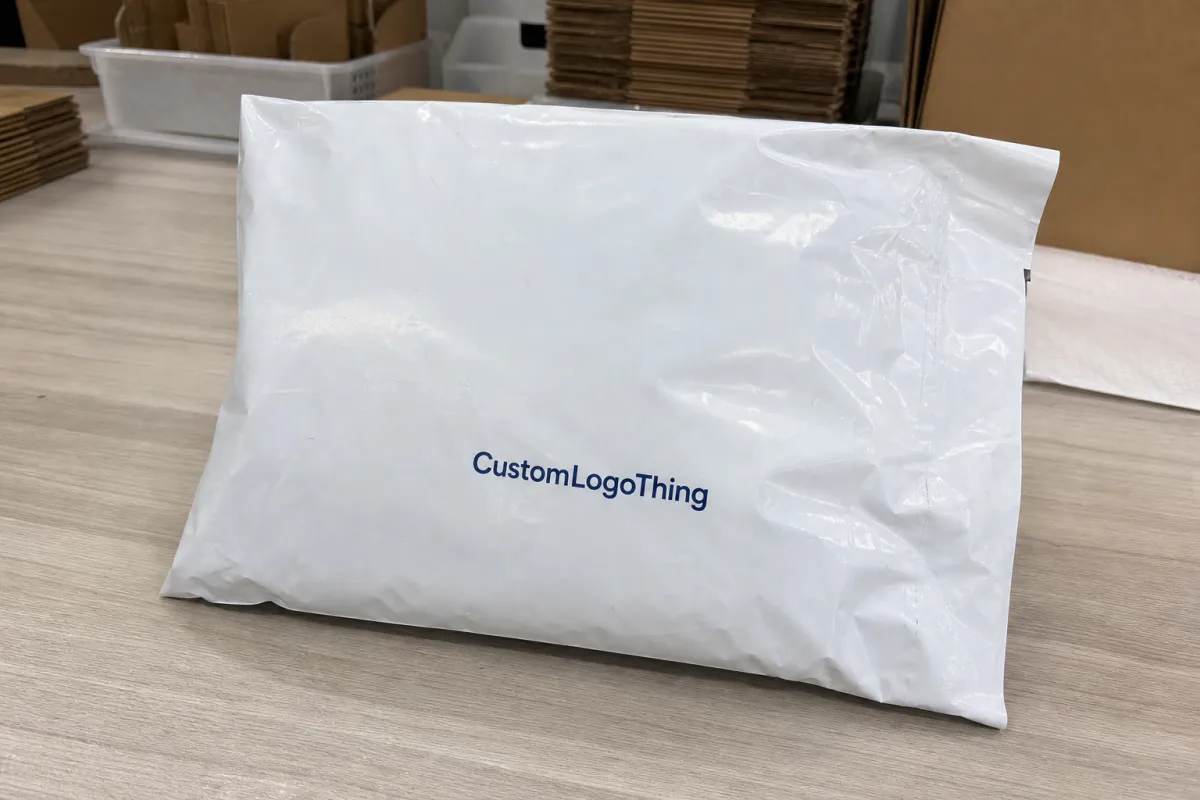
One damaged one-off book order is annoying. A small defect repeated across 800 monthly parcels becomes a margin problem, a customer service queue, and a churn signal. Subscription shipping magnifies packaging decisions because the same mailer spec, pack method, and carrier handling pattern repeat again and again.
Boxes give structure. They also eat storage space, slow assembly, and can push a shipment into a higher postage profile if the dimensions creep upward. Poly mailers reduce dimensional bulk and usually pack faster, but only if the film thickness, seal strength, and size match the actual bundle. Not the product photo. Not the tidy mockup. The real packed parcel.
Books sit in an awkward category. They are not fragile like glass, but they are not forgiving like T-shirts. Subscribers expect square corners, dry pages, clean inserts, and no mystery scuffs. That expectation is emotional as much as functional, especially for signed editions, sprayed edges, collector covers, and giftable subscription drops.
Packaging rule of thumb: if the subscription is selling collectability, the mailer must protect presentation, not merely deliver a readable item.
The practical buying question is blunt: what level of protection reduces the most risk without bloating postage, warehouse space, or unit cost? The answer depends on material, sizing, artwork, order volume, timeline, and the way the fulfillment team actually packs each parcel under pressure.
How Poly Mailers Protect Books During Subscription Fulfillment
A poly mailer is a flexible polyethylene shipping envelope with a self-seal adhesive strip. Ecommerce teams use it for parcels that do not need rigid box walls. For book subscriptions, the useful specs are puncture resistance, tear resistance, water resistance, opacity, and seal integrity.
Water resistance is the obvious benefit. A co-extruded poly film can shrug off porch rain far better than plain paper wrap. Opacity matters too. Genre picks, invoices, art prints, and subscriber gifts should not be visible through the package, especially for romance, wellness, political, mental health, or young adult subscriptions where privacy can influence trust.
The caveat is simple: a standard poly mailer does not prevent crushing by itself. If the shipment includes hardcovers, signed editions, sprayed edges, collector dust jackets, or sharp-cornered art books, the outer mailer may need help from chipboard, a rigid insert, kraft board, bubble lining, or a snug internal wrap. A mailer can block rain and tearing while still allowing a corner to bruise. Annoying, but true.
Common formats include standard co-extruded mailers, recycled-content films, bubble-lined poly mailers, dual-seal returnable mailers, and custom printed mailers. Paperbacks can often tolerate a slimmer structure. Heavier hardcovers usually need a thicker gauge or a hybrid pack that protects corners before the outer mailer does its job.
Customer perception is the hidden spec. A scuffed book may still be readable, but subscription customers buy ritual: the anticipation, the reveal, the curation, the shelf-worthy object. Packaging should be evaluated as part of that experience, not only as a freight expense.
How to Buy Poly Mailers for Book Subscription Brands Without Guesswork
Start with thickness. Poly mailer film is usually discussed in mils, where 1 mil equals one-thousandth of an inch. Lightweight apparel mailers often sit around 2.0 mil. Book shipments commonly deserve testing in the 2.5 to 3.5 mil range, depending on weight, trim size, corner sharpness, and carrier route.
Thicker is not automatically better. It costs more, can feel stiff during packing, and may complicate sustainability claims. A well-sized 2.5 mil mailer with a chipboard insert may outperform a loose 3.0 mil mailer with nothing controlling the book inside.
Size selection is where teams quietly lose money. The ideal mailer lets the packed book, insert stack, tissue, bookmark, sticker sheet, or protective board slide in smoothly without excess plastic flapping around. Too tight, and the adhesive strip strains. Too loose, and the parcel folds, snags, shifts, or looks underfilled.
Adhesive quality deserves its own test. Paper dust, cold warehouse air, hot delivery vans, and hurried packing can all affect closure performance. For subscriptions, test the seal after the pack has been handled, dropped, stacked, and left overnight. A seal that looks fine at the packing bench may fail after a dense hardcover presses against it for two days in transit.
| Mailer Option | Typical Use | Approximate Unit Range | Watch-Out |
|---|---|---|---|
| Stock 2.0-2.5 mil poly mailer | Low-risk paperback shipments | $0.08-$0.18 at moderate quantities | May lack corner defense for heavy books |
| Custom printed 2.5-3.0 mil mailer | Branded monthly book parcels | $0.18-$0.35 around 5,000 pieces, depending on print coverage | Setup costs and artwork changes can alter true cost |
| Bubble-lined poly mailer | Hardcovers or gift-heavy bundles | $0.30-$0.70 depending on size and volume | Bulkier storage and disposal concerns |
| Dual-seal returnable mailer | Returns, exchanges, or rental-style programs | $0.25-$0.55 depending on size and seal system | Extra seal must be clearly explained to customers |
Print coverage changes the quote. A one-color logo on white or colored film is usually the economical starting point. Full-surface artwork creates a stronger unboxing moment, but ink coverage, registration tolerance, proofing time, and minimum order quantity can climb fast. For early launches, restrained logo print is often the smarter move. Less romantic. More survivable.
Sustainability claims need careful wording. Recycled content, recyclable films, and reusable mailers can support brand values, but local recycling access varies. The U.S. Environmental Protection Agency offers useful background on recycling systems and consumer guidance at epa.gov/recycle. If you claim recyclability, tell customers what to do with the mailer after opening. “Recycle me” is not enough if the material belongs in store drop-off rather than a curbside bin.
Test with the real contents. Not estimates. A bookmark, enamel pin, art print, folded note, or chipboard pad can change the way pressure sits against a seam. This is the step many brands rush because the prototype looks close enough. Close enough is where damage claims breed.
Cost, MOQ, and Unit Cost: What Drives the Quote
Mailer pricing usually comes down to size, film thickness, order quantity, print complexity, number of colors, material type, adhesive features, and destination. MOQ means minimum order quantity: the smallest production run a manufacturer will accept. Custom printed mailers usually have higher MOQs than stock blanks because film, ink, setup, and press time need to be batched.
For poly mailers for book subscription brands, the cheapest unit price is not always the cheapest decision. A 10,000-piece order may drop the unit cost by several cents, but over-ordering the wrong size traps cash in inventory. It can also leave a young subscription brand shipping next quarter’s books in last quarter’s artwork, which looks exactly as awkward as it sounds.
Custom printing may include plate, setup, or artwork preparation charges. A $250 setup fee spread over 1,000 mailers adds $0.25 per unit. Spread over 10,000 mailers, it adds $0.025. That math explains why vendors often encourage higher quantities. The buyer still has to balance inventory risk against unit savings.
Stock mailers are useful for validating a new subscription launch. They let the team test book formats, shipping weights, pack speed, and complaint rates without committing to a branded run. Custom mailers make more sense once monthly volume, visual identity, and book mix stabilize. If the subscription already ships 3,000 to 8,000 parcels a month, custom print can justify itself through recognition, consistency, and repeatable packing specs.
Hidden costs deserve attention: damaged replacements, customer service time, rush production, warehouse storage, oversized postage, unclear artwork files, and inbound freight. One extra ounce or a loose oversized mailer can change postage economics. So can a 2% damage rate if every replacement includes the book, postage, labor, and a goodwill credit.
Ask vendors for two or three quantity breaks. For example: 2,500, 5,000, and 10,000 units. Request landed cost, not just ex-factory or pre-freight pricing. If you are comparing Custom Poly Mailers with other Custom Packaging Products, use the same size, gauge, print coverage, and delivery destination across quotes. Otherwise the comparison is mostly decoration.
Process and Timeline From Artwork to Delivered Mailers
The buying process usually follows a predictable path: confirm specifications, Request a Quote, prepare artwork, approve a digital proof, review a physical sample if needed, enter production, complete quality checks, and ship cartons to the fulfillment location. On paper, simple. In subscription operations, timing turns simple steps into pressure points.
Packaging delays can disrupt a monthly drop, trigger split shipments, or force the brand into plain emergency mailers. That emergency fix may protect the ship date, but it weakens the branded moment customers expected. If the subscription sells anticipation, a plain replacement mailer can feel like a downgrade before the book is even opened.
Artwork checkpoints include logo placement, bleed, safe zones, barcode clearance, color expectations, and orientation. Carrier labels are big. A 4-by-6-inch label can cover a QR code, campaign message, or character illustration if the design is not mapped around the label zone. Leave clean space where the label will actually sit, not where the designer wishes it would sit.
A digital proof checks layout. A physical sample checks feel, fit, closure, print appearance, and packing speed. They are not the same thing. If the order is high volume, the sample stage can save far more than it costs because it reveals problems that a flat PDF politely hides.
Lead time varies by print method, volume, material availability, approval speed, seasonal congestion, and freight method. A basic custom printed run may take roughly 12-20 business days after proof approval. More complex jobs or imported materials can run longer. Treat any range as a planning estimate, not a promise carved into stone.
Build a reverse calendar. Start with the subscriber ship date. Add fulfillment packing time, inbound freight time, production time, proof approval time, artwork preparation, and a buffer. If one rejected proof can threaten the entire month, the approval came too late.
Step-by-Step Guide to Spec Your First Subscription Mailer
- Gather the real shipment. Include the largest book, smallest book, inserts, wrapping, stickers, gifts, and protective board. Subscriptions rarely ship a book alone.
- Weigh and measure the packed bundle. Measure thickness after wrapping. Dense paper goods compress differently than soft merchandise, and that changes postage and seam strain.
- Choose the protection strategy. Use plain poly for low-risk paperbacks, thicker film for heavier bundles, bubble lining for impact protection, or chipboard inserts for corner defense.
- Select the size. Aim for enough tolerance to pack quickly without forcing the adhesive strip. Avoid slack that creates folding, shifting, or corner exposure.
- Choose the branding level. Options range from stock color to logo print, seasonal art, or a full custom pattern. Early-stage brands often learn faster with simpler artwork.
- Request samples and stress test them. Try a 3-foot drop, corner rub, water splash, overnight seal check, and a rough-handling simulation with the packed parcel.
- Document the final spec. Record size, gauge, color, resin type if known, seal type, print file, label zone, carton count, reorder point, and approved sample notes.
Testing should reflect actual fulfillment. If one person carefully packs five samples at a desk, that does not prove the mailer will perform during a 1,200-order packing day. Ask the fulfillment team to pack samples at normal speed. Time it. Watch where friction appears.
Inspect the packed sample like a subscriber would. Is the seal flat? Are the corners pushing hard against the side welds? Does the label cover the artwork? Does the parcel look intentional, or does it look like a book got shoved into whatever was closest? That last question sounds subjective because it is. Subscription packaging lives in subjective territory.
For drop and vibration references, the International Safe Transit Association publishes widely used package testing frameworks at ista.org. Not every small subscription needs formal lab testing, but ISTA thinking helps buyers ask better questions about corners, compression, vibration, and real transit abuse.
Common Mistakes That Damage Books, Margins, and Reviews
The first mistake is choosing a mailer based only on book length and width. Thickness matters. Inserts matter. A dense hardcover pushing against a side seam behaves differently from a thin paperback sliding into the same footprint.
The second mistake is treating all mailers as interchangeable. Film gauge, resin blend, side-weld quality, adhesive formulation, opacity, and print method vary widely. Two mailers can both be labeled “2.5 mil” and perform differently under corner pressure. Spec sheets help, but samples tell the truth faster.
The third mistake is approving a dramatic custom size before testing packing speed. A beautiful mailer that slows packing by 20 seconds per order costs more than it appears to. At 5,000 parcels, that adds more than 27 labor hours to the month. The mailer did not get cheaper. It just moved the cost somewhere harder to see.
The fourth mistake is oversizing. Too much slack creates folds, snags, and a less premium handoff. It can also expose corners as the book shifts inside the parcel. A slightly larger mailer may feel safer during buying, yet perform worse during transit.
The fifth mistake is vague sustainability language. Readers are often highly attuned to waste. If the mailer contains recycled content, say how much if the supplier can document it. If it is recyclable through store drop-off rather than curbside bins, say that plainly. The Forest Stewardship Council at fsc.org is also useful if the subscription uses paper inserts, boards, or FSC-certified printed components.
The sixth mistake is artwork that ignores carrier labels. Place key brand elements away from label zones, folds, seals, and areas likely to be scuffed. A lovely illustration hidden under postage is not branding; it is paid ink with no audience.
The seventh mistake is skipping replacement-cost math. If a cheaper mailer saves $0.04 but raises damage claims by 1%, the true cost may include reshipment, labor, support tickets, refund risk, and churn. Small percentages become large numbers in recurring programs. Packaging math is rude like that.
Before You Request Samples or Place an Order
Create a one-page packaging brief before asking for quotes. Include book dimensions, average packed weight, monthly shipment volume, destination mix, branding goals, sustainability requirements, target ship date, fulfillment location, and any unusual items such as pins, prints, candles, or bookmarks with metal edges.
Choose two or three realistic options to test. Not twelve. Focused testing produces cleaner decisions: perhaps a 2.5 mil logo mailer, a 3.0 mil custom printed mailer with chipboard, and a bubble-lined option for hardcover months. Pack five samples the same way the fulfillment team will pack them, then inspect seal strain, corner pressure, label placement, scuffing, and how the parcel looks after rough handling.
Ask for quotes at multiple quantities and include freight, setup, sample fees, and reorder timing. Landed cost matters more than headline unit cost. If the supplier can support repeat orders with consistent film, print, and sizing, that reliability has value too.
Set reorder triggers based on growth and lead time. A subscription shipping on a fixed monthly calendar cannot treat packaging like office supplies. If production takes 15 business days and inbound freight takes another week, the reorder point should be based on future subscriber counts, not the number of mailers left on the shelf today.
If you want to compare formats before committing, review packaging examples and ordering paths through Case Studies and supplier samples rather than relying on renderings alone. Once the specs, samples, and landed costs are documented, poly mailers for book subscription brands become a controlled operational choice instead of a last-minute packaging gamble.
FAQ
Are poly mailers for book subscription brands safe for hardcover books?
They can be safe for some hardcovers if the mailer is thick enough and the book is protected with chipboard, padding, or a snug internal wrap. For collector editions, signed books, sprayed edges, or sharp-cornered hardcovers, test bubble-lined mailers or rigid inserts before committing to a full run. A drop test with the actual book is more reliable than judging by material description alone.
What size poly mailer should a monthly book box use?
Measure the packed bundle, not just the book. Include tissue, art prints, bookmarks, inserts, stickers, and any protective board. The mailer should leave enough room for fast sealing without forcing the adhesive strip, but not so much extra space that the parcel folds loosely. If the subscription alternates between paperbacks and hardcovers, two mailer sizes may outperform one oversized compromise.
How much do custom poly mailers for subscription books cost?
Pricing depends on size, thickness, order quantity, print colors, material choice, setup requirements, and freight. Stock mailers usually have lower entry costs, while custom printed mailers become more efficient once shipment volume and design direction are stable. Ask for quantity breaks and landed cost, because freight and setup charges can change the true unit cost.
How long does it take to produce custom book subscription mailers?
The timeline usually includes quoting, artwork preparation, proof approval, production, quality checks, and inbound shipping to the fulfillment site. Lead time varies by print complexity, material availability, order volume, approval speed, and freight method. Subscription brands should build a reverse calendar from the monthly ship date and include a buffer for proof changes or transit delays.
Can book subscription brands use recycled or recyclable poly mailers?
Yes. Many brands use recycled-content or Recyclable Poly Mailers, but availability depends on size, thickness, print requirements, and supplier capability. Recyclability claims should be paired with clear customer instructions because curbside acceptance varies by location. Test recycled options for seal strength, opacity, print appearance, and puncture resistance before making sustainability claims part of the customer promise.