Buyer Fit Snapshot
| Best fit | Biodegradable Mailers Comparison projects where brand print, material claims, artwork control, MOQ, and repeat-order consistency need to be specified before quoting. |
|---|---|
| Quote inputs | Share finished size, material target, print colors, finish, packing count, annual reorder estimate, ship-to region, and any compliance wording. |
| Proofing check | Approve dieline scale, logo placement, barcode or warning zones, color tolerance, closure strength, and carton packing before bulk production. |
| Main risk | Vague material claims, crowded artwork, missing packing details, or unclear freight terms can make a low unit price expensive after revisions. |
Fast answer: Biodegradable Mailers Comparison: Artwork Proof, Packing Count, and Landed Cost should be specified like a repeatable production item. The safest quote records material, print method, finish, artwork proof, packing count, and reorder notes in one written spec.
Production checks before approval
Compare the actual filled-product size with the drawing, then confirm tolerance on folds, seals, hang holes, label areas, and retail display edges. Reserve space for logos, QR codes, warning copy, and material claims before decorative graphics fill the panel.
Quote comparison points
Review material grade, print process, finish, sampling route, tooling charges, carton quantity, and freight assumptions side by side. A quote is only useful when the supplier can repeat the same color, closure quality, and packing count on the next order.
Biodegradable Mailers Comparison: Which Type Wins? A sustainable-looking mailer can look good in a photo and still leave you with a nasty surprise once it hits the shipping lane. For real buyers, the question is simple: what happens when the box is gone, the label is torn, and the customer finally has it in hand. Three things usually decide that outcome: material behavior, disposal claim accuracy, and the operational path behind the quote.
For packaging teams, the decision is not which option sounds most “green.” It is which option protects the product, handles the warehouse, survives transit, and is still honest about end-of-life. I have seen teams approve something that looked great and then scramble because the new mailer shrank storage life by half and broke the old packing rhythm. That usually turns a sustainability effort into a productivity headache.
If you are evaluating alternatives this quarter, a biodegradable mailers comparison is the quickest way to stop the noise and start making a decision that can be defended in operations, finance, and customer support at the same time. It is not glamorous, but it beats arguing over adjectives.
Biodegradable mailers comparison: what the label really hides
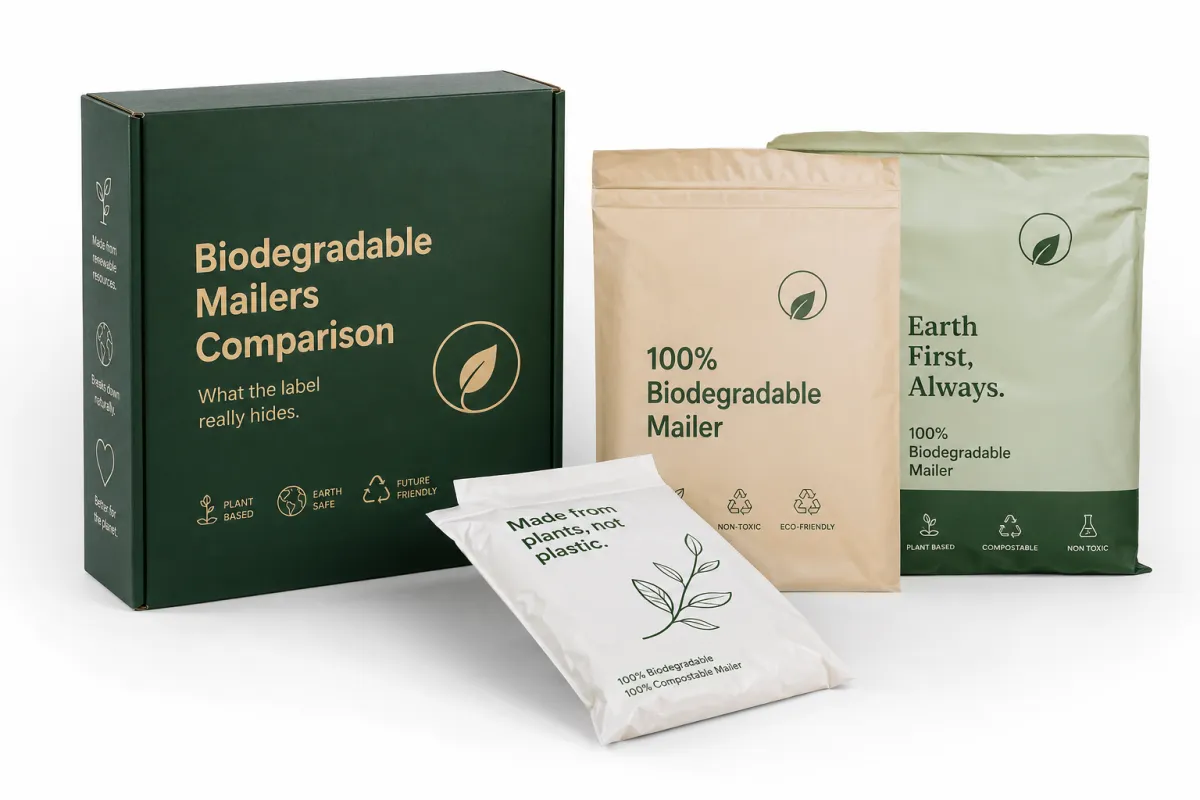
Biodegradable mailers comparison is not a simple ingredient check. It is a reality check across claims, testing data, handling limits, and policy fit. When I review samples for clients, I usually start by asking where the disposal route lives: in the spec, in the contract, or in the sales deck only. If it is in the deck only, the risk is already there.
Biodegradable, compostable, and recycled-content are three different buckets. Biodegradable describes a material that can break down over time, but the speed and conditions are often vague unless the supplier explains both. Compostable tends to mean a controlled process under set standards, often with test documentation that points to systems like ASTM D6400 or EN 13432. Recycled-content mailers are usually still plastic-based but reduce virgin resin demand by using post-consumer or post-industrial feedstock.
This matters because the same phrase can hide completely different outcomes. A plant-based film may be softer and look premium yet be sensitive to UV and heat. An additive-based option may keep handling performance close to standard poly but still carry a biodegradation label. A smart biodegradable mailers comparison compares both the compliance story and the engineering reality.
A green label is not a disposal route. If the customer cannot tell where to send it after opening, the sustainability story weakens fast.
In practice, I structure the comparison with four tracks: material system, strength and seal behavior, disposal pathway certainty, and true total cost. That combination is where good packaging decisions get made. Otherwise you pick a headline and hope operations catches up, which usually does not happen.
One practical gap I see too often is shelf life. Some biodegradable films absorb humidity differently and soften or deform in warmer storage. If your warehouse sits at 28°C for weeks, your “top-tier” sample can become a weak link by quarter-end. I once advised a team that moved a pilot from a cool offsite room to a regular stock zone; the mailer that looked perfect in the lab got rejected after one week. That is why storage conditions belong in the file, not as an afterthought.
How does a biodegradable mailers comparison reveal how mailers break down?
Most mailers are not one-layer products, even if they look flat and simple in photos. You normally have outer film for printability and abrasion resistance, a heat or adhesive closure layer, and one or more functional layers for flex and rupture performance. Plant-based blends, starch-based layers, and modified polyesters each degrade differently and seal differently. Some recycled-content structures stay out of the biodegradation game entirely but can still outperform on speed and durability.
Breakdown speed depends on environment, not brand copy. Temperature, oxygen levels, moisture, and microbial activity are all part of the equation. A material may look “biodegradable” but only perform as expected in industrial composting at high heat with specific oxygen control. In a landfill or mixed municipal stream, the same material can linger much longer. A biodegradable mailers comparison has to treat those paths separately.
When compostability is claimed, ask for exact certification language and what conditions were used. A proper certificate usually states whether the claim is for industrial or home composting, which standard was used, and what was tested with the film—full packaging, print coatings, and closures included. That last part matters; an untested adhesive strip can change the result. The EPA recycling guidance is a useful benchmark for understanding where claims align with real infrastructure, but it does not replace supplier data.
Transit behavior matters just as much as disposal language. Transit means stack loads, conveyor friction, temperature swings, and fast handling by packers. A weak seal can split during automated sealing, and a brittle edge can tear at first friction. If 1% of parcels fail, the eco argument starts looking expensive quickly.
Some buyers also expect all biodegradable materials to vanish quickly anywhere. They usually do not. A mailer can be engineered for biodegradation in the right process and still not be suitable for backyard composting or local curbside options. That is why a high-confidence biodegradable mailers comparison includes both best-case and real-case timelines.
For transit validation, the ISTA testing framework is a practical anchor. The tests are built for the shipping environment, which is where many sustainable products look good on paper and fail in practice. If you skip that layer, you are comparing brochure claims, not package performance.
If you do not have full standardized tools yet, run a basic internal protocol before placing bulk orders: seal peel consistency, seam integrity, tear response, and dimensional hold at the temperatures your line actually runs. Kinda boring maybe, but it is the difference between a hunch and a decision that survives the next 3,000 shipments.
Biodegradable mailers comparison by material, strength, and sealing
Material type is where the biodegradable mailers comparison starts, but it should not be the finish line. Plant blends, compostable films, recycled-content mailers, and hybrids are not equivalent on print behavior, cold-room handling, or corner resistance. If your line and products are stable, the paper trail is in specs; if your line is complex, the difference is felt at the pallet.
Plant-based blends can be a strong option where brand teams want a material-forward message. Some blends print better than expected and feel premium. Compostable options can work well too, especially with brands willing to invest in guided disposal education. Recycled-content poly often gives more predictable behavior under load, better puncture tolerance, and stable seam performance. That does not disqualify biodegradable options; it just means your comparison must include this performance tier.
Strength is not a single metric, even though some procurement sheets act like it is. You want tear resistance, puncture resistance, edge stress behavior, stretch recovery, and seal strength. A 2.5 mil profile can outlast a thicker 3.0 mil film if the sealing chemistry is stronger. Product geometry changes everything: hard-cornered bottles, sharp boxes, and rigid inserts punish weak films immediately.
Sealing is where returns often appear. Heat-seal windows, seal temperature window, and glue-strip response to humidity differ by film system. Inconsistent seal pressure can turn into a spike in rework, especially in humid seasons. If seal failures rise, your “eco” narrative is paying for itself in customer support tickets.
Print is part of the real packaging equation, not branding decoration. Print adhesion, color hold, and scratch resistance vary by substrate and coating. A matte finish can look elegant but may flatten color depth under high-speed printing. If your campaign relies on precise brand color, ask for actual-print mockups from your supplier, not digital proofs only. The biodegradable mailers comparison needs production-grade samples.
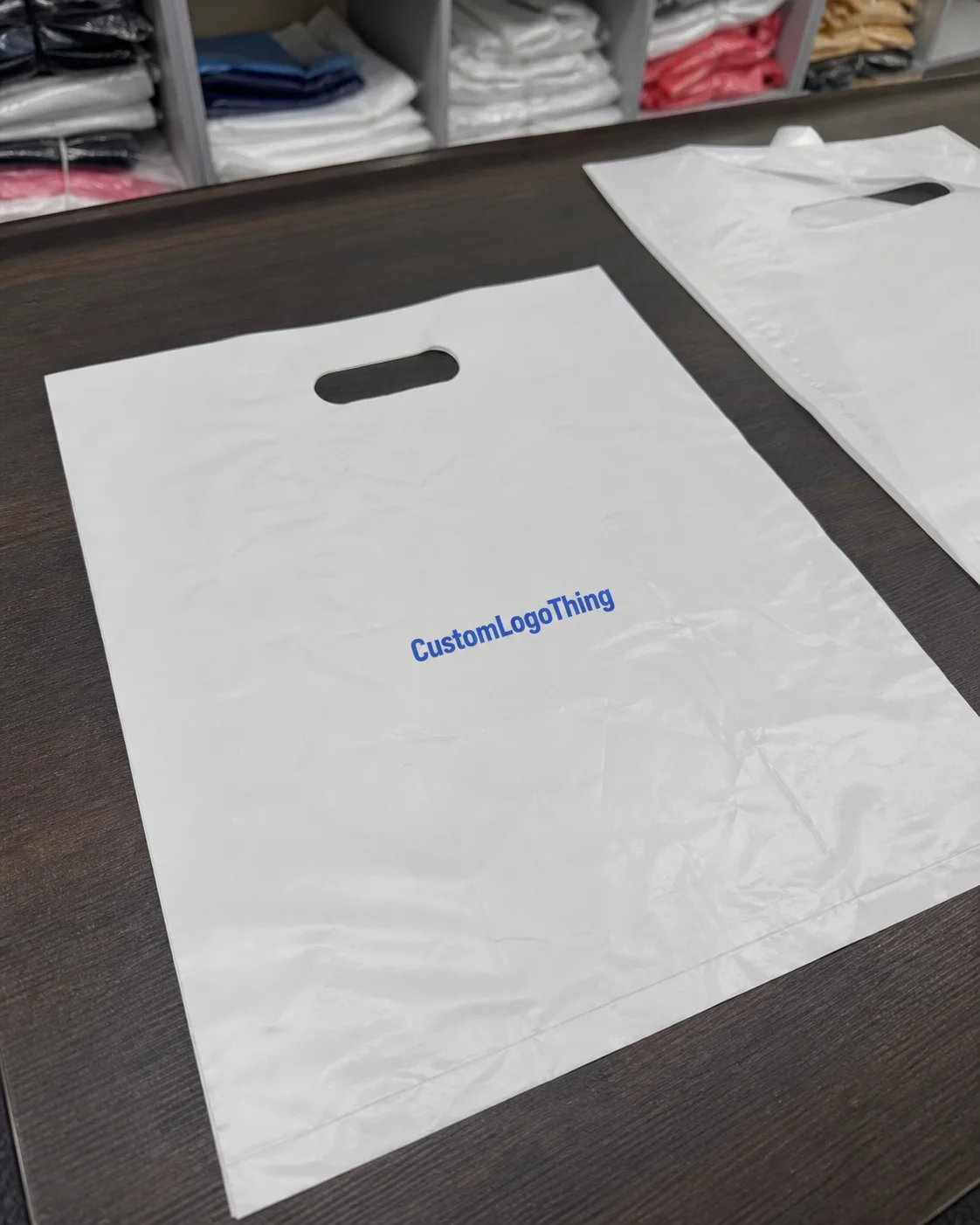
If you are comparing direct alternatives across formats, it helps to place Custom Poly Mailers side-by-side with your compostable and plant-based options. The point is not to crown a winner by label, but to see which one protects more shipments with fewer exceptions. In many programs, a non-biological claim does not lose on sustainability if it keeps operations stable and disposal communication honest.
| Mailer type | Typical unit cost at 5,000 pcs | Strength and seal profile | Best fit |
|---|---|---|---|
| Plant-based blend | $0.18-$0.30 | Moderate puncture resistance; seal quality depends on formulation | Brands wanting a softer eco story with moderate shipping demands |
| Compostable mailer | $0.22-$0.38 | Varies widely; often good on print, sometimes less forgiving in cold storage | Teams with verified composting pathways and clear customer guidance |
| Recycled-content poly mailer | $0.10-$0.22 | Strong puncture and tear resistance; dependable sealing | High-volume shipping where durability and cost control matter most |
| Hybrid structure | $0.16-$0.28 | Balanced performance; specs depend heavily on resin blend | Brands balancing branding, performance, and a less resource-intensive build |
The table is directional, not definitive. A mailer that is a few cents higher but cuts damage by even 1% can beat a cheaper candidate after reshipments, restock labor, and complaint handling are counted. For a practical biodegradable mailers comparison, include one line for disposal outcomes and one for claims support. Waste pathway risk can flip your ranking before the second quarter closes.
Biodegradable mailers comparison: cost, pricing, and hidden fees
Cost is where people get fooled most quickly. Unit price is obvious; landed cost is not. A full pricing check has to include minimum order quantity, freight tier, print complexity, storage requirements, and replacement rates. Otherwise, a low unit cost can look cheap while total program spend quietly climbs.
Current ranges in many markets still show recycled-content poly around $0.10-$0.22 per piece at 5,000 units, depending on size and print. Compostable and plant-based products often sit higher, commonly around $0.18-$0.38 at similar volumes, plus variable print surcharges. I have seen add-ons of $0.03-$0.08 per piece where complex artwork was included, and it compounds quickly in monthly volume.
Freight and lead-time behavior change the math further. A pallet freight variation can easily add $75-$250 depending on lane and urgency. If lead-time stretches, stockout risk can force emergency replenishment at higher cost. A few “cheap” choices become the ones with the loudest variance in final spend.
Hidden costs are often operational: void fill, oversize inserts, slower pack-out if the closure is stiff, and added labor when seal rework appears during peak loads. If the line has to slow because the opening window is tricky or material handling is inconsistent, that is a performance cost, not a green cost.
Short runs and volume programs behave differently. Early-stage brands usually value faster learning and differentiated packaging, so a premium eco option can be acceptable on margin. Higher-volume firms cannot absorb broad premiums if the breakage profile increases. For 100,000 shipments, a $0.05 difference is $5,000 before freight, and even before service costs.
Useful model: unit cost + damage rate + return rate + support load + freight + storage impact. This is the formula I use when teams ask for a practical answer. If this formula cannot be completed before purchase, the decision is incomplete.
Customer support is another line item that gets ignored. If your bag says “compostable” but half your buyers cannot find the right bin, you create confusion calls, social comments, and returns. One brand I worked with spent more per month on support than they saved on mailer price after dropping a new material. The materials were fine; the guidance was not.
A full sourcing view helps too. Pair mailers with related packaging in Custom Packaging Products and model the system. You may be able to adjust inserts, outer wraps, or cushioning strategy in ways that lower breakage and simplify the waste story simultaneously.
Biodegradable mailers comparison: how to test samples and map timelines
The first step in a trustworthy biodegradable mailers comparison is not the sample pull. It is your operating profile: product weight, edge hardness, box travel distance, storage climate, and published disposal promise. If these are unclear, test results may be technically correct but operationally useless.
Then run staged testing. Start with incoming inspection: film gauge consistency, seam placement, curl, print registration, and adhesion feel. Run 20 to 30 pack-outs per candidate with real SKUs where possible. Watch for seal consistency under the same operator and machine settings you use every day. If your team slows, you already have signal.
Next stage is abuse testing. Do drop, corner-load, and pull tests. Repeat a few cycles over a short period, not one-off pulls. Include the worst-route scenario, not a gentle shipping path. The goal is not passing a theoretical score. The goal is preventing real rejections and returns.
Then run environment checks. Keep samples in humidity for a defined period, then check seam behavior and dimensional change. Repeat at cooler zones if your stockroom dips in temperature. Adhesive release and film flexibility can shift dramatically and affect sealing speed. A mailer that behaves in warm sample conditions may crack in a cold loading dock.
Timeline discipline is part of validation. Ask suppliers for proof-to-production lead time, artwork revision windows, and how they manage raw material variability. In my experience, 12-15 business days from approval happens in smoother operations, but anything seasonal, low-availability, or custom-heavy can stretch quickly. If your replenishment cycle is tight, one missed week can become an operations problem, not just a supplier problem.
Here is a practical timeline for teams that are already running three to five candidates:
- Days 1-3: lock product specs, define disposal claims, and set budget boundaries.
- Days 4-7: pull samples and request certification packets plus test method notes.
- Days 8-14: complete arrival inspections, pack-out timing, and drop/impact tests.
- Days 15-18: evaluate print quality, cold/humidity behavior, and seal consistency.
- Days 19-21: finalize landed cost, lead-time confidence, and go/no-go decision.
This sequence keeps teams out of analysis paralysis. I have seen teams spend months discussing sustainability language while operations waits for direction. A structured biodegradable mailers comparison creates a decision rhythm and keeps teams aligned.
Before finalizing, run a small pilot if volume allows. A 200-unit trial tells you about actual packing speed, returns, and customer reaction in a way no sample shelf can. The first live route is where hidden defects show, and that is where you either confirm or reject the option.
Also map packaging timelines to your claim commitments. If the brand tells customers they are shipping by a date, include approval windows and quality hold times in the plan. A green decision that misses shipment windows creates both margin and trust damage.
Common mistakes buyers make with a biodegradable mailers comparison
The most common mistake is treating "biodegradable" as a universal behavior. It is not. Backyard compost, industrial compost, landfill, and curbside recycling are different systems with different outcomes. If a supplier says one sentence and leaves it at that, ask for full context immediately.
Second mistake: approving too early. Teams check appearance, ask a few broad questions, and finalize before testing against sharp edges, long-haul routes, and climate variation. A mailer for apparel can behave differently from one carrying rigid inserts. A biodegradable mailers comparison should be SKU-specific, not category-generic.
Another weak link is sizing. Too much space causes movement and pressure on seams. Too little space causes awkward sealing and lower speed. Both outcomes increase labor and defects. Use your true packed dimensions, not idealized design measurements, when evaluating candidates.
Brand confidence can also mislead. Mockups look good, then production ink adhesion or color consistency fails on your actual lines. If color and print quality matter to your brand, request production-scale prints before committing. This is not optional if your fulfillment model depends on repeatable recognition.
Disposal messaging is often inconsistent. If you label a mailer compostable but do not tell buyers where it can actually be processed, claims can turn into confusion. That weakens trust quickly and increases support load. Your customers are not bad actors here; they are missing information.
And yes, there is a paperwork trap too: skipping third-party proof. Certifications, material disclosures, and test protocols are not paperwork theater. They are your way to separate a validated claim from marketing fluff. For compostability, standards matter. For durability, test protocols matter. If neither is present, that is a decision to revisit.
I can see this often: one department pushes the greener option, another pushes cost, and the last one gets blamed later when returns rise. Ask suppliers for a disposal matrix and edge-case response, and then socialize it internally before rollout. That usually removes a lot of future misunderstandings.
Biodegradable mailers comparison: next steps for a low-risk rollout
The cleanest rollout method is deliberately small. Start with three candidates, not ten. Score each across cost, protection, claims reliability, and printability. Then apply weights based on your product, not on brand preference alone. A high-value fragile line can carry a stricter scoring profile than low-risk consumables.
After scoring, pull production-ready samples with artwork, run real product trials, and compare landed cost under your local freight assumptions. Confirm claim wording and disposal instructions before approval. Then test with a pilot batch, ideally a few hundred units, before scaling. Evidence beats instinct every time.
Disposal claims must match local realities. Some regions support industrial composting programs; others do not. Before public-facing messaging, verify local rules and collection pathways. If you cannot support a claim in one of your top customer regions, either change the claim language or change suppliers. That sounds strict, but it is cleaner than retrofitting apologies later.
Use a one-page decision sheet with four sign-offs: operations, marketing, quality, and procurement. It is simple: fit and seal, claim language, Price and Lead-time, and test outcome. When each function signs the same document, the chance of downstream reversals drops a lot.
To keep this useful, be explicit about trade-offs. The right choice might be compostable. It might be recycled-content poly. It might even be a hybrid that balances both performance and sustainability profile. The key is consistency: product protection, transport reality, and a disposal claim you can defend.
Practical takeaway: if a candidate fails your biodegradable mailers comparison on protection, disposal clarity, or packaging reliability, drop it before launch. If it passes all three, run the pilot, track damage and complaint rates for a defined period, then scale. That sequence protects your margin, your team’s time, and your credibility with customers who care about both packaging and results.
What should I compare first in a biodegradable mailers comparison?
Start with what can actually break a shipment: product geometry, shipping distance, and handling stress. Then verify disposal claims and certification evidence against where your customers can realistically send the package. Finish with cost and lead time so the chosen mailer is operationally feasible, not just environmentally aspirational.
Are biodegradable mailers the same as compostable mailers?
No. Biodegradable is a broader term and does not always specify the conditions needed for decomposition. Compostable usually ties to defined standards and environments, often requiring industrial composting conditions. Always review the certification method and test scope before using the term in communication.
How much do biodegradable mailers cost compared with standard poly mailers?
Biodegradable options often have higher unit costs, but the final answer depends on returns, freight, and labor impacts. A lower unit price can become more expensive if failure rates rise or if additional packing controls are needed. Always compare landed cost, not headline price.
How long do biodegradable mailers take to break down?
There is no single breakdown timeline. Heat, oxygen, moisture, and microbial activity all affect the process, so conditions matter more than labels. Ask for exact test conditions and avoid taking "biodegradable" as a universal claim.
Can biodegradable mailers be customized for branding and protection?
Yes, but customization must match material chemistry. Ink holdout, print adhesion, and seal behavior can change by substrate and processing settings. Request production samples with your actual artwork and test both appearance and sealing performance before approving a full order.