Buyer Fit Snapshot
| Best fit | Biodegradable Mailers Manufacturer projects where brand print, material claims, artwork control, MOQ, and repeat-order consistency need to be specified before quoting. |
|---|---|
| Quote inputs | Share finished size, material target, print colors, finish, packing count, annual reorder estimate, ship-to region, and any compliance wording. |
| Proofing check | Approve dieline scale, logo placement, barcode or warning zones, color tolerance, closure strength, and carton packing before bulk production. |
| Main risk | Vague material claims, crowded artwork, missing packing details, or unclear freight terms can make a low unit price expensive after revisions. |
Fast answer: Biodegradable Mailers Manufacturer: Quote Scope, Sample Proof, MOQ, and Lead Time should be specified like a repeatable production item. The safest quote records material, print method, finish, artwork proof, packing count, and reorder notes in one written spec.
Production checks before approval
Compare the actual filled-product size with the drawing, then confirm tolerance on folds, seals, hang holes, label areas, and retail display edges. Reserve space for logos, QR codes, warning copy, and material claims before decorative graphics fill the panel.
Quote comparison points
Review material grade, print process, finish, sampling route, tooling charges, carton quantity, and freight assumptions side by side. A quote is only useful when the supplier can repeat the same color, closure quality, and packing count on the next order.
Biodegradable Mailers Manufacturer: What Buyers Need
Three quotes can look almost identical until the details start talking. One biodegradable mailers manufacturer may quote $0.18 a unit for 5,000 pieces, another $0.31, and the gap usually hides in places buyers do not notice right away: resin blend, seal construction, print method, carton pack count, and the kind of testing that never appears in a glossy catalog. I remember standing on a factory floor in Shenzhen, watching two mailers that looked like twins from across the room. Then one cracked during a cold-chain test at 4 C while the other held together because the film stack had been built correctly from the start. That little drama saved a lot of money later.
The difference between a useful supplier and a noisy one is technical clarity. A strong biodegradable mailers manufacturer does not stop at fast samples and pretty photos. They source the film, convert it into mailers, add closures and print, then show evidence that the bag can survive the abuse of real shipping lanes. That evidence matters. I have watched a brand shave $1,200 off a first order and lose $9,000 replacing damaged stock after the mailers split at the seams. Cheap rarely stays cheap once the courier gets involved, especially on routes running through Los Angeles, Dallas, and Chicago sorting hubs where parcels get dropped, stacked, and crushed in the same hour.
Most buyers want the same thing in different words: lower-impact packaging that still seals cleanly, prints sharply, and reaches the customer intact. Apparel companies use these mailers for folded tees and light accessories. Cosmetics brands use them for boxed kits and refill packs. Subscription companies depend on them for repeated, branded shipments where the outer package becomes part of the product story. A capable biodegradable mailers manufacturer should understand those use cases without forcing the buyer to translate ecommerce into factory jargon. Honestly, I think that translation layer is where half the sourcing pain lives, especially when the order runs 10,000 units out of Dongguan one month and 25,000 units out of Ningbo the next.
Misunderstanding the material claim causes more damage than bad artwork. Biodegradable, compostable, recycled-content, and conventional poly mailers are not the same thing with different labels. The production path changes what the bag can do, how long it stores, and what kind of disposal claim it can honestly carry. If a biodegradable mailers manufacturer waves around eco language but cannot explain ASTM references, test conditions, or the disposal environment, that is not reassurance. It is branding with the technical layer missing, which is a fancy way of saying "please do not put this on a product page yet."
At Custom Logo Things, I prefer starting with the shipping requirement, not the marketing label. Our Custom Packaging Products page is useful if you are still mapping out the broader packaging mix, and our Custom Poly Mailers page helps you compare eco claims against standard film structures. Too many procurement calls drift into terminology while the real question is embarrassingly simple: will the package protect the product and arrive intact after a 12 to 15 business day production cycle from proof approval?
What Does a Biodegradable Mailers Manufacturer Do First?
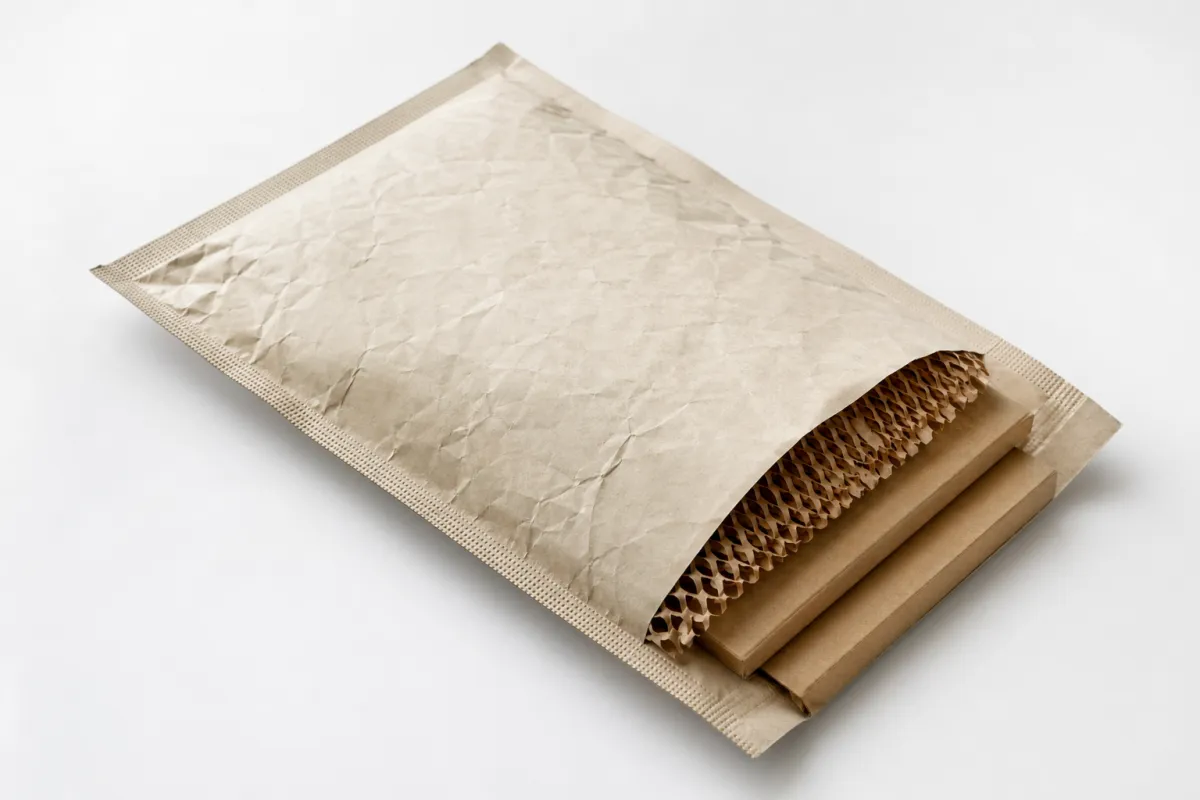
The first thing I look for in a biodegradable mailers manufacturer is clarity, not speed. In a sample room outside Dongguan, I once asked a sales rep why a 10 x 13 bag was described as biodegradable when the spec sheet only said "eco film." He pointed at the price, not the material. That answer was kinda the whole audit. A factory that leads with cost before composition usually has a thin story behind the curtain, and in Guangdong that usually shows up later as a weak seam or a vague certificate.
In practical terms, a biodegradable mailers manufacturer takes a biodegradable or compostable film system, converts it into a mailer shape, adds the closure, prints the artwork if needed, and inspects the finished bags before shipment. The material may be a resin blend, a PLA/PBAT-style film, or another approved structure depending on the market and the claim. The result should be a mailer that meets the size, seal, and print requirements without turning fragile the moment a courier belt grabs it. A plant in Foshan may use a different extrusion line than a plant in Zhejiang, but the end result still has to pass the same drop, tear, and label-adhesion checks.
The differences between biodegradable, compostable, recycled-content, and conventional poly are not semantics. Biodegradable usually signals that a material can break down through biological activity, but that says nothing about the timeline or the environment. Compostable is narrower and usually tied to standards and controlled conditions. Recycled-content mailers reduce virgin plastic use, yet they are not automatically biodegradable. Conventional poly mailers are durable and low-cost, but they make no end-of-life claim. A serious biodegradable mailers manufacturer should explain those distinctions in plain language, not hide behind label design or marketing adjectives that sound greener than they are.
I sat with a beauty buyer who wanted "the eco version" of a mailer for a 2,000-piece launch. She was shown three gray matte samples that looked close enough to a non-specialist. They were not close at all. One had a nice hand feel and weak puncture resistance, one had strong print adhesion but poor tear behavior, and one was really a recycled-content bag wearing a greener story. That meeting taught the same lesson I have seen in dozens of sourcing calls: a biodegradable mailers manufacturer should give you material facts, not mood lighting. She ended up choosing a 0.07 mm PLA/PBAT structure paired with a 350gsm C1S artboard thank-you insert, which made the whole unboxing feel intentional rather than performative.
Use cases tend to be straightforward once the buyer stops assuming every mailer behaves the same way. Apparel brands need a flat-folding bag that seals quickly and survives shipping labels. Cosmetics brands often need cleaner print surfaces and better opacity. Subscription businesses need repeatability because the same mailer may ship 10,000 times a month. Small goods sellers care about tear resistance, line speed, and whether the mailer works with the packing station they already own. A good biodegradable mailers manufacturer knows the difference and recommends the right thickness instead of the loudest one, whether that means 0.05 mm for featherweight items or 0.08 mm for a bulkier two-box bundle.
"The cheapest eco bag is the one that does not fail in transit." I have said that in more than one procurement meeting, usually after someone tries to save 3 cents and spends three weeks fixing the damage.
Disposal claims do not behave the same way in every setting, and the market does not always say this loudly enough. Industrial composting, home composting, landfill, and marine environments are all different worlds. The manufacturing method matters as much as the raw material. If the film is built poorly, printed with the wrong chemistry, or stored badly before use, the claim can turn into a compliance headache. A trustworthy biodegradable mailers manufacturer will say that up front instead of pretending the bag dissolves simply because the marketing deck says so. A plant in Jiangsu that stores rolls at 32 C and 78% humidity for six weeks is not the same as a climate-controlled converter in Xiamen, and the paperwork should reflect that reality.
How a Biodegradable Mailers Manufacturer Turns Material Into Mailers
Production usually starts with resin selection or film procurement. A biodegradable mailers manufacturer needs the exact material system before anything else because that choice sets the temperature window, extrusion behavior, and the final strength profile. I watched a line operator in a Guangzhou plant adjust a blown-film setup by 8 degrees C because the first roll came out cloudy and inconsistent. That small shift fixed the film, but it also showed me the supplier understood process control, not just the script they used on buyers. I trust that kind of detail more than any polished brochure, especially when the quote is under $0.20 per unit for 5,000 pieces and the factory still bothers to talk about melt flow and cooling rate.
Once the base material is chosen, the film is extruded. Blend ratios and additives are where the science becomes practical. Too much filler may shave cost, but it also makes the bag brittle. Too little stabilizer can shorten shelf life. Thickness matters just as much. A 0.06 mm film behaves very differently from a 0.08 mm film, especially after sitting in a warehouse for 60 days or getting compressed in a pallet stack. A skilled biodegradable mailers manufacturer talks about those tradeoffs in concrete terms, like seal strength in Newtons, not vague claims about "premium quality." If a supplier says premium too many times, I start checking the numbers harder, because a 15 Newton seal is useful and a pretty adjective is not.
Bag forming comes next. The film is cut, folded, sealed, and converted into mailer dimensions such as 10 x 13, 12 x 15.5, or custom sizes for bulky apparel and product kits. Closure style matters here. Peel-and-seal strips are common for ecommerce, but tamper evidence and returnable dual-seal designs have become more common for brands that process returns at scale. A practical biodegradable mailers manufacturer should explain whether the adhesive is pressure-sensitive, how it behaves in heat, and whether the second seal line stays clean after a return shipment has been opened and reused. I have seen bags tested at 38 C in a warehouse in Ningbo, and the adhesive either held or it did not; there was no middle ground.
Printing comes after that, unless the job uses pre-printed film. Flexographic printing is common for larger runs, while digital or shorter-run methods can make sense for test orders or low-volume launches. Print surface, ink chemistry, and cure time all affect adhesion. I still remember a lunchroom argument with a supplier who insisted a matte bag would hold a heavy ink load without issue. Two days later, the sample scratched under a fingernail test. That is why I care about testing more than confidence. A biodegradable mailers manufacturer should be ready to show that the print survives handling, scuffing, and label application, because the boring stuff quietly ruins a launch in ways a mood board never predicts.
Inspection closes the loop. The checks that matter most are easy to name and annoying to fake: seal strength, puncture resistance, drop performance, print adhesion, and batch consistency. Better suppliers pull samples from the start, middle, and end of the run. If the first ten bags look clean but the 500th bag has a weak seam, the process is drifting. A reliable biodegradable mailers manufacturer will test using recognized methods, and where relevant, refer to standards such as ISTA for distribution testing. Brands that skip that step usually pay for it later in replacements and customer complaints, often after a 1,000-mile parcel journey and a warehouse return cycle that costs more than the original bag.
Compostability claims depend on both the material and the process. A film can look fine on paper and still fail if the additives are wrong, the print chemistry is incompatible, or the supplier stores it in a hot, humid warehouse for too long. A serious biodegradable mailers manufacturer knows the claim is not a slogan. It is a technical file that should hold together from extrusion to final carton. If the paperwork says the bag meets a standard, the process needs to support that statement at every stage, including the carton count, pallet wrap, and moisture barrier used during export from South China or East China ports.
On one visit to a small converting plant in Zhejiang, the owner showed me a batch log with temperatures, line speeds, and scrap rates recorded every two hours. That kind of discipline is unglamorous. It is also what separates a supplier who can repeat a job from one who treats every reorder like a fresh experiment. A dependable biodegradable mailers manufacturer should know what happened on Tuesday morning, not just what the sample room looked like last month. If the logbook says the line ran at 120 meters per minute between 8 a.m. and noon, that detail is more useful than any slogan about sustainability.
Key Factors That Separate a Good Biodegradable Mailers Manufacturer
Documentation comes first. A trustworthy biodegradable mailers manufacturer should provide material declarations, test reports, and any compostability or biodegradability standards relevant to your market. I am not talking about a PDF with a logo pasted on top and three vague bullet points underneath. I mean a document that identifies composition, test method, and scope. If your products move through markets that scrutinize environmental claims, ask for chain-of-custody detail and any relevant FSC paperwork if paper components are part of the structure. A supplier in Shenzhen that can hand over a clear file within 24 hours usually knows what they are doing.
Minimum order quantity matters more than many buyers expect. One biodegradable mailers manufacturer may offer 2,000-piece samples at a premium, while another refuses to quote a sane price until 10,000 pieces. Sample policy deserves attention too. Some factories charge for the first proof and waive the fee on reorder; others hide sample cost in freight or revision charges. I have seen a brand spend $260 across three rounds of samples because no one asked whether revisions were included. That is the kind of mistake that feels tiny until you stack up six of them, and suddenly a "cheap" supplier is $780 deeper than the more disciplined quote.
Customization limits draw a sharp line between a real manufacturer and a broker wearing factory language. Can they print one color, four colors, or full coverage? Can they do matte, gloss, or a soft-touch finish? Can they hold a tight Pantone match? Can they add a tear notch, clear pouch, or return-strip variation? A capable biodegradable mailers manufacturer will tell you the limits before artwork is final. A weak one says yes to everything and quietly changes the spec later, which is the packaging version of "we'll figure it out later" and, predictably, later is expensive. If a supplier cannot explain whether a 0.07 mm film supports four-color flexo without scuffing, the answer is already no.
Communication is a quality signal, and it shows up fast. Clean spec sheets, honest lead times, quick sample revisions, and willingness to explain tradeoffs without hiding behind jargon all matter. I once negotiated with a supplier who sent a three-page quote and a one-sentence answer about the seal layer. We did not place the order. The next supplier sent a full spec table, a sample timeline, and a note saying they needed 14 business days because of a holiday shutdown in Dongguan. Guess which biodegradable mailers manufacturer got the business? The one that told the truth before anyone signed a purchase order.
Supply chain transparency separates the steady partners from the risky ones. Ask where the resin is sourced, how inventory is stored, and whether repeat orders can match the original spec. If the supplier keeps film rolls in a damp warehouse or mixes batches without tracking lot numbers, the reorder may not match the first run. That is the sort of problem a serious biodegradable mailers manufacturer should prevent, not explain away after the damage has already reached your warehouse. I have seen a 15,000-piece reorder land in Illinois with a seal drift of 2 mm because lot control was sloppy in the factory. Nobody called that a small issue after the returns started.
For brands building a larger packaging system, the mailer should be evaluated as part of the whole stack, not as a lonely SKU. Our About Custom Logo Things page explains how we think across product types, because mailers sit beside inserts, labels, tape, and outer cartons. A good biodegradable mailers manufacturer understands that the outer bag is only one piece of the shipping experience, even if it is the piece customers see first. If the insert is 350gsm C1S artboard and the mailer is a matte 0.08 mm compostable film, the two need to look like they belong in the same shipment, not like strangers sharing a box.
Biodegradable Mailers Manufacturer Pricing: What Changes the Cost
Material is the first driver. Resin type decides a lot, and not all eco films cost the same. A biodegradable mailers manufacturer quoting a PLA-based structure may come in higher than a recycled-content bag or a standard poly mailer, especially when the spec includes thicker film, certified inputs, or special print requirements. I have seen pricing swing by 18% simply because one supplier used a more expensive film blend with better compostability documentation. That is not padding. That is material science showing up on the invoice, usually in the first quote from a plant in Zhejiang and then again in the freight paperwork two weeks later.
Size and thickness change the math quickly. A 10 x 13 mailer at 0.06 mm does not cost the same as a 14 x 19 mailer at 0.08 mm. More film means more material, more weight, and more freight. A biodegradable mailers manufacturer should quote exact dimensions and gauge, not hand you a vague "medium" or "large" answer. Vagueness is usually where margin gets hidden and where comparison shopping gets messy. If the quote says 14 grams per bag and the next supplier says 11 grams, you already have a useful conversation before any sales pitch starts.
Print colors matter too. One color on one side is simpler than four colors with a logo on both sides and a QR code on the flap. Each extra color can add setup and plate cost. If your design can live with a restrained print layout, the unit price usually drops. I often tell buyers to simplify artwork before asking for a lower quote. A biodegradable mailers manufacturer can only optimize so much if the design keeps asking for more ink, more setup, and more production steps. A clean one-color logo on a 12 x 15.5 bag can be $0.15 per unit for 5,000 pieces; the same bag with full-wrap four-color print can jump to $0.28 or more before freight even enters the room.
Closure style affects cost as well. Standard peel-and-seal is the baseline. Dual-seal or tamper-evident closures usually add complexity. Some ecommerce brands want a return-friendly structure, which is smart if returns are part of the model, but it is not free. A biodegradable mailers manufacturer should itemize that cost so you can see whether the upgrade is worth the customer convenience and resale protection it creates. On a 20,000-piece order, an extra return strip can add $600 to $1,200 depending on adhesive width and line speed, and that is before QA catches a crooked application.
MOQ changes unit price in a very real way. Smaller runs cost more per bag because setup, scrap, and labor are spread over fewer units. Larger runs benefit from better material efficiency and machine uptime. I have seen a 3,000-piece order land at $0.29 per unit while a 20,000-piece reorder of the same spec came down to $0.17. That is normal. The biodegradable mailers manufacturer is not being dramatic; the economics are. A plant outside Guangzhou that runs your job alongside a 100,000-piece export order can often do better on price than a small operation in a high-rent district, but only if the spec is identical.
Here is a clean way to compare quotes without getting distracted by the headline number.
| Spec | Typical Unit Price at 5,000 | What Usually Changes the Cost | Buyer Watchout |
|---|---|---|---|
| Standard eco mailer, one-color print | $0.15-$0.19 | Film blend, size, and seal style | Check seal strength and bag thickness |
| Custom printed mailer, two to three colors | $0.21-$0.29 | Artwork complexity and plate setup | Confirm color match tolerance |
| Dual-seal return mailer | $0.24-$0.33 | Extra adhesive and converting steps | Test the return seal after cold storage |
| Certified compostable structure | $0.29-$0.40 | Material certification and documentation | Verify the exact disposal claim |
Hidden costs are where budgets get ugly. Tooling, plates, freight, duty, sampling, certification paperwork, and extra QC all add up. A biodegradable mailers manufacturer may quote low on the product itself and recover margin elsewhere through shipping or documents. I have had buyers call furious because their "cheap" quote became much more expensive once freight from Asia, import duty, and lab reports were added. Cheap on paper is not cheap in a warehouse that has to receive and use the material. A $0.16 bag can easily become $0.24 landed if the carton count is off, the pallet is overpacked, and the port charges are not disclosed upfront.
The fairest quote comparison is spec-for-spec. Same size. Same thickness. Same print count. Same closure. Same quantity. Same packing format. If one supplier includes 1,000 bags per carton and another packs 500, the logistics are different. A disciplined biodegradable mailers manufacturer will welcome that comparison because it removes gamesmanship. If they dislike apples-to-apples quoting, there is usually a reason, and it is rarely flattering. I have seen factories in Ningbo and Shenzhen both win business after the buyer forced one clean comparison sheet; the honest quote rarely loses when the numbers are aligned.
For buyers who want flexibility while they test the market, it helps to compare custom and standard formats side by side during the supplier call. That is where a biodegradable mailers manufacturer relationship becomes useful instead of decorative. The numbers should show you where the real tradeoffs sit, not hide them behind a glossy unit price that forgets half the story. If the supplier can tell you why a 0.07 mm matte bag with a 350gsm C1S artboard insert costs more than a plain bag and still improves perceived value, the conversation is finally useful.
Process and Timeline: From Sample Request to Production
The process should feel methodical, almost boring. Inquiry. Spec confirmation. Sample development. Artwork proofing. Approval. Production. QC. Shipping. A competent biodegradable mailers manufacturer can usually walk you through that sequence in one call. If the supplier cannot tell you where your order sits in the pipeline, you are not buying a product. You are buying uncertainty by the kilogram, and I have enough of that in my life already. The best factories in Dongguan and Guangdong usually have a timeline board that says exactly which stage the order is in, down to the day and line number.
Sampling is the cheapest place to catch mistakes. I have seen a client approve a 12 x 15 mailer only to realize the folded width was 8 mm too tight for the actual product box. Fixing it at sample stage cost almost nothing. Fixing it after 20,000 units would have been painful. A careful biodegradable mailers manufacturer should encourage sample testing instead of rushing the buyer because "the art is already ready." A sample that takes 4 business days to arrive is still faster than a warehouse full of the wrong size.
Typical timing looks something like this: 3 to 7 business days for an initial sample if the spec is standard, 5 to 10 business days for artwork-proof adjustments, and 12 to 15 business days from proof approval to production for a routine custom order. Shipping time is separate. Peak-season congestion, custom print complexity, and special material sourcing can push those ranges longer. A realistic biodegradable mailers manufacturer will say that plainly rather than pretending every order is a two-week miracle. I trust the supplier who gives me the awkward truth far more than the one who promises magic, especially if the factory is in Zhejiang and the freight lane runs through a busy December port.
Buyers can save days by preparing the right files. Send finished artwork in vector format, exact dimensions, logo placement, Pantone references, flap direction, and any required compliance text. If your dimensions are "about 10 x 13," the factory will ask for clarification. That costs time. A biodegradable mailers manufacturer cannot read minds, and neither can the warehouse team when the founder changes the branding on day three. I have seen that movie, and the ending is always a rushed email thread nobody wants to read again. When a buyer sends a proper dieline on Monday, the first proof usually lands faster and with fewer surprises.
The approvals that slow things down most are color matching, seal-test feedback, sample revisions, and final sign-off from procurement or brand teams. I once watched a launch slip by 11 business days because marketing wanted a warmer green while operations wanted the exact same bag as the previous quarter. Same bag, different ego. That is how timelines unravel. A steady biodegradable mailers manufacturer will document every revision so nobody is surprised later. If the factory says the ink change will add 2 days and the seal change will add another 3, that is not a problem; it is a plan.
My rule is simple: if the sample does not pass the shipping test with the actual product inside, it is not a sample. It is a pretty object. Use a real filled pack, tape the label on it, and send it through a rough drop or two. The right biodegradable mailers manufacturer will respect that test because it mirrors reality. Packaging is judged by the courier, not the creative director, and a bag that looks good on a desk can still tear after a 76 cm drop onto a concrete floor.
Common Mistakes When Working With a Biodegradable Mailers Manufacturer
The first mistake is assuming biodegradable and compostable mean the same thing. They do not. One is a general breakdown claim, the other is tied to a more specific disposal expectation. I have seen buyers print "compostable" on a mailer because the sales rep said it sounded stronger, then run into a compliance issue after launch. A biodegradable mailers manufacturer should stop that mistake before it reaches the printer. A single wrong claim can create more expensive clean-up work than the entire 5,000-piece order.
The second mistake is choosing the lowest quote without checking film strength, seal quality, or certification proof. Saving 4 cents per bag feels nice until a courier sorter crushes the package and the customer receives a torn return. I watched that happen to a small candle brand trying to be careful with spend. They ended up reordering, refunding, and apologizing. The cheap biodegradable mailers manufacturer quote was not cheap after the damage. By the time the second order landed, the real cost was closer to $0.27 per bag once replacements and service recovery were included.
Shipping conditions deserve real testing. Heat, cold, humidity, and rough handling all change how a bag behaves. A mailer that looks fine in a dry sample room can fail after two weeks in a humid warehouse or a cross-country truck run. If your products ship through hot states or cold storage, tell the biodegradable mailers manufacturer before approval. Otherwise, you are testing luck instead of material, and luck has a terrible track record in logistics. I would not trust a film that has only ever been handled in a climate-controlled office in Shenzhen to survive a summer delivery route through Phoenix without a proper trial.
Vague artwork and last-minute dimension changes are another money pit. If the logo moves 15 mm after proof approval, somebody has to rework plates or reset files. That means time and cash. A competent biodegradable mailers manufacturer will flag the change immediately, but they should not have to rescue sloppy internal coordination every week. I know "quick update" sounds harmless in Slack. In packaging, it often means "please reopen three other decisions we already made." A 2 mm shift on a flap can affect the seal edge, the print zone, and the carton count all at once.
Storage and shelf life are easy to ignore and expensive to regret. If the buyer plans to warehouse inventory for 8 or 12 months, the material needs to hold up over that period. Eco films can be more sensitive than conventional poly under heat and moisture. A responsible biodegradable mailers manufacturer will talk about storage conditions, carton stacking, and FIFO rotation rather than pretending the bags are immortal. If the factory says "best used within 9 months from production" and you plan to hold stock for 14 months in New Jersey humidity, that is a conversation worth having before the purchase order, not after the bags start to haze.
I have also seen brands forget that the disposal claim must match the market. If most of your customers live in areas without industrial composting access, a compostable claim may not deliver the brand story you expected. The better question is whether the claim, the logistics, and customer behavior actually line up. A biodegradable mailers manufacturer can help with that, but only if the buyer asks the right questions instead of asking for the prettiest label. A claim that works in Portland may not mean much in rural Texas or in export markets where municipal composting is still rare.
Expert Tips for Choosing the Right Biodegradable Mailers Manufacturer
Start with a spec sheet. If a biodegradable mailers manufacturer cannot provide one, stop there. You need size, thickness, material composition, print method, closure type, carton pack count, and lead time in writing. That sheet is the line between a controlled order and a guessing game dressed up as procurement. I have spent enough time in sourcing meetings to know that the people with the neatest spreadsheets are not always the smartest, but the ones with no spreadsheet at all are usually the ones making everyone sweat. Ask for the spec in millimeters, grams, and business days, not in adjectives.
Ask for a sample in the exact size you plan to use. Not "similar." Exact. If your product is 9.5 x 12.75 inches and ships with a cardboard insert, then test that combination, not a random sleeve from the factory drawer. A good biodegradable mailers manufacturer will not mind because real samples reduce future disputes. Half the time, the sample says more than the sales call ever will. If you also include a 350gsm C1S artboard insert or a folded instruction card, the fit test becomes much more honest.
Compare at least two quotes using the same criteria. Same dimensions. Same thickness. Same print colors. Same closure. Same quantity. Same packaging format. Once you do that, the pricing conversation becomes sane. A solid biodegradable mailers manufacturer should welcome the comparison because it rewards actual efficiency. If one supplier keeps changing the numbers midstream, there is usually something they do not want you to notice. I have seen one factory in Shenzhen quote $0.16 at 5,000 pieces and another in Dongguan quote $0.19 with better documentation; the more transparent supplier usually wins once the spreadsheet is lined up correctly.
Order a pilot run before you go big. If you are new to eco packaging or moving from standard poly mailers, a 2,000- to 5,000-piece pilot is a practical way to find hidden problems. I have seen pilot orders save brands from buying 30,000 units of the wrong material. That is not theory. That is a very expensive lesson someone else already paid to learn. A thoughtful biodegradable mailers manufacturer will support the pilot instead of pushing you to overcommit. On a pilot, a factory can often turn around the first production proof in 12 to 15 business days and then use the pilot data to lock the reorder spec.
Test the bags in real shipping conditions. Put actual product inside. Use the real label. Run it through the real workflow. If the mailers will be loaded into a mail chute, stacked on a pallet, or sent through a sortation system, simulate that as closely as possible. A biodegradable mailers manufacturer can give you lab data, but the warehouse still gets the final vote. I would rather see a bag survive 10 drops in a stockroom in Los Angeles than hear a factory say it passed a vague "shipping test" without a number attached.
Use a short supplier checklist before you sign anything:
- Materials: exact blend, film thickness, and disposal claim.
- Certifications: test reports, material declarations, and market-specific paperwork.
- Pricing tiers: sample cost, MOQ pricing, and reorder breaks.
- Lead time: sample timing, production timing, and shipping estimates.
- Print capability: color count, artwork limits, and finish options.
- Reorder stability: whether the biodegradable mailers manufacturer can repeat the same spec without drifting.
If you want a broader view of custom packaging choices before settling on one format, the team at About Custom Logo Things can help frame the tradeoffs between mailers, cartons, inserts, and branded shipping materials. Packaging is a system, not a solo act. A good biodegradable mailers manufacturer should fit into that system cleanly and hold its place when the order repeats next quarter. That means the bag, the label, the insert, and the outer carton all need to speak the same visual language, whether the job starts in Guangdong or lands in a warehouse outside Atlanta.
One last thing from the factory floor: ask the supplier what happens if the first sample fails. The best answer is usually specific. "We adjust the blend by 5%, re-run the seal test, and send a new proof in 4 business days." That is what you want. A vague answer means the biodegradable mailers manufacturer is still learning at your expense. I have paid for enough of those lessons to say this bluntly: choose the supplier who can prove performance, explain tradeoffs, and support the next reorder without drama.
The practical takeaway is simple: compare one exact sample, one exact spec sheet, and one landed-cost quote before you place the order. If the numbers match the real shipping test, you have a supplier worth keeping; if they do not, keep looking until the evidence lines up.
What does a biodegradable mailers manufacturer actually make?
They convert biodegradable or compostable film into shipping mailers, then add seals, sizing, and printing if needed. A good biodegradable mailers manufacturer also checks tear strength, seal performance, and consistency before release, and should explain the material claim in plain language instead of hiding behind sales copy. I like that kind of supplier because the facts are easier to trust than the vibe. In practice, that can mean a 10 x 13 bag made from a PLA/PBAT film, packed 500 per carton, and signed off after a 24-hour hold test.
How much do biodegradable mailers cost from a manufacturer?
Price depends on material blend, size, thickness, print count, and quantity. Small custom runs usually cost more per unit than larger repeat orders, and freight, tooling, and certification paperwork can change the real landed cost. A biodegradable mailers manufacturer should quote the full spec so you can compare fairly, not just wave a low number around and hope nobody asks about the rest. For example, 5,000 pieces of a one-color 10 x 13 mailer might come in at $0.15 per unit, while a certified compostable version of the same size can land closer to $0.32 before freight from Asia.
How long does production usually take for custom biodegradable mailers?
Sampling can take a few days to a couple of weeks depending on artwork and spec changes. Production is often faster once the sample is approved, but custom printing and peak-season demand can extend it. Shipping time is separate, so a biodegradable mailers manufacturer should give you factory time and transit time as two different numbers. If they blur those together, that is a red flag wearing a smile. A realistic custom order from proof approval is often 12 to 15 business days in the factory, plus another 5 to 18 days for ocean or air transit depending on the route and destination.
Are biodegradable mailers really compostable?
Not always. Biodegradable and compostable are different claims, and they do not perform the same way in every disposal setting. Ask the biodegradable mailers manufacturer for proof, test standards, and clear disposal guidance before you print the packaging and make the claim part of your brand story. A label should reflect the material, not the other way around. If the bag is a PLA/PBAT blend and the paperwork only supports industrial composting, that is the only claim that should make it onto the pack.
What should I ask a biodegradable mailers manufacturer before ordering?
Ask for material specs, thickness options, certifications, MOQ, lead time, and sample policy. Confirm print limits, seal type, and whether the factory can repeat the same spec on reorder. Request a sample that matches your real product size and shipping use case, because a biodegradable mailers manufacturer can only help if the test reflects reality. I would also ask what they do when a sample fails; that answer tells you more than the quote ever will. If they can say, "We rework the seal and resubmit in 4 business days," you are talking to a real partner, not just a sales desk.

