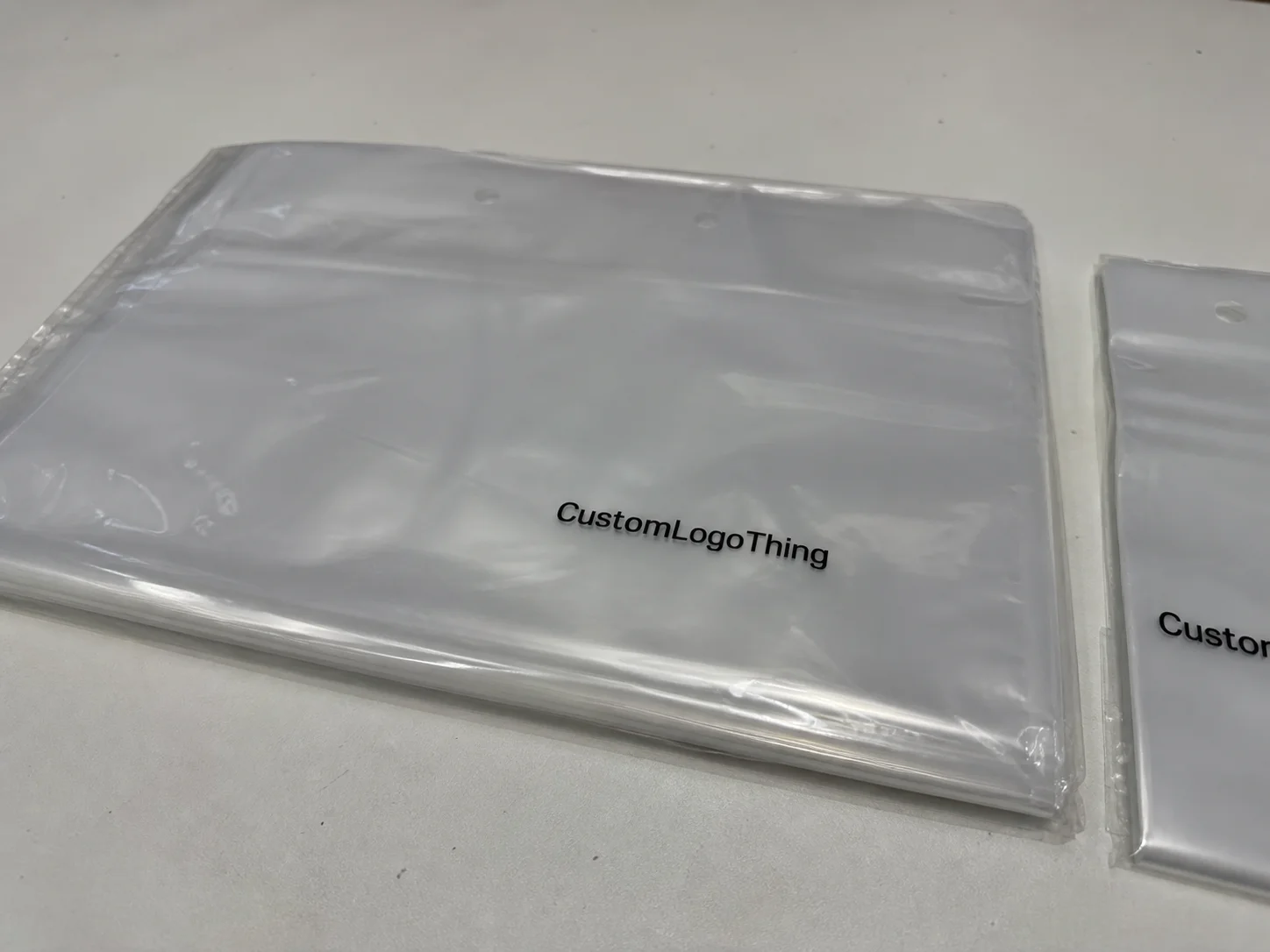
Buyer Fit Snapshot
| Best fit | Biodegradable Mailers Supplier for projects where brand print, material claims, artwork control, MOQ, and repeat-order consistency need to be specified before quoting. |
|---|---|
| Quote inputs | Share finished size, material target, print colors, finish, packing count, annual reorder estimate, ship-to region, and any compliance wording. |
| Proofing check | Approve dieline scale, logo placement, barcode or warning zones, color tolerance, closure strength, and carton packing before bulk production. |
| Main risk | Vague material claims, crowded artwork, missing packing details, or unclear freight terms can make a low unit price expensive after revisions. |
Fast answer: Biodegradable Mailers Supplier for: Film, Print, MOQ, and Carton Packing should be specified like a repeatable production item. The safest quote records material, print method, finish, artwork proof, packing count, and reorder notes in one written spec.
Production checks before approval
Compare the actual filled-product size with the drawing, then confirm tolerance on folds, seals, hang holes, label areas, and retail display edges. Reserve space for logos, QR codes, warning copy, and material claims before decorative graphics fill the panel.
Quote comparison points
Review material grade, print process, finish, sampling route, tooling charges, carton quantity, and freight assumptions side by side. A quote is only useful when the supplier can repeat the same color, closure quality, and packing count on the next order.
I’ve spent enough time on packaging floors to know that a Biodegradable Mailers Supplier guide can spare a buyer from a very expensive mistake. I remember the first time I walked a blown-film line turning out “eco-friendly” mailers in a factory outside Dongguan, and the label sounded excellent, yet the seal gave way at the corners on a 2.5 mil roll while the film carried more filler than anyone admitted during the sales call. That kind of mismatch is exactly why a biodegradable mailers supplier guide matters before you place a purchase order, especially if your brand ships apparel, subscription kits, or light accessories that still need protection in transit and usually need unit costs held around $0.14 to $0.22 each at 5,000 pieces.
Custom Logo Things works with brands that care about presentation, cost control, and sustainability claims, and I’ve seen how quickly those priorities collide once the cartons arrive at the warehouse in Los Angeles, Chicago, or Manchester. Honestly, I think a smart biodegradable mailers supplier guide helps you separate real performance from marketing language, and that separation is worth money, time, and a lot fewer customer complaints (and a lot fewer frantic emails at 4:57 p.m., which I could happily live without).
Biodegradable Mailers 101: What They Are and Why Buyers Care
A biodegradable mailers supplier guide begins with the simplest definition: biodegradable mailers are shipping bags made from materials designed to break down under specific environmental conditions through microbial action, heat, moisture, or industrial composting, depending on the blend and certification. That sounds straightforward, but in practice I’ve seen suppliers in Shenzhen, Jiaxing, and Ho Chi Minh City use the same “green” language for very different constructions, and buyers end up comparing apples to cardboard on a spreadsheet with no actual material specs attached.
Here’s the part many people get wrong. Biodegradable does not automatically mean compostable, and neither of those terms means recyclable. A compostable mailer may be certified to break down in industrial composting under controlled conditions, while a biodegradable film may still need a specific environment and a time frame of 90 to 180 days to degrade properly. Oxo-degradable products are a different animal altogether; they use additives that cause plastic to fragment, which is not the same thing as true biodegradation, and I’ve seen brand managers get burned when they assumed “degradable” meant environmentally responsible end-of-life.
In a practical biodegradable mailers supplier guide, you also need to know the materials. Common structures include PBAT blends, PLA content, starch-based compounds, and paper-poly hybrid constructions. PBAT is often chosen because it adds flexibility and toughness, while PLA can contribute rigidity but needs the right blend to avoid brittleness; a 65/35 PBAT-PLA mix behaves very differently from a 90/10 starch-heavy blend. Starch-based compounds can reduce fossil-based content, though shelf life and moisture sensitivity Matter More Than many brochures admit. Paper-poly hybrids, meanwhile, often give a more premium feel, especially with a 350gsm C1S artboard insert or a kraft outer layer, but they are not automatically biodegradable unless the film and adhesive structure support that claim.
I usually place biodegradable mailers in the broader poly mailers category, because that is how buyers actually compare them on a sourcing spreadsheet. They’re used every day for apparel, socks, lightweight cosmetics, subscription products, and low-damage e-commerce shipments where a corrugated box would be overkill. In one supplier meeting I sat through in Dongguan, a buyer for a boutique clothing brand realized they could drop shipping weight by 18% just by moving from a rigid mailer tray to a 2.5 mil biodegradable film mailer with a clean self-seal strip and a 40 mm adhesive flap.
A biodegradable mailers supplier guide also needs to be blunt about claims. Ask what standard is being referenced, what disposal environment is assumed, and whether the documentation points to an actual certification or just a supplier statement. If you want credibility, look for recognized references such as ISTA testing standards for transit performance and public guidance from the EPA on materials management and waste pathways, because a claim without a test report dated within the last 12 months is usually just a marketing line.
How Biodegradable Mailers Work in Real-World Shipping
Any solid biodegradable mailers supplier guide should explain the construction, because the structure tells you what will happen in the field. The process usually starts with resin compounding, where the base material is blended with additives, color masterbatch, and sometimes slip agents or anti-block ingredients. Then the blend goes through a blown film line or cast film system, depending on the plant’s equipment in places like Ningbo, Foshan, or Binh Duong. After that, the film is printed, folded, side-sealed, gusseted if needed, and finished with a closure strip or adhesive line.
I remember standing beside a flexographic printing press in a facility outside Shenzhen while the operator adjusted the drying temperature by just 4 degrees because the biodegradable film was scuffing more than standard polyethylene. That tiny change fixed the issue, and it also saved a 20,000-piece run from a dull, smeared logo on a bright white 3 mil mailer. It reminded me that a biodegradable mailers supplier guide is not only about environmental claims; it’s about how the material behaves at speed, under heat, and during sealing.
Biodegradation depends on the environment, and that’s where confusion starts. Oxygen, moisture, heat, and microbes all influence breakdown, which means a mailer does not simply vanish in a dry warehouse in Phoenix or a sealed landfill cell in Sydney. Industrial composting conditions are usually more controlled than home compost setups, and some materials only meet their claims in those specific facilities over a 60 to 120 day window. A buyer reading a biodegradable mailers supplier guide should ask whether the mailer is intended for industrial composting, whether it needs active microbial conditions, and whether the film’s shelf life is long enough for real inventory cycles of 6 to 9 months.
Performance testing matters too. A good supplier will check tear resistance, puncture resistance, seal integrity, and load performance. I’ve seen 1.8 mil mailers that looked beautiful on press but failed a corner drop test with a pair of boxed earbuds, while a 2.75 mil blend with better seal geometry held up perfectly under a 4-foot drop and a 20-pound compression stack. The lesson is simple: biodegradability does not have to mean fragile packaging, but the construction must be matched to the product.
Factory equipment changes as well. When a plant shifts from standard polyethylene to biodegradable blends, the heat-sealing window often changes by 10 to 20 degrees Celsius, the film can feel softer, and the machine operator may need to adjust dwell time or bar temperature. Side-seal machines and auto-bagging systems may need re-tuning for film memory and slip, especially on lines running 18,000 to 30,000 bags per shift. A complete biodegradable mailers supplier guide should warn you that this is normal, not a red flag, but it does make sample testing essential before any full production run.
Honestly, I think this is where buyers save the most money: not by chasing the cheapest quote, but by making sure the film, seal, and print all work together in the actual warehouse environment. That’s the difference between a nice-looking sample and a packaging program that survives a busy Monday morning at fulfillment speed in a 40,000-square-foot warehouse.
Key Factors to Evaluate in a Biodegradable Mailers Supplier
If you’re using a biodegradable mailers supplier guide the right way, your first filter is not price. It’s documentation. Ask for third-party certifications, material declarations, and test reports that match the exact construction you intend to buy, whether that is a 2.0 mil PBAT blend or a 3.2 mil paper-poly hybrid. If a supplier says the mailer is compostable, ask which standard: ASTM, EN, or another recognized program. If they say biodegradable, ask what conditions, what time frame, and what evidence supports the claim. A supplier who answers clearly usually has a better grasp of production reality.
Certifications and compliance documents should be checked with the same care you’d give a dieline proof. Depending on your market, you may need proof related to compostability, material sourcing, food-contact suitability, or transit durability. For brands with strong sustainability programs, I also like to see FSC references when paper components are part of the structure. The Forest Stewardship Council has clear public standards, and that kind of transparency helps when you’re explaining packaging choices to retail partners or internal sustainability teams in New York, Toronto, or Berlin.
Minimum order quantity matters more than many buyers admit. I’ve had startups tell me they wanted a premium custom mailer, but their first order was only 2,000 pieces and they needed four printed SKUs. That changes the economics fast. A reliable biodegradable mailers supplier guide should push you to ask about MOQ by size, by print color count, and by construction type. Some suppliers can handle 5,000 pieces for a standard size with one-color printing, while others require 10,000 or more once you add custom artwork and special finishes like matte lamination or spot UV.
Pricing deserves a real breakdown. In a recent quote review I handled, a buyer saw a unit price of $0.18 for 5,000 pieces and thought they had a winner. After adding plate fees at $120 per color, sample charges at $65, and freight at $480, the real landed cost was closer to $0.29 per unit. In another case, a 10,000-piece reorder from a plant in Xiamen landed at $0.15 per unit after tooling was already paid, which shows how volume and repeat production can shift the math quickly. A practical biodegradable mailers supplier guide should always look at raw material premium, printing setup, freight, and reorder behavior, not just the headline number.
Supplier quality systems matter just as much. Ask whether the plant uses in-line inspection for film gauge, seal testing on every batch, and batch traceability tied to resin lots. A plant running 30,000 mailers a day can look immaculate from the office and still produce a bad seal if the temperature drifted on one machine for two hours. I’ve watched a carton of sample bags pass visual inspection, then fail a load test because the side seam had been under-pressed by a few millimeters. Those details show up in a mature biodegradable mailers supplier guide for a reason.
Lead time is another point where buyers get surprised. Raw resin availability, mixing, film extrusion, print queue length, packing, palletizing, and export transit all affect delivery. A domestic supplier in Texas or Ohio may quote 12 to 15 business days from proof approval, while an offshore supplier in Guangdong or Hai Phong might need 25 to 35 business days before shipping. If you are managing seasonal launches or promotional drops, your biodegradable mailers supplier guide should include a buffer of at least one extra week for artwork changes and one more for freight variability, especially during Q4 when vessel space tightens.
Step-by-Step Process for Choosing the Right Supplier
The best biodegradable mailers supplier guide starts with a proper needs brief. Write down product weight, dimensions, shipping method, average monthly volume, print coverage, and the sustainability claim you actually want to make. A 7 oz knit shirt has very different protection needs than a boxed accessory with a sharp metal zipper pull, and those differences affect film thickness, seam design, and even adhesive choice. If your target is 8,000 units a month, say that plainly so the factory can quote the right resin blend and production slot.
Once that brief is set, shortlist suppliers by more than price. Compare the blend options, certifications, print capability, production capacity, and how they answer technical questions. I once watched two suppliers quote the same size at nearly the same price, but one could explain the seal window in Celsius, while the other kept saying “our material is very good.” Guess which one got the business? A real biodegradable mailers supplier guide should reward specificity, especially when one supplier can produce in Suzhou with a 7-color flexo press and another only offers basic one-color printing.
Request samples and test them under real conditions. Fill them with actual products, not empty cartons or folded paper. Run drop tests from waist height, check whether the seal opens after compression, and see how the print looks after rubbing against cartons or conveyor belts. If your team uses auto-bagging, test the sample on the actual machine. If the warehouse is humid, leave a few samples in that environment for several days and inspect them again. A supplier can only promise so much; your workflow tells the rest of the story.
Then ask for a formal quote. A strong biodegradable mailers supplier guide should encourage buyers to request line-item pricing for unit cost, plate or setup fees, sample charges, freight estimates, and production schedule. For custom jobs, I also ask for proofing steps: artwork check, color target approval, and pre-production sample review. A detailed quote prevents the old “that wasn’t included” conversation, which I’ve heard more times than I care to count, especially when a buyer discovers the quoted $0.17 unit price did not include export cartons or inland trucking from the factory gate.
Run a pilot order before scaling. I’m serious about this. One apparel client in the Midwest ordered 25,000 pieces after approving a sample that looked great, but the first production run had slightly heavier ink coverage and took longer to dry, which created scuffing in the inner carton stack. A 3,000-piece pilot would have exposed it early. A disciplined biodegradable mailers supplier guide should treat pilot orders as insurance, not as a delay, because a two-week pilot often protects a 12-month packaging program.
During the pilot, collect warehouse and customer feedback. Measure damage rate, packaging time per order, and any comments about opening ease or presentation. If customers praise the unboxing but the seam splits in the packing line, you have a technical issue, not a marketing issue. That distinction matters when you are choosing between two suppliers that both look fine on paper and both can quote a 10,000-piece run out of Qingdao or Ningbo.
For buyers who want broader support, Custom Logo Things also offers Custom Packaging Products and Custom Poly Mailers, which can help you compare biodegradable options against other mailing constructions before you commit to a production run.
Common Mistakes Buyers Make When Sourcing Biodegradable Mailers
The biggest mistake I see in any biodegradable mailers supplier guide conversation is trusting green language without proof. “Eco-friendly,” “earth-friendly,” and “plant-based” all sound reassuring, but none of them tell you whether the mailer meets a specific standard or how it behaves after use. Ask for documentation, ask for the exact material blend, and ask for the disposal conditions in writing, ideally with the test report number, lab name, and issue date.
Another common problem is underestimating thickness and seal requirements. A 2.0 mil mailer may work beautifully for a soft tee, then fail badly for a package with a rigid metal accessory or a slightly overstuffed order. I’ve seen split seams happen because a buyer shaved the film thickness by 15% to save fractions of a cent, only to pay far more in reships and support tickets. A serious biodegradable mailers supplier guide always balances cost against real performance, whether the order is 4,000 pieces or 40,000.
Print compatibility gets overlooked too. A design that looks sharp on a screen mockup can scratch, dull, or haze on a biodegradable surface if the ink system is not matched correctly. Some films take flexo print better than others, and some need a different curing profile. I once reviewed a batch where dark navy logos looked slightly purple under warehouse lighting because the ink density and film finish were mismatched. The buyer blamed the printer; the real issue was inadequate proofing on a 1,000-piece pre-run from a plant in Huizhou.
Storage and shelf-life limitations can also create trouble. Heat, humidity, and long storage times matter more for some biodegradable blends than for standard polyethylene. If a carton sits too long in a hot distribution center in Dallas or Dubai, the film can become more brittle, the seal strip can weaken, or the bag can curl. A thoughtful biodegradable mailers supplier guide should ask where inventory will sit, how long it will be stored, and whether FIFO rotation is being followed across a 90-day or 180-day supply cycle.
Documentation review is the last major miss. If a supplier cannot explain the difference between biodegradable, compostable, and recyclable, that is a signal to slow down. It can also become a customer-service headache later if your marketing team uses one term and the packaging insert uses another. I’ve seen that confusion cause not only complaints, but also refund requests from sustainability-conscious buyers who felt misled after reading a product page that promised “compostable” on one line and “biodegradable” on the next.
Expert Tips for Better Pricing, Timeline Planning, and Supplier Communication
When I review a biodegradable mailers supplier guide from a procurement angle, I always tell teams to negotiate around total landed cost. That means unit price, setup, plates, freight, duty if applicable, sample charges, and the cost of any reorders or rush production. A cheaper quote on paper can become expensive once you include ocean transit, port delays, or a minimum freight charge on a low-volume order, such as $380 to $900 for a partial pallet out of southern China.
Build buffer time into your launch schedule. Sampling, artwork correction, print approval, production, packing, and shipping all take longer than most marketing calendars assume. For a custom run, I’d rather see a buyer plan 4 to 6 weeks with realistic checkpoints than promise a retail launch and then scramble for substitute packaging at the last minute. A practical biodegradable mailers supplier guide should protect you from those rushed decisions, especially if your proof approval arrives on a Friday and the factory shuts down for a holiday in the next week.
Ask about color matching and proofing early. Suppliers should be able to explain whether they use a Pantone target, a digital proof, or a pre-production strike-off. Ask how they handle dieline checks, bleed, and bar-code placement if your design includes regulatory marks or shipping data. In one factory meeting in Xiamen, a buyer nearly approved artwork with the logo placed too close to the seam; the final production bag would have sliced through the brand mark every time the bag was heat-sealed. That is exactly the kind of error a detailed biodegradable mailers supplier guide helps prevent.
Use a test matrix if your products vary. A mailer that works for soft goods may not suit boxed accessories, and a bag that performs well in dry inland shipping may not hold up in coastal humidity. I like to test by weight bands, such as 4 oz, 8 oz, and 12 oz, and by route type, such as local ground, national ground, and humid-region transit. That gives buyers real data instead of guesswork, especially when a shipment spends 5 days crossing the Gulf Coast in midsummer.
Create a supplier scorecard with five categories: communication speed, quality consistency, documentation clarity, pricing transparency, and on-time delivery. Score each on a 1-to-5 scale after the sample stage and again after the first production run. A good biodegradable mailers supplier guide should feel like a repeatable system, not a one-time purchase checklist, and it works best when the same team uses it on every RFQ from the same factory in Foshan or the next one in Ningbo.
Also, do not hesitate to talk about the ugly details. Ask what happens if resin inventory is short, if a press lane goes down, or if a shipment misses the booked vessel. The suppliers I trust most are the ones who answer those questions with a plan, not with vague reassurance. That honesty is worth a lot more than a polished brochure, especially when a missed boat can push delivery from 18 days to 31 days.
What to Do Next: Your Action Plan for Sourcing with Confidence
Your next step with a biodegradable mailers supplier guide is simple: gather your product dimensions, estimated annual volume, target unit cost, and the exact sustainability statement you want to make. If your brand wants compostable claims, say that clearly. If you simply want a lower-impact mailer with better brand presentation, say that too. Clarity at the start saves revisions later, and it helps a supplier quote the right construction instead of guessing between a 2.5 mil and 3.0 mil blend.
Request three sample constructions if possible. Compare a standard biodegradable blend, a paper-poly hybrid, and one heavier-duty option with the same print design. That side-by-side review will tell you far more than a sales pitch. A good biodegradable mailers supplier guide should make room for comparison, because packaging performance is always relative to your product and workflow, whether your order ships from Atlanta, Vancouver, or Paris.
Collect all documentation in one procurement folder: certifications, test reports, material statements, artwork approvals, and production notes. If your company is ever audited by a retailer, a marketplace, or a sustainability team, you will be glad that folder exists. I’ve seen teams spend two days chasing old emails because no one saved the original proof. That kind of scramble disappears when your biodegradable mailers supplier guide is used as a real working document with filenames that include dates like 2025-08-14 and 2025-08-19.
Pilot one shipping lane first. Measure damage rate, warehouse handling time, and customer feedback, then review the data after the first 30 to 60 days. If the mailer performs well, scale gradually. If it doesn’t, adjust thickness, seal width, or print coverage before ordering the next large batch. That is a far safer approach than betting the whole season on a single approval sample, particularly when a 12,000-piece seasonal drop must arrive before the first week of October.
Finally, set a reorder threshold and a review schedule. If your lead time is 15 business days and your monthly usage is 20,000 units, you should not wait until the last pallet is open before reordering. I prefer buyers to carry enough inventory for one full production cycle plus a small buffer for freight delays. A disciplined biodegradable mailers supplier guide helps you stay ahead of that curve rather than chasing it, and it gives your team enough time to approve a reorder before stock drops below two weeks of cover.
For brands that want custom print support alongside better sourcing choices, Custom Logo Things can help align packaging format, artwork, and supply planning so your mailers do more than just ship products—they reinforce the brand with every order.
“The cheapest mailer is rarely the cheapest packaging choice once you count damaged goods, rework, and customer complaints. The right supplier saves money in the places finance doesn’t always see on day one.”
Biodegradable Mailers Supplier for Smart Buying: decision table
| Decision area | Best fit | What to verify | Risk if skipped |
|---|---|---|---|
| Board or flute choice | Product protection, stacking strength, and shipping distance | Caliper/flute, crush resistance, and sample fit | Weak structure or oversized cartons increase damage and freight cost |
| Print and finish | Retail presentation, unboxing, and shelf recognition | Color proof, coating, scuff resistance, and logo placement | A good dieline can still look cheap if finish and color drift |
| Packing method | Hand packing, ecommerce fulfillment, or retail-ready cartons | Inner count, master carton, label position, and warehouse handling | Good packaging slows operations if pack-out is ignored |
Frequently Asked Questions
What should I ask a biodegradable mailers supplier guide when comparing options?
Ask which materials are used, what certifications back the claims, and how the mailers should be disposed of. Request sample specs, minimum order quantities, lead times, and a full cost breakdown including freight and setup. A good biodegradable mailers supplier guide should also help you verify whether the claim applies to industrial composting, home composting, or another specific condition, and whether the product was tested at a lab in Guangzhou, Shanghai, or an accredited facility in Europe.
How do I know if biodegradable mailers are strong enough for shipping?
Check the film thickness, seal strength, puncture resistance, and test them with your real product weight. Ask the supplier for performance data and run drop and transit tests before a full rollout. If you need a practical reference point, many buyers evaluate mailers using the same discipline they would apply to poly mailers and fulfillment packaging under ISTA-style transit expectations, ideally with samples tested at 4 feet and again after 24 hours under compression.
Are biodegradable mailers more expensive than standard poly mailers?
Often yes, because the raw materials and manufacturing process can cost more than traditional polyethylene. The real comparison should include total landed cost, damage reduction, and brand value, not only unit price. A careful biodegradable mailers supplier guide will show how a slightly higher mailer cost can still produce a better overall packaging budget if returns and replacements drop, especially on orders above 10,000 pieces where freight and setup costs spread out more efficiently.
What is the usual timeline for a custom biodegradable mailer order?
Timeline usually includes sampling, artwork approval, production, and shipping, so it can take several weeks depending on complexity. A domestic supplier may need 12 to 15 business days from proof approval, while an overseas plant can need 25 to 35 business days before the freight leg even begins. In my experience, the difference between a smooth launch and a rushed one is often whether the buyer planned for proofing and freight before the marketing deadline got locked.
How can I avoid misleading sustainability claims from suppliers?
Ask for third-party certifications, written test results, and clear disposal instructions tied to the exact material blend. Avoid vague language and verify that the supplier can explain the difference between biodegradable, compostable, and recyclable. A reliable biodegradable mailers supplier guide should push you to keep the paperwork together so your claims are defensible and easy to audit later, whether the supplier is in Shenzhen, Chicago, or Barcelona.