Buyer Fit Snapshot
| Best fit | Black Friday Fulfillment Packaging That Cut Delays projects where brand print, material claims, artwork control, MOQ, and repeat-order consistency need to be specified before quoting. |
|---|---|
| Quote inputs | Share finished size, material target, print colors, finish, packing count, annual reorder estimate, ship-to region, and any compliance wording. |
| Proofing check | Approve dieline scale, logo placement, barcode or warning zones, color tolerance, closure strength, and carton packing before bulk production. |
| Main risk | Vague material claims, crowded artwork, missing packing details, or unclear freight terms can make a low unit price expensive after revisions. |
Fast answer: Black Friday Fulfillment Packaging That Cut Delays: Material, Print, Proofing, and Reorder Risk should be specified like a repeatable production item. The safest quote records material, print method, finish, artwork proof, packing count, and reorder notes in one written spec.
Production checks before approval
Compare the actual filled-product size with the drawing, then confirm tolerance on folds, seals, hang holes, label areas, and retail display edges. Reserve space for logos, QR codes, warning copy, and material claims before decorative graphics fill the panel.
Quote comparison points
Review material grade, print process, finish, sampling route, tooling charges, carton quantity, and freight assumptions side by side. A quote is only useful when the supplier can repeat the same color, closure quality, and packing count on the next order.
I still remember a 14-minute carton shortage that snowballed into 400 late parcels, and that is exactly why black friday fulfillment packaging tips matter long before the first order lands. In one Midwest apparel warehouse outside Columbus, Ohio, an unlabeled pallet of right-sized mailers slowed the line by 19 seconds per order; at 3,200 orders, that was enough to push trucks past the 5:00 p.m. carrier cutoff. Packaging is not the decorative layer at the end. It is the machinery that decides whether the order leaves on time, whether the invoice stays clean, and whether the customer sees a polished brand experience or a dented surprise.
Fulfillment packaging is the carton, mailer, insert, void fill, label, tape, and packing workflow that move an order from pick to ship. It also includes the quiet but decisive details: where the tape gun hangs, how the label printer feeds, whether the packer reaches for 50 lb kraft paper or 1.5 cubic foot air pillows, and whether the next carton is within arm's reach or across the aisle in a rack labeled A3. I have watched teams lose more time debating box choice than actually sealing the parcel, which is a special kind of warehouse comedy until the UPS or FedEx cutoff starts blinking red. Black friday fulfillment packaging tips belong in operations meetings, not only branding discussions, because the line speed and the brand story travel in the same truck.
Custom Logo Things sits in a useful place in that conversation because packaging touches both throughput and presentation. If you are comparing branded packaging against stock cartons or a hybrid pack-out, black friday fulfillment packaging tips help you weigh the labor, shipping cost, damage claims, and customer tickets that ride along with each decision. A Custom Printed Mailer from a converter in Dongguan, Guangdong may land at $0.15 per unit for 5,000 pieces, while a stock white mailer with a 2-inch branded label from a Los Angeles supplier can ship in 3 to 5 business days; both choices can work if the order profile fits. If you want a broader look at packaging options while you read, the Custom Packaging Products page is a useful reference point, and so is the Custom Logo Things homepage if you are mapping what a full package branding program might look like.
I think many teams treat packaging like a design choice and only later discover it is a throughput choice. That is backward. On a peak week, a carton that saves 0.12 ounces of billable weight or 12 seconds at the station can matter more than a prettier print finish. A 350gsm C1S artboard insert with a clean die-cut slot may look modest on paper, but if it cuts pack time by 8 seconds across 10,000 orders, it has earned its place. Black friday fulfillment packaging tips work best when they are built around the actual pace of your warehouse, not the mood board pinned to the conference room wall, because mood boards do not ship parcels.
Why Do Black Friday Fulfillment Packaging Tips Break So Fast?
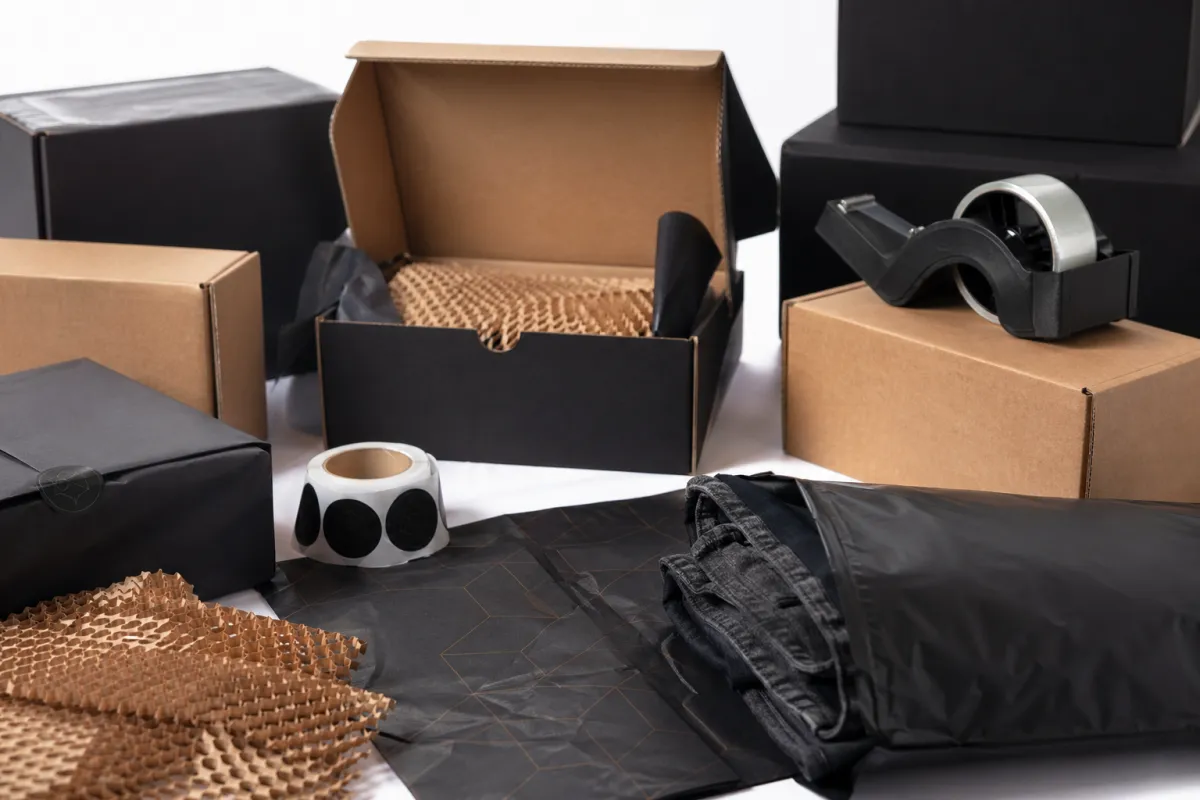
The reason black friday fulfillment packaging tips matter so much is pretty simple: peak season exposes every weak spot that normal weeks hide. A line that comfortably ships 800 orders a day can look fine with 6 packers and 2 printers. Add a 3x volume spike, and suddenly the same line needs 9 packers, 4 printer rolls, and a stockroom person who can replenish cartons every 20 minutes without missing a beat. If one of those parts slips, support tickets rise, late shipments stack up, and returns become more likely. In a Baltimore facility I visited last November, a single paused label printer added a 7-minute queue because 42 orders were already staged at the back table.
I remember visiting a cosmetics client in New Jersey where the warehouse looked calm at 2 p.m., then fell apart at 4:15 p.m. because the largest SKU needed a different insert, a different mailer, and one extra strip of tape. That one SKU represented only 18% of orders, but it consumed nearly 31% of pack time. The team had designed packaging for the shelf, not for the shift. That is the trap black friday fulfillment packaging tips are trying to help you avoid, and it is usually more expensive than it looks on paper. Their outer carton was a 32 ECT kraft box from a plant in Charlotte, North Carolina, but the pack spec never accounted for the custom foam corner used on the fragrance variant.
Plain language helps here. Fulfillment packaging is not just the outer box. It includes the carton strength, the mailer style, the amount of void fill, the label placement, the insert that stops product movement, and the packing order a human follows 500 times a day. If any piece adds friction, peak volume magnifies it. A 5-second delay per order becomes 2.1 labor hours across 1,500 orders. That is not theory; that is a spreadsheet problem you can feel on the warehouse floor when the line starts to stack up and everybody starts looking at the printer like it personally offended them. On a 10-hour shift, that same 5-second drag can erase the output of one full-time packer.
Good packaging is also a customer service decision. Damaged goods are expensive in two directions: the cost to replace them and the cost of the customer experience breakdown. I have seen brands spend $0.07 less per unit on packaging and then pay $8.50 in re-ship cost plus a return label plus a support interaction. Black friday fulfillment packaging tips should push you toward total cost, not the cheapest carton on paper, because cheap material that triggers replacement work stops being cheap very quickly. If the replacement carton comes from a warehouse in Reno, Nevada and arrives 6 days late, the savings disappear even faster.
"We thought the box was the easy part," one fulfillment manager told me after a 6-hour overtime shift, "but our real problem was choice overload at the packing station. Every extra option added 4 to 6 seconds." That line stuck with me because it was so honest, and because the numbers matched what I kept seeing on other floors, especially on nights when the team was packing until 9:30 p.m. with 18-inch tape rolls and a half-empty void-fill hopper.
There is another reason the problem accelerates. Peak season compresses supply. If a carton is delayed by 10 business days, you may not have time to recover before the carrier cutoff calendar closes. If a void-fill supplier ships partial, the missing pallet can force the team to improvise with oversized boxes and extra dunnage. That is how black friday fulfillment packaging tips become a hedge against cascading failure, especially when your production calendar is already pinned to a tight freight window and everyone is pretending the backup order will somehow arrive by magic. A corrugator in Shenzhen may promise a vessel ETA, but your warehouse in Nashville still needs the cartons on the dock by Tuesday morning.
How Black Friday Packaging Fits Into Your Fulfillment Timeline
Packaging decisions start earlier than many teams admit. The timeline usually begins 6 to 8 weeks before the surge with forecasting, supplier ordering, and approvals. Sampling often takes 3 to 7 business days if the design is simple, or 10 to 14 business days if custom printed boxes need revised artwork and a new die line. After that, receiving, kitting, and station setup can consume another week if the warehouse is juggling new SKUs. Black friday fulfillment packaging tips only work if they are mapped against that timeline instead of treated as a last-minute purchase you can wedge in between payroll and a pallet count.
Lead times cascade. I once watched a beverage brand in Atlanta lose 9 shipping days because their outer cartons arrived on time, but the inserts did not. The result was a half-finished pack-out area, 2 temporary labor hires waiting with nothing to do, and 1,200 orders pushed into the next carrier window. Packaging delay is rarely isolated. It spreads into labor scheduling, inventory staging, and customer promise dates with almost no warning. The inserts were scheduled from a supplier in Monterrey, Mexico, while the cartons came from an Indiana corrugator, and the mismatch turned into a very expensive lesson.
In practical terms, your packaging calendar should sit next to your inventory calendar. If sales expects a 42% order spike on Friday and Saturday, procurement needs packaging on site before that spike, not after it. If the warehouse plans to add a second shift, training on box selection and label placement should happen before the extra shift starts. One of the simplest black friday fulfillment packaging tips is to run a 30-minute training session with sample orders, because it can save hundreds of mispacks when the team is seeing three times the usual volume and every extra decision adds pressure. I like to schedule that session at 3:00 p.m., right before the evening wave starts, because the mistakes show up while there is still time to fix them.
My own rule is to build a pre-season schedule with five checkpoints: approvals, sampling, ordering, training, and contingency prep. For approvals, give creative and operations 48 hours, not 10 days. For sampling, test the top 10 SKUs first, because those usually drive 60% to 80% of volume. For ordering, add a 15% buffer on fast-moving consumables like tape and mailers. For training, use real product with real labels, including the exact Avery or Zebra stock your team will print. For contingency prep, identify a backup box size and a backup supplier before the pressure hits. Those black friday fulfillment packaging tips sound simple, but they are what keep the line moving when a pallet is late and the queue is not waiting.
It also helps to think in cutoffs. If your carrier deadline is 5:00 p.m., your packaging plan has to support a 4:15 p.m. pack finish, not a 4:59 p.m. miracle. That 45-minute buffer absorbs printer jams, missing inserts, and a sudden rush of customer service exceptions. In a high-volume week, the buffer is the difference between a controlled day and a backlog that spills into the weekend, especially when dock doors are already loaded with outbound pallets and the trailer yard has only 2 open spots left.
Key Factors That Decide Speed, Damage, and Cost
The first factor is fit. One of the most practical black friday fulfillment packaging tips is to choose right-sized packaging, because that reduces dimensional weight charges and cuts dead space that needs filler. A carton that is 2 inches too large in each direction can trigger a higher billable weight tier on thousands of shipments. Multiply that by 4,000 orders, and you have a freight problem that looks small in a quote but large in the P&L. Black friday fulfillment packaging tips should start with fit because fit influences both labor and shipping spend. In a 12 x 9 x 4 mailer, for example, a single inch of extra headspace can force another layer of kraft paper or a larger insert board.
Second is material strength. A fragile candle, a rigid hardcover book, and a folded T-shirt do not need the same protection strategy. A candle may need a 32 ECT carton with 1.5 inches of void fill on every side. A T-shirt may ship safely in a 5-oz poly mailer or a thin mailer plus a branded insert. The lightest packaging that still protects the product is usually the winning choice, but "usually" matters. I have seen a weak mailer save 6 cents and cost $11.40 in replacement and freight on a single order, which is enough to undo the savings from dozens of clean shipments. For rigid gift items, a 350gsm C1S artboard sleeve over an E-flute carton can be a smarter blend of protection and presentation.
Third is the tradeoff between branding and speed. Custom printed boxes can strengthen package branding and make the shipment feel more premium, but they also add lead time and sometimes slow the pack line if the team must choose between multiple artwork variants. A hybrid approach often works better: stock cartons for speed, plus a branded insert, label, or sleeve for recognition. That is often the point where black friday fulfillment packaging tips become most practical instead of most glamorous, because the warehouse can keep pace while the customer still sees a polished package. A sleeve printed in Chicago on 17pt C1S paper can ride with a generic corrugated mailer and still feel intentional.
Fourth is the work environment. Station layout matters more than people think. If the tape gun is 18 inches too far from the body, each packer can lose 2 to 3 seconds per order. If the label printer is across the aisle, another 4 to 6 seconds vanish. If the void fill is stored below knee height, fatigue rises by the third hour. I have stood in a line where simply moving the tape, label, and dunnage within arm's reach increased throughput by 11% in a single afternoon. That is the kind of change that looks small from the office and enormous from the packing bench, especially in a 6,000-square-foot facility where every step matters.
There are standards behind this, too. ISTA test protocols, especially the drop and vibration tests used for parcel shipping, tell you whether the packaging can survive the trip. You can read more about those methods at ISTA. For sustainability and waste context, the EPA tracks containers and packaging as a major materials stream; their guidance on materials recovery and recycling is worth reviewing at EPA containers and packaging guidance. Those references are not decoration. They are the floor under your packaging decisions, especially if your brand is trying to balance curbside recyclability with a 2-day pack window.
There is also the reality of carrier rules. Label size, scan contrast, and carton strength all affect acceptance. A carton that cannot carry a clean barcode or that splits under handling tests may cost far more than the packaging budget line shows. The smartest black friday fulfillment packaging tips always consider the carrier's requirements, because the warehouse is only half the journey and the sorting hub can be less forgiving than your own dock. A scannable label with a 4 x 6 inch thermal format and at least 300 dpi print quality is not optional if you want to avoid a costly exception at the hub in Louisville or Memphis.
| Option | Example Unit Cost | Lead Time | Best For | Operational Risk |
|---|---|---|---|---|
| Stock mailer with branded label | $0.18/unit at 5,000 pieces | 3-5 business days | Fast-moving apparel, accessories, and small gifts | Low, if sizes are standardized |
| Custom printed box | $0.42/unit at 5,000 pieces | 12-15 business days from proof approval | Premium product packaging and retail packaging programs | Medium, because artwork and inventory must be locked early |
| Hybrid carton plus insert | $0.27/unit at 5,000 pieces | 5-8 business days | Brands balancing speed with package branding | Low to medium, depending on insert kitting |
That table is not a universal truth; it is a realistic planning range. If you buy 20,000 units instead of 5,000, the unit cost drops. If you want specialty finishes like soft-touch lamination or foil, it rises. The point is to compare the full cost of the packaging choice, not just the print quote. Black friday fulfillment packaging tips are strongest when they include freight, labor, damage, and return risk in the math, because those pieces usually decide whether the project earns its keep. A $0.03 change in unit price can be irrelevant if it saves 9 seconds and avoids a $7.95 reship.
Black Friday Fulfillment Packaging Tips: Step-by-Step Workflow
Start with your top-selling SKUs. One of the most reliable black friday fulfillment packaging tips is to audit the top 20 products and assign each one a packing spec that lists carton size, insert type, tape method, and label position. This removes improvisation at the station. If your top 20 products make up 75% of orders, you have already reduced most of the decision-making burden. That is one of the most reliable black friday fulfillment packaging tips I know, because it takes pressure off people before the rush begins and keeps the line from turning into a daily guessing game. A spec sheet with a 10 x 8 x 4 carton, one 350gsm insert, and one 2-inch tape seal is a lot easier to execute than a vague brand brief.
Next, standardize the pack-out recipe. A recipe is a one-page sheet that says, for example, "Use 10 x 8 x 4 carton, 1 kraft paper insert, 2 strips of 2-inch tape, ship label on top right, return slip under the lid." I have seen pack times drop by 14% simply because the team stopped asking which size to choose. The recipe should be visible at the station, not buried in a shared drive that only the supervisor can open, and it should be written in the same plain language the packers use on the floor. Laminate the sheet, tape it to the line, and keep one copy at the printer in case the shift lead needs to re-train a temp in under 5 minutes.
Then pre-stage materials by product family or by station. If all cosmetics orders are packed on the east line, the east line should have 3 days of cartons, labels, and filler within 2 steps of the packer. If apparel and accessories use different mailer sizes, color-code the bins. One client used red bins for small mailers and blue bins for medium cartons, and mis-picks dropped from 2.8% to 0.9% in the first week. That is the kind of operational gain black friday fulfillment packaging tips should aim for: fewer choices, fewer errors, faster hands. In a warehouse in Phoenix, Arizona, the color coding alone shaved 1,100 feet of unnecessary walking per shift.
Run timed pack tests on real orders. Do not test with empty boxes and pretend the result means anything. Put in the actual product, the actual insert, and the actual label. Time 25 orders per SKU, record average pack time, and note where errors happen. If a fragile item takes 46 seconds instead of 28, the team needs either a different box or a different method. I have found that a small sample of 15 to 25 timed packs is usually enough to expose the problem spots, especially when the same mistake repeats across multiple packers. If the label peels up after a 3-foot drop, fix the adhesive before peak week starts.
You should also build a fallback plan. What happens if the 12 x 9 x 4 carton runs out on Wednesday afternoon? What happens if the carrier changes label placement rules? What happens if a gift bundle appears in the order queue and none of the standard kits fit? A fallback plan should name the substitute carton, the substitute insert, the supplier contact, and the person who can approve the switch in under 10 minutes. That kind of clarity is one of the most underused black friday fulfillment packaging tips in the field, and it saves the day when the best-laid plan is sitting on a delayed truck from Savannah or Long Beach.
One of my better memories is from a Dallas area client that sold premium notebooks. Their team had a 3-step pack flow for standard orders and a 6-step flow for gift sets. After we simplified the gift-set packaging to 4 steps and moved the tissue insert into pre-folded packs, throughput rose by 22 orders per hour. The paper looked fancier before, but the warehouse was paying for the extra flourish with labor. That was a hard conversation, but an honest one, and the kind that keeps a peak week from bogging down. The final package still used a 350gsm C1S belly band, just cut to a cleaner 1.25-inch wrap.
If you need structured packaging support while you build those recipes, the right mix of custom printed boxes, inserts, and stock packaging can save hours of sorting later. For many brands, that is where product packaging and package branding finally align with fulfillment reality instead of fighting it. Black friday fulfillment packaging tips are not about making everything plain. They are about making the process predictable enough that the branding choices can actually do their job. A supplier in Qingdao, China or a corrugator in Ohio can both be part of the solution if the spec sheet is clear and the artwork is approved on time.
Common Mistakes That Slow Black Friday Orders
The first mistake is over-customizing every SKU. If you have 48 packaging variations for 80 orders, you have created a decision problem, not a brand advantage. I have watched newer fulfillment teams confuse variety with value. In practice, too many box sizes create training gaps and slower packing. One of the most practical black friday fulfillment packaging tips is to limit active packaging SKUs, and one cosmetics brand cut theirs from 19 to 7 and shaved 1.6 seconds off average pack time. That is a meaningful gain when volumes are high, especially when the line is already moving at a clip. Their packaging line in Secaucus, New Jersey went from two shelves of cartons to one labeled bay, which made replenishment much simpler.
The second mistake is waiting too long to reorder. Reorder points for tape, cartons, sleeves, and void fill should be set before the rush, not after the first stockout. A missed reorder on Tuesday can become an emergency buy on Friday at 18% higher cost, plus 2 lost shifts of productivity. Black friday fulfillment packaging tips only work if your procurement calendar is disciplined. Otherwise, the line ends up borrowing materials from the wrong station, which is how errors multiply and supervisors spend the afternoon untangling the mess. I like to trigger replenishment at 3 days of cover, not 1, because freight rarely behaves nicely once volumes rise.
The third mistake is oversized packaging. This one is expensive because it feels harmless. A carton that is too large may need extra paper fill, extra tape, and a higher shipping charge due to dimensional weight. I have seen brands pay 9% more in freight simply because they refused to standardize to 3 carton sizes. That is money leaving the building one parcel at a time, and it never looks dramatic on a single order. If a 14 x 10 x 6 box can replace three nearly identical box sizes, the math gets easier, the floor gets calmer, and the pallet stack gets tighter.
The fourth mistake is training the team on the fly. If each packer invents a method under pressure, you will see inconsistent tape patterns, crooked labels, and slower decisions. A 20-minute huddle before the shift, plus 10 practice orders per packer, is better than a heroics culture that collapses at 3 p.m. Black friday fulfillment packaging tips should make the packer feel calmer, not more inventive, because calm hands make fewer corrections and fewer corrections keep the queue moving. I have seen one well-run huddle cut mislabels from 27 in a shift to 4, simply because everyone used the same top-right label placement.
The fifth mistake is waiting to test samples until the orders are already stacking up. Early sample testing catches tape adhesion issues, label smudges, and carton crush problems while there is still time to fix them. I once sat in on a supplier meeting where a rigid box looked beautiful in the sample room but failed a basic parcel drop test because the lid corner cracked after the third impact. The client saved themselves from 2,000 ugly surprises by testing before production, not after the warehouse had already committed space to the wrong format. That box had a matte lamination and a magnetic closure, but the hinge board was too thin for parcel handling.
There is one more mistake that gets overlooked: ignoring customer service. If your packaging creates hard-to-open parcels, confusing inserts, or damaged deliveries, support tickets will spike within 48 hours. Customer service and fulfillment should review the same packaging checklist. A few black friday fulfillment packaging tips belong in both departments because the package is the first thing the customer touches and the last thing the warehouse controls, and the handoff between those two worlds is where a lot of friction hides. A support team in Austin, Texas can often spot a packaging flaw long before the warehouse sees the damage trend.
Black Friday Fulfillment Packaging Tips for Cost Control
The real packaging cost is not just the carton price. One of the core black friday fulfillment packaging tips is to model total cost, including material, labor, freight, damage, and returns. A box that costs $0.03 less but adds 7 seconds to pack time may be more expensive overall. I have seen companies chase a low unit price and miss the larger picture by a full 12% on the shipping side. Black friday fulfillment packaging tips need a total-cost lens, or the savings are fake and the finance team ends up paying for them twice. A $0.15 poly mailer from a Shenzhen plant can make sense for a low-breakage item, while a heavier carton may be the right choice for a $68 candle set.
Start by comparing custom packaging to stock packaging plus extras. A custom printed box at $0.42 per unit may make sense for a hero SKU that ships 40,000 times a month and doubles as a branding asset. For smaller SKUs, a $0.18 stock mailer with a $0.06 branded insert and a $0.03 label may be the smarter route. That hybrid route often gives you package branding without tying up cash in slow-moving inventory. It is not glamorous. It is effective, and it keeps the warehouse from carrying a pile of expensive boxes that only fit one season. A 350gsm C1S artboard insert with a clean one-color imprint can carry the brand without forcing every carton into a custom run.
Bulk ordering matters, but only if you can store the inventory. A supplier may quote $0.18/unit at 5,000 pieces and $0.11/unit at 25,000 pieces, yet the larger buy might create storage costs, obsolete artwork risk, and cash flow pressure. I once negotiated with a Shenzhen packaging supplier for a client whose custom printed boxes were landing 17 days later than promised. We saved the order, but only after shifting 60% of the volume into stock cartons and cutting a second artwork pass. Supply decisions always have a timing cost, and the timing cost can outrun the unit savings if nobody is watching the calendar. The cartons finally shipped from a warehouse near Yantian port, but only after proof approval was locked within 24 hours.
Hidden costs are where most budgets bleed. Expedited replenishment can add 12% to 25% to the material price. Oversized cartons can push freight into a higher tier. Excessive filler creates waste and slows the line. Re-shipments due to damage can erase an entire week's packaging savings in a morning. Black friday fulfillment Packaging Tips That focus on hidden costs are usually the ones finance teams appreciate six weeks later, once the invoice stack tells the real story. A single damaged 3-piece gift set can trigger $14.75 in replacement and freight before anyone sees the first profit report.
Have a direct conversation with suppliers about rush fees, split shipments, and backup inventory. Ask what happens if you need a second drop of 2,000 cartons instead of 10,000 all at once. Ask how proof approval affects production start. Ask whether they can hold 10% of your order in reserve. A supplier who can answer those questions precisely is often more useful than the one with the prettiest mockup. If your packaging program has a standard base, the whole operation becomes easier to forecast and the warehouse gets a material plan it can actually trust. I would rather work with a converter in Illinois that can quote a 12-day turnaround and a realistic freight lane than a glossy vendor with a vague promise.
Below is a practical way to think about the budget split for a high-volume week:
- Material: 35% to 55% of packaging spend, depending on print complexity and carton strength.
- Labor: 20% to 35%, especially if the pack-out has more than 3 steps.
- Freight: 15% to 30%, with dimensional weight driving the upper end.
- Damage and returns: 5% to 20%, which jumps fast for fragile goods.
Those percentages shift by category, and not every business will land in the same band. A subscription box brand, a footwear company, and a parts distributor will each see different ratios. Still, the structure helps. It forces the team to ask where the real cost lives, and that question is at the heart of black friday fulfillment Packaging Tips That actually save money, not just money that looks saved because the invoice came in lower. A 26% freight share may be normal for large goods, while a 41% material share can be reasonable for premium gift packaging with foil and embossing.
For many brands, the smartest move is not the cheapest box. It is the box that keeps the line moving, protects the product, and avoids a replacement order later. That is why I keep coming back to black friday fulfillment packaging tips as an operations tool, not a decoration exercise. The box has to earn its place on the pallet, in the lane, and on the truck. If the outer carton comes from an E-flute run in Chicago and the insert is die-cut in Dallas, both pieces still have to arrive on the same day and fit the same packing spec.
What to Do Next Before Orders Surge
If I had seven days to get a warehouse ready, one of the most useful black friday fulfillment packaging tips would be to start with the top SKUs and stop pretending every product needs a bespoke pack-out. Confirm the top 20 items, lock the carton sizes, and write the pack recipes in plain language. That alone can eliminate a surprising amount of friction. It also gives customer service a consistent answer when a buyer asks how the order is packed, which keeps the story straight across the whole company. I would also set one backup carton size for the top 5 products, just in case the primary board inventory slips by a day or two.
Next, order the materials and confirm the dates in writing. I would want purchase orders, proof approvals, and dock dates pinned down within 48 hours. If custom printed boxes are involved, I would protect the schedule with a backup stock carton. If the product is fragile, I would test at least 10 sample packs with rough handling and a 3-foot drop sequence. Black friday fulfillment packaging tips are strongest when the team has already seen the failure mode once in testing instead of for the first time on the live line. A supplier in Minneapolis or Seattle can often ship faster than expected, but only if the window is already booked.
Then I would assign owners. Procurement owns the reorder points and supplier calls. Warehouse operations owns the pack recipes, station setup, and training. Customer service owns the customer-facing language around shipping expectations, delay alerts, and replacement approvals. When one person is responsible for each lane, the response time drops. That is especially valuable on days when the order queue jumps by 35% between noon and 4 p.m., because nobody has time to chase a loose thread. I like naming a backup owner too, because someone will be on lunch when the tape pallet hits zero.
After that, I would create a tiny dashboard with four numbers: pack rate per hour, error rate, materials on hand, and replenishment risk. Nothing fancy. If the pack rate falls below target by 10%, you want to know before lunch. If carton inventory drops under 3 days of cover, procurement should get an alert that same afternoon. Black friday fulfillment packaging tips become much easier to act on when the data is visible, and much harder to ignore when it sits on the supervisor's screen all day. A simple spreadsheet refreshed at 8:00 a.m. and 2:00 p.m. can do the job if the team is consistent.
Finally, I would review contingencies for stockouts, carrier delays, and special product needs. Temperature-sensitive orders may require insulated packaging. Fragile orders may need a stronger carton with more dunnage. Oversized orders may need a separate workflow so they do not clog the main line. One of the smartest things I learned on a factory floor in Ohio was that contingency planning does not slow you down. It speeds up the moment the unexpected hits, because the team is not inventing a fix while the clock is already running. If the backup plan already names the pallet location, the substitute box, and the approval chain, the shift can keep moving.
Here is the seven-day action list I would put on the wall:
- Confirm the top 20 SKUs and their pack-out recipes.
- Lock carton, mailer, insert, and label specs.
- Order core materials with a 15% buffer.
- Train all packers on one standard checklist.
- Run one timed packing test per major SKU.
- Set reorder alerts for tape, cartons, and void fill.
- Write the backup plan for stockouts and carrier changes.
Do those seven things, and you will already be ahead of many brands. Do them with discipline, and black friday fulfillment packaging tips stop being advice and start behaving like a final-mile playbook. I have seen one week of prep save a company from three weeks of recovery, and that is not dramatic. That is how fulfillment works when the volume hits, especially when the warehouse floor is full and the carrier clock is unforgiving. The difference between a clean closeout and a weekend of recovery often comes down to whether the cartons were staged, the labels were tested, and the right people were in the room on Tuesday afternoon.
For brands building or refreshing retail packaging, this is also the moment to think about the customer experience after the box leaves the dock. A tighter fit, cleaner inserts, and a more predictable pack flow can make custom printed boxes earn their keep instead of becoming an expensive ornament. If you want the fastest path forward, pair your packaging plan with the actual warehouse rhythm and keep the branding choices honest. That is the real promise behind black friday fulfillment packaging tips, and it is the part that lasts after the sale ends. A well-planned program can move from sampling in Toronto to production in Dongguan and still arrive ready for the holiday rush if every date is pinned down early.
What are the best black friday fulfillment packaging tips for small businesses?
Black friday fulfillment packaging tips for small businesses start with standardizing to 2 to 4 box or mailer sizes, ordering core materials 6 to 8 weeks ahead, and giving every packer the same 1-page checklist. Small businesses usually win by reducing choice, not by adding more options. If you can keep the pack-out to a 30-second decision, you will feel the difference fast, especially on the first heavy shipping day. A shop shipping from a 2,500-square-foot space in Chicago can often gain more from one clean carton family than from three custom formats.
How early should I order packaging for black friday fulfillment?
Plan to order packaging 6 to 8 weeks before your expected surge, and earlier if the items are custom printed or imported. Add 3 to 7 business days for sample approval and another 10 to 14 business days if artwork changes are likely. If your forecast is volatile, keep a backup order for the fastest-moving cartons and mailers so the line does not wait on a truck that is still somewhere out in transit. For imported runs from Shenzhen or Ho Chi Minh City, I would protect the schedule with at least 2 extra weeks of cushion.
How can packaging lower black friday shipping costs?
Right-size the carton to reduce dimensional weight charges, use lighter materials where product protection allows it, and compare freight savings against material cost. A box that saves $0.05 but adds a higher shipping tier can cost more overall. The best savings usually come from reducing dead space and filler, then trimming the extra seconds that slow the pack station. A change from a 14 x 10 x 6 carton to a 12 x 9 x 4 carton can cut enough billable weight to matter on thousands of orders.
Should I use custom or stock packaging for black friday orders?
Stock packaging is usually faster and easier to replenish when speed is the priority. Custom packaging makes sense when the brand experience justifies the extra lead time and higher unit cost. Many teams get the best result from a hybrid plan: stock cartons with branded labels, sleeves, or inserts, which keeps the warehouse moving while the shipment still feels intentional. A stock mailer with a 350gsm C1S artboard insert often delivers the right balance for fast-moving seasonal offers.
What should I test before peak season starts?
Test pack time with real products, not empty samples, and check damage resistance with drop or rough-handling tests. Confirm that labels scan properly and that the packaging meets carrier acceptance rules. Also verify reorder timing so the warehouse knows exactly when to trigger replenishment for cartons, tape, and void fill, because a clean test without a reorder plan can still fail once the first 2 pallets are gone. I would run at least 10 live packs per major SKU, use the exact 4 x 6 thermal labels, and keep one backup carton spec ready if the first option crushes in transit.

