Buyer Fit Snapshot
| Best fit | Black Friday Packaging Workflow Checklist for Brands projects where brand print, material claims, artwork control, MOQ, and repeat-order consistency need to be specified before quoting. |
|---|---|
| Quote inputs | Share finished size, material target, print colors, finish, packing count, annual reorder estimate, ship-to region, and any compliance wording. |
| Proofing check | Approve dieline scale, logo placement, barcode or warning zones, color tolerance, closure strength, and carton packing before bulk production. |
| Main risk | Vague material claims, crowded artwork, missing packing details, or unclear freight terms can make a low unit price expensive after revisions. |
Fast answer: Black Friday Packaging Workflow Checklist for Brands should be specified like a repeatable production item. The safest quote records material, print method, finish, artwork proof, packing count, and reorder notes in one written spec.
Production checks before approval
Compare the actual filled-product size with the drawing, then confirm tolerance on folds, seals, hang holes, label areas, and retail display edges. Reserve space for logos, QR codes, warning copy, and material claims before decorative graphics fill the panel.
Quote comparison points
Review material grade, print process, finish, sampling route, tooling charges, carton quantity, and freight assumptions side by side. A quote is only useful when the supplier can repeat the same color, closure quality, and packing count on the next order.
Black Friday Packaging Workflow Checklist for Brands
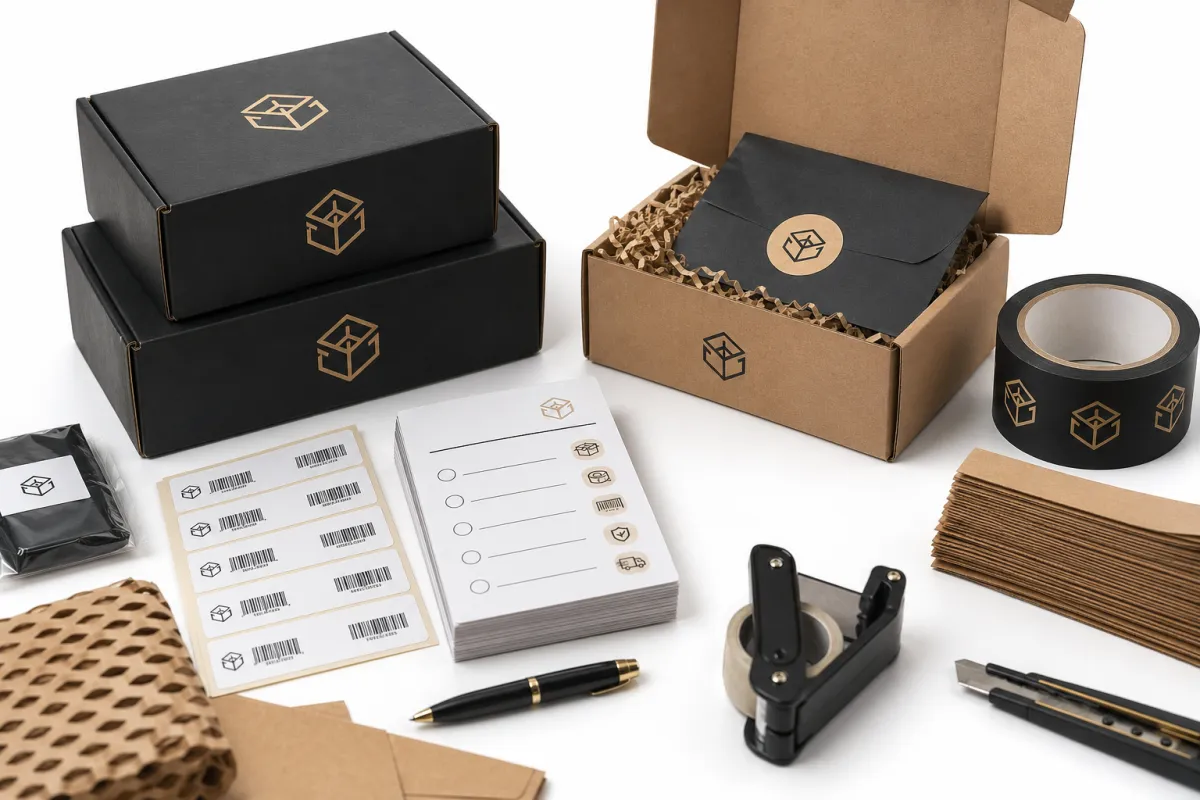
The first holiday launch I ever watched stumble did not fail because the ad creative was weak or because traffic came in late. It fell apart at the packing table in a Phoenix warehouse, where 1,200 paper inserts were missing and finished goods sat behind a pallet jack like they were waiting for a miracle. I remember looking at the dock schedule and realizing that a 48-hour delay in one carton line can erase the value of an entire weekend campaign. That is exactly why the Black Friday Packaging workflow checklist matters so much. It catches the packaging decisions that can freeze a high-volume event before the first 500 orders leave the building.
I have watched brands spend months on paid media forecasts and conversion targets, then discover that one carton dimension is off by 4 mm and the pack line can no longer keep pace. The Black Friday packaging workflow checklist prevents that kind of mess by putting packaging specs, artwork approvals, Supplier Lead Times, kitting, quality checks, shipping materials, and the backup plan into one working system. A clean checklist is more useful than a pretty spreadsheet nobody opens after Tuesday morning.
Packaging becomes the growth limiter faster than most teams expect. If order volume jumps 8x over a 72-hour window, a 2 percent error rate stops being small and starts becoming dozens of rework cases, piles of refund tickets, and one exhausted fulfillment manager trying to keep the dock schedule from turning into chaos. The Black Friday Packaging workflow checklist keeps speed, margin, and customer experience in the same room, which is where they should have been from the start.
I still see teams treat packaging like a design task instead of an operating system. That is where the trouble starts. A crisp logo on Custom Printed Boxes looks great in a deck, but a box that shows up 10 business days late from a converter in Dongguan, Guangdong helps no one, and I have had to explain that more than once. This piece is the practical version of the black friday packaging workflow checklist for business teams that need the line to keep moving on a 6 a.m. shift in Chicago or Columbus. Nobody on the floor is gonna care how nice the mockup looked if the cartons are still on a truck.
Why the Black Friday Packaging Workflow Checklist Matters
The black friday packaging workflow checklist matters because every packaging choice has a downstream effect. A mailer that saves $0.04 per unit can also add 20 seconds of assembly time, and that extra time compounds fast when your team is packing 3,000 orders a day in a 14,000-square-foot facility. I have watched a pack line lose nearly one labor hour per shift because someone approved a decorative insert that had to be folded by hand, which is the kind of detail that sounds minor in a meeting and feels brutal on the floor.
During a client meeting in Chicago's Fulton Market district, a cosmetics brand told me they had planned for traffic spikes but not for packaging bottlenecks. Their forecast looked healthy, yet the team had staged only 60 percent of the required void fill and had no backup labels ready in their Evanston overflow room. That brand learned the hard way that the black friday packaging workflow checklist is really a coordination tool, not a paperwork exercise, and the operations lead still remembered the exact pallet count when the issue hit at 7:15 p.m.
"We thought we had an advertising problem. We actually had a packaging timing problem," one operations director told me after a Friday night pack-out went sideways because the approved insert size was 3 mm too wide.
Traffic can be bought. Packaging time cannot. Media spend can be adjusted with a dashboard refresh, but a missing proof, a delayed carton shipment from a supplier in Ningbo, or the wrong barcode label can bring fulfillment to a standstill. That is why the black friday packaging workflow checklist belongs in planning meetings from the start, not as a last-minute appendix. If packaging is not in the first planning conversation, it is already late by at least one production cycle.
It also protects brand trust. Customers notice a crushed corner, a misprinted sleeve, or a half-empty box long before they notice the scramble that caused it. In my experience, one bad unboxing can trigger 5 to 12 support contacts within 24 hours, especially when the order included gift packaging or a limited-edition item shipped from a regional hub in Dallas. The black friday packaging workflow checklist gives teams a way to reduce those avoidable misses, and frankly, it saves everyone from a very rough Monday morning.
For broader standards and supply-chain context, I often point teams to ISTA transit testing standards and the industry resources at Packaging Industry Resources. Those references help turn packaging decisions into measurable risk, which is exactly what the black friday packaging workflow checklist should do when a carton is traveling 1,200 miles from a converter in Ohio to a fulfillment center in Atlanta.
How Does a Black Friday Packaging Workflow Checklist Work?
Think of the black friday packaging workflow checklist as a chain of dependencies. Demand forecast comes first, then packaging specs, then material confirmation, then proof approval, then production, and finally fulfillment testing. If one link slips, the rest of the timeline compresses in a way that looks harmless on paper and feels brutal on the dock, especially when a 12-day print slot in Shenzhen is already booked.
That chain also connects departments that rarely sit in the same room long enough. Marketing drives the campaign calendar, procurement controls cost, operations manages stock, and fulfillment has to execute the pack-out at line speed. The black friday packaging workflow checklist gives those teams one timeline, one file version, and one owner for each task, which can save 6 to 8 hours of back-and-forth during a busy week in November.
In a Shenzhen supplier negotiation I handled for a beauty client, the difference between a 1.5 mm insert and a 2 mm insert changed the entire carton structure. The quote moved from $0.18 per unit for 5,000 pieces to $0.24 per unit because the thicker board changed the die line and added a day to the production window. That is exactly the kind of decision the black friday packaging workflow checklist should surface early, before the order is locked and everybody starts pretending the schedule is fine.
The practical test is simple: if the packaging decision affects order speed, breakage risk, or shipping cost, it belongs on the black friday packaging workflow checklist. If it is only decorative and does not alter the pack flow, it can wait. That distinction saves time and keeps the team from treating every design choice like a launch blocker, which matters a lot when the line is pushing 40 orders per hour.
Sign-off gates make the workflow easier to control. A packaging spec should not move to production until someone confirms the dieline, artwork, material grade, carton count, and lead time. A good black friday packaging workflow checklist also names the backup contact for each gate, because holiday schedules do not care who is on PTO in Miami, and they certainly do not care that someone just stepped away for a minute.
For brands building branded packaging, this step matters even more. A logo can be perfect and still fail if the outer shipper is undersized by 8 mm or the insert arrives without glue tabs. That is why the black friday packaging workflow checklist should be treated like a production schedule, not a mood board. I love a good design concept as much as anyone, but the warehouse does not pack vibes, and it definitely does not pack them at 2:30 p.m. on a Friday.
Key Factors That Shape Packaging Readiness
The first factor is demand mix. A store that ships 70 percent single-item orders and 30 percent gift sets needs a very different black friday packaging workflow checklist than a brand that bundles five SKUs into one rigid presentation box. I have seen teams underestimate gift set volume by 40 percent in a single November week, then scramble for extra inserts, void fill, and outer cartons like they were trying to fix the problem with a warehouse miracle in Nashville.
The second factor is packaging compatibility. Product height, fragility, and fulfillment automation all change the final material list. A ceramic item that passes drop tests in a 250 gsm mailer may fail if the team swaps to a thinner stock because the new box is 12 mm shorter and the corner crush zone changes. The black friday packaging workflow checklist should capture those dimension tolerances before procurement issues the PO, because a few millimeters can turn into a very expensive lesson.
The third factor is supplier reliability. Custom packaging often needs 12 to 15 business days from proof approval, and freight can add another 4 to 7 days depending on lane and season. A production run from Foshan to Los Angeles may also need 2 extra days if port congestion gets ugly. Stock components may arrive faster, but they usually offer less room for package branding. I tell clients to separate the "must have" items from the "nice to have" items inside the black friday packaging workflow checklist, because that distinction keeps the whole plan from wobbling when the calendar gets crowded.
Customer expectation is the fourth factor. Buyers notice unboxing quality, but they also notice overpackaging, weak protection, and wasteful inserts. If your mailer uses 18 percent more material than necessary, that extra cost shows up in freight, storage, and customer perception all at once. The black friday packaging workflow checklist should balance presentation with practical protection, because nobody enjoys paying extra to ship air across three states.
I also pay attention to environmental claims because shoppers do. FSC-certified board, recycled-content paper, and right-sized packaging all influence how the final order feels. If your sustainability story is part of the offer, the black friday packaging workflow checklist needs to confirm the material claims and the supplier documentation, not just the artwork. A nice-looking box with sloppy proof support from a factory in Suzhou is a bad look, and I do not say that lightly.
One more detail gets missed more often than it should: fulfillment layout. A box that looks perfect on a designer's screen can be awkward at the packing bench if it takes two hands to fold a dust flap or three extra motions to place an insert. In a 10-hour shift, those extra seconds become real labor dollars, especially at a warehouse paying $19.50 an hour in Chicago's southwest suburbs. That is why the black friday packaging workflow checklist belongs in the warehouse, not only in the brand deck.
Black Friday Packaging Workflow Checklist: Cost and Pricing
Pricing is rarely just the unit price. The black friday packaging workflow checklist needs to include tooling, freight, storage, minimum order quantities, rush charges, inspection time, and the reprint risk that comes with last-minute artwork corrections. A box quoted at $0.16 can easily become $0.29 once you add freight, a second proof cycle, and a 1,500-mile truck lane from North Carolina to Texas. That is the part people forget when they focus only on the shiny quote in the first column.
Here is the mistake I see most often: teams compare quote sheets instead of cost per order. A rigid gift box can look expensive next to a stock mailer, but if it protects a $78 product and cuts damage claims by even 1.5 percent, the economics can swing the other way. That kind of math should be visible inside the black friday packaging workflow checklist. Personally, I think this is where a lot of "budget-friendly" decisions quietly become expensive by the second week of November.
In one supplier negotiation, a client wanted a fully printed mailer at 5,000 units, but the production slot was already tight. We ran the numbers and found a hybrid plan: stock mailers with a branded sleeve, then a fully custom run after the holiday surge. The backup spec saved about 14 percent on the first wave, and the black friday packaging workflow checklist kept the launch on schedule. That kind of compromise is not glamorous, but it works when a factory in Dongguan is booked for 11 straight days.
| Packaging Option | Typical Unit Cost | Best Fit | Main Tradeoff |
|---|---|---|---|
| Stock mailer + custom label | $0.11-$0.16 | Fast-moving ecommerce orders with uncertain demand | Lower brand impact and less print coverage |
| Custom printed boxes, 350gsm C1S artboard | $0.18-$0.24 at 5,000 units | Balanced cost and strong branded packaging | Needs proof approval and firmer lead times |
| Rigid gift box with wrapped board | $1.80-$3.40 | Premium product packaging and gift sets | Higher assembly labor and storage space |
That table is not theoretical. I have watched brands choose the lowest unit price, then spend more on labor because the box took 18 extra seconds to assemble and 9 extra seconds to tape. The black friday packaging workflow checklist should translate unit cost into cost per shipped order, which is a much better way to protect margin. A cheap box that slows the line is not actually cheap; it is just dressed up as thrift.
My own rule of thumb is to reserve 5 to 8 percent of the packaging budget as a contingency line. That buffer covers reprints, rush freight, or one damaged pallet that needs emergency replenishment from a regional distributor in Atlanta or Columbus. Without that cushion, the black friday packaging workflow checklist can look complete and still fail on the first delay. I would rather have a little money left over than a panic call from the warehouse at 8:40 p.m.
If you are comparing formats, start with the right source. I often point teams to Custom Packaging Products so they can compare stock options, custom printed boxes, and presentation formats in one place. The better the early comparison, the easier it is to keep the black friday packaging workflow checklist aligned with real budget limits and a realistic 14-day print window.
Step-by-Step Black Friday Packaging Workflow Checklist
Start with a demand snapshot. Pull last season's order mix, current campaign assumptions, and your best-case versus realistic volume. If last year produced 6,400 peak-day orders, do not plan as if 4,900 will magically be enough. A strong black friday packaging workflow checklist begins with the numbers, not with the artwork, and it should be built before the first creative review in July.
Next, lock specs early. Confirm box dimensions, board grade, print files, insert copy, barcode labels, tape, and any finishing detail that affects production. I have seen teams approve creative before confirming a shipping carton size and then lose three days correcting the dieline at a converter in Suzhou. The black friday packaging workflow checklist should make that mistake hard to repeat, because it can cost a full week once freight is added.
After that, set checkpoints. I usually build a schedule with five hard gates: proof approval, purchase order release, material arrival, quality inspection, and pre-peak pack-out testing. Each gate needs one owner and one backup. Without named accountability, the black friday packaging workflow checklist turns into a document nobody owns, which is basically a very expensive suggestion.
Then run a live pack test. Simulate a busy day with 50 to 100 orders, measure pick time, and count how many units fit cleanly without rework. If a packer needs to stop and adjust an insert on every fifth order, that slowdown will become expensive by hour four. This is the point in the black friday packaging workflow checklist where speed meets reality, and reality tends to be less polite than the planning deck.
I also recommend a short quality sample review before any order goes live. Check print alignment within 1.5 mm, verify the adhesive fold, and inspect the shipping label placement under actual warehouse lighting. Small checks prevent large problems, and the black friday packaging workflow checklist is supposed to catch those problems before customers do. The difference between "fine" and "reprint" can be maddeningly small when the pallet has already left the dock.
- Confirm the order forecast and SKU mix.
- Approve the outer shipper, insert, and label spec.
- Release the production order with a firm deadline.
- Stage a 10 percent safety stock of consumables.
- Run the pack test and record the bottlenecks.
That short sequence sounds basic, but it saves time because every step has a deadline and a result. In my experience, a team that follows the black friday packaging workflow checklist with discipline ships faster than a team that has prettier packaging but no pack-out plan. Pretty packaging is fine, of course, but pretty packaging without a process is just a future complaint ticket with a glossy finish.
One more detail: if you are shipping fragile items, test against actual transit conditions. A carton that passes on a bench may fail in a vibration test or a 30-inch drop. Standards such as ASTM D4169 and ISTA methods exist for a reason, and the black friday packaging workflow checklist should reflect them where relevant. I would much rather learn from a test box than from a broken customer order that arrived in Houston with a crushed corner.
Common Mistakes That Slow Down Packaging Workflow
The biggest mistake is late approval. Teams often sign off on marketing assets first and only then ask operations whether the package can actually be made in time. By that point, suppliers are booked and the schedule is already fragile. The black friday packaging workflow checklist works best when production capacity is confirmed before the design is celebrated, especially if the supplier is in Shenzhen and the proof window is only 3 business days.
The second mistake is undercounting consumables. Tape, labels, void fill, cartons, mailers, and replacement inserts disappear faster than expected once volume spikes. I once visited a warehouse in Nashville that had planned for 9,000 mailers and 500 rolls of tape, only to discover that the new gift set used 22 percent more tape per order. That kind of miss is exactly what the black friday packaging workflow checklist should catch. It is the sort of error that makes people stare at the supply shelf like it personally betrayed them.
The third mistake is ignoring line speed. Beautiful packaging that takes two extra folds, a magnetic close, and a sleeve wrap may look premium, but it can cut throughput by 18 to 25 percent. That is fine for a boutique drop in Portland; it is painful during peak fulfillment in a 30-station pack line. The black friday packaging workflow checklist should measure assembly time, not just appearance. I like premium packaging, but I like payroll and on-time shipping even more.
The fourth mistake is skipping contingency planning. One delayed truck, one damaged pallet, or one barcode correction can throw off the whole schedule if no backup spec exists. I think every black friday packaging workflow checklist should include a fallback material, a fallback supplier, and a fallback approval path. Those backup lanes are not glamorous, but they are the reason a bad day does not become a bad week.
There is also a softer mistake: treating packaging as purely functional. That ignores how retail packaging and product packaging influence repeat purchase behavior. In a direct-to-consumer setting, the box is often the first physical proof that the brand is worth the price, especially when the item costs $42 or more. The black friday packaging workflow checklist has to protect that first impression without slowing the line. It is a balancing act, and yes, it can be annoying, but the customer sees the result, not the struggle.
If you want a simple filter, ask three questions: can we make it on time, can we pack it quickly, and can we repeat it at peak volume? If the answer to any one of those is no, the black friday packaging workflow checklist needs another pass before orders open. I would rather change a spec in September than explain a 2-day delay in November.
Expert Tips and Next Steps for Stronger Packaging
Use a single source of truth for approvals. One spreadsheet, one folder, one final PDF. I have seen three departments work from three versions of the same dieline, and that is usually how a 2 mm mismatch becomes a 2-day delay. The black friday packaging workflow checklist gets much easier when every owner is looking at the same file, ideally one saved in a shared drive with version control and a timestamp from 4:00 p.m. on the dot.
Create a 48-hour issue-response window for proof changes, inventory shortages, and damage claims. That deadline is short on purpose. If a supplier replies in 72 hours during peak planning, your launch can slip before you notice. A tight response loop keeps the black friday packaging workflow checklist from drifting into a list of unresolved notes, and I have been on enough "we'll circle back tomorrow" calls to know tomorrow has a way of disappearing.
Train the fulfillment team before the surge begins. I like a rehearsal with the first 50 orders, because people learn faster when they can feel the actual box, the actual insert, and the actual tape gun in their hands. A well-practiced pack line can save 8 to 12 seconds per order, which is real money at $18 to $22 per labor hour. That is why the black friday packaging workflow checklist should end with a live training session, not an email.
Here is the simplest way to finish strong: finalize the checklist, assign owners for every deadline, and verify the black friday packaging workflow checklist with a live pack test before peak traffic starts. If you need a starting point, compare materials, lead times, and packaging formats through Custom Packaging Products, then build your backup spec from there. A 350gsm C1S artboard sample on the table is worth more than ten paragraphs in a slide deck.
If the brand depends on premium presentation, spend the extra hour on the unboxing sequence. If the brand depends on speed, simplify the insert count and reduce manual steps. Either path can work, but only if the black friday packaging workflow checklist is built around the way your warehouse actually operates in Ohio, Georgia, or Southern California. That part matters more than people like to admit.
My honest view: most teams do not need more packaging ideas. They need fewer surprises. A strong black friday packaging workflow checklist turns packaging from a holiday risk into an operating advantage, and that is the difference between surviving the surge and controlling it. I have seen the difference firsthand in warehouses from Charlotte to Las Vegas, and it is never subtle.
Before you lock the season, ask one final question: if the largest order wave lands 24 hours earlier than expected, can the black friday packaging workflow checklist still hold? If the answer is yes, you are ready. If the answer is no, fix the weak link now, not after the first truck arrives from the regional carrier terminal at 6:30 a.m.
When should I start a black friday packaging workflow checklist?
Start as soon as you have a realistic demand forecast, because custom materials, proofing, and freight can easily add 12 to 15 business days before the first finished unit is packed. If your schedule is already tight, the black friday packaging workflow checklist should move immediately to backup specs and faster approval paths, especially if your factory is in Shenzhen or Ningbo. Waiting even a few days can make a clean plan feel scrambled.
How do I estimate packaging costs for Black Friday orders?
Count every direct and indirect cost: boxes, inserts, labels, void fill, freight, storage, rush fees, and reprint risk. Then convert the result into cost per order, not just cost per unit, using actual quotes like $0.15 per unit for 5,000 pieces or $1.95 for a rigid gift box. That makes the black friday packaging workflow checklist much easier to compare across stock, custom, and hybrid options, and it keeps the math honest.
What packaging items should be approved first in the workflow?
Approve the outer shipper, protective insert, and branded components first because they drive the dimensions, the freight cost, and the lead time. After that, confirm tape, labels, and other consumables so the packing line is fully equipped. The black friday packaging workflow checklist should treat decorative extras as secondary unless they affect production timing at a factory in Dongguan, Guangdong or a warehouse in Indianapolis.
How can I prevent delays in the black friday packaging workflow checklist?
Set firm deadlines for proof approval and supplier confirmation, then assign one owner per task and one backup contact. Run a small packing test before the surge so you can catch fit issues and assembly slowdowns early. A disciplined black friday packaging workflow checklist usually catches the delay before it reaches customers, which is the only time delays are worth catching.
How do I adapt the checklist for custom packaging versus stock packaging?
For custom packaging, start earlier, lock artwork sooner, and build in extra time for production and freight, because a 350gsm C1S artboard run can take 12 to 15 business days from proof approval. For stock packaging, focus on inventory depth, sizing accuracy, and insert compatibility. In both cases, keep a fallback option ready so the black friday packaging workflow checklist can pivot without rebuilding the entire plan.


