Buyer Fit Snapshot
| Best fit | custom premium unboxing packaging design for packaging buyers comparing material specs, print proof, MOQ, unit cost, freight, and repeat-order risk where brand print, material, artwork control, and repeat-order consistency matter. |
|---|---|
| Quote inputs | Share finished size, material target, print colors, finish, packing count, annual reorder estimate, and delivery region. |
| Proofing check | Approve dieline scale, logo placement, barcode or warning zones, color tolerance, and any recyclable or compostable wording before bulk production. |
| Main risk | Vague material claims, crowded artwork, or missing packing details can create delays even when the unit price looks attractive. |
Fast answer: Custom Premium Unboxing Packaging Design: Dieline, Finish, Proof, and Buyer Review should be specified like a repeatable production item. The safest quote includes material, print method, finish, artwork proof, carton packing, and reorder notes in one written spec.
What to confirm before approving the packaging proof
Check the product dimensions against the actual filled item, not only the sales mockup. Ask for tolerance on folds, seals, hang holes, label areas, and retail display edges. If the package carries a logo, QR code, warning copy, or legal claim, reserve that space before decorative graphics fill the panel.
How to compare quotes without losing quality
Compare board or film grade, print process, finish, sampling route, tooling charges, carton quantity, and freight assumptions side by side. A lower quote is only useful if the supplier can repeat the same color, closure quality, and packing count on the next order.
Custom Premium Unboxing Packaging: Design That Sells
Custom premium unboxing packaging starts with a feeling, not a carton, and I learned that the hard way while reviewing a Rigid Box Sample in Dongguan, Guangdong, where a foam insert that was only 3 mm too tall changed the lid from a clean snap to a stubborn bind. That tiny adjustment turned the pack from ordinary mailer territory into custom premium unboxing packaging with a deliberate opening sound, and the difference was obvious the moment the magnetic flap settled at the right pressure. A customer never measures the insert height, but they do notice when a box opens with the calm, exact feel of something built by a factory that understands tolerances down to 0.5 mm.
I have seen the same pattern in folding carton plants in Suzhou, Jiangsu, rigid box shops in Shenzhen, and corrugated converting rooms near Ningbo, Zhejiang: the brands that win treat custom premium unboxing packaging as a complete system. Structure, print, insert, coating, opening sequence, and shipping plan all need to work together, and if one of them misses by a few millimeters or the finish is chosen for the wrong reason, the whole experience slides from premium to generic product packaging with a shiny surface. I have watched beautiful concepts fall apart because they were difficult to assemble at volume, and I have also watched modest Custom Printed Boxes outperform pricier builds because the reveal was cleaner, quieter, and more intentional for a 2,000-unit launch or a 20,000-unit replenishment run. That is the part people often miss: the box does not need to shout. It needs to land.
This topic keeps pulling me back because it sits right where packaging design, factory discipline, and customer psychology meet. That intersection matters if you care about details like 350gsm C1S artboard, 1.5 mm greyboard, and a production run that has to move from proof approval to shipping in 12-15 business days. The best custom premium unboxing packaging does more than cradle a product. It supports perceived value, giftability, social sharing, and recall, while still surviving freight from Dongguan to Los Angeles, pack-out labor on a Tuesday morning, and the pace of a fulfillment floor moving 400 units an hour. I have seen gorgeous concepts fail because they were impossible to assemble at scale, and I have also seen simpler builds win because the opening moment felt right in the hand and the customer could tell somebody measured the work carefully.
There is a practical side to all of it too: materials, tooling, finishes, pricing, and timelines. If you are sourcing custom premium unboxing packaging for a launch, a retail set, or a direct-to-consumer shipment, you need both the creative eye and the factory eye, plus a budget that reflects real numbers like $0.15 per unit at 5,000 pieces for a simple printed mailer or $2.10 per unit at 3,000 pieces for a rigid setup box with a custom insert. That combination keeps the project grounded, keeps the budget honest, and gives the final box a reason to feel premium instead of merely looking expensive in a rendering that nobody can assemble without a production supervisor standing nearby with a tape measure.
What Makes Custom Premium Unboxing Packaging Work So Well?
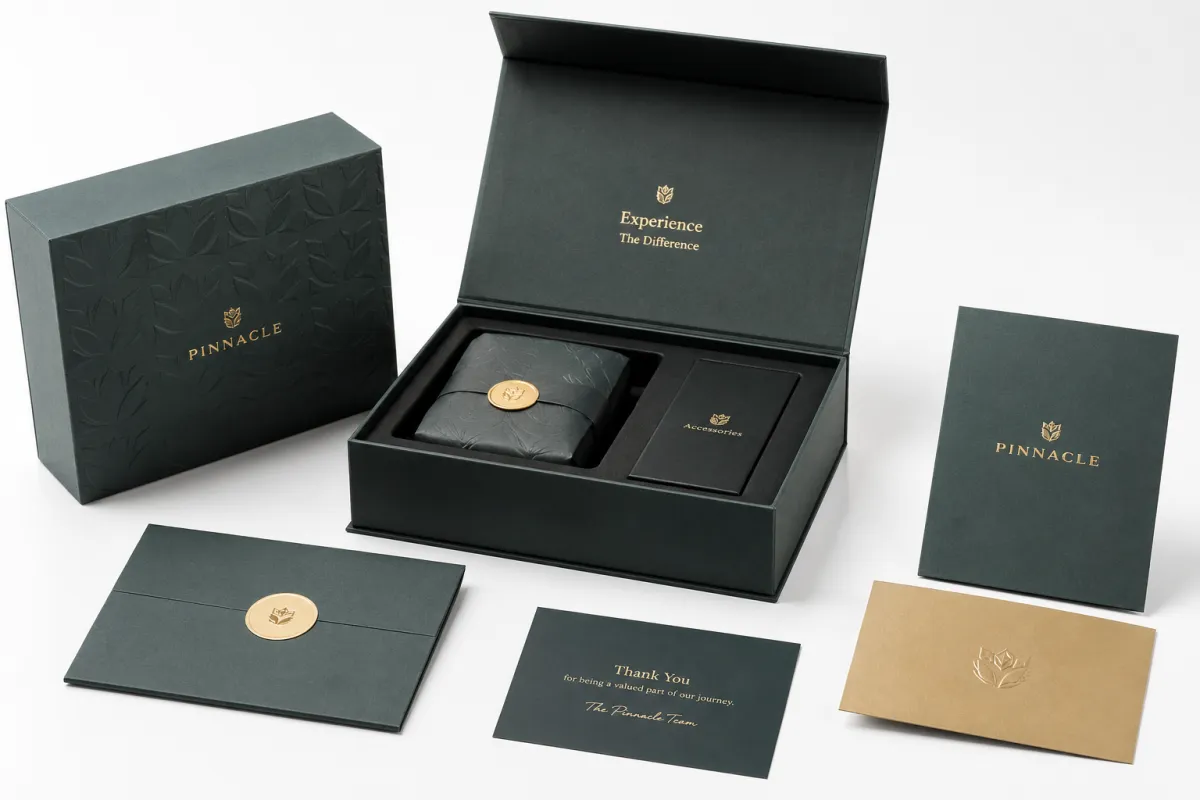
Custom premium unboxing packaging works because it turns a product delivery into a guided reveal, and that reveal can shape how a customer judges quality before they ever use the item. The structure, the closure, the insert, the finish, and the print all have to support one another, which is why the strongest luxury packaging often feels calm rather than crowded. When a rigid box opens with a soft magnetic catch, a premium gift packaging insert frames the product cleanly, and the outer print stays disciplined, the whole experience reads as intentional. That is also where Subscription Box Packaging and ecommerce packaging can borrow from one another: one needs a memorable reveal, the other needs dependable shipping strength, and custom premium unboxing packaging is the space where both goals can meet without forcing one side to give up too much.
I have seen a simple paperboard tray outperform a more elaborate build because the fit was cleaner and the opening sequence felt natural in the hand. I have also seen a custom premium unboxing packaging concept lose its impact because the lid opened too fast, the insert sat too low, or the coating felt slippery instead of tactile. The best packs are usually the ones that make one or two strong promises and keep them, whether the goal is premium gift packaging for a skincare launch, custom printed boxes for a retail set, or a shipping-first system that still gives the customer a polished first impression. In other words, the box should know what it is supposed to do and stop trying to be everything at once.
What Custom Premium Unboxing Packaging Really Means
Custom premium unboxing packaging is more than a nicer box. It is a coordinated system of structure, graphics, inserts, surface finishes, and opening sequence that makes the customer feel as if the product was prepared for them personally. A plain mailer can protect a serum bottle or headphone set just fine, but custom premium unboxing packaging turns the first reveal into an event that usually lasts 20 to 40 seconds, long enough for the lid to lift, the insert to frame the product, and the brand mark to appear at exactly the right moment. That pause is one of the most underrated parts of package branding, especially for products sold through ecommerce, DTC subscriptions, and gift sets shipped in 12 x 9 x 4 corrugated shippers.
On one cosmetics job, I watched a team debate whether a magnetic closure was worth the extra spend on a run of 6,000 boxes. The real question was not the magnet itself; it was whether the box wall thickness, wrap tension, and insert height would let the lid sit flush on a 1.8 mm greyboard shell wrapped in 157gsm art paper. We changed the spec by 0.4 mm on the wrap score and the whole closure shifted from loose to confident. That is the kind of detail most people never notice, yet it is exactly why custom premium unboxing packaging feels luxurious in the hand. The customer does not say, "Ah, a 0.4 mm correction." They just feel that it is right when the closure lands with a soft, controlled click.
Plenty of brands get this part wrong by piling on effects. Foil, emboss, soft-touch, window, sleeve, ribbon, magnet, foam, and glitter all in one pack can make the box feel like a trade show sample instead of a premium product system. Good custom premium unboxing packaging works because every part has a purpose. The structure protects the item, the graphics explain the brand, the insert holds the product steady, and the finish gives the hand something rich to feel, usually through one carefully chosen tactile layer like a matte soft-touch lamination on a 350gsm C1S board or a blind deboss on a 1.5 mm rigid shoulder box. I will take one elegant decision over three loud ones any day, especially when the box has to move through a packaging line in under 90 seconds per unit.
I also think brands underestimate how much custom premium unboxing packaging supports the commercial side of the business. Giftability improves because the box already feels presentable, even before the satin lift ribbon or folded tissue is added. Social sharing rises because the reveal has a natural sequence that photographs well in daylight, usually within the first 10 seconds after opening. Brand memory strengthens because the customer touches the logo, the coating, and the closure in a specific order, and that physical sequence is part of the packaging design itself. That is not fluffy marketing language; it is the practical result of package branding shaped around a repeatable opening moment, the kind that gets remembered after a customer has unpacked 18 other parcels in the same week.
"The nicest box in the room is not the one with the most decoration. It is the one that opens exactly the way the product needed it to." I heard a senior converter say that during a supplier review in Dongguan, and I have carried it with me ever since.
For brands comparing Custom Packaging Products, this is the first filter I use: does the pack support the product, the shipping path, and the customer's first 20 seconds with the box? If it does, then custom premium unboxing packaging has a real job to do. If it does not, the design is probably chasing the eye while ignoring the hand, which happens more often than anyone likes to admit, especially on projects where a pretty mock-up gets approved before a drop test, a compression test, or a simple fit check in the warehouse. That is also where the real trust is built: not in the render, but in the sample that survives a hard look from operations.
How the Packaging System Is Engineered, Printed, and Assembled
The engineering side of custom premium unboxing packaging starts with the dieline. That file determines where folds land, how the lid clears the shoulder, where glue tabs sit, and whether the insert locks the item without crushing it, usually within a tolerance of 1 to 2 mm depending on the board. I have seen a 2 mm variance turn a beautiful concept into a box that scuffs the corners every time the lid closes, and that becomes expensive fast when the order is 10,000 pieces headed to a fulfillment center in New Jersey. Small measurement errors are not small on the floor; they repeat on every unit, then somebody has to explain why a premium box sounds scratched instead of crisp.
From there, the board choice sets the tone. A folding carton line might run SBS or CCNB for lighter products, while a rigid box shop in Suzhou or Dongguan usually builds on chipboard wrapped with printed or specialty paper. A corrugated converting plant in Ningbo is better for shipping strength and larger formats, especially if the box must survive parcel handling from a warehouse in California to customers across the United States. That is why custom premium unboxing packaging is not a single thing. It is a family of production methods, each with its own tradeoffs, speeds, and cost profile, and the right one depends on whether the goal is shelf presence, ecommerce protection, or a hybrid of both.
Printing and finishing shape the look. Offset lithography is common for vivid, controlled color on custom printed boxes, while digital printing helps with short runs and fast proofs, sometimes as short as 3 to 5 business days for a sample pack. Foil stamping, embossing, debossing, spot UV, and soft-touch lamination each add a different tactile note. I once sat across from a paper supplier in Hong Kong while he pushed a pearlescent wrap stock, but the brand wanted quiet luxury, not shimmer, so we kept the paper simple and used a blind deboss instead. The savings landed around $0.41 per unit at 8,000 pieces, and the box looked more expensive because it felt restrained, not decorated for decoration's sake. That kind of restraint is hard to sell in a meeting, but it usually wins on the shelf.
Assembly matters just as much as print. Die-cutting, gluing, wrap application, and final kitting all affect the result, and those steps are priced differently in every plant from Foshan to Shenzhen. If the insert is hand-fitted, the labor has to be counted. If a ribbon pull is used, someone has to place it. If a sleeve slides over a tray, the friction has to be just right so it does not catch during fulfillment or crease at the corners after 500 cycles through a pack-out table. In a rigid box shop, that friction is often checked by hand, because a machine cannot tell you whether the customer will hear a clean glide or a gritty drag, and a gritty drag is the sound of perceived value slipping away.
The opening sequence is the hidden hero. Magnetic closures, tear strips, reveal layers, nested trays, and custom cavities all shape the moment. Good custom premium unboxing packaging controls what the customer sees first, second, and third, often by using a 25 mm reveal margin, a centered insert, and a product lift point that aligns with the thumb instead of fighting it. The product should not wobble. The logo should not appear too early. The reveal should feel paced, almost like stage design, while still staying practical enough for line workers packing 300 units an hour on a weekday shift in a warehouse near Long Beach or Dallas. If a box has to be handled fast, the design has to be forgiving, not precious.
Prototyping is where the risk drops. I always want a plain white structural sample and a fully printed sample. The white sample checks fit, closures, and insertion behavior. The printed sample checks color, line weight, finish impact, and the emotional read, especially under warehouse lighting at 4,000K and retail lighting at 3,000K. If a fragrance bottle rattles in the prototype, it will rattle in production unless the cavity is corrected. If the lid shadow line looks uneven under fluorescent warehouse lights, it will still look uneven on a retail shelf. That is why custom premium unboxing packaging should never skip samples, even when somebody says, "We can probably just eyeball it," because that is how teams end up reordering 2,000 boxes with a launch date five days away. You are gonna hear the difference immediately if the sample is wrong.
For teams that want a broader industry vocabulary, the ISTA testing framework is useful for parcel and distribution checks, and FSC guidance at fsc.org helps when you need certified paper claims for a retail or ecommerce run. I have found those references especially helpful when a client asks why a box should be tested for drop, vibration, or compression before the launch date is locked. The answer is usually because the alternative is a damaged box, a refund request, and a very awkward email thread that someone has to answer twice on a Monday morning.
Custom Premium Unboxing Packaging: Materials, Finishes, and Pricing
Material choice is where custom premium unboxing packaging becomes either smart or expensive for the wrong reasons. I have seen brands spend heavily on a rigid structure when a well-made folding carton with one strong finish would have delivered the same customer reaction on a $0.65-per-unit budget at 10,000 pieces. I have also seen the opposite, where a premium skincare set needed a rigid box because the product weight, refill components, and gift positioning justified the higher build. The right answer depends on product weight, shipping path, and how much drama the opening needs, whether the box is headed to a retail counter in London, a warehouse in Texas, or a subscription customer in Toronto.
For lighter products, SBS and CCNB are common because they print cleanly and keep unit cost under control. For a higher-end presentation, rigid chipboard wrapped in specialty paper gives more depth and a stronger hand feel, especially when the shell is 1.5 mm to 2 mm greyboard with a 157gsm or 128gsm cover stock. Corrugated works when protection matters more than shelf polish, especially for ecommerce shipments. Molded pulp and precision-cut paperboard inserts are popular when a brand wants sustainability without giving up structure. Foam can still be useful for delicate items, but I only recommend it when the product truly needs that level of immobilization, such as a glass bottle with a fragile pump or a metal accessory with sharp edges that can scuff during transit.
Finishes change the emotional tone quickly. Soft-touch coating can make a box feel velvet-smooth in the hand, while foil stamping gives a precise highlight that catches the light in a 5-inch square near the logo or lockup. Embossing adds shadow and lift, and debossing can feel more understated, especially on black or deep navy paper stocks sourced from mills in Asia or Europe. Spot UV can help graphics pop, but if the art is already busy, it can push the design into clutter. In custom premium unboxing packaging, the best finish is the one that serves the story and does not fight the product, because a finish that needs a long explanation usually needed a veto instead.
Pricing is driven by run size, tooling, color count, structural complexity, and hand assembly. A simple printed mailer with a paper insert might sit around $0.15 to $0.42 per unit at 5,000 pieces if the artwork is straightforward and the board spec stays modest. A rigid set-up box with a custom insert and one hero finish often lands between $1.65 and $4.25 per unit, depending on the paper, closure, and whether the work is done in Dongguan, Suzhou, or a regional specialty plant closer to the final market. A corrugated mailer with a branded exterior and a neat interior tray may fall between $0.62 and $1.35 per unit. Those are planning ranges, not promises, but they help a brand avoid fantasy budgets and keep the quote grounded in actual factory labor.
| Structure | Best Use | Typical Feel | Planning Range at Scale |
|---|---|---|---|
| SBS or CCNB folding carton | Lightweight retail packaging and e-commerce kits | Clean, efficient, print-forward | $0.15-$0.42/unit at 5,000 pieces |
| Rigid chipboard box | Luxury sets, gifts, high-perceived-value product packaging | Heavy, structured, deliberate | $1.65-$4.25/unit at 3,000 pieces |
| Corrugated mailer with insert | Shipping-first branded packaging with a premium reveal | Secure, practical, balanced | $0.62-$1.35/unit at 10,000 pieces |
| Molded pulp insert with printed sleeve | Sustainable kits, accessories, and lighter electronics | Earthy, modern, restrained | $0.40-$1.10/unit at 8,000 pieces |
The biggest cost trap is trying to make every surface special. A box with foil, emboss, soft-touch, a magnetic closure, a window, and a hand-tied insert may sound luxurious, but if the product itself is small and the margin is tight, the pack can swallow too much of the budget. In practice, one or two hero choices usually outperform a stack of features. I would rather see a clean structure with a refined deboss and excellent paper than a crowded box that burns money without improving the reveal, especially when the factory quote already includes die-cut tooling, wrap labor, and a 7 to 10 business day finishing window.
Freight and warehousing matter too. A rigid box might look elegant in a proposal, but if it arrives nested poorly, takes up too much cubic space, or requires extra labor to pack out, the landed cost rises fast. Custom premium unboxing packaging should be judged on total cost, not just printed unit price. That means carton cost, freight, storage, assembly, and the minutes spent by fulfillment staff all belong in the same conversation. I have watched a team save $0.22 on the box and spend $0.39 more on labor. That is not savings; that is a transfer, just with nicer PowerPoint slides and a more expensive shipping pallet.
If you need a place to compare finishes and structure options before asking for quotes, the Custom Packaging Products page is a practical starting point. It is easier to Choose the Right build when you can see whether the priority is retail presence, shipping strength, or a stronger reveal sequence, especially if your supplier is quoting from Guangzhou and your launch team is working from Chicago. Seeing the options laid out in one place prevents the classic "we thought it would be obvious" conversation, which somehow always arrives on a Friday afternoon.
Step-by-Step Process and Timeline From Brief to Delivery
Every custom premium unboxing packaging project starts with a brief that should be more specific than "make it feel premium." I want product dimensions, product weight, shipping method, target quantity, budget range, brand colors, and the desired opening moment. If the box is for a serum trio, a watch, or a candle set, those details shape everything from wall thickness to insert depth and determine whether a 350gsm C1S artboard or a 2 mm rigid shell is the better choice. A good brief saves weeks later because it gives the converter something measurable instead of something abstract, and measurable is what keeps the factory from guessing.
The structural direction comes next. Some teams already know they want a rigid box. Others need help choosing between a folding carton, a sleeve-and-tray system, or a mailer with a reveal insert. Once that choice is made, the dieline can be developed and sampled, often in 2 to 5 business days for an initial structure and 5 to 7 business days for a white mock-up if the plant is already tooled. In my experience, the most common delay is not production capacity; it is indecision about the structure. A brand will ask for three versions, then two, then one with a different insert, and every change ripples through the schedule like a missed train in Shenzhen.
Artwork preparation usually runs alongside sampling. That stage includes barcode placement, copy checks, bleed allowances, image resolution, and finish callouts. If the design uses foil or emboss, the artwork must separate those layers cleanly. If the insert needs print, that file should follow the same color logic as the outer box. Custom premium unboxing packaging looks expensive partly because the print system is disciplined, not improvised, and because the files land in the prepress department with the right 3 mm bleeds, the correct Pantone references, and the dieline locked before proofing starts.
Then comes proof approval. This is where color corrections, die adjustments, and insert tuning can still be made without major pain. The sample should be checked under the same kind of lighting the box will see in real life. Warehouse fluorescents can flatten a soft-touch coating, and warm retail lighting can make white stock look creamier than expected. I learned that lesson in a retail packaging review room where a white sleeve looked crisp at noon and suddenly looked beige under the store lights. The stock did not change; the environment did. I still remember staring at that sleeve and thinking, "Well, that is inconvenient."
Typical timing depends on complexity, but here is a practical frame that fits many runs in Dongguan, Suzhou, or Ningbo:
- Brief and budget alignment: 1-3 business days
- Dieline and structural concept: 2-5 business days
- White sample or mock-up: 5-10 business days
- Printed sample and proof approval: 5-12 business days
- Tooling, press scheduling, and finishing queue: 7-15 business days
- Production, inspection, and packing: 8-20 business days
- Freight and receiving: 4-7 business days by air, 18-32 days by ocean lane
Late delays usually come from the same handful of problems: a dieline change after approval, missing barcode data, a last-minute product dimension shift, a color correction that requires a new proof, or an insert that was never measured with the final sample in hand. I have seen a launch slip a full week because the team approved the box before the bottle shoulder height was finalized, which forced a revised cavity and a new set of blade rules. Custom premium unboxing packaging does not forgive guesswork, and it definitely does not reward optimism that ignores the tape measure.
One client meeting still stands out to me. The marketing lead wanted a launch date tied to a trade show in Las Vegas, while the operations manager was worried about insert labor and shipping cartons from the plant in Foshan. We solved it by locking the structure first, then pre-sorting the inserts in pack-out order before the printed shells arrived. That move cut assembly friction and kept the schedule alive. The lesson is plain: custom premium unboxing packaging moves fastest when the team agrees on the box shape before the artwork starts chasing it. Otherwise, everybody is polishing details on a box that is still arguing with itself.
Common Mistakes That Make Luxury Packaging Feel Cheap
The fastest way to make custom premium unboxing packaging feel cheap is to let the product move inside the box. Oversized cavities, loose sleeves, weak closures, and inserts that do not match the actual item create noise, wobble, and doubt. I once inspected a fragrance kit where the bottle stood upright in the tray but slid diagonally during transit because the base cavity was 4 mm too generous. The package looked fine on a table and wrong in the hand, and that kind of slop immediately lowers trust, especially after a 300-mile ground shipment or a trans-Pacific freight leg that shakes everything loose.
Visual clutter creates a second problem. Too many finishes, too many type styles, and too many competing messages make the box feel busy rather than premium. A box can be well built and still feel ordinary if the typography is muddy or the brand color shifts from panel to panel by even a small amount, such as a 5-point difference in saturation. In custom premium unboxing packaging, restraint usually reads as higher value. The customer notices alignment, paper quality, and the confidence of the layout before they count the effects, and that kind of discipline usually comes from a converter who knows how to keep the print run clean across 8,000 or 15,000 units.
Another mistake is designing only for the render. A beautiful digital comp can hide all kinds of issues: a lid that telegraphs the chipboard edge, a coating that fingerprints too easily, or a foil area that disappears under certain lighting. I always tell clients that custom premium unboxing packaging has to survive three separate realities: the mock-up table, the shipment, and the customer's hands. If it works in only one of those settings, the design is incomplete. The rest is just cosmetics with a good lighting setup, which is a rough way to find out a premium box was never really premium at all.
Pack-out labor gets ignored too often. A clever insert that takes 18 seconds to load might look elegant on paper but cause real trouble during fulfillment. Multiply that by 8,000 units and the labor cost becomes impossible to ignore, especially at a packing rate of 120 units per hour per worker. The same is true for shipping tests. If the shipper box passes visual review but fails a vibration or compression check, the customer is the one who pays for the mistake. Industry references like ISTA are useful because they remind teams that distribution belongs to the product journey, not the footnotes, and the test report usually reveals the weak point long before the first replacement request hits inboxes.
"Pretty is not the same as premium." A fulfillment manager said that to me while pushing a pallet of damaged sleeves back onto the dock in New Jersey, and he was right. The best custom premium unboxing packaging earns its look by surviving the route.
There is also a strategic mistake I see all the time: brands spend on the wrong premium signal. They choose a costly feature that is invisible to the customer or not aligned with the product story. For example, a heavy magnet can feel impressive, but if the product is a simple accessory kit sold on price, the magnet may add expense without adding meaningful perceived value. Better to invest in fit, touch, and one memorable finish than to layer on decoration that does not help the story. A box can be expensive and still feel oddly empty if the money went into the wrong corner, especially when the add-on costs are carrying another $0.28 per unit and the customer never notices them.
Honestly, one of the best guards against cheap-looking custom premium unboxing packaging is a plain white mock-up review with the warehouse team in the room. Marketing sees the brand story. Operations sees the assembly path. Quality sees the failure points. When all three groups touch the sample, problems surface fast, and the final box feels more deliberate because the rough edges were removed early. Plus, it keeps the conversation grounded before anyone gets attached to a shiny rendering that cannot survive a real conveyor belt, a real pallet, or a real delivery driver who does not care about the mood board.
Custom Premium Unboxing Packaging: Expert Tips for Better Results
My first tip is simple: pick one hero moment. Maybe that is a magnetic close, a deep reveal, a foil mark on the lid, or a custom insert that frames the product like jewelry. Custom premium unboxing packaging rarely gets better by adding every premium effect at once. A single, well-placed moment usually lands harder than a box that is trying to be impressive from every angle. The customer remembers the pause, the lift, and the reveal, not the number of finishes, and a good example is a watch box that opens in two stages with a 15 mm reveal before the tray slides out.
Protect the product first. I have seen brands start with graphics and work backward to structure, which is the wrong order. If the item is delicate, the insert and shipper need to be solved before the visual flourishes are locked. A box that protects the product cleanly feels premium because it performs without fuss. That is especially true for electronics, skincare, glass bottles, and accessories that ship in mixed channels from a warehouse in Arizona one day and a retail replenishment center in Pennsylvania the next. Good custom premium unboxing packaging should hold up in transit and still open with grace, which is a lot to ask, but that is the job.
Ask for two samples: one plain white structural sample and one fully printed version. The white sample tells you whether the cavity, depth, and closure are right. The printed sample tells you whether the finish, branding, and color story are doing their job. If both samples feel strong, the project is usually on solid ground. If one of them feels weak, you know exactly where the problem lives. This saves time, saves money, and keeps custom premium unboxing packaging from drifting into guesswork, which is especially useful when the production slot in Shenzhen is only open for 9 business days before the next run.
Compare perceived value per dollar, not just unit price. A $0.18 increase on the box can be a smart move if it raises the customer's sense of quality by a much larger margin. I have seen a small emboss and a cleaner paper stock create more impact than a much larger spend on hardware or decorative extras. The same thinking applies to branded Packaging for Retail displays, gift sets, and subscription products. A little refinement in the right place can lift the whole experience, and that is where the craft pays back in returns that are felt rather than argued about in a spreadsheet.
Think about the outer shipper and the inner reveal together. A beautiful inner box inside a weak shipper is still vulnerable. A strong shipper with no reveal moment can feel dull. The sweet spot is a system: outer protection, inner presentation, and a final handoff that makes the product feel earned. That is why I keep saying custom premium unboxing packaging is a system, not a single object. The customer does not experience the box in pieces; they experience the whole sequence in one motion, often in less than 30 seconds while holding the parcel on a kitchen counter or office desk.
In practice, I usually recommend a short checklist before the quote goes out:
- Does the insert stop movement without over-compressing the product?
- Does one finish carry the brand story cleanly?
- Will the box survive the chosen shipping method?
- Can the fulfillment team assemble it without strain?
- Does the structure support the product's real retail or ecommerce role?
That last point matters more than people think. Custom premium unboxing packaging for a luxury launch is not the same as custom premium unboxing packaging for a subscription refill, a holiday gift set, or a retail shelf display. The box should match the channel, the margin, and the customer behavior, whether that behavior is opening on-camera for a TikTok clip or unwrapping in a store bag after a 6 p.m. purchase. A good converter will ask those questions before quoting. A great one will help you make the right tradeoff before the artwork even starts, which saves everyone from a very expensive round of "we thought this would work."
If you are evaluating options inside Custom Packaging Products, look for the intersection of fit, finish, and labor. That is usually where the best answer sits, and it is almost never the most decorative one. The package has to perform first and impress second, even if the branding team would prefer those two things to arrive in the opposite order, which is a preference that usually fades after the first production invoice arrives.
Actionable Next Steps Before You Request Quotes
If you want stronger custom premium unboxing packaging, start by gathering the facts that make quoting accurate. You need product dimensions, product weight, target quantity, shipping method, brand guidelines, budget range, and the exact opening experience you want the customer to feel. A box for 250 units of jewelry gifts is a different animal from a box for 15,000 accessory kits going through ecommerce fulfillment. The more precise the input, the more useful the quote. I know that sounds obvious, but people still ask for "premium" without a single dimension attached, then wonder why the estimate has a wide range.
I also recommend writing a one-page request-for-quote packet that includes the product photo, a rough sketch of the opening sequence, and a short note on what must not happen. For example: "No product rattle," "No plastic insert," "Must fit in a 12 x 9 x 4 shipper," or "Need FSC paper if available." Those notes save time because they tell the supplier where the non-negotiables live. A converter can price custom premium unboxing packaging far more accurately when the constraints are visible up front, and that usually shortens the path to a usable sample by at least 2 or 3 revisions.
Then compare vendors on more than cost. Ask about material options, sample policy, lead times, finishing capability, and assembly support. A slightly higher quote can still be the better choice if the vendor can deliver cleaner samples, tighter closure tolerances, or more dependable pack-out help from a plant in Dongguan or a finishing team in Shenzhen. The lowest number on the page is not always the lowest total cost once revisions, freight, and labor are included. That is one of the oldest lessons on a packaging floor, and it still saves people from bad decisions, especially when the cheap quote hides a 10-day delay on tooling.
Before you approve a direction, map the full unboxing path: outer shipper, opening cut or tear strip, outer print, inner tray, insert, product reveal, and any last-touch piece such as a card or tissue wrap. That journey should support both the brand story and the logistics plan. If the opening is elegant but the shipper collapses in transit, the customer never gets to the good part. If the shipper is strong but the reveal is flat, the brand misses its chance to feel memorable. Custom premium unboxing packaging works best when both sides are designed together, from the first carton flap to the last layer of tissue.
My strongest advice is to keep the design honest. Choose materials that fit the product. Choose finishes that earn their place. Choose structures that the factory can build cleanly at the quantity you need, whether that is 2,000 units for a regional launch or 50,000 units for a multi-market rollout. That approach produces branded packaging with real staying power, and it keeps custom printed boxes from becoming expensive decorations. The brands I remember most are the ones that knew exactly what they wanted the box to do, then let the packaging design support that job with discipline and taste, not with extra layers of decoration that only looked good in a rendering.
If you are ready to move forward, start with the numbers, not the mood board. A quote built on real dimensions, real quantities, and real timeline constraints will get you much closer to the right answer. That is how custom premium unboxing packaging turns into a practical launch tool rather than a beautiful problem. And honestly, beautiful problems are only fun for about ten minutes before the production manager asks for the revised dieline and the freight booking number.
When the fit is right, the closure feels right, and the insert supports the product instead of fighting it, custom premium unboxing packaging does what it is supposed to do: it makes the customer feel the value before they ever use the product. That is the whole point, and in my experience, it is the reason the best custom premium unboxing packaging keeps selling long after the first box is opened, whether it came from a factory in Guangdong or a regional plant built around a specific retail program. That is also the clearest takeaway: define the opening moment, lock the measurements, and let the factory prove the design before you place the full run.
What makes custom premium unboxing packaging different from standard packaging?
Custom premium unboxing packaging combines structure, graphics, finishes, and insert design into one planned customer experience. It is usually engineered around a specific reveal sequence, not just containment, and it often uses materials like 350gsm C1S artboard, 1.5 mm greyboard, or precision-cut molded pulp for a better hand feel. The strongest versions protect the product, feel deliberate in the hand, and raise perceived value without making the box hard to assemble or ship.
How much does custom premium unboxing packaging usually cost?
Pricing depends on run size, board type, print complexity, finishing, and hand assembly. A simple folding carton or corrugated mailer can sit near $0.15 to $0.42 per unit at 5,000 pieces, while rigid boxes and specialty finishes cost more because they use thicker board, extra wrap labor, and more setup time. The quickest way to control cost is to simplify the structure and keep one or two premium features, especially when the total run is under 3,000 units.
How long does a custom premium unboxing packaging project take?
A straightforward project can move quickly if the artwork is ready and the structure is simple. Sampling, proofing, and approval usually take the most time, especially when inserts or special finishes are involved, and production is often 12-15 business days from proof approval for a standard run in Dongguan or Suzhou. Late dieline changes, missing specs, and color revisions are the most common reasons schedules slip.
Which materials work best for luxury unboxing boxes and inserts?
Rigid chipboard works well for a high-end presentation, while SBS and CCNB support lighter, more efficient builds. Corrugated is often the better choice when shipping protection matters more than shelf presence. Molded pulp and precision-cut paperboard inserts can deliver a premium feel with less bulk, and they are often a smart fit for custom premium unboxing packaging that needs both structure and a cleaner materials story, especially for skincare, accessories, and small electronics.
How do I keep custom premium unboxing packaging on brand without overspending?
Start with one strong visual or tactile moment that matches the brand personality, then build the structure around product fit and protection. Use finishes selectively where they will be seen and felt the most, and keep an eye on quote drivers like tooling, hand assembly, and freight. Ask vendors for options at different price points so you can compare perceived value, not just unit cost, and make sure the final custom premium unboxing packaging supports the brand story as well as the budget.

