Buyer Fit Snapshot
| Best fit | Custom Printed Box Sleeves projects where brand print, material claims, artwork control, MOQ, and repeat-order consistency need to be specified before quoting. |
|---|---|
| Quote inputs | Share finished size, material target, print colors, finish, packing count, annual reorder estimate, ship-to region, and any compliance wording. |
| Proofing check | Approve dieline scale, logo placement, barcode or warning zones, color tolerance, closure strength, and carton packing before bulk production. |
| Main risk | Vague material claims, crowded artwork, missing packing details, or unclear freight terms can make a low unit price expensive after revisions. |
Fast answer: Custom Printed Box Sleeves: Design, Cost, and Uses should be specified like a repeatable production item. The safest quote records material, print method, finish, artwork proof, packing count, and reorder notes in one written spec.
Production checks before approval
Compare the actual filled-product size with the drawing, then confirm tolerance on folds, seals, hang holes, label areas, and retail display edges. Reserve space for logos, QR codes, warning copy, and material claims before decorative graphics fill the panel.
Quote comparison points
Review material grade, print process, finish, sampling route, tooling charges, carton quantity, and freight assumptions side by side. A quote is only useful when the supplier can repeat the same color, closure quality, and packing count on the next order.
A plain stock carton can look like a premium launch package with one well-made wrap, and I have watched custom printed box sleeves do exactly that on more than one production floor, including a cereal co-packer in New Jersey where a simple kraft tray suddenly looked retail-ready after a 0.25 mm printed sleeve went on the line. That is the real appeal of custom printed box sleeves: they can turn a standard box into branded packaging without forcing you to rebuild the whole structure, which is why I keep recommending them when a client wants a cleaner shelf presence without paying for a full structural redesign. A sharp sleeve also gives a brand room to breathe, which matters when a product needs both a practical shipper and a face that can hold its own under harsh fluorescent store lighting in places like Newark, NJ, or the refrigerated aisles of Minneapolis, MN. It is one of those rare packaging choices that can improve the look of a product, tighten the logistics, and keep the project grounded in practical production rather than expensive reinvention. In many cases, these printed packaging sleeves are the simplest way to move from ordinary to deliberate.
In my experience, the best packages are not always the most complicated ones. A smart sleeve can carry the logo, the product story, the barcode, the claims panel, and the seasonal artwork while the inner carton does the quiet work of holding the product securely. That is why custom printed box sleeves show up so often in food, cosmetics, candle, and gift packaging, where the outer presentation matters almost as much as the product itself. I have seen a tea brand in a Chicago meeting room argue for an expensive rigid box, then win the same premium effect with a textured sleeve over a standard carton at less than half the structural cost, with the sleeve quoted at $0.19 per unit for 5,000 pieces on 350gsm C1S artboard. The box stayed simple, the sleeve did the speaking, and the result felt deliberate instead of overbuilt. And honestly, it saved everyone a few meetings, which felt like a small miracle. For brands that want retail Packaging Sleeves That feel polished without becoming fussy, that balance is usually the sweet spot.
What follows is a practical look at custom printed box sleeves from the factory floor side of the business: how they are built, what drives pricing, how long they usually take, and where people get tripped up on sizing and artwork. If you are comparing branded packaging options or trying to improve package branding without overspending, this format deserves a serious look, especially if your supplier is quoting from Dongguan, Guangdong, or from a converter in Illinois with an 8-color offset line. I will also share the mistakes I see most often, because the difference between a good sleeve and a frustrating one usually comes down to a few measurements, a few material choices, and one or two early decisions made before print approval. That is the kind of detail that saves a packaging line from headaches later, and it is usually the kind of detail nobody remembers until something goes sideways at 6:30 a.m. on a Friday shift. It also helps to know the difference between a sleeve that merely decorates and one that functions as a true carton sleeve in the production flow.
What Are Custom Printed Box Sleeves?
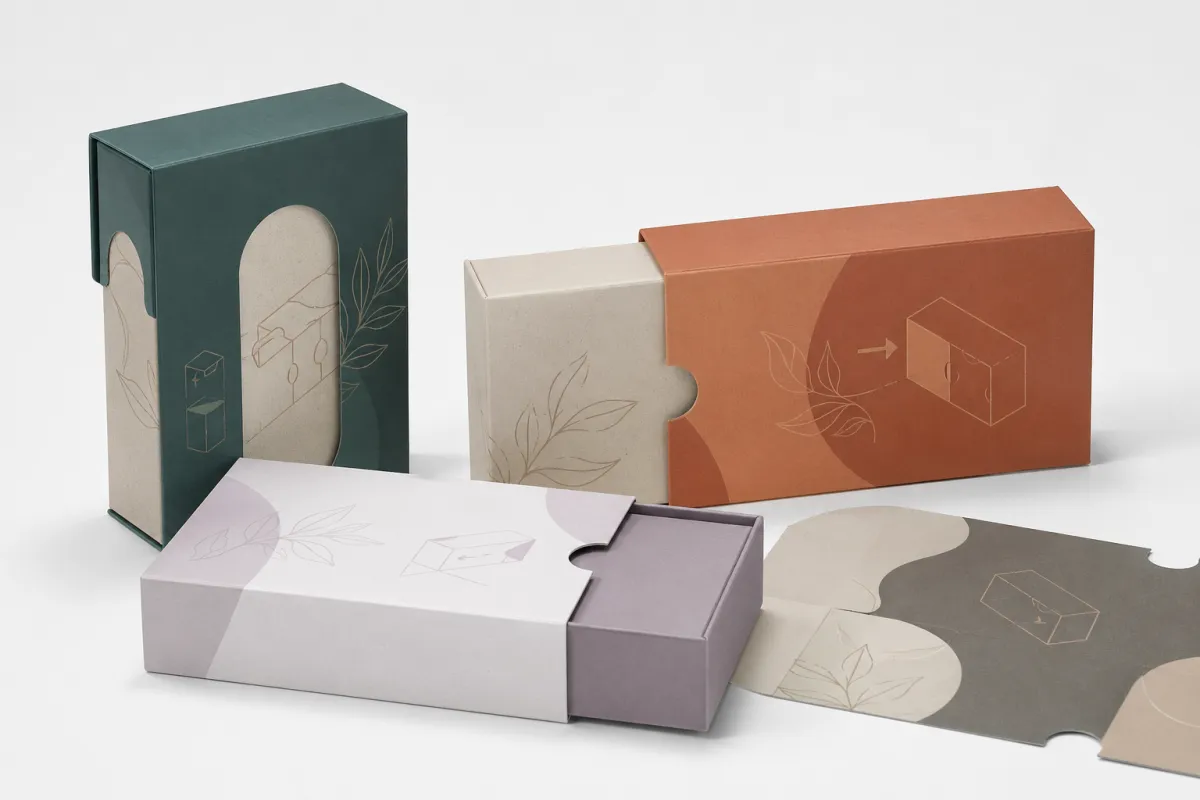
Custom printed box sleeves are printed wraps that slide over a box, tray, or carton to add branding and information without replacing the entire package structure. The simplest way to picture them is as a second skin for a standard box. I have seen them used on everything from soap bars in a kraft tray to premium chocolate assortments in a rigid sleeve-and-tray setup, and the effect is often dramatic for a very small change in materials. A plain mailer can feel like a boutique package after you add a well-sized sleeve with the right board, the right finish, and a layout that understands how the product will actually be handled in transit from Toronto, Ontario, to a retail shelf in Vancouver, British Columbia. When the sleeve is built well, the carton underneath disappears into the system and the brand story takes center stage. In practical terms, they are printed packaging sleeves that let the outer message do its job without forcing the inner carton to carry every responsibility.
They shine because they let a brand upgrade the shelf presence of existing product packaging without paying for a fully custom box build. A sleeve can add a front panel, a side panel, a back panel, and sometimes a tuck or lock feature that keeps it aligned. For seasonal kits, subscription boxes, or limited-edition runs, custom printed box sleeves are one of the fastest ways to refresh retail packaging while keeping the base carton unchanged. I have walked lines where the same inner box ran for three different retailers, and the only real difference was the sleeve artwork and a small compliance panel tied to the channel, including one launch in Phoenix, AZ, that used the same 260gsm folding carton for a spring promo and a holiday promo. That kind of flexibility is hard to beat when a brand has to move quickly but still look polished. It also keeps the production team from muttering under their breath, which I count as a real operational benefit.
Here is the part many buyers appreciate after the first sampling round: the sleeve can carry the story while the inner carton carries the structure. That split is useful when the existing box already passes drop testing, stores well, and fits the product exactly. In that case, custom printed box sleeves are not a compromise; they are a practical upgrade that gives you a cleaner balance of cost, speed, and visual impact. When the base carton is already dialed in, I would much rather spend the budget on print quality, board selection, and finishing than on rebuilding a box that already does its structural job. A good sleeve lets the packaging team keep what works and improve the part the customer actually sees first, whether the run is 2,000 units in Atlanta or 20,000 units out of a plant in Monterrey, Nuevo Leon.
They are not the answer for every package, and I would never pretend otherwise. If the product needs heavy protection, high tamper resistance, or unusual geometry, a different format may be better. But for many brands, custom printed box sleeves are the sweet spot between plain stock cartons and expensive fully custom boxes, especially when shelf appeal matters and the box size does not change from order to order. The best use cases are usually the ones where the carton is stable, the product assortment is repeatable, and the brand wants to look more deliberate without committing to a heavier, more expensive structure. That middle ground is often exactly where the packaging budget goes the farthest, particularly for launch programs in Dallas, TX, and repeat replenishment orders in the Midwest. It is also why paperboard sleeves keep showing up in retail packaging programs that need speed and consistency more than structural reinvention.
"The sleeve is often where the first sale happens," a plant manager told me during a cosmetics run in Ohio, while we were checking a 400-piece short run for a blush set. "The inner carton protects the product, but the sleeve is what gets the shopper to pick it up."
I agree with that more than most people expect. On a busy retail shelf, the sleeve is the part that has to earn attention in a split second, and it has to do it while still being readable from three feet away and believable at arm's length. That is why custom printed box sleeves are often the first place I look when a client says the package feels generic, because very often the structure is fine and the graphics are simply not getting enough room to breathe. The sleeve becomes the handshake, while the box beneath it does the practical work, and in stores from St. Louis to San Diego that first visual cue is often the difference between a pass-by and a pickup.
How Custom Printed Box Sleeves Work
The mechanics are simple, but the details matter. Custom printed box sleeves are sized so they slide snugly over the existing carton or tray, with the artwork wrapped around the panels so the design reads cleanly from the shelf. A good dieline will account for overlap, glue zones, fold lines, and the tiny amount of extra room needed so the sleeve does not scuff or bow during insertion. I have watched a 1.5 mm misread on one side turn a beautiful sleeve into a frustrating rework, and that is the sort of mistake that can eat time, materials, and patience on a live line in places like Richmond, VA, or El Paso, TX. A narrow margin sounds harmless on a drawing and turns into a real problem once a stack of sleeves reaches the pack-out table.
Production usually starts with a dieline review, then print-ready artwork, then print and finishing, then cutting and folding. Depending on the design, the sleeve may be left open, side-glued, or locked with a tab. For custom printed box sleeves, the way the sleeve closes is just as important as the artwork. A beautiful design that pops off the box after two handling passes is not a success; it is a packaging problem with good graphics. I always tell clients to think about the sleeve as part of the physical package, not just the visual one, because the two are linked the second the carton enters the pack-out stage. In a plant setting, beauty and fit are never separate conversations for long, especially on high-speed lines running 40 to 60 cartons a minute.
Material choice changes the feel right away. SBS, coated paperboard, kraft, and specialty textured stocks all create different outcomes, and the differences are noticeable in hand. A 350gsm C1S artboard sleeve with matte varnish will feel very different from a 300gsm kraft sleeve with no coating, even before you add foil or embossing. For food contact or paper sourcing concerns, I always ask whether the board is FSC certified and whether the supplier can document the chain of custody; FSC certification matters more than many buyers realize, although it is not the same thing as a food-safety approval. In a bakery project I reviewed for a regional chain in Pennsylvania, the client had strong artwork but weak sourcing records, and the retailer would not sign off until the board documentation was cleaned up. Good documentation does not make a package prettier, but it can keep a launch from stalling for ten business days or more.
Print and finish options can change the entire personality of the package. Offset gives very sharp detail on larger runs, digital is often better for shorter runs and faster approvals, and specialty finishes like foil, embossing, soft-touch coating, or spot UV can lift the perceived value fast. On a premium candle project in Atlanta, we tested three versions of custom printed box sleeves with the same artwork, and the soft-touch version outsold the gloss sleeve by a noticeable margin because shoppers read the finish as calmer and more expensive. The candle itself did not change, the fragrance did not change, but the sleeve changed the first impression enough to matter on shelf. That is the kind of detail that marketing teams notice once they watch real shoppers interact with a display in a store aisle, not just in a render.
Because sleeves are separate from the inner box, they are also easier to revise. That is a major advantage for SKU changes, retailer-specific promos, multilingual panels, and localized package branding. I have seen brands keep the same carton for six or eight product variations and simply swap the printed sleeve artwork, which avoids the cost of redesigning the base structure every time a formula, size, or market changes. For teams managing several custom printed box sleeves at once, that flexibility is worth real money, especially when a 10,000-piece carton run is already sitting in a warehouse in Charlotte, NC. It also reduces the risk of scrapping a perfectly good carton run just because a flavor, scent, or legal line needs to be updated. A new sleeve can carry the update while the box stock stays in use.
If you are evaluating packaging design options, think about the sleeve as a layer of messaging, not a substitute for structure. The carton still needs to fit the product, pass handling tests, and stack well in transit. The sleeve adds the story. That split is why custom printed box sleeves can work so well for branded packaging that needs a premium face without a premium structure. In practical terms, that means your packaging engineer and your graphic designer should be talking to each other early, because the best sleeve layouts happen when artwork, panel count, and physical fit are solved together rather than in separate silos. The projects that run smoothly usually have both voices in the room before the first proof is printed, whether the vendor is in Shenzhen or a converter in Indianapolis.
What A Good Sleeve Needs
There are a few non-negotiables. The board has to hold the form without splitting at the score, the glue area has to stay out of critical artwork zones, and the sleeve width has to account for the real carton dimensions, not the nominal spec from a catalog. I have seen custom printed box sleeves fail simply because someone used the advertised carton size instead of the measured run sample, and the result was a sleeve that bound up on the first 200 pieces. On the line, that difference is everything, because a sleeve that is too tight slows pack-out and one that is too loose looks careless. A fit that is off by a small amount can still feel wrong in the hand, and shoppers notice that instinctively when the package is lifted off a shelf in Denver or Montreal.
It also helps to decide early whether you need a display-first sleeve or a logistics-first sleeve. A display-first version can be more decorative, with foil or rich solids and a window cutout. A logistics-first version may need simpler coverage, better scuff resistance, and easier insertion. The most successful custom printed box sleeves usually respect both needs at once, which is why I push teams to test the sleeve on an actual carton sample instead of relying only on the drawing. Paper on a screen looks perfect; paper in a packing room tells the truth. The plant floor has a way of revealing every assumption that looked harmless in the mockup, especially once the team runs a 500-piece test lot at a pace of 30 units a minute.
Key Factors That Affect Custom Printed Box Sleeves Pricing
Pricing for custom printed box sleeves is driven by more than just size, though size is always the first place I start when reviewing a quote. Sleeve dimensions, board thickness, ink coverage, number of colors, die complexity, and finish choices all affect the final number. A clean two-color sleeve on 300gsm board is in a completely different cost band than a full-bleed, foil-stamped, soft-touch sleeve with a window cutout and an odd-shaped lock tab. If someone gives you one line item and says that is the whole story, they are leaving out the parts that usually move the budget the most. The quote only makes sense when the supplier lays out the setup, the paper, the die, and the finishing in plain language, including whether the job is running on a Heidelberg offset press in Ohio or a digital press in Southern California.
Quantity changes the equation quickly. A short run of 1,000 units may carry a higher unit price because setup costs are spread across fewer pieces, while 10,000 units usually cut the per-piece cost but demand more storage space, more cash flow, and more confidence in the artwork. For a recent health supplement project, I saw custom printed box sleeves drop from about $0.42 each at 1,000 units to roughly $0.18 each at 5,000 units once the setup was already absorbed and the finishing was kept simple. For a higher-volume reorder of 20,000 pieces, the quote came down to $0.15 per unit because the die was already on file and the printer in Illinois could gang the job efficiently. That is not magic; it is the normal shape of packaging economics once the press, die, and finishing steps are spread across a bigger order. The bigger the run, the more the fixed pieces of the job soften into the final price.
Finishing is where budgets often drift. Foil stamping, embossing, spot UV, and specialty coatings can each add a line item, and not all of them are necessary. Sometimes a crisp one-color logo on a textured kraft sleeve does more for a product than a crowded design loaded with effects. Still, the right finish can lift sell-through, and that is why I tell clients to compare the cost of custom printed box sleeves against the cost of a weaker retail presentation, not just against another quote on paper. If the shelf impact improves enough to move inventory faster, the finish can pay for itself in ways that do not show up in a simple unit-cost comparison. In a retail setting, perceived value is part of the return, especially for a $24 candle or a $38 skincare set.
Sourcing also matters. Domestic production can help with faster reorders and easier communication, while offshore production can be attractive for larger runs where freight and timing are already built into the plan. I have sat through supplier calls where the actual quote looked lower overseas, but once you added air freight, extra samples, and a two-week delay, the gap was much smaller than it first appeared. If the sleeve needs to survive pallet distribution or rough warehouse handling, it is smart to ask about ISTA test methods and whether the supplier understands the package testing path before you approve the final run. A supplier who knows ASTM and ISTA expectations usually asks better questions up front, and that saves a lot of back-and-forth later. The right questions early are cheaper than a line stoppage after launch, whether the plant is in New Jersey, Michigan, or Guangdong.
| Option | Typical Run | Common Material | Typical Unit Cost | Notes |
|---|---|---|---|---|
| Simple digital sleeve | 1,000-2,500 units | 300gsm coated board | $0.28-$0.55 | Good for short runs, proofs, and faster artwork changes |
| Offset printed sleeve | 5,000-10,000 units | 300-350gsm board | $0.15-$0.24 | Better for consistent branding and larger retail programs |
| Premium finished sleeve | 5,000+ units | 350gsm C1S or textured stock | $0.22-$0.48 | Foil, embossing, spot UV, or soft-touch finish adds cost |
| Specialty sleeve with window or lock tab | 3,000+ units | Heavy board, custom die | $0.30-$0.70 | Useful for premium gift sets and retail presentation |
These numbers are starting points, not promises. The real quote depends on carton size, board availability, print coverage, nesting efficiency, pack-out method, and where the sleeves are being produced. I have seen two almost identical custom printed box sleeves jobs differ by nearly 20 percent because one used an efficient die layout and the other wasted sheet space with an awkward panel arrangement. That is why I always ask for a sample estimate, a dieline review, and a material spec before I even compare the price to a competitor's bid. A quote without context can mislead more than it helps, especially if the first number came from a plant in Dongguan and the second came from a converter in Ohio.
Another factor people miss is labor at the packing stage. If a sleeve is difficult to open, hard to orient, or slow to place over the carton, the real cost is not only in materials. I have watched small bottlenecks add up to hours over a week, especially on hand-pack or semi-automated lines. In those cases, the best custom printed box sleeves are the ones that save time in the plant, not just the ones that look pretty in a mockup. A few seconds saved per unit can turn into a very real production gain by the end of a shift, and that matters more than some people want to admit when labor in a facility is already tight.
Custom Printed Box Sleeves Process and Timeline
The usual process starts with measurements, not artwork. That is the part that saves the most trouble later. Once the carton dimensions are confirmed, the supplier prepares the sleeve dieline, then your design team places the artwork, then proofs are checked for panel alignment, bleed, and safety margins. For most custom printed box sleeves, I expect 12-15 business days from proof approval for straightforward digital or offset work, then a few more days if there is specialty finishing, complex die-cutting, or an extra round of revisions. A clean brief keeps that calendar from stretching for avoidable reasons, and a supplier in Chicago or Shenzhen can usually hit that window if the files arrive ready.
Sampling can take longer than people expect, and it should. A flat proof is useful, but a folded sample or pre-production sample tells you more about fit, scuffing, and insertion speed. When I was working with a chocolate distributor in Pennsylvania, the first sample looked perfect on paper and sloppy on the carton because the side seam sat too close to the logo. We fixed it before full run production, but if that issue had made it to the retailer, it would have looked like a quality miss on the brand's part. That is why I push for physical samples on custom printed box sleeves whenever the timeline allows. A quick mockup can expose an expensive mistake before it spreads across the full order, and that is especially true for sleeves with matte coatings or metallic inks.
If the order includes foil, embossing, soft-touch coating, or unusual board sourcing, add time. I usually tell clients to budget 18-22 business days from proof approval for more involved packaging sleeves, and I would rather underpromise than force a rushed sign-off. Rush orders are possible, but they can compress review time so much that no one has enough space to catch a small mistake. A sleeve may be small, but the approval chain is still real: design, compliance, print, finishing, quality control, and packing all need a clean handoff. The tighter the schedule, the more disciplined the approvals have to be, especially if the finished pieces are being packed flat in a warehouse outside Toronto or loaded for a cross-border truck run to Seattle.
Quality control should include board thickness verification, color matching, die-cut inspection, fold performance, and fit testing on the actual carton or tray. If the project is for food, personal care, or anything with retailer compliance rules, keep the document trail intact. I like suppliers who can speak to ASTM D4169 or similar distribution testing expectations without sounding confused, because that usually means they understand more than just the press room. Good custom printed box sleeves are not simply printed well; they are checked well, packed well, and shipped with enough margin that they arrive ready to use. The best plants treat the sleeve like a component, not a loose printed accessory, and that mindset matters whether the final destination is a warehouse in Atlanta or a fulfillment center in Reno.
One thing I have learned from factory visits is that timing is often about decision quality, not just calendar days. A team that approves artwork quickly but then changes a legal statement after plate setup can lose more time than a team that spends an extra day tightening the proof. With custom printed box sleeves, a clean first approval is often the fastest path overall, because every downstream step gets simpler when the artwork is final and the carton sample is correct. A bit more care at the start usually saves a lot of friction at the end, and it can keep a 15-business-day project from turning into a 30-day scramble.
Step-by-Step: Planning Custom Printed Box Sleeves
The best results start with a clear packaging brief. Before you send a quote request for custom printed box sleeves, collect the carton dimensions, target quantity, product weight, shelf environment, branding goals, and any retailer or regulatory requirements. If you do not already have a final carton, ask your supplier how they want the measurements taken, because a tight sleeve depends on real numbers, not guesses. I have seen projects drift because someone measured the outer master carton instead of the retail carton, and that kind of mismatch can throw the whole job off by several millimeters. The measurements need to come from the actual piece that will live under the sleeve, whether the run is 2,500 boxes in Portland or 12,000 boxes in Charlotte.
Next, decide what the sleeve needs to do. Is it meant to add luxury, carry instructions, support compliance, or refresh the look for a seasonal launch? The answer changes everything. A sleeve for a soap bar set may need a cleaner front face and a lighter board. A sleeve for a candle gift pack may need heavier stock, a deeper color build, and a finish that resists scuffing from transit. A sleeve for a supplement box may need more disciplined panel spacing so the barcode, nutrition copy, and claims all fit without crowding. Custom printed box sleeves work best when the job is defined before layout begins. Clear intent leads to cleaner artwork and fewer changes after proofing, which is especially useful if the retailer wants copy locked by a fixed date like March 15 or September 1.
Then gather artwork in the right format. I prefer vector logos, linked image files at print resolution, and a single source of truth for the approved claims. If a brand team keeps three different versions of the same logo, the sleeve approval process becomes messy fast. The same goes for ingredient panels, safety copy, and multilingual text. When the art is clean, custom printed box sleeves move through prepress faster, and the press team spends less time fixing avoidable problems. Good files make everyone calmer, and calmer reviews usually produce better packaging, whether the art is being prepared in-house in Brooklyn or by a design studio in Vancouver.
Once the layout is ready, print one sample and test it on the real carton. Check the seam, the panel wrap, the scuff points, and the insertion effort. That single carton test tells you more than ten screen mockups. On a gift set run I reviewed for a Midwest retailer, the sleeve looked elegant until the packing team realized it caught on the carton flap during insertion. We made a small score adjustment and solved the problem before production, but if we had skipped that check, the line would have slowed down immediately. That is the kind of practical detail that makes custom printed box sleeves either easy or irritating in the plant. Fit is not a detail; it is the whole workflow.
What To Confirm Before Ordering
Ask about board thickness, print method, finish, die fee, sampling cost, and whether the quote includes packing the sleeves flat or assembled. Ask how the cartons will be shipped and whether the supplier can bundle by SKU or by retailer if that matters to your warehouse. Also ask for a realistic lead time, not a sales estimate that sounds pleasant but leaves no room for production hiccups. Good custom printed box sleeves projects are built on boring clarity, and boring clarity is what keeps schedules stable. The best vendors answer direct questions directly, which usually says a lot about how the job will go once production begins, whether the line runs in Illinois, Texas, or South Korea.
Finally, define your reorder plan. A sleeve that works well should be easy to repeat, easy to revise, and easy to store without curling or crushing. If your business sees repeated launches, keep the dieline, artwork files, and approved sample together so the next run is faster. The brands I have seen succeed with custom printed box sleeves are usually the ones that treat the sleeve as a repeatable packaging asset instead of a one-off design project that gets forgotten after the first shipment goes out. Reorders go smoother when the first run is documented like a real production component, with a saved spec sheet, photo proof, and supplier contact number attached.
Common Mistakes When Ordering Custom Printed Box Sleeves
The first mistake is ordering from nominal dimensions instead of real measurements. Cartons shift during production, paperboard thickness varies, and glue build-up changes the final size more than people think. If you approve custom printed box sleeves before measuring the actual box samples, you are asking for a fit problem. I have seen the same box listed as one size in a spec sheet and slightly different in the physical sample, and that tiny difference was enough to create a poor slide fit on the finished sleeve. Once the run starts, a small miss becomes a big pile of wasted time, especially if 8,000 sleeves are already printed and sitting in a warehouse in Ohio.
The second mistake is packing too much art into too little space. A sleeve gives you valuable panels, but not endless room. When brands try to cram five selling points, a compliance block, a story panel, and a QR code into every face, the design gets busy fast. Strong custom printed box sleeves usually have one clear message on the front, one supporting message on the side, and one informative panel on the back. That hierarchy helps the package read quickly on shelf and keeps the overall design from feeling noisy. Clarity usually wins over volume, and a clean 12-point hierarchy beats a cluttered 8-point panel every time.
The third mistake is ignoring the line where the sleeve will actually be used. If a worker is applying sleeves by hand, the opening direction, stiffness, and panel alignment matter more than a marketing render might suggest. If the job is semi-automated, tolerances matter even more. I once watched a small drinks brand lose almost an hour because the sleeves were pretty but difficult to orient on the fill line. They fixed the artwork later, but the lesson stayed with them: custom printed box sleeves have to work in the plant, not only in the pitch deck. The operator's job should be easy if the design is doing its job, and a 2-second placement delay can add up quickly on a 5,000-piece run.
Another common issue is choosing finishes that fight the rest of the package. Gloss can feel too shiny for a natural brand, while ultra-matte can scuff more easily in heavier warehouse handling. Foil can be elegant, but not every brand needs it. The best custom printed box sleeves are the ones that fit the product category, the price point, and the distribution channel. A hand-poured candle sold in boutiques can tolerate different aesthetics than a mass retail snack pack that gets stacked, shipped, and touched by dozens of hands before it reaches the shelf. Matching the finish to the environment is part of making the package feel honest, whether the shelf is in a Whole Foods in Austin or a pharmacy in Quebec.
Last, people sometimes skip the document check. If your carton carries claims, allergens, recycling marks, or regional compliance lines, every word has to be reviewed. A beautiful sleeve with a typo or a wrong legal line creates more trouble than any cost savings can justify. That is where custom printed box sleeves should be handled like packaging and compliance together, not as two unrelated tasks. In my view, the smartest projects always build in time for that final review, because fixing copy after print approval is one of the slowest ways to lose budget. The prettiest sleeve in the world cannot recover from a bad legal line, especially once the order is already in motion.
Expert Tips for Better Custom Printed Box Sleeves Results
Start with the carton, then design around it. That sounds basic, but it is the best advice I can give. The carton is the physical anchor, and the sleeve has to respect its measurements, folding behavior, and finish. If the carton has a seam, a flap, or a tuck that creates a raised edge, build the sleeve so the artwork avoids awkward interruptions. The strongest custom printed box sleeves are the ones that look simple because the hard parts were solved early. Simplicity on shelf usually comes from a lot of careful decisions behind the scenes, including a clean score line and a board spec that matches the product weight.
Use contrast wisely. A sleeve does not need every design trend at once. A restrained layout with a strong logo, one vivid brand color, and a well-chosen stock can often look more expensive than a busy design with too many effects. I have seen small beverage and beauty brands gain a more polished look simply by switching to a cleaner front panel and a better board finish. That is one reason custom printed box sleeves remain so useful: they reward discipline. Good negative space, sharp typography, and accurate color management can do a lot of heavy lifting. The page does not need to shout when the materials already carry authority, and a Pantone-matched navy on 350gsm C1S can do more than a crowded rainbow layout.
Ask for a physical prototype before you lock the order. Even a simple mockup helps you check whether the sleeve opens easily, slides cleanly, and reads well under warehouse lighting. On one snack packaging project in the South, the proof looked terrific under studio light but lost legibility under fluorescent bulbs. We adjusted the ink density and improved the contrast before the final run. Small changes like that are often the difference between decent and excellent custom printed box sleeves. The review step costs time, but it usually pays back in fewer complaints and fewer surprises, especially when the first shipment is headed to a distribution center in Tennessee.
Think about storage and shipping too. Sleeves can arrive flat, folded, or pre-assembled depending on the process and the supplier. If your operation uses limited storage space, flat-packed sleeves may be easier to manage. If you need speed on the packing line, pre-assembled sleeves may make more sense. I have seen brands choose a slightly higher unit cost because the labor savings at pack-out were worth it. That is a sensible tradeoff, and it is exactly the kind of operational thinking that makes custom printed box sleeves more valuable than a simple print job might suggest. A little more spend on format can save a lot of labor where it counts, particularly if each sleeve saves 4 to 6 seconds at insertion.
One more thing: keep the files organized. Save the final dieline, the approved PDF, the sample photo, the material spec, and the supplier contact in one place. The next time you reorder, that file set saves time and prevents a lot of guesswork. Teams that use custom printed box sleeves repeatedly tend to run smoother when they treat each sleeve as a controlled packaging component with a history, not as a one-time marketing asset that disappears after launch. A repeatable sleeve system is easier to manage and far easier to improve over time, especially when the next order needs a quick tweak for a holiday promotion or a retailer-specific bundle.
My Short List For Better Results
Use measured carton samples, not catalog guesses. Keep the front panel simple. Match finish to brand personality. Test the sleeve on the line. Store the approved files together. Those five habits sound small, but they make custom printed box sleeves easier to source, easier to pack, and easier to reorder without drama. They also keep the packaging process grounded in what the product really needs, instead of what looks good only in a mockup. A sleeve built with those habits can move from a 1,000-piece pilot run to a 10,000-piece reorder without much friction.
"Give me the actual carton, not the brochure size," a converter told me during a supplier negotiation in Shenzhen, and he was right. Once we measured the real box and adjusted the board caliper, the sleeve stopped fighting the product and started fitting like it was meant to be there.
FAQs
How long do custom printed box sleeves usually take? For straightforward jobs, I usually expect 12-15 business days from final proof approval. If you add foil, embossing, specialty coating, or a complex die, plan for 18-22 business days. Custom printed box sleeves move faster when the carton dimensions are confirmed early and the artwork is final before prepress starts. A tight approval path matters as much as the press schedule, especially if the supplier is running the job in Chicago, Nashville, or Dongguan.
What material works best for custom printed box sleeves? It depends on the product and the brand position. A 300gsm coated board works well for many retail items, while 350gsm C1S or textured stock can feel more premium. Kraft is a strong choice for natural or earthy branding. I usually pick the stock after I know the handling conditions, because custom printed box sleeves that travel through rough distribution need different surfaces than sleeves that sit mostly in boutique displays. The material should match the shelf, the route, and the brand story, whether the pack is going into a dry grocery aisle or a humid coastal market.
Are custom printed box sleeves cheaper than fully custom boxes? Most of the time, yes. The sleeve lets you reuse an existing carton or tray, which saves structural tooling and development time. That said, if you add heavy finishing or a difficult die, the savings can shrink. The best way to judge is to compare the total package system, not just the printed piece. In many cases, custom printed box sleeves give you the better balance of price, visual impact, and speed. That balance is what makes them so practical for launches and refreshes, especially when a brand needs to keep the package under a $1.00 total finished cost.
Can I use custom printed box sleeves for food packaging? Yes, provided the materials and inks are appropriate for the application and the supplier can document the board source if needed. If the sleeve touches a primary food pack, make sure the construction matches the compliance requirements for your market. I always ask suppliers for certification details and testing support before approving custom printed box sleeves for food, supplements, or anything with retailer compliance rules. The packaging has to look right and clear the paperwork too, including FDA expectations in the United States or local labeling rules in Canada and the EU.
What should I send to get an accurate quote? Send carton dimensions, quantity, target material, finish ideas, artwork status, packing method, shipping destination, and any compliance needs. If you already have a sample carton, send that or measure it carefully. The more exact the input, the better the quote for custom printed box sleeves. A good quote is not just a number; it should also tell you what assumptions were used so there are no surprises later. Precision up front keeps the whole job calmer, and it usually prevents the extra round of revisions that can add a week to the timeline.
For brands that want a cleaner retail face without rebuilding the whole package, custom printed box sleeves remain one of the most practical tools in the box, and when they are measured carefully, printed well, and matched to the right carton, they can make a simple package look remarkably intentional. I have seen that happen on the factory floor enough times to trust it, and I still think the best custom printed box sleeves are the ones that make the product look more valuable while keeping the production line calm, predictable, and easy to run. The most useful next step is simple: confirm the real carton dimensions, choose the board that fits the route and the shelf, and get a physical sample onto the actual box before you approve the full run.
Related packaging resources
Use these related guides to compare specs, costs, quality checks, and buyer decisions before making the final call.