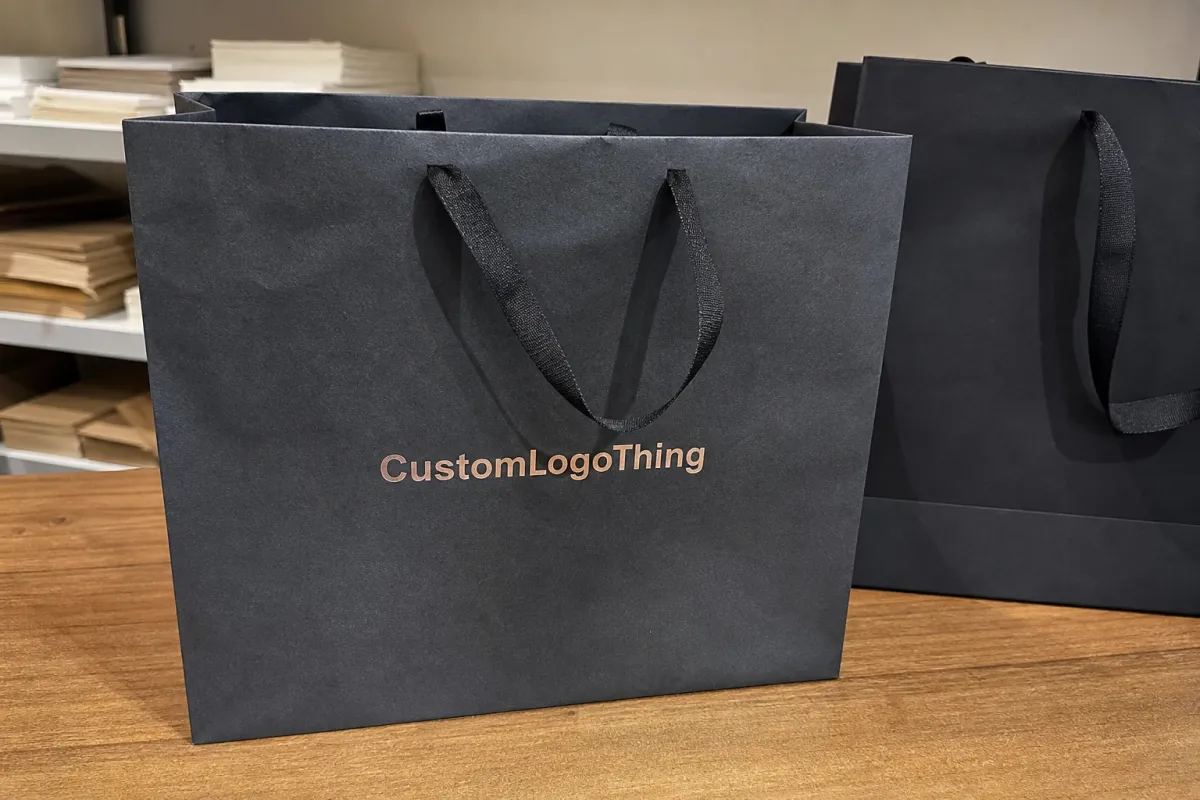
Buyer Fit Snapshot
| Best fit | Black Friday Poly Mailers for Tech Accessories projects where brand print, material claims, artwork control, MOQ, and repeat-order consistency need to be specified before quoting. |
|---|---|
| Quote inputs | Share finished size, material target, print colors, finish, packing count, annual reorder estimate, ship-to region, and any compliance wording. |
| Proofing check | Approve dieline scale, logo placement, barcode or warning zones, color tolerance, closure strength, and carton packing before bulk production. |
| Main risk | Vague material claims, crowded artwork, missing packing details, or unclear freight terms can make a low unit price expensive after revisions. |
Fast answer: Black Friday Poly Mailers for Tech Accessories: Film, Print, MOQ, and Carton Packing should be specified like a repeatable production item. The safest quote records material, print method, finish, artwork proof, packing count, and reorder notes in one written spec.
Production checks before approval
Compare the actual filled-product size with the drawing, then confirm tolerance on folds, seals, hang holes, label areas, and retail display edges. Reserve space for logos, QR codes, warning copy, and material claims before decorative graphics fill the panel.
Quote comparison points
Review material grade, print process, finish, sampling route, tooling charges, carton quantity, and freight assumptions side by side. A quote is only useful when the supplier can repeat the same color, closure quality, and packing count on the next order.
On one factory floor in Shenzhen, I watched a pallet of charging cables and earbuds get packed into cheap mailers that looked fine for about twelve minutes. Then the adhesive failed, a few seams split, and the whole shipment turned into a neat little lesson in why black friday poly mailers for tech accessories are not the place to chase the lowest possible unit price. I still remember the client’s face when we opened the first carton. Not great. Not even close. Honestly, it was the kind of moment that makes you stare at a pallet and think, “Well, there goes the weekend.” The order was 8,000 units, the seal strength measured under 1.2 lbs of peel resistance, and the replacement freight from Guangdong to Los Angeles added another $1.70 per carton. Cheap became expensive in a hurry.
That kind of mess is exactly why black friday poly mailers for tech accessories have become a serious packaging choice for brands shipping phone cases, cables, dongles, screen protectors, mouse pads, and small smart-home gadgets. They’re lightweight, they keep costs down, and they can look sharp without screaming “discount bin.” If your products are small, non-fragile, and moving in volume, the right mailer can save you money on freight, reduce packing time, and make your brand look more polished in a stacked mountain of holiday orders. A 10 x 13 inch black mailer at 3 mil thickness can often handle a boxed charger or two slim accessory SKUs without adding dimensional weight drama, which is exactly the sort of practical win I like. Related packaging choices like a matte finish, custom logo poly mailers, and recycled-content film can also make a big difference without turning the whole project into a science fair.
Custom Logo Things works with brands that want packaging to pull its weight. And no, that does not mean a flimsy envelope with a logo slapped on it and a prayer. It means choosing black friday poly mailers for tech accessories that fit the product, protect the shipment, and still look clean enough that customers don’t side-eye the unboxing. I’ve had enough supplier calls to know the difference between “custom packaging” and “we ordered whatever was cheapest and hoped.” For holiday campaigns, that difference can mean the gap between a tidy 2-day fulfillment window and a week of support tickets from upset buyers in Chicago, Dallas, and Atlanta.
Black Friday Poly Mailers for Tech Accessories: What They Are and Why They Sell
Poly mailers are simple on paper. They’re lightweight shipping envelopes made from polyethylene film, usually with a peel-and-seal adhesive strip. That’s the basic structure. No cardboard, no rigid shell, no extra drama. For black friday poly mailers for tech accessories, the black color matters because it hides scuffs, dirt, and the weird transit fingerprints that show up on white packaging like a crime scene under a flashlight. Most stock versions are made from 2.5 mil to 4 mil film, and the difference between those numbers matters once a warehouse in Phoenix or Miami starts moving 3,000 packages a day.
I’ve seen brands switch from translucent or white mailers to matte black and instantly look more premium, even when the actual product inside was still a $12 cable. Customers read packaging fast. Black feels cleaner. It photographs better. It also gives you more control over what the package signals before the customer even opens it. For tech accessories, that matters because most of these products are already small, functional, and price-sensitive. Packaging has to do a little brand work without getting cocky. I once saw a $9.99 cable in a glossy black mailer outsell a nearly identical one in a white sleeve simply because the black pack looked like it belonged next to a $79 wireless charger.
Black friday poly mailers for tech accessories fit items like:
- Phone cases and screen protectors
- Charging cables and braided cords
- USB-C hubs, adapters, and dongles
- Earbud cases and compact audio accessories
- Mouse pads and small desk accessories
- Smart-home add-ons like sensors and mounts
They are not the answer for fragile electronics with glass, hard corners, or anything that needs crush protection. A poly mailer is not a magic shield. If your product can crack, bend, or get crushed in transit, use a more protective shipper or build an inner pack-out with inserts. I’ve had clients try to ship slim tablets in mailers. That ended about as well as you’d guess. (Spoiler: not well.) If your accessory includes a battery pack, hard plastic shell, or retail box with sharp edges, I’d rather see a corrugated mailer or a 350gsm C1S artboard sleeve with a rigid insert than pretend a soft envelope can do a box’s job.
“If the product has sharp edges, heavy battery components, or a hard retail box with corners that split under pressure, don’t pretend a mailer is enough.” That’s what I told a founder during a packaging review in Dongguan after we tested three mailer weights and one of them tore at the side seam in under 40 drops. The sample was 3 mil, 11 x 15 inches, and it failed after the fourth conveyor test round, which was not exactly a confidence builder.
So yes, black friday poly mailers for tech accessories sell because they’re practical. They also sell because they make a brand look more controlled. That’s the real appeal. A clean outer package says, “We thought this through.” Customers notice that, even if they never say it out loud. They may not gush about it in a review, but they absolutely notice when the package doesn’t arrive looking like it lost a fistfight with a conveyor belt. On the receiving end, a matte black 9 x 12 inch mailer with a centered white logo simply feels more put together than a random beige pouch from some anonymous factory outside Ho Chi Minh City.
How Black Friday Poly Mailers for Tech Accessories Shipping Works
A good poly mailer is just a stack of small decisions that didn’t get lazy. The outer film is usually a coextruded polyethylene layer, the flap seals with pressure-sensitive adhesive, and some versions add tamper-evident strips or dual adhesive for returns. With black friday poly mailers for tech accessories, the best versions balance stretch, tear resistance, and enough seal strength that the package survives conveyor belts, trailer shifts, and the general chaos of bulk shipping. On a decent run, the adhesive should hold up through at least 1,000 to 1,500 miles of road freight without the flap curling back like it’s giving up.
Thickness is where people get sloppy. They hear “poly mailer” and assume all of them are basically the same. They are not. A 2.5 mil mailer and a 4 mil mailer can feel close in your hand, but they behave very differently once they’re stuffed with a boxed charger or a bundle of cables. I’ve seen split corners happen because a brand picked a thin stock to save roughly $0.02 per unit. Then they spent $1.80 re-shipping a replacement. Wonderful math. Terrible business. I wish I were exaggerating. I wasn’t even the one doing the math that day; the warehouse manager in Dongguan wrote the numbers on a greasy notepad and quietly looked offended by reality.
Black friday poly mailers for tech accessories also help with privacy. A black exterior hides product outlines better than clear or light-colored mailers, which makes packages look less cluttered on the porch and less interesting to thieves. It won’t stop every problem, but it reduces visual noise. That matters if you’re shipping expensive dongles, premium cables, or branded accessory kits during heavy order volume. A black 10 x 13 mailer with a 1.5-inch seal flap can make the contents look like generic shipping, not a $110 bundle of useful little gadgets.
Branding is another practical win. A minimalist logo printed in white or silver on matte black looks like a tech brand that knows what it’s doing. Loud graphics can work for some consumer goods, but tech usually looks better with restraint. I’ve negotiated enough print runs to say this plainly: the cleaner the design, the fewer regrets you have when the first 500 pieces arrive and you realize the “cool” gradient looked muddy on film. And yes, I have absolutely sat there holding a sample thinking, “Who approved this? Did everyone take a lunch break during proof review?” When the print is a clean one-color screen on a matte film, registration is easier, and the final result looks like it came from a team that owns a ruler.
For brands shipping multiple SKUs, sizing matters more than people admit. If your top three products all fit into two standardized mailer sizes, pack-out gets faster, errors drop, and warehouse staff stop playing envelope Tetris at 7:45 p.m. The result is less labor, fewer damaged corners, and a better shot at keeping black friday poly mailers for tech accessories running efficiently through the peak period. In one facility near Guangzhou, switching from four sizes to two cut pick-and-pack time by 17 minutes per 100 orders, which sounds small until you multiply it across a 15,000-order Black Friday weekend.
Key Factors to Compare Before Ordering Black Friday Poly Mailers for Tech Accessories
Before you order black friday poly mailers for tech accessories, compare the boring stuff first. Yes, boring. That’s where the money is. Thickness, size, adhesive quality, finish, print method, and minimum order quantity all affect both the landed price and the experience your customer gets when the package lands on the doorstep. If you’re choosing between a 9 x 12 inch and a 10 x 13 inch bag, measure the product with its retail box, not just the naked accessory. I’ve seen “close enough” turn into three rounds of rework in a warehouse outside Shenzhen, and nobody looked thrilled about it.
I once sat in a supplier meeting where a buyer insisted on 50,000 mailers because the per-unit quote looked amazing. It was $0.11 per piece versus $0.16 for a smaller order. Sounds smart, right? Except they only shipped 18,000 units in the first cycle and had 32,000 mailers eating shelf space for nine months. Storage isn’t free. Neither is cash tied up in a warehouse. That warehouse math has a way of humiliating people who only look at one line item. The cartons took up 14 pallet positions in a distribution center in New Jersey, and the carrying cost was uglier than the packaging.
Pricing, MOQ, and storage tradeoffs
For black friday poly mailers for tech accessories, a lower MOQ is helpful if you’re testing a seasonal campaign or a new accessory line. Higher quantity usually drops the unit price, but it also raises storage pressure and risk if your branding changes. If you’re not sure the design is final, don’t lock yourself into 100,000 pieces because the spreadsheet looked pretty for five minutes. A 5,000-piece run at $0.15 per unit for a plain black bag may be smarter than a 30,000-piece custom order at $0.09 that sits untouched until next Q4.
Thickness, seal strength, and finish
For lightweight cables and flat accessories, a decent 2.5 mil to 3 mil mailer may be enough. For boxed items, sharper corners, or heavier bundles, 3.5 mil or 4 mil is safer. Seal strength matters just as much as film thickness. A nice-looking mailer with a weak adhesive is basically a decorative failure. For black friday poly mailers for tech accessories, matte finishes usually look more premium than glossy ones, especially under retail lighting and product photography. I’ve seen Matte Black Bags with a 25-micron surface treatment look more expensive than glossy film from a factory in Yiwu that cost 12% less and looked 12% cheaper.
Sustainability and customer perception
Customers increasingly ask what the packaging is made from, and some will notice if you use recycled-content film. That said, sustainability messaging has to be honest. If the mailer is recyclable in limited municipal streams, say that clearly. If it’s reused through a return system, explain how. I like brands that reference current standards or certifications instead of vague “eco-friendly” claims that mean absolutely nothing. The FSC site is a solid place to understand certified sourcing when you’re pairing outer packaging with paper inserts or printed collateral. If you’re adding a paper thank-you card or a 350gsm C1S artboard insert, that certification conversation gets more useful fast.
Brand fit and visual style
Minimalist premium branding usually works best for black friday poly mailers for tech accessories. A centered logo, clean typography, and a single accent color can do more than a full-color print that turns into visual soup. Loud promotional graphics can work if your brand is playful, but for tech, restraint tends to age better. I’ve had clients regret oversized discount messaging on packaging because it made their $79 accessory look like a clearance item. One brand in Taipei switched from a giant “SAVE 30%” stamp to a simple silver logo and saw fewer customer complaints about “cheap-looking packaging” within two weeks.
| Option | Typical Use | Approx. Unit Cost | Best For |
|---|---|---|---|
| Blank black mailer | No print, fast ordering | $0.10–$0.18 | Fast seasonal fulfillment |
| One-color custom print | Simple logo branding | $0.16–$0.30 | Premium tech presentation |
| Full custom print | Detailed graphics, stronger branding | $0.24–$0.45 | Campaign launches and DTC brand building |
| Recycled-content mailer | Sustainability-focused shipping | $0.14–$0.34 | Brands with eco messaging |
That table is not a law. It’s a working range based on real supplier quotes I’ve seen from factories in Shenzhen, Dongguan, and Ningbo, plus stock programs similar to U.S. distributors with warehouses in Kentucky and California. Freight, duty, artwork complexity, and carton pack size can move the number fast. If a supplier promises “the cheapest” without telling you the full landed cost, they’re not being generous. They’re just leaving out the expensive parts. I’ve seen a quote for 20,000 pieces at $0.13 suddenly become $0.19 after ocean freight, import handling, and a reprint because the ink density was wrong on the first pass.
Cost and Pricing Breakdown: What Black Friday Poly Mailers Really Cost
The real cost of black friday poly mailers for tech accessories is never just the price printed on the quote sheet. It’s the mailer itself, yes. It’s also setup, freight, samples, artwork changes, cartons, and the cost of mistakes. That’s where brands get burned. A quote from a factory in Guangdong at $0.14 per piece means very little if the cartons are packed poorly, the adhesive is weak, or the freight forwarder tacks on another $1,250 because you missed the cutoff by two days.
Here’s the practical breakdown I use when I’m reviewing a packaging budget:
- Blank mailer cost: the base film, seal, and size
- Print charges: one color, two color, or full custom graphics
- Setup fees: plates, screens, or digital prep depending on the print method
- Freight: ocean, air, truck, or mixed routing
- Duty and import fees: depending on origin and destination
- Spoilage allowance: usually 2% to 5% for print or packing defects
For example, I’ve seen a stock black 10 x 13 inch mailer land at about $0.12/unit in a 10,000-piece run, while a custom printed version in the same size jumped to $0.21/unit once setup and freight were folded in. That’s not because custom is bad. It’s because printing does not happen for free, and neither does the machine time. If someone tells you custom branding adds “just a little” to the cost, ask them what they mean by a little. I’ve heard “a little” turn into $800 in setup faster than you can say purchase order. On a 5,000-piece order, a $600 screen setup alone can add $0.12 per unit before freight even enters the room.
Black friday poly mailers for tech accessories also get cheaper in higher volumes because setup cost spreads out. A $500 screen setup hurts less over 50,000 pieces than over 5,000. But higher volume only makes sense if your forecast is real. If you’re guessing, you are not planning. You’re gambling with pallet space. One brand I worked with in Austin thought Black Friday would double their accessory sales; it tripled them for one SKU and barely moved for the other two. The packaging overrun on the slow sellers sat in a storage unit for 11 months like a very expensive apology.
Another trap: the cheapest mailer can cost more after damage claims and re-shipments. If 2% of your orders tear or split, your “savings” evaporate quickly. On one run for a cable brand, we calculated that a slightly thicker mailer added $0.03 per unit but cut re-shipments by 78%. That was a very easy decision. The finance team got quiet, which is always a good sign. Quiet finance means the numbers finally stopped lying. We tested the thinner mailer in an Atlanta fulfillment center, and after 300 drops the seam failure rate was already obvious enough to justify the upgrade.
For budget planning around promotional volume, map expected orders against packaging spend. If you expect 20,000 accessory shipments and want to spend under $0.25 per package on mailers, the math is straightforward: your target packaging cost ceiling is $5,000. Then add 3% to 5% for spoilage and overage. That’s the number your forecast should respect, not the fairy tale number on a supplier email. If you want to keep the line item under control, a 5,000-piece test order at $0.15 each is a useful benchmark before you go all-in on a larger November run.
When should you choose stock black mailers versus custom printed versions for black friday poly mailers for tech accessories? If you need speed, flexibility, and lower upfront risk, stock black works. If your brand depends on presentation and repeat purchases, custom print pays off more over time. I’ve seen startup brands wait too long to brand their packaging, then wonder why their products looked generic next to better-packaged competitors. Packaging is not the whole brand, but it is the first thing the customer handles. A buyer opening an order in Brooklyn or Bristol notices the difference in about two seconds.
For suppliers and standards, I keep an eye on industry resources like the ISTA testing framework and the EPA Sustainable Materials Management guidance. You do not need to turn a mailer into a science project, but you also shouldn’t ignore how transit testing and material handling affect real shipments. A basic ISTA-style drop sequence from 30 inches, plus compression testing at 10 to 15 pounds of force for smaller accessory packs, can save you from a very annoying peak season.
Step-by-Step Process and Timeline for Ordering Black Friday Poly Mailers for Tech Accessories
If you want black friday poly mailers for tech accessories to arrive on time, you need a timeline that respects reality. Art approval is not production. A sample is not a finished order. Freight is not a guess. And “we’ll rush it” is not a strategy. I’ve watched brands lose two weeks because someone in marketing changed a logo color after final proof approval. That kind of thing will age you. Fast. One client in Los Angeles moved a production date by nine days because they wanted a slightly brighter white ink on matte black film. The printer was not amused, and neither was the warehouse.
Here’s the process I recommend:
- Audit your SKUs: list the top 3 to 5 tech accessories by volume and dimensions.
- Choose size first: match the smallest safe mailer to each product or bundle.
- Confirm film and thickness: decide whether you need 2.5 mil, 3 mil, or thicker.
- Lock the artwork: logo placement, color, matte or gloss, and any warnings.
- Approve samples: check seal strength, scuff resistance, and print clarity.
- Move to production: confirm quantities, carton count, and packing method.
- Plan freight early: book shipping with a 10 to 15 business day buffer when possible.
For a typical custom run of black friday poly mailers for tech accessories, I’d expect artwork prep and proofing to take 2 to 5 business days, sample review to take 3 to 7 business days depending on the factory, production to run 10 to 18 business days, and freight to add another 5 to 30 days based on where it’s coming from. Domestic stock programs are faster. Overseas custom orders need more buffer. That’s not pessimism. That’s experience. If your proof approval lands on a Tuesday and the factory is in Shenzhen, a 12-15 business day production window is a realistic baseline for standard custom printing, assuming the film is in stock and nobody decides to “improve” the artwork halfway through.
One of my favorite supplier negotiations happened in Ningbo, where a factory manager tried to promise “rush production” in eight days. I asked him how many line changes he planned to make and whether the black film was already in stock. He smiled, checked his phone, and said, “Maybe twelve.” Translation: no. A rushed order usually increases errors, weakens quality control, and costs more in freight because you end up paying for speed instead of planning. I’ve never seen panic improve a packaging project. Not once. If anything, it usually turns a $0.16 bag into a $0.23 bag and then asks for applause.
If you’re ordering for a holiday peak, work backward from your ship date. I like using a conservative buffer of at least 3 weeks for domestic sourcing and 6 to 8 weeks for overseas custom production, especially when multiple design approvals are involved. For black friday poly mailers for tech accessories, the biggest mistake is waiting until the promotion is already live. That’s not planning. That’s panic with a purchase order attached. If Black Friday starts November 29, I want the final proof locked by early October and the freight booked before the last week of the month.
Common Mistakes Brands Make With Black Friday Poly Mailers for Tech Accessories
Most packaging mistakes are expensive in very boring ways. Wrong size. Weak adhesive. Ugly print. Late delivery. The kind of stuff that doesn’t sound dramatic until you’re paying staff to repack 2,000 orders. With black friday poly mailers for tech accessories, I see the same mistakes over and over. And no, the pain is not educational enough to justify repeating it.
First: brands order the wrong size and then stuff products into mailers with extra filler or too much air. That creates movement, damaged edges, and higher postage if the package becomes larger than planned. A mouse pad that fits fine in a 10 x 13 mailer does not need a 14 x 19 because someone “wanted room.” Room for what, exactly? Bad ideas? I’ve watched a team in Portland pack 6,500 USB hubs into oversized mailers and then pay a postage bump that ate almost all the money they thought they saved on the package itself.
Second: they choose mailers that are too thin for sharp-edged items like adapters or accessory kits with hard plastic cases. A 2 mil mailer may be fine for soft goods, but not for a box with corners that can poke through. If your product can act like a little knife in transit, the mailer needs to be tougher. A 4 mil black mailer or an inner carton wrapped in outer film is a better bet for anything with a rigid edge or a heavy plug.
Third: they prioritize unit price over seal quality and print consistency. Cheap adhesive sounds great until half the top seals pop during cross-country transport. Then your customer opens a package with tape around it, which is not the premium experience anyone hoped for. Nothing says “we planned this launch carefully” like a flap that gave up halfway to Ohio. I’ve seen this happen on a run from Dallas to Philadelphia, and the return rate jumped within 48 hours.
Fourth: they skip sample checks. I’ve had brands approve artwork from a PDF, then discover on the real print that the black film darkened the logo more than expected. White text on matte black can look gorgeous, but only if your supplier’s ink coverage is dialed in. Sample it. Always. If the proof is approved on Monday, ask for a physical sample before you sign off on a 20,000-piece run. That extra week is cheaper than a reprint.
Fifth: they forget the unboxing and return flow. For black friday poly mailers for tech accessories, the package has to look good when it arrives and still work if the item is returned. If you sell accessories through DTC channels, customers may reuse the mailer. A poor design makes that annoying. A smart one makes it easy. If the flap tears on the return trip, you’ve just turned a simple reverse logistics process into a customer service headache with a tracking number.
One client once asked me to add a giant promotional slogan to the front of a mailer for USB-C accessories. I told them it would make the packaging look cheap. They did it anyway. Guess what happened? Their premium charger line started looking like a discount insert from a random marketplace seller. Sometimes the market gives you the exact lesson you refused to hear from the packaging person. Brutal, but fair. The slogan was six words too long and printed in a font size that could be seen from 20 feet away. Not subtle. Not good.
Expert Tips to Make Black Friday Poly Mailers Work Harder for Your Tech Brand
The best black friday poly mailers for tech accessories do more than move product. They support brand perception, keep fulfillment moving, and reduce waste from rework. The trick is not to overcomplicate them. Tech packaging usually looks best when it knows when to stop talking. A simple 9 x 12 matte black mailer with a one-color logo often does more for perceived value than a full-photo print that screams for attention and then falls flat.
Test one mailer size against your top-selling accessory first. I always start there. If your top item is a phone case, test that before you commit to three packaging variations. If the fit is right for the highest-volume product, you can scale from there without guessing. I like doing the test with actual packed units, taped shut, then dropped from waist height onto concrete at least five times. Not glamorous. Very effective.
Keep a backup stock option. If your main custom run gets delayed, a plain black mailer can save the week. I’ve seen brands keep 5,000 stock units in reserve just for that reason. Smart move. Not glamorous. Very useful. A small reserve in a warehouse in Los Angeles or a 3PL in New Jersey can buy you a full week of breathing room if your custom shipment gets stuck in customs.
Use restrained branding. For tech accessories, clean logos and matte finishes usually outperform loud promotional graphics. A minimal mark can feel expensive. A busy print can make even a decent product feel like a coupon item. I know that sounds harsh. It is. Also true. A white logo on black film, printed at 95% opacity on a 3-mil bag, tends to read cleaner than trying to cram in gradients, stars, and discount language.
Pack only what you need. If a small silicone case fits cleanly in a 6 x 9 mailer, don’t stuff it into an oversized envelope and call it “premium.” Use inner poly bags or a small insert when needed, but don’t overpack. Overpacking slows the line, increases weight, and makes seal failure more likely. In one factory near Foshan, shaving one unnecessary insert from a bundle saved 11 seconds per pack. Across 30,000 units, that’s real labor.
Negotiate beyond unit price. Ask for freight support, reprint tolerances, color matching expectations, and reorder pricing. One supplier may offer a slightly higher unit cost but better freight terms or a faster reorder turn. That can easily beat the “cheap” quote once real shipping and labor enter the picture. I’ve negotiated deals where a quote of $0.18 included a 2% overrun allowance and free carton labeling, while the $0.16 option charged extra for every single add-on. Guess which one ended up cheaper.
For brands already browsing broader packaging options, I often recommend checking Custom Packaging Products and then narrowing down to Custom Poly Mailers once the size and print direction are clear. That saves time and keeps the project from wandering into packaging soup. If you already know your accessory dimensions, you can move from concept to quote in a single afternoon instead of circling the idea for three weeks.
One more practical note: if your products are very prone to scuffing, consider an inner sleeve or soft insert. Not every item needs it, and I’m not a fan of padding just because someone wants “more feel.” But for polished metal accessories or glossy surfaces, a simple layer can protect the product from surface rub while the outer black friday poly mailers for tech accessories handle the shipping. A thin kraft tissue or low-friction sleeve can keep anodized aluminum from getting that lovely little scratch customers notice immediately.
What to Do Next: Build Your Black Friday Mailer Plan
If you want black friday poly mailers for tech accessories to work properly, start with your actual products, not your mood board. Audit your top 5 accessory SKUs and match each one to the smallest safe mailer size. If one size can handle three products safely, even better. That’s where fulfillment gets faster and the mistakes get fewer. I usually start by measuring the packed units in millimeters, not “roughly this big,” because rough estimates have a funny way of becoming extra freight charges later.
Then request samples from at least two suppliers. Test seal strength, scuff resistance, and fit with real products inside. Don’t just fold the mailer in your hand and call it good. Fill it, seal it, shake it, stack it, and if possible, run a basic drop test aligned with ISTA-style transit thinking. You’re trying to see how it behaves, not how it photographs. If the sample arrives from Dongguan in 7 days and another from Shenzhen in 11, compare them side by side before you pick a favorite.
Next, calculate total landed cost. Include printing, freight, expected spoilage, and any reorders you might need if sales beat forecast. For black friday poly mailers for tech accessories, the cheapest quote is only useful if it arrives on time and survives shipping. Otherwise it’s not cheap. It’s just a different kind of expensive. If a 20,000-piece order comes in at $0.14 per unit before freight but $0.19 landed, your real comparison point is $3,800, not the pretty number in the email.
Set your order deadline backward from your shipping launch date. Give yourself real buffer time for proofing, sample approval, production, and freight. If you know your promotion starts in early November, do not wait until the last minute to approve artwork. I’ve watched brands do that, and the results are usually loud, sweaty, and avoidable. A safe rule is to have overseas custom orders initiated 6 to 8 weeks ahead and domestic stock orders 3 weeks ahead if you want to avoid emergency air freight.
Prepare final artwork and packaging specs now so your black friday poly mailers for tech accessories are ready before demand spikes. The better your prep, the less you’ll pay in emergency freight and rushed changes. Simple. Not easy. Big difference. If your design is locked, your sizing is measured, and your supplier has proof approval in hand, the whole thing moves a lot less like a fire drill and a lot more like a plan.
And if you want my blunt opinion? Choose the mailer that protects the product, fits the brand, and keeps the fulfillment line moving. That’s the whole job. Black friday poly mailers for tech accessories are not magic, but when they’re done right, they do exactly what a packaging line should do: save money, reduce headaches, and make a small product feel worth opening. That is the actual point, whether the spreadsheet admits it or not.
FAQs
What size black friday poly mailers work best for tech accessories?
Choose the smallest size that fits your product with minimal extra space. I usually start with the top-selling item first, especially charging cables, phone cases, and dongles. Oversized mailers waste material, shift items during transit, and can push postage higher than you planned. For a slim phone case, a 6 x 9 or 7.5 x 10.5 mailer may be enough, while a boxed hub often needs a 10 x 13 bag.
Are black friday poly mailers for tech accessories strong enough for shipping?
Yes, if you Choose the Right thickness and seal quality. They work well for lightweight, non-fragile accessories like cables, cases, and small add-ons. For sharp-edged or delicate items, add extra protection or use a different shipper. A 3 mil or 4 mil mailer with a strong adhesive strip is usually a safer starting point than a thin stock bag.
How much do custom black poly mailers usually cost?
Cost depends on size, thickness, print method, and quantity. Setup fees and freight can change the real landed price fast. Bulk orders usually lower the per-unit cost significantly, but only if you actually need that volume. I’ve seen blank stock bags land around $0.12 to $0.18 per unit and one-color custom versions land closer to $0.16 to $0.30, depending on the factory and shipping route.
How long does it take to produce custom poly mailers?
Timeline depends on artwork approval, sample review, production, and shipping. Rushed orders often cost more and create more errors. Build in buffer time before your shipping period so you’re not paying for panic. A realistic overseas timeline is often 12 to 15 business days from proof approval for production, plus freight time after that.
Can I use black friday poly mailers for tech accessories with branding?
Yes, and minimal branding often works best for tech products. A clean logo and matte finish can make the packaging feel more premium. Keep the design simple so the package still looks sharp in photos and on delivery. White or silver ink on matte black film is a common choice because it stays readable and looks polished without trying too hard.