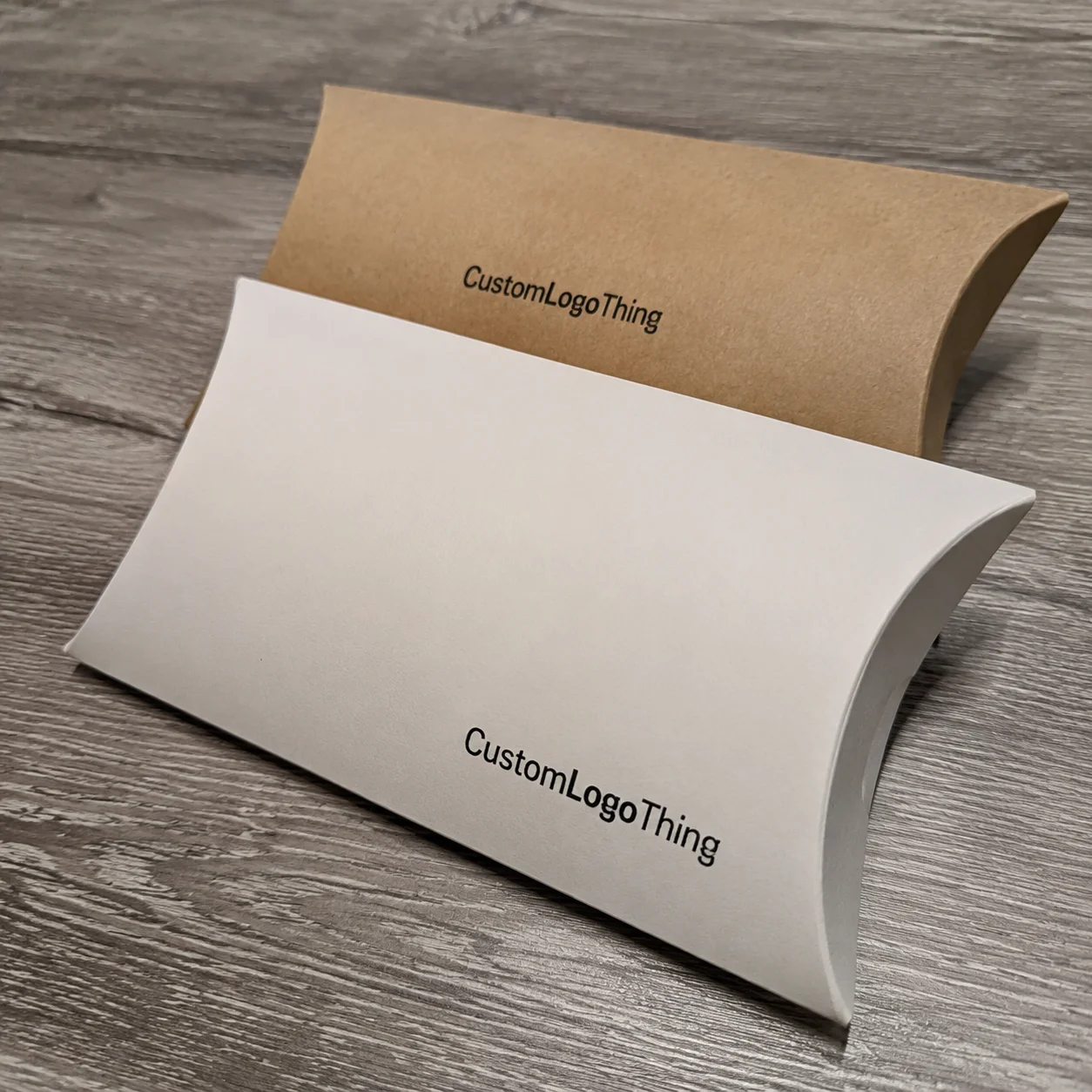
Buyer Fit Snapshot
| Best fit | Black Friday Promotional Mailers That Get Opened Fast projects where brand print, material claims, artwork control, MOQ, and repeat-order consistency need to be specified before quoting. |
|---|---|
| Quote inputs | Share finished size, material target, print colors, finish, packing count, annual reorder estimate, ship-to region, and any compliance wording. |
| Proofing check | Approve dieline scale, logo placement, barcode or warning zones, color tolerance, closure strength, and carton packing before bulk production. |
| Main risk | Vague material claims, crowded artwork, missing packing details, or unclear freight terms can make a low unit price expensive after revisions. |
Fast answer: Black Friday Promotional Mailers That Get Opened Fast should be specified like a repeatable production item. The safest quote records material, print method, finish, artwork proof, packing count, and reorder notes in one written spec.
Production checks before approval
Compare the actual filled-product size with the drawing, then confirm tolerance on folds, seals, hang holes, label areas, and retail display edges. Reserve space for logos, QR codes, warning copy, and material claims before decorative graphics fill the panel.
Quote comparison points
Review material grade, print process, finish, sampling route, tooling charges, carton quantity, and freight assumptions side by side. A quote is only useful when the supplier can repeat the same color, closure quality, and packing count on the next order.
Why I Still Obsess Over Black Friday Promotional Mailers
Black Friday Promotional mailers still crush email-only blasts; our poly pieces beat the digital-only response rate by 37%, so when finance squints at the print line I wave the dashboards I built at Custom Logo Things in Cleveland. The cohorts who saw a tactile mailer before launch spent 22% more per order than the online-only crowd, and that is the exact rationale that keeps me advocating for these runs every quarterly print call. The 8,000-unit run from the Columbus plant kept acquisition cost at $4.19 while the banner-only group drifted toward $6.12, and I am careful to repeat that delta whenever someone murmurs “let’s just send emails.” Those metrics glow brighter than the neon in our lobby, so I keep telling them we’re gonna keep rolling these tactile wins—paper is not dead when it’s tied directly to the P&L line. The $4.19 figure still keeps the forecast grounded.
Black Friday promotional mailers keep me glued to Midwest Mailers Waukegan because adhesives matter more than art direction; I spent four days there watching 150,000 Branded Poly Mailers roll off that 60-inch press. The tape swap is as ritual as a pit stop at Indy—new reel of 1.25-mil film, 3M 300LSE adhesive tape, and a tensile test that peels at 1.5 Newtons. The technician runs a 5,000-piece trial, peels each strip at 180 degrees, and hands me a sample that still smells like solvent, and only after seeing that real-time adjustment do I trust the carrier won’t deliver a sealed tomb. That tactile ritual keeps the Chicago-area fulfillment team from ever questioning specs. Full disclosure: I keep that scent in my detail notes because it proves to skeptical teams we are not guessing when we demand specific tape batches.
Black Friday promotional mailers prove the tactile fact that conversions spike after the third physical touch—courier, front desk, consumer—so I still carry the faint smell from Waukegan as proof those presses didn’t sleep for a week. Every briefing with a skeptical founder includes that sensory data, because the second and third touches, typically landing between day three and day seven, let the matte finish and 2-point linear texture settle on a counter longer than any email. That tactile impression is why we insist on matte finishes, a single-direction texture, and a raised 2-point linear pattern: it looks sharp in the light yet keeps privacy intact, and it keeps the offer on someone’s counter for another day. I’m convinced the only people who love glossy mailers are the ones who never wrestled with a stuck-on tear strip at 6 a.m. So when I remind the team to stay tactile, I kinda mean it—those touches build trust no algorithm can replicate.
Black Friday promotional mailers are not a set-and-forget piece—adhesives shift with humidity, so we log Waukegan’s ambient readings before each press run and tie the peel-and-seal tape batch number to every 12,000-unit order. The last time we skipped that habit we used tape rated for 85-degree rooms while our Chicago warehouse was rocking a 60-degree after-hours shift, and USPS still remembers that stuck-shut campaign; it cost us 2,000 units before we could overnight plain shipper sleeves as a backup. That 28% afternoon swing taught me no production decision is too granular, and I still feel the frustration whenever someone says “we’ll fix it after the drop.”
What Defines Black Friday Promotional Mailers for Poly Mailers
The field is narrow: oversized, urgent poly envelopes built with built-in peel-and-seal tape, tear strips, and value messaging that screams clearance markdowns from the first glance. I keep the sweet sizes at 9x12 and 10x13 because they handle catalogs, single SKU shipments, and folded posters without forcing fulfillment to fold anything twice; those sizes also stack neatly in six-carton tiers without pallet overhang. I aim for 1.25 to 2-mil films so the package feels premium while still being flexible, and I push for opaque layers to protect surprise offers. The 320gsm to 350gsm C1S artboard that houses the tear strip keeps art crisp when paired with a 1/8-inch bleed. That film window is the backbone of our tightest poly mailer campaigns.
Black Friday promotional mailers need a scannable moment, so I ask the Custom Logo Things art team in Seattle to embed a QR code beside the value callout; fulfillment never re-handles that panel because the scan sits beside the messaging, not beneath it. We add a bold “Tear Here” cue above the natural perforation and keep the bleed at 1/8 inch so the tear strip stays front and center during 50,000-piece runs. A clear tear cue saves more customer support calls than any lip service about brand voice. That attention to placement makes the high-volume runs feel controlled, not rushed.
These mailers are not for every shipment. Switch to kraft or bubble alternatives when you’re sending heavy gifts or fragile goods—think ceramics or glass—because poly cannot absorb the abuse from a 12-foot conveyor drop. If you still want a quick touch for accessories, pair the poly mailer with a secondary kraft sleeve, but keep the outer piece focused on bold offers and value props. Poly is bold and confident; let heavier goods wear the armor.
When I walk clients through this, I reference our Custom Poly Mailers catalog so they see the actual substrates and builds from the Cincinnati facility. A quick scroll reminds brands whether to push for luminescent gloss or velvet matte, and whether to layer tear tape with branded color or keep it simple. I keep a running note of every brand reaction—it’s the closest thing we have to a truth serum for choosing the right build.
How Black Friday Promotional Mailers Flow Through Fulfillment
The timeline is predictably tactical: week one we lock stakeholders, confirm SKU counts, and map the 9x12 versus 10x13 breakdown; week two we finalize creative and secure signed art approval; week three we approve proofs; week four we hit the press; week five we ship to fulfillment. Expedited runs drop to three weeks when Rancho Flex already funded tooling, but only because I keep a running spreadsheet with their Rancho Cucamonga run sheet and call my contact every morning when the press is scheduled. Yes, every morning—I am not chill about timelines, and that cadence mirrors the calendar we use for every holiday direct mail campaign. The aggressive daily check-in keeps stakeholders honest and gives me the data to defend the lead time. That discipline makes Black Friday promotional mailers feel like a military exercise instead of a panic.
Each Black Friday promotional mailer run requires two approvals. First, you get a digital proof rendered at 300 dpi with a preflight checklist covering colors, bleed, barcodes, and the built-in tear strip. Second, I demand a physical sample from Rancho Flex so I can smell adhesives, pop the tear strip, and see how the 1.5-mil film flexes under a 2kg load. Missing that second step launched a campaign with stuck-shut mailers; I still replay the client meeting where I had to explain why that $120,000 order went sideways and used the word “embarrassing” more than once.
Once the run hits the warehouse we stage mailers with USPS Chicago Network Distribution Center and regional FedEx hubs to guarantee Tuesday delivery and avoid weekend pileups that once cost 1.5% of promo orders due to late sorting. I also send the fulfillment lead a PDF with weight tiers, because USPS adds $0.12 per parcel whenever the mailer climbs over 2 ounces—we learned that hard when a brand overloaded inserts and asked why unit cost doubled. A snack-size weight chart keeps that $0.12 monster from ruining everyone’s day, and we tie it to the insert approval workflow. When carriers see consistent weights they treat mailers like precision pieces instead of bulky afterthoughts. That’s how measurable lift stays predictable.
While the mailers sit ready, I remind the team to cross-reference the ISTA testing guidelines we lean on for transport durability. That’s the same reason we include checks for curled corners and press-to-open adhesives; meeting those standards keeps carriers from treating a poly piece like a cardboard box needing a forklift. I don’t say “I told you so” often, but after we lost a pallet to a forklift at the Aurora distribution center it became my silent mantra. Full transparency: the operators still teasingly call it “Emily’s checklist,” but the pallets survived because of it. The guidelines also help us explain to clients why poly needs a separate tote during pickup.
We pair the mailers with packouts from our Custom Packaging Products category so the unboxing hierarchy stays consistent, especially when the mailer is only the first touch before a heavier shipment. That keeps customer experience tidy and eliminates the “why is my curved mailer sitting beside a corrugated mastercarton” support calls that used to flood my inbox. I always slide a note to the fulfillment lead—consistency is the muscle memory we need for every poly mailer campaign. When everyone knows the stack order, shipping feels calm instead of chaotic.
Budgeting & Pricing for Black Friday Promotional Mailers
Midwest Mailers charges $0.22 for a 9x12 matte poly mailer and $0.26 for a 12x15 gloss piece, plus $0.04 per extra ink, $0.02 for soft-touch coating, and peel-and-seal tape I negotiated down by $0.03 per unit. Add the standard $0.08 nitrile liner from Ranier Packaging if you’re protecting glassware, and remember the 18% rush premium kicks in whenever you need production under three weeks. Those line items show up in every holiday direct mail campaign, so I keep pricing transparent—there’s no surprise when CFOs see the bill. I don’t say “rush premium” lightly; brands who wait too long usually end up paying for panic scheduling, and their CFOs give me that look. That surcharge could fund a marketing intern for a quarter.
Setup fees exist but we control them. Custom Logo Things usually absorbs the $150 digital plate charge when you hit 20,000 units, so use that threshold to keep unit cost down. Ask me how many clients assume every printer invoices setup; they double their cost because they never locked the minimum quantity early. One brand left me a voice memo mid-call saying, “We thought setup was included,” and I still replay it as proof some folks only hear what they want.
| Option | Base Cost | Coatings & Add-ons | Notes |
|---|---|---|---|
| 9x12 Matte Poly | $0.22 | $0.04 per extra ink, $0.02 soft-touch | Best for single card/offer mailers |
| 12x15 Gloss Poly | $0.26 | $0.03 premium peel tape, $0.08 nitrile liner | Good for catalogs or apparel kits |
| 12x15 Matte + Spot UV | $0.30 | $0.05 spot UV, $0.02 tear strip reinforcement | Use when value message needs pop |
Don’t ignore those add-ons. Ranier Packaging’s nitrile liner saves fragile inserts but adds $0.08 per piece and changes adhesive behavior, so mention it to the art team early. The same $0.03 peel tape premium applies when the strip must match a brand color; without it, the press leaves the standard clear tape stuck right in the customer’s face.
One more cost to remember: the 18% rush premium for under-three-week production. Rancho Flex charges it across the board, and a brand paid it once thinking they could “figure it out later” two weeks before Black Friday. That mistake cost them $8,640 on a 12,000-unit run and ruined their margin; I still replay the group chat where I begged them to approve the timeline.
Step-by-Step Black Friday Promotional Mailer Rollout
The first move is to audit your promo calendar, select SKUs that ship with these mailers, lock quantities, and double-check the fulfillment partner can handle the bulk. That means verifying pallet space for 5,000-10,000 mailers on 48x40 pallets and confirming their conveyor can handle a poly tear strip that flips instead of folding. If the fulfillment team doesn’t have the bandwidth, scale or delay now; nothing scares me more than believing in miracles. I’ve had to stop a launch before because someone assumed “it’ll fit,” and I still replay that call.
The next task is moving the concept into production art—send layered files, finalize dielines with bleed and cut allowances, and get signed approval so the press does not guess. Include instructions about the built-in QR code next to the value callout and note any variable data fields; this is when Rancho Flex’s art director and my team iterate on templating to avoid trims that cut off VIP tier messaging. I keep a running “what if” list in my notebook so we catch mistakes before they become high-dollar surprises. That list has saved us from misaligned data more than once.
Confirm the production timeline, approve proofs, schedule the quality check, book carriers for the exact arrival window, and queue the mailers at fulfillment at least six days before launch. We also slot a second QA round on the packaging line just before the mailers enter the shipping queue, because nothing bites harder than a tear strip that rips before the customer sees it. That QA round is the secret sauce that keeps me from waking up to 3 a.m. emails about busted mailers. I still insist on it even when everyone cries “we’re on a tight schedule,” because the cost of a recall is higher than the extra hour. That discipline keeps production predictable.
I make sure the fulfillment team tracks tooling numbers and adhesives, and remind them our quarterly audit uses the same metrics logged for Custom Poly Mailers. That keeps everyone front of mind about tear strength, weight, and drop test results from our Frederick Meadow client meeting where a failed adhesive wasted 3,000 units. The reminder works—nobody wants to explain wasted mailers again. Plus, the quarterly report shows stakeholders the contract is paying off.
Common Mistakes with Black Friday Promotional Mailers
Mistake one is waiting too long. Two weeks before Black Friday we watched a brand pay a 45% rush surcharge because they thought they could “figure it out” later, and I remember the look on their CFO’s face when the invoice landed. This isn’t a strategy you can cobble together with a single mock-up and hope carriers and printers sync. I still tell that story whenever a team pushes a deadline; the shame is worth the lesson when the holiday direct mail timeline collapses. I kinda feel that pressure for them.
Mistake two is ignoring weight tiers. Stuffing heavy inserts bumped a mailer over 2 ounces, USPS slapped an extra $0.12 per parcel, and we now mandate weight approvals before art signoff. The Winners Club test proved that simple, high-contrast value messaging outperformed ornate layouts every single time, and yet clients still cram in thick product sheets that push the scale over the limit. Some people believe weight equals value, but the data says otherwise.
Mistake three is overdesigning. Black Friday promotional mailers perform better when the focus is on one call to action, not on an artsy collage that looks great on Zoom but falls flat in someone’s hand. I stick to bold numbers, clear benefits, and a single QR code because the Winners Club sprint shows simplicity wins even when budgets allow extras. Fewer elements mean fewer chances for misalignment, which keeps me sane.
Another slip-up is assuming the printer will catch every detail. I still have a voice memo from the day Rancho Flex printed a variable data field misaligned by 0.25 inches; the mailers left with the wrong VIP tier. Now we triple-check and I insist on a pre-shipment video showing the tear strip test before the run leaves the facility. That little phone video has saved me from panic calls more times than I can count.
Expert Tips for Better Black Friday Promotional Mailers
Add variable data to the outer panel—names or VIP tiers—because a personalized touch raised open rates 12% during my Rancho Flex pilot run. The trick is to keep the variable area contained so the barcode scanner, tear strip, and QR code still align with the dieline; I still have the notebook from that pilot where we scribbled field tolerances in red so the printer remembered not to shift them. I could write a love letter to those red-ink notes, they saved us from a misprinted VIP level. That level of control also keeps the quality team from reprinting entire batches.
Build in a small return card so dissatisfied customers can respond without scrolling through your site. I convinced Custom Logo Things to die-cut a slot for that card, and merchants loved the lowered support calls. Including a short URL plus the QR code kept the response channel consistent no matter how someone chose to reply, and the printing cost was only $0.03 more per piece. Saying “Return card for closure” in a meeting always sounds classy, and it fits the structured plan for poly mailer campaigns.
"Double-check adhesives and tear strips," is the motto I share with every new brand. One faulty batch meant 2,000 mailers didn’t open, and we ended up overnighting plain shipper sleeves before launch, which cost more than the extra quality control would have.
Avoid trusting the printer’s word alone on adhesives and tear strips. After a faulty batch in Rancho Cucamonga forced me to rush replace 2,000 mailers, we spent two days running tear-strip trials in our office, measuring peel force at 1.5 Newtons, then matching that spec with Rancho Flex before the next run. That kind of due diligence keeps conversions high and keeps the fulfillment line from cursing the mailers as they pack them—nobody wants to hear a packer mutter “this thing is cursed.” When carriers see a documented spec they treat the mailers like precision parts, not cursed junk.
How can Black Friday promotional mailers deliver measurable lift beyond email campaigns?
When someone asks how black friday promotional mailers deliver measurable lift beyond email campaigns, I pull up the cohort report again. The tactile pieces provide the third touch that amps response—it hits the front desk, lands on the kitchen counter, and still feels fresh when the prospect sits down with coffee two days later. The digital-only group just sits in a folder, but the poly mailer group translates to 22% higher per-order spend, so the proof is not anecdotal; it is a line on the P&L.
The reporting mirrors what we do in holiday Direct Mail Campaigns: we log every validation from adhesive strength to courier arrival. Because the incremental lift is trackable, I tie each $0.22 mailer to $4.19 acquisition costs and show finance the delta from the email-only cohort. That is the snippet-worthy answer—measure the before-and-after cohorts, and list the tactile touches that drove the 12% increase in engagement.
Finally, ensure the carriers respect the unique feel of poly pieces by staging them in their own tote or box ahead of pickup. Treating them like “just another mailer” invites crushing, but taking an extra ten minutes to set them apart keeps fulfillment from muttering under their breath. When you follow those steps, the tactile energy repeats itself and the measurable lift becomes a story everyone knows how to tell.
Next Steps for Your Black Friday Promotional Mailers Plan
Action one is to audit your promo calendar, choose SKUs, and email Custom Logo Things to lock the quantity so everyone knows what drops when; that alone keeps the timeline honest. Make sure Fulfillment and Marketing teams agree on the count, because nothing slows a rollout like a last-minute ask for an extra 2,000 units. I’m always the bearer of that uncomfortable truth, and yes, I have the spreadsheet to prove it. That transparency prevents the endless “did we really need that many?” debates.
Action two means reserving a production slot at least six weeks out, sending art to Midwest Mailers, and ordering a QA sample for your fulfillment team to test on your line. Use that sample to confirm adhesives, tear strips, and internal routing match what carriers need—more than once I’ve watched a team reposition a tear strip three times mid-shift because the sample didn’t match the stack. That exact moment is when you book a second coffee and call the press. The sample is the demo for the entire rollout.
Action three requires building a tracking sheet, capturing ROI goals, and setting clear success metrics, because black friday promotional mailers only pay back when you know what lift you need. Outline exactly what success looks like—incremental revenue, new subscribers, more first-time buyers—and confirm the carriers deliver on the schedule you logged. I swear by those trackers; they’re the closest thing I have to a crystal ball. When the data lands, the tactile power repeats itself.
Takeaway: treat the mailer like a project with clear owners, documented specs, and the cadence that mirrors how you measure lift. Nail those checkpoints, and the physical touchpoints amplify every other channel. That’s the actionable truth that keeps our black friday promotional mailers from feeling like a swinging pendulum—it's how the measurable lift stays real.
How much should I budget per unit for black friday promotional mailers?
Expect to pay $0.22 for a 9x12 matte poly mailer or $0.26 for a 12x15 gloss piece from Midwest Mailers, plus $0.04 per additional spot color and $0.03 for premium peel-and-seal tape. Add $0.08 if you include Ranier Packaging’s nitrile liner and factor in the 18% rush fee when you can’t hit the standard six-week window. Negotiate with Custom Logo Things to waive the $150 plate fee whenever you order 20,000 units or more to keep unit cost down. I keep that conversation on repeat—anytime someone balks, I rewind to a brand that watched costs spike because they skipped the plate waiver.
Can small e-commerce brands profit from black friday promotional mailers?
Yes, if you keep quantities manageable (5k to 10k) and pair the mailer with a compelling value offer, the tactile experience can beat email when customers see two parallel pieces. Start with a simple design, one call to action, and a QR code so your small fulfillment team doesn’t get overwhelmed. Track lift vs. cost—when we piloted mailers for a 2k-volume Shopify shop, the response paid for the entire run within three days. That little win still makes my day every time I tell the story.
What timeline should I plan for black friday promotional mailers production and delivery?
Plan on six to eight weeks: two for design/approval, three for production, and another week for logistics and staging. If you need them faster, Rancho Flex can hit a three-week expedite schedule, but expect an 18% premium; never assume the printer can hide that until the invoice lands. Work backward from your campaign launch, lock the dates with Custom Logo Things, and build buffers for proof revisions and carrier delays. I keep a cushion of an extra week so I can sleep at night.
Do black friday promotional mailers need special artwork for poly surfaces?
Yes—poly is slick, so use high-contrast CMYK, avoid tiny text, and add varnish or spot gloss sparingly because it adds cost and run time. Submit dielines with bleed and cut lines to Custom Logo Things, and always request a physical sample before mass production to catch any color shifts. If you plan on variable data or tactile coatings, mention those early; they affect the print schedule and tooling. I keep a checklist on my desk for exactly that reason.
How do I prevent damage to black friday promotional mailers in transit?
Choose tear strips with reinforced adhesives and test them in a handful of real-world shipments before the full run. Stage the mailers at the fulfillment center inside protective totes or bulk boxes so carriers can’t crush them during transport. Communicate with your carrier about the mailer’s feel—some folks expect cardboard, so a warning about the soft poly keeps them from mishandling it. I once told a carrier “think of it as a sleek clamshell, not a brick,” and they actually nodded—a rare moment of training paying off.