Overview: why waterproof mailers need warning labels at events
A rain-soaked stadium dock, a pallet left under a canopy that leaks at the corners, a VIP merch kit opened to find condensation inside the outer pack — those are the moments that turn a packaging detail into a claim. For event merch teams working with Waterproof Apparel Mailers and warning labels, the problem is rarely the bag alone. It is the gap between packaging performance and human behavior.
A waterproof apparel mailer warning label does one job very well: it tells the next person in the chain how to handle the shipment before they make a mistake. That can mean protect from moisture, do not store outdoors, inspect before accepting, or keep sealed until use. It is a small format with outsized influence, especially when apparel has embroidery, heat transfers, or sponsor branding that cannot be casually re-racked after damage.
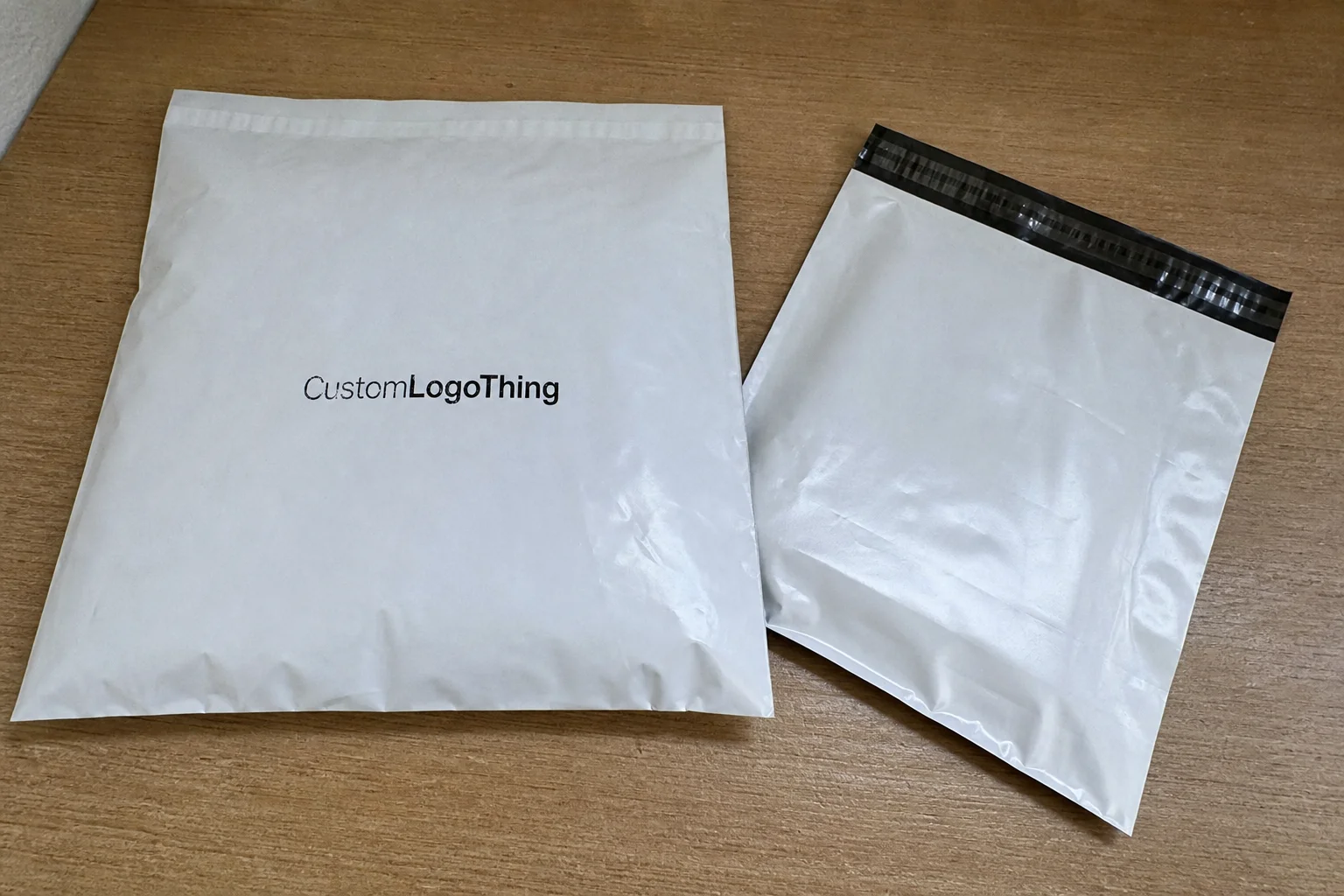
Not every mailer is actually waterproof, and that distinction matters more than buyers sometimes expect. A true barrier mailer uses a high-density film or laminated structure designed to block water exposure. A water-resistant poly mailer may shrug off brief splashes, but it is not the same thing as a sealed barrier pack. Paper-based shippers are a different animal again: they may be fine in dry receiving areas, but they need an exterior warning label if the contents are moisture-sensitive or if the receiving process is rough.
From a packaging buyer’s point of view, the business problem is simple. Event teams often juggle multiple vendors, last-minute artwork, mixed fulfillment locations, and tight ship windows. One ambiguous carton can create damage, returns, labor rework, and awkward conversations with sponsors. Labels reduce ambiguity. They do not eliminate risk, but they make the risk visible.
That visibility matters because event logistics are full of small handoffs. The merch truck, the back dock, the temporary storage room, the volunteer table, the field house, the convention floor — each stop gives someone a chance to make the wrong assumption. A clear warning label narrows the room for error.
If you are building a system around waterproof apparel mailers and warning label planning, the useful questions are practical: what the label actually does, which specs matter, what it costs, how long it takes, and how to roll it out across multiple shipments without slowing packing.
How waterproof apparel mailers and warning labels work together
The cleanest way to think about it is as a stack. The outer mailer material provides the barrier. The closure keeps the contents enclosed. The inner pack, tissue, or polybag adds another layer of protection. Then the warning label acts as the visual control — a cue that tells warehouse staff, carriers, and event personnel what not to do.
That visual cue matters more than many teams expect. In a fast-moving fulfillment space, people sort by appearance first. A bright, high-contrast label on the shipping face gets noticed in seconds. A tiny note tucked near a seam gets ignored until the package is already stacked near a damp dock door. Placement is not a design flourish; it changes behavior.
There are cases where the warning label is useful and cases where it may be redundant. If a shipment is already in a highly visible, clearly branded sealed poly mailer and the handling risk is low, a label may add little. But for direct-to-event delivery, third-party logistics handoffs, and kit fulfillment with premium apparel, the warning message often earns its keep because it communicates handling expectations beyond the mailer itself.
Labels also help when multiple people touch the same shipment without seeing the packing note. In event work, that happens constantly. One team packs it, another receives it, a third person stages it for show call, and a fourth decides where it sits for the night. A warning on the outside does not solve every problem, but it reduces the odds of a moisture-sensitive shipment being left near an open loading bay or a wet floor.
What the label should say
Keep the copy short and action-oriented. The best versions use one clear instruction, maybe two. Examples include:
- Protect from moisture
- Do not leave outdoors
- Inspect package before accepting
- Keep sealed until use
That is more effective than a vague “handle carefully” message. Specificity helps the receiver decide what to do next. It also supports claims documentation if a shipment arrives compromised.
Labels are not a substitute for waterproof packaging. That sounds obvious, but teams still make the mistake of treating a sticker like a shield. The right way to use them is as a communication tool that lowers handling errors and dispute risk. For formal shipping validation, some teams also look at transit testing references such as ISTA packaging test standards and general packaging guidance from the Packaging School’s industry resources.
One useful rule: if the contents would be expensive to replace, fragile in appearance, or difficult to repack, the outside label should be treated as part of the protection system, not a decorative add-on. That matters for premium apparel, sponsor co-branded kits, and anything that has to arrive ready for immediate distribution.
Key specs that affect durability, compliance, and readability
If the label has to survive cold docks, humid backrooms, and a little abrasion from carton handling, the substrate matters. For slick poly mailers, a paper label often fails first. BOPP and vinyl usually perform better because they resist moisture and stay intact longer. Thermal direct labels can work for short-life applications, but they are not the first choice if the receiving environment is damp or warm enough to soften adhesives.
Adhesive choice is just as important as face stock. A good label on a bad adhesive is still a bad label. For event merchandise, teams commonly need an adhesive that holds on low-energy surfaces, especially when the mailer has a glossy finish. In colder conditions, some adhesives need a bit of dwell time to reach full bond. In humid conditions, others simply never recover if the surface was damp at application.
The finish changes readability. Matte tends to be easier to scan in warehouse light because it cuts glare. Gloss can offer better moisture resistance, though not always better legibility under bright LEDs. For quick handling, bold contrast wins: black text on bright yellow, red warning blocks on white, or a strong icon plus short line of text.
Typography is where teams sometimes overdesign the problem. If the warning has to be read from arm’s length, the letters need real size. A 10-point font may look tidy on screen, but it becomes a liability on a moving dock. For most merch operations, a simple layout with a dominant warning line, smaller secondary copy, and maybe a QR or order code works better than decorative branding.
Branding still matters, but it should sit behind the warning message. That is the right hierarchy. A sponsor logo or event mark can live in a secondary position, while the handling instruction stays front and center. In practice, that balance reduces friction with both operations and marketing teams.
There is also a compliance layer, though it is easy to overstate it. Most warning Labels for Apparel mailers are operational controls rather than regulated hazard labels. Still, if you are shipping into a venue, a warehouse, or a shared receiving bay, clarity reduces dispute risk. It is cheaper to prevent a handling mistake than to explain one after the fact.
| Label option | Best use | Typical strengths | Tradeoffs |
|---|---|---|---|
| Paper warning label | Dry indoor handling | Lower cost, easy print clarity | Weak in moisture and abrasion |
| BOPP label | Poly mailers, damp storage, event freight | Moisture resistance, good durability | Usually costs more than paper |
| Vinyl label | Rough handling, cold or wet environments | Strong durability, flexible face stock | Can be pricier and slightly slower to source |
| Thermal direct | Short-lifecycle packing | Fast printing, low complexity | Heat, moisture, and abrasion can reduce readability |
For sustainability-minded teams, it is reasonable to ask whether the substrate can be recycled or whether there is an FSC-aligned paper option. The answer depends on the mailer system, the receiving environment, and local recycling rules. If you need general direction on responsible sourcing, the FSC site is a useful starting point. For teams tracking packaging waste reduction, EPA guidance can help frame broader material decisions, though it will not choose the label for you.
Process and timeline for ordering warning labels for merch mailers
The cleanest ordering workflow starts with a brief. That brief should include label size, surface type, mailer material, warning copy, quantity, and whether you need sequential numbers or variable data. If any of that is missing, proof cycles multiply. Then the timetable stretches.
In a typical production run, artwork approval is the first bottleneck. Teams often have the copy but not the final placement, or the layout but not the actual receiving instruction. Once approved, production timing depends on substrate availability and print method. For standard label runs, a realistic window is often 12-15 business days from proof approval, though rush work can compress that if the supplier has the stock on hand.
Pre-event merch needs margin. That means building in time for sample checks, freight variability, and a pilot application on real mailer stock. If the label is being applied to a new poly mailer, test it before the main pack-out begins. I have seen more delays caused by untested adhesion than by print defects.
The operational checkpoints are usually straightforward, but they need discipline:
- Review color proof and copy.
- Test adhesion on the actual mailer surface.
- Confirm label size against packing speed and visibility.
- Check carton-level consistency before full deployment.
- Verify the labels arrive before packing starts.
That last step sounds basic. It is not. A label arriving after the first shipment has already gone out creates a messy split process, and split processes are where mistakes hide. To keep the pack line calm, coordinate with your fulfillment partner early and make sure the warning label is part of the packing SOP, not an afterthought.
For event teams with a short lead time, the schedule is usually tightest around proof approval and inbound freight. A one-week production promise can still fail if the art team stalls for two days or if the labels ship to the wrong receiving point. Good planning usually matters more than heroic rush work.
Cost, pricing, and MOQ factors for event merch label runs
Label pricing is a mix of material, size, print method, finish, and quantity. Specialty adhesives for slick or cold surfaces add cost. So do variable data, multiple versions, and tight turnaround windows. A simple warning label may be economical at scale, but the moment you ask for four versions, two finishes, and rush freight, the budget changes quickly.
For rough planning, small custom warning labels might land anywhere from about $0.04 to $0.12 per unit at higher quantities, while lower volumes can move into the $0.15 to $0.30 range depending on stock and setup. That is not a fixed quote; it is a buyer’s range to help frame conversations. The real price depends on art, substrate, and whether the label has to perform on a difficult surface.
MOQ tradeoffs are worth thinking through. A smaller run lowers the risk of obsolete inventory if copy changes after sponsor approval. A larger run usually cuts unit cost, but it can tie up budget and leave you with overstock if the event calendar shifts. For many event merch teams, the right answer is not the lowest price; it is the lowest total risk.
There are hidden costs, too. Revisions can add proof fees. Rush jobs can trigger freight surcharges. Split shipments can increase receiving labor. And if the label copy changes after the first carton has been packed, the wasted labels themselves become a line item. That is why I often tell buyers to budget the label against the cost of one damaged premium apparel shipment. If the shipment contains jackets, hoodies, or sponsor-branded kits, the label often pays for itself the first time it prevents a single claim.
There is also a point where custom print makes more sense than hand-applied stickers. If your team is applying dozens or hundreds of packs at a time, a standardized custom warning label saves labor and improves consistency. Generic stock warnings can be smart for very small or one-off shipments, especially when the handling risk is limited. But once you start repeating the same event structure, custom tends to win on speed and control.
Buyers also tend to underestimate the cost of inconsistency. If one location uses a different warning phrase, or one pack line applies labels crookedly, the system starts to look unofficial. That can reduce compliance at the exact point where you need the message to carry authority.
Step-by-step setup for a reusable warning label system
Step 1 is an audit. List the merchandise types, ship conditions, and failure points. A t-shirt kit moving through a dry warehouse is not the same as a fleece drop going to a humid outdoor venue. Build from the real risk, not the worst-case fantasy or the cheapest assumption.
Step 2 is to choose your warning hierarchy. Usually that means one primary moisture warning, one secondary handling note, and an optional brand or sponsor instruction. Keep the hierarchy stable so the pack team does not have to decide which label to use every time.
Step 3 is placement testing. Put the label on the actual mailer stock — not a sample sheet, not a different film, not an “almost the same” material. Check corners, seams, and any textured or matte surfaces. If the adhesive lifts on the edge during the first test, it will likely fail in transit.
Step 4 is the packing SOP. Every team member should apply the label in the same position and orientation. That reduces confusion at receiving and makes inspections faster. A good SOP is short enough to be used under pressure and specific enough that two people would place the label the same way.
Step 5 is a live pilot shipment. Send a small run and ask receivers, event staff, or the fulfillment operator for feedback. Did the label catch attention? Was the copy clear? Did the adhesive hold? This is where warning label systems stop being theoretical and become part of the actual shipping process.
“The label shouldn’t be decorative. It should answer the receiving question before anyone has to ask it.”
That is the mindset that keeps the system reusable. Once the process works for one event, document everything in a shared file: final artwork, placement photo, mailer spec, and packing note. Then reuse it with small changes only when the handling risk changes.
A reusable system also helps new staff. Event crews change, seasonal labor turns over, and fulfillment partners rotate teams. A repeatable label format means the training burden drops. That is worth more than most buyers expect because fewer instructions get lost in handoff.
Common mistakes event merch teams make with waterproof mailers
The first mistake is weak adhesive selection. Cold, dusty, or slick surfaces are unforgiving. If the label is designed for office envelopes, it may look fine in approval and fail in real life. That failure often shows up after the shipment has left the building, which is exactly the wrong time.
The second mistake is size. Tiny labels get ignored during fast picking. If the warning is important, it needs enough visual weight to interrupt someone’s routine. A label should not blend into the mailer; it should announce itself.
Vague language is the third trap. “Handle carefully” sounds polite, but it does not tell anyone what to do. Moisture, outdoor storage, and acceptance checks are concrete. Concrete instructions reduce guesswork.
The fourth mistake is skipping tests on the actual mailer and closure type. A peel-and-seal flap behaves differently from a zip-style closure. A matte film behaves differently from a gloss one. That is why pre-production testing matters more than a polished mockup.
The fifth mistake is treating the warning label like a substitute for packaging performance. It is not. If the outer mailer cannot protect the contents, the label only documents the problem more clearly.
There is a sixth mistake that shows up in larger programs: changing the label design every time a team changes a sponsor lockup or internal phrase. That creates version drift. Eventually nobody knows which art file is current, and the label that was supposed to simplify operations becomes one more item to reconcile.
Expert tips and next steps for rollout
Standardize one master warning template for all event shipments first. Then create variants only if the handling risk changes materially. That keeps ordering simpler and avoids an archive of nearly identical files no one wants to manage.
Keep a 10-15% buffer for reprints. Copy changes happen. Samples get damaged. A last-minute sponsor edit can wipe out a run if you have no cushion. Buffer inventory is cheap insurance against delays.
Ask vendors for substrate samples and run a quick test series before full approval. Water exposure, abrasion, and adhesion are the three tests I would prioritize. They do not need to be lab-grade to be useful. Even a controlled real-world test tells you a lot more than a PDF proof does.
Document the final approved artwork, a placement photo, and the packing SOP in one shared file. Then make sure every merch partner has the same version. That consistency is what turns a label from a one-off fix into an operating system.
For teams building out broader packaging systems, it can help to align warning labels with the rest of the pack format, including Custom Labels & Tags, Custom Poly Mailers, and other Custom Packaging Products. That way the warning message supports the package instead of fighting it.
Next steps are simple: confirm your mailer material, write the warning copy, request a sample proof, test it on one shipment, and scale only after receiver feedback confirms it works. For event merch teams waterproof apparel Mailers Warning Label guide planning, that is the practical path, and it is usually the one that saves the most money and the most headaches.
If you are comparing options across multiple events, treat the label as a repeatable control rather than a one-off purchase. A good system should survive copy changes, vendor changes, and seasonal labor changes without needing a fresh rethink every time.
FAQs
What should event merch teams put on waterproof apparel mailers warning labels?
Use short, action-based wording such as protect from moisture, do not store outdoors, and inspect package before accepting. Keep the message readable at a glance so warehouse staff and event receivers do not have to interpret it under time pressure.
Do waterproof apparel mailers still need warning labels if the bag is sealed?
Yes. A sealed mailer protects the product, but the label tells people how to treat the shipment during storage, transport, and receiving. That extra communication can reduce avoidable damage and help with claims if a shipment arrives compromised.
How many warning labels should I order for an event merch rollout?
Base the quantity on shipment count, expected packing waste, sample testing, and a small overrun for reprints. A 10-15% buffer is a sensible starting point if copy changes or damaged rolls would create a delay.
What’s the best label material for waterproof apparel mailers?
BOPP or vinyl often performs better than paper when moisture, abrasion, or cold surfaces are in play. The adhesive matters just as much, so test the label on your actual mailer stock before approving the full run.
How can I reduce label and mailer costs without cutting quality?
Lock artwork early, test once on real mailers, and avoid rush revisions that add fees. A standardized warning label across multiple shipments can also improve pricing and make reordering easier for fulfillment teams.