A sample matters because the gap between a mockup and a finished beanie is bigger than most buyers expect. On screen, the hat looks balanced and branded. In hand, it may feel thin, sag at the crown, or show a patch edge that lifts after a few wears.
That is why sampling is a decision step, not a courtesy. It tells you whether the knit, patch, fit, and packing can survive real use. If you skip it, you are approving specs by guesswork.
What a book logo patch beanies material sample guide reveals before bulk ordering
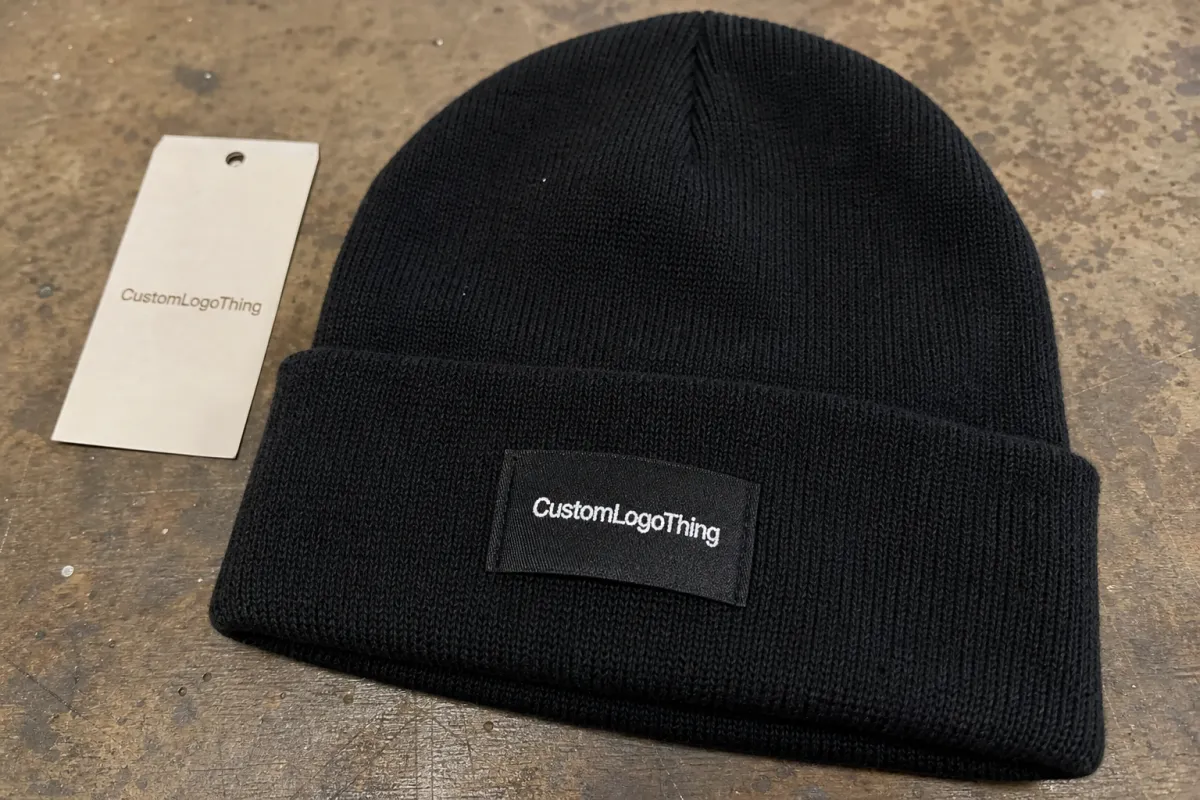
Photos hide a lot. They do not show how a 7-gauge acrylic knit stretches after handling, or how a tighter 12-gauge knit keeps a cleaner line under a logo patch. They do not show whether the cuff stays flat once the beanie is folded and packed, or whether the patch backing feels stiff against the forehead.
The sample exposes the parts that spec sheets flatten out. Knit density affects warmth and shape. Fiber choice affects softness, pilling, and recovery. Stitch tension affects whether the hat feels dense or loose. Patch construction affects both appearance and comfort. A woven patch keeps small text readable, embroidery adds texture, and leather or PVC changes the feel entirely.
Buyers should judge the sample against the actual use case. A retail beanie needs to hold its shape on a shelf. A workwear beanie needs to stay comfortable through repeated use. Event merchandise needs to survive being stuffed into bags and pockets. The same product can succeed in one setting and fail in another, so the sample should match the channel, not just the artwork.
Think of the sample as a stress test. Does the logo still read clearly when the cuff is folded twice? Does the yarn rebound after being stretched? Does the patch stay flat, or does the edge start to curl after handling? Those details separate a prototype that looks fine from one that is ready for bulk.
The sample is not decoration. It is a decision tool, and the best one shows comfort, fit, and durability issues before the order gets expensive.
Even basic wear conditions matter. A commuter wears a beanie differently than a warehouse crew or a retail shopper. One group wants warmth and softness. Another wants recovery and shape retention. Another wants a clean branded face that reads well from three feet away. A good sample guide keeps those differences in view instead of pretending one spec solves everything.
How sample kits are built and what each material tells you
Not every sample answers the same question. A yarn swatch tells you about fiber and color. A knit shell tells you about structure. A full prototype tells you almost everything. If you judge a rough swatch like a finished hat, you will make the wrong call for the right reasons.
Yarn swatches are the lowest-commitment sample. They are useful for comparing acrylic, wool blend, recycled polyester, or mixed yarns before the machine starts knitting. You can feel softness, surface sheen, and spring, and you can see whether the color has the depth you expected.
Partial knit shells show construction. They reveal stitch tightness, crown shaping, seam bulk, and how the cuff behaves when folded. If the beanie is meant to be slouchy, this sample shows whether the shape actually hangs right. If the cuff has to sit firm under a patch, this is where you learn whether it will stay flat.
Full beanie prototypes are the closest thing to production reality. They let you check fit, recovery, logo placement, and how the patch sits with the cuff worn high, low, or doubled. They also reveal whether the hat feels too shallow, too deep, too tight, or oddly loose at the crown.
Logo patch mockups isolate the branding. Woven patches are good for crisp edges and small lettering. Embroidered patches add texture and thickness, which can look premium if the art supports it. Heat-applied patches can speed application, but the edge feel matters. Sewn patches usually hold better, though puckering can show if the knit is too soft or the stitch line is too tight.
| Sample format | What it answers | Typical fee range | Best for |
|---|---|---|---|
| Yarn swatch pack | Color, fiber feel, basic finish | $10-$25 | Early material comparison |
| Partial knit shell | Gauge, cuff behavior, seam bulk | $20-$45 | Shape and structure checks |
| Full beanie prototype | Fit, recovery, wear comfort, placement | $35-$80 | Final approval before bulk |
| Patch mockup only | Logo clarity, edge finish, stitch or adhesive feel | $15-$40 | Decoration comparisons |
Compare samples in more than one light source. Natural daylight and indoor LED light do not show the same surface behavior. Dark yarns can hide stitch tension that becomes obvious on lighter colors. A patch that looks matte in daylight can take on a slight sheen under shop lighting.
Packaging belongs in the same review. A sample that arrives in a corrugated carton with kraft paper protection usually tells you more than one packed loosely in an oversized mailer. If the supplier claims recycled materials, FSC certified cartons, or biodegradable packaging, check the actual pack-out, not just the invoice language. Packaging choices often show where a factory is managing cost carefully and where it is simply keeping the shipment intact.
Cost, pricing, MOQ, and quote variables buyers should compare
Beanie pricing is a stack, not a single number. Fabric weight, yarn type, patch construction, number of colors, placement complexity, labels, hang tags, and packaging all move the quote. A one-color woven patch on a standard acrylic cuff beanie is one cost profile. A multi-color embroidered patch on a heavier knit with retail folding and individual tagging is another.
MOQ changes the math because setup cost gets spread across the run. A supplier still has to knit, trim, apply the patch, inspect the order, and pack it. That is why a 300-piece run usually lands higher per unit than 2,000 or 5,000 pieces. Sample fees are often separate, but some suppliers credit them back if the bulk order moves forward. Shipping, rush work, and revision rounds can still push the landed cost around.
For planning, a basic custom logo patch beanie often lands around $4.20-$6.50 per unit in smaller runs, then closer to $2.10-$3.60 per unit as volume climbs. That is not a quote. It is a bracket for rough budgeting. Wool blends, recycled yarns, thicker gauges, special labels, and layered patch work can move those numbers fast. Buyers should treat unusually low pricing as a signal to check what is missing, not as proof of efficiency.
Ask for a line-item breakdown so comparison is clearer.
- Base beanie cost for the knit, gauge, and fiber blend.
- Patch cost for woven, embroidered, leather, PVC, or similar decoration.
- Application cost if the patch is stitched, heat-applied, or both.
- Packaging cost for bags, labels, hang tags, or retail inserts.
- Shipping cost for samples and bulk cartons.
That breakdown shows where the margin sits and where a low quote is being held together with missing details. It also helps when two suppliers look close on paper but one is hiding packing or revision costs. The cheapest line item is not always the cheapest landed order, especially once packaging and freight are added.
Production steps and turnaround from sample approval to shipment
The production timeline sounds simple until someone changes the logo file halfway through. In a clean run, the process goes like this: tech pack intake, sample review, revision notes, pre-production approval, bulk knitting, patch application, quality check, and final packing. Every extra change adds time.
Most delays are predictable. Artwork files are a common one. A low-resolution logo, an unconfirmed Pantone, or a late change to patch size can force the sample back through another round. Yarn sourcing is another variable, especially for wool blends or recycled content. If the supplier needs to match a specific color across lots, the calendar can stretch quickly.
Typical turnaround depends on the complexity of the order, but buyers usually see sample development take about 5-12 days, then bulk production take another 15-30 days after approval. Freight timing sits on top of that. Air moves faster but costs more. Sea freight reduces unit cost, but the handoff window gets longer and less forgiving.
Quality control should not be treated as a formality. A beanie can pass a visual check and still fail if the patch is offset, the crown is uneven, or the knit batch varies in size. For larger orders, ask whether the factory checks every piece or samples from the batch, and how they handle rejects. That detail matters more than a broad promise of "inspection."
Good suppliers also separate sample approval from production approval. That distinction matters because a sample can look right while bulk output still drifts if the factory changes yarn lot, machine settings, or patch placement. A clean approval trail reduces that risk.
Step-by-step method to compare fabrics, patches, and finishes
Comparing samples works best when the review follows the same order every time. Start with feel, then fit, then branding, then finish. If you jump straight to the logo, it is easy to miss a fabric issue that will matter more in wear.
Step 1: Check the fabric hand. Hold the beanie and note softness, scratchiness, thickness, and stretch recovery. A softer yarn may feel better, but it can also lose structure faster. A denser knit may feel more durable, but it can run warmer and feel less flexible.
Step 2: Review the fit on head. A beanie should sit where the buyer expects it to sit. Some styles need a tight cuff and close fit. Others need a relaxed crown and more drape. A sample that looks good flat can still wear awkwardly if the depth is off by even a small margin.
Step 3: Inspect the patch under real light. Readability, edge finish, and alignment matter more than a polished presentation photo. Small text needs enough contrast and enough border space to survive production. If the patch is too detailed for the chosen method, the factory may simplify it without saying so clearly.
Step 4: Check seam and cuff behavior. Fold the cuff, stretch it, and let it recover. Look for puckering, curling, or strain around the patch line. These are common places where soft knits and stiff branding materials disagree.
Step 5: Test packaging and handling. Pack the beanie back the way it will ship or be sold. If the shape collapses too easily or the patch scuffs in transit, the product may need a different pack-out. That change can add cost, but it may be cheaper than dealing with returns or retail presentation problems later.
It helps to compare two or three options side by side rather than judging each one in isolation. Once the samples are next to each other, weak points become obvious. One may be softer. Another may hold shape better. Another may have the cleanest patch. The best choice is usually the one that balances the production constraints most cleanly for the intended use.
Common mistakes buyers make when approving beanie samples
One common mistake is approving a sample because the logo looks good in a close-up photo. The real test is whether the beanie wears well as a product, not whether the patch looks strong in a cropped image.
Another mistake is comparing samples without keeping the end use in mind. A lightweight promotional beanie may be perfectly acceptable for an event, but too flimsy for retail. A heavier, more structured sample may look premium, but it can feel too warm for a mild-weather market.
Buyers also underestimate how much fabric and decoration interact. A patch that works on a dense knit may pucker on a softer one. A fine logo can read clearly on one color and disappear on another. Changing one variable can affect several others, so each approval should be tied to the exact spec being ordered.
Revision language can create false confidence. Terms like "similar," "match closely," or "approve by eye" leave too much room for interpretation. If the project depends on a specific shade, patch size, or placement, write it down. Suppliers need clear targets, and buyers need a record of what was approved.
Finally, do not ignore handling marks. A sample can look clean out of the bag and still show weak points after folding, shipping, and a few rounds of wear. In production, those small defects are the ones that tend to multiply.
Expert tips and next steps for a cleaner approval decision
Keep the approval checklist short enough to use. The best version usually includes material feel, fit, patch clarity, cuff behavior, pack-out, and expected use. If a checklist becomes too long, people stop using it and start relying on memory.
Request photos of the sample from the factory only after you have handled the physical version. Photos are useful for documentation, but they should not replace a tactile review. A beanie is a soft goods product, and softness is part of the specification.
Ask the supplier what can vary without warning. Yarn lots, patch backing, thread shade, and packaging inserts are common examples. A supplier who can explain those limits clearly is usually easier to work with through bulk production.
When the order matters, approve the version you actually want to receive, not the version that is easiest to produce. That may mean paying more for a better patch method, a denser knit, or cleaner packaging. It may also mean simplifying the logo so the finished product remains legible at production scale. Good sourcing is often about choosing the version that will hold up under real constraints, not the one that looks most ambitious on paper.
Once the sample is approved, keep the approval notes tied to the purchase order. That makes any later discussion about size, placement, or finish much easier to resolve. It also reduces the chance that the factory treats a small but important detail as optional.
FAQ
What should I look for first in a beanie sample? Start with fit, fabric hand, and patch placement. If the beanie is uncomfortable or the branding is misaligned, the sample is not ready for approval.
Are sample fees normal? Yes. Sample fees are common, especially when the supplier has to knit, patch, and ship a one-off prototype. Some suppliers credit the fee against a bulk order, but that is not universal.
How many samples should I compare? Two or three is usually enough to reveal meaningful differences. More than that can help with complex projects, but too many options can slow the decision without improving it.
Can I approve from photos alone? Photos help, but they are not enough for a soft goods item like a beanie. Texture, stretch, recovery, and patch feel need to be handled in person whenever possible.
What is the biggest hidden cost in beanie sourcing? Revision cycles are often the most underestimated cost. A small change to artwork, yarn color, or patch size can add time, sampling, and freight expenses quickly.
``` If you want, I can also do a second pass to make the intro and section openings even more editorial and less repetitive while still keeping the same structure.

