Boutique Cuffed Knit Beanies bulk order planning gets messy the moment someone signs off on a pretty mockup and skips the actual specs. The screen version looks polished. The hand sample lands differently. Then the cuff is too short, the knit is too loose, the logo feels cramped, and the "simple" order starts collecting revisions like bad habits.
The job is not to chase the lowest quote. The job is to buy a beanie that looks premium in person, lands inside a workable MOQ, and repeats without drama on the next run. That means the spec sheet comes first, decoration comes second, pricing comes third, and timing needs a buffer that reflects reality, not hope.
A boutique cuffed beanie has more variables than people expect. Yarn weight changes the hand feel. Gauge changes the drape. Cuff height changes the silhouette and the branding space. If those three are not pinned down early, the first sample becomes a debate instead of a check on whether the product actually works.
Why boutique cuffed knit beanies bulk order planning matters
Most problems start with the same mistake: the buyer shops a look, not a build. That works until the supplier has to guess what "similar" means. One sample comes back snug. Another comes back slouchy. A third has a cuff that eats half the logo. Suddenly the order is no longer about buying beanies. It is about recovering from vague instructions.
Planning matters because Cuffed Knit Beanies are deceptively simple. They are not. A knit hat has body length, open width, cuff depth, stitch density, yarn composition, and decoration constraints. Each one affects the others. If the knit is looser, the logo can distort more. If the cuff is taller, the fit may feel more structured. If the yarn is warmer and thicker, the stitch count needs to change or the hat stops sitting cleanly.
Buyers also tend to focus on unit price too early. That is backwards. A slightly higher-cost beanie can sell better if it looks cleaner on shelf and behaves better in photos. Retail does not reward an item because it was cheap to make. It rewards the one that reads as worth the price tag. Annoying, but there it is.
A good order sequence is boring and effective:
- Product specs first: yarn content, gauge, cuff depth, body length, and target weight.
- Decoration second: embroidery, woven label, patch, or intarsia.
- Commercial terms third: MOQ, sample cost, unit tiers, freight, and duties.
- Timing last: proof approval, sample revisions, production, packing, and transit.
That order sounds dull because it is. Dull saves money. Dull avoids the "we thought it would look different" meeting. Dull also makes reorders much less painful, which is useful if the first run is supposed to become a regular style.
Yarn, gauge, and cuff height that change the fit
The three specs that change a beanie the most are yarn, gauge, and cuff height. Everything else is downstream. If boutique cuffed knit Beanies Bulk Order Planning is getting tangled, lock those three before anyone starts debating thread color.
Yarn content sets feel, warmth, and cost. Acrylic is the predictable workhorse. It keeps color consistent, holds shape reasonably well, and usually protects margin. Wool blends feel softer and more premium, and they usually bring better warmth. They also add cost and can introduce small variations in texture or shrink behavior. Wool-rich yarns raise the perceived value again, but they are less forgiving if the target price is tight.
Gauge is the knit density. A tighter gauge usually gives the beanie a cleaner face, better shape retention, and a more retail-ready look. A looser gauge feels softer and more relaxed, which can be good for a casual brand, but it can also expose the knit structure more than expected. If the brand is aiming for refined and minimal, a tighter knit is usually the safer choice.
Cuff height changes both the silhouette and the branding area. A shorter cuff can make the beanie feel softer and less structured. A taller cuff gives the logo more space and usually looks more deliberate, but it can swallow smaller head shapes if the body length is not balanced. The beanie should look intentional on a hanger and still sit right on a human head. That seems obvious, yet here we are.
| Yarn Type | Typical Feel | Planning Cost Range | Best Use Case |
|---|---|---|---|
| Acrylic | Smooth, consistent, easy to color match | About $2.00-$4.00 blank equivalent | Entry-level retail, broad color runs, tighter margin buys |
| Wool blend | Warmer, softer, more premium hand | About $3.50-$6.50 blank equivalent | Boutique collections, gift sets, higher perceived value |
| Wool-rich | Dense texture, strong cold-weather feel | About $5.00-$8.50 blank equivalent | Premium assortments, brand-led drops, colder markets |
Those ranges are rough planning numbers, not promises. Decoration, labeling, packaging, and freight can move them fast. Still, they are useful because they keep a buyer from mistaking a low base price for a real landed cost.
For factory communication, the spec should read like a checklist, not a mood board: fiber content, knit count, cuff depth, body length, final open width, and target weight. A supplier can work with that. A screenshot with a circle drawn on it is less helpful than people think.
As a practical starting point, many Cuffed Knit Beanies fall around 80-150 g finished weight, with cuff heights around 6-10 cm and overall body lengths that allow either a fitted or slightly slouchy look. Those numbers shift with yarn and gauge, but they are the right kind of starting points: real enough to guide a quote, flexible enough to avoid false certainty.
Logo placement, colors, and decoration choices
Decoration is where buyers overreach. Tiny text. Thin lines. Four colors squeezed into a cuff that barely has room for two. Then everyone stares at the sample and acts betrayed by physics. The knit surface is limited. The art has to fit the fabric, not the other way around.
Embroidery is the default because it is durable, clean, and usually the best value for a simple logo. It works well for bold marks, initials, and short wordmarks. Fine detail is where it gets touchy. On knit fabric, small lettering can collapse faster than it would on a flat woven surface. If the logo is intricate, ask for a stitch-count review before assuming it will hold.
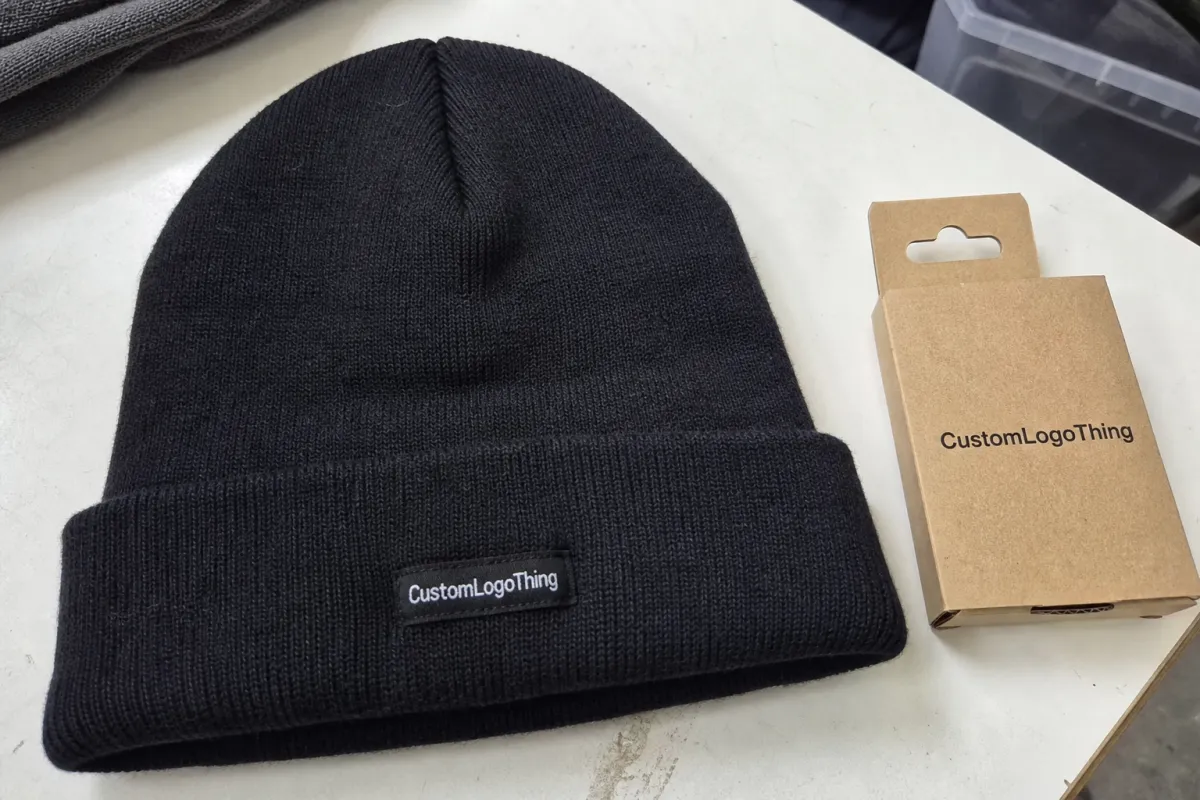
Woven labels help when the logo needs sharper edges or small-type readability. Patches add dimension and can make a cuffed beanie feel more premium, especially on thicker knits. Intarsia integrates the design into the fabric, which looks strong when the concept suits the build, but it usually raises MOQ and extends lead time. Nice result. Less flexibility. That tradeoff does not disappear because someone wants it to.
Color can be a trap too. Pantone references are useful, but knit yarn is not paint. Fiber blend, stitch density, and lighting all affect how color reads in real life. A sample that looks perfect on screen can look dull in person, or vice versa. The only answer that matters is the decorated sample on the actual knit surface. Not a mockup. Not an impression. The real thing.
The cheapest quote is often the one that hides revision costs. If the art is too fine for the knit, you will pay for the lesson twice.
A few rules keep decoration from getting silly:
- Keep the logo bold enough to read from arm's length.
- Limit color counts unless the method truly supports more.
- Use contrast with purpose, not habit.
- Place the logo where the cuff sits flat, not where the knit rolls or stretches.
Paper packaging should get the same discipline. If hang tags, belly bands, or cartons are part of the presentation, specify paper grade and whether recycled or FSC-certified stock is required. That avoids the usual back-and-forth about whether the insert is "close enough." Close enough is the phrase that starts waste.
Pricing, MOQ, and unit cost tradeoffs
MOQ is not random. It changes with yarn choice, decoration method, and the amount of custom setup required. Boutique Cuffed Knit Beanies Bulk Order planning gets expensive fast when a buyer adds custom labels, special packaging, and a complicated stitch structure before the base style is even approved.
Smaller runs cost more per piece because setup, sampling, and waste are spread across fewer units. That is not a mystery. A 100-piece order will almost always carry a higher unit price than a 500-piece order with the same build. The mistake is comparing quotes that are not actually comparable. A lower number only means something if the spec is identical.
A useful quote should show the pieces separately:
- Sample charge: often credited back on larger production runs, but not always.
- Unit tiers: for example 100, 250, 500, and 1,000 pieces.
- Decoration fee: embroidery, patch application, woven label, or intarsia setup.
- Label and pack fee: woven labels, hang tags, polybags, carton marks.
- Freight and duties: separate from factory pricing.
For planning, a blank or lightly decorated cuffed beanie often lands somewhere in the low single digits per unit at meaningful volume, with premium yarns, custom patches, or heavier packaging moving the number up quickly. If a quote looks unusually cheap, one of two things is happening: the build is stripped down, or something is missing. Usually the latter. Suppliers are not magic. They are just good at arithmetic.
Freight and duties matter more than buyers want them to. A factory price can look tidy until cartons, shipping mode, customs, and receiving costs are added. If the product is heading to retail or multiple locations, ask for landed cost thinking from the start. It saves time and it saves the awkward finance conversation later.
The cleanest way to compare quotes is to use the same spec sheet for every supplier. No loose notes. No "similar to this one." No screenshots with arrows that mean different things to different people. If the factories are not quoting the same build, the comparison is fiction dressed up as diligence.
Production process, timeline, and lead time
The production path should be simple: quote, tech pack, sample, revisions, bulk production, packing, shipment. That is the skeleton. Everything else is delay. When the supplier has to chase missing information, the clock slows down while everybody pretends the order is moving.
Typical timing depends on how custom the order is, but these ranges are practical:
- Sampling: usually 7-14 business days after artwork and specs are approved.
- Bulk production: usually 12-20 business days for standard knit builds.
- Custom yarn or dense decoration: often 20-30 business days, sometimes longer.
- Packing and dispatch: a few additional days once inspection passes.
- Freight: add time for customs, routing changes, and peak-season congestion.
Those numbers are for straightforward orders. If the build uses custom yarn, unusual labeling, or more complex decoration, add buffer. First runs should always carry extra time. So should any order tied to a launch date. Nothing improves a deadline like a three-day delay on proof approval and a sudden appetite for last-minute changes. That goes great. Said no one ever.
The biggest time losses usually come from three places: slow proof approval, unclear artwork files, and spec edits after the sample is already underway. The fix is boring. Lock the dimensions. Send vector artwork. Confirm the logo placement before the sample starts. Answer the proof quickly. Waiting days to approve a detail that could have been settled in minutes is how timelines slip for no good reason.
For transit planning, packaging needs to be treated as part of the product, not an afterthought. Carton count affects warehouse speed. Polybag choice affects how the beanies arrive at retail. Master carton labels affect receiving accuracy. If the case pack is sloppy, the receiving team notices immediately. They may not compliment the knit, but they will absolutely remember the carton that wasted their time.
One practical note: rush freight can save a launch, but it can erase margin quickly. Use it only when the date truly matters. Otherwise, plan normal transit and keep the economics intact. Excitement is overrated when it shows up on the shipping bill.
Factory checks, packing specs, and reorder consistency
Once production starts, quality control should focus on the details that actually affect sell-through. Stitch count. Color variance. Size tolerance. Trim placement. If those are right, the beanies usually land well. If they are wrong, nobody cares that the carton art was handsome.
The first check is the sample itself. Compare it to the approved reference, not to memory. Measure cuff height, body length, and open width. Look at the logo from a normal retail viewing distance. Check that the knit is even and the cuff sits flat. A premium beanie should hold shape without feeling stiff. If it feels like cardboard, the material choice or gauge is off.
Packing matters more than people admit. Carton count affects warehouse flow. Polybag style affects presentation and moisture control. Master carton labels affect receiving accuracy. If the case pack is messy, the supply chain feels it immediately. The product does not get better because the box got prettier. It just gets easier to miscount.
For repeat orders, the factory should store both the approved sample and the final spec sheet. That sounds basic because it is basic. Reorder inconsistency usually starts when a new person in production works from an old email thread instead of the actual approved build. A good reference package should be easy to find and hard to misread.
Arrival inspection should be simple and sharp:
- Check a sample from each carton lot.
- Confirm logo placement against the approved position.
- Measure cuff depth and size on a small batch.
- Inspect for loose threads, dye shift, or packing damage.
- Hold any questionable lot before it reaches shelves or stores.
If you want a cleaner process, use the same tolerance rules every time. For example, set an acceptable range for cuff height, body length, and logo placement before production starts. That way, nobody is improvising a definition of "close" after the goods arrive. Tolerances are not glamorous, but they keep arguments short.
Consistency matters more than a hero sample. A great one-off does not help if the reorder comes back different and the line breaks at retail.
What to send for a faster quote and cleaner first sample
If you want a faster clean quote, send the information that removes assumptions. Artwork files. Target quantity. Preferred yarn feel. Logo placement. Color references. Delivery date. If any of those are missing, the supplier will fill the gap with judgment, and judgment is where avoidable mistakes start.
Before quoting, lock these decisions:
- Cuff size: the visible branding field and overall silhouette.
- Beanie length: standard, long, or more fitted.
- Decoration method: embroidery, patch, woven label, or intarsia.
- Packaging style: bulk packed, polybagged, tagged, or retail ready.
- Color strategy: one SKU, multiple colors, or a controlled split.
Ask for tiered pricing, sample timing, and the exact approval points before bulk production begins. The approval chain should be clear enough that nobody can pretend confusion later. If the sample needs two revisions, fine. If the stitch count needs to be adjusted, fine. Just get those decisions out of the way before the full run starts.
My blunt advice: build the order around one base yarn, one logo location, and one or two colors unless sales data says otherwise. More variables mean more cost, more risk, and more room for one small mistake to turn into a large headache. Boutique cuffed knit beanies bulk order planning works best when the build is disciplined, not ambitious for the sake of being busy.
Start with the spec sheet. Request a side-by-side quote on the same build. Approve one sample. Release production. That sequence is plain, repeatable, and effective. It is also how you keep the order on budget, on time, and ready for a second run instead of a rescue mission.
Frequently Asked Questions
How many boutique cuffed knit beanies should I order for a first run?
Start where the unit price makes sense without overcommitting inventory. For many buyers, that means 100 to 300 pieces for a test run. If you already have sell-through data, use it. If you do not, keep the assortment tight and ask for pricing at 100, 250, and 500 units so you can see the real cost curve instead of guessing.
What is the best decoration method for a cuffed knit beanie bulk order?
Embroidery is the default because it is durable, clean, and usually the easiest to cost. Woven patches are useful when the logo has fine detail that embroidery would blur. Intarsia looks strong for pattern-driven designs, but it usually raises MOQ and extends lead time. For most brands, embroidery on the cuff gives the best mix of value and appearance.
How do I keep pricing under control on a custom beanie order?
Use one base yarn, one logo location, and one or two colors. Keep packaging simple unless retail needs something more finished. Avoid rush freight unless the launch date truly requires it. The fastest way to save money is to approve the proof quickly so setup does not drag into extra fees, extra revisions, and a schedule that slips for no good reason.
How long does a custom cuffed beanie order usually take?
Plan for sample time, bulk production, and shipping as separate steps. Simple builds usually move faster than custom yarn or heavily decorated versions. A practical window is often 7-14 business days for sampling, 12-20 business days for bulk, then shipping time on top. Holiday congestion, slow approvals, and freight delays can add weeks, so leave buffer time.
What should I approve before production starts on a bulk beanie order?
Confirm dimensions, cuff height, yarn content, color references, and decoration placement. Lock carton pack-out, packaging style, and the final quantity by color or size. Keep the approved sample and spec sheet on file so reorder production stays consistent. That is the point: a first run that can be repeated without the factory guessing what you meant.