Branded Beanies for Ecommerce: How to Buy the Right Fit
Good headwear earns its keep fast. Branded beanies for ecommerce are compact, easy to store, and visible every time someone wears one on a commute, at a game, or on a cold walk to the coffee shop. That kind of repeat exposure is hard to beat. You do not fight size charts. You do not wrangle multiple fits. You do not need the packaging circus that outerwear brings with it.
Beanies win quietly.
That is why they keep showing up as low-risk test products, add-on items, and seasonal drops that can move quickly if the finish feels right. They look simple from the outside, but they are not. The difference between a beanie that sells and one that sits usually comes down to three things: material comfort, decoration clarity, and fulfillment efficiency. If those are off, the product feels cheap before the customer even tries it on. What other merch item earns that kind of repeat exposure without a complicated fit?
Branded Beanies for Ecommerce: Why They Sell So Well
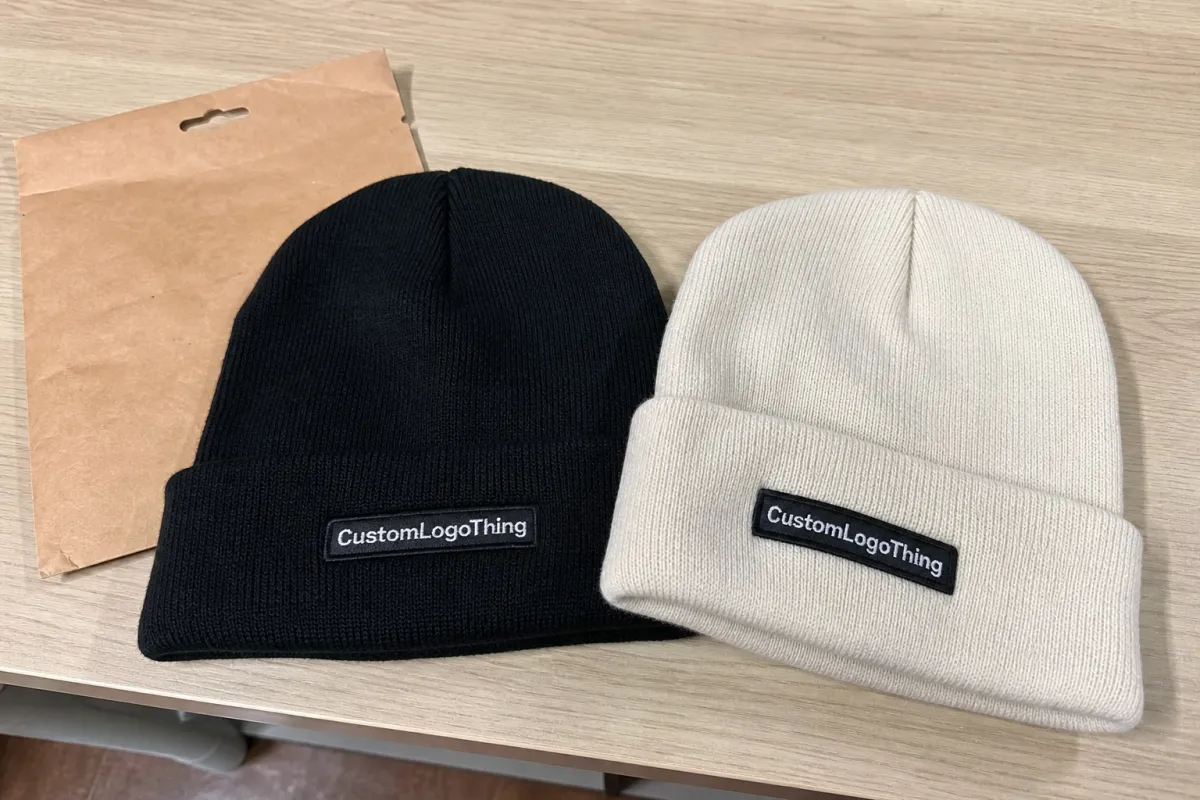
Beanies sit in a useful middle ground. They are practical, but not boring. They are wearable, but not fussy. A customer can justify buying one because it solves a problem, then end up wearing it because it looks good. What other merch item gets this much repeat exposure without asking for a complicated fit? That gives the product a better shot than a lot of merch items, which often ask people to pay for brand visibility and call it a day. People are not that generous.
For ecommerce teams, the logistics are part of the appeal. Beanies are compact enough that a few hundred units do not consume much space, and even larger runs are easy to carton and pick. There is no size curve to manage. Returns tied to fit are far lower than with apparel basics. If the decoration is clean, the item can do double duty as a revenue product and a brand signal.
They also work well as a test of brand feel. Customers judge the whole thing quickly: how soft the yarn is, whether the logo sits straight, whether the cuff looks tidy, whether the packaging feels intentional or like somebody panicked near a label printer. When those details hold together, the beanie can support a premium product page without needing a giant story around it.
The strongest programs usually start with a narrow question: does this item feel worth keeping? Not “does it look cool in a mockup.” Not “can we put a logo on it.” Those are easy questions. The real one is whether a customer would wear it again after opening the box.
How Custom Knit Beanies Are Built for Online Stores
A custom knit beanie is a stack of small decisions. Construction affects shape. Gauge affects hand feel. Decoration affects brand read. Get one of those wrong and the whole piece starts sliding downhill. A cuffed beanie usually gives you a stronger branding zone and a more substantial look. Uncuffed and slouch styles feel looser and more fashion-led, but they give you less control over where the mark sits.
Rib gauge matters more than people expect. A tighter knit often looks cleaner and keeps its shape better after repeated wear. A looser knit can feel softer right away, but it may stretch out faster or lose that crisp retail look. Neither is automatically better. The right choice depends on whether the product is supposed to feel technical, premium, casual, or seasonal.
Decoration choice matters just as much. Embroidery works well for bold marks, short text, and clean contrast. It is usually the simplest route, but it can get bulky if the artwork is too detailed. Woven patches handle finer lines and give you sharper edges. Silicone badges read more modern and technical. Leather labels tend to feel warmer and more lifestyle-driven.
Jacquard knitting builds the logo into the fabric itself, which can look excellent if the design is simplified before programming. If the art needs a paragraph of explanation, jacquard is probably not the move.
| Decoration method | Best use | Relative cost | What to watch |
|---|---|---|---|
| Embroidery | Bold logos, short text, strong contrast | Low to medium | Small details can fill in or look bulky |
| Woven patch | Finer artwork and cleaner edge definition | Medium | Patch size has to fit the cuff and stay balanced |
| Silicone badge | Modern, technical-looking branding | Medium to high | Oversized badges can make the front feel heavy |
| Leather label | Warm, premium, lifestyle positioning | Medium | Not a fit for tiny details or thin type |
| Jacquard knit | Logo built into the fabric | Medium to high | Artwork has to be simplified before programming |
Logo placement is another place where buyers get overconfident. A mark that looks perfect in a flat mockup can distort once the beanie stretches over a head, especially if it sits close to a seam or rides across a ribbed panel. The safe move is to keep the artwork simple, leave generous spacing, and check the placement at real size, not in a tiny PDF thumbnail.
Packaging deserves real attention too. For ecommerce, that usually means individual polybags, barcode labels, and insert cards that make intake and bin sorting faster. If you are using paper inserts or hang tags, FSC-certified stock is a sensible choice. And if the product ships in a branded mailer or retail box, checking parcel test methods through ISTA is a good way to think through transit damage before it shows up as returns.
Materials, Fit, and Branding Choices That Shape Demand
Material choice changes the whole product. Acrylic is common because it is affordable, color-consistent, and easy to knit at scale. It is not fancy, but it does the job well if the yarn quality is decent and the finish is controlled. A wool blend usually feels warmer and more premium. The tradeoff is cost, plus a little more variation in texture and fiber behavior. Recycled yarns are popular for brands that want a more responsible story, but recycled content alone does not guarantee softness. That still has to be checked.
Heavier thermal knits make sense in genuinely cold regions, but they can feel bulky if the store is fashion-led or the customer base is in a milder climate. I see a lot of buyers pick a thick knit because it photographs well, then realize it wears like a heater for the head. Cute in a studio. Less cute on a train.
Fit is where reviews are won or lost. A crown that sits too shallow can make the beanie feel unstable. A tight rib opening can leave a ring mark or make the item feel cheap. Too loose, and the cuff loses shape and starts sliding around. For branded beanies for ecommerce, the safer choice is the one that holds up after a few wears, not the one that looks dramatic for one hero image.
Color strategy matters too. Neutral colors like black, charcoal, oatmeal, navy, and forest green usually convert because they are easy to wear and easier to photograph. Bright colors can work in drops, but they need stronger contrast and cleaner logo placement to survive compression in product images and social media previews. If the logo is subtle, make sure the texture still separates it from the base color. Tone-on-tone can look elegant. It can also disappear completely. The camera does not care about your brand vision.
- Softness: first impressions come from touch, close-up photos, and how the cuff sits.
- Warmth: seasonal sell-through improves when the piece actually feels useful in cold weather.
- Durability: pilling, stitch recovery, and embroidery stability affect repeat wear.
- Brand read: the logo has to stay legible when the beanie stretches and moves.
Pricing, MOQ, and Unit Cost Drivers
The economics are usually friendlier than they look. Beanies tend to have lower freight complexity than bulkier apparel, and that helps ecommerce teams keep launch risk under control. But unit cost still depends on yarn choice, decoration type, packaging, and order volume. A simple embroidered acrylic beanie at scale will usually cost less than a fully jacquard-knit style with custom labels and premium packaging. The question is not only what the piece costs to make. It is what the customer believes it is worth.
MOQ is where optimism gets checked. Some factories can support small trials, but the price per unit often jumps when the run is tiny. That can be fine for a proof of concept, especially if you want to test style, color, or audience response before committing to a larger buy. Just make sure the sample quantity does not trick you into underestimating real landed cost.
Why make the customer work harder than they need to?
For a launch built around branded beanies for ecommerce, the best pricing model usually leaves room for margin after freight, duties, packaging, and spoilage. If the math only works at a perfect sell-through rate, the product is too fragile. A little buffer matters because returns, replacement units, and discounting can eat into the clean-looking gross margin faster than people expect.
Production Process and Timeline: From Art File to Delivery
Production starts with art, but not the kind that belongs in a deck slide. The factory needs a clean file with measurements, placement notes, color references, and clear guidance on stitch count or badge sizing. If the design is being knitted into the fabric, the programmer may need to simplify line weight and reduce tiny detail. The better the brief, the fewer surprises in sampling.
Sampling usually exposes the real tradeoffs. A yarn swatch can look perfect online and feel scratchy in person. A logo that seemed balanced in Illustrator can sit too high on the cuff once you see it on a real sample. This is the point where it pays to slow down and actually compare options side by side. The goal is not to approve the first thing that arrives. The goal is to approve the one that will sell.
Once the sample is locked, bulk production moves faster, but only if approvals are tight. Color checks, label confirmation, carton labeling, and pack-out details all need to be settled before the run starts. If there is a delay, it is usually because someone waited too long to answer a question that looked minor.
Transit should be planned as part of the production timeline, not as an afterthought. Beanies are resilient, but they still need clean packing and a shipping plan that matches the promised launch date. When ecommerce teams rush this stage, they often end up paying more for air freight, which can erase the margin they thought they were protecting.
Step-by-Step Buying Plan for an Ecommerce Beanie Drop
Start with the audience, not the ornament. Are you selling to a cold-weather customer, a fashion audience, a sports community, or a broad general store? Each one wants a slightly different balance of warmth, softness, and visual attitude. A workwear-leaning audience may prefer a sturdier cuff and muted color. A lifestyle audience may care more about yarn hand feel and refined branding.
Next, pick the construction that fits the story. Cuffed beanies are the safest ecommerce bet because they create a natural branding zone and photograph clearly. Slouch styles can feel more expressive, but they need stronger styling and better model imagery to make sense online. If you are unsure, start with the version that is easiest to explain in one product title.
Then choose the decoration method that matches your art. Simple logos usually work best with embroidery. More detailed marks may call for woven patches or jacquard. If the artwork depends on tiny type, rethink the artwork before you rethink the production method. The product should carry the design, not apologize for it.
After that, pressure-test packaging and fulfillment. Can the item move through your warehouse without rework? Can a picker identify the color fast? Does the insert card support the brand story, or just add noise? These small details matter because they shape the unboxing, the review, and the return rate.
Common Mistakes That Hurt Sales and Margins
The biggest mistake is treating all beanies like the same product. A heavy wool blend, a basic acrylic style, and a fashion-led slouch beanie do not solve the same problem, so they should not be priced or presented the same way. When the product page ignores that difference, the customer feels it immediately.
Another common error is overloading the front panel. Too many colors, too much text, or a badge that is too large can turn a simple accessory into visual clutter. Clean wins here. A beanie does not need to shout to be effective. It needs to look intentional.
Some teams also underinvest in sample review. They approve from photos, then discover the cuff stretches out, the stitching puckers, or the color shifts in daylight. That is an expensive place to learn a lesson. Physical checks still beat optimistic screen-time every time.
Finally, there is the packaging trap. A product can feel premium in the warehouse and unfinished in the box. If the insert is cheap, the label is crooked, or the mailer arrives dented, the whole item loses value in the customer’s mind. Small touches create the sense that somebody cared.
Expert Tips and Next Steps for a Cleaner Launch
Keep the first run focused. One strong style in two or three colors is usually better than a wide, noisy assortment. It reduces decision fatigue, simplifies photography, and makes inventory easier to manage. If the product performs, you can expand the line later with confidence.
Use the sample phase to stress-test the story. Put the beanie on different heads, under different lighting, with different outfits. See whether the logo reads from a distance and whether the texture holds up on camera. Those are the moments that decide whether the product feels aspirational or forgettable.
One clean design is enough.
If you want a stronger launch, align the merch with a real use case: winter shipment, community drop, employee store, or bundled holiday offer. A clear reason to buy usually beats a vague “new item” announcement. That is especially true for ecommerce, where attention is expensive and the scroll never stops.
``` If you want, I can continue by polishing the rest of the article once you paste the missing tail.