If you are planning branded Bucket Hats for Ecommerce, the main thing to keep in mind is simple: the hat has to do more than sit nicely in a mockup. It needs to look good in a thumbnail, feel solid in hand, and hold up through packing, shipping, unboxing, and regular wear. Plenty of merch survives the design review and then falls apart once real people touch it. Bucket hats are no different.
The good part is that the format gives you room to work. A bucket hat has more visible surface area than a standard cap, but not so much that the branding has to scream. That makes it useful for merch drops, creator kits, loyalty gifts, and add-on upsells. It can feel premium without acting precious. That balance is hard to find.
There is also a production angle that gets skipped too often. Hat shape, crown depth, brim stiffness, and decoration method all change the final read. If those choices are wrong, the hat looks cheap. If they are right, the brand looks more thoughtful than the budget would suggest. That is the whole game.
Why branded bucket hats for ecommerce punch above their weight
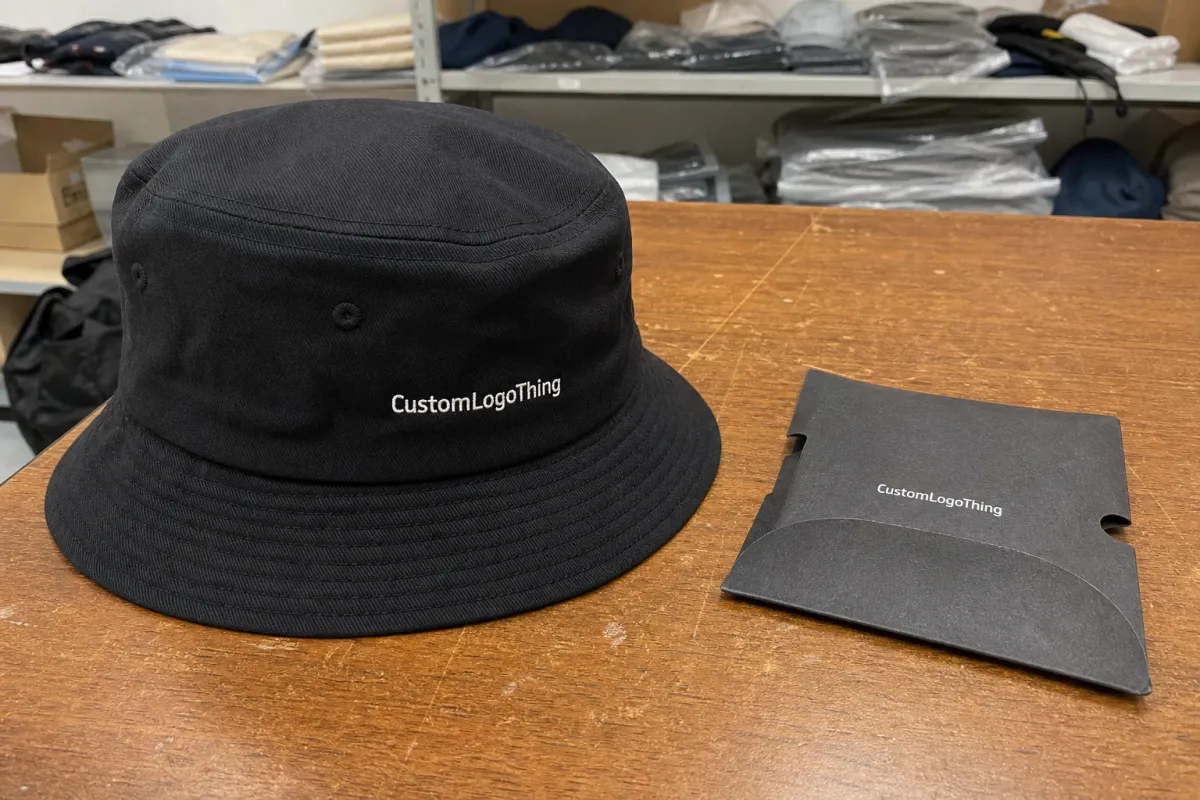
A bucket hat gives you several branding surfaces without turning the item into a billboard. Front panel, side panel, brim edge, underbrim, woven label, and interior taping can all carry small details. None of them need to shout. The better versions usually do the opposite. The logo should feel placed, not dumped on top.
That restraint matters because shoppers do not buy merch just to see a logo. They buy it because the item looks wearable outside the campaign. A bucket hat can do that better than a lot of branded products. It works as a style piece, a practical sun hat, and a brand reminder at the same time. That is a useful combination.
For ecommerce, bucket hats usually end up in a few different roles:
- Merch drops with a short launch window and limited quantity.
- Influencer kits where the hat needs to look clean on camera right away.
- Loyalty gifts that feel useful enough to keep.
- Add-on upsells that raise average order value without making checkout awkward.
- Seasonal releases tied to travel, festivals, outdoor events, or summer campaigns.
What usually goes wrong is not subtle. The buyer thinks in flat artwork, not in fabric and shape. A logo that looks crisp on screen can distort on a curved crown. A patch that feels balanced in a mockup can look oversized once it is sewn on. A brim that is too soft or too stiff changes the whole silhouette. The hat is not a poster, and it will not behave like one.
Good merch usually looks obvious in hindsight. The decoration, fit, and material all agree, so nobody has to puzzle out why the item works.
That is why branded bucket hats for ecommerce can punch above their weight. They are easy to wear, easy to photograph, and easy to fit into a campaign without building a giant story around them. If the spec is clean, the product does enough on its own.
Process and turnaround: from artwork proof to delivery
Most runs follow the same path: brief, mockup, proof or sample approval, bulk production, quality control, packing, and shipment. It is not glamorous, but a boring process is usually a safer process.
- Brief and artwork - confirm logo files, placement, quantity, ship date, and what the hat needs to do in the campaign.
- Mockup and proof - review layout, color placement, decoration method, and edge details before cutting starts.
- Sample or strike-off - check stitch density, patch texture, and color accuracy if the project needs a physical check.
- Bulk production - the factory sews, patches, prints, or embroiders the full order.
- Quality control - inspect logo placement, seam alignment, crown symmetry, loose threads, and obvious defects.
- Packing and shipment - confirm carton labeling, bagging, bundling, and the final shipping format for your warehouse or 3PL.
Turnaround depends on the build. A stock hat with a simple embroidered logo may be ready in roughly 12-18 business days after proof approval. A woven patch, extra labels, or custom trim usually pushes that to 15-25 business days. If the project needs color matching, a physical sample, or artwork revisions that drag on too long, add buffer. Fully custom fabric, dye work, or more involved finishing often moves into the 25-35 business day range before freight even enters the picture.
Rush orders are possible, but they come with trade-offs. The proof stage gets shorter, sampling gets compressed, and the factory has less room to correct mistakes before bulk starts. That can work when the artwork is clean and everyone already knows what they want. It works less well when the logo file is a mess and the team is pretending it is not.
Shipping deserves attention too. If the hats are going Direct to Consumers, carton strength matters more than people expect. A soft crown sitting in a weak carton arrives looking tired. For distribution-style testing, ISTA methods are a useful benchmark for drop, vibration, and compression behavior. Nobody buys a hat to test the packaging, but the packaging still gets tested.
Fabrics, decoration methods, and fit details that change the result
Fabric feel changes the perceived value
Cotton twill is still the safest place to start for many ecommerce runs. It has enough body to hold shape, photographs cleanly, and usually feels substantial without being stiff. A good cotton twill bucket hat often sits in the 220-280 gsm range. That range is not magic, but it shows up often for a reason.
Washed cotton gives a softer, more relaxed look. It feels more lifestyle-driven and less corporate, which helps if the brand wants the hat to look worn-in instead of polished. Nylon blends are lighter and dry faster, so they make sense for travel or outdoor collections. Recycled materials can work too, but only if the supply chain supports the claim and the documentation is real. A hangtag that says "eco" is not proof of anything except enthusiasm.
Fabric weight matters because ecommerce photography leaves things out. A light fabric can look fine in a studio shot and then collapse oddly when the customer opens the bag. Too much structure can make the hat feel boxy. The goal is not maximum stiffness. It is controlled shape.
Decoration should match the logo, not the cheapest machine
Direct embroidery works well for simple logos with thick lines and a small number of colors. It is strong, tidy, and usually the most straightforward option. Problems start when the artwork gets too fine. Tiny text, skinny outlines, and complex gradients usually read better as a woven patch, because the edges stay cleaner.
Patch size matters more than buyers think. For most branded bucket hats for ecommerce, a front patch around 2.25 to 3 inches across is a practical range. Too small and the brand disappears. Too large and the hat starts looking like a label instead of a product. Underbrim prints can add personality for lifestyle drops, but they should be used with some restraint. A hidden graphic is a nice surprise. A crowded set of competing graphics is just noise.
Interior labels, woven side tags, and clean binding can make a hat feel finished without cluttering the front panel. These details are small on their own, but they add up fast. If the outside branding stays minimal, the inside finish has to carry more of the quality impression. Buyers notice more than they admit. So does the return rate.
Fit decides whether the hat gets worn or returned
Crown depth, brim width, and the inside finish all affect comfort. A brim around 2.25-2.75 inches is common, but the real question is how the hat sits on the head. A shallow crown can ride up and feel awkward. A deep crown can look relaxed and wearable, but only if it is not overbuilt.
Test fit on more than one head shape. That is where the real answers show up. A hat that looks balanced on a display head can sit strangely on a person with a wider face or a stronger jawline. Adjustable sizing helps, but it is not a cure-all. Sweatband quality, seam finish, and the amount of internal structure matter more than most spec sheets admit.
If the hat is meant for repeated wear, comfort wins over clever styling. A rough interior edge, an irritating label, or a crown that traps heat will get the item left on a shelf. People rarely return a bucket hat because they have a philosophical objection to the design. They return it because it feels off.
How to plan the order: artwork, colorways, and fulfillment
Start with the use case, not the logo file. If the hat is going into a creator kit, the design needs to photograph clearly in one glance. If it is going into a merch store, the hat needs to look good enough for people to wear after the campaign ends. If it is a gift, the packaging and first impression may matter as much as the decoration itself.
Colorway planning should be practical. One safe body color plus one accent version is usually better than chasing a full rainbow of options. More colors can create choice, but they also create inventory noise. If the brand already has a clear palette, stay inside it unless there is a good reason to break out.
Artwork should be cleaned up before the proof stage. Tiny type should be simplified. Thin outlines should be thickened. Gradient effects should be reconsidered. The production team is not there to rescue a weak vector file. They are there to turn a workable file into a decent hat.
Fulfillment setup is another place where teams lose time. Decide early whether the hats ship to a warehouse, a 3PL, a fulfillment partner, or direct to consumers. That choice affects carton labeling, pack-out style, and how much attention you need on compression resistance. The hat might be the star of the drop, but the final mile still decides whether it arrives looking like one.
Cost, pricing, and MOQ planning for ecommerce orders
Pricing is usually driven by fabric, decoration method, trim complexity, and order size. A basic stock bucket hat with embroidery sits at the low end. Add a woven patch, custom labels, contrast stitching, or special packaging, and the cost moves up fast. That is normal. More steps mean more labor.
MOQ planning should match the channel. A smaller merch drop can work with a lower minimum, especially if the item is being used as a test. A larger ecommerce launch usually needs enough volume to support ad spend, shipping efficiency, and a reasonable margin after returns. Ordering too few means the inventory disappears before the campaign gets traction. Ordering too many means the shelf life of a simple accessory turns out to be shorter than hoped.
It helps to work backward from the price you want to charge. If the hat needs to sit in a premium merch tier, the decoration and fabric need to support that story. If it is meant as an impulse add-on, the spec should stay tight so the margin does not evaporate. The wrong mistake is common: teams either overspend on features nobody asked for or underbuild the product and wonder why it feels cheap.
Freight, duties, and domestic distribution should be included early, not as an afterthought. A bucket hat is light enough that people sometimes ignore shipping costs until the invoice lands. That is a bad habit. The item may be small, but the landed cost still decides whether the campaign makes sense.
Common mistakes that lower sell-through or trigger returns
- Overbranding - too many logos make the hat look like promo stock instead of something people would wear.
- Weak structure - a floppy brim or a crown that collapses in transit creates an instant cheap impression.
- Poor scale - artwork that looks fine on a screen can end up too small, too large, or too crowded on the actual hat.
- Ignored comfort - rough seams, scratchy labels, and bad interior finishing push the hat into the back of the closet.
- Late packaging decisions - a hat packed badly can arrive wrinkled, misshapen, or harder to sell than it should be.
The quiet mistake is to treat the bucket hat like a flat canvas. It is not. It bends, sags, folds, compresses, and moves with the head underneath it. That is why a spec that looks fine in a PDF can still fail in real use. If the sample feels off, believe the sample.
Expert tips for a better-looking merch drop
Keep the front decoration simple unless the brand really needs more. A single strong logo usually works harder than three small ones fighting for space. If you want more texture, move that detail to the inside label, underbrim, or seam finishing.
Ask for samples when the run depends on feel, not just appearance. Woven patches, special dyes, and unfamiliar fabrics all change the result enough to justify a physical check. A proof can tell you where the logo sits. A sample tells you whether the hat belongs in the drop at all.
Use the packaging to support the product, not hide it. A bucket hat does not need a huge box, but it does need enough protection to keep the crown and brim from arriving crushed. Simple tissue, a clean insert card, or a branded polybag can make the item feel more finished without inflating cost too much.
If the hat is part of a larger campaign, tie the color and texture back to the rest of the collection. That does not mean every item has to match exactly. It just means the hat should feel like it was made for the same world as the rest of the drop.
Next steps before you place the order
Before you approve production, check three things: the logo size on the actual hat, the material feel in person, and the shipping plan. Those are the points most likely to cause trouble later.
If the project is moving fast, lock the design first and treat the proof like a final decision point, not a brainstorming round. If the launch is more flexible, take the extra day or two to look at a sample. That small delay often saves the bigger headache.
For ecommerce teams, branded bucket hats work best when the spec is disciplined and the goal is clear. They do not need a complicated concept. They need a clean shape, a sensible decoration choice, and packaging that respects the hat instead of fighting it.
FAQ
What decoration method works best for branded bucket hats for ecommerce?
Simple embroidery is usually the easiest win for bold logos. Woven patches are better when the artwork has fine detail or needs cleaner edges.
How long does production usually take?
A simple stock style can be ready in about 12-18 business days after proof approval. More custom builds often take 15-25 business days or longer.
What fabric should I start with?
Cotton twill is the safest default. It has enough structure to look good, and it usually feels substantial without being stiff.
What is the biggest reason these hats get returned?
Fit and finish. If the crown sits badly, the brim feels wrong, or the inside is scratchy, people stop wearing it.
Do I need a sample?
If the order uses a new fabric, a patch, a special finish, or custom trim, yes. It is a cheap way to catch problems before bulk production starts.

