Ceramic Logo Patch Beanies bulk order planning gets complicated when the first approved sample and the final run do not match. A patch that sits slightly off center, a body color that shifts under warehouse lighting, or a cuff that collapses after wear can turn a straightforward order into a delay.
What Bulk Buyers Miss First
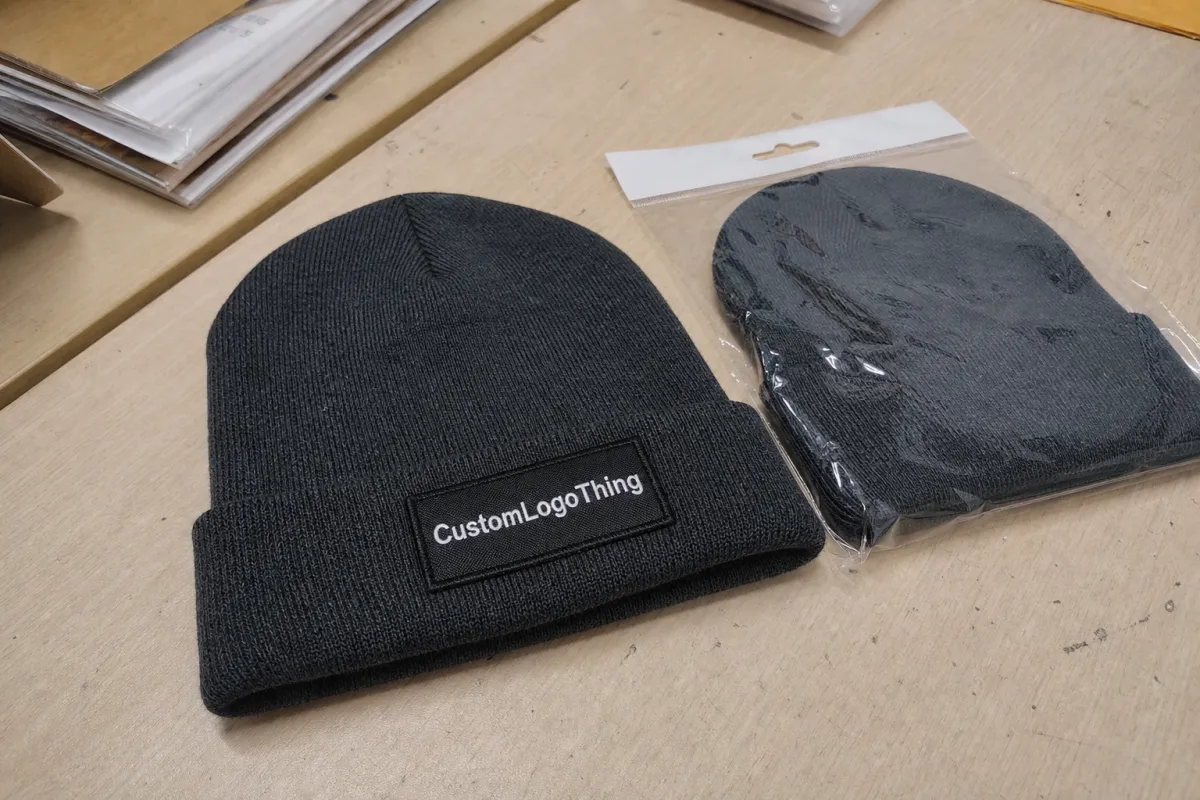
Beanies with a logo patch are popular because they handle branding without needing a large print area. They work for retail, team programs, winter promotions, and event giveaways. But the item still has to be comfortable enough to wear. If the yarn feels rough or the patch looks out of place, the hat loses value fast.
The first mistake is focusing on price before the spec. Buyers often ask for a quote before deciding how the patch will attach, what the cuff height should be, or whether the same color can be repeated later. That creates extra proof rounds and slows production.
The cleaner way to plan the order is to lock three things early: patch construction, beanie fit, and allowed variation. If those are vague, the final run usually drifts away from the approved sample.
Repeat orders matter too. A first batch may look acceptable, but if the next batch comes from a different yarn lot or uses a different backing, the product line stops looking consistent. That is a small manufacturing detail with a visible brand impact.
Buyers usually get better results when they define the full spec before requesting the final quote. Patch size, finish, body style, target color, and packaging should be clear at the start. The supplier can still flag issues, but the order will move faster and with fewer revisions.
Patch, Body, and Fit Choices
The patch is the visible part of the product, but the beanie body determines whether it looks right in wear. A patch can be accurate on paper and still fail visually if the knit stretches too much or the cuff loses shape.
Patch construction usually comes down to three choices: face finish, edge treatment, and attachment method. A smooth face gives a cleaner premium look. A lightly textured face can hide small flaws better and may feel more tactile. Edges may be stitched, molded, or clean-cut, and each option changes both appearance and durability.
Attachment method affects risk. Sewn patches are common because they stay secure and are easier to inspect. Heat-applied or bonded options can look neater at the edge, but they depend more on fabric compatibility and process control. Buyers should ask how the supplier checks attachment strength after production, not just how the sample looks.
Beanie style changes where the logo lands. A cuffed beanie gives a stable decoration zone and is usually the safest choice when the logo must read clearly across a larger order. A slouch beanie looks more relaxed, but the patch can shift visually once the crown settles. Standard fit is often the easiest to approve because it behaves more predictably.
Fabric content matters as well. Acrylic is common because it keeps costs manageable, holds color well, and repeats consistently. Acrylic-wool blends can feel warmer and denser, but they usually cost more and can show more shade variation between dye lots. Cotton blends are less common for cold-weather beanies, but some buyers prefer them for a softer hand feel or milder climates.
Gauge and stitch density also affect the result. A tighter knit usually looks cleaner and supports sharper patch placement, but it can cost more and feel less casual. A looser knit may feel softer, though it can distort more when stretched. For retail, shape recovery and finish matter more; for giveaways, price and consistency usually matter more.
Placement is the detail that causes the most avoidable rework. A patch that looks centered on a flat proof can appear crooked once the beanie is worn and stretched. Flat artwork alone is not enough. Approval should happen on an actual sample or curved proof that shows the patch in a realistic position.
Artwork, Color, and Approval Checks
Good artwork prevents a lot of problems later. A clean vector file gives the supplier a reliable starting point and reduces the chance that small details disappear when the patch is resized. Thin outlines, tiny type, and crowded elements may look fine on screen, then fail at patch scale.
For patch-based headwear, fewer shapes often perform better than many shapes. Strong silhouettes read faster at a distance and hold up better when the surface finish adds texture or shine. The goal is not to make the logo plain; it is to make sure it still works in production.
Color control is another common failure point. Buyers should confirm whether the supplier is matching to Pantone, physical swatches, lab dips, or internal color cards. Those methods do not behave the same way. A color can look correct in a photo and still miss the approved target enough to matter in a retail or corporate program.
Patch and body color should be reviewed together. A logo that looks sharp on a white beanie may disappear on charcoal if the contrast is too low. The same logo might feel too loud on a bright body color and too muted on a dark one. The right balance depends on viewing distance and how prominent the branding needs to be.
Physical samples are more useful than screen proofs because knitwear has depth. Yarn texture, cuff fold, and patch height all affect the final look. A flat image cannot show those details. A sample can.
Approve the logo at actual size, on the real beanie shape, with the final body color. That one step prevents more rework than most revision threads.
A practical pre-production check should cover size, placement, contrast, and edge finish. If the patch is too large, it overwhelms the cuff. If it is too small, it loses visibility. If contrast is weak, the branding blends into the knit. If the edge finish is rough, the whole product looks cheaper than it should.
It also helps to ask for tolerance ranges before production starts. No sewn item is perfectly identical. A good supplier should be able to state what variation is acceptable for placement, stitch density, patch trimming, and overall dimensions. That answer says a lot about how controlled the line really is.
Cost, MOQ, and Quote Structure
Price is usually driven by a few practical variables: patch complexity, knit construction, stitch count, yarn choice, packaging, and quantity. Buyers often look only at the unit price and miss setup costs, sample fees, or freight charges that affect the landed total. On small runs, those fixed costs matter a lot more.
MOQ planning should match the actual use case. A first retail test does not need the same volume as a corporate winter program. A trade show handout usually needs enough stock for the event plus a cushion. Reorder planning is different again, because a successful item should be repeatable without rebuilding the spec.
Here is a practical range buyers can use as a starting point. It is directional, not a promise. Actual pricing changes with patch structure, yarn quality, packing requirements, and shipping method.
| Run Size | Typical Unit Price | What Usually Changes | Best Fit |
|---|---|---|---|
| 100-199 pieces | $6.50-$9.00 each | Setup cost weighs more, revision risk is higher, and color matching needs tighter review | Pilot programs, local events, design testing |
| 300-499 pieces | $4.80-$6.50 each | Better balance between cost and flexibility, still manageable for inventory control | Retail launches, staff programs, regional promotions |
| 1,000+ pieces | $3.40-$5.20 each | Lower per-piece pricing, more attention needed for QC, packing, and carton consistency | Seasonal stock, national campaigns, replenishment orders |
Reading the quote line by line matters. Separate the unit price from setup fees, sample charges, packaging add-ons, and freight. A quote that looks slightly higher can still land lower overall if it includes tighter proofing, better defect control, or cleaner carton packing. A lower quote is not a win if it hides revision fees or vague tolerances.
For recurring programs, consistency in ordering terms helps. Keeping the headwear order inside the same sourcing structure used for other branded items can simplify approvals, payment, and repeat runs. That matters more than saving a small amount on one line item.
Production Timelines and Shipping
The production path is usually simple: quote, artwork review, sample or proof approval, bulk run, inspection, packing, and shipment. It becomes messy when handoffs are unclear. If nobody knows who approves the sample, or whether the patch needs one final revision, the job can sit idle while everyone waits.
Lead time depends on season, materials, patch complexity, and how many approval rounds the buyer needs. For a straightforward order with final artwork and standard materials, a realistic planning window is often 12-15 business days after approval. More complex orders, custom packaging, or material sourcing can push that to 18-25 business days, sometimes longer in peak season.
That timeline does not include transit, receiving, or distribution. A holiday campaign does not care that production finished two days late. Retail receiving windows, warehouse appointments, and event dates are fixed, so buyers should leave buffer time for cartons to be checked, counted, and stored before use.
The most useful schedule checkpoints are sample signoff, production start, and ship-ready confirmation. Those dates are more useful than a vague promise that the order will be "soon." They also make it easier to spot slippage before it becomes a bigger problem.
Shipping details matter more on branded goods than many teams expect. If the cartons are going to multiple locations, if the order needs to clear a distribution center, or if retail-ready packing is required, the supplier should know that before production starts. Carton labeling, polybag rules, and inner pack counts can change how the order is assembled.
It helps to ask what happens if one batch fails inspection. A good supplier should have a rework path, a QC hold process, and a clear answer about whether the buyer will see photos before shipment. Those details sound small until there is a problem.
Supplier Vetting and QC
Production photos tell you more than a polished catalog page. Catalog images are useful for style, but production photos show whether the supplier can hold patch alignment, stitch consistency, and packing quality across a full run. That is the difference between a mockup and a usable bulk order.
Quality control for headwear should cover stitch consistency, patch adhesion, edge trimming, loose threads, color consistency, and packaging accuracy. Minor variation is normal in sewn goods. The real question is whether the variation stays within an acceptable range and whether the supplier checks it before cartons leave the floor.
Buyers should ask how defects are handled. Are imperfect pieces removed during inspection? Are extra units packed to cover loss? Is there a photo record for issues found before shipment? Those questions are practical. They show whether the supplier is managing the order like a manufacturing job or just moving boxes.
Communication speed is another useful filter. When a supplier responds slowly to basic questions, the schedule usually gets slower later. A better sign is a direct answer that names the constraint instead of pretending every request is easy. If a body color is unavailable or a logo detail is too small for the patch size, that should be said early.
Reorder support matters for recurring programs. Ask whether the same yarn, patch spec, and placement can be repeated later. On repeat orders, buyers care less about a small first-run discount and more about getting the same result again. If the second batch looks different, the brand loses continuity right when it should be building it.
That is the practical reason ceramic Logo Patch Beanies bulk order planning matters beyond the first purchase. The goal is not only to buy one run, but to make the first run repeatable enough that the next one does not require new guesswork.
Order-Ready Checklist
Before sending a request for pricing, gather the details that actually move the job forward. The more complete the first brief, the fewer corrections are needed later.
- Final quantity for the first run and any expected reorder volume
- Exact in-hand date, not just the month
- Beanie body style, cuff height, and fit preference
- Patch artwork in vector format, plus brand color references
- Placement notes, especially if the logo must sit at a specific height
- Packaging needs such as polybags, stickers, hangtags, or carton labeling
- Shipping method, delivery address, and whether the order splits across locations
It also helps to identify the approval contact before production starts. When one person requests the quote, another approves the artwork, and a third receives the shipment, things can stall fast. A single decision-maker or a clearly assigned approval chain saves time and keeps the job moving.
For tighter internal signoff, a short spec sheet is usually enough. It should list the patch size, decoration method, body color, quantity, and delivery target. That one page keeps everyone aligned better than a long email thread that keeps changing.
Good sourcing is not about making the order complicated. It is about removing avoidable uncertainty before production starts. When the spec is clear, the quote is easier to compare, the proof is easier to approve, and the bulk run is easier to receive without surprises.
How many ceramic logo patch beanies should I order for a first run?
Start with the smallest quantity that still gives you a useful unit price and enough stock for the planned audience. If the beanies will be distributed at events, sold in retail, or shipped to several locations, add a buffer so a strong sell-through does not force an urgent reorder. If you expect repeat demand, confirm that the supplier can match the same patch and yarn later.
What affects pricing the most?
Patch complexity, knit construction, color count, packaging, and total quantity usually have the biggest impact. Sampling and freight can change the landed cost more than people expect, especially on smaller runs. Higher volumes lower the unit price, but only if the spec stays stable.
How long does production usually take after approval?
A straightforward order often takes about 12-15 business days after artwork approval. More complex orders, custom packaging, or material sourcing can stretch to 18-25 business days or more. Peak season adds risk, so buffer time is smart even when the supplier is moving quickly.
Can I mix colors or sizes in one order?
Many suppliers allow mixed colorways, but minimums may apply to each variant. Mixing can affect price, packing, and scheduling, so it should be confirmed before the quote is approved. A clean breakdown by color and quantity keeps the order easier to manage.
What artwork file should I send?
Send a vector file whenever possible so the patch can be resized without losing detail. Include logo colors, placement notes, and any reference images that show the intended finish. If the art is still being revised, ask for a proofing step before bulk production starts.


