Buyer Fit Snapshot
| Best fit | Branded Cardboard Sleeves Bulk Order projects where brand print, material claims, artwork control, MOQ, and repeat-order consistency need to be specified before quoting. |
|---|---|
| Quote inputs | Share finished size, material target, print colors, finish, packing count, annual reorder estimate, ship-to region, and any compliance wording. |
| Proofing check | Approve dieline scale, logo placement, barcode or warning zones, color tolerance, closure strength, and carton packing before bulk production. |
| Main risk | Vague material claims, crowded artwork, missing packing details, or unclear freight terms can make a low unit price expensive after revisions. |
Fast answer: Branded Cardboard Sleeves Bulk Order: Pricing & MOQ should be specified like a repeatable production item. The safest quote records material, print method, finish, artwork proof, packing count, and reorder notes in one written spec.
Production checks before approval
Compare the actual filled-product size with the drawing, then confirm tolerance on folds, seals, hang holes, label areas, and retail display edges. Reserve space for logos, QR codes, warning copy, and material claims before decorative graphics fill the panel.
Quote comparison points
Review material grade, print process, finish, sampling route, tooling charges, carton quantity, and freight assumptions side by side. A quote is only useful when the supplier can repeat the same color, closure quality, and packing count on the next order.
Branded Cardboard Sleeves Bulk Order: Pricing & MOQ
A branded cardboard sleeves bulk order can do more shelf work than a sticker while using less board than a full printed carton. That matters in categories where the primary container already does the heavy lifting and the packaging team still needs a sharper retail face. For brands under pressure to control spend, a branded cardboard sleeves bulk order often lands in the narrow space between visibility and restraint.
The appeal is easy to miss if you only look at the pack from a distance. Packaging buyers are usually solving three separate problems at once: keep unit cost in check, protect the product, and make the item look deliberate in a crowded aisle. Sleeves answer that mix better than many teams expect. They are especially useful for seasonal drops, multi-SKU families, and limited editions where the artwork changes faster than the base container.
The tradeoff is straightforward. Sleeves add branding and information, but they do not replace the kind of protection a rigid shipper or full carton provides. That means the sleeve should be judged against the product it sits on, not against every other package on the shelf. If the bottle, jar, tray, or tube already handles protection, the sleeve becomes the visible layer that carries the sale.
That is why a branded cardboard sleeves bulk order often sits between labels, shrink bands, and cartons. Labels cost less, but they usually carry less perceived value. Full cartons look complete, but they use more board, more print area, and more setup time. Sleeves offer a middle path that lets a buyer change presentation without rebuilding the whole pack structure.
I have seen this decision play out most clearly in small-batch launches. A client brings in a new candle or supplement line, the primary jar is already approved, and the only thing missing is a retail-facing exterior that does not overcomplicate production. In that setting, a sleeve is often the fastest route to something that feels finished.
Why a branded cardboard sleeves bulk order can cut waste fast
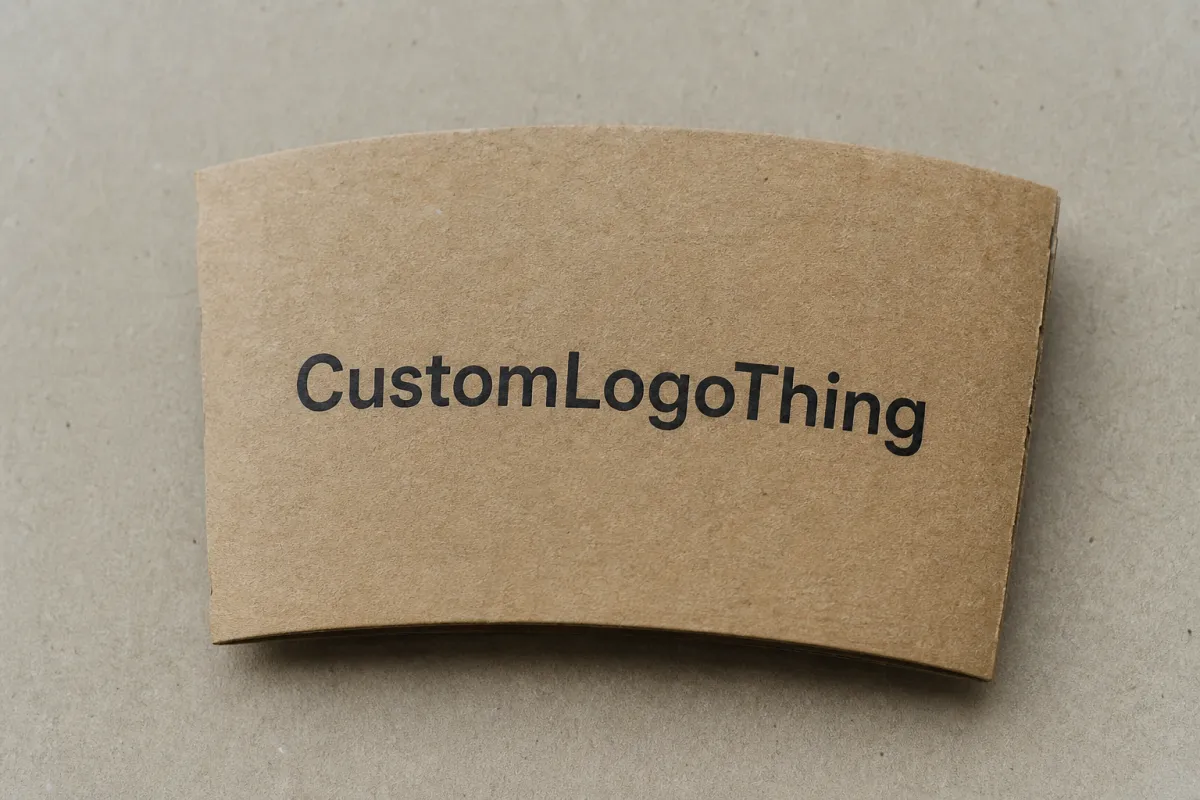
For a packaging buyer, a branded cardboard sleeves bulk order often delivers more shelf presence than a sticker while using less material than a full printed carton. That combination is useful when the primary package already works and only needs a branded outer layer.
In practice, a branded cardboard sleeves bulk order is especially common in soap, candle, and supplement lines. Those products usually ship in jars, bottles, trays, or sealed cartons, so the sleeve is not expected to protect the product from scratch. It is expected to build a retail face, carry compliance text, and make the item feel priced correctly.
The economics start to look better once the full job is compared side by side. A label may win on the lowest unit price, yet a sleeve can win on perceived value and on how much of the pack it covers. A full printed carton may win on enclosure, though it usually requires more board, more press coverage, and more make-ready. A branded cardboard sleeves bulk order sits in the gap between those two extremes.
Speed helps the case as well. If the bottle mold, jar supplier, or tray dimensions are already fixed, a sleeve lets the brand update the design without asking operations to touch the entire line. That matters for promotional packs, launch trials, and short runs where the marketing calendar moves faster than procurement.
The waste argument is practical, not abstract. A sleeve can be sized more tightly than a general-purpose carton because it is built around an existing container. Less board means less scrap at the press, fewer square inches of ink coverage, and often a smaller shipping footprint before the sleeves even reach the packing line. A branded cardboard sleeves bulk order does not erase waste, but it can reduce it in several places at once.
Most buyers end up comparing the same three options. A label is cheapest but weak on shelf presence. A carton is strongest on enclosure but heavier on material. A sleeve is the fast, visible option that preserves the current pack structure. That is the reason a branded cardboard sleeves bulk order often gets chosen for short runs and multi-SKU programs where the wrapper has to do the selling.
There is also a practical supply chain angle. A sleeve that ships flat takes up less room than a box that must be pre-formed or nested, which can simplify receiving and reduce storage pressure. I have seen operations teams appreciate that more than the marketing team initially expected, especially when warehouse space is already tight.
Where sleeves make the most sense
When the product already has a stable primary pack, sleeves tend to make the most sense in four scenarios:
- Short runs: test launches, seasonal promotions, and event-specific packs.
- Multi-SKU systems: same container, different scent, flavor, strength, or size.
- Retail upgrades: products that need stronger shelf blocking without a full carton.
- Regulated copy: packs that need more space for ingredient lists, warnings, or legal text.
That is the real value of a branded cardboard sleeves bulk order. It changes the retail story without forcing a redesign of the product itself.
What branded cardboard sleeves bulk order buyers actually get
At the simplest level, a sleeve is a printed wraparound component that sits over a box, tray, jar, bottle, or bundled item to add branding and product information. A branded cardboard sleeves bulk order can be built to look minimal or premium, depending on the board, print method, and finish.
The most common constructions are straight tuck sleeves, open-ended sleeves, die-cut window sleeves, and lock-tab styles. Straight tuck sleeves are common when the sleeve needs crisp assembly and a tidy edge. Open-ended sleeves work when the product slides through one side. Window sleeves reveal part of the item beneath, which matters for food, cosmetic, or gift packaging where the product itself is part of the appeal.
A branded cardboard sleeves bulk order may also be used as a band around a bundle. That approach is popular for promotional sets and multi-item packs because it keeps the pack modular while still making it feel unified. For buyers, that can be cheaper and quicker than custom tooling for a full enclosure.
Print method matters. Digital printing is often the best fit for lower quantities, faster proofs, and jobs with frequent artwork changes. Offset printing tends to fit better when color consistency and higher volume are the priority. Flexographic printing can be efficient for larger runs with simpler graphics. In a branded cardboard sleeves bulk order, the right print method usually depends on how stable the artwork is and how much setup the job needs.
Finishing choices can change the feel of the pack more than many teams expect. Matte and gloss coatings alter how the sleeve catches light. Soft-touch lamination adds a smoother hand feel and a more premium surface. Foil, spot UV, and embossing raise visual contrast, but they also add cost and time. A branded cardboard sleeves bulk order does not need every finish available; it needs the few that support the price point and the channel.
Before approving a quote, buyers should confirm a few basics:
- Board type: SBS, CCNB, kraft, or recycled content board.
- Print coverage: one side, full wrap, or selective panels.
- Fold direction: especially important for machine insertion or manual packing.
- Die line ownership: whether the supplier provides it or the brand supplies it.
- Assembly requirement: flat supply, pre-glued, or folded and packed.
A branded cardboard sleeves bulk order gets much easier to buy once those details are set. Without them, two quotes can look similar on paper and still deliver very different results on the line.
The details above are not theoretical. In packaging work, the small items are often the ones that create the largest delay. A barcode placed too close to a fold, or a finish that interferes with scannability, can send a job back for revision even when the artwork itself looks polished.
Specifications that affect fit
Fit starts with measurements, not artwork. For a branded cardboard sleeves bulk order, the most important numbers are finished width, wrap depth, product clearance, and overlap allowance. If any one of those is off, the sleeve can feel loose, buckle at the seam, or scuff the product during insertion.
Finished width is the total circumference the sleeve must cover once folded. Wrap depth tells you how far the sleeve travels across the front, back, and side panels. Product clearance is the breathing room the sleeve needs so it does not crush the item beneath it. Overlap allowance keeps the closure secure and gives the glue or tuck area enough room to hold up in production.
Board caliper changes the user experience more than many teams expect. A 16pt sleeve feels different from a 24pt sleeve. Thicker stock can hold shape better and improve shelf presentation, but it may also resist tight folds and make machine application slower. That is why a branded cardboard sleeves bulk order should always be spec'd with the end use in mind, not just the paper grade.
Artwork placement is the next source of trouble. Barcode position, regulatory copy, expiration space, batch coding, and window placement can all affect the die line. If the barcode lands too close to a fold or a matte finish creates scanning issues, the sleeve may need a revision. A branded cardboard sleeves bulk order is easier to approve when the print layout is planned alongside the structure instead of after it.
There are also practical tolerance questions. In bulk production, a small variance is normal. The real question is whether the variance still keeps the sleeve functional. Buyers should ask what tolerance is acceptable for width, seam overlap, and score location, and whether a reproof is required if the change crosses that limit. A branded cardboard sleeves bulk order should have a clear tolerance range before anyone signs off.
Sustainability and supply chain needs belong in the spec sheet too. If you want FSC-certified fiber, say so up front and ask for documentation. FSC certification matters when retail partners want traceable sourcing. Recycled content can be a strong option as well, but recycled board may behave differently in folding, print holdout, and scuff resistance. A branded cardboard sleeves bulk order should balance environmental goals with the way the sleeve actually performs.
If the sleeve is shipping pre-packed, ask how it will be configured in master cartons and on pallets. Pallet pattern, carton count, and whether the sleeves ship flat or folded can change freight cost and receiving efficiency. For transit testing, many teams still map expectations to ISTA methods even when the sleeve itself is light. That is the sort of detail that separates a neat quote from a usable production spec.
One more item belongs here: insertion method. A sleeve that is fine by hand may be a poor fit for an automatic cartoning line, and the reverse can also be true. If the supplier knows whether the pack is being loaded manually or by machine, they can suggest a score depth and lock style that avoids jams. That saves time later, and it saves money in the pressroom.
Branded cardboard sleeves bulk order pricing, MOQ, and unit cost
A branded cardboard sleeves bulk order is priced by more than quantity alone. The main cost drivers are board grade, print method, color count, die shape, finishing complexity, and how much setup work the press needs before the first sellable piece is produced.
MOQ usually reflects that setup load. The supplier has to pay for plate work, die cutting, proofing, and press waste before the run turns into usable inventory. That is why a small branded cardboard sleeves bulk order often carries a higher unit cost than a larger one. The make-ready cost is spread over fewer pieces.
That relationship is easy to miss if you only compare the per-unit number. A quote with a lower unit price can still cost more overall if it adds extra proofs, a more expensive finish, or shipping that is not included. A solid branded cardboard sleeves bulk order quote should show the full landed picture: tooling, samples, freight, packing, and any post-press assembly.
From a packaging buyer's point of view, the cheapest quote is only useful if the sleeve fits, prints cleanly, and arrives in the right quantity packed the right way. One bad die line can erase the savings from a low number on the page.
Typical pricing ranges can vary, but practical expectations help. For a simple digital sleeve at a lower quantity, a buyer might see roughly $0.45-$1.10 per unit depending on size and coverage. Offset runs often fall closer to $0.18-$0.42 per unit once quantity climbs and artwork is stable. Flexographic printing can go lower on long runs, sometimes around $0.12-$0.28 per unit, but the graphics and setup need to suit the process. A branded cardboard sleeves bulk order with foil, embossing, or spot UV can add $0.05-$0.20 per unit or more, depending on coverage and tooling.
Those numbers are not a promise. They are a working range. Heavy board, a complex die-cut window, or a sleeve that needs pre-gluing will push pricing up. So will small runs with a lot of ink coverage. A branded cardboard sleeves bulk order is cheapest when the structure is simple and the artwork is press-friendly.
The clearest way to compare quotes is to ask for a price ladder. That means one line for a pilot quantity, one for the next break point, and one for a fuller replenishment order. With that view, a buyer can see where the real savings start. A branded cardboard sleeves bulk order often becomes much more efficient after the first quantity jump.
In practical terms, MOQ is not just a supplier preference. It is the point where the fixed costs of printing, die cutting, and setup can be distributed across enough units to keep the job viable. Once buyers understand that, the quote stops looking arbitrary and starts looking like an engineering decision.
| Print / build option | Typical MOQ range | Indicative unit cost | Best fit | Buyer notes |
|---|---|---|---|---|
| Digital sleeve | 250-1,000 | $0.45-$1.10 | Launches, test markets, multi-SKU runs | Fast proofing; good for frequent artwork changes |
| Offset sleeve | 2,000-10,000 | $0.18-$0.42 | Stable artwork, retail programs, repeat orders | Color control tends to be stronger at scale |
| Flexographic sleeve | 5,000+ | $0.12-$0.28 | Long runs, simpler graphics, efficient replenishment | Best when setup is justified by volume |
| Special finish adders | Varies by job | + $0.05-$0.20 | Premium shelf presentation | Foil, embossing, and spot UV change both cost and timing |
That table is the starting point, not the final answer. The real quote still depends on board choice, dieline complexity, packing format, and whether the job needs custom tooling. The cheapest branded cardboard sleeves bulk order is not always the lowest landed cost if it triggers waste, late approvals, or reprints.
Order process and timeline for a branded cardboard sleeves bulk order
A clean branded cardboard sleeves bulk order follows a predictable sequence: inquiry, spec review, artwork submission, quote, proofing, sample approval, production, and shipment. The fastest projects are the ones where each step has a clear owner and nobody is guessing at the measurements.
It starts with the spec sheet. If the buyer sends product dimensions, target quantity, artwork files, finish preferences, and delivery location up front, the supplier can usually respond much faster. A branded cardboard sleeves bulk order with complete information may get a usable estimate in 1-2 business days. If the spec is incomplete, that same quote can turn into a week of back-and-forth.
Artwork readiness affects the calendar more than most people expect. If the brand files are press-ready and the dieline already exists, proofing moves quickly. If the die line needs revision, or if the sleeve is fit-critical, sample work may be needed before approval. A branded cardboard sleeves bulk order can lose days at this stage if the team is debating structure and design at the same time.
Here is the sequence that usually keeps things moving:
- Spec review: confirm dimensions, stock, print method, and finishes.
- Dieline check: verify folds, overlap, barcode space, and any cutouts.
- Quote approval: compare unit cost, tooling, freight, and pack-out terms.
- Proof or sample: approve color, copy, and fit before mass production.
- Production: print, cut, finish, and inspect the run.
- Shipment: book freight and confirm carton and pallet configuration.
Typical timing also depends on the process. Digital jobs are often the quickest because they avoid some of the setup associated with plates. Offset and flexographic work may need more time for make-ready. A simple repeat branded cardboard sleeves bulk order can move in about 10-15 business days after proof approval, while a first-time custom job with new tooling or samples may take 15-25 business days or more.
Delays usually come from avoidable places. Incomplete dimensions force dieline revisions. Low-resolution artwork forces another proof. Regulatory text that arrives late can hold the whole job. A branded cardboard sleeves bulk order moves faster when design, operations, and procurement review the pack together instead of in sequence.
Ask for four dates before you approve anything: estimated proof date, production start, completion window, and freight booking date. That gives internal teams something practical to work around. If the supplier cannot name those milestones, the schedule is probably too loose for a retail launch.
One honest caution: a tight timeline is possible, but only if the project is stable. If the dimensions are still changing or the legal copy is not finalized, speeding up the quote stage rarely helps. It usually just shifts the delay into production.
What to expect from a supplier
The right supplier should reduce friction, not add it. For a branded cardboard sleeves bulk order, the value is in consistency, responsive quoting, and someone who understands packaging logic well enough to spot problems before they become expensive.
That means fewer surprises on color, fewer mistakes on the die line, and fewer order-to-order variations. A sleeve that fits on the first run but drifts on the second is a supplier problem, not a design flourish. A branded cardboard sleeves bulk order should hold its spec from one replenishment to the next unless the buyer asks for a change.
At Custom Logo Things, the best work happens when the brief is translated into something the press can actually produce. That sounds basic, but it is where many projects slow down. Good packaging partners do not just answer the quote request; they help define the die line, the stock, the finish, and the assembly method so the job can be repeated with less risk. That is the real upside of a branded cardboard sleeves bulk order.
For buyers who want to compare outcomes, our Case Studies show how packaging decisions change cost, shelf impact, and production flow. For repeat programs, Wholesale Programs are usually the most efficient path because the artwork and structure are already established. And if the pack needs full enclosure instead of a sleeve, Custom Shipping Boxes may be the better structure.
A supplier also needs to communicate clearly. Sample support, proof feedback, and reordering notes should be easy to follow. If a production team can explain why a stock choice affects scuff resistance or why a finish might interfere with barcode scanning, that saves time downstream. A branded cardboard sleeves bulk order is much less stressful when the supplier speaks the language of the line, not just the language of sales.
Most buyers do not want more options. They want the right options, explained in plain English, with the numbers attached.
That is the standard we try to hold. Not hype. Not vague reassurance. Just packaging guidance that makes the next purchase easier than the last one.
Next steps for a branded cardboard sleeves bulk order
If you are preparing a branded cardboard sleeves bulk order, start with a short checklist instead of a long meeting. The better the information, the less room there is for rework.
- Product dimensions: finished size, clearances, and any protruding features.
- Target quantity: pilot run, replenishment, or full production.
- Artwork files: print-ready PDF, editable source files, and barcode art.
- Material preference: SBS, CCNB, kraft, or recycled board.
- Finish preference: matte, gloss, soft-touch, foil, embossing, or spot UV.
- Delivery details: shipping address, pallet needs, and receiving constraints.
- Compliance copy: ingredients, claims, warnings, and any required symbols.
Then ask for a quote that names the exact substrate, print method, MOQ, and freight assumptions. That is the only fair way to compare suppliers. A branded cardboard sleeves bulk order quoted on different stock or different packing terms is not an apples-to-apples comparison.
If the sleeve has a tight fit or carries regulated copy, approve a sample or digital proof before the full run. That single step can prevent a costly mismatch between the dieline and the product. A branded cardboard sleeves bulk order may look simple, but a one-millimeter error can still create a real production headache.
Build in time for internal sign-off. Procurement, design, compliance, and operations rarely review packaging on the same schedule. If you leave no buffer, the order will sit waiting for the last approval instead of moving to press. A branded cardboard sleeves bulk order is easiest to execute when all four functions know the decision window before the quote is accepted.
Use one final filter before you place the order: will the sleeve still work if the next replenishment arrives with a slightly different batch or a minor carton shift? If the answer is yes, the spec is probably mature enough for bulk production. If the answer is no, revise the dieline now rather than after print.
The clearest takeaway is practical. When dimensions, artwork, and quantity are aligned, a branded cardboard sleeves bulk order can move from quote to press-ready approval with fewer surprises, cleaner pricing, and a much better chance of hitting the shelf date you actually need.
Frequently asked questions
What is the usual MOQ for a branded cardboard sleeves bulk order?
MOQ depends on board type, print method, and how much setup the job requires. Digital runs can support lower quantities, while offset and specialty finishes usually need higher volume to stay cost-effective. For a branded cardboard sleeves bulk order, the best request is a tiered quote that shows the minimum run and the next price break.
How long does a branded cardboard sleeves bulk order usually take?
Timeline depends on artwork readiness, proof approval, and whether custom tooling is needed. Simple repeat orders move faster than first-time jobs with new dielines or sample requests. Ask for an estimated proof date, production window, and shipping ETA before you approve a branded cardboard sleeves bulk order.
What do I need to get an accurate quote for branded cardboard sleeves bulk order pricing?
Provide product dimensions, target quantity, material preference, print coverage, finishes, and shipping destination. Include barcode placement, regulatory text, and any window or cutout requirements that could change the die line. The more complete the spec sheet, the fewer revisions and surprise charges you are likely to face on a branded cardboard sleeves bulk order.
Can I use recycled board for a branded cardboard sleeves bulk order?
Yes, many sleeve programs use recycled or FSC-certified board, depending on stiffness and print requirements. The key tradeoff is performance: some recycled stocks may behave differently in folding, color holdout, or scuff resistance. Ask for sample boards if sustainability is a priority and the sleeve still needs to feel premium.
Are sleeves better than full cartons for branded packaging?
Sleeves are often better when the product already has a functional primary pack and needs branding, retail presence, or product information. Full cartons are better when protection, tamper evidence, or full enclosure is the priority. The right choice usually comes down to cost, shelf impact, and how much structure the product actually needs.