Pet Treat Kraft Paper Bags Unit Cost for Bulk Orders is rarely just a line item. Material grade, barrier layer, closure type, print coverage, and freight all change the final number, sometimes more than the treat formulation itself. The useful question is not “what is the cheapest bag?” but “what structure protects the product and still makes sense at scale?”
A clean rendering can hide real tradeoffs. A bag that looks premium may be harder to fill, less stable in transit, or more expensive to reorder than the first quote suggests. Buyers usually get the best result when they decide the spec first, then use pricing to test whether that spec is sustainable for the margin.
Why kraft paper bags beat the usual pouch scramble
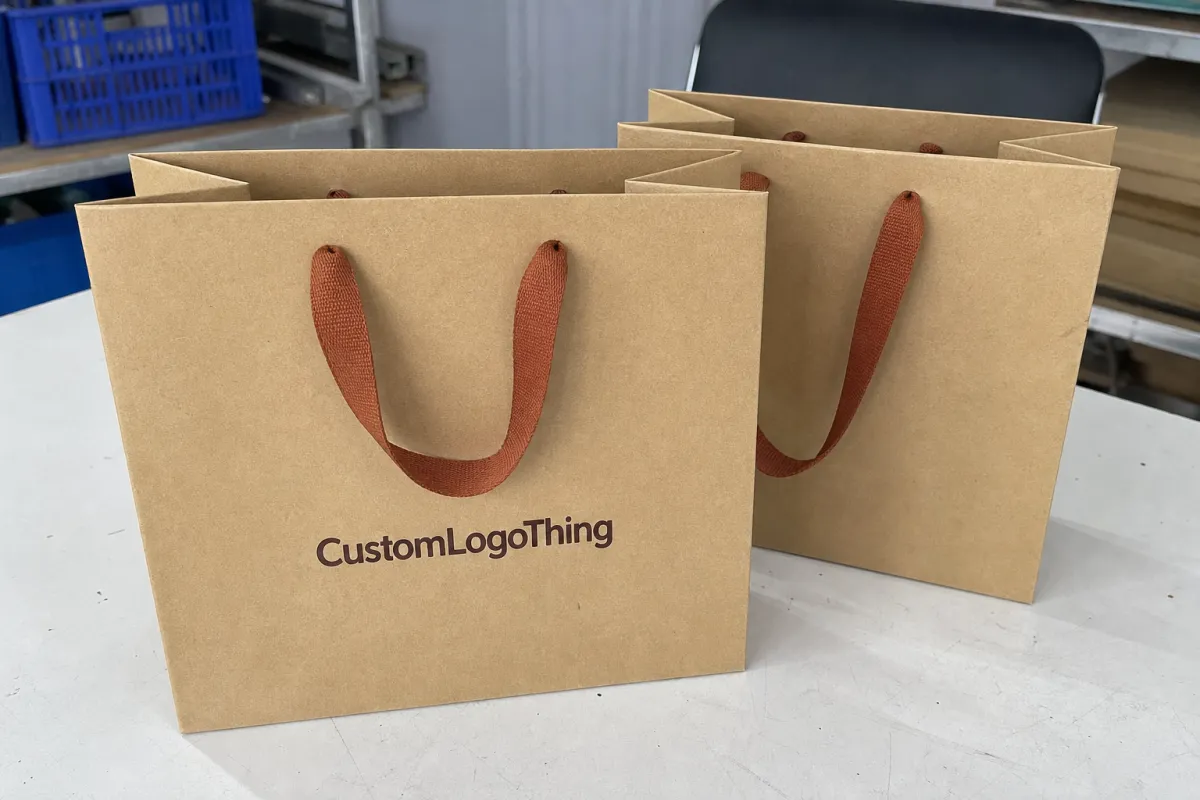
Kraft paper gives pet treats a natural look without forcing brands into rigid tubs or fully plastic pouches. That is useful for small labels, seasonal lines, farm-store products, and private-label launches that need a credible shelf presence without complicated packaging.
The paper face also changes how the pack behaves in retail and logistics. It stacks well, handles carton compression better than some flimsy film-only bags, and gives designers a tactile surface that feels less generic. The outer layer sells the brand; the liner and seal do the preservation work.
That split matters. Dry biscuits need shape retention and crush resistance. Jerky needs stronger barrier performance and a reliable seal. Soft chews need moisture control or they can degrade faster than buyers expect. A kraft face can support the story, but it does not replace functional structure.
There is also a line-speed angle. Many kraft-faced bags run without major equipment changes, which helps if the filling line already handles flexible packaging. Still, fit matters. If the gusset collapses, the zipper interferes with sealing, or the bag dimensions are off, the attractive format becomes a production problem.
Judge the pack by what happens after launch: whether the product stays fresh, whether the bag fills cleanly, and whether the carton and pallet layout waste space. Appearance matters, but repeat performance matters more.
Bag styles that fit biscuits, jerky, and soft chews
The format should follow the product, not the other way around. Hard biscuits need structure. Chewy strips need sealing reliability. Soft chews need barrier protection first and decoration second.
- Stand-up pouch - Good for shelf display and small to mid-size retail runs.
- Flat-bottom bag - Better for premium positioning and cleaner case packing.
- Gusseted bag - Often the lower-cost option for simple dry treats.
- Pinch-bottom style - Less common, but useful for a bakery-like or traditional look.
Closure choice changes both user experience and cost. A straight heat seal is simple and usually cheapest. A zipper helps repeat opening and improves retail usability. Tear notches are worth adding if the bag will be handled often. Combining all three improves convenience, but the bag gets more expensive and slightly more complex to convert.
Windows need caution. A small window can help shoppers see treat shape or color variation, but it reduces barrier area and adds structural complexity. On greasy biscuits or moisture-sensitive soft chews, a large window can become a weak point. If protection matters more than visibility, a printed faux window is often the better choice.
The best structure is the one the team can fill and seal without constant adjustments. If the bag jams the line or forces operators to baby every pouch, the real cost rises even after the quote looks approved.
Material and print specifications buyers should lock in
This is where quotes start to separate. Two bags can look nearly identical in mockups and still land in different cost bands because of paper weight, liner choice, barrier performance, printing method, and finishing details. If the spec is vague, the quote will be vague too.
A typical pet treat structure combines an outer kraft paper face, a food-safe inner liner, and a barrier layer chosen for grease resistance, moisture resistance, or both. Dry biscuits do not need the same protection as oily jerky, and soft chews often need stronger moisture control than crunchy snacks.
If sustainability claims matter, specify them precisely. Ask for FSC-certified paper if that is part of the brand story, or request the exact percentage of recycled content rather than a loose “eco” claim. A kraft face alone does not make the whole bag compostable or biodegradable; the liner, adhesive, ink system, and sealant all matter. Request the full material stack in writing.
Before approving production, lock these items down:
- Paper weight, finish, and whether the face is natural or bleached kraft
- Inner liner material and barrier level
- Print count, print method, and total coverage area
- Closure type, seal width, and tear notch location
- Bag dimensions, gusset depth, and target fill weight
- Food-contact compliance for inks, adhesives, and liners
Print coverage is one of the easiest ways to push cost up. Limited spot colors are usually easier on budget than full-bleed graphics across every panel. Matte finishes can look refined, but soft-touch coatings, metallic effects, and specialty varnishes all add cost. If the design already carries enough visual weight, do not pay extra for decoration that does not help sell the product.
Quality checks should match the product. Ask for seal strength testing, ink rub resistance, and basic drop or compression checks on sample packs. If the treats are oily, ask for grease bleed checks after storage. If they are moisture sensitive, ask how the liner performs under normal warehouse humidity. A bag that looks good on day one is not enough.
For sourcing and packaging references, buyers often cross-check responsible paper standards through the FSC and general packaging education through packaging.org. Those sources do not replace a spec sheet, but they help when terminology or claims need verification.
pet treat kraft paper bags unit cost, MOQ, and quote drivers
Pet treat kraft Paper Bags Unit Cost usually falls as volume rises, but the curve is shaped by setup work, print preparation, material choice, and conversion waste. Add a zipper or window and the cost changes again. Add a special liner and it changes again.
Price requests should compare the same build across several volumes. A quote at 1,000 units tells you little by itself. A quote ladder at 1,000, 3,000, and 5,000 units shows where the real break point sits. That is the only way the unit cost becomes useful for decision-making.
| Bag build | Common MOQ | Approx. unit cost at 1,000 | Approx. unit cost at 5,000 | Best fit |
|---|---|---|---|---|
| Stand-up kraft bag, zipper, 1-2 color print | 1,000-2,000 | $0.38-$0.62 | $0.20-$0.34 | Dry biscuits and starter retail runs |
| Flat-bottom bag, small window, 2-color print | 2,000-3,000 | $0.44-$0.72 | $0.24-$0.40 | Premium shelf presentation |
| High-barrier jerky bag, reseal zipper, 3-4 color print | 3,000-5,000 | $0.52-$0.88 | $0.30-$0.50 | Oily treats and longer shelf life |
| Large custom format, special finish, full bleed | 5,000+ | $0.70-$1.10 | $0.38-$0.62 | Premium private label and stronger brand play |
These are ex-factory ranges, not landed cost. Freight, duty, carton count, and domestic storage can move the final number a lot. A low quote can also hide thinner liners, weaker zippers, or limited print handling, so buyers should always ask what is included before comparing offers.
The main cost drivers are usually predictable: bag size, paper grade, barrier type, zipper style, window cutout, print coverage, carton packing method, and order quantity. Smaller jobs with more moving parts cost more. Standardizing formats across flavors usually saves more money than trying to shave every line item.
Production steps and lead time from proof to shipment
A clean production plan saves time and avoids rework. The normal path is spec confirmation, dieline review, artwork check, digital proof, sample approval, production, inspection, and packing. If the order is handled like a one-email shortcut, revisions usually appear later.
For straightforward custom runs, production often takes about 12 to 18 business days after proof approval. Larger bags, special finishes, or more complex structures can push that to 18 to 30 business days. Shipping adds its own timeline, with air faster and more expensive and ocean slower but better for bulk.
Delays usually start with missing information: low-resolution logos, late copy changes, unclear dimensions, or weak dieline notes. If the pack includes a zipper, window, or specialty liner, sampling matters more. A pre-production sample can prevent a second round of corrections once the job is already in motion.
Quality control should be visible, not assumed. Ask what gets checked during production: color consistency, seal width, zipper alignment, print registration, and dimensional tolerance. After packing, ask whether cartons are tested for compression and whether the finished case count matches the agreed configuration. Small packing errors can still create receiving problems.
If the bags travel long distances in corrugated cases, the outer packaging should be checked against handling realities, not only shelf appearance. Basic transport testing often lines up with ISTA guidance and common ASTM methods.
What makes a supplier worth choosing for pet brands
A good supplier explains the quote instead of hiding behind the word “custom.” A single number is not enough if the buyer still needs to reverse-engineer the build.
Transparency matters because pet packaging repeats. The first order may be forgiving, but the second and third orders are where color drift, seal weakness, bag-height inconsistency, and carton-count mistakes show up. If a vendor cannot repeat the first run cleanly, the low quote was probably just bait.
Look for three things: material clarity, repeatability, and support during approval. Good suppliers will tell you when a thicker liner is unnecessary, when a window hurts barrier performance, or when print coverage is making the bag harder to convert. That kind of pushback usually means the quote was built by someone who has actually run the job.
A cheap quote is not cheap if the second run looks different, seals weakly, or forces rework on artwork and carton counts.
Repeatability matters especially for multi-SKU pet lines. Seasonal flavors, limited runs, and pouch families are common in this category, so the supplier should be able to keep fit, structure, and print behavior consistent across orders. Boring consistency is valuable here.
Cost-saving mistakes that push the price up fast
The fastest way to wreck a packaging budget is to overdesign the bag. Too many colors, oversized windows, special coatings, and decorative effects all add cost, and they also make the pack busier than it needs to be.
Changing dimensions by a few millimeters can trigger new tooling or a less efficient carton layout. The change may look minor in a file, but it is not minor in production unless there is a real filling or shipping reason behind it.
SKU sprawl causes another kind of waste. Four flavors ordered as four tiny jobs usually cost more than one core bag family with different labels or secondary graphics. Shared structures reduce setup cost and make inventory easier to manage.
Barrier overkill is another common mistake. If the treat is dry and moves quickly, a high-barrier structure may be unnecessary. If the product is oily or has a longer shelf life, the stronger liner earns its keep. The right barrier is the one matched to the actual product, not the one that feels safest in theory.
Artwork mistakes also drain budget. Low-resolution files, unsupported effects, late copy changes, and scattered version control all create extra proof rounds. A clean file package is cheaper than a polished mess that keeps coming back for corrections.
Recycled content and other sustainability claims can be useful, but they are not automatically cheaper. Ask for the exact material stack before assuming the greener option is also the budget option.
Next steps to request a quote and lock the right spec
Before requesting pricing, gather the details that actually change the number: bag dimensions, fill weight, treat texture, print colors, closure preference, target quantity, and whether a window is needed. If those details are missing, the quote is just a guess with better formatting.
A useful quote package should include the price ladder, material breakdown, sample option, and estimated production window. If the response is vague, the missing details usually show up later as a change order.
Approve the job in the right order: confirm the dieline first, then artwork, then barrier and closure details, then carton count. That sequence avoids the common problem where a late change forces a fresh proof cycle.
Compare landed assumptions too. Check shipping method, carton quantity, and reorder planning. A lower ex-factory number can lose once freight, duties, and packing inefficiencies are added. That is why pet treat Kraft Paper Bags unit cost only means something when every quote uses the same spec, the same volume, and the same delivery assumptions.
In practice, the best packs are the ones that are specific instead of theatrical. Keep the structure honest, match the barrier to the product, and make the packaging do the job it actually has to do.
What changes pet treat kraft paper bags unit cost the most?
Size, order quantity, and barrier liner usually move the price first. Print coverage, zipper style, and window cutouts add cost quickly, while freight and carton configuration can change the landed cost more than buyers expect.
What MOQ should I expect for custom pet treat kraft paper bags?
Simple custom builds often start lower than premium structures. Higher color counts, special liners, larger formats, and windows usually need a higher MOQ to stay price-efficient. Tiered quotes are the easiest way to find the break point.
Can kraft paper pet treat bags still be food safe?
Yes, if the liner, adhesives, and inks are specified for food-contact use. Oily or moisture-sensitive treats need more than a paper face, so ask for material and compliance details before approving production.
How long does production usually take after approval?
Simple orders move faster than complex custom builds. After proof approval, many runs take about 12 to 18 business days, while more complex jobs can take 18 to 30 business days. Shipping time sits on top of that.
How can I lower pet treat kraft paper bags unit cost without cheapening the pack?
Standardize the bag size, simplify the print layout, and keep one core structure across multiple SKUs. Remove nonessential features like oversized windows or premium finishes unless they serve a real packaging purpose.

