For teams buying cold-weather gear, a Heavyweight Winter Hats bulk order usually fixes more problems than it creates. The hat feels warmer, keeps its shape better, and gives logos a steadier surface than a thin promotional beanie. That matters whether the hats are for crews, outdoor staff, retail shelves, or winter events where nobody wants a hat that looks tired before January is over.
The difference shows up fast once people start wearing it. A thicker knit sits more cleanly on the head, the cuff resists collapse, and the fabric tends to recover better after being stuffed into a pocket or tossed into a work bag. That is not a cosmetic detail. If the hat is supposed to carry a brand through winter, the material weight is part of the product, not a footnote.
There is a trap here. Buyers often compare hats by photo and miss the things that decide whether they get worn: stretch recovery, stitch density, cuff stability, and how the decoration sits on the knit. A hat can look fine online and still feel flimsy in the hand. Winter gear gets judged quickly, and nobody gives extra points for looking cheap but “promotional.”
Why heavier winter hats solve cold-weather fulfillment problems
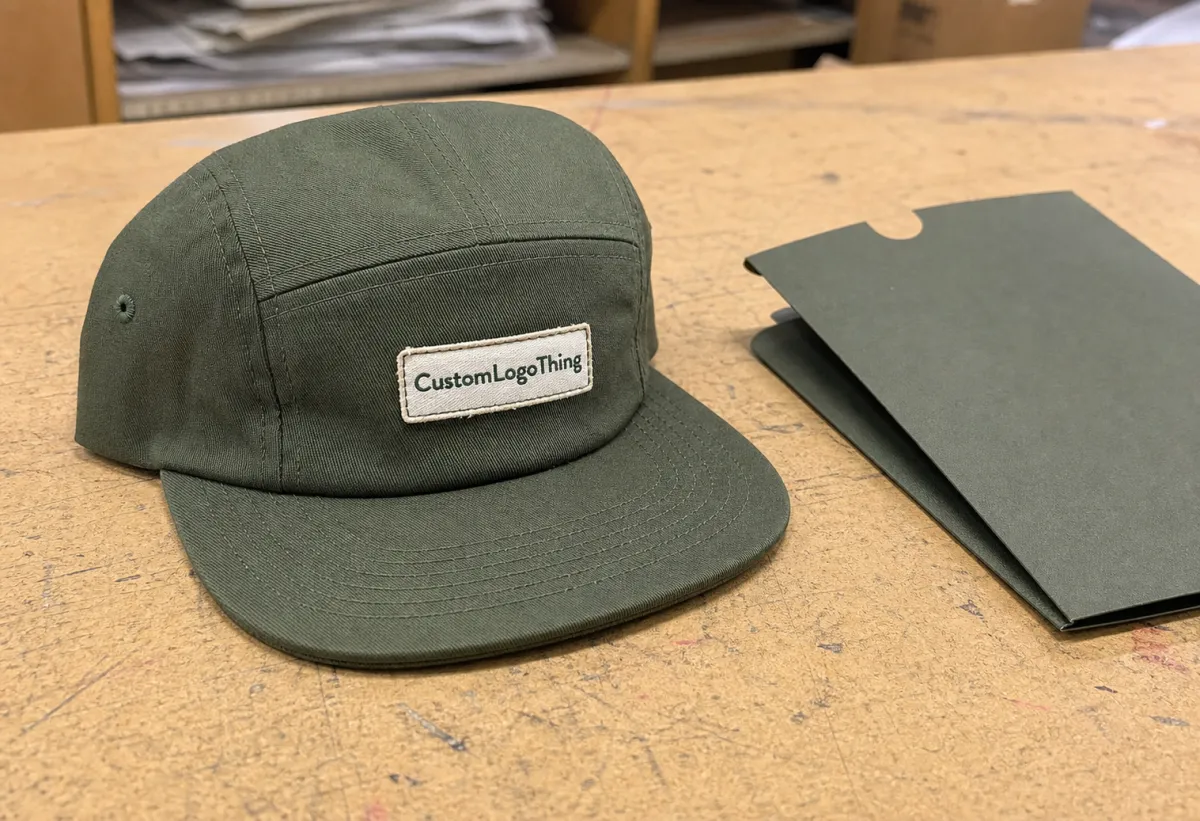
Heavier winter hats do more than look substantial. Extra yarn mass usually improves warmth retention, especially in wind, because the knit holds more body and creates a better barrier than a loose, light fabric. A lightweight beanie can still work, but it often spreads out after repeated wear and starts to look shapeless faster than buyers expect.
That is why thicker cuffed beanies keep getting picked for crews, resale programs, and outdoor promotions. They feel more dependable in the hand. That perception matters because the end user is not evaluating a spec sheet; they are putting on a hat before a shift or on a freezing sidewalk. If it feels thin, the rest of the order is already fighting uphill.
A winter hat gets judged in seconds. If it feels flimsy on day one, nobody believes it will survive the season.
There is also a fit advantage. A denser knit gives the hat more structure around the head and ears, which helps it stay put without constant readjustment. That matters for workwear and field use, where comfort is part of whether the item gets worn at all. A hat that rides up, twists, or loses its cuff shape ends up in a glove box instead of on a head. Great use of budget, that.
For buyers, the lesson is simple. This is not a giveaway item where the lowest price wins. A good winter program starts with a hat that feels appropriate for winter. That means paying attention to yarn weight, cuff stability, shape recovery, and the way the knit behaves after shipping and repeated wear.
What a heavyweight winter hats bulk order should include
Before anyone asks for pricing, the spec should be written in plain language. Start with the fiber blend, yarn thickness, cuff style, fit depth, and intended use. A hat for warehouse staff is not always built the same way as one for a retail display, and a run meant for event distribution may need a different balance between cost, warmth, and decoration area.
Decide whether the order needs a stock style or a custom build. A stock cuff beanie with decoration moves faster. A custom knit gives more control over the look, but it usually asks for tighter artwork control, more color approval, and longer production coordination. Neither route is “better” in the abstract. The right choice depends on the job.
Two hats can look similar in a product shot and feel completely different once they are on the head. Density, stretch, and recovery change how the hat performs after folding, shipping, and repeated wear. A sample or even a swatch is worth the time. Knit texture can change how a logo reads, and cuff height can change how balanced the whole piece looks.
A clean quote should include details that affect production and approval speed:
- Fiber blend and whether the hat needs a soft hand, stronger shape retention, or more warmth
- Color count and whether exact matching is required
- Decoration placement on cuff, body, or patch area
- Packaging format for retail, warehouse, or kitted distribution
- Fit notes if the order needs a deeper crown, a longer cuff, or a closer fit
That level of clarity protects both the budget and the schedule. A heavyweight winter hat order should not just be warm. It should be specified well enough that production can make the same decision on piece one and piece 5,000.
Knit density, cuff construction, and decoration limits
Once the spec is set, the next question is how the knit and decoration work together. A tighter knit density usually gives the hat more structure, which helps if the goal is a clean cuff or a more polished retail appearance. A deep cuff gives more room for decoration, but the cuff still has to sit flat enough that the logo does not warp when worn.
Heavier yarn changes the decoration conversation. Some methods perform best on a stable, fairly flat surface. Others can work on a more textured knit, but they may not be the best fit for tiny type or intricate linework. That is why decoration choice should follow the hat style, not the other way around.
Here is the practical tradeoff buyers usually face:
| Decoration option | Best use | Typical strengths | Watch-outs |
|---|---|---|---|
| Embroidery | Simple logos, bold shapes | Durable, familiar, good value | Very fine text can fill in on textured knit |
| Woven patch | Detailed art, sharper edges | Cleaner small elements, strong retail look | Needs a suitable patch size and placement |
| Woven label | Minimal branding, subtle identity | Low profile, tidy finish | Not ideal for large logos or long copy |
| Sewn-on emblem | Premium team programs | Distinct visual presence, good hand feel | Higher cost and more setup time |
Fit matters just as much as decoration. Crown depth, stretch range, and cuff height determine whether the beanie feels snug, loose, or awkward on the head. A shallow hat can photograph well and still disappoint in the field. A deeper, heavier knit usually performs better for winter wear because it stays put without feeling like a compression band for your forehead.
Decoration limits also show up in stitch count. A logo with too many tiny details can blur once it is stitched onto a thick surface. Bold art survives better. Clean edges survive better. Thin outlines and tiny words are the first things to get punished by yarn. That is not a design flaw; it is just how knitwear behaves.
If the program includes transit packaging or retail cartons, some buyers also check carton durability and pallet handling against recognized shipping tests such as ISTA standards. That is not necessary for every apparel order, but it becomes useful when hats are moving through multiple warehouses or packed into kits with other items.
Material blends and quality control checks
Material selection is where a lot of orders quietly go wrong. The fabric is not just about warmth. It affects feel, pilling, stretch, and the way the hat behaves after repeated wear. Acrylic is common because it is affordable, consistent, and easy to decorate. Polyester can improve durability and colorfastness. Wool blends add warmth and a more natural hand, but they can also bring itch, shrink risk, or care issues that buyers should not ignore.
For many heavyweight beanies, the sweet spot is a thick acrylic or acrylic/poly blend with a double-layer construction. That gives enough body for cold weather without pushing the price into premium territory. Recycled polyester can make sense for sustainability goals, but not every recycled yarn feels the same. Some are soft and smooth. Others are a little dry in the hand and need a sample check before a full order.
Quality control should be boring. That is a compliment. Good checks catch the stuff nobody wants to discover after shipment:
- Measurement tolerance on crown height, cuff depth, and overall width
- Stitch consistency so the knit does not thin out or bunch up in one area
- Seam strength at the crown and cuff transitions
- Decoration alignment so logos sit level and centered
- Color consistency across the batch, especially on repeat orders
- Pilling resistance after handling and sample wear
A decent production team should also check whether the cuff recovers after stretching. If the cuff flares out or waves after one wear, the hat will look older than it is. Another easy miss is hand feel. A heavy knit should feel substantial, not scratchy. Dense does not have to mean rough. If it does, the spec probably needs adjustment.
There is a useful production truth here: a heavier knit does not automatically mean a better winter hat. A loose, bulky knit can trap air, yes, but if it loses shape or sheds fibers, the value drops fast. Buyers should look for weight plus structure, not weight by itself. Otherwise they end up with a hat that looks expensive only from across the room.
Pricing, MOQ, and what drives unit cost
For a heavyweight winter Hats Bulk Order, unit cost usually comes down to quantity, yarn choice, decoration method, color count, and whether the build is stock or custom. A simple cuffed beanie with one-color embroidery will price differently than a custom knit with a woven label and special packaging. That sounds obvious. People still skip these details in the first quote request, then wonder why the number is fuzzy.
MOQ works the same way. Smaller runs are possible, but the per-piece cost often rises because setup, sampling, and decoration time get spread across fewer hats. Larger volume usually lowers the unit price and makes freight planning easier. The price curve is not random. It follows the amount of work needed to make the hat correctly.
For planning purposes, here is a practical market-style view of how options often stack up:
| Option | Typical MOQ | Indicative unit range | Best fit |
|---|---|---|---|
| Stock heavyweight cuff beanie, one-color embroidery | 100-250 pcs | $4.25-$7.50 | Fast team issue or event distribution |
| Stock heavyweight cuff beanie, woven patch | 250-500 pcs | $5.50-$9.25 | Retail-friendly branding and sharper detail |
| Custom knit heavyweight beanie | 500-1,000 pcs | $6.50-$12.00 | Higher control over pattern, color, and texture |
| Premium heavyweight hat with custom packaging | 250-1,000 pcs | $7.25-$14.00 | Retail or gift programs where presentation matters |
Those ranges are broad planning numbers, not promises. Final pricing changes with artwork complexity, stitch count, yarn choice, carton setup, labor, and shipping destination. Still, the table is useful because it shows where value usually starts to improve. If the goal is to save money without weakening the product, simplify the decoration, keep the color count tight, and stay close to a standard cuff and fit.
Packaging affects the quote too. Individual polybags, hang tags, belly bands, and retail inserts all add labor. Shipping also matters more than many buyers expect because a heavy beanie is still a bulky item once it is packed. If the order is going into store shelves, gift boxes, or kitted distributions, build that into the budget early instead of pretending it will sort itself out later. It will not.
The fastest way to get an accurate quote is to send the target quantity, hat color, logo file, decoration size, packaging needs, and delivery deadline in one message. That cuts out back-and-forth and gives the production team enough detail to price the real job, not a guess.
Process and lead time from proof to shipment
A clean order usually follows a clear path: Request a Quote, confirm the hat spec, approve artwork, review the pre-production proof, and then move into production. The jobs that go smoothly are the ones where each step is closed before the next one starts. Basic? Yes. Common? Not even close.
Artwork is often the first place schedules slip. If the file is low resolution, the logo needs redraw work, or the buyer is still deciding between two placements, the proof stage slows down. Color matching can add time too, especially if the logo must sit within an exact brand palette or the hat body needs a specific yarn shade. None of that is unusual. It just has to be planned for.
Heavy knit hats sometimes need more care during sampling and decoration setup because the fabric behaves differently than smooth woven material. A good production partner flags that early and suggests a decoration method that can actually hold the logo shape. That keeps the buyer from discovering a problem after the order is already moving.
Typical lead time depends on quantity and complexity, but many bulk programs fall into a window of roughly 12-20 business days after proof approval, with shipping added on top. Faster is possible on stock items with simple decoration. Custom knit programs usually need more runway, sometimes several weeks more if yarn development or color matching is involved. The safest habit is to lock the spec early and confirm the delivery window before production starts.
Quality control should happen before freight leaves the dock, not after someone opens the carton and starts sending photos. The final check should confirm count, decoration placement, color consistency, and obvious defects like loose threads, skewed cuffs, or patch misalignment. For orders that will be split into multiple destinations, carton labeling and pack counts deserve the same attention. That is where “small” mistakes become expensive.
If you want to Reduce Packaging Waste on the back end, ask whether the order can use minimal retail inserts or FSC-certified paper components. For buyers who care about material sourcing, FSC-certified paper can be a useful option for hang tags or insert cards without changing the hat itself.
How to match spec, decoration, and schedule to your order
The real value in a good supplier relationship is not just getting a quote back. It is having someone translate the use case into a product that makes sense. A winter hat for a field crew may need a deeper cuff and a tougher decoration choice than a hat designed for a merch table. That sounds like a minor distinction. It is not. It changes how the hat wears, how long the logo stays readable, and whether the order gets used or ignored.
Common mistakes are predictable. Buyers choose a logo treatment that fights the knit surface. They order a shallow beanie for an audience that wants full winter coverage. They approve a decoration method before checking whether the brand colors still read clearly after stitch compression or patch edging. None of those mistakes are dramatic. They are just expensive in a boring, irritating way.
Good order review should answer three questions together:
- Does the hat style match the end use?
- Does the decoration method support the artwork?
- Does the schedule fit the deadline without compression?
That kind of review is practical, not flashy. It reduces surprises during production, protects the budget, and gives the buyer a result that looks deliberate. If the order will be repeated, save the approved art, note the final hat spec, and keep the decoration method consistent so the next run starts from a clean baseline. Reorders get messy fast when nobody remembers which version was actually approved.
The best programs also leave room for reality. If the event date is fixed and the artwork is still changing, the hats need to be simplified. If the design is non-negotiable, the timeline needs to stretch. If the budget is fixed, packaging and decoration should be trimmed before the yarn quality gets cut. That order of priorities is usually what separates a decent run from a frustrating one.
For many buyers, the shift is simple: do not buy the cheapest knit hat available. Buy the hat that will be worn, seen, and remembered for the right reasons. Cheap is fine only until the first cold morning exposes the problem.
Next steps for a clean quote and a smoother reorder
Before requesting pricing, gather four things: target quantity, desired hat color, logo file, and required delivery date. With those in hand, the quote becomes much more precise and the back-and-forth drops fast. If you can also tell the supplier whether the order is for crew use, retail, or event distribution, the recommendation usually gets better right away.
It also helps to decide early whether you need sample approval, color matching, or packaging details. A lot of delays come from treating those items as afterthoughts, then realizing they affect the quote, the schedule, or both. If the order will be repeated, keep one clean reference file, note the approved decoration method, and record the finished hat spec so the next run starts from a solid baseline.
That is the practical path to a better heavyweight winter hats bulk order: define the use, choose the right knit, approve the decoration with care, and give production a realistic timeline. The fewer assumptions you make, the fewer unpleasant surprises show up in the cartons.
What makes heavyweight winter hats different in a bulk order?
Heavier hats usually use denser knit structure and more substantial yarn, which gives them a warmer feel and a more durable hand. They also hold cuff shape better, which matters when the logo needs a stable decoration area. For bulk buyers, the big difference is performance: the hat is built for repeated cold-weather wear, not short-term giveaway use.
What MOQ should I expect for a heavyweight winter hats bulk order?
MOQ depends on the hat construction, decoration method, and whether the spec is stock or fully custom. Smaller runs are possible in some cases, but unit cost usually improves as quantity goes up. If you are comparing options, ask for pricing at two or three volume breaks so you can see where the best value starts.
Which decoration method works best on heavyweight winter hats?
Embroidery is common when the logo has clean shapes and needs a durable finish. Woven patches or labels can work better for detailed artwork, especially when the knit surface is textured. The best method depends on logo size, color count, cuff height, and how flat the chosen hat sits once worn.
What material blend is usually safest for a bulk winter hat order?
A thick acrylic or acrylic/poly blend is a common starting point because it balances cost, warmth, and consistency. Wool blends can feel better in some cases, but they need more care with comfort and care instructions. Recycled yarns are useful too, though the hand feel and finish should be checked with a sample before committing to volume.
How long does production usually take after artwork approval?
Lead time depends on quantity, decoration complexity, and whether any custom color matching is required. Many stock programs land in a 12-20 business day range after proof approval, plus shipping. Custom knit orders usually need more time, so the safest move is to confirm the delivery window before production starts.
What should I send for the fastest quote on a bulk hat order?
Send the target quantity, preferred hat color, logo file, and needed delivery date. If possible, add notes about the end use, such as crew wear, retail resale, or promotional distribution. The more complete the spec, the faster it is to quote accurately and avoid back-and-forth changes.

