Buyer Fit Snapshot
| Best fit | branded carton seals with logo for packaging buyers comparing material specs, print proof, MOQ, unit cost, freight, and repeat-order risk where brand print, material, artwork control, and repeat-order consistency matter. |
|---|---|
| Quote inputs | Share finished size, material target, print colors, finish, packing count, annual reorder estimate, and delivery region. |
| Proofing check | Approve dieline scale, logo placement, barcode or warning zones, color tolerance, and any recyclable or compostable wording before bulk production. |
| Main risk | Vague material claims, crowded artwork, or missing packing details can create delays even when the unit price looks attractive. |
Fast answer: Branded Carton Seals with Logo: What They Are and Why should be specified like a repeatable production item. The safest quote includes material, print method, finish, artwork proof, carton packing, and reorder notes in one written spec.
What to confirm before approving the packaging proof
Check the product dimensions against the actual filled item, not only the sales mockup. Ask for tolerance on folds, seals, hang holes, label areas, and retail display edges. If the package carries a logo, QR code, warning copy, or legal claim, reserve that space before decorative graphics fill the panel.
How to compare quotes without losing quality
Compare board or film grade, print process, finish, sampling route, tooling charges, carton quantity, and freight assumptions side by side. A lower quote is only useful if the supplier can repeat the same color, closure quality, and packing count on the next order.
Branded Carton Seals with logo are the kind of packaging detail people overlook right up until they handle one. A plain corrugated box can feel fully considered the moment a seal crosses the flap, and that small move changes the tone of the whole shipment. Ecommerce parcels, retail cartons, and subscription packs all benefit from that shift because the box stops reading like generic freight and starts reading like part of the brand.
Branded carton seals with logo do more than decorate a closure. They help keep a carton shut, give the customer a visible tamper cue, and turn an ordinary shipper into something people remember a little longer. For a packaging buyer, that is useful because the value shows up in more than one place. The seal works while the carton ships, while it sits on a desk or shelf, and again when somebody opens it and notices the mark right where the hand lands.
If you are comparing options for custom packaging, the clearest way to judge branded carton seals with logo is to separate appearance, function, and production reality. That keeps the common mistake from creeping in: treating a seal like a sticker and expecting it to do every job in the system. It will not. Built with the right spec, though, it can add a lot of value for a modest spend. For a sense of how small packaging touches shape presentation in actual projects, the Case Studies page is a useful place to start.
"Put the logo where the hand opens the box. That is where people notice it."
Why Branded Carton Seals with Logo Punch Above Their Weight
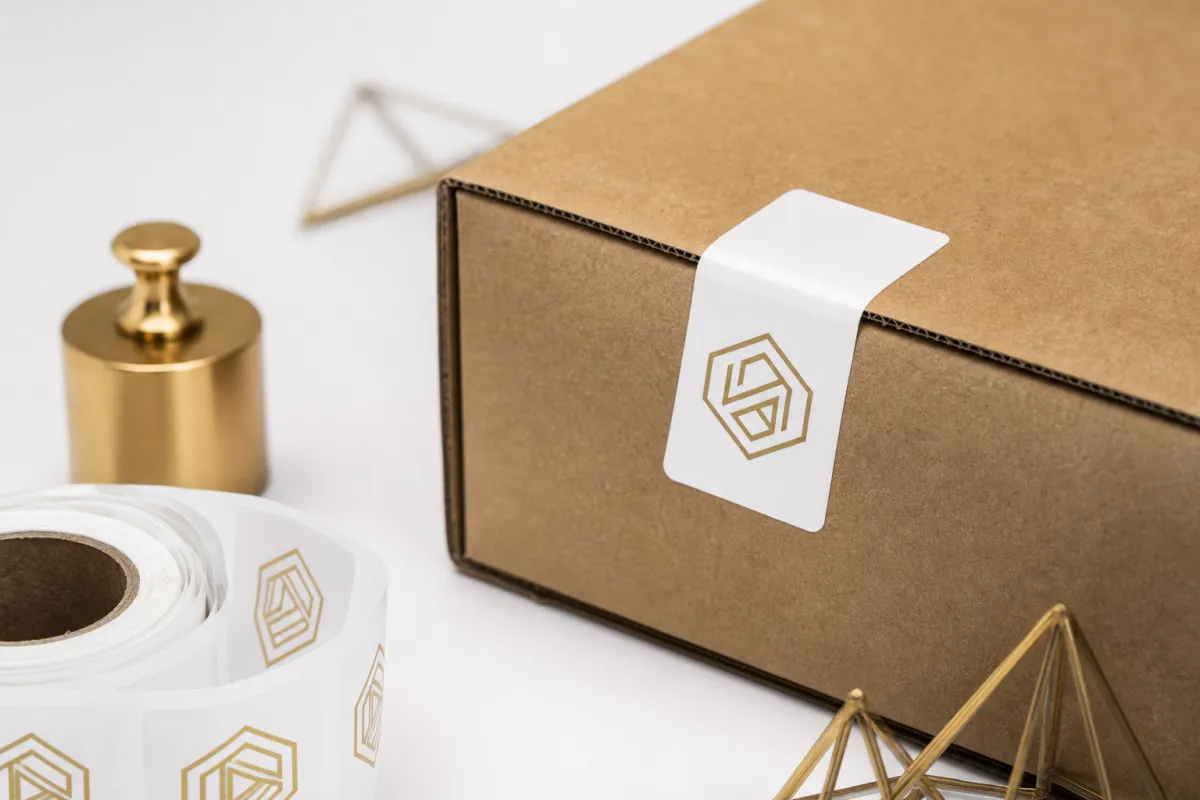
Branded carton seals with logo punch above their weight because they change the box without asking for a full packaging redesign. Buyers miss that advantage more often than they should. A seal set across the closure flap turns a plain shipper into something that looks planned, not accidental, and that effect comes from a very small surface area.
People see the seal at the exact moment they open the package, which gives the logo a natural place in the unboxing sequence. That position matters. A mark that lands on the flap is seen up close, and if the carton gets photographed, stacked, carried into a meeting, or passed around a warehouse bench, the branding stays in sight long enough to register. Small touch, long tail.
There is a practical side too. Branded carton seals with logo can create a basic tamper signal because opening the flap usually disturbs the seal. That is not the same thing as high-security packaging, and anyone pretending otherwise is overselling it. Still, for ecommerce shipping, retail cartons, product kits, and subscription boxes, that visible cue can reduce the uneasy moment where a customer wonders whether the box has already been opened.
In press checks and pack-out reviews, I have seen one clean seal do more for perceived quality than a louder box print that cost three times as much. That surprises people the first time, then it makes perfect sense. The closure is where the hand lands. That is the moment that sticks.
The strongest use cases tend to be the ones already built around repeated handling:
- Ecommerce shipping where a polished closure helps the box feel less generic.
- Retail cartons where the outer shipper participates in the brand experience.
- Subscription boxes where presentation matters almost as much as the product inside.
- Product kits and sample packs that need a neat, repeatable closure.
- B2B fulfillment where internal teams want quick visual confirmation of a closed carton.
Most brands understand the value of branded carton seals with logo the instant they compare an untouched flap with a cleanly sealed one. The box looks finished. That is the whole trick, and it is a better trick than people usually give it credit for. If the carton already ships well, the seal can be the small detail that moves it from plain utility to intentional presentation without stretching the packaging budget.
What it should not become is brand theater. A seal is one piece of a packaging system, not a substitute for clear graphics, correct sizing, sturdy board, or thoughtful fulfillment. The best results come from using branded carton seals with logo to support the rest of the pack instead of trying to carry the whole load alone.
How Branded Carton Seals with Logo Work on a Carton
Branded carton seals with logo are usually pressure-sensitive closures built from four basic parts: a face stock, an adhesive layer, a liner, and the printed design. The seal sits across a fold, flap intersection, or closure point so it bridges two surfaces and visually locks the carton shut. On corrugated board, that placement matters more than many buyers expect. Too short and the seal looks like an afterthought. Too long and it can wrinkle at the edge or get damaged during transit.
Application method changes the buying decision more than the sample sheet suggests. Hand application is the lowest-cost place to begin and works well for small runs, seasonal launches, or low-volume fulfillment. Semi-automated application fits teams that seal enough cartons each day to justify a bench applicator or label dispenser. High-speed labeling belongs in repeat production, not one-off experiments. The seal may be small, but the workflow around it is not.
Branded carton seals with logo often get confused with security labels, and that confusion leads to poor specifications. A true tamper-evident seal should show visible disturbance after opening. A decorative closure label may look branded but offer little evidence of opening. Tape is another category altogether; it is usually chosen for closure strength first and branding second. Those are different tools, and mixing them up usually ends in disappointment.
Here is the plain version: some branded carton seals with logo are mostly decorative, and that is fine if the buyer understands the role. Others help with opening cues, especially on cartons that will be inspected or reclosed. For high-value shipments, controlled environments, or packages that make claims about protection, the seal should be specified like a real packaging component rather than a cosmetic flourish.
For broader packaging context, the Packaging Industry Association resources at packaging.org are helpful for terminology and package design background, while ISTA test methods are worth reviewing if your cartons will face drop, vibration, or compression in parcel networks. A seal that looks perfect on a desk can behave very differently once it moves through an actual shipping lane.
One detail many buyers miss: branded carton seals with logo need to suit the carton surface. Gloss-coated board, recycled kraft, and rough corrugated stock all react differently to the same adhesive. The seal is only as good as the surface it has to grip.
Choosing Materials, Adhesives, and Finishes
Branded carton seals with logo work best when the material matches the carton, not just the mood board. Paper remains the most common choice because it prints cleanly, keeps costs in check, and handles standard artwork well. Kraft stocks suit natural-looking or recycled packaging. Film materials hold up better against scuffing, moisture, and rough handling. Specialty stocks can look premium, although they should earn that cost through real performance. A fancy face stock with the wrong adhesive is just a quick way to watch edges lift.
Adhesive choice is where practical packaging knowledge pays off. Permanent adhesive is the safest default for most shipping cartons. Removable adhesive makes sense only when the seal is meant to come off cleanly, which is not the norm for carton closures. High-tack adhesive helps on recycled board, textured kraft, and dusty surfaces. Freezer-safe or cold-chain adhesive belongs in a separate category and should be specified only if the cartons actually need cold storage or chilled transit. That sounds simple, yet the wrong glue still gets ordered all the time, and the failure usually shows up later in the field.
Finish affects both brand feel and readability. Matte is easy to read and usually behaves well under warehouse lighting. Gloss can make colors feel richer, though it can show scuffs sooner. Soft-touch feels premium, but it adds cost and can be less forgiving on small graphics. Foil can create a strong brand cue, provided the logo is large enough to survive production and application. Spot varnish can help one element stand out, yet it rarely earns its place unless the seal is large enough to justify the extra step.
Practical design limits matter more than people expect. The logo needs safe margins away from fold lines and tear points. Thin type can vanish once the seal wraps across a flap edge. Barcodes are usually a poor fit for a small seal unless placement is tightly controlled, since curved application and surface texture can reduce scan reliability. If the layout includes more than a logo and one short line of copy, ask whether the extra text is actually helping. Often it just competes for space.
On the spec side, a typical paper carton seal might use a 70-100 gsm face stock on a release liner, while a heavier kraft version might sit in the 80-120 gsm range depending on finish and print method. Film can run thinner on paper weight but stronger on abrasion resistance. For many branded carton seals with logo jobs, a simple one- or two-color print on paper is enough. The product feels intentional, and the order stays practical.
If the packaging program is aimed at recycled or FSC-certified paper, that can be a helpful filter too. It will not rescue a weak carton, but it can support a cleaner materials story. The adhesive still needs to suit the board, though. Sustainability claims are useful. A seal that falls off during transit is not.
One simple rule helps here: if the box finish is rough and the seal is small, prioritize adhesion and readability over luxury effects. If the box finish is smooth and the seal sits inside a premium unboxing sequence, finish choices can do more work. Branded carton seals with logo should feel matched to the carton, not pasted on as a late correction.
Branded Carton Seals with Logo: Cost, Pricing, and MOQ Drivers
Branded carton seals with logo are priced the same way most custom packaging parts are priced: size, shape, print colors, material, adhesive, finish, and quantity all move the number around. The part that surprises buyers is how quickly the unit price can drop once the run is large enough to spread setup costs. Small batches can feel expensive, while moderate runs suddenly make more sense.
| Option | Best For | Typical Unit Price at 5,000 | Notes |
|---|---|---|---|
| Paper seal | Standard ecommerce cartons and general shipping | $0.06-$0.12 | Good print quality, lower scuff resistance, simple to reorder |
| Kraft seal | Natural, recycled-looking boxes | $0.07-$0.14 | Earthier appearance, works well on brown corrugated stock |
| Film seal | Abrasion-heavy or moisture-prone handling | $0.09-$0.18 | Better durability, usually a more polished surface |
| Foil or soft-touch finish | Premium presentation and high-visibility branding | $0.15-$0.30 | Higher setup cost, more sensitive to timing and proof approvals |
Those numbers are not a promise. They are the kind of range a buyer can use to make sense of quotes. At 500 pieces, the same branded carton seals with logo might cost two to four times more per unit because setup is being divided across a tiny run. At 10,000 pieces, the unit price may fall sharply, but only if the design stays simple enough to keep production efficient.
Setup costs are the part many buyers forget to budget for. Custom die-cutting can add anywhere from $75 to $200 depending on complexity. Proofing may be bundled or billed separately. Rush production and split shipments add more. Roll format can also change the economics, especially if the applicator or fulfillment line needs a certain core size or unwind direction. None of that is exotic. It is just the quiet math behind packaging.
The lowest-priced branded carton seals with logo are not always the best value. A simple one-color seal on paper may outperform a foil version if the box gets handled hard and the logo needs to stay legible. On the other hand, if the seal is one of the first branded touchpoints in a premium kit, paying a little more for a cleaner finish can make sense. The right spend is the one that matches the carton’s actual job.
There are also hidden costs that catch people who did not ask the right questions early: artwork cleanup, blade or die adjustments, extra proof rounds, freight on short timelines, and special packaging for roll or sheet delivery. If a supplier says a job is cheap but cannot explain the setup, caution is wise. Cheap usually means somebody is paying for the mistake later.
Here is the practical approach. Keep the design simple if the quantity is low. Skip specialty finishes if the carton sits inside another branded box and never gets much visual attention. Save premium finishes for cartons that ship directly to customers or sit on a retail shelf. Branded carton seals with logo should earn their cost, not just make the quote feel busy.
Branded Carton Seals with Logo: Step-by-Step Production and Timeline
Branded carton seals with logo move faster when the brief is clear. The first thing any supplier needs is the carton size, the seal placement, the artwork file, and the finish target. Without those four pieces, the project starts wandering. A clean brief usually prevents two or three pointless revision cycles before production even begins.
- Brief and dimensions - Confirm the flap width, closure overlap, and where the seal needs to sit.
- Artwork cleanup - Make sure the logo is vector-ready, with fonts outlined and colors defined.
- Dieline confirmation - Check the exact cut shape so the seal bridges the box correctly.
- Proof approval - Review placement, color, and copy before anything goes to press.
- Press setup and printing - Plates, cutters, and material preparation happen here.
- Finishing and shipping - The seals are cut, packed, and sent in the format the line can handle.
For standard branded carton seals with logo, a realistic timeline is often 5-10 business days after proof approval if the artwork is ready, the material is stock-friendly, and there is no complex finish involved. Custom die-cut jobs, foil, or cold-resistant adhesive can push that to 10-15 business days or more, especially if proof changes arrive late. The artwork stage can move faster than people expect, but only when the files are usable from the start.
The common delays are boring, which is exactly why they create problems. Missing vector files. A seal size guessed instead of measured. A logo that looks clean on screen but falls apart at print scale. Proof revisions that land after the production slot has already been booked. Those are the things that turn a tidy project into a rushed one.
If the cartons are going into a shipping test or a heavier distribution lane, make time for validation as well. A quick bench test on real carton stock can save a lot of trouble. If you need a formal reference point, ISTA-style thinking is useful because it forces the team to ask what happens under vibration, impact, stacking, and temperature swings rather than only how the seal looks in a sample photo.
Branded carton seals with logo also benefit from reorder discipline. Keep the approved dimensions, the exact material callout, and the finish on file. That way the next run does not start from zero because someone changed the box or misplaced the old spec sheet. A seal is a small part. It still deserves to be treated like part of the system.
Common Mistakes That Make Carton Seals Look Cheap
Branded carton seals with logo look cheap for a few predictable reasons, and nearly all of them can be prevented. The worst one is design overload. Tiny logos, thin type, too much text, and a cramped layout all get worse once the seal is applied to a folded carton. What looked crisp on a computer screen turns muddy on an actual flap.
Another common problem is poor adhesive choice. If the carton surface is dusty, rough, recycled, or cold, the wrong adhesive can cause lifting, edge curl, or residue. That is not only a cosmetic issue. It makes the seal feel flimsy, and customers notice flimsy much faster than they notice polish. Branded carton seals with logo should look planted, not half-peeled.
The third mistake is treating the seal like a leftover sticker. That is how you end up with a design that does not fit the box graphics, the box finish, or the brand tone. A seal should feel like a deliberate part of the packaging system. If the carton is minimal and matte, the seal should probably be minimal and matte. If the box is bright and glossy, the seal can carry a bit more energy. Random choices drag the whole package down.
There is another production error that gets ignored too often: skipping a real carton test before approving the full run. That means the actual board, not a spare sheet. Apply the seal to the finished carton, fold it, tape it, stack it, and handle it. That quick test shows whether the seal rides over the crease cleanly, whether the edges lift, and whether the logo stays readable after application.
- Too-small artwork makes the seal disappear at arm's length.
- Wrong adhesive causes lifting on recycled or textured board.
- Poor placement leaves the seal fighting fold lines and cuts.
- Overstuffed copy turns a branding touch into clutter.
One more thing: branded carton seals with logo are not tape, and they should not pretend to be. If the carton needs structural hold for heavier loads, use packaging tape or a proper closure system first. Then use the seal for presentation. That two-part approach is common for a reason. It works.
From a packaging buyer’s point of view, the carton is doing a job in the real world. It gets stacked, dragged, scanned, loaded, and opened by human hands that do not care about the mockup. The seal has to survive that. Otherwise it is just expensive decoration with a shipping label nearby.
"The most expensive seal is the one that fails on the first shipping lane and has to be replaced."
Expert Tips for Carton Seals That Actually Work
Branded carton seals with logo perform best when the layout stays simple and the hierarchy is obvious. Logo first. One short message second, if you need one. Everything else is optional. If the seal needs a QR code, barcode, or legal copy, pause and ask whether that content belongs on the carton itself instead. Small formats are unforgiving. They punish clutter.
Size should follow flap width and handling conditions. A wider seal gives more visibility, but only if it does not cover folds or create an awkward overhang. In practice, a seal in the 1.5 x 4 inch to 2 x 6 inch range covers many common carton closures, while larger cartons may justify something closer to 2.5 x 8 inches. Measure the actual box. Do not guess. Guessing is how people end up with the wrong die line and a week of pretend confidence.
Match the finish to the carton so the branding feels considered. A matte kraft box usually benefits from a seal that feels grounded and clean. A glossy white mailer can support a brighter, sharper finish. Premium cartons can carry soft-touch or foil if the logo is large enough to survive the treatment. If the box finish and the seal fight each other, the package ends up looking patched together.
Test one short run before committing to a larger reorder. That advice sounds plain because it is. It also saves money. Check the seal on real cartons, in real light, with real hands. Confirm that the adhesive holds, the logo reads from arm’s length, and the application speed matches the fulfillment line. The quickest way to improve branded carton seals with logo is to stop approving them from a screen alone.
Once the spec works, lock it down. Keep the carton dimensions, adhesive type, finish, and artwork version in one place. That makes reorders much less painful. It also helps the seal stay consistent across batches, which matters more than many teams admit. Customers may not describe the difference in technical terms, but they absolutely notice when a pack looks slightly off.
If you are choosing between options, use this order of priorities: fit, adhesion, readability, then finish. That sequence keeps branded carton seals with logo practical instead of decorative. It is the same kind of thinking that separates packaging that ships well from packaging that only photographs well.
If you want more proof that the quiet details matter, the best examples are usually not the loudest ones. They are the cartons where the seal feels obvious the second the box is lifted. That is the target. Not flashy. Just right.
For a brand like a smaller direct-to-consumer seller or an established fulfillment program, that usually means a cleaner brief, a sensible material choice, and one test run before the full order. Small detail. Big payoff.
FAQ
What are branded carton seals with logo used for?
They close cartons while putting the logo in a visible place on the package. They help with unboxing appeal, brand recall, and basic tamper evidence. They are common on ecommerce boxes, retail shipper cartons, and product kits.
Are branded carton seals with logo better than tape?
They are better for branding because the logo is visible and deliberate, not buried in plain packing tape. Tape can be stronger for heavy closures, so the better choice depends on box weight and handling conditions. Many brands use both: tape for structure and a seal for presentation.
How much do branded carton seals with logo cost?
Price depends mostly on size, quantity, material, print complexity, and finish. Small custom runs cost more per piece because setup is spread across fewer units. Simple shapes and one or two colors usually keep pricing lower than foil or specialty finishes.
How long does it take to produce branded carton seals with logo?
Standard jobs usually move faster than custom die-cut or specialty-finish orders. The biggest time sinks are artwork corrections, proof approvals, and production queue delays. If you need them on a deadline, confirm carton size, artwork, and finish before asking for a firm timeline.
What size should branded carton seals with logo be?
The size should fit the flap width and leave enough room for the logo to stay readable after application. A larger seal improves visibility, but it can look awkward if it covers fold lines or overlaps labels. Test on the actual carton before finalizing the die line.
Branded carton seals with logo work best when the spec is practical: the right carton, the right adhesive, the right finish, and a size that survives real handling. Do that, and the seal stops being a minor extra and starts doing real packaging work. That is why branded carton seals with logo keep showing up in smart packaging programs, and why they are usually worth the spend when the details are done right. The takeaway is simple: match the seal to the carton’s real life, not the mockup, and the result will feel intentional every time someone lifts the box.


