Buyer Fit Snapshot
| Best fit | Branded Carton Wraps with Logo projects where brand print, material claims, artwork control, MOQ, and repeat-order consistency need to be specified before quoting. |
|---|---|
| Quote inputs | Share finished size, material target, print colors, finish, packing count, annual reorder estimate, ship-to region, and any compliance wording. |
| Proofing check | Approve dieline scale, logo placement, barcode or warning zones, color tolerance, closure strength, and carton packing before bulk production. |
| Main risk | Vague material claims, crowded artwork, missing packing details, or unclear freight terms can make a low unit price expensive after revisions. |
Fast answer: Branded Carton Wraps with Logo: Design, Cost, and Process should be specified like a repeatable production item. The safest quote records material, print method, finish, artwork proof, packing count, and reorder notes in one written spec.
Production checks before approval
Compare the actual filled-product size with the drawing, then confirm tolerance on folds, seals, hang holes, label areas, and retail display edges. Reserve space for logos, QR codes, warning copy, and material claims before decorative graphics fill the panel.
Quote comparison points
Review material grade, print process, finish, sampling route, tooling charges, carton quantity, and freight assumptions side by side. A quote is only useful when the supplier can repeat the same color, closure quality, and packing count on the next order.
A plain shipper can look like a premium retail box in seconds once branded carton wraps with logo are applied. That shift is usually the difference between packaging that disappears in transit and packaging that keeps carrying the brand on the shelf, in the unboxing video, and on the pack line. The carton structure can stay simple. The wrap does the heavy lifting. It gives the box a cleaner face, a stronger first impression, and a way to introduce the product before anyone opens it.
That is why these wraps show up everywhere: e-commerce mailers, subscription boxes, folding cartons, display shippers, and seasonal programs. You are not rebuilding the whole package every time the campaign changes. You are layering print onto an existing carton, which usually means faster updates and a lower barrier to entry than a full structural redesign. For brands comparing options, the real question is rarely whether branding matters. The question is which wrap format fits the box, the budget, and the abuse the package will take on the way out the door.
If you want a sense of how those choices play out in actual packaging programs, our Case Studies are a useful place to start before you request pricing or lock artwork.
A good carton wrap has to do two jobs at once: hold the brand together from a distance and still behave like a production part when it reaches the pack line.
What Are Branded Carton Wraps with Logo?
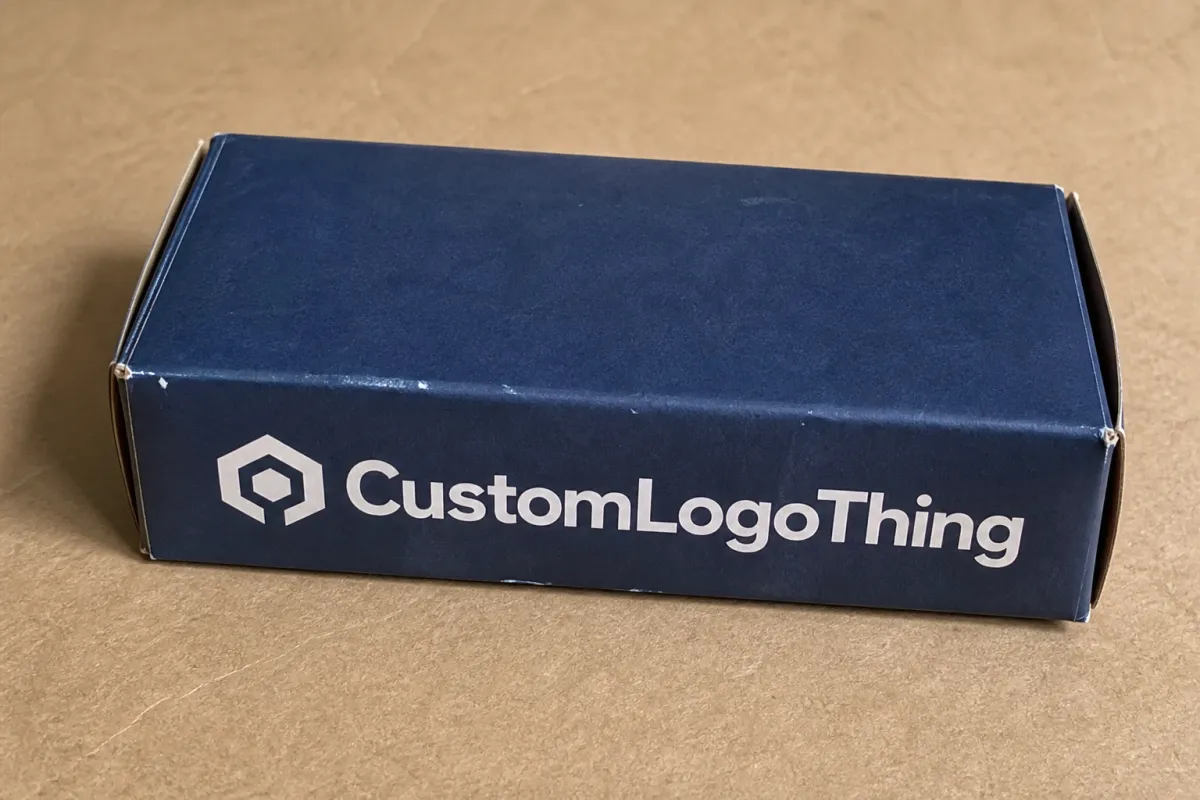
At the simplest level, branded carton wraps with logo are printed outer layers that sit on top of an existing carton instead of replacing it. People also call them sleeves, overlays, labels, belly bands, or decorative wraps, depending on how they are built and how they are applied. The material can be paperboard, pressure-sensitive stock, or a lightweight corrugated piece. The job stays the same: turn a plain carton into something that looks deliberate and brand-led.
These wraps often appear on e-commerce mailers that need more presence after delivery, on subscription boxes where the repeated unboxing moment matters, and on display shippers that move from warehouse to retail floor. Seasonal packaging is another obvious use case because a wrap can change with a campaign without forcing a full carton reprint or a new box tool. That makes the format appealing for launches, regional versions, retailer-specific packs, and test runs that do not justify permanent packaging changes.
The branding value is direct. A wrap can make a logo visible from a few feet away, create a clearer hierarchy for the product name, and make the carton feel more intentional. It also gives design teams room to refresh graphics more often than they can with the base carton. Instead of changing the box every time marketing wants a new angle, the structure can stay put while the printed layer shifts around it. That helps inventory planning and cuts down on obsolete stock.
For packaging buyers, that flexibility is the point. A wrap can carry the logo, product messaging, color system, barcode area, and compliance copy while the base carton keeps doing its actual job: protecting the product and surviving distribution. No drama. Just a smarter division of labor.
The key decision is whether the wrap should feel decorative, functional, or both. A high-end gift program may need a heavy paperboard sleeve with a soft-touch coating. A fast-turn e-commerce job may only need a clean printed band with solid registration and an ink system that resists scuffing. Either way, the wrap is doing real work. It is not window dressing.
How Branded Carton Wraps Work in Production
The production flow usually starts with the carton dimensions, a short brief, and artwork built around a specific dieline. Standard cartons sometimes come with a supplier template already in hand. Custom shippers and display packs usually need the wrap designed around the final outside dimensions, seam locations, and fold direction. That is where prepress earns its keep. A wrap can look perfect on screen and still miss in a way you can see from across the room if the carton measurements are sloppy.
Once the dieline is set, the artwork moves through proofing, print production, cutting or slitting, scoring if needed, and then finishing. Depending on the format, the wrap may ship flat for manual application or arrive in a form that can be placed by machine. For hand-applied programs, a clean fold and easy registration matter just as much as the printed graphics. For line-applied work, the wrap needs to feed predictably, hold its shape, and stay inside the tolerances of the equipment doing the work.
There are a few common construction types:
- Paperboard wraps for a more premium, structural look with crisp print quality.
- Pressure-sensitive labels for smaller wraps, short runs, or jobs that need quick application.
- Slip-on sleeves that slide over the carton and are often used for display or gift packaging.
- Adhesive-backed overlays that bond to the carton surface and can work well for flat-panel branding.
Each format has its own balance of cost, appearance, and handling speed. A pressure-sensitive label may be the right move when flexibility and smaller minimums matter most. A paperboard sleeve usually gives a more elevated tactile feel, though it may come with a higher setup cost. A slip-on sleeve works well when the front face needs to stand out and the graphics need a quick refresh for seasonal programs. Adhesive-backed overlays fit nicely when the carton face is large, smooth, and easy to place by hand or by simple automation.
The logo is usually only one piece of the system. A stronger wrap design places the logo alongside supporting graphics, product naming, color blocking, and any required barcode or compliance areas. Hierarchy is everything here. If every panel tries to shout, nothing reads clearly. Good packaging design gives the logo space, then lets the product information and campaign copy support it instead of fighting it.
Finishing changes the result more than a lot of teams expect. Matte coatings soften the look and cut glare under retail lights. Gloss can sharpen color and make imagery feel more energetic. Soft-touch film or coating adds a tactile note that usually reads as premium, though it can raise cost and show wear differently depending on handling. Aqueous coating is often the practical middle ground for paper-based wraps, especially when scuff resistance and press efficiency matter. Uncoated natural stock fits brands that want a restrained, earthy presentation and can live with a less saturated palette.
For teams that care about responsible sourcing, paper-based wraps can sometimes be specified with FSC-certified stock depending on the supplier's chain of custody. If that matters to your procurement standards or brand rules, ask early. Chasing it later is a waste of time. You can review the certification framework at FSC before you finalize your stock choice.
What Affects Cost, Pricing, and MOQ?
Cost for branded carton wraps with logo comes down to a handful of variables, and they stack fast. The biggest ones are wrap size, quantity, material thickness, ink coverage, number of colors, print method, and whether the design needs custom cutting or specialty finishing. A simple one-color label wrap on a standard carton can be inexpensive at scale. A full-coverage sleeve with die cutting, coating, and multiple graphics panels lands in a very different price range.
MOQ, or minimum order quantity, usually follows the print method and setup method more than the design itself. Digital printing tends to work well for smaller batches because setup is lighter and variable data is easier to handle. Flexographic and offset setups usually favor larger volumes because the press setup and finishing steps make more sense when spread across more units. That does not make short runs impossible with traditional print. It just changes the math.
Here is a practical way to compare common options:
| Wrap Type | Typical Use | Typical MOQ | Approx. Unit Cost Range | Notes |
|---|---|---|---|---|
| Pressure-sensitive label wrap | Short-run branding, SKU changes, fast application | 500-5,000 units | $0.08-$0.30 | Works well for smaller runs and simpler graphics, especially when the application step has to stay quick. |
| Digital printed paperboard sleeve | Subscription boxes, launches, seasonal programs | 250-2,000 units | $0.35-$1.10 | Useful for low-volume work and variable artwork, though unit cost can be higher than larger offset runs. |
| Offset printed paperboard wrap | Retail cartons, premium presentation, larger campaigns | 5,000-25,000+ units | $0.12-$0.45 | Often cost-efficient at volume and capable of very consistent color, but setup needs more planning. |
| Slip-on sleeve with coating | Display packaging, gift sets, brand refreshes | 1,000-10,000 units | $0.20-$0.60 | Balances structure and display impact, often with a stronger shelf presence than a simple label. |
| Adhesive-backed overlay | Flat-panel branding, carton identification, co-pack operations | 1,000-10,000 units | $0.10-$0.35 | Can be efficient if the carton face is predictable and the layout stays simple. |
Those numbers are directional, not a quote. Real pricing depends on the exact dimensions, artwork coverage, finish, shipping destination, and whether the supplier is building in sampling or assembly labor. A wrap with heavy ink coverage, tight registration, or a specialty laminate can cost more even if the material itself is ordinary. A job with straightforward print but awkward hand assembly can end up more expensive than expected because labor eats into the margin.
When you compare quotes, check what is included. Some suppliers price only the printed wrap. Others include prepress, proofing, tooling, sampling, freight, and even kitting or carton application. That can make two quotes look far apart when they are actually closer than they seem. A clean comparison asks for the same assumptions across every quote:
- Prepress and artwork correction
- Proofs, both digital and physical if needed
- Tooling or dies for custom cuts
- Sampling and carton fit checks
- Freight to your site or co-packer
- Assembly labor if the wrap is applied before shipping
There are also situations where a slightly higher unit cost saves money overall. If a branded wrap replaces a separate label, eliminates an insert card, or reduces the number of stock-keeping units, the simplified operation may be worth more than the raw print price. I see this a lot with seasonal programs. One strong wrap can do the work of three smaller components, and the packaging line gets easier to manage because there is less inventory to track.
If you are comparing options for your own packaging line, a few minutes with the right spec sheet can save days of back-and-forth. A good starting point is to review real packaging layouts in the Case Studies and notice how much of the design is structure, how much is print, and how much is disciplined information hierarchy.
Production Process and Timeline: What to Expect
Most projects follow a similar path, although the order can shift depending on how custom the carton is and whether the wrap will be applied by hand or on a line. The early stage is usually a discovery brief: dimensions, carton style, quantity, shipping expectations, brand goals, and any print or compliance requirements. From there, artwork is prepared against a dieline, and the supplier creates a proof for review.
- Discovery brief with carton dimensions, use case, and quantity.
- Artwork prep using the approved dieline and brand files.
- Proof approval for layout, copy, and color intent.
- Sample review when fit, finish, or application needs to be checked in hand.
- Print production with the selected method and substrate.
- Finishing such as cutting, scoring, coating, or lamination.
- Shipment or application planning for delivery to your plant, co-packer, or fulfillment site.
Lead time is affected by more than press capacity. Artwork revisions can add days fast, especially if the logo file is not production-ready or the carton measurements are still changing. Color matching can also take time if the brand uses a tight standard or if the artwork includes a hard-to-hit spot color. Specialty finishes such as soft-touch film, embossing, foil, or unusual coating combinations may require extra setup or extra proofing. Seasonal demand matters too. If you are trying to launch near peak gift packaging season, you are competing with more orders for press time and finishing capacity.
Material availability is another real-world factor. A wrap using standard paperboard stocked in the supplier's program may move faster than one that needs a niche thickness, a custom coating, or a specific FSC-certified paper grade. When everything is on hand and the artwork is clean, a straightforward run can move surprisingly quickly. A digitally printed short run might be ready in roughly 5-10 business days after proof approval. A more involved offset or die-cut program often needs 12-20 business days or more. Those are planning ranges, not promises, but they keep launch dates honest.
Where projects slip most often is at the beginning. Incomplete carton measurements, hand-drawn dimensions, or a logo supplied only as a low-resolution JPEG all create friction later. The wrap may still be printable, but the odds of a late correction go up. Another common delay comes from skipping sample review and assuming the digital proof says everything. On screen, a seam can look fine. On the actual carton, it may land exactly where the customer's eye goes first.
Build in time for one round of sample review if the wrap is customer-facing. That one step can tell you whether the color reads correctly on the chosen stock, whether the seam is tolerable, and whether the handling method makes sense for the carton shape. If the wrap is going onto a line, test the packout before production closes. A design that looks elegant in a mockup can turn into a mess if it slows folding or adds a handling step the team was not expecting.
For projects that will travel through parcel networks, it is worth checking whether your testing plan should align with ISTA methods. Distribution testing will not make a package indestructible, but it does expose weak points before the cartons are in the field and the brand is paying for damage claims.
Step-by-Step Guide to Specifying the Right Wrap
The best specifications begin with the carton itself, not the design software. Start by auditing the box in its finished form. Measure length, width, and depth after the carton is fully formed, because a flat blank and a finished carton are not the same thing once folds, boards, and closures are involved. Note where the seams, corners, tuck flaps, glue joints, and closures land, since those details affect how the wrap sits and where the logo should appear.
Next, choose the print system and material based on the use case, not on whatever looks most decorative in a presentation deck. If the carton is shipping long distances, a scuff-resistant coating or lamination may matter more than a flashy finish. If the box sits on shelf, color contrast and front-face visibility may matter more than hidden structural detail. A simple rule helps here: solve the handling problem first, then refine the appearance.
After that, build the design hierarchy. The logo should be visible at a glance, but it should not crowd out the product name, campaign copy, or required marks. Keep the most important message on the most visible panel, and let the supporting graphics do the quieter work. If the wrap crosses a fold or corner, leave enough dead space so the logo does not get chopped visually. Text that needs to be read quickly should stay away from seams and should not sit too close to score lines.
A practical spec sheet usually includes these items:
- Carton dimensions after formation
- Wrap dimensions with overlap and seam notes
- Quantity and target reorder volume
- Carton style and intended use, such as shipper, display, or gift box
- Logo files in vector format if possible
- Print target with color references or PMS values
- Finish choice and any protection requirements
- Timeline including proof and launch date
Request a physical sample whenever possible, especially if the wrap is going onto a carton with odd geometry or if the logo has to land in a very specific place. A sample is not just a courtesy. It is a fit check, a color check, and a handling check. Screen color can hide contrast problems that become obvious in hand. A seam that looks fine in a PDF can be distracting once the box is assembled.
Confirm who will apply the wrap. If it is manual, the design should be simple enough for repeatable placement and the adhesive or fold behavior should be forgiving. If a machine applies it, make sure the supplier understands the equipment constraints, speed, and orientation. A line that runs 30 cartons a minute has different tolerance needs than a team applying 300 cartons by hand during a campaign packout.
Before you release the order, test the full packout with a small pilot lot. That means cartons, inserts if any, wrap application, closure, and final handling. It is the easiest way to catch a mismatch between the design intent and the actual production flow. For teams with multiple SKUs or seasonal variations, a pilot lot often shows whether the wrap family can be standardized across products or whether each carton needs its own layout.
Common Mistakes That Weaken the Final Result
The first mistake is designing the wrap before the carton is finalized. Even small changes in dimensions can shift seam location, panel visibility, and logo placement. A design that felt balanced on a preliminary blank can end up awkward once the carton thickness and fold lines are locked. In packaging, a few millimeters matter more than people like to admit, especially where corners and closures are involved.
Another frequent problem is overcrowded artwork. If the logo is strong, it does not need five supporting effects trying to prove the same point. Too much copy can work against the package because the eye loses its path. On shelf or in a fulfillment photo, the viewer should understand the brand in a second or two. Low-contrast logo placement, soft color differences, and tiny text on a folded area all make that harder.
Color approval is another place where projects drift. A proof on a monitor is not the same as a proof on the actual substrate, and the lighting in a design office is not the same as the lighting in a warehouse or retail environment. If the wrap is meant to read as premium, check the approval against the right stock under neutral light if possible. That is one reason a press check or physical sample can be so valuable on jobs where color identity matters.
Handling realities get ignored more often than they should. Cartons scuff. Wraps rub against other boxes. Moisture changes how some papers behave. Compression from pallet stacking can dent softer materials. If the wrap will travel through a rough distribution chain, the finishing choice should account for abrasion and surface wear, not just how it looks on day one. For parcel-heavy programs, think in terms of distribution performance, not just print quality. Testing aligned to ISTA methods is often a practical way to find the weak point before a customer does.
Here is a mistake that sounds small but causes real headaches: forgetting the line application step. A wrap can be beautifully designed and still underperform if it takes too long to place, needs constant adjustment, or introduces inconsistency from packer to packer. If the application step slows the line, the packaging cost rises even when the printed component is cheap. Production-friendly design is part of the value, not an afterthought.
Another issue is ignoring the carton's real job. A shipper that lives in transit needs a different balance of durability and decoration than a display carton that opens on a shelf in front of customers. Using the same visual approach for both can waste money or create a weak result. Ask whether the wrap needs to survive parcel handling, retail stacking, refrigerated storage, or repeated customer touch. The answer changes the material and finish choices.
Good packaging decisions also pay attention to documented performance and sourcing. If your team is working against sustainability targets, recycled-content paper, FSC documentation, and end-of-life recyclability can all matter. If you are checking packaging recyclability claims, the EPA recycling guidance is a useful public reference for the broader material conversation, even though the final package decision still has to fit your specific carton and market.
If the carton is going to be touched, stacked, shipped, or opened more than once, choose finishes and seams as though the package will be handled harder than the mockup suggests.
Expert Tips and Next Steps for Better Results
One of the smartest uses of branded carton wraps with logo is to create seasonal, regional, or campaign-specific variations without changing the base carton structure. That matters when the product line stays stable but the marketing calendar keeps moving. A single carton family can carry summer graphics, holiday messaging, retailer-specific artwork, or limited-edition product stories just by changing the printed wrap. That keeps the packaging system cleaner and often reduces the pileup of leftover box inventory.
Choose the finish for the real environment, not just for the presentation board. Matte is usually better when you want a quieter premium look and less glare under retail lighting. Gloss can make color feel stronger and more energetic, especially on bold graphics. Protective coatings matter when the package is likely to rub against other cartons or travel through rough handling. If the product is high touch, do not shrug off scuff resistance. A wrap that looks great at packout but arrives worn has missed the point.
A one-page spec sheet can save a surprising amount of time. Keep it simple and practical, with box dimensions, expected quantity, logo files, print targets, substrate preferences, finish notes, and approval timeline. The cleaner the brief, the fewer clarifying questions the supplier has to ask, and the quicker you get to a useful quote. It also makes internal approval easier because everyone is working from the same facts instead of a half-remembered email thread.
Before you move to production, gather the pieces in this order:
- Measure the finished carton and verify the seam layout.
- Confirm the quantity, launch date, and reorder expectations.
- Request a quote that lists print, finish, tooling, proofs, and freight separately.
- Ask for a sample or proof on the actual carton whenever possible.
- Lock the approval schedule so artwork does not drift past the launch window.
If you are still comparing options, look at more than price. Ask which format is easiest to apply, which one handles shipping best, and which one gives the logo the most useful visibility. Then compare that against your reorder cycle. A wrap that saves a few cents but creates line congestion can cost more in the end than a slightly pricier component that keeps the operation moving.
For a sharper view of how those decisions show up across different packaging programs, revisit the Case Studies with an eye on structure, print coverage, and finish. Patterns usually show up fast. Some cartons feel premium because they are simple and controlled. Others just look busy.
Branded carton wraps with logo work best when Design, Cost, and Process all point in the same direction. The strongest programs do not chase decoration for its own sake. They use the wrap to solve a real branding problem, fit the carton correctly, and move through production without friction. Start with clear measurements, pick the right material, and leave enough time for proofing. The result is a package that looks intentional in the hand, on shelf, and in transit.
If you are building a new packaging spec, the most useful next step is simple: measure the finished carton, decide where the logo must live, and test one sample before you approve the full run. That order prevents most of the expensive mistakes.
How do I size branded carton wraps with logo for my box?
Measure the finished carton after it is formed, not just the flat blank, so the wrap reflects the real outside dimensions. Leave room for overlaps, seams, and any movement caused by folding or hand application. If possible, send a physical sample carton to the supplier so the fit can be checked before production starts.
Are branded carton wraps with logo better for retail or e-commerce?
They can work well in both environments, but the priorities are different. Retail usually needs shelf impact, a clear logo, and strong visual recognition from a few feet away. E-commerce needs a carton that survives transit and still creates a strong unboxing moment. For shipping, choose materials and finishes that handle abrasion, moisture, and compression better than a purely decorative approach would.
What artwork files should I prepare for a branded carton wrap?
Vector logo files are best, along with linked images at production resolution and any brand color references you rely on. If the design uses specific fonts, outline them or provide the font files so prepress does not have to substitute anything. Ask for the supplier's preferred dieline format before design begins, because that keeps the artwork aligned with the actual carton structure.
Can I order branded carton wraps with logo in small quantities?
Yes, smaller runs are often possible, especially with digital print or simpler finishing choices. MOQ depends on the print method, material, and whether custom tooling or cutting is required. For short runs, keep the design efficient and avoid extras that raise setup time or unit cost without adding much value.
How can I keep costs down without losing brand impact?
Standardize carton sizes where possible so the same wrap family can be reused across multiple products. Limit ink complexity and give the logo one strong hero panel instead of adding heavy graphics everywhere. Choose premium finishes only where they create real value, such as scuff resistance or a specific tactile feel that supports the brand story.


