Buyer Fit Snapshot
| Best fit | Branded Corrugated Cartons Bulk projects where brand print, material claims, artwork control, MOQ, and repeat-order consistency need to be specified before quoting. |
|---|---|
| Quote inputs | Share finished size, material target, print colors, finish, packing count, annual reorder estimate, ship-to region, and any compliance wording. |
| Proofing check | Approve dieline scale, logo placement, barcode or warning zones, color tolerance, closure strength, and carton packing before bulk production. |
| Main risk | Vague material claims, crowded artwork, missing packing details, or unclear freight terms can make a low unit price expensive after revisions. |
Fast answer: Branded Corrugated Cartons Bulk: Specs, Pricing, Timing should be specified like a repeatable production item. The safest quote records material, print method, finish, artwork proof, packing count, and reorder notes in one written spec.
Production checks before approval
Compare the actual filled-product size with the drawing, then confirm tolerance on folds, seals, hang holes, label areas, and retail display edges. Reserve space for logos, QR codes, warning copy, and material claims before decorative graphics fill the panel.
Quote comparison points
Review material grade, print process, finish, sampling route, tooling charges, carton quantity, and freight assumptions side by side. A quote is only useful when the supplier can repeat the same color, closure quality, and packing count on the next order.
Branded Corrugated Cartons Bulk: Specs, Pricing, Timing
Buyers comparing branded corrugated cartons bulk options usually discover the same thing after a few quotes: the cheapest printed-box price is rarely the cheapest packaging program. Freight, damage, labor, and storage can quietly eat the savings. I have seen teams celebrate a low per-box quote, then spend the next month untangling crushed corners, overfilled pallet racks, and packing stations that slow to a crawl because the carton was a pain to fold. A box that looks affordable on paper can become expensive in the warehouse. Funny how that happens.
Price per unit matters, sure. But it is only one piece of the story. A carton that stacks tighter may save pallet space. A board spec that matches the load can reduce compression damage. A cleaner folding structure can shave seconds off each pack-out, and seconds add up fast when labor is tight. A few cents off the quote is easy to see. The labor savings, breakage reduction, and freight efficiency are usually the parts that make the real difference.
If you are evaluating branded corrugated cartons bulk, think in four buckets: protection, consistency, storage footprint, and cost control at scale. The carton should protect the product in transit, print the same way from run to run, fit the pallet plan, and arrive in enough quantity to keep supply steady without swallowing all your storage space. Packaging gets practical very quickly. The box has to do its job, then stay out of the way.
Branded Corrugated Cartons Bulk: Why Volume Changes the Buy
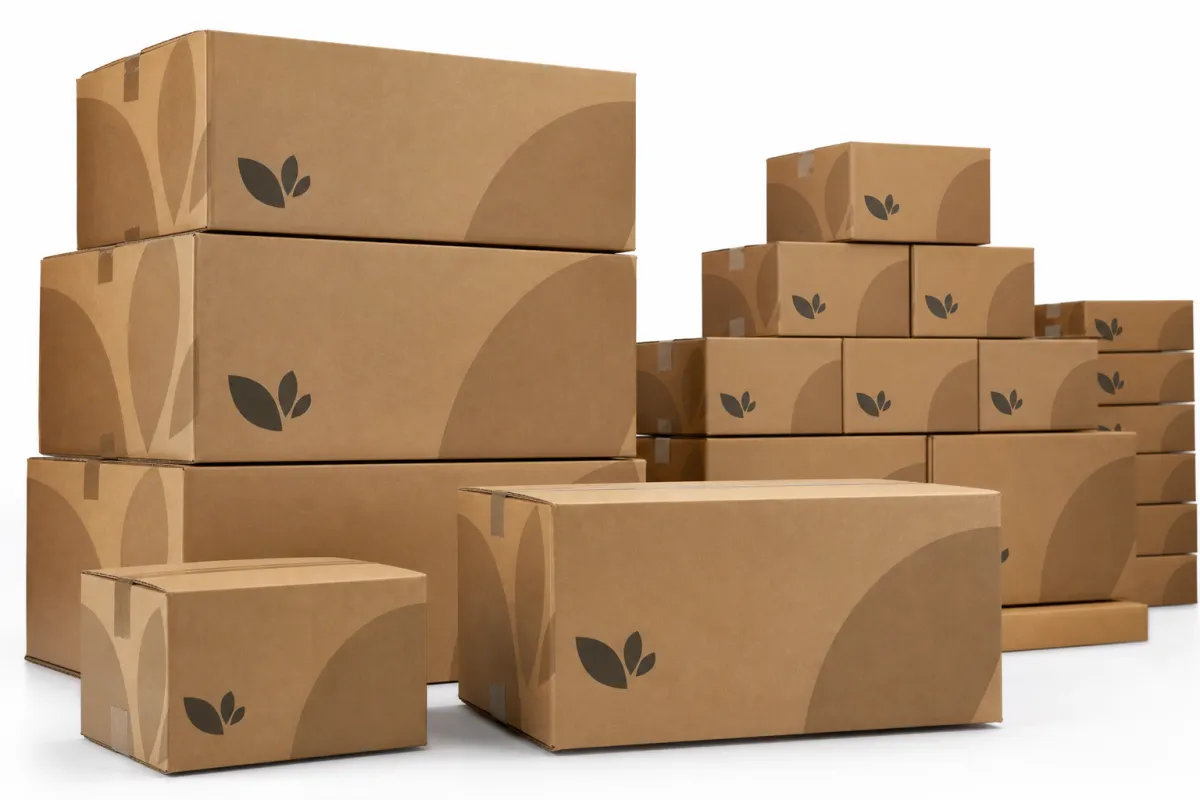
branded corrugated cartons bulk orders behave differently from small runs because the economics shift as quantity rises. Setup costs, print plates, die charges, and prepress work get spread across more units, so the unit price often improves with volume. That part is obvious. The less obvious part is that larger orders make mistakes more expensive. If the dimensions are off by even a quarter inch, or if the flute choice is too light for the load, those same problems repeat across thousands of boxes. Bulk buying rewards precision more than optimism.
Freight and pallet utilization deserve just as much attention. Corrugated shipping cartons are physical objects first and branding surfaces second. If the box size wastes cube, you pay to move air. If the board is heavier than the job needs, inbound freight creeps up. If the carton stacks poorly, warehouse handling gets messy and slow. In one audit I reviewed, a slight reduction in carton height let the team add more units per pallet and cut inbound loads by a meaningful amount. No glamorous fix there, just better math.
One useful pattern in bulk packaging is that branded corrugated cartons bulk performance often changes more with board grade or flute profile than with print coverage. A switch from a light single-wall spec to a better matched flute can improve compression strength, reduce edge damage, and keep panels from bowing during shipment. That kind of adjustment can matter more than whether the logo is one color or two. Buyers who start with structure usually end up with a carton that behaves better everywhere else too.
Practical rule: if the box is moving through parcel carriers, stacking in a warehouse, or sitting in a retail replenishment flow, the structure has to earn its place before the artwork enters the conversation.
For teams ordering branded corrugated cartons bulk every month or every quarter, repeatability is another major advantage. Once the spec is locked, the next run should perform the same way, which makes receiving, packing, and customer service easier. That consistency matters for brands that need dependable supply, predictable print quality, and enough volume to keep production moving without emergency ordering. If you want to see how packaging choices affect the finished result, review our Case Studies for practical use cases.
There is also a branding point that gets overlooked. Cartons are often the first physical touchpoint a customer sees after checkout, and with branded corrugated cartons bulk that means the box itself becomes part of the experience. The box should not act like a billboard that ignores function. The best bulk carton balances clean brand presentation with folding reliability, stacking strength, and efficient storage. That balance keeps packaging useful instead of decorative, which is kinda the whole point.
From a buyer's point of view, the better question is not "What is the cheapest printed box?" It is "Which branded corrugated cartons bulk spec gives me the lowest total cost once freight, damage, labor, and reorders are counted?" That question tends to produce better packaging decisions because it looks at the whole system, not just the invoice.
Branded Corrugated Cartons Bulk Product Details
branded corrugated cartons bulk can cover several carton formats, and the right one depends on how the product is packed, stored, and shipped. Regular slotted containers remain the workhorse for many shipping programs because they are efficient to manufacture, easy to pack, and dependable on pallets. Die-cut mailers are common for e-commerce because they present well on arrival and can feel more premium without demanding a lot of extra material. Folder-style cartons are useful when the box has to wrap around a product or display item, while custom-shape shipping boxes help when product dimensions do not fit a standard blank.
Customization in branded corrugated cartons bulk usually starts with print, but it can include more than a logo. One-color or multi-color flexographic print is common for larger runs, and some projects need branding on the outside panel only while others require interior print for an unboxing effect. Window cutouts, tuck features, ventilation slots, and lock-bottom styles also show up in bulk programs when the product or presentation demands them. The key is to keep the structure aligned with the packing line so the carton still folds cleanly and does not slow down operators.
Material choice matters just as much as graphics. Single-wall corrugated is common for lighter goods, general shipping, and retail cartons that do not see heavy stacking loads. Double-wall construction adds strength and is often better for heavier items, longer transit routes, or cartons that will be stacked more aggressively. Flute profiles also affect performance and print appearance. A finer flute can look cleaner on the outside, while a larger flute may offer more cushioning or compression resistance. That is why branded corrugated cartons bulk should never be specified by print alone.
In practical terms, there are three common use cases. Shipping cartons need strength, stackability, and carrier-friendly dimensions. Retail presentation cartons need cleaner graphics, tighter registration, and a more polished opening experience. Subscription or e-commerce cartons need a mix of both, because they have to survive transit and still create a good first impression when opened. The best branded corrugated cartons bulk programs match those needs instead of forcing one box style to do everything.
Good packaging is also about how the box works with the rest of the supply chain. If cartons are arriving flat, they need to store efficiently. If they are being packed in a high-speed environment, fold consistency matters. If pallets are wrapped and stored, the carton should not sag or crush before it reaches the customer. A well-set-up branded corrugated cartons bulk order keeps those realities in mind from the start.
For buyers comparing formats, our Custom Shipping Boxes page is a helpful reference point because shipping performance often sets the baseline for the whole project. If the structure works there, it usually works better everywhere else too.
Specifications That Affect Fit, Strength, and Print
The first spec to confirm for branded corrugated cartons bulk is inside dimensions. Outside dimensions can be misleading because board thickness changes the usable space, and a carton that is too tight can crush product edges while a carton that is too loose allows movement. Product weight matters too, as does whether the item ships singly, in bundles, or in a master pack. Once those basics are clear, the board grade and flute type can be chosen with much more confidence.
Strength is not a vague feeling; it is tied to measurable structure. For branded corrugated cartons bulk, buyers should ask about the board basis, the compression target, and whether the carton is expected to hold a specific stack load. If the package will travel through parcel networks, the box should be tested with that route in mind. If it is going on a pallet for warehouse storage, the stack height and wrap pattern matter. Industry testing references such as ISTA packaging test standards help teams think through drop, vibration, and compression risk in a more disciplined way.
Print specs are another place where detail pays off. For branded corrugated cartons bulk, line thickness, text size, color count, and ink coverage all influence how clean the final box looks. Fine details can fill in on rougher board surfaces, especially if the design pushes too much dark ink across a large panel. If the box uses Pantone colors, those references should be provided early. If the design has large solids, the printer may recommend adjustments so the coverage lays down evenly and the carton still folds without cracking the print.
Manufacturing tolerances deserve a realistic conversation. Corrugated is a production packaging material, not a rigid display box with jewelry-case tolerances. That means dimensions, print alignment, and cut scores will have normal working tolerances. Buyers planning branded corrugated cartons bulk should allow for that reality and specify what matters most: exact fit, visual presentation, or stack performance. Trying to demand perfection in every category usually creates more delay than value.
Here is a simple spec checklist that saves time before quoting:
- Inside dimensions and acceptable tolerance
- Product weight, count per carton, and any inserts
- Single-wall or double-wall construction
- Flute profile and board grade target
- Print method, color count, and placement
- Closure style, glue style, or tape requirements
- Shipping method, stack height, and pallet pattern
That list may look basic, but it is exactly what keeps branded corrugated cartons bulk projects from drifting into guesswork. Good spec sheets shorten sampling time, reduce revision cycles, and cut down on expensive surprises after production is already scheduled.
If sustainability is part of the brief, the materials conversation should be direct and specific. Corrugated is widely recyclable, and sourcing can often be aligned with FSC-certified paper options when the program requires it. Certification and recycled content are not interchangeable, so buyers should confirm what is actually being claimed before using any environmental message on the carton.
For large-volume packaging programs, the strongest branded corrugated cartons bulk orders are the ones where the spec sheet is complete before the quote starts. That is how you get cleaner pricing, faster approvals, and a carton that works the first time.
Branded Corrugated Cartons Bulk Pricing and MOQ
Pricing for branded corrugated cartons bulk is shaped by a handful of concrete variables: size, board grade, print method, number of colors, finishing details, and total quantity. Bigger cartons cost more in material and freight because they occupy more cube. Heavier board costs more because the raw sheet is more substantial. Multi-color print adds setup and operating time. Special structures can require tooling or die investment. There is no honest way around those inputs, which is why good quoting starts with complete information instead of broad guesses.
Minimum order quantities are tied to manufacturing efficiency. A simple straight-topped carton with one-color print may have a lower MOQ than a custom die-cut box with multiple panels and special folds. In branded corrugated cartons bulk, setup costs matter, so a small order can look expensive because those costs are spread over too few units. Once quantity rises, the unit price usually comes down, but only if the spec remains stable enough to run efficiently. If the order keeps changing, the savings can disappear quickly.
To make pricing easier to compare, it helps to separate the components:
- Carton cost: board, converting, and print
- Tooling or die charges: one-time or amortized setup costs
- Samples and proofs: blank or printed confirmation pieces
- Freight: inbound shipping to one or more locations
- Prepress and artwork work: file setup, trapping, and color prep
That separation matters because a quote for branded corrugated cartons bulk is only useful if it shows what is actually included. A low unit price can be misleading if freight is excluded, if tooling is extra, or if the proof stage is not covered. Buyers should also ask whether the pricing assumes one ship-to point or multiple drop locations. A carton delivered to one warehouse can look much cheaper than the same carton split across three sites.
Below is a practical comparison of common bulk carton options. The figures are illustrative ranges for standard-sized programs and will move with board choice, quantity, and print complexity, but they are useful when a team needs a realistic starting point.
| Carton Option | Typical Use | Common Build | Approx. Bulk Unit Price | Notes |
|---|---|---|---|---|
| Regular slotted container | General shipping and warehouse use | Single-wall, 1-color flexo | $0.48-$0.92 | Strong value when the size is well matched to the product |
| Die-cut mailer | E-commerce presentation and unboxing | E-flute, 1-2 color print | $0.62-$1.20 | Cleaner opening experience, often higher setup cost |
| Heavy-duty shipping carton | Heavier goods or longer transit | Double-wall, minimal print | $1.25-$2.80 | Chosen for strength more than decoration |
| Folder-style retail carton | Display, retail, or shelf-ready packaging | Single-wall or SBS-style hybrid | $0.38-$0.75 | Great for presentation when product weight is moderate |
Those ranges are not promises, and they should not be treated like a final quote. They do, though, show why branded corrugated cartons bulk gets cheaper as the order becomes more predictable and standardized. A buyer who can commit to annual usage, or at least to repeat reorder volume, will often get a better tier than a buyer only quoting a single shipment. If you are comparing programs, our Wholesale Programs page can help frame how volume affects supply planning.
One more practical note: ask for pricing at several quantity breakpoints. A quote at 2,500, 5,000, and 10,000 pieces often reveals where the actual efficiency sits. Sometimes the best deal is not the absolute largest quantity, especially if storage space is limited or if the brand expects a packaging refresh later in the year. Smart branded corrugated cartons bulk buying is about matching quantity to usage, not just chasing the lowest line item.
Production Process and Lead Times for Bulk Orders
The production flow for branded corrugated cartons bulk is usually straightforward when everyone has clean information. It starts with a quote, then moves to dieline confirmation, artwork review, proofing, production scheduling, and shipment. That sounds simple, but delays often happen in the spaces between those steps. A missing dimension, an unclear color reference, or a last-minute change after the order is already on the schedule can stretch lead time more than the manufacturing itself.
Lead time is usually won or lost on the file side. If the artwork is ready, the dieline is accurate, and the buyer approves quickly, branded corrugated cartons bulk orders can move in a predictable window. If the files need redesign or the spec changes after the first proof, the clock resets. For that reason, it helps to separate three sample types early:
- Blank sample: confirms fit and structure only
- Printed proof: confirms artwork placement, text, and visual balance
- Production sample: confirms the finished build before the full run
Each sample answers a different question, and none of them should be expected to do everything. A blank sample is excellent for fold behavior and product fit, but it will not show the final look. A printed proof helps with brand presentation, but it is not always identical to the production sheet. A production sample is the closest to the final order, which is useful when the product is delicate or the packing line is tight.
For branded corrugated cartons bulk, real-world lead time also depends on board availability, print complexity, and the converting queue. If a job uses standard board and simple print, it can move more easily than a carton requiring heavier material, multiple colors, or special finishing. Freight time has to be added on top of that. A factory schedule can be efficient and still miss the launch date if transit time is not built into the plan.
A realistic planning window for many bulk carton programs is often 12-15 business days from proof approval to ship, but that can move up or down based on size, structure, and current capacity. Custom die-cut or higher-complexity runs may take longer. That is why the safest approach is to align carton delivery with production schedules, warehouse space, and any seasonal or launch dates well before the cartons are needed.
There is one more timing factor that buyers should respect: approvals. In a busy packaging department, it is common for the biggest delays to come from internal review, not from the plant. If a marketing team, operations lead, and procurement manager all need to sign off, branded corrugated cartons bulk can sit idle while opinions move around. The faster the approval chain is clarified, the less risk there is to the shipment window.
For teams that need packaging to arrive on time and keep moving, timing is not a soft detail. It is part of the cost. A carton that shows up late can disrupt labor, waste inbound freight, and force temporary packaging substitutions. That is another reason why branded corrugated cartons bulk should be ordered with a real timeline instead of a hoped-for one.
How Do You Compare Branded Corrugated Cartons Bulk Options?
The cleanest way to compare branded corrugated cartons bulk options is to judge them on four things at once: fit, strength, print quality, and total landed cost. A carton that looks inexpensive but arrives oversized, weak, or hard to pack is not a better buy. A carton with a strong structure and clean print can be the smarter choice if it lowers damage, speeds packing, or reduces storage waste. That is the real math behind bulk packaging.
Start by checking the product dimensions against the inside carton size, then confirm the board grade and flute profile for the shipping route. After that, review the print method, the number of colors, and whether the artwork needs interior branding or only exterior panels. Once those details are clear, compare freight, tooling, and any sample charges so the quote reflects the full cost of branded corrugated cartons bulk, not just the printed sheet price.
The most useful comparison method is also the simplest: ask which option performs best in the warehouse, in transit, and at the customer opening. That approach keeps the decision grounded in actual use rather than a glossy mockup. It also makes it easier to identify where small spec changes can create big savings, such as a different flute, a tighter carton size, or a lower-cost print layout.
If you are still deciding between a few formats, ask for a blank sample and a printed proof before approving the run. Those two checkpoints often reveal whether the carton will support the packing line and the brand story at the same time. For branded corrugated cartons bulk, that kind of comparison usually saves more money than chasing the lowest starting quote.
Why Choose Us for Branded Corrugated Cartons Bulk
What buyers usually want from branded corrugated cartons bulk is not mystery or hype. They want a carton that fits the product, prints clearly, ships on schedule, and behaves the same way from run to run. That is where practical packaging knowledge matters. A good packaging partner should be able to look at a dimension set, a shipping method, and an artwork concept, then suggest a structure that protects the product without overbuilding the box or wasting material.
We focus on the details that keep bulk packaging dependable. That means clear spec review, straightforward quoting, and honest feedback when a carton can be simplified without hurting performance. For branded corrugated cartons bulk, that kind of communication matters because changes to board grade, panel size, or print layout can affect price and lead time in real ways. You do not want to discover those tradeoffs after the order is already placed.
Quality control also matters more at volume. A single carton can look fine on a sample table and still create problems across thousands of units if the fold lines are inconsistent or the print sits too close to the score. We pay attention to board selection, print consistency, folding performance, and shipment readiness so the finished cartons arrive ready to use. That matters for brands that cannot afford a production surprise in the middle of a fulfillment cycle.
There is a practical benefit to working with a partner who understands how cartons perform in the warehouse, on the truck, and on the shelf. branded corrugated cartons bulk should help reduce waste, avoid oversizing, and protect the product without turning the packaging line into a troubleshooting station. If a carton also has to support brand presentation, then the print and finish need to be balanced with function, not pushed past it.
We also keep the process clear enough that buyers know what they are approving. A strong packaging partner should explain whether a structure is best as a shipping box, a retail carton, or a hybrid. That is the same thinking behind our Custom Shipping Boxes solutions, where structural fit and practical use come first. When the box is right structurally, the branding performs better too.
And when volume matters, dependable supply matters just as much. Buyers ordering branded corrugated cartons bulk need a partner who can support repeat business, stable specs, and consistent reorders without making every purchase feel like a new project. That is where packaging experience becomes a business advantage, not just a production detail.
Next Steps to Order Branded Corrugated Cartons Bulk
If you are ready to move forward with branded corrugated cartons bulk, the fastest path is to gather the information that removes guesswork. Start with product dimensions, unit weight, pack count, shipping method, artwork files, and any retail or e-commerce requirements. Add destination ZIP codes if freight matters, and note whether the cartons need to be staged, split-shipped, or stored for repeated use. The better the brief, the cleaner the quote.
A spec review or sample request is often the smartest first step. With branded corrugated cartons bulk, a blank sample can confirm fit, a printed proof can confirm visual placement, and a production quote can confirm the cost structure. Looking at all three together helps the buyer see how the structure, appearance, and price line up before production starts. That is far better than discovering a problem after a full run has already been scheduled.
Here is a simple ordering path that works well for most teams:
- Gather the product dimensions, weight, and target quantity.
- Share artwork files, dielines, and color references.
- Request pricing with freight and tooling called out separately.
- Approve the structure, proof, and production schedule.
- Set the delivery window so cartons arrive before packing begins.
If you want a more business-case view of how packaging programs are handled, our Case Studies can show how practical decisions translate into finished packaging results. That matters for branded corrugated cartons bulk because the right carton is rarely the flashiest option; it is the one that survives the supply chain, fits the product, and still presents the brand well.
One last piece of advice: compare the blank sample, printed proof, and production quote as a set instead of as separate decisions. A carton can be inexpensive but still cost more if it damages product or slows packing. It can also look beautiful in a mockup and still fail in transit. The best branded corrugated cartons bulk purchase is the one where cost, structure, and performance all support the same goal.
For teams making a decision right now, the most practical takeaway is simple: lock the inside dimensions, Choose the Right board strength for the route, and request tiered pricing before approving artwork. That sequence keeps branded corrugated cartons bulk aligned with the product, the budget, and the schedule, which is where the savings actually show up.
FAQ
How many branded corrugated cartons bulk do I need to get better pricing?
Pricing usually improves as setup costs are spread across more units, but the best tier depends on carton size, print complexity, and board grade. If your usage is steady, it is often smarter to quote annual volume instead of only one shipment so the price reflects real ordering patterns. Ask for tiered pricing at several quantities so you can compare unit cost against storage space and reorder frequency for branded corrugated cartons bulk.
What artwork files work best for branded corrugated cartons bulk?
Vector files such as AI, EPS, or a print-ready PDF are usually preferred because they hold line quality and text clarity. A dieline with clearly marked print areas, color callouts, and safe zones helps prevent layout mistakes. If spot colors matter, provide the Pantone references early so the printer can evaluate ink match and coverage for branded corrugated cartons bulk.
Can I get a sample before placing a bulk order?
Yes, and it is usually wise to request at least a blank sample or structural proof before approving full production. A printed proof is helpful when you want to confirm artwork placement, color balance, and panel visibility. For new products or tight packaging lines, a preproduction sample can catch fit issues before the bulk run starts, which is especially useful for branded corrugated cartons bulk.
How long does branded corrugated cartons bulk production take?
Lead time depends on the carton style, print method, material availability, and how quickly approvals are returned. Artwork revisions and sample approvals can add more time than the actual manufacturing window, so early file readiness matters. Freight time should be included in the plan so cartons arrive before the packing schedule begins for branded corrugated cartons bulk.
Which carton style is best for shipping products in bulk?
Regular slotted cartons work well for many shipping applications because they are efficient, stackable, and cost-effective. Die-cut mailers are often better for e-commerce presentation, while heavier products may require stronger wall construction. The right answer depends on product weight, carrier handling, and whether the box must also support shelf or unboxing presentation, so the best branded corrugated cartons bulk choice is always the one matched to the job.
If you are comparing options now, start with a clean spec sheet, a realistic quantity target, and the expected shipping method. That gives you the shortest path to branded corrugated cartons bulk that fits the product, protects the shipment, and supports the brand without creating avoidable waste.


