Buyer Fit Snapshot
| Best fit | Branded Tuck Boxes Bulk projects where brand print, material claims, artwork control, MOQ, and repeat-order consistency need to be specified before quoting. |
|---|---|
| Quote inputs | Share finished size, material target, print colors, finish, packing count, annual reorder estimate, ship-to region, and any compliance wording. |
| Proofing check | Approve dieline scale, logo placement, barcode or warning zones, color tolerance, closure strength, and carton packing before bulk production. |
| Main risk | Vague material claims, crowded artwork, missing packing details, or unclear freight terms can make a low unit price expensive after revisions. |
Fast answer: Branded Tuck Boxes Bulk: Specs, Pricing, and Orders should be specified like a repeatable production item. The safest quote records material, print method, finish, artwork proof, packing count, and reorder notes in one written spec.
Production checks before approval
Compare the actual filled-product size with the drawing, then confirm tolerance on folds, seals, hang holes, label areas, and retail display edges. Reserve space for logos, QR codes, warning copy, and material claims before decorative graphics fill the panel.
Quote comparison points
Review material grade, print process, finish, sampling route, tooling charges, carton quantity, and freight assumptions side by side. A quote is only useful when the supplier can repeat the same color, closure quality, and packing count on the next order.
Branded tuck boxes Bulk: Specs, Pricing, and orders. A packaging change that looks small on a quote can ripple through freight, shelf appeal, and landed cost faster than most teams expect. I have watched brands treat a carton as a finishing touch, then discover it behaves more like a logistics decision. Once volume enters the picture, branded tuck boxes bulk stop being a simple print choice and start shaping how the entire product line performs.
That matters for lip balm, supplements, candle accessories, small electronics, and any other item that depends on a compact carton to survive shipping and still look good in front of a buyer. Structure, board stock, and finish all affect whether the product arrives intact, displays well, and stays inside margin. Brands that order branded tuck boxes bulk usually feel the difference in fewer damaged goods, cleaner presentation, and fewer rushed reprints. That is not theory. It shows up in returns, in warehouse complaints, and in the small, irritating gaps between what a mockup promised and what the pallet actually delivered.
Repeatable retail packaging runs on consistency. One approved dieline. One print spec. One reorder pattern. That kind of discipline reduces waste and gives operations teams a tighter grip on inventory, especially across seasonal launches, subscription shipments, and wholesale programs such as Wholesale Programs. It also sits comfortably inside the broader folding cartons category, where custom tuck boxes and other retail packaging formats are judged by more than appearance alone.
A broader view helps too. Comparing packaging formats against the rest of a line through Custom Packaging Products or reviewing Case Studies shows how real brands handle repeat production. Those choices matter because branded tuck boxes bulk are not just containers; they are part of the cost structure, the visual system, and the replenishment cycle. In a sample room I once visited, two boxes looked almost identical until someone tried to fold the third carton in the stack. One extra millimeter in the score line changed the whole rhythm. Kinda annoying, and very expensive.
Why Branded Tuck Boxes Bulk Orders Change Unit Economics
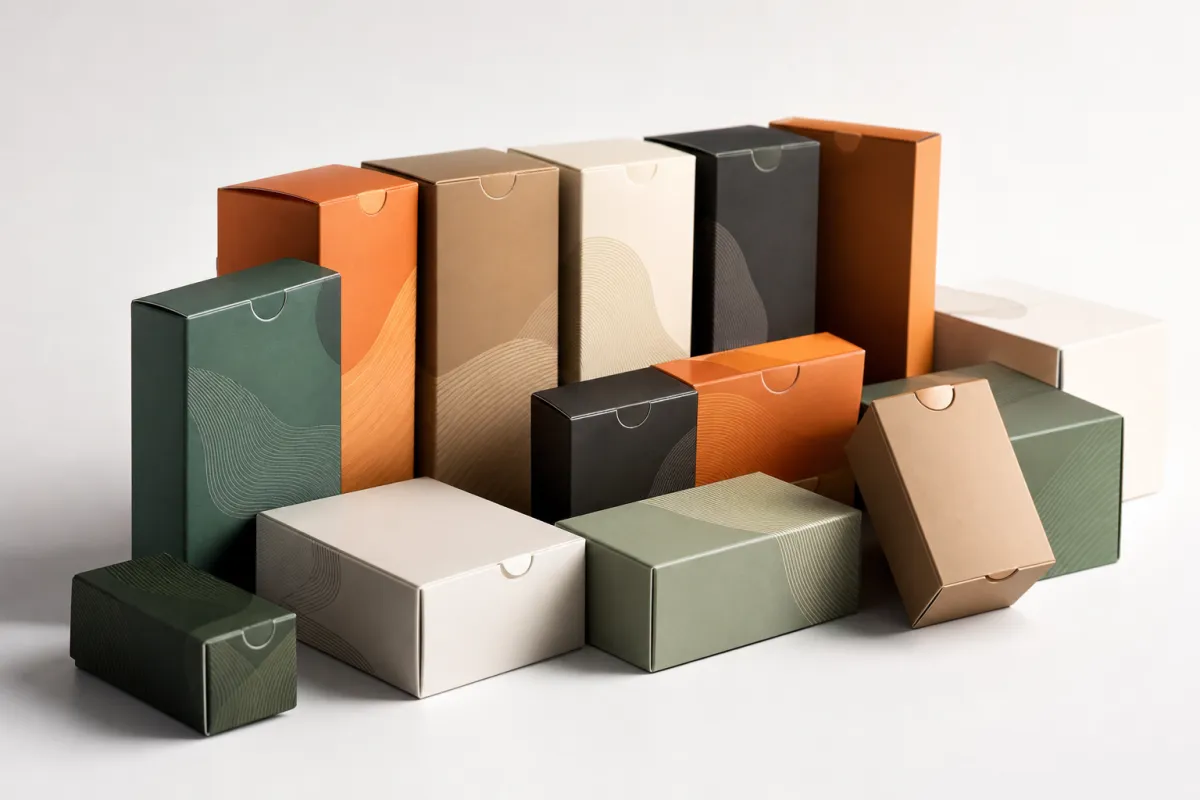
Packaging buyers often notice the setup savings first. The larger shift sits deeper in the run. With branded tuck boxes bulk, one prepress file, one cut die, and one production setup can cover thousands of cartons. Changeovers shrink. Press downtime drops. Labor spreads across the order in a way that simply does not happen with short runs. The difference is subtle on one carton and very visible on 5,000 or 10,000.
A quote can make a board upgrade or stronger print coverage look expensive at first glance. Then the order runs. Waste falls. Box fit improves. Product damage eases. Dimensional weight may drop if the carton is sized correctly, because couriers bill by the space a package occupies, not just the weight on a scale. In branded tuck boxes bulk, the real metric is total landed packaging cost, not the line item sitting on the invoice.
Bulk ordering also helps brands keep SKUs from drifting apart. A retail replenishment line works better when the same artwork, dimensions, and closure style carry across multiple drops. A subscription brand that needs a stable outer carton for six months gains something else entirely: predictable purchasing. That predictability is often worth more than the last cent shaved from unit price.
From a buyer's standpoint, the practical gains are easy to measure. Branded tuck boxes bulk improve front-of-house presentation, cut the risk of emergency reorders, and give procurement a cleaner planning rhythm. A 3,000-unit order arriving on time can beat a 500-unit order that forces a rushed rerun in four weeks. Control keeps the program intact, and control is what keeps margins from wobbling whenever demand spikes.
"The cheapest box is not always the cheapest program. If the carton fails in transit or forces a second run, the real cost climbs fast."
That logic keeps branded tuck boxes bulk useful for brands with recurring demand. It supports shelf consistency, trims repeated approval cycles, and keeps packaging aligned with production reality instead of reactive buying. The lesson is simple enough, but easy to ignore: the carton is not a side character once volume gets large.
Branded Tuck Boxes Bulk: Box Styles and Best Uses
Three tuck styles dominate branded tuck boxes bulk programs: reverse tuck, straight tuck, and auto-lock bottom. Each has a different strength. Pick the wrong one and a box that looks polished on screen can underperform in the warehouse or on shelf. The box that saves a few cents can also add a few headaches, which is a bad trade if the product is fragile or the packing line is already busy.
Reverse tuck
Reverse tuck shows up often in lightweight product lines and high-volume runs. The top and bottom close in opposite directions, which keeps the build economical and efficient to produce. Cosmetics, small supplements, and promotional items fit here well. In branded tuck boxes bulk, reverse tuck often delivers the lowest structural cost while still giving the brand a clean panel for graphics and messaging.
Straight tuck
Straight tuck closes from the same direction on the top and bottom, which creates a cleaner line across the face of the box. Shelf presentation benefits from that small visual order. Premium packaging tends to lean this way because the box feels more deliberate when it is opened and displayed. Candle products, skincare, and accessories often land here because the opening experience matters almost as much as the item inside.
Auto-lock bottom
Auto-lock bottom adds support where the load demands it. Heavier products, kits, and fragile goods with more weight often need the stronger base. Assembly takes more steps, yet the payoff is stability. For branded tuck boxes bulk, that extra support can separate a retail-ready carton from one that needs extra reinforcement before it reaches a shelf. I have seen a small electronics launch skip this detail and then spend the first production week chasing crushed corners. Not glamorous, just expensive.
Product category matters, but it is not the whole story. Opening experience, shelf display goals, and shipping method all influence the right style. A candle jar may call for a different closure than a fragrance pen. A supplement bottle with a tamper band may need an insert. A promotional kit may need a window or hang tab so the package does more than simply close.
Custom inserts, clear windows, and hang tabs can improve function without changing the core footprint of branded tuck boxes bulk. That keeps a brand on the same dieline across multiple SKUs while adjusting the holder or window size. Fewer structural variants usually mean simpler purchasing, easier storage, and quicker reorder handling. It also keeps the warehouse from turning into a puzzle nobody asked for.
There is a quiet operational gain too. A standard tuck format can simplify line training. Teams learn one fold sequence and one carton behavior, which cuts mistakes during high-volume packing days. That does not make for flashy marketing copy, but it protects margin. It also keeps the packing team from having to improvise under pressure, which is where small errors multiply.
Materials, Printing, and Finishes for Branded Tuck Boxes Bulk
Material choice is where branded tuck boxes bulk either become a cost-efficient system or turn into a source of complaints. Common substrates include paperboard grades such as 14pt, 16pt, and 18pt SBS, plus coated C1S artboard in the 300-400 gsm range. Heavier stock adds stiffness and shelf presence. It also increases freight and can create folding or gluing issues if the structure gets too tight.
Light products usually perform well on 14pt or 16pt board, which keeps cost in check. Higher-end presentation often benefits from 18pt or 350gsm stock because it feels more substantial in the hand. Fragile or heavy items should treat board choice like a structural decision rather than a brand preference. In branded tuck boxes bulk, the right board can reduce crush damage and improve stackability during transport. Too much board can be its own problem, though. A stock that is too stiff for the score line may crack on fold, and then the premium look goes sideways pretty quickly.
Printing often begins with CMYK, but PMS spot colors remain common when a brand needs tighter color control on logos or packaging systems. That matters for repeat runs, because color drift becomes obvious across replenishment batches. A deep navy or warm red that looks right in one batch can shift in the next if the spec is loose. Consistency is part of the product experience in branded tuck boxes bulk, and buyers usually notice drift faster than printers do.
Finish selection adds another layer. Matte lamination gives a calm, modern look and helps resist scuffs. Gloss finish boosts saturation and can make graphics punch harder. Soft-touch adds a premium feel, though it also changes how fingerprints appear and usually increases cost. Foil stamping, embossing, and spot UV make sense when the brand wants one strong focal point instead of a surface packed with effects. In branded tuck boxes bulk, selective finishing often delivers more value than coating every panel with decoration.
Performance details matter as much as style. Scuff resistance affects how the box looks after shipping and fulfillment handling. Fold performance affects line speed. Color consistency affects multi-batch reorders. If inventory will sit for months, those details are not side notes; they are the reason some bulk orders arrive crisp while others look tired before they reach retail.
File prep matters, too. Most folding-carton printers want bleed around 0.125 in, or about 3 mm, but that number can vary by shop, so always check the printer's spec sheet before outputting final art. High-resolution assets should stay at 300 dpi or better, and text should be vector wherever possible. That is a boring detail until the proof comes back fuzzy, and then it is the only detail anybody wants to talk about.
Sustainability belongs in the conversation, but only if the claim is real. Recyclable boards and FSC-certified stocks are widely used, and the choice should balance eco goals with durability. FSC certification can be checked directly through FSC. For packaging reduction and waste handling context, the EPA's materials guidance is also useful: EPA recycling resources. Good packaging has to do two things at once: protect the product and avoid needless material excess.
For branded tuck boxes bulk, the strongest material decision is usually the one that survives real handling, not just a mockup photo. A box that looks elegant but scuffs in the shipper is not elegant for long.
What should you confirm before ordering branded tuck boxes bulk?
Before requesting a quote for branded tuck boxes bulk, the buyer should pin down the numbers that actually drive production. Start with product dimensions. Add interior clearance, board caliper, and the final box size. A carton that is off by only a few millimeters can create loose product movement or a box that refuses to fold cleanly. Multiply that across thousands of units and the error turns expensive.
Artwork prep comes next. The dieline should be approved before design work moves too far ahead. Bleed, safe zones, and resolution all affect the finished print. For most packages, 300 dpi is the practical floor for raster art, while logos and text should stay vector whenever possible. If the file is built for the wrong panel or the wrong bleed, the print team ends up troubleshooting instead of producing.
Buyers should also confirm functional needs: closure strength, inserts, coating, and any tamper-evidence requirements. A supplement box may need a neck insert or seal. A candle box may need extra headspace for protective packing. A retail carton may need a hang tab. In branded tuck boxes bulk, the best quote comes from a spec sheet that leaves little room for guesswork.
Document the following before sending a request:
- Product dimensions and target internal clearance
- Desired quantity and split quantities, if any
- Product weight and shipping method
- Retail or shelf display requirements
- Finish preference and print coverage
- Compliance copy, warnings, or barcode placement
That list is not paperwork for its own sake. It saves back-and-forth and makes branded tuck boxes bulk quotes easier to compare. If one supplier quotes 16pt and another quotes 18pt, the gap means very little unless the buyer knows the actual product load and shipping profile. A clean spec sheet protects both sides.
Brand colors, logo files, and compliance copy should travel together too. Missing assets extend proofing time, and proofing delays often matter more than print time itself. The smartest orders remove ambiguity before production starts. That is the part people skip when they are in a rush, and then wonder why the project keeps stalling.
Branded Tuck Boxes Bulk Pricing, MOQ, and Cost Drivers
Pricing for branded tuck boxes bulk makes more sense once the parts are separated. Quantity matters, yet it is not the only variable. Board stock, print coverage, finish, structure, and freight all move the final number. Larger runs usually lower the unit cost because setup and tooling get spread across more cartons, while the upfront cash outlay rises with quantity. That tradeoff is the real decision.
A simple 16pt reverse tuck with moderate CMYK coverage will land in a very different range from a soft-touch, foil-stamped straight tuck with spot UV. The second box costs more because it asks more of the press, more of the finishing line, and more of the quality check. In branded tuck boxes bulk, complexity is not abstract; it shows up in the quote. So does speed. A rush schedule can add pressure fees, and those fees have a habit of looking small until they are not.
Minimum order quantity, or MOQ, depends on the supplier's print method and finishing. Simple structures often allow lower minimums. Specialty finishes and custom tooling usually push the minimum higher. If the order is still exploratory, a pilot run may make more sense. That is often the smarter move for a product launch with uncertain demand, because it protects inventory from sitting idle before the market proves itself.
Several cost drivers deserve attention:
- Tooling and setup: die creation, plate prep, and press calibration
- Proofing: digital proofs, mockups, and sample revisions
- Freight: carton weight, pallet count, and delivery zone
- Storage: space needed if the whole run does not ship immediately
- Artwork revisions: rework that can trigger extra prepress time
The table below gives a simple planning view. Exact pricing will vary, but this framework helps a buyer compare options instead of chasing the lowest headline number.
| Option | Typical Use | Approx. Unit Cost Range | Typical Cost Pressure |
|---|---|---|---|
| 14pt reverse tuck | Lightweight retail items | $0.18-$0.28 at 5,000 units | Low structure, moderate print coverage |
| 16pt straight tuck | Premium shelf presentation | $0.24-$0.40 at 5,000 units | Cleaner closure, stronger visual branding |
| 18pt auto-lock bottom | Heavier products and kits | $0.32-$0.55 at 5,000 units | More board, more assembly, more support |
| Soft-touch with foil | Premium or gift packaging | $0.45-$0.85 at 5,000 units | Finishing steps and slower throughput |
Those ranges are directional, not universal. They still make the economics plain: branded tuck boxes bulk become more attractive as quantity rises, but the lowest unit price is not always the best decision if storage, cash flow, or product shelf life is constrained. A fast-turn brand may want a larger run. A brand with uncertain demand may not.
Compare short-run and bulk economics honestly. Short-run packaging works for launches, seasonal tests, and fragile demand, but repeated reorders often cost more per unit and create more operational friction. Branded tuck boxes bulk make sense when the design is stable, the SKU is proven, and replenishment predictability matters.
"A clear MOQ conversation saves money on both sides. The goal is not just to hit a number; it is to order the right number for the product cycle."
That is where branded tuck boxes bulk begin to outperform piecemeal buying. The order becomes a planning tool, not an interruption. The order size stops being a guess and starts acting like inventory strategy.
Ordering Process and Production Timeline
The standard workflow for branded tuck boxes bulk starts with a quote request, but the real work begins when the spec sheet arrives. A good supplier reviews dimensions, structure, quantity, finish, and artwork readiness before confirming the price. Then comes the dieline review, where the artwork gets mapped to the carton panels and issues are caught before production.
After that, digital proofs or samples are produced. This stage matters because a proof can expose incorrect copy, color problems, or panel mismatches that were hidden in the design file. Once the buyer approves the proof, production begins. The sequence usually includes printing, finishing, cutting, folding, and quality inspection before shipment.
Timeline depends on order size and finishing complexity. A straightforward branded tuck boxes bulk order often moves faster than a premium run with foil, embossing, or heavy spot UV. As a planning guide, many Bulk Packaging Orders need roughly 12-15 business days from proof approval to production completion, with freight adding more time depending on destination. If sampling is required first, the total calendar stretches further.
Delays tend to show up in three places. Artwork revisions that keep changing after proofing begins. Late approvals from internal stakeholders. Spec sheets that leave too much open to interpretation. A job that should move cleanly can sit for days if the brand has not settled color, barcode placement, or finish selection.
That is why clear communication matters so much in branded tuck boxes bulk. If the deadline is tied to a product launch or retail reset, say so early. If the order needs to land before a shipping window closes, build in buffer time. Production schedules are not elastic forever, and they do not get kinder when everyone is suddenly in a hurry.
For brands that want more context on delivery patterns, product categories, or repeat-order support, the operational side is easier to understand through Case Studies. They show how packaging specs behave under real order pressure rather than in theory.
In manufacturing terms, the smoothest branded tuck boxes bulk orders are the ones that arrive with a final dieline, approved colors, and a firm quantity. Ambiguity is the enemy of schedule control. I have seen a launch slip a week because no one could agree on whether the QR code belonged on the back panel or the bottom flap. Small detail, big delay.
What Reliable Bulk Packaging Support Looks Like
Brands do not usually shop for packaging because they want more options. They shop because they need packaging that behaves the same way every time. That is where branded tuck boxes bulk can be judged on measurable strengths: print consistency, structural accuracy, order flexibility, and dependable turnaround. Those are the points that save time once the order enters production.
In-house prepress support is a real advantage because it catches dieline issues, panel mismatches, and color risks before they become waste. That kind of review can prevent a costly second run. It also reduces revision cycles, which matters more than many first-time buyers realize. Every unnecessary proof round adds friction, and friction in packaging usually turns into freight, labor, or rework.
Bulk packaging also needs repeat-order discipline. A brand may reorder the same branded tuck boxes bulk six months later and expect the carton to match the first run exactly. That is not a minor request. It is how product lines stay recognizable. Same stock. Same finish. Same registration. Same fold. Small differences become obvious when cartons sit side by side on shelf.
Reliable support also includes honest limits. If a supplier says a premium finish can ship tomorrow without a proof, that should raise an eyebrow. Fast is possible. Magic is not. The better vendors explain where the risk sits, which parts can be compressed, and which ones should not be rushed. That kind of candor is a trust signal, and it matters more than polished sales language.
We also support brands that need packaging across more than one channel. Retail, e-commerce, subscription, and promotional kits often use the same base structure with different art or insert choices. That is a practical reason to keep a stable packaging partner. One team can standardize the carton while adjusting graphics or interior features for each channel.
Response time matters too. When a buyer asks for a quote, clear pricing and realistic timing make planning move faster. That is one reason brands compare vendors through Custom Packaging Products and then use a wholesale framework to forecast future orders. Branded tuck boxes bulk are easier to manage when the supplier supports repeat purchasing instead of treating every reorder like a fresh puzzle.
If the decision comes down to one sentence, it is this: consistent bulk packaging protects margin better than flashy packaging that cannot be repeated cleanly. That is the kind of statement procurement can actually use.
How to Prepare a Bulk Order Without Delays
The fastest way to move a branded tuck boxes bulk project forward is to gather the right inputs before requesting a quote. Start with the product dimensions, target quantity, preferred box style, and finish. Then add artwork files, brand colors, and any compliance copy that must appear on the package. If the product has a barcode, warning statement, or country-of-origin requirement, include that too.
Ask for two quote paths. One standard option. One upgraded option. That comparison makes the price difference visible in terms of actual packaging goals. A matte reverse tuck and a soft-touch straight tuck may serve different brand stories, but the buyer should see the tradeoff in cost, lead time, and shelf effect before choosing. Branded tuck boxes bulk should be judged by what they do for the product, not by decoration alone.
If the design is still moving, request a dieline first. If the artwork is ready, ask for a proof. If the launch date is fixed, say so upfront. Those three steps save the most time. They also make it easier to move from specs to sample approval, then to production, and finally to replenishment planning.
For brands that want a more efficient path, branded tuck boxes bulk can become a repeatable packaging system rather than a one-off purchase. That shift is where the economics improve most. Once the structure is approved and the art is locked, future orders become easier to forecast, easier to compare, and easier to replenish.
When you are ready to turn a concept into a production run, branded tuck boxes bulk are one of the most practical ways to protect presentation, control cost, and keep supply stable. The right order size, the right board, and the right finish will do more for your margins than a last-minute rush ever will. If there is one action to take before ordering, it is this: lock the dimensions, the board grade, and the finish before the quote stage, because that trio determines most of the final cost and nearly all of the production risk.
How many branded tuck boxes bulk orders do I need to lower the unit price?
Pricing usually improves in tiers, so moving from a low MOQ to a larger run can reduce unit cost quickly. The break point depends on board stock, print coverage, and finishing, not just quantity alone. Ask for two or three quote levels so you can compare unit price against storage and cash flow.
What is the typical MOQ for branded tuck boxes bulk printing?
MOQ varies by material, size, and print complexity, but bulk packaging usually starts at a few hundred units or more. Simple structures and standard finishes tend to allow lower minimums than specialty boxes. If your volume is uncertain, ask whether a pilot run is possible before committing to a larger order.
Which tuck box style works best for retail products in bulk?
Reverse tuck is common for lightweight items and efficient packing. Straight tuck often suits premium shelf presentation because the front panel closes cleanly. Auto-lock bottom is better for heavier products that need extra support.
How long does branded tuck boxes bulk production usually take?
Timeline depends on proof approval, finishing, and quantity, but the process usually includes artwork review, sampling, production, and shipping. Complex finishes and last-minute revisions add time, while standard specs move faster. Build in extra time if the boxes are tied to a product launch or retail deadline.
What files do you need for branded tuck boxes bulk artwork?
A print-ready dieline, editable artwork, and linked fonts or outlined text are the most common starting files. High-resolution logos, accurate color references, and any regulatory copy should be included up front. If you do not have a dieline, ask for one before design work begins.


