Buyer Fit Snapshot
| Best fit | Rigid Boxes Choose The Right Fit for Your Brand projects where brand print, material claims, artwork control, MOQ, and repeat-order consistency need to be specified before quoting. |
|---|---|
| Quote inputs | Share finished size, material target, print colors, finish, packing count, annual reorder estimate, ship-to region, and any compliance wording. |
| Proofing check | Approve dieline scale, logo placement, barcode or warning zones, color tolerance, closure strength, and carton packing before bulk production. |
| Main risk | Vague material claims, crowded artwork, missing packing details, or unclear freight terms can make a low unit price expensive after revisions. |
Fast answer: Rigid Boxes Choose The Right Fit for Your Brand: Board, Finish, Dieline, and Unit Cost should be specified like a repeatable production item. The safest quote records material, print method, finish, artwork proof, packing count, and reorder notes in one written spec.
Production checks before approval
Compare the actual filled-product size with the drawing, then confirm tolerance on folds, seals, hang holes, label areas, and retail display edges. Reserve space for logos, QR codes, warning copy, and material claims before decorative graphics fill the panel.
Quote comparison points
Review material grade, print process, finish, sampling route, tooling charges, carton quantity, and freight assumptions side by side. A quote is only useful when the supplier can repeat the same color, closure quality, and packing count on the next order.
A rigid box changes the first judgment call. People see it before they touch the product. They feel the weight, the lid tension, the finish, and the whole package tells a story before the product gets a chance. That is why rigid boxes how to choose is not about grabbing the prettiest sample and calling it done. It is about picking a structure that fits the product, protects it in transit, and still makes financial sense.
The best packaging choice usually looks boring on a spreadsheet and sharp in the hand. That is not a problem. That is usually the point. It means the box is doing its job without dragging the budget into the ditch. Brand teams get distracted by finishes and mockups fast. Buyers have to stay annoying and practical. Someone should.
For a packaging buyer, the real question is not whether a box looks premium. The real question is whether it earns its keep. Does it protect the item. Does it support the brand. Does it hold up in shipping. Does it stay inside the cost target. Those questions do a lot more for rigid boxes how to choose than any mood board ever will.
I have seen projects where the spec looked elegant on paper and then fell apart the second someone packed the actual product. The box was too shallow, the insert was loose, and the lid bowed after a week in storage. Pretty expensive mistake. The good news is that most of those problems are avoidable if the decision starts with function instead of the photo render.
What Rigid Boxes Are and Why the Choice Matters
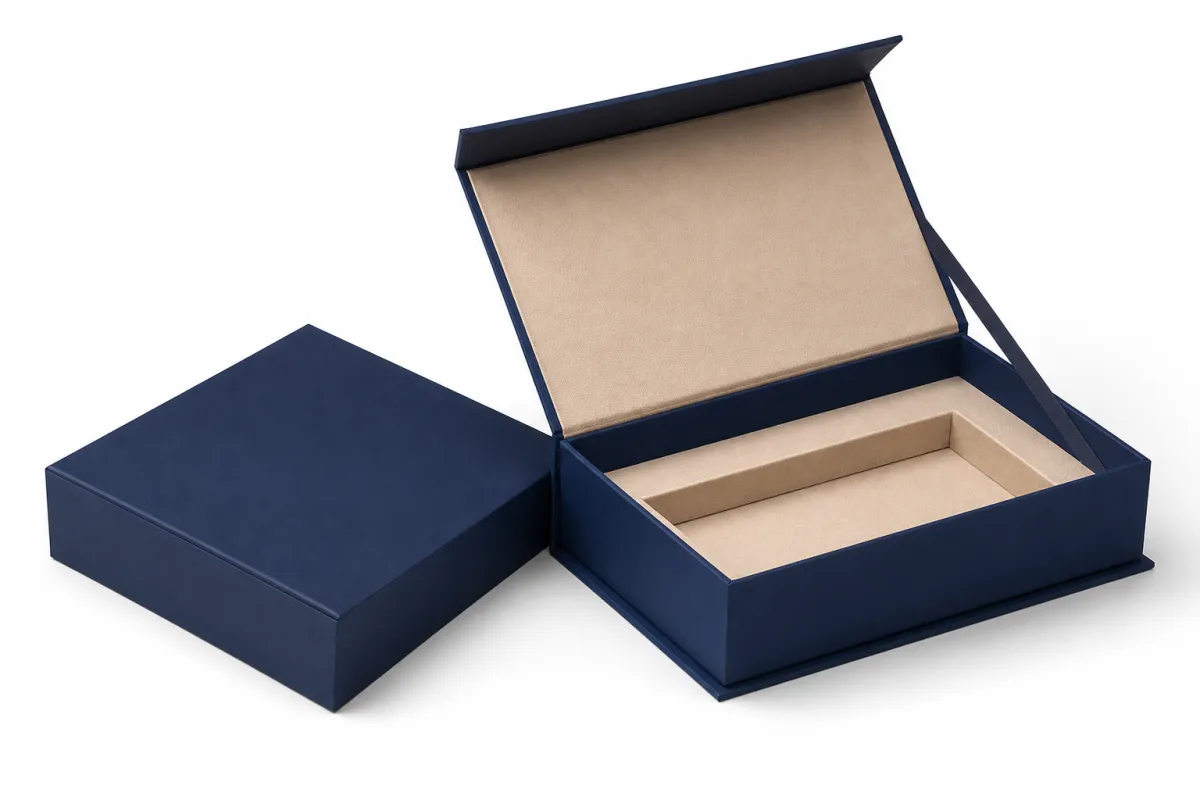
Rigid boxes use thick paperboard, usually chipboard, wrapped in printed paper, specialty stock, or a textured material. They do not collapse flat like folding cartons. They stay formed. They feel solid. They make a product seem more finished the second someone picks it up.
That matters more than people like to admit. A customer often reads value through the box before the product ever appears. That is why rigid boxes how to choose comes up so often in cosmetics, candles, jewelry, electronics accessories, wellness kits, premium gifts, and subscription packaging. The box is carrying part of the sale.
Protection matters too. Folding cartons do fine for lightweight items and basic retail jobs. They are not in the same category for structure. A rigid box handles inserts better, gives heavier products more support, and usually delivers a cleaner presentation. That still does not make it the right answer every time. If the product is small, light, and price-sensitive, a rigid box can become expensive decoration. Nice, but expensive.
The practical decision is simpler than the branding conversation makes it sound. Ask what the product needs from the package. Does it need a stronger reveal. Does it need better protection. Does it need to feel worth a higher price tag. That is the short version of rigid boxes how to choose.
“A box that looks expensive in a mockup and arrives dented is not premium packaging. It is a regret with a lid.”
How Do You Choose Rigid Boxes?
Start with the product, then work outward. Size, weight, fragility, shape, and shipping method all change the answer. A rigid box for a perfume bottle is not the same as a rigid box for a candle set or a tech accessory. The structure, insert tray, and closure style should follow the product, not the other way around.
If you need a simple rule for rigid boxes how to choose, use this one: fit first, then protection, then brand feel, then price. That order keeps the project grounded before finishes and embellishment start taking over. It also makes it easier to compare set-up boxes, luxury packaging, and hybrid shipping formats without getting lost in the design noise.
Ask a few blunt questions before you approve anything. Does the box protect the item in transit. Does it create the right unboxing experience. Does it support the retail price. Does it work at the quantity you actually need. If one answer is shaky, the box needs another pass.
That is the practical heart of rigid boxes how to choose. Not romance. Not trend chasing. A box that does the job well and leaves enough margin to make the product worthwhile. Simple, but not easy. Packaging rarely is.
How Rigid Boxes Work: Structure, Materials, and Inserts
A rigid box is a layered build. The board creates stiffness, the wrap carries the branding, the adhesive holds everything together, and the insert keeps the product where it belongs. Each layer affects the final feel. If one piece is weak, the whole package reads cheaper than it should.
The core is usually chipboard in roughly the 1.5 mm to 3 mm range, depending on the box size and the product weight. Bigger or heavier items often need thicker board or a more supportive insert. The wrap can be printed paper, textured paper, soft-touch film, kraft, or a decorated surface with foil or embossing. The insert might be paperboard, E-flute, molded pulp, EVA foam, or a cut paper tray depending on the product and sustainability goals.
Closure style changes the experience more than many buyers expect. Lift-off lid boxes feel classic and easy to understand. Magnetic Closure Boxes feel polished and deliberate. Drawer boxes create a reveal as the tray slides out. Shoulder-neck boxes add layers and a more substantial feel. Book-style rigid boxes work well when the opening moment needs some theater and the interior matters as much as the outside.
That is why rigid boxes how to choose cannot be separated from structure. A magnetic box with a sloppy insert feels expensive for about ten seconds. Then the product rattles and the illusion falls apart. A drawer box with a weak pull-tab annoys the customer. A shoulder box with sloppy tolerances looks good in a render and slightly embarrassing in real life. I wish that were an exaggeration.
Inserts deserve more respect than they usually get. They stop movement. They reduce scratches. They protect edges. They shape the reveal. A good insert gives the product a proper home inside the box. A bad one makes the whole package look like it was dressed up for a photo and never tested after that. That gap is where a lot of budget leaks out.
Finish choices matter because they set the tone. Soft-touch lamination feels modern and quiet. Foil stamping feels ceremonial. Embossing adds depth you can feel. Spot UV can work well if it has a clear purpose. Overused, it looks busy. Textured wraps lean more craft-driven and suit natural, artisanal, or wellness positioning well.
For products that will ship through rougher channels, testing should go beyond appearance. Check whether the box stays closed under movement. Check whether the insert keeps the product centered. Check whether corners survive handling. If the item is fragile, using test methods similar to those published by ISTA can save you from a costly surprise. For paper sourcing, FSC certification remains a common signal for responsible material selection.
People get tripped up because a beautiful rigid box can still be a production problem. Weak magnets. Thin board. Loose tolerances. A finish that looks expensive but scuffs too easily. That is why rigid boxes how to choose is really a structural decision wearing a design mask.
Rigid Boxes How to Choose Based on Product Needs
Start with the product. Not the inspiration board. Size, weight, fragility, shape, and whether the item ships alone or as part of a set all change the answer. A perfume bottle with a narrow neck needs a different insert strategy than a candle set. A tech accessory is not a luxury gift set just because someone added foil.
If the item is fragile, the insert matters even more than the shell. It needs to hold the product tightly with no side movement and very little vertical bounce. Delicate surfaces need soft contact points. Paper-based trays can be better than harder materials when scuffing is a concern. That is one of the clearest places where rigid boxes how to choose becomes a protection question instead of a visual one.
Shape matters just as much. Square and rectangular items are easy. Odd shapes are where waste creeps in. Oversized boxes waste material, increase shipping costs, and make the unboxing feel less precise. A box that looks sleek outside but has a lot of empty volume inside usually costs more and feels less considered. It also invites product movement, which nobody wants.
Sales channel changes everything. Retail packaging needs shelf presence because the box is being seen and compared in person. Ecommerce packaging has to survive parcel handling, stacking, drops, and the general mood of carriers on a bad day. That usually means stronger closures, tighter inserts, and more compression resistance. The same product may need a different box for store shelves, direct-to-consumer shipping, and subscription kits.
For teams comparing formats, a side-by-side view helps more than a long debate about aesthetics. That is where rigid boxes how to choose becomes easier to manage. A structure comparison clears up the noise fast.
| Rigid Box Style | Best For | Strengths | Watch-Outs | Typical Cost Impact |
|---|---|---|---|---|
| Lift-off lid | Gifts, candles, simple premium SKUs | Classic look, easy to understand, lower production complexity | Less dramatic reveal, lid fit must be consistent | Baseline to modest |
| Magnetic closure | Beauty, retail launches, premium tech accessories | Polished opening feel, secure close, strong brand impact | Magnets add cost and require tighter alignment | Often +$0.20 to +$0.60 per unit at mid volumes |
| Drawer style | Gift sets, jewelry, curated kits | Strong reveal, good for staged presentation | Pull-tab and tray fit need careful testing | Often +$0.25 to +$0.75 per unit |
| Shoulder-neck | Luxury launches, premium bottles, high-end gifting | Substantial feel, layered reveal, upscale presence | More components, more board usage, higher labor | Often +$0.40 to +$1.00 per unit |
| Book-style | PR kits, storytelling boxes, subscription programs | Great for narrative opening, presentation-friendly interior | Needs precise hinge construction and a strong wrap | Often +$0.30 to +$0.90 per unit |
The table is a guide, not gospel. The right style still depends on the product, the customer, and the price ceiling. A beauty launch can justify a magnetic closure because the opening moment supports the retail price. A small candle line may get more value from a clean lift-off lid, a good wrap, and a well-cut insert. That is the kind of judgment rigid boxes how to choose actually asks for.
Freight matters too, and it sneaks up on people. Oversized packaging costs twice. More board and wrap on the front end. Higher dimensional charges on the back end. Bigger is not automatically better. A tighter box with a better insert usually wins unless the product truly needs a larger format to feel right.
If you need to narrow the field, use this order: product fit, protection, brand tone, budget. That sequence keeps the box grounded in reality before decoration takes over. For a lot of teams, that simple order answers half the question of rigid boxes how to choose before sampling even starts.
For buyers comparing actual packaging builds, browsing Custom Packaging Products can make the trade-offs easier to see. A visual comparison usually shows whether the project needs a presentation box, a shipping-oriented solution, or a hybrid that handles both jobs without pretending to be something else.
Rigid Boxes How to Choose on a Budget: Cost and Pricing
Price is where everyone suddenly becomes honest. Unit cost gets the headline, but that number hides a lot. Board thickness, wrap material, print coverage, specialty finishes, insert design, and quantity all move the final price. If the project is custom, rigid boxes how to choose turns into cost management just as much as brand building.
At lower quantities, setup costs bite harder. Dielines, tooling, sample rounds, proofing, and labor setup are spread across fewer units, so the unit price climbs fast. A simple rigid box at a few thousand pieces can land in a very different range than the same build at a few hundred. As a rough planning frame, simple Custom Rigid Boxes may sit in the low single-dollar range at mid volumes, while smaller runs with specialty wraps or inserts can climb well above that. Add foil, embossing, or multi-piece structures and the number moves again.
That is why the cheapest quote is often the most misleading one. A supplier might quote the shell but not the insert. Or the quote assumes a basic wrap instead of the specialty paper the brand actually wants. Savings vanish quickly once the real spec is finalized. If rigid boxes how to choose matters, apples-to-apples comparison matters even more.
Hidden cost is the other trap. Sample rounds cost money, but they usually save money by catching fit issues before production. Freight can be heavy. Storage can matter if the boxes land before the launch date. Artwork changes after dieline approval can trigger rework that costs more than the original package line. The cheapest quote is often the one that left the most assumptions untouched.
To keep the budget sane, decide where the money should actually go. If the box supports a premium price point, put spend into the parts the customer will feel. If the product is the hero and the box is mostly protective, keep the structure simpler and spend on fit. That is one of the cleanest ways to use rigid boxes how to choose as a filter instead of a wish list.
Here is a practical breakdown of what pushes price:
- Board thickness: thicker chipboard usually costs more and needs tighter forming control.
- Wrap material: coated art paper, textured paper, and specialty stocks price differently.
- Printing: full-coverage print usually costs more than a simple one-color wrap.
- Finishes: foil stamping, embossing, debossing, and soft-touch lamination add cost and setup time.
- Insert design: molded or custom-cut inserts increase structural complexity.
- Quantity: larger runs lower per-box price because fixed setup costs are spread out.
There is a middle ground that gets ignored too often. You do not have to choose between plain and overdesigned. A clean lift-off rigid box with one strong finish can feel more premium than a crowded box using every effect available. That is the ugly little truth behind rigid boxes how to choose: one strong idea usually beats five weak ones.
If sustainability is part of the brief, do not assume it automatically costs more. Smaller dimensions, fewer layers, and a simpler structure can reduce waste and cost at the same time. Less material is not just a green talking point. It is often cheaper. The EPA’s materials hierarchy is a useful reminder that source reduction beats cleanup. In packaging terms, that means less empty space and fewer unnecessary components from the start.
Comparing quotes only makes sense if the specs match. Ask if the same board is being used. Ask if the insert is included. Ask if freight and handling are part of the number. Ask what happens if the finish changes. That keeps rigid boxes how to choose anchored in reality instead of line items that look smaller than they are.
If the box helps lift the price, reduce damage, or improve the unboxing moment enough to lift conversion, it can pay for itself in ways unit cost never shows. That matters most for premium gift sets and direct-to-consumer launches. A more expensive box is not waste if it drives margin, reduces returns, or helps the product feel worth more.
Process and Timeline: From Brief to Final Delivery
The production path usually follows the same rough sequence. Brief first. Concept and dieline next. Sampling after that. Then proof approval, production, quality checks, and shipping. If one step gets rushed, the risk goes up fast. That is why rigid boxes how to choose should include timeline planning from the start, not as a cleanup task at the end.
The supplier needs a few things early: product dimensions, target quantity, closure style, insert needs, finish preferences, and the delivery deadline. Leave one of those vague and the first sample may come back wrong in exactly the kind of way that wastes a week. The box can only be as accurate as the brief behind it.
Sample rounds save projects more often than they slow them down. A sample can reveal that the insert is too loose, the magnets are misaligned, or the soft-touch finish looks too matte for the brand tone. Good news, bad news. The issue shows up early. That does add time. If a team rushes approval because the launch date is breathing down its neck, it is easy to sign off on a structure that looks right in a render and feels wrong in the hand. Another reason rigid boxes how to choose should always include a real sample review if possible.
The delays are usually predictable. Artwork revisions can stall proof approval. Structural changes can require a fresh dieline. Specialty papers may have longer lead times. Complex inserts can trigger another sample round. None of this is unusual. What is unusual is pretending it will not happen.
Leave room for one extra sample round and some freight buffer. Not glamorous. Very useful. A perfect calendar on paper often falls apart because it assumes every approval happens instantly and every shipment lands early. Production does not care about hope.
For teams working through rigid boxes how to choose, the safest move is to line up the packaging calendar with the marketing calendar and the fulfillment calendar at the same time. If the box has to arrive before filling, before a retail launch, or before holiday orders spike, those dates need to sit in the same conversation. Packaging delays do not stay packaging delays for long. They become launch delays. Then revenue problems.
A simple sequence keeps the process cleaner:
- Lock the product dimensions and target quantities.
- Choose the box style and insert concept.
- Approve the dieline before final artwork.
- Review a sample or prototype in hand.
- Confirm final proof details and shipping assumptions.
- Move into production only after fit and finish are signed off.
If the team needs help narrowing choices before sampling, a look at packaging structures and finishes can make the trade-offs easier to compare. A visual pass usually kills a lot of back-and-forth before it starts.
Short version: rigid boxes how to choose is not a one-meeting decision. It is a chain of small approvals that have to stay aligned. The more complex the box, the more the sequence matters.
Common Mistakes When Choosing Rigid Boxes
The first mistake is choosing with your eyes only. A beautiful rigid box that dents, ships badly, or fits poorly is still the wrong box. Pretty helps. Functional wins. If the product rattles or the lid pops open in transit, the premium effect dies fast.
The next mistake is ignoring the insert. Buyers will spend a week on exterior finishes and then treat the interior like an accessory. Bad move. The insert controls movement, scratch resistance, and the reveal. When it is wrong, the whole package feels cheaper than it should. For fragile or high-gloss items, this gets expensive quickly. A solid rigid boxes how to choose process gives the insert the same attention as the shell.
Production limits get underestimated too. Minimum order quantities, finishing capabilities, and lead times shape what is realistic. A design that looks simple on a screen may be annoying to produce cleanly in a smaller run. A simpler structure may hit the deadline and still look good, which tends to be the better outcome unless someone is trying to win an award for complexity.
Too many finishes create a different kind of problem. Foil, embossing, spot UV, and specialty wraps can all work. Stack all of them together and the package starts fighting itself. The design gets loud. The production schedule gets longer. The budget gets grumpy. Usually one or two finishes are enough. That keeps the box focused and easier to justify.
Dimensions cause trouble more often than they should. Buyers approve a box that feels roomy in a render, then discover the insert and wrap thickness changed the real fit. Now freight is higher, board use is higher, and the box feels less refined. If rigid boxes how to choose is meant to stay practical, confirm internal dimensions, not just outside size.
Do not assume one sample tells the whole story. If the closure is magnetic, test the strength. If the product is heavy, see what happens after a bit of handling. If the finish is soft-touch, check whether it scuffs or fingerprints too easily. Sampling is not a formality. It is the moment bad choices become visible before they become expensive.
The easiest way to dodge those mistakes is to slow down before final approval. Check dimensions. Check the insert. Check the finish. Check the shipping assumptions. Then approve. That discipline usually separates a box that looks premium from a box That Actually Performs like one.
Expert Tips and Next Steps for a Final Decision
Once the field gets smaller, build a shortlist of two or three rigid box styles and compare them with the same criteria every time: fit, brand impact, unit Cost, and Production timeline. That makes the choice less emotional and more useful. It also keeps rigid boxes how to choose from turning into a long argument about personal taste.
If possible, ask for a sample or prototype and handle it in real life. Magnetic pull, insert fit, lid tension, and finish quality are much easier to judge in hand than in a PDF. Small flaws that look harmless on screen can stand out after the box has been opened and closed a few times. Packaging is tactile. Pretending otherwise is how teams end up unhappy with expensive boxes.
A basic decision matrix helps. Score each option from one to five on protection, perceived value, shipping efficiency, and cost per unit. Compare totals. That does not replace judgment, but it keeps the trade-offs visible. In many projects, the best box is not the fanciest one. It is the one that performs steadily across all four categories. That is the heart of rigid boxes how to choose.
Before ordering, confirm the dieline, print method, dimensions, and delivery window with the supplier. Ask what happens if the artwork changes after approval. Ask whether the finish needs extra curing time. Ask if the insert can be tweaked without changing the full structure. Basic questions. Still useful. They prevent the sort of surprise that burns time and budget.
Ask one more question that matters more than most people admit: what should the box do for the business. If it needs to support a premium price, invest in the opening moment. If it needs to protect a fragile ecommerce product, prioritize structure and insert security. If it needs to carry a brand story, keep the outer layout clean and use the interior with intent. That is where rigid boxes how to choose becomes a business call instead of a packaging preference.
When buyers are torn between a few custom options, revisiting Custom Packaging Products can help put the structures back into context. Side-by-side comparisons make it easier to spot which choice fits the brand and which one only looks good in isolation.
If the decision still feels muddy, use the simplest rule. Choose the box that fits the product, the budget, and the timeline, then move into sampling quickly enough to catch problems before production. That is the most reliable version of rigid boxes how to choose, and it tends to produce better results than chasing the flashiest design in the room.
For most teams, the right rigid box is not the most expensive one or the most decorated one. It is the one that holds the product properly, tells the brand story without overplaying its hand, and shows up on time without blowing up freight or production. If that is the standard, rigid boxes how to choose gets a lot easier.
The actionable takeaway is straightforward: lock the product specs first, choose the structure that protects it best, and only then spend on finishes. If a sample does not pass fit, closure, and shipping tests, do not force it. Adjust the box. That one habit saves more money than any clever finish ever will.
How do I choose rigid boxes for fragile products?
Start with the insert. It should hold the product firmly with no side-to-side movement and very little bounce. Choose a closure style that does not press on delicate surfaces. If you are still sorting out rigid boxes how to choose, a sample test with a short shake or drop check can expose weak spots before production starts.
What affects rigid box pricing the most?
Board thickness, wrap material, finishing choices, insert design, and order quantity usually drive the price. Small runs cost more per unit because setup costs are spread across fewer boxes, which is why rigid boxes how to choose should always include quantity planning.
How long does the rigid box process usually take?
It depends on how fast the dieline, sample, and artwork proof get approved. Specialty finishes, custom inserts, and revisions add extra days or weeks. That is exactly why rigid boxes how to choose should include a time buffer instead of a last-minute launch guess.
Which rigid box style is best for premium retail packaging?
Magnetic Closure Boxes are a strong fit when the goal is a polished opening moment. Drawer and shoulder-style boxes can feel more elevated when the product should be revealed in stages. The best answer to rigid boxes how to choose is the one that fits the product securely and matches the brand tone.
Can rigid boxes be cost-effective for small runs?
Yes, but the unit price is usually higher than on larger runs because setup costs stay fixed. Simpler structures and fewer specialty finishes help keep the budget under control. If the box supports a higher selling price or reduces damage, rigid boxes how to choose can still point to a smart investment.


