Buyer Fit Snapshot
| Best fit | Branded Counter Display Cartons projects where brand print, material claims, artwork control, MOQ, and repeat-order consistency need to be specified before quoting. |
|---|---|
| Quote inputs | Share finished size, material target, print colors, finish, packing count, annual reorder estimate, ship-to region, and any compliance wording. |
| Proofing check | Approve dieline scale, logo placement, barcode or warning zones, color tolerance, closure strength, and carton packing before bulk production. |
| Main risk | Vague material claims, crowded artwork, missing packing details, or unclear freight terms can make a low unit price expensive after revisions. |
Fast answer: Branded Counter Display Cartons: Design, Cost, Setup should be specified like a repeatable production item. The safest quote records material, print method, finish, artwork proof, packing count, and reorder notes in one written spec.
Production checks before approval
Compare the actual filled-product size with the drawing, then confirm tolerance on folds, seals, hang holes, label areas, and retail display edges. Reserve space for logos, QR codes, warning copy, and material claims before decorative graphics fill the panel.
Quote comparison points
Review material grade, print process, finish, sampling route, tooling charges, carton quantity, and freight assumptions side by side. A quote is only useful when the supplier can repeat the same color, closure quality, and packing count on the next order.
Branded counter display cartons are what happens when packaging stops acting like a plain shipper and starts earning its spot right at the register. A product that gets missed on a shelf can move much faster once it sits at the counter, faces forward, stays easy to reach, and meets the shopper during those last few seconds before payment.
The idea sounds simple enough. The execution is not. Branded counter display cartons have to hold product, present product, and help sell product, all while fitting into a tight, awkward space that is usually crowded with card terminals, receipts, pens, and whatever else a retailer has already claimed for the counter. If a carton gets in the way, leans after a few grabs, or turns replenishment into a small headache, nobody is admiring the artwork. They are removing it.
For buyers who want practical examples, our Case Studies page gives a better read on real-world performance than a wall of mockups. It also shows how branded counter display cartons behave once they leave the approval stage and start living in an actual store, which is where the truth usually shows up.
What Branded Counter Display Cartons Actually Do
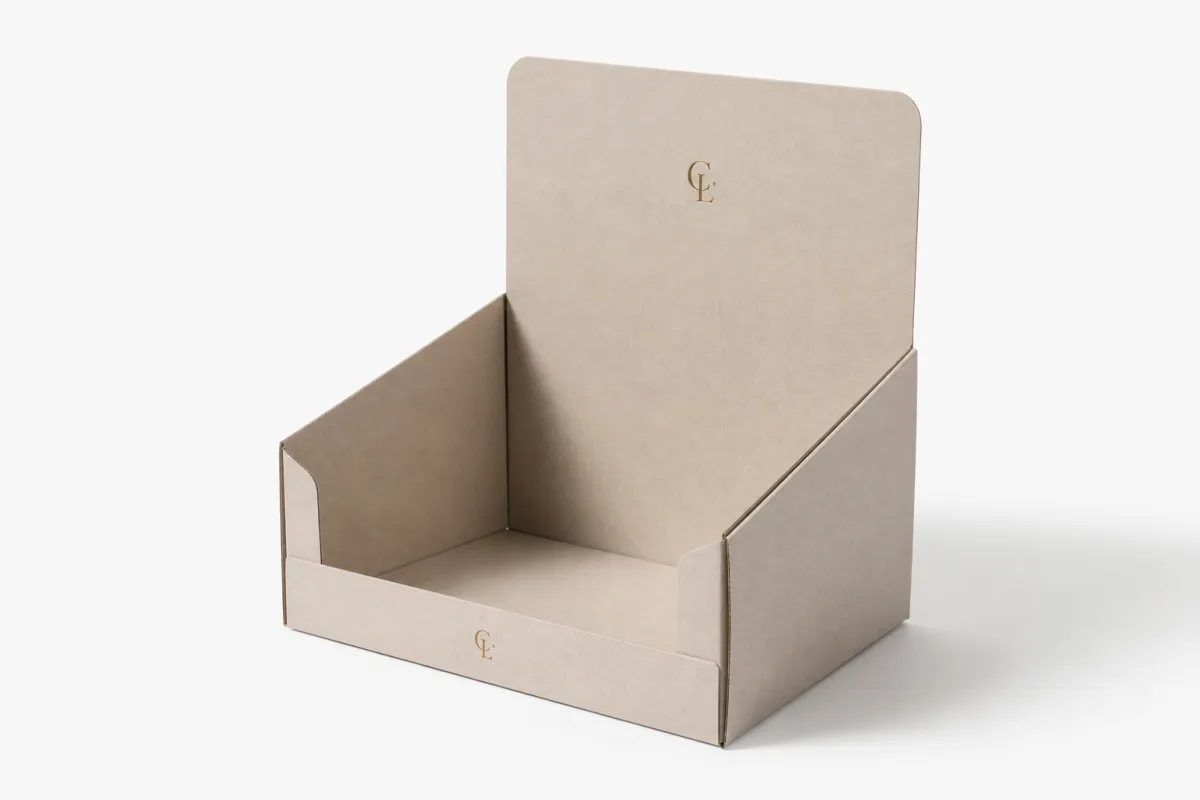
Branded counter display cartons are compact retail units made to hold, present, and promote products at the point of sale. They usually sit near cash wraps, service desks, pharmacy counters, convenience store tills, and reception areas where shoppers pause long enough to notice a small item and make a quick decision. That pause is the opportunity. The carton earns attention without asking for extra shelving, extra labor, or extra signage.
The strongest branded counter display cartons handle three jobs at once. They protect the product during handling and transit. They organize the product so the right quantity is easy to reach. They communicate the brand in a way that reads immediately at close range. Miss one of those jobs and the carton becomes a half-finished idea. Attractive, maybe. Useful, not really.
Counter space is expensive in a very literal sense. A retailer will not hand over square inches because the artwork looks polished on a screen. The carton needs to earn its place through stability, visibility, and quick access. That means a front panel with a clear message, a footprint that makes sense, and a structure that still works once the carton is partly emptied. A display that looks great on day one and awkward on day three is not a good display. It is short-lived decoration.
From a packaging buyer's point of view, branded counter display cartons often offer one of the cleanest ways to combine stock and merchandising in a single unit. Instead of shipping a tray, a sign, and a shelf talker separately, the carton can carry the product, the graphics, and the merchandising cue together. That cuts handling and usually helps the brand stay visible without asking staff to build a miniature store every morning.
One thing many brands miss is that the carton does not need to shout. It needs to be clear. A shopper at the counter has a few seconds, not a browsing session. Good branded counter display cartons use simple hierarchy, readable type, and one obvious call to action. They do not bury the product beneath five messages and a logo the size of a dinner plate.
If a display needs a staff member to explain it, the display is already asking for too much effort.
That is why the right format depends on the product, the retail lane, and the refill routine. A lightweight cosmetic sample does not need the same structure as a small hardware pack or a carded accessory bundle. Branded counter display cartons should match the item count, the weight, and the way the product is picked up. Otherwise the carton is just expensive paper with trust issues.
I've seen good-looking displays fail for the simplest reasons: the front lip was too low, the base flexed after a few refills, or the pack count made the carton look full in the sample room and half-empty on the shop floor. That is the kind of detail that matters, because retail is not a render. It is a place where people reach in, bump corners, and keep moving.
How Branded Counter Display Cartons Work at Checkout
Branded counter display cartons work because checkout is a decision zone. Shoppers are already standing still, already near the payment point, and already looking for one last purchase that feels quick and low risk. That creates a good setting for impulse items, add-ons, samples, and small consumables. The carton gets attention that a shelf unit has to fight to earn.
The customer journey is short, which is exactly why structure matters. The front panel catches the eye first. The open face or cutaway makes the product easy to take. The printed surfaces reinforce the brand in a matter of seconds, usually before the shopper has finished paying. Good branded counter display cartons make that sequence feel natural. Weak ones make the shopper hesitate. Hesitation kills impulse sales faster than weak copy does.
There are several common structure types, and each one solves a different problem. Self-erecting cartons save assembly time and work well for compact launches. Tray-style displays are open, simple, and quick to shop from. Tear-away fronts let the display move from shipping mode to selling mode with one deliberate action. Reinforced bases help when the product is heavier or the fill count is high. None of these options is automatically better. The right choice depends on the product, the counter, and how often staff will touch the unit.
The shape matters as much as the graphics. A carton that bows, leans, or hides half the product is poor retail packaging no matter how sharp the print looks. Branded counter display cartons need stable geometry, enough wall strength, and a footprint that does not fight the counter edge. If the unit blocks the payment screen, crowds the till, or slides every time someone reaches for a pack, it will not last long. Retail staff are practical. They will not wrestle with packaging that behaves badly.
Refill behavior matters just as much, and it gets ignored far too often. The best branded counter display cartons make topping up simple. Staff should be able to refill the carton without opening three flaps, hunting for a hidden tear line, or rebuilding the front edge after every restock. If the display is annoying to refill, it is gonna get left half-empty or replaced by something easier. That is how good-looking displays quietly disappear.
Think of branded counter display cartons as a bridge between storage and selling. A warehouse carton can be plain and still do its job. A display carton cannot. It has to arrive flat, open fast, hold shape, and present product in a way that makes the counter look more organized rather than more cluttered. That brief is harder than many teams expect.
If your brand ships to stores that care about transit performance, ask for packaging testing aligned with relevant methods from ISTA. If material sourcing matters, ask for FSC chain-of-custody documentation that matches the paper spec, not a vague line buried in a quote. Fancy wording does not protect cartons in transit. Specifications do.
Key Design Factors for Branded Counter Display Cartons
Design starts with the product, not the artwork. That sounds obvious, which is usually the sign that people skip it. For branded counter display cartons, the first questions are basic ones: What is the product size? How many units go in each carton? What does the filled weight look like? How much counter footprint is available? How tall can the display be before it feels awkward or unstable? Those answers shape the structure long before color selection begins.
Board choice matters more than most buyers expect. Folding carton stock is common for light items and clean print surfaces, often in the 300gsm to 450gsm range for small display units. Corrugated board, usually E-flute or a similar light corrugated build, is better when the carton needs more crush resistance or has to carry a heavier fill. Reinforced inserts can help with weight distribution, though they add cost and assembly time. A soft-touch finish may look premium, yet it can increase price and create scuff concerns if the display is handled often.
Print coverage should match the retail job. Branded counter display cartons do not need every surface loaded with messaging. They need a clear front panel, a readable side panel if shoppers will see it, and enough brand presence to make the unit feel intentional. If a shopper has to lean in and decode the design, the packaging is missing its moment at the counter. The best layouts keep hierarchy simple: brand, product name, key benefit, and maybe one supporting line. More than that usually turns into visual noise.
Small structural details make a big difference. Perforations can create a clean tear-away front. A display lip can stop products from sliding out too quickly. Die-cut windows can show color or texture without exposing the full pack. A reinforced base can stop sagging when the carton is full. These are not glamorous features, but they separate a display that works from a display that only looks good in a folder.
Design for the worst counter condition, not the best mockup. In real retail, the counter may be scratched, uneven, narrow, busy, or already covered in payment equipment, impulse items, and general clutter. Branded counter display cartons need enough friction resistance, enough footprint discipline, and enough visual clarity to survive that reality. If the design only works in a clean studio setup, it is not ready.
Brand messaging needs discipline as well. Counter displays live close to the shopper, so copy should be shorter, not longer. Use one primary offer or one product benefit. Use type that remains readable from a standing distance of one to two feet. Use contrast that survives fluorescent lighting. If the carton is meant to be filled by staff who are moving fast, make the opening obvious. Retail teams do not have time to decode clever die-lines.
- Size: Match the carton to the exact product footprint and pack count, not the target shelf photo.
- Structure: Choose folding carton, corrugated tray, self-erecting base, or tear-away front based on weight and refill speed.
- Graphics: Keep the front panel simple and readable at arm's length.
- Durability: Test for sagging, edge crush, and repeated handling.
- Retail fit: Confirm counter depth, payment hardware clearance, and shopper reach before finalizing dielines.
Buyers comparing vendors should ask for a dieline before approving any artwork. Then ask for a physical sample. Then place that sample on an actual counter, beside actual payment equipment, and load it with real product. That three-step check catches more problems than another round of email opinions. If you want examples of structural thinking that survived real use, the packaging notes in our Case Studies section show how shape and function affect the final result.
Branded Counter Display Cartons Cost: Pricing, MOQ, and Quote Basics
Cost is where enthusiasm usually meets arithmetic. Branded counter display cartons can be very affordable in volume, or surprisingly expensive in small quantities, depending on structure, print coverage, and finish. The biggest price drivers are material grade, carton size, print complexity, die-cut detail, inserts, and order quantity. That is not packaging poetry. That is the bill.
For a rough planning range, simple branded counter display cartons in standard folding carton construction might land around $0.18-$0.35 per unit at 5,000 pieces, while more complex tray-style or reinforced corrugated versions might sit closer to $0.28-$0.65 per unit at the same quantity. Smaller runs can climb quickly. At 500 to 1,000 units, the same format can easily cost several times more per unit because setup, tooling, and prepress spread across fewer cartons. Nobody likes that answer, but it keeps budgets honest.
Minimum order quantity, or MOQ, matters because setup costs do not shrink just because the order is small. If you need a low-volume pilot, accept that the unit price will be higher. If you need a national rollout, quantity can work in your favor, but only if the cartons will actually move through retail at that pace. A huge run of the wrong display is not savings. It is storage with a pretty face.
Finishes are where people get tempted. Gloss varnish, matte aqueous coating, soft-touch lamination, spot UV, and metalized effects can all improve shelf presence, but each one changes the quote. Sometimes the smarter move is plain and practical: strong board, clean print, no special finish, and a structure that opens fast. A simple carton with good hierarchy often sells better than a fancy carton that needs a second look and a larger budget.
Ask suppliers for quotes that spell out the same variables every time. You want exact dimensions, product weight, pack count, print sides, finish, board grade, quantity, delivery location, and whether the cartons ship flat or pre-packed. Without that list, you are comparing guesses, not offers. And guesses are how buyers end up saying, “Why did the landed cost jump so much?”
| Option | Typical Use | Indicative Unit Cost at 5,000 | Strength | Tradeoff |
|---|---|---|---|---|
| Folding carton display | Light impulse items, samples, travel sizes | $0.18-$0.35 | Clean print, low material use | Less suited to heavier products |
| Corrugated tray display | Heavier packs, mixed assortments | $0.28-$0.65 | Better crush resistance, more stable | Bulkier look and higher freight risk |
| Self-erecting carton | Fast setup, compact counters | $0.30-$0.75 | Quick to deploy, tidy presentation | More structural engineering up front |
| Tear-away front display | Ship-flat units that convert in store | $0.32-$0.80 | Good retail theater, strong brand reveal | Needs accurate perforation design |
Hidden costs are the ones that frustrate everyone later. Prepress can add up if artwork is not ready. Sampling costs money, especially for structural samples. Shipping can move the number more than expected if the cartons are bulky or the delivery zone is expensive. Storage becomes relevant if the run is large and the launch is delayed. Even extra handling labor matters, because a display that needs manual filling one carton at a time costs more than a display that can be packed efficiently.
If your quote is vague, it is not really a quote. It is a teaser. Smart buyers ask for a split between material, print, tooling, and freight so they can see where the spend is going. That makes branded counter display cartons easier to compare across vendors, and it also shows whether a lower quote is missing a spec you will need later. Low numbers are fun. Accurate numbers are better.
Production Steps and Timeline for Branded Counter Display Cartons
The production flow usually follows the same sequence: brief, structure review, dieline development, artwork setup, proofing, sample approval, production, finishing, packing, and delivery. That sounds orderly because it is orderly on paper. In practice, the schedule gets bent by slow approvals, unclear specs, and late changes that were easy to avoid if somebody had measured the counter first.
Simple branded counter display cartons can move fairly quickly once the structure is approved. A straightforward run might take 10-15 business days after proof sign-off, with another few days for shipping depending on location. More complex custom structures, specialty coatings, or added inserts can stretch that to 18-25 business days or more. If a sample revision is needed, add time. There is no magic trick here. Packaging still needs to be built correctly.
The biggest delay point is usually not the factory. It is the brief. If the carton size, product weight, counter footprint, and pack count are not confirmed early, the designer will be guessing. Guessing creates revisions. Revisions create delay. Delay creates rushed approvals. Rushed approvals create displays that look acceptable until they are loaded and placed in store. Then the problems begin.
There is also a difference between lead time and turnaround, and buyers should insist on clarity. Lead time often includes every step from approval to delivery. Turnaround sometimes means only factory time. Those are not the same thing, even if a quote sheet uses them as if they are. A supplier who can explain the schedule in plain English is usually easier to work with than one who hides behind jargon. Packaging should not need a translator.
Launch planning should run backward from store delivery. If the carton must arrive in distribution two weeks before a campaign, the sample needs to be approved well before that, artwork should already be final, and the dieline should be locked before print-ready files are built. That sounds obvious, yet people still build timelines as if the packaging will teleport itself into stores. It will not.
For buyers who care about quality control, a physical sample is not optional when the carton needs to hold weight or survive repeated handling. A render can only show visual balance. It cannot tell you whether the front lip flexes, whether the board creases too easily, or whether the open face exposes the product too far. That is why sample approval is not bureaucracy. It is insurance.
- Brief stage: Confirm product dimensions, pack count, weight, and retail placement.
- Dieline stage: Check counter footprint, open face, and refill access.
- Proof stage: Confirm type size, brand colors, and barcode placement.
- Sampling stage: Test stability, load, and setup speed in a real store-like environment.
- Production stage: Approve only after all structural and print details are signed off.
One more practical note: if the display is shipping pre-packed, ask how the cartons are packed into master cases and whether the transit plan was tested. That is where a lot of branded counter display cartons quietly fail. They make it through the printing stage, then get crushed, scuffed, or misfolded in the final leg because the shipping plan was treated like an afterthought. It should not be.
Common Mistakes with Branded Counter Display Cartons
The most common mistake is designing for the artwork file instead of the actual product and counter. A polished front panel means very little if the carton overhangs the counter edge, blocks payment equipment, or forces staff to move part of the checkout setup just to place it. Branded counter display cartons are judged in context, not in a design review.
Overbranding is another classic error. If every panel is shouting at once, nothing stands out. Too much copy, too many badges, too many claims, and too many fonts create a carton that feels loud rather than effective. The shopper at checkout wants clarity, not a small seminar. A compact display with one strong message usually performs better than a busy carton trying to do everything.
Weak structure is the other big failure point. If the base sags, the side walls bow, or the front lip opens badly, the display stops looking intentional. Retail staff notice that immediately. So do shoppers. Branded counter display cartons need enough structural confidence to survive being handled, bumped, and refilled. If they cannot do that, they will not stay in the store long enough to matter.
People also forget that displays do not stay full forever. A carton that looks balanced when packed to the top may become awkward, empty-looking, or unstable after a few units sell. That is why refill behavior matters. Good branded counter display cartons still look acceptable at 70 percent fill. Better ones keep working even when inventory gets thin. Dead space is not just ugly. It signals weak sales.
Then there is the retailer requirement issue. Buyers sometimes skip the boring questions: Does the store allow countertop displays? Is there a size limit? Does the unit need to arrive flat? Does it need a barcode in a specific spot? Are there material or recycling rules? Ignore those details and you risk rejection before the carton even reaches the shelf. That is a painful way to learn that paperwork is part of packaging too.
If you want a quick checklist of what usually goes wrong, it looks like this:
- The carton is sized to the render, not the real product.
- The structure is too weak for the fill weight.
- The copy is overcrowded and hard to read.
- The refill process was never tested by staff.
- The retailer's display rules were ignored.
One more mistake is buying on unit price alone. A low quote can hide thinner board, weak scoring, poor print registration, or a structure that costs more in labor than it saves in material. Branded counter display cartons should be judged on total retail performance, not just purchase price. Cheap packaging that slows sell-through is not cheap. It is expensive in disguise.
Expert Tips and Next Steps for Branded Counter Display Cartons
Start with one hero SKU or one compact assortment. Trying to cram every product line into a single display usually makes the format awkward and the buying decision messy. Branded counter display cartons work best when they stay focused. One product family, one retail job, one clear message. That is usually enough.
Build the brief around three things: product size, retail placement, and replenishment rhythm. Those three variables decide whether the carton works. If the product is small but the counter is narrow, the structure needs to stay compact. If the placement is near a high-traffic till, the branding needs to read fast. If staff will refill it twice a day, the opening and pack count need to support that routine. Miss any one of those and the display becomes harder to live with.
Request a dieline, a print proof, and a physical sample before you commit to volume. That sequence catches the irritating problems early. The dieline checks fit. The proof checks color and type. The sample checks structure, feel, and counter behavior. A good supplier will not resist that process. If they do, that tells you something useful about the relationship before money gets locked in.
Compare vendors side by side using the same fields: board grade, structure, print method, finish, MOQ, lead time, freight terms, and sample policy. Do not focus on one number and call it a day. A quote that is $0.05 cheaper per unit can become a worse landed cost if the board is weaker, the finish is scuffed, or the assembly time is longer. Retail packaging is rarely won by the cheapest line item. It is won by the best total package.
For sustainability-minded brands, ask for paper sourcing detail, recycling guidance, and any certifications that actually match the material spec. For performance-minded brands, ask for testing notes and transit assumptions. Branded counter display cartons are not complicated, but they do reward people who ask disciplined questions. That is the difference between packaging that looks nice in a presentation and packaging that earns its keep in store.
Here is the simplest path forward:
- Measure the counter space and the available height.
- List the product dimensions, pack count, and filled weight.
- Decide whether the carton ships flat or pre-packed.
- Ask for a dieline and a physical sample.
- Check the carton in a real retail setting before placing the full order.
If you want to sanity-check your structure choices, our Case Studies page helps because it shows how packaging behaves after the polished mockup stage. That matters more than people like to admit. Beautiful drawings do not sell products. Well-made branded counter display cartons do.
The clear takeaway is simple: pick the structure around the product and the counter first, then test it in the store-like setting it will actually live in. Measure the space, verify the refill routine, and approve a physical sample before you commit to volume. Do that, and branded counter display cartons stop being a nice idea on paper and start doing the job they were supposed to do.
FAQ
What products work best in branded counter display cartons?
Small, lightweight, impulse-friendly products usually perform best. Think single-serve items, travel sizes, accessories, samples, and compact retail packs. If the item is heavy or oddly shaped, the carton needs extra reinforcement and a tighter structural check before production.
How many branded counter display cartons should I order?
Order based on store count, launch volume, and how often the display will be replenished. If you are testing a new item, start smaller and use the first run to learn the real sell-through rate. A larger order can lower unit cost, but only if the cartons will move quickly enough to justify the quantity.
What affects branded counter display cartons pricing the most?
Material thickness, structure complexity, print coverage, and finish have the biggest impact. Quantity matters too; low-volume runs almost always cost more per unit. Shipping, sample costs, and artwork changes can push the final number higher than the first quote, so ask for a full breakdown.
How long does production usually take for branded counter display cartons?
Simple jobs can move quickly, while custom structures and revisions add time. Artwork approval and sample sign-off often decide whether the schedule stays on track. Ask the supplier for a clear breakdown of design time, proof time, production time, and shipping time so the launch plan is realistic.
What should I send when requesting a quote for counter display cartons?
Send product dimensions, pack count, weight, target quantity, and where the display will sit in store. Include artwork files if you have them, plus your finish preferences and deadline. The more exact the brief, the less guesswork and the fewer surprises in the quote.