Buyer Fit Snapshot
| Best fit | Branded Export Cartons Wholesale projects where brand print, material claims, artwork control, MOQ, and repeat-order consistency need to be specified before quoting. |
|---|---|
| Quote inputs | Share finished size, material target, print colors, finish, packing count, annual reorder estimate, ship-to region, and any compliance wording. |
| Proofing check | Approve dieline scale, logo placement, barcode or warning zones, color tolerance, closure strength, and carton packing before bulk production. |
| Main risk | Vague material claims, crowded artwork, missing packing details, or unclear freight terms can make a low unit price expensive after revisions. |
Fast answer: Branded Export Cartons Wholesale: Specs, Pricing, MOQ should be specified like a repeatable production item. The safest quote records material, print method, finish, artwork proof, packing count, and reorder notes in one written spec.
Production checks before approval
Compare the actual filled-product size with the drawing, then confirm tolerance on folds, seals, hang holes, label areas, and retail display edges. Reserve space for logos, QR codes, warning copy, and material claims before decorative graphics fill the panel.
Quote comparison points
Review material grade, print process, finish, sampling route, tooling charges, carton quantity, and freight assumptions side by side. A quote is only useful when the supplier can repeat the same color, closure quality, and packing count on the next order.
Branded export cartons wholesale looks simple until freight gets involved. A carton can pass a sample check and still fail under stack pressure, humidity, or a long container run. Corners split. Board softens. A pallet that looked tidy at dispatch starts sagging halfway through the route. I have seen that happen more than once, and it is usually the moment someone realizes the quote was cheap for a reason.
From a packaging buyer's angle, the carton has one job: protect the product and stay out of the way. That job sounds boring because it is supposed to be boring. It needs to survive rough handling, warehouse stacking, inspection stops, and the kind of damage that never shows up in a sales mockup. Done well, branded export cartons wholesale cuts claims, repacks, labor waste, and all the tiny supply-chain headaches that eat time for no good reason.
Branding matters for practical reasons, not vanity. Warehouses move fast. Labels get covered. Mixed pallets turn into a mess if every box looks the same. A clean logo, a readable SKU mark, or a bold handling symbol helps teams identify product faster, even when the carton is buried under stretch wrap and three other layers of freight. That is not decoration. That is function.
Compare stock cartons with purpose-built export packaging and the gap usually shows up in three places: board choice, print control, and total landed cost. A low-cost carton gets expensive the second it fails. A prettier carton is just expensive confetti if it cannot survive the route. Buyers figure that out quickly, usually after the first damage claim lands on their desk.
Branded export cartons wholesale belongs in the shipping plan, not in the "nice to have" pile. Once that is clear, the rest of the decision gets cleaner fast.
Branded export cartons wholesale: why they matter in real shipping
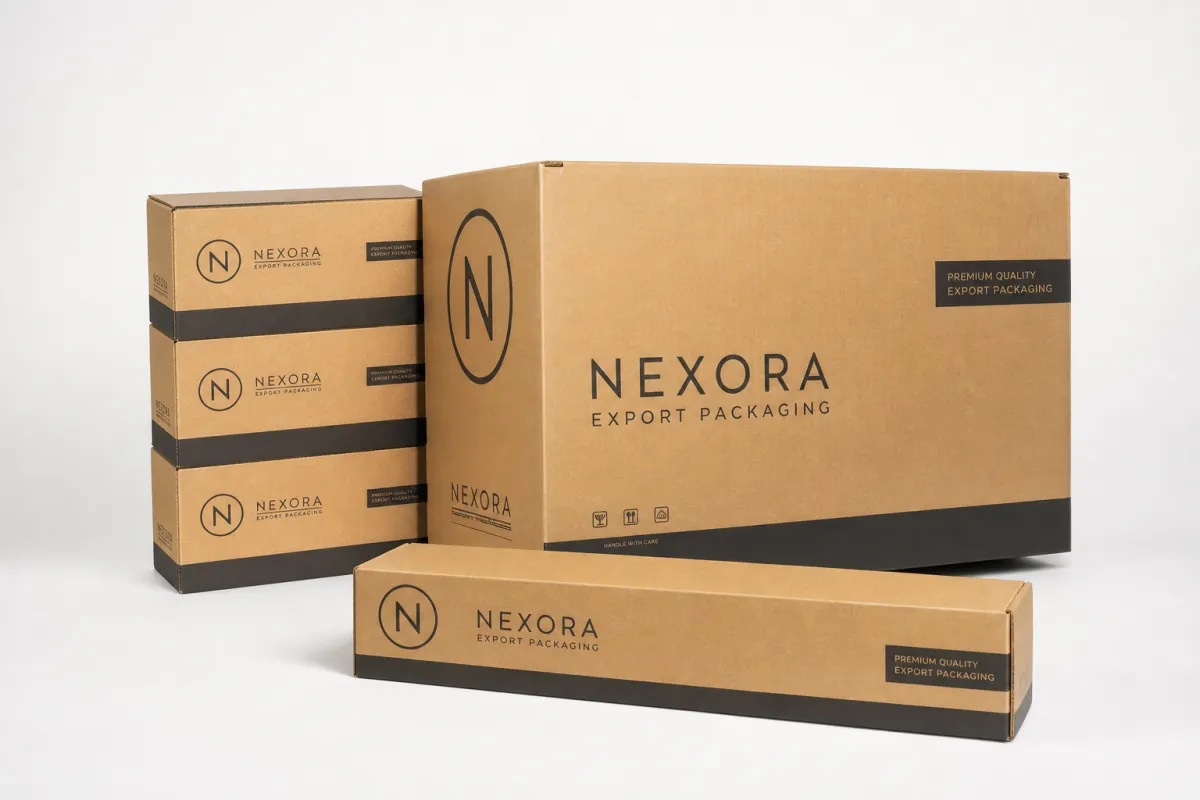
A carton failure does not stop at a broken box. It starts a chain. Damaged goods need inspection, repacking, notes to the carrier, and a fresh round of apologies nobody wanted to write. Branded export cartons wholesale is meant to interrupt that chain before it starts. Better board, tighter fit, and cleaner print placement all help the shipment survive the trip long before it reaches the destination port.
The margin story is just as practical. Saving a few cents on each carton is useless if the load shifts and the product gets damaged. Spend a little more on the right structure and the damage rate drops. That is usually the cheaper route. Branded export cartons wholesale is not only a packaging choice. It is a cost-control decision with freight attached.
Branding also helps the back end of the supply chain. Mixed pallets are normal. Route changes happen. Old labels get covered. A warehouse team spots a branded carton faster than a plain brown box, especially when the carton carries a logo, SKU, color bar, or handling mark that matches the pick list. Branded export cartons wholesale can save seconds on each move, and seconds add up fast when volume climbs.
Cheapest is often the most expensive carton after freight. The fanciest carton is often the one that never needed to exist. The right carton lives in the middle: strong enough to travel, clear enough to identify, and priced so it still leaves room in the margin. That is kinda the whole trick.
The cheapest carton gets expensive the moment it starts failing. The best carton is the one nobody complains about after the truck leaves.
- Damage control: stronger board and better fit reduce split corners, crushed stacks, and moisture softening.
- Labor control: branded marks speed up picking, staging, and receiving.
- Claims control: fewer transit failures mean fewer disputes with carriers and distributors.
- Planning control: consistent carton specs make reorders predictable instead of messy.
A useful way to compare options is to start with route risk. A dry inland lane is not the same as a humid ocean lane. A light consumer product does not need the same carton as a dense industrial part. Branded export cartons wholesale should match the route, the stacking load, and the product weight. Anything else is guesswork dressed up as procurement.
Product details: what branded export cartons wholesale includes
Branded export cartons wholesale usually starts with the carton format. Common options include regular slotted cartons, die-cut export cartons, mailer-style packs for smaller goods, and specialty builds for fragile or high-value products. The format matters because it changes how the carton folds, how it stacks, and how much board is actually doing useful work.
Regular slotted cartons are the workhorse. They are cost-efficient, easy to run at volume, and suitable for many export shipments. Die-cut cartons are better when the product needs a tighter fit, a cleaner opening, or more controlled presentation. Mailer-style packs make sense for smaller shipments, especially when the product moves through parcel networks before it reaches a pallet. In every case, branded export cartons wholesale can be set up with one-color marks or fuller artwork depending on budget and durability needs.
Print options should follow the route, not the mood board. A simple one-color logo mark is usually enough for warehouse recognition and brand consistency. Multi-color print makes sense if the carton is visible at retail, in a presentation center, or in distributor storage. Handling icons, lot codes, SKU numbers, and batch marks often matter more than a giant graphic. The buyer's job is not to fill white space. It is to make the carton easier to use.
Structural options are where buyers either overbuild or underbuild. Flute profile, single-wall versus double-wall construction, inserts, dividers, and reinforced corners all change performance. Fragile goods may need dividers to stop carton-to-product contact. Dense products may need double-wall board to stay safe in transit. Branded export cartons wholesale should match the actual product weight, not the hope that the box "probably holds." Hope is not a spec.
Branding and durability pull on each other. Heavy ink coverage looks sharp until it starts forcing a weaker board choice or complicating moisture protection. A big solid flood print can look great, but if the design slows production or calls for extra coating, the buyer needs to know before approving the artwork. Good carton design starts with function, then adds branding with enough discipline to keep the result clean.
Useful product details to ask for upfront:
- Board type: single-wall, double-wall, or specialty corrugated construction.
- Flute profile: B, C, E, BC, or another profile based on crush needs and print quality.
- Print method: flexo, digital, or another process suited to the run size.
- Closure style: tape seal, glue lock, or die-cut locking tabs.
- Pack-out method: loose product, inserts, partitions, or nested components.
If you need help comparing wholesale structures across product families, our Wholesale Programs page is the right place to start. Lock the structure before you get attached to a polished render. Branded export cartons wholesale works best when the box fits the product, not the other way around.
Specifications that affect performance in branded export cartons wholesale
The spec sheet matters more than most buyers want to admit. Exact internal dimensions, board grade, flute profile, ECT or BCT strength, carton weight, and finish decide whether the shipment stacks neatly or leans like a bad poker player. With branded export cartons wholesale, even a few millimeters can change how the load behaves on a pallet.
Exact dimensions matter because nominal size is not enough. Two cartons can both be listed as "400 x 300 x 250 mm," but if one runs short internally by 4 mm, product fit changes, loading changes, and the stack pattern may fail by the third layer. That sounds picky until you see a shifted pallet in a container. Then it sounds sensible. branded export cartons wholesale should be checked against actual internal dimensions, not just the brochure line.
Export conditions add stress that basic warehouse cartons never see. Humidity softens board. Long storage under load weakens the bottom panel. Rough handling knocks corners. Container movement works the seams. If the route is humid or slow, ask for a board spec that accounts for moisture and compression, not just static display. The carton should survive the lane it will actually travel, not the lane in the sales deck.
Print durability is another detail worth caring about. Ink rub resistance matters if the cartons are stacked, handled, and wrapped multiple times. Label adhesion matters if third-party logistics teams add routing stickers or customs marks. Logo placement matters if tape or stretch wrap covers the wrong face. Branded export cartons wholesale should keep marks readable after packing, not only when the sample is sitting on a white table under studio lights.
For transport testing, ask what standards were used and what the sample actually passed. The ISTA procedures are useful if you want transit testing that reflects real shipping stress instead of a desk-only approval. For compression, ask for data that lines up with ASTM D642 or a similar method. A supplier who can explain the result is worth more than one who only says, "It passed."
One detail gets ignored too often: bundle count and pallet configuration. Awkward bundle counts cost labor. Inconsistent pallet heights waste truck space. A carton spec that supports cleaner palletization improves the whole chain. That is the quiet kind of win branded export cartons wholesale should deliver.
Ask for sample cartons before full production. Test them with the actual product, the actual seal, and the actual route conditions if possible. Drop checks, compression checks, and simple stacking trials catch more problems than another round of logo comments ever will.
Here is the technical shorthand I use with buyers who want the quick version: ECT tells you how the board handles edge crush, while BCT points to how the finished box behaves under stack load. Both matter. One is the input, the other is the outcome. If you only chase the number that looks good on paper, the pallet will tell on you later.
Pricing branded export cartons wholesale without guesswork
Pricing is where buyers get overconfident or get burned. The headline number on a quote only means something if the spec behind it is the same. For branded export cartons wholesale, the main cost drivers are board material, carton size, print colors, tooling or die fees, finish, inserts, and shipping distance. Change one of those and the price moves. That is not mysterious. That is packaging.
MOQ changes the unit price fast. A small run has to absorb setup, printing, and inspection costs across fewer cartons, so the per-unit cost climbs. Larger orders spread those fixed costs out and usually unlock better board pricing too. If you are buying branded export cartons wholesale for a stable SKU, it often makes sense to push volume into fewer, larger releases rather than lots of tiny orders that each carry their own overhead.
Hidden costs matter as much as the quoted unit price. Plates, sampling, freight, export packing, and rush fees can quietly distort the total if they are not listed clearly. A supplier may quote a low unit price and then add separate charges for die setup, samples, or bundle wrapping. That is fine if it is disclosed. It is not fine if the buyer finds out after approval. branded export cartons wholesale should be compared line by line, not by instinct.
Compare like with like. Board grade should match. Dimensions should match. Print method should match. Included packaging should match. A 32 ECT carton is not the same as a 44 ECT carton, and a single-color flexo job is not the same as a four-color printed carton with coating. If the spec is not normalized, you are not comparing quotes. You are comparing two different products that happen to carry the same logo.
Sometimes the slightly higher carton is the cheaper carton. That sounds backwards until the math includes damage rate, labor time, and pallet failure. A sturdier box can reduce repacks, avoid claims, and make warehouse handling less annoying. For buyers shipping heavy goods or humid-route cargo, branded export cartons wholesale often saves money by preventing avoidable loss, not by chasing the lowest sticker price.
Here is a practical pricing snapshot for common wholesale carton types. These are broad market ranges for reference only. Exact pricing depends on size, board grade, artwork coverage, and freight terms.
| Carton option | Typical spec | Common MOQ | Approx. unit price at 3,000 pcs | Best for |
|---|---|---|---|---|
| Plain RSC with one-color logo | Single-wall, kraft liner, flexo print | 500-1,000 pcs | USD 0.22-0.38 | Light to medium products, simple branding |
| Custom branded export carton | Single-wall, 1-2 color print, standard finish | 1,000-2,000 pcs | USD 0.30-0.60 | General export shipments with repeat orders |
| Double-wall export carton | BC flute or similar, moisture-aware board | 1,500-3,000 pcs | USD 0.68-1.25 | Heavier goods, humid lanes, higher stack loads |
| Die-cut carton with inserts | Custom tooling, partitions, presentation opening | 2,000-5,000 pcs | USD 0.95-2.10 | Fragile, premium, or high-value products |
A few buyers focus too hard on the quote and not enough on the shipped cost. That is backwards. The right question is not "What is the cheapest carton?" It is "What carton gives me the lowest total cost after freight, damage, and labor?" branded export cartons wholesale is a shipping input, so judge it like one.
If the supplier can provide tiered pricing, ask for it. A good quote shows where the unit cost drops at 1,000, 3,000, 5,000, and 10,000 pieces. That makes budget planning easier and often shows whether you should consolidate SKUs. For repeat programs, that structure matters more than a one-time discount.
Process and timeline for branded export cartons wholesale orders
The order flow should be boring. Boring is good. The usual path for branded export cartons wholesale is brief, quote, artwork review, sample approval, production, quality check, and shipment. Skip or rush any of those steps and the odds of a mistake climb. Packaging is not the place to wing it and hope the pallet is forgiving.
Sampling is usually faster than production, but only if the brief is complete. If the supplier has to chase dimensions, redraw a dieline, or clean up a low-resolution logo, days disappear fast. A clean first brief helps more than any polite reminder later. For branded export cartons wholesale, the fastest orders are the ones where product size, finished weight, and print file are already locked.
Timelines vary by complexity, but a realistic expectation is often 3-7 business days for sample preparation and roughly 12-18 business days for production after final approval on a standard custom carton. Double-wall construction, heavy print coverage, or specialty inserts can add time. Sea freight sits on its own clock, and that difference matters more than people like to admit. A carton can be finished and still not be in your warehouse for weeks.
Most delays come from preventable issues. Missing dimensions create layout confusion. Low-resolution logos slow prepress. Last-minute changes to board grade or artwork force a new approval cycle. If a buyer keeps changing the spec after the sample is approved, the schedule slips. That is not a supplier problem. That is a planning problem.
Here is the short list I want buyers to prepare before asking for branded export cartons wholesale pricing:
- Product dimensions: finished size, not guesswork.
- Loaded weight: per carton weight, plus any tolerance range.
- Shipping route: inland, sea freight, humid lane, or mixed transit.
- Stacking needs: how many layers on a pallet, and for how long.
- Artwork files: vector logo, copy, color references, and handling marks.
- Reorder plan: expected monthly volume or seasonal peaks.
Reorders are where standardized packaging earns its keep. Once the spec is locked, repeat orders move faster because the supplier is not rebuilding the carton from zero. That lowers risk and keeps the visual identity consistent across shipments. Branded export cartons wholesale is much easier to manage when the first order becomes the master spec for everything that follows.
Transit time deserves its own line in the plan. Production time and shipping time are two separate clocks. Buyers often approve a carton, breathe out, and then discover ocean freight takes the longer half of the total timeline. Plan inventory around both. That bit of discipline prevents a lot of panic later.
Why choose us for branded export cartons wholesale
At Custom Logo Things, the useful part is not the mockup. It is the spec that still works after the mockup is forgotten. The value in branded export cartons wholesale is finding the carton that fits the route, the product, and the budget without forcing the buyer to guess which compromise hurts least.
A good supplier should talk about board strength, print consistency, sample validation, and pallet planning without turning it into a speech. If a carton is overbuilt, say so. If it is underbuilt, say so. If the logo coverage is pushing the price too high for the actual use case, say that too. Buyers do not need flattery. They need a carton that ships well. Branded export cartons wholesale is a technical purchase with a branding layer, not the other way around.
Communication speed matters more than people think. A slow response on the dieline becomes a slow approval. A slow approval becomes a missed ship date. That is why the best wholesale partner keeps the spec history organized, the artwork files clear, and the change log tight. If you want a few examples of how that shows up in real orders, our Case Studies show the process better than any polished sales deck.
Supply-chain documentation matters too. If your customer wants chain-of-custody paper, ask for FSC-certified paperboard and the documents to match. The FSC system is the standard most buyers recognize, and it is easier to build that requirement into the carton spec from the start than to patch it in later. For branded export cartons wholesale, traceability should be part of the plan, not an awkward add-on.
There is a simple operational benefit here. A reliable carton spec reduces surprise. Fewer surprises at the dock. Fewer damaged units on arrival. Fewer calls about missing labels or crushed corners. That is the part people remember after the order is done. Branded export cartons wholesale should make your shipping process quieter, not louder.
If you are scaling multiple SKUs, consistency becomes even more valuable. Same board language. Same print quality. Same approval path. Same reorder history. That is what makes wholesale packaging manageable instead of annoying. The buyer who locks this down early spends less time chasing packaging problems and more time moving product.
I have also watched brands get seduced by artwork before the carton structure was finished. Pretty render, wrong box. Not a great use of anyone's time. Get the shipping spec right first, then let the branding sit on top of a carton that can actually do the job. That order of operations saves money and, frankly, a lot of grumbling.
Next steps: order branded export cartons wholesale without delays
The fastest way to move is to gather the basics before asking for a quote on branded export cartons wholesale. Get the product size, finished weight, shipping route, stacking needs, and artwork files together. That sounds obvious. It still gets skipped more often than it should.
Request a quote and a sample at the same time if possible. That lets the supplier check price and structure together instead of pricing a box that was never going to survive the actual route. For new products, heavy goods, or cartons that will face humidity, a pilot run is usually the smart move. Small test orders are cheaper than fixing a full container of mistakes.
Confirm the spec in writing before production. Dimensions. Board grade. Print setup. Bundle count. Pallet plan. Lead time. If those details are clear, the order moves faster and the repeat order is easier to place later. Branded export cartons wholesale is much smoother once the spec is treated like a controlled document instead of a casual note in email.
Use a simple internal checklist before you release the order:
- Approve the artwork and dieline.
- Confirm the carton strength and board grade.
- Lock the MOQ and price tier.
- Check bundle count and pallet height.
- Set the reorder trigger before stock gets tight.
If you need repeat specs across several SKUs, our Wholesale Programs page can help you organize the purchasing side before the shipping side gets messy. That is usually where the best savings show up anyway: fewer rework cycles, fewer last-minute changes, and a tighter link between packaging and fulfillment.
Branded export cartons wholesale works best when it is treated as part of the logistics plan, not as a decorative afterthought. Start with the route, the load, and the box strength. Then add branding that helps the warehouse instead of fighting it. If you get those three pieces right, the carton disappears into the background, which is exactly what a good export carton should do.
What MOQ should I expect for branded export cartons wholesale?
MOQ depends more on size, print setup, and carton complexity than on a single fixed number. For many simple export cartons, the minimum can start around 500 to 1,000 units per SKU. More custom structures often sit in the 1,500 to 3,000 range. Higher volumes usually unlock better pricing and more room for stronger board or upgraded print.
Can branded export cartons wholesale handle sea freight and humidity?
Yes, if the board grade and strength rating are chosen for export conditions instead of basic warehouse use. Moisture-resistant coatings, proper pallet wrap, and desiccants can help reduce softening in long transit. For humid routes or slow-moving containers, ask for a sample that reflects the actual lane, not a dry-room test piece.
How do I compare quotes for branded export cartons wholesale?
Compare board grade, dimensions, print method, MOQ, sampling cost, and freight terms line by line. A lower unit price can be misleading if it excludes tooling, plates, or export packing. Ask every supplier for a like-for-like spec sheet so you are not comparing two different cartons with the same logo.
How long does branded export cartons wholesale production take?
Sampling is often measured in days, while production usually takes longer after artwork and structural approval. A simple reorder is faster than a first-time custom carton because the spec is already locked. International shipping time is separate from production, so total delivery time depends on both manufacturing and transit.
What artwork do I need for branded export cartons wholesale?
Provide a vector logo, brand colors, final text copy, and any handling marks or regulatory notes. A dieline speeds things up because it shows exactly where print, folds, and seals will sit. If the artwork is incomplete, expect delays while the supplier cleans up files or rebuilds the layout.
If you are pricing branded export cartons wholesale, start with the spec, not the logo. Get the board, dimensions, route conditions, pallet plan, and artwork sorted first, then make sure the branding supports the shipment instead of fighting it. That is the difference between a carton that looks nice and a carton that actually earns its keep.