For candle brands, Branded Hang Tags do more than carry a logo. They signal whether the product feels considered, giftable, and worth a second look. The jar label may win the first glance, but the tag often delivers the tactile proof that the brand paid attention to detail.
That is why the search for branded Hang Tags for Candle brands Sustainable Material Options should start with packaging behavior, not decoration. The paper stock, fiber content, thickness, and finish all influence how the candle is read on shelf, in a gift bag, or on a retail peg. A thin, glossy tag can make a well-made candle feel cheaper. A well-chosen uncoated stock can make even a simple design feel deliberate.
There is also a practical side. Candle tags usually need to carry scent names, safety copy, and sometimes barcodes or batch references. They have to hang cleanly, survive handling, and stay legible when customers touch them. That means the best material choice is rarely the most visually dramatic one. It is the one that holds up under actual use.
Why candle hang tags carry more weight than they look
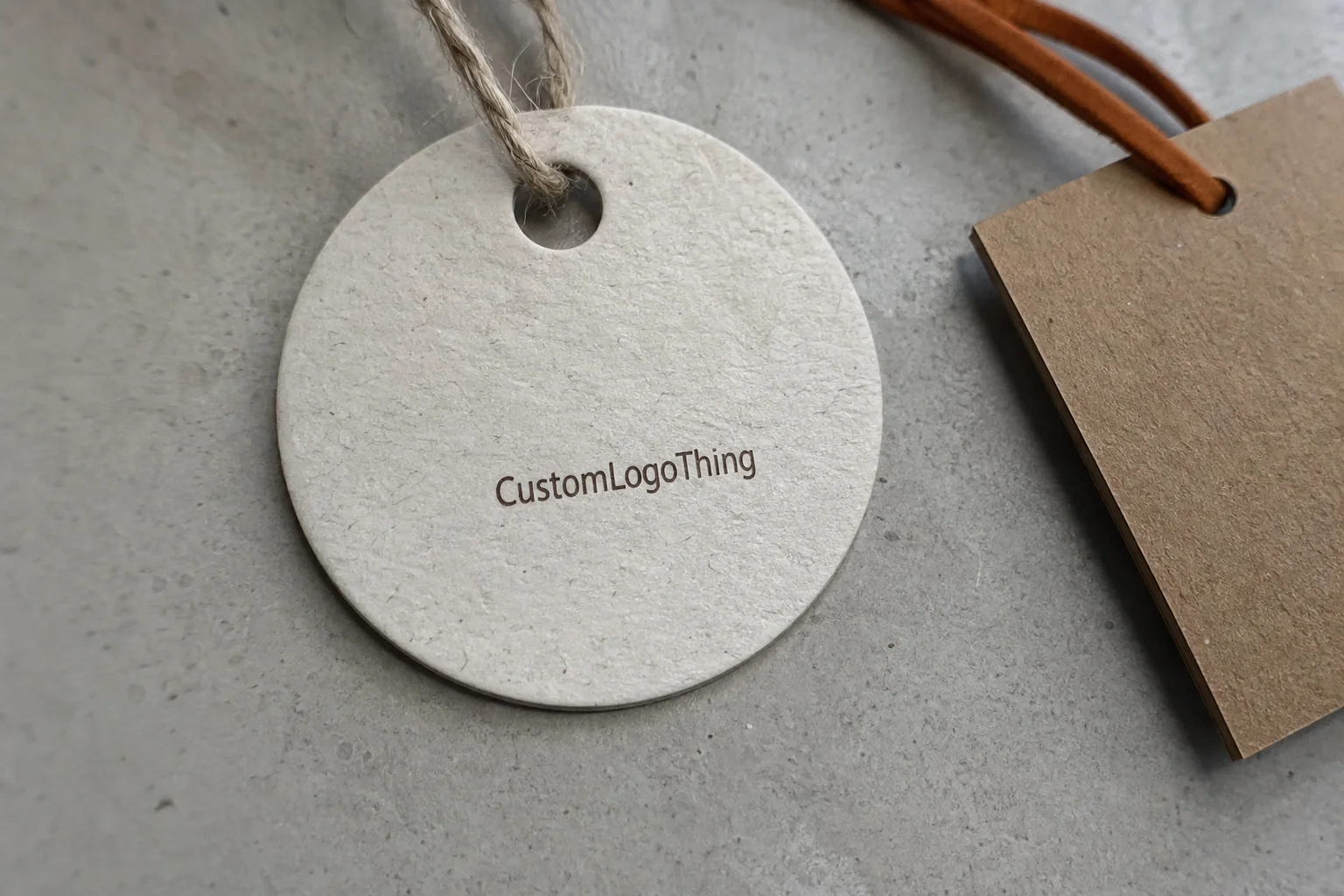
A hang tag is small, but it behaves like a miniature sales sheet. It can explain the scent family, reinforce the brand tone, and add the kind of detail buyers expect from a premium candle. For a shopper in a crowded aisle, that extra information often decides whether the product feels polished or unfinished.
Material tells its own story. Recycled paper, kraft board, cotton stock, and FSC-certified paper each imply something different before a single word is read. A textured, restrained tag suggests care and restraint. A flimsy one suggests the packaging budget ran out before the product story was complete.
That matters because candle buyers often use packaging as a proxy for quality. If the candle is sold as wellness-focused, natural, refillable, or seasonal, the tag has to support that claim visually. The better the material match, the less work the rest of the design has to do.
Most brands want a premium result without plastic lamination or heavy coatings. That instinct is usually sound. A tag should support the candle, not compete with it. If the packaging system already includes a jar label, closure, and shipper, the tag should feel like part of the same design language rather than an extra layer of branding noise.
From a buyer’s point of view, the useful question is simple: does the tag still look intentional after shipping, hanging, and customer handling? If the answer is no, the packaging system needs work, regardless of how it looked in a mockup.
How sustainable hang tag materials perform on candle packaging
Not every eco-friendly stock behaves well in production. A paper can look beautiful in a sample book and still fail once it is die-cut, hole-punched, printed, and tied to a jar. That is why the practical test is not just whether a material sounds sustainable. It is whether it survives the full packaging process.
FSC-certified paper is a common starting point because it gives brands a recognized sourcing framework. The certification does not make a tag magical, but it does make the paper story easier to defend. More importantly, it is usually available in a wide range of weights and finishes, which makes it easier to match the product line. You can review the certification framework at fsc.org.
Recycled cardstock is another practical option. It often has a slightly muted look, which works well for candles positioned around calm, natural, or everyday luxury themes. The tradeoff is consistency. Recycled papers can vary a bit more by lot, so tight color matching and ultra-fine typography need to be tested early.
Kraft board gives the clearest earthy signal. It pairs well with black ink, simple type, and natural string. The downside is predictable: kraft does not always play well with bright whites, rich solids, or highly detailed graphics. If a brand wants the material itself to carry part of the aesthetic, kraft is useful. If the design depends on precision color reproduction, it is less forgiving.
Cotton paper sits closer to the premium end. It has a softer hand feel and a more elevated texture, which suits gift candles and higher-priced collections. It also costs more, and that cost is not only about paper. Cotton stocks can affect print coverage, trimming, and hole integrity, so the whole production run needs a little more care.
Seed paper gets attention, but it deserves caution. It is memorable and aligned with a compostable narrative, yet it is not always the most reliable for detailed print work or clean edges. Once the brand adds seeds into the sheet, the paper becomes harder to control. For limited campaigns or promotional drops, that may be acceptable. For a long-running candle line, consistency often matters more than novelty.
One thing buyers learn quickly: uncoated papers feel more natural, but lightly treated stocks can resist smudges better. That becomes relevant with candles because fragrance oils, shipping friction, and repeated handling can mark the tag. If the tag sits close to a jar, a coated or internally sized stock may outperform a more delicate paper, even if the delicate option looks better in a sample book.
The best starting point is usually physical sampling. Screen images flatten texture, thickness, and edge quality. A recycled board may feel solid in a photo and unexpectedly soft in hand. A dark ink may look rich online and sink into an open fiber stock in print. Samples reveal those differences before the order is committed.
| Material | Typical strengths | Possible limitations | Best fit |
|---|---|---|---|
| FSC-certified paper | Recognized sourcing story, versatile, good print clarity | Can feel ordinary without strong design choices | Most candle lines that need credible sustainability messaging |
| Recycled cardstock | Visible recycled content, sturdy enough for hanging tags, familiar finish | Color and texture can vary by batch | Eco-focused and mainstream premium candles |
| Kraft board | Natural appearance, strong with simple ink layouts, low-finish look | Less suited to bright colors or heavy coverage | Rustic, refill, artisanal, and wellness candles |
| Cotton paper | Soft touch, premium feel, strong gift appeal | Higher cost, not ideal for dense graphics | Luxury and seasonal candle collections |
| Seed paper | Memorable, conversation-starting, compostable-leaning story | Variable print sharpness, weaker durability | Short-run launches and experiential campaigns |
For most brands, a controlled recycled or FSC-certified stock is a better production choice than a novelty material that is hard to print consistently. Sustainability should hold up in manufacturing, not just on a marketing slide.
Key factors to weigh before choosing your tag stock
The right stock depends on the candle’s position in the market. A luxury candle, a refill candle, and a seasonal gift candle are not asking for the same visual language. A heavy uncoated sheet can make sense for an elevated, minimal line. A lighter recycled stock may be more appropriate for a lower-priced or higher-volume range where unit cost matters more than a thick hand feel.
Function matters just as much as branding. Many candle tags need scent notes, warning copy, batch details, and sometimes a barcode or QR code. Once all of that is added, small format errors become obvious fast. If the tag is too small, the layout gets crowded and starts to feel like instructions rather than branding. If it is too large, the candle can look over-labeled and unbalanced.
Thickness should be chosen carefully. Most candle hang tags land in the 12 pt to 18 pt range, but that is only a rough guide. A 14 pt recycled board may be strong enough for a standard hang tag, while a softer cotton stock at the same thickness can feel more premium yet behave differently at the hole punch. The real question is whether the tag will hang straight and remain intact after repeated handling.
Sustainability claims need to be specific. Vague language like “eco-friendly” or “green” does not help a buyer make a decision. Better wording is clearer: FSC-certified paper, post-consumer waste content, recyclable paper components, or compostable where the material genuinely supports that claim. If the string is cotton, jute, or paper cord, name it. If the entire tag can be sorted with paper waste, say that plainly and only if the full construction supports it.
There is also a compliance layer. Candle safety text cannot be treated as an afterthought. Depending on the market, the tag may need clear burn instructions, allergen references, or warning language. That copy has to fit the design without making the tag look cramped or improvised. If the brand sells multiple fragrance families, standardizing the back panel structure can reduce errors and make reorders faster.
Buyer behavior usually comes down to three questions: Is the paper certified or recycled in a way that is easy to explain? Does the material choice match the brand tone? And can the tag survive printing, cutting, and transport Without Wasting Money on rejects? Those questions are more useful than broad sustainability claims, because they connect marketing language to production reality.
For packaging teams that want a wider frame, the EPA provides useful guidance on materials and waste reduction, and packaging.org is a practical reference for packaging fundamentals. Sustainability decisions land better when they are treated as a system, not a single attribute.
Cost, pricing, MOQ, and unit cost basics
Pricing for candle hang tags usually comes down to stock, print coverage, finishing, shape, attachment method, and quantity. Change any one of those and the quote moves. A simple square tag on recycled cardstock is a different job from a custom-die cotton-paper tag with rounded corners, foil, and pre-attached twine.
As a rough benchmark, straightforward runs at around 5,000 pieces often land near $0.18 to $0.28 per unit. That assumes standard printing, a common stock, and minimal finishing. Smaller runs can land closer to $0.35 to $0.70 per unit, especially when setup costs are spread over fewer tags. Specialty stocks, manual assembly, or complex die-cutting can push the number higher.
MOQ matters more than many teams expect. Some recycled or FSC papers are easy to source in standard sheets or rolls, while specialty cotton or seed stocks may require higher minimums. For a seasonal candle line or a fragrance test, a smaller order can be the smarter move even if the unit price is higher. Paying a little more for a short run is often less expensive than sitting on packaging that no longer fits the product plan.
Comparing only the unit price is a common mistake. That hides setup fees, die charges, shipping, assembly, and storage. A lower quoted price can become a higher landed cost once the tags are cut, sorted, tied, and boxed. A better way to compare options is to look at total landed cost and the operational work needed to get the tags shelf-ready.
Unit cost usually drops as volume rises, but specialty materials can flatten that curve. Once the brand moves into a textured stock or a more complex finish, the savings from scale may be smaller than expected. In those cases, simplicity is often the cheapest path to a premium result.
Most buyers also underestimate the cost of inconsistency. A slightly cheaper paper that tears at the hole or rejects poorly at print can erase the savings quickly. Stable production is worth more than a low quote that only works on paper.
Process and turnaround: from dieline to finished tags
The production process usually starts with stock selection and a dieline. After that comes copy placement, proofing, and a check for variable data like barcodes or batch codes. Then the job moves into printing, finishing, cutting, and packing. It sounds linear. In practice, most delays happen before the press ever starts.
The most common causes of delay are missing copy, low-resolution logos, unclear hole-punch placement, and vague string specifications. If the tag needs to hang a certain way on the jar, a few millimeters matter. Hole position changes the drape. Tag shape changes the balance. Even the choice between cotton cord and paper cord can affect how the finished product sits on the shelf.
For a simple order, turnaround is often around 10 to 15 business days after proof approval. More complex jobs, especially those with specialty paper sourcing, custom shapes, foil, or manual attachment, can move to 15 to 25 business days. Rush schedules can happen, but they reduce room for revision and usually carry a premium.
“The best candle hang tags are the ones that look calm, survive handling, and still feel right after they are tied to the jar.”
To keep production moving, the spec sheet needs to be clean from the start. Send final copy, vector logo files, size, paper choice, finish, Pantone or CMYK targets, hole placement, and attachment style. If the candle brand wants a natural look, say whether the string should be cotton, jute, or paper cord. If the tag needs a barcode or QR code, include the required size and a file that prints cleanly at actual dimensions. Small omissions create large delays.
Useful prepress checklist:
- Approved copy, including safety and warning text
- Logo files in vector format
- Final tag dimensions and dieline
- Paper stock or finish target
- Pantone or CMYK color references
- Hole size and location
- Attachment type: twine, elastic loop, paper cord, or none
- Quantity by SKU or fragrance family
Common mistakes candle brands make with tag design
The most common mistake is overloading the front. A candle tag should not act like a tiny brochure. If the front panel tries to carry the logo, fragrance description, sustainability statement, and multiple claims, the hierarchy collapses. The customer has to work too hard, and the brand feels less refined as a result.
Another problem is vague sustainability language. “Green” and “eco-conscious” are too broad to be useful. Buyers respond better to facts they can verify: recycled content, FSC certification, recyclable paper components, or a specific natural fiber. Precision matters because it makes the packaging easier to trust.
Finish mismatch shows up more often than brands expect. A glossy coating can feel wrong on a calm, natural candle line. A heavily textured stock can look out of place on a clean, modern fragrance range. Thin paper that tears at the hole gives the worst signal of all. It says the brand wanted the impression of quality without paying for the construction that quality requires.
Skipping samples is expensive. On screen, a cream stock, a soft white stock, and a warm recycled stock can all look close enough. Under store lighting, they diverge quickly. Ink density, edge quality, and fiber texture are easier to judge in hand than on a monitor, and those are the details customers notice once the candle is on shelf.
There is also a systems mistake that shows up in multi-piece packaging: the tag is designed in isolation. If the candle ships in a carton or mailer, the tag still needs to make sense when it is removed from the outer pack. The jar label, lid, wrap, and shipping box should feel like one family. When they do not, the packaging starts to look assembled instead of designed.
Expert tips for a cleaner, more premium tag system
Start with hierarchy. Scent name first. Brand mark second. Required copy third. Sustainability details last. That order matches how shoppers actually scan packaging. They want to know what the candle is before they read the proof points.
Use one tactile cue consistently. A recycled texture, a soft uncoated surface, natural twine, or a restrained ink palette is usually enough. Adding every possible “eco” signal at once can make the design feel staged. One or two deliberate choices tend to read as more credible.
Size the tag against the candle, not against the artwork file. A tag that looks balanced on a flat mockup may hang too low, cover part of the label, or bunch against the lid once it is tied. If the candle will sit inside a box or shipper, test the full package, not just the isolated tag. The way the tag moves matters as much as the way it prints.
Standardize wherever possible. If the brand has six fragrances, use one base structure and vary only the scent text or a small accent detail. That reduces waste, shortens approval cycles, and makes reorders easier. It also creates a more disciplined shelf presence, which buyers often read as premium whether they say so or not.
Good candle tags look designed, not decorated. That is the difference between a package that feels deliberate and one that feels assembled from trend fragments. Clarity usually does more for perceived value than ornament does.
Next steps for specifying your candle tag order
Before placing an order, define the job the tag has to do. Is the candle luxury-forward, natural, refill-focused, or meant for gifting? That answer should guide paper choice, typography, size, and finish before anyone starts polishing the artwork.
Then build a short specification sheet. Include the material preference, size, print method, finish, string type, and any required warnings or barcode details. If the brand is deciding between two or three stocks, request samples and compare them under the same lighting. Texture, rigidity, print sharpness, and edge quality all change how the candle is perceived.
It also helps to compare tags the same way you would compare labels or shipper boxes: by feel, function, cost, and production fit. That keeps the discussion grounded in what the packaging must actually do, not just how it photographs in a deck.
For candle brands trying to balance presentation with material responsibility, Branded Hang Tags for candle brands sustainable material options are worth treating as part of the packaging system rather than as an add-on. The best version is clear, durable, cost-aware, and consistent with the candle itself. If the tag does those four things well, it has done its job.
What are the best sustainable material options for candle hang tags?
FSC-certified paper, recycled cardstock, kraft board, cotton paper, and seed paper are all common options. The best choice depends on whether the brand values durability, texture, cost control, or a more distinctive sustainability story.
How thick should branded hang tags for candles be?
Most candle brands use stock in the 12 pt to 18 pt range, but the right thickness depends on the finish, hole placement, and how much text the tag needs to carry. Thicker stock can feel more premium, while lighter stock may be better for high-volume or minimalist lines.
Do sustainable hang tags cost more to produce?
Often yes, especially with specialty recycled papers, textured stocks, or added finishing. The difference can be manageable at higher quantities, and simple layouts usually keep pricing under control.
How long does production usually take for custom candle hang tags?
Simple jobs often run about 10 to 15 business days after proof approval. Specialty paper sourcing, custom shapes, foil, or manual assembly can extend that to 15 to 25 business days.
What should be printed on a candle hang tag besides the logo?
Common additions include the scent name, fragrance notes, burn instructions, safety warnings, batch or collection details, and a QR code or barcode. The strongest layouts keep the front panel simple and move the detailed information to the back.


