Printed Ziplock Bags Are Tiny Billboards With One Job
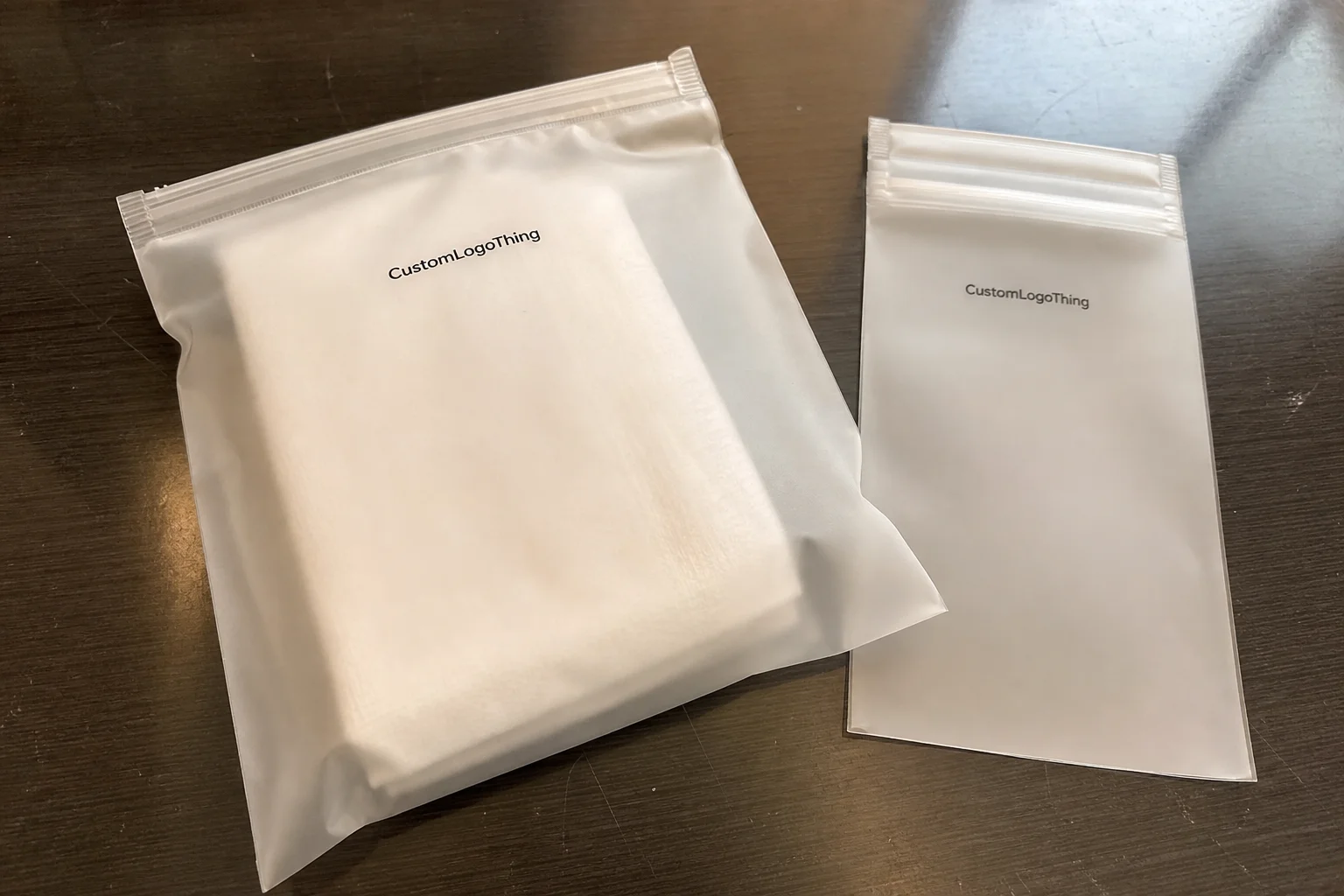
Customers touch the bag before they read the label. That tiny moment does more work than most people expect. Printed Ziplock Bags are not just storage. They are product packaging, sample packaging, retail packaging, and a brand cue packed into one piece of plastic.
A clean bag makes the product feel organized and worth opening. A cloudy film, weak zipper, or sloppy logo does the opposite. The item inside may be excellent. The packaging still gets judged first. Annoying? Yes. Real? Also yes.
Most buyers use the phrase printed ziplock bags, but suppliers may call them resealable plastic bags, custom zip bags, zipper pouches, or Custom Resealable Bags. The exact term matters less than the construction. These bags are usually made from LDPE, HDPE, PP, or laminated film, with a press-to-close zipper, double-track closure, or slider depending on how often the customer opens them.
They show up in apparel accessories, cosmetics, hardware kits, supplements, stationery, jewelry, food-adjacent goods, promotional samples, replacement parts, and small retail bundles. If the product is small, countable, and needs to stay together, a resealable printed bag is often the easiest packaging format to price and ship.
The cheapest bag is rarely the cheapest decision. Thin film can tear, ink can scuff, and a weak zipper can make the whole package feel disposable. That is how people save three cents and lose the premium feel they were trying to create.
Good buying starts with the basics: material, thickness, print method, zipper style, quantity, artwork, lead time, and freight. Skip one of those and the quote comparison gets messy fast. Packaging pricing loves to hide its bad habits in the details.
How Custom Resealable Plastic Bag Printing Works
The production flow is simple enough on paper. Choose the film. Confirm the size and zipper. Prepare artwork. Print the design. Convert the film into bags. Inspect the run. Pack the cartons. Ship the order. The part people miss is that each step has a cost, and each step has a failure point.
Flexographic printing is common for larger runs and repeat orders. It uses plates, runs efficiently once set up, and handles solid logos, warnings, brand colors, and repeating patterns well. The setup cost is higher, but the unit cost can become attractive once quantities rise.
Digital printing fits shorter runs, multiple SKUs, and artwork with gradients or more detailed graphics. It usually avoids plate costs, which helps in small batches. The tradeoff is simple: unit price is often higher than flexo at scale, so it makes more sense for test launches, seasonal runs, or lower quantities.
Screen printing still has a place on simple stock bags, especially one-color logos on clean film. It is not the answer for every design, but for a centered mark on a straightforward bag, it can be sharp and inexpensive.
Print placement matters. Surface printing sits on the outside of the film and is easier to run, but the ink is more exposed to scuffing. Reverse printing places the artwork inside the layers, which protects the design and usually looks cleaner. It also costs more because laminated construction is more involved than a basic single-layer bag.
Color choices create more surprises than they should. One-color logos are easier to proof and often look stronger than cramped full-color art on a small bag. Full-color printing can work well, but it needs better files and tighter approval. On clear bags, light brand colors often need a white underbase. Without it, pale blue, yellow, gray, and pastel tones can vanish into the background or look washed out.
Practical rule: design the bag around the product inside it, not around an imaginary flat rectangle with perfect lighting.
Zipper quality sounds boring until it fails. A stiff or misaligned zipper makes a premium product feel cheap immediately. For anything customers open repeatedly, ask for samples and cycle the closure several times. Twenty open-close cycles tell you more than a spec sheet ever will.
Most designs print on the front panel, the back panel, or both. Some include a barcode zone, a writable area, or a warning text block. Leave room near the side seals and zipper line. Artwork too close to those areas can distort during sealing or get cut off in conversion.
Specs That Matter Before You Ask for a Quote
Start with usable size, not the size somebody guessed from a product photo. Measure the item, then add room for thickness, inserts, air, and actual packing motion. A flat 4 x 6 inch item can still need a 5 x 7 inch bag if it has bulk or if the packing team needs speed more than drama.
Thickness is usually listed in mils in the U.S., where 1 mil equals 0.001 inch. Lightweight sample bags may use 1.5 to 2 mil film. General retail accessories often land around 2 to 3 mil. Heavier kits, sharper edges, or more reusable packaging may need 4 mil or more. Thicker film feels better and resists punctures, but it also adds cost and freight weight.
Material changes both appearance and function. LDPE is soft, flexible, and common for everyday resealable bags. HDPE is stiffer and crinklier. PP usually looks clearer and glossier, which helps on shelf. Laminated film gives stronger structure and better print quality, but it costs more and can narrow recycling options.
Finish matters too. Clear film keeps the product visible and the packaging honest. Frosted film softens the look and can make a low-cost item feel a little more considered. Opaque film hides contents and gives stronger print contrast. Colored film can help with product lines or scent variants, though it can complicate barcode readability and color matching.
Zipper style should match actual use. A standard press-to-close zipper works for many light products. A double-track zipper closes more securely. A slider is easier for repeated use, but it adds cost and bulk. Hang holes make sense for peg displays, though the header area needs enough strength so the bag does not split under weight.
Compliance is not the fun part, but it matters. Depending on product type and market, you may need suffocation warnings, recycling symbols, country-of-origin text, lot codes, barcodes, or child-resistant features. Food-contact use needs documentation, not assumptions. For transit standards, the International Safe Transit Association is a useful reference. For recycling guidance, the EPA recycling resources are a practical starting point.
Artwork quality can make or break the quote. Vector files are best: AI, EPS, or a clean PDF. Fonts should be outlined. Pantone references help if brand color matters. A screenshot pulled from social media is not production artwork. It is a headache in waiting.
| Spec Choice | Best For | Typical Tradeoff |
|---|---|---|
| 1.5-2 mil LDPE | Light samples, inserts, low-weight parts | Lower cost, less premium feel |
| 2-3 mil LDPE or PP | Retail accessories, cosmetics, stationery, jewelry | Balanced feel and cost |
| 4 mil or thicker film | Heavier kits, sharp items, repeated handling | Better durability, higher unit and freight cost |
| Laminated film | Premium presentation, strong print, better structure | Higher MOQ and higher setup cost |
Cost, MOQ, and Unit Pricing: What Actually Moves the Number
Pricing for printed ziplock bags usually comes down to size, thickness, material, print colors, print coverage, order quantity, zipper style, tooling, and freight. If a quote looks too good, something in that list is probably thinner, smaller, slower, or missing.
For rough planning, simple one-color small stock bags may land around $0.08-$0.18 per unit at higher quantities. Mid-size custom resealable bags with 2-3 mil film often sit closer to $0.18-$0.35 per unit for runs around 5,000-10,000 pieces. Larger, thicker, full-color laminated bags can move into the $0.45-$1.20+ range, especially with low quantities or special construction. These are planning ranges, not universal truth carved into a wall.
MOQ exists because setup, plates, film rolls, and press time do not care that someone needs 73 bags for a weekend pop-up. Stock-size printed bags may start at a few hundred or 1,000 pieces with some suppliers. Fully custom sizes, flexographic printing, and laminated structures can push minimums to 5,000, 10,000, or more. Digital printing can lower the entry point, but the unit cost often rises.
Unit pricing drops as quantity increases because setup gets spread over more bags and material can be bought more efficiently. That does not mean a giant order is smart for every brand. Storage, design changes, retailer updates, and product tweaks can turn “savings” into cartons of outdated packaging.
Watch the extra charges. Printing plates may run $75-$300+ per color depending on supplier and size. Color matching or drawdowns may add fees. Pre-production samples can cost $50-$300+ and add time. Rush production, freight, duties, and artwork cleanup all affect landed cost. None of those line items are dramatic by themselves. Together, they explain why the final number is higher than the first email quote.
The real trap is comparing only unit price. One supplier may quote a 2 mil clear LDPE bag with one-color surface print. Another may quote a 3 mil PP bag with white ink underbase and a stronger zipper. Both are “logo ziplock bags.” They are not the same product. Ask for apples-to-apples quotes with material, thickness, print setup, MOQ, lead time, setup fee, unit price, and freight shown separately.
| Option | Typical Setup | Planning Price Range | Smart Use Case |
|---|---|---|---|
| Good | Stock size, 1-color logo, 2 mil LDPE | $0.08-$0.22 each at volume | Samples, inserts, lightweight accessories |
| Better | Stock or custom size, 1-2 colors, 2-3 mil LDPE or PP | $0.18-$0.40 each at mid-volume | Retail packaging, cosmetics, jewelry, kits |
| Best | Custom size, laminated film, full-color or reverse print | $0.45-$1.20+ each | Premium retail, strong shelf presentation, repeat use |
Production Steps and Timeline From Artwork to Delivery
A clean order starts before artwork reaches the press. Confirm the use case, choose the bag spec, submit the artwork, receive the quote, approve the digital proof, approve a sample if needed, start production, inspect the finished bags, ship the cartons, and leave enough time to fix something if it goes sideways. That last part is the one people like to skip. It is also the part that saves launches.
Simple stock-size bags with one-color printing may move in 7-12 business days after proof approval, depending on supplier capacity. Custom-size bags, flexographic plate work, special film, or full-color production often need 15-30 business days. Overseas production adds freight and customs time, which can stretch the schedule by several weeks. Air freight is faster and expensive. Ocean freight is cheaper and slow enough to test anyone’s patience.
Separate sample time from production time. Buyers mix those up constantly. A stock sample may take 3-10 business days. A closer pre-production sample can take 2-4 weeks. That delay is annoying, but it is still cheaper than discovering the zipper is stiff or the logo sits too close to the seal after 10,000 bags have already been made.
A digital proof checks layout, copy, barcode placement, print size, and general color direction. It is not the same as ink on plastic. Clear film, white ink, gloss level, and the product behind the bag can change the appearance. If color matching matters, ask about Pantone matching, ink drawdowns, or a press proof. Not every supplier offers every option, so confirm before you commit.
Flexographic jobs may need plate making before production starts. If the artwork changes after proof approval, the schedule can restart. Sometimes the plates need to be remade. Sometimes the supplier can adjust digitally. Either way, late changes cost time, money, or both.
Build in extra time for launches, trade shows, and seasonal packaging. Packaging rarely causes the deadline, but it often gets blamed for it. Someone remembers the bags three weeks before ship date and then acts offended that plastic does not teleport.
Common Buying Mistakes That Make Good Bags Look Cheap
The first mistake is choosing the smallest possible bag size to save a little money. Then the packing team has to force every item into the opening like they are stuffing a suitcase before a flight. A bag that slows fulfillment can cost more in labor than it saves in material.
The second mistake is covering a clear bag with too much print. If the product is the hero, let people see it. Heavy artwork, too many badges, and oversized slogans turn a display bag into a wall of plastic noise.
The third mistake is skipping white ink under light colors on clear film. Without a white base, pale artwork can look transparent, weak, or half-finished. Dark brand colors usually survive better. Light ones need support.
The fourth mistake is choosing thin film for sharp or heavy products. Hardware kits, metal parts, pins, and chunky accessories can puncture corners or stretch the bag. For those items, 3-4 mil film is a safer starting point than the thinnest option on the quote sheet.
The fifth mistake is ignoring zipper feel. If the closure does not align cleanly or pops open after sealing, the customer blames the brand, not the polymer. Nobody says, “The zip profile seems under-optimized.” They say the packaging feels cheap.
The sixth mistake is approving proofs too quickly. Check spelling, barcode quiet zones, warning text, lot code space, front-versus-back orientation, and seal clearance. A proof approval is not a vibe check. It is a production instruction.
The seventh mistake is forgetting how the bag behaves in real packing. A beautiful package that slows fulfillment is still a problem. Test it with real product, real inserts, real labels, and the actual packing crew. Ten sample bags tell you more than a dozen email replies.
Next Steps: Build a Bag Spec That a Supplier Can Price
If you want useful pricing, give the supplier a real spec. “How much are bags with my logo?” is not a spec. It is a guessing game with invoices attached.
- Product dimensions: width, height, depth, weight, and any sharp edges or bulky areas.
- Target bag size: usable inside space, not just outside dimensions.
- Material preference: LDPE, HDPE, PP, frosted film, opaque film, or laminated film.
- Thickness: 2 mil for light use, 3 mil for retail, 4 mil or more for heavier items.
- Closure type: standard zipper, double-track zipper, slider, hang hole, or header space.
- Print details: number of colors, white ink, front or back placement, barcode zone, and coverage area.
- Order details: quantity, deadline, ship-to ZIP code or country, and compliance text.
Order physical samples before committing if the bag carries a premium product, sits on retail shelves, or will be handled repeatedly. A blank sample in the same size and thickness can still reveal fit, clarity, zipper feel, and packing speed. That alone can save an expensive reprint.
Compare quotes on identical specs first. Then ask for alternatives. Otherwise, you end up comparing three different bags and pretending the cheapest one won fairly. It did not. It changed the rules.
Keep a clean artwork folder with vector logo files, Pantone or brand color references, barcode files, warning text, and a mockup showing front and back placement. If the bag needs a suffocation warning, recycling mark, country-of-origin note, lot code box, or compliance copy, include it from the start.
Stock-size printing is often the smartest first move if budget is tight, speed matters, or the product fits standard dimensions cleanly. Fully custom production makes more sense when the product fit is awkward, shelf presentation matters, retailer requirements are strict, or the bag is part of the product experience.
Before ordering printed ziplock bags, lock down the boring specs first. Size, film, thickness, closure, artwork, compliance, quantity, and delivery date are not glamorous. They are what keep packaging from turning into an expensive guessing game.
FAQ
What are printed ziplock bags usually made from?
Most are made from LDPE, HDPE, PP, or laminated plastic films, depending on the clarity, flexibility, strength, and print finish you need. LDPE is soft and flexible, PP is clearer and glossier, and laminated films are better for premium printing or stronger structure. The right choice depends on product weight, shelf presentation, reuse expectations, and whether the bag needs extra barrier properties.
How much do custom printed resealable bags cost?
Cost depends on size, thickness, material, order quantity, print colors, print coverage, zipper style, setup fees, and shipping. Simple one-color bags at higher quantities are much cheaper per unit than short-run, full-color, heavy-gauge, or laminated bags. Ask for setup, unit cost, freight, MOQ, and Lead Time separately so you can compare quotes cleanly.
What is the minimum order quantity for logo ziplock bags?
MOQ varies by supplier, print method, bag size, and whether you use stock dimensions or fully custom production. Stock-size printed bags usually have lower minimums than custom-size bags because the film and format already exist. If your quantity is small, ask about one-color printing, stock sizes, or digital print options to keep the order realistic.
Can printed zip bags be food safe?
They can be, but only if the material, ink system, and production environment are suitable for the intended food-contact use. Do not assume every plastic bag with a zipper is food safe; ask for material documentation and confirm whether direct food contact is allowed. For snacks, powders, edibles, or food samples, compliance matters more than a pretty logo.
How long does it take to produce custom printed ziplock packaging?
Timelines depend on artwork readiness, proof approval, sampling, print method, order size, production location, and shipping method. Simple stock-size printed bags can move faster, while custom sizes, special materials, full-color printing, or overseas freight add time. Build in extra time for proof revisions, samples, quality checks, and freight delays if the bags are tied to a launch or retailer deadline.