If you are building a reorder system for Branded Hang Tags for cosmetics brands, treat tags as inventory, not decoration. That small shift changes everything. A tag shortage rarely sounds dramatic in advance, but once a launch box is packed, retail units are awaiting final assembly, and the artwork file is buried in someone’s desktop folder, the problem gets expensive fast.
Tags are one of those packaging components that look simple until they fail. When they run out, products appear unfinished, production pauses, and rush freight starts eating into margin. The damage is rarely limited to one SKU. More often, one missed reorder affects a whole collection because the tags were tied to the same launch window, same art approval, and same print run. Planning ahead keeps the packaging line moving and keeps your team out of crisis mode.
That is the practical advantage of a well-managed reorder system: cleaner shelf presentation, steadier replenishment, and fewer rework costs. A repeat order should feel like a controlled production task, not a fresh design project with surprise fees. If the specification is locked, the result should be predictable.
“The cheapest tag is usually the one you reorder before the last carton is opened. The expensive one is the emergency replacement.”
Brands selling through DTC, salons, marketplaces, and retail feel the pressure differently. One SKU may sell at a steady pace while another spikes around gifting season. If inventory is tracked only at the collection level, reorder timing becomes guesswork. Guesswork works badly in procurement.
Why Reorder Planning Beats Last-Minute Tag Panic
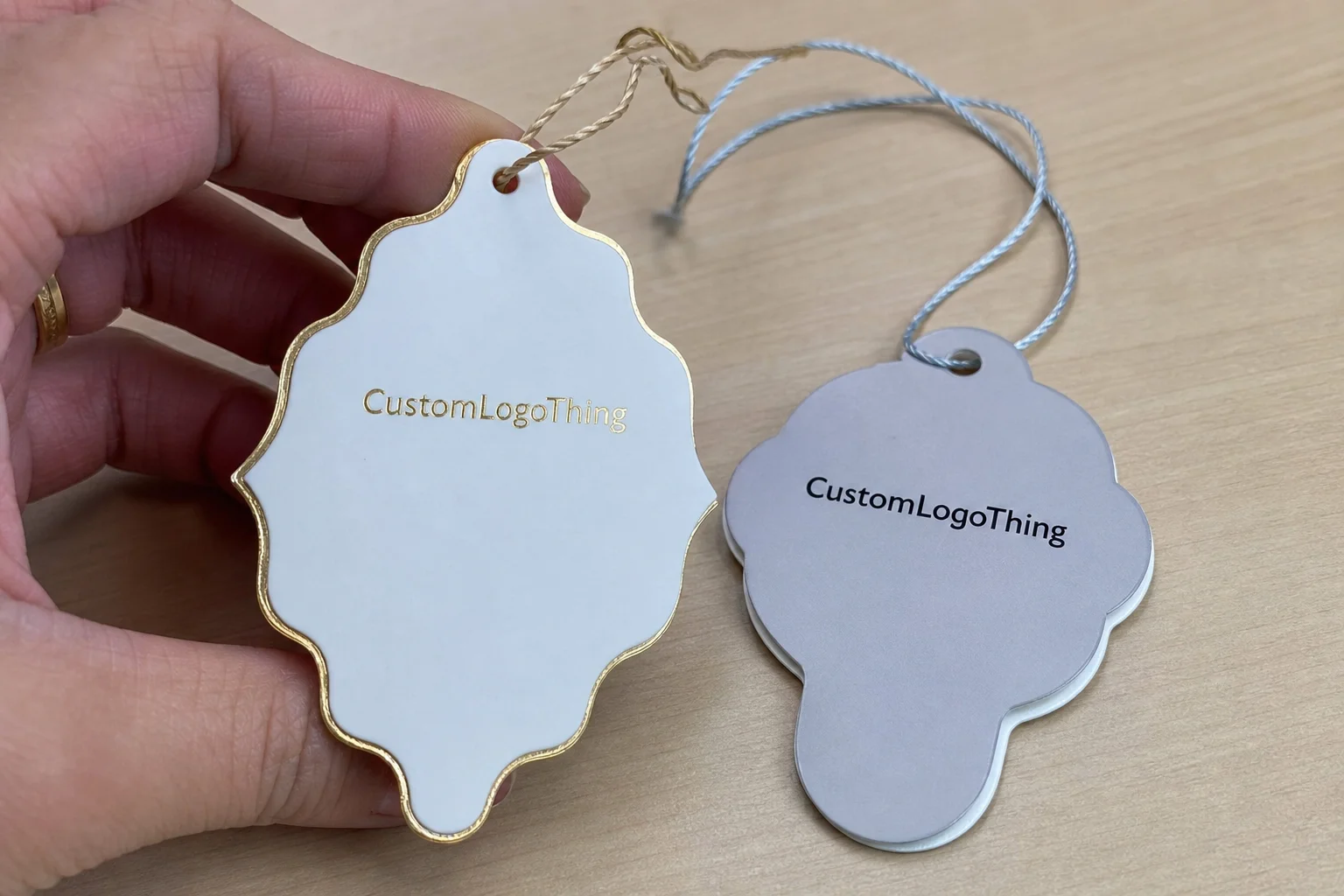
Cosmetics packaging gets judged by the smallest visible details. A serum bottle with no hang tag can look temporary. A skincare set with mismatched tags can look assembled from leftovers. Buyers notice, and so do retailers. Internal teams notice too, usually when the reprint invoice arrives and everyone starts asking who approved the last file.
For branded Hang Tags for Cosmetics brands reorder planning guide work, the goal is not only to buy more tags. It is to protect brand consistency and keep the supply chain from turning each replenishment into a fresh negotiation. Reorders become easier when the same die line, finish, and copy structure can be used again without revision.
There is a real cost advantage here, and it is not flashy. Fewer emergency design changes. Fewer setup repeats. Fewer partial runs that do not hit the better price break. The savings build slowly, then all at once when a seasonal spike lands and the print file is already approved.
Cosmetic packaging often looks best when the tag is doing one clear job first and a couple of supporting jobs second. A lash set may need a premium face and a barcode on the back. A lip product may need shade identification. A gift box may need to look polished while still leaving room for claims or handling information. Too much data turns a tag into a cluttered insert. Too little turns it into dead space.
For brands that keep packaging references in one place, internal standards files and product FAQs help the next reorder start from the correct version rather than from memory. That matters more than most teams expect, especially when multiple people touch the artwork.
What Your Branded Hang Tags Need to Do on Shelf and in Cartons
Hang tags for cosmetics do more than hang. They identify SKUs quickly, reinforce brand tone, and carry text that buyers actually use. Depending on the product, that might be shade names, ingredient callouts, collection names, short claims, or a simple premium cue that makes the package feel finished.
Good tag design starts with the product environment. If the tag sits on a bottle neck, the hole size and position matter. If it hangs from a string tie, the fold and weight matter. If it travels through contract filling, labeling, and fulfillment, the finish has to survive handling without scuffing or curling. The prettiest tag in the proof file is not useful if it bends in transit or blocks a barcode.
Common use cases include:
- Skincare sets with collection names or ingredient callouts
- Lip products with shade differentiation and barcode space
- Gift boxes that need stronger shelf appeal
- Sample kits with compact size and clear SKU identification
- Seasonal collections that need limited-run artwork without breaking brand consistency
Multi-SKU lines need extra discipline. A collection might include six shades, two sizes, and a gift version, all with one visual family. If each tag is ordered separately without a shared spec, the brand risks color drift, finish variation, and inconsistent print setup. Grouping related SKUs reduces confusion and can improve pricing because more of the order sits in one production run.
There is also a practical retail point that gets missed: shoppers make decisions fast. In crowded beauty aisles, a hang tag has only a moment to communicate the product identity before the package moves out of view. That is why the front panel should be easy to read from a short distance, and why the back panel should never be overloaded with legal copy that could have been placed elsewhere.
Material, Size, and Finish Specs That Affect Reorder Stability
If you want reorders to behave, the specification has to be locked. Material, size, finish, hole style, and print method should all be documented before the first run is approved. Those details can be changed later, but each change adds proofing time and can trigger extra setup cost. The more embellished the tag, the more sensitive the repeat order becomes.
Common material choices for Cosmetics Hang Tags include coated paper stock, uncoated paper, kraft, textured specialty paper, and laminated options. Coated stock tends to deliver sharper color and cleaner imagery. Uncoated feels softer and more natural. Kraft suits earthy or minimalist branding. Specialty papers can add tactile value, though batch consistency matters more when the finish is intentionally textured. Lamination helps resist scuffs and moisture, which is useful in busy packing rooms and transport-heavy fulfillment workflows.
Size affects both look and function. Small tags, often around 1.5 x 2 inches to 2 x 3 inches, work well for compact bottles, sample sizes, and simple branding. Larger tags, around 2.5 x 4 inches to 3 x 5 inches, fit gift sets, boxed skincare, and tags carrying more claims or compliance text. Oversizing a tag to make it feel “premium” can backfire if the product itself is small. A tag that overwhelms the package is more likely to tear, crease, or look awkward on shelf.
Finish selection influences both appearance and production stability. Matte lamination usually hides fingerprints better. Gloss can deepen color, but it may reflect light and make small text harder to read. Foil stamping, embossing, and spot UV can create strong shelf presence, although each adds process sensitivity. A reorder with heavy embellishment should always have a tighter quality-control routine than a simple flat print.
Before approving a repeat run, lock in the details that are easiest to forget and most costly to fix:
- Color profile and approved swatch reference
- Die line retention so the shape stays the same
- Hole punch size and placement
- String, ribbon, or fastener compatibility
- File version control for artwork and compliance text
If your product line also uses labels or inserts, keeping the system aligned through Custom Labels & Tags helps reduce visual drift between launches. Consistency matters. Once a brand uses one paper tone on cartons and another on tags without a deliberate reason, the packaging starts to feel pieced together.
Cost, Pricing, and MOQ: How to Plan a Smarter Buy
Tag pricing is driven by a small number of variables: size, material, print method, quantity, and the amount of finishing. A simple one-color tag on coated stock will always cost less than a foil-stamped, embossed, die-cut tag with soft-touch lamination. That is not a mystery. The better question is where the extra spend actually helps sales or brand presentation.
For practical budgeting, a basic custom cosmetic hang tag may land around $0.10-$0.18 per unit at higher quantities, while more finished tags often sit in the $0.18-$0.45 per unit range depending on complexity and order size. Smaller orders can cost more per unit because setup is spread across fewer pieces. That is standard print economics, and it becomes very visible when a brand reorders too late and loses the chance to batch volume.
Minimum order quantities vary, but many custom print runs start in the 1,000-3,000 piece range. Some suppliers can go lower if the design is simple and the schedule is flexible. The higher the quantity, the more likely the unit cost drops. For evergreen SKUs, it often makes sense to buy into the next price tier if the sell-through rate is reliable. For trend-driven or compliance-sensitive products, overbuying can leave branded stock sitting in cartons longer than planned.
| Order Type | Typical Quantity | Approx. Unit Cost | Best For | Tradeoff |
|---|---|---|---|---|
| Basic stock look | 1,000-3,000 | $0.10-$0.18 | Evergreen SKUs, simpler branding | Fewer finish options |
| Mid-level branded tag | 3,000-5,000 | $0.14-$0.28 | Core cosmetics lines, retail-ready packaging | Some setup fees still apply |
| Premium embellished tag | 5,000+ | $0.18-$0.45 | Gift sets, launches, prestige beauty | Higher upfront spend, longer setup |
Setup charges matter. Die fees, plate costs, and specialty finishing setup can make the first order feel expensive even when the unit price looks reasonable. Reorders are where the economics improve if the spec stays unchanged. That is why a stable file, a stable dieline, and a stable finish are worth protecting.
For launch planning, a modest cushion is usually smarter than ordering right to the forecast. If demand is expected to be 4,200 units, a 4,500 or 5,000 piece order can prevent a second rush run if the product performs better than expected. For permanent assortments, keep the cushion aligned with actual sell-through. Overbuying artwork that contains seasonal claims or date-sensitive copy can create dead stock faster than a missed reorder creates stockout pain.
Brands managing repeated retail buys can also review Wholesale Programs if the same tag specs are likely to move across multiple collections or account types. The value there is not just pricing. It is consistency across recurring orders.
Process and Timeline: From Proof Approval to Reorder Delivery
A typical reorder moves through quote, artwork review, proofing, approval, printing, finishing, packing, and shipping. The path sounds straightforward. In practice, delays usually come from late file changes, compliance updates, or a launch schedule that was built without enough lead time.
Standard turnaround for Custom Hang Tags is often 12-18 business days from proof approval. More complex jobs can take longer. Add time for foil, embossing, custom die cuts, specialty lamination, or international freight. If the delivery window falls close to a holiday peak or a carrier slowdown, build in more cushion than feels necessary. Shipping schedules are rarely impressed by a product launch date.
Repeat orders move faster when the supplier already has the core information on file:
- Final artwork
- Approved die line
- Confirmed material and finish
- Previous color reference
- Fastener or string specification
That is the quiet advantage of a disciplined reorder plan. The second order should not require the same discovery work as the first. It should be replenishment, not rediscovery.
One timing error shows up again and again: waiting until the last carton is gone before placing the next order. That is too late. A safer rule is to reorder when remaining stock equals about one production cycle plus a buffer. If lead time is around 15 business days and freight adds another week, a buffer of two to three weeks of sell-through is a sensible baseline. Seasonal launches need more cushion because demand spikes do not respect production calendars.
For packaging that has to survive transit, testing references from groups like ISTA can help frame handling expectations. If your team is also comparing substrate choice, recyclability, or waste reduction, environmental guidance from EPA can provide useful context.
How to Keep Repeat Orders Consistent for Multi-SKU Beauty Lines
Multi-SKU beauty lines are where reorder discipline proves itself. If one collection includes several shades, multiple sizes, and a gift version, consistency depends on document control as much as print quality. Keep the dieline, approved artwork, spec sheet, and finishing notes together. Scattered files are how teams end up printing from the wrong version because somebody found a file named “final_final_v7” and assumed that was a system.
Repeat-order control usually comes down to three things: version tracking, color reference, and text review. If ingredients, claims, or regulatory copy change, the artwork needs to be checked before print. If the structure stays the same and only a line of copy changes, the reorder can still move quickly. If the size, shape, or finish changes, expect a revised proof and possible setup adjustments.
Brand systems also need to stay aligned across cartons, inserts, and tags. A matte carton can work with a gloss tag, but only if the contrast feels intentional. Warm neutrals on the carton should not suddenly turn cool gray on the hang tag because the paper stock shifted. Small mismatches are one of the fastest ways to make a polished line look less controlled than it really is.
Quality control matters most on repeat orders because the team may assume the previous approval covers everything. It does not. A quick check against the last approved sample, plus a look at barcode readability, hole placement, and trim accuracy, catches most of the expensive mistakes before the run goes out the door. That review takes far less time than reprinting a bad batch.
If you want to see how repeat packaging programs are organized across product families, Case Studies can be a practical reference point. The useful part is not the marketing language. It is seeing how recurring specs stay consistent when the brand keeps adding SKUs.
Next Reorder Steps to Avoid Stockouts and Rush Fees
If the next reorder is coming up, start with the unglamorous work. Count what is on hand. Review the last approved spec. Estimate sell-through by SKU. Confirm whether claims, ingredient statements, barcode data, or product names changed. Then place the request early enough to leave time for proofing and shipping. Rush fees are rarely a surprise; they are usually the penalty for waiting too long.
A strong reorder request should include:
- Last approved size and die line
- Material and finish
- Quantity target and backup ladder
- Artwork file and version number
- Target delivery date
- Any compliance or SKU changes
Always ask for a quantity ladder. It is the easiest way to see how pricing changes at 1,000, 3,000, 5,000, or 10,000 pieces. Sometimes the jump to the next tier is small enough that the larger buy is the smarter one. Sometimes it is not. The comparison gives you the answer instead of guessing at it.
If anything about the spec changed, approve a digital proof or sample before production begins. That matters even more when the paper stock, finish, or compliance copy changed. A small edit can create a large production problem if nobody catches it early. Once print starts, the cost of correction rises quickly.
The practical purpose of a Branded Hang Tags for cosmetics brands reorder planning guide is simple: order before the shelf is empty, keep the specification stable, and avoid paying more because the stock ran out before the next cycle was ready. If your hang tags are part of a broader packaging system, the best results usually come from treating the tag like every other controlled component: tracked, versioned, and reordered before it becomes urgent.
How far in advance should cosmetics brands reorder branded hang tags?
Start planning when inventory drops to about one full production cycle plus buffer, not when supplies are nearly gone. For seasonal launches, order earlier because proofing and shipping can add delays. If artwork or compliance text changes, build in extra time for approval.
What information do you need for a hang tag reorder quote?
Send the last approved size, material, finish, quantity, and artwork file if you have it. Include any updates to claims, ingredients, barcode data, or SKU names. Also share your target delivery date so the quote reflects the right production and shipping options.
Can we change the design slightly on a reorder without restarting everything?
Yes, small edits are usually possible if the structure stays the same. Changes to size, shape, or finishing details may require a new setup or revised proof. Any compliance text change should be reviewed carefully before production starts.
What affects the unit cost of branded hang tags the most?
Quantity, material, print method, and special finishes have the biggest impact. More complex shapes or extra embellishment usually raise cost. Higher quantities often reduce unit cost, which is why reorder planning matters so much.
Do you offer help with multi-SKU reorder planning for beauty brands?
Yes. The best approach is to group similar SKUs by size, finish, and print specs. That reduces production confusion and makes inventory planning easier. It also speeds up future reorders because the core specs stay consistent.


