Branded Hang Tags for Cosmetics brands factory audit questions sound administrative until a launch is stalled because the tag curls, the foil misses the mark, or the hole tears after a few passes through packing. That is usually the moment buyers realize a hang tag is not a decorative extra. It is a production part with its own failure points.
A cosmetic tag has to do several jobs at once. It should look premium, survive handling, carry copy that stays readable, and attach cleanly without damaging the product or carton. Miss one of those, and the whole piece feels cheaper than it should. The problem is rarely the concept. It is almost always the specification.
Good audit questions reduce that risk before anyone pays for a full run. They reveal whether a factory can really hold the stock weight, finishing detail, color consistency, and packing method that your brand needs. They also expose the supplier's limits early enough to change the design instead of discovering them after approval.
Why Branded Hang Tags for Cosmetics Brands Factory Audit Questions Matter Before You Print Hang Tags
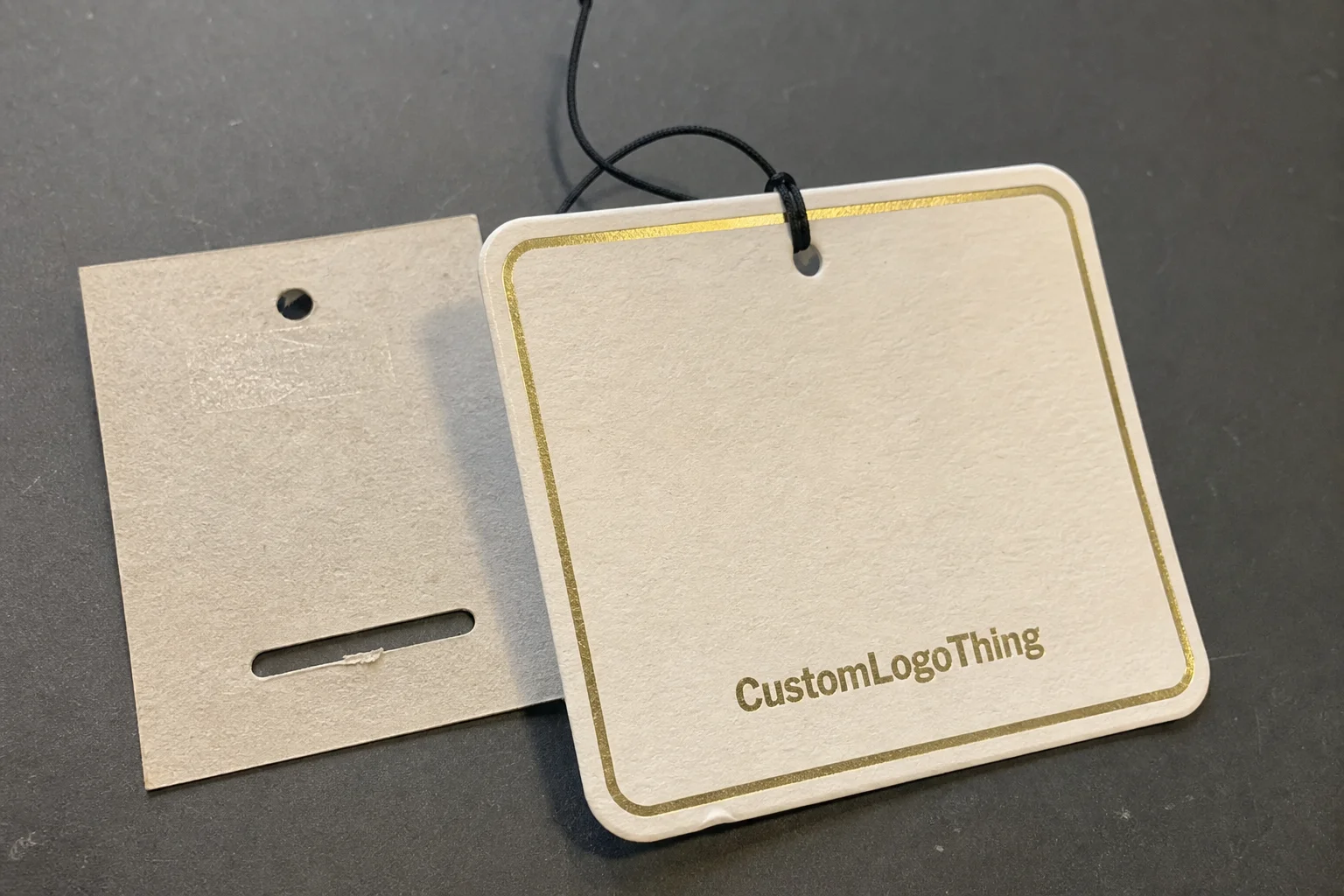
Cosmetics buyers often start with the visible layer: logo placement, finish, die shape, maybe a ribbon color. That is normal. The trouble is that the visible layer depends on invisible discipline underneath it. A half-millimeter shift in hole placement can throw off the layout. A coating that looks elegant on screen can scuff in transit. A board that feels substantial in hand can still split around the punch.
That is why branded Hang Tags for Cosmetics brands factory audit questions should act like a filter, not a formality. The goal is not to sound diligent. The goal is to find out whether the factory can repeat the same result across thousands of pieces without drifting away from the approved sample.
The most useful questions usually expose four things early:
- Paper or board limits, including the heaviest stock the factory can cut and crease cleanly.
- Finishing tolerance for foil, embossing, debossing, and spot UV on small formats.
- Attachment strength, including whether the hole needs an eyelet, patch reinforcement, or a different punch.
- QC discipline, especially how the factory handles defects, retains reference samples, and signs off on color.
That kind of audit costs almost nothing compared with a reprint. One bad run creates waste, late freight, and a launch team that has to explain why the tags do not match the product. A small item can become a large problem quickly because it shows up everywhere at once.
How a Factory Audit Shapes the Tag Specification
A useful audit turns a loose brief into a working production spec. The sequence should be simple: define the brief, ask the factory questions, confirm the spec, approve the sample, then release production. The part that goes wrong most often is the first step. Teams send a rough concept and expect the supplier to fill in the blanks. That usually leads to quote revisions and sample rounds that solve avoidable problems late.
Strong audit answers narrow the field. If a factory says it cannot hold sharp foil detail on a highly textured 250gsm sheet, that is a real production constraint, not a sales objection. If it warns that a custom shape needs a larger tolerance than your design can tolerate, you have a chance to simplify the outline before the tooling is cut. That is cheaper than discovering the same issue during inspection.
Ask for the answers that affect production directly:
- Board type and basis weight.
- Print method, usually offset, digital, or screen for special effects.
- Color matching method, ideally against Pantone or a supplied swatch.
- Hole size, hole position tolerance, and whether reinforcement is standard.
- QC checkpoints before packing, during finishing, and before shipment.
Once those points are in writing, they become the shared reference for the designer, purchasing, and the factory. That saves time later because nobody has to guess what “premium but not too glossy” was supposed to mean.
Materials and Finishes That Hold Up on Cosmetics
Paper choice is the part of the job that quietly decides whether the tag feels expensive or merely printed. A 300gsm C1S board can work well for mass retail and simpler artwork. A 350gsm artboard usually carries a more substantial feel and resists bend better in shipping. For prestige skincare or gift sets, 400gsm or specialty board may be justified, but heavier stock is not automatically better if the die is complex or the tag needs tight folding.
Texture changes the conversation. A smooth sheet gives foil and fine type more room to behave. A textured or cotton board adds tactility, but small strokes can fill in or break apart depending on the stamp pressure and foil film. If the design includes tiny lines, hairline icons, or compact legal copy, the finish should be chosen around legibility first and feel second.
Soft-touch lamination creates a muted, premium surface, yet it marks more easily than many buyers expect. Matte lamination hides fingerprints better and usually looks cleaner after handling. Gloss delivers stronger contrast, but it shows scuffs and can make the piece feel more promotional than cosmetic. Spot UV can look sharp on the right artwork, though it needs accurate registration. On small tags, crowding too many effects into one surface is how alignment problems start.
Cosmetics tags also need to survive ordinary handling. They get touched by warehouse staff, brushed against cartons, and occasionally exposed to a little moisture or skin oil. A finish that looks beautiful in a studio can disappoint if it scratches in packing. That is why scuff resistance matters. The tag has to stay presentable after the first impression.
Attachment detail deserves the same attention as print quality. Check whether the tag uses a round hole, slot punch, ribbon tie, elastic loop, or string. Decide whether the hole needs an eyelet, paper patch, or thicker board around it. A strong design can still fail if the attachment point tears during packing or retail handling.
For sourcing vocabulary and sustainability references, FSC certification is worth checking if the brand has material requirements, and ISTA standards are useful if the tags travel with other components or need to survive more than one packing stage. Those references do not choose the spec for you, but they make the discussion more concrete.
| Option | Typical Feel | Common Use | Relative Cost |
|---|---|---|---|
| 300gsm C1S board | Clean, serviceable | Mass retail, simple branding | Low |
| 350gsm artboard with matte lamination | Stiffer, more premium | Mid-range cosmetics | Mid |
| Textured board with foil or embossing | Tactile, high-end | Prestige skincare, gift sets | High |
| Soft-touch laminated board | Velvety, modern | Luxury beauty launches | High |
Step-by-Step: From Brief to Approved Sample
Step one is the brief. Gather the dieline, dimensions, SKU count, barcode needs, legal copy, pack format, and brand color references before you send anything out. A factory can quote a clear job. It cannot quote “something elegant, maybe square, maybe not” without adding risk to the price. If artwork is still changing, say so plainly.
Step two is the audit conversation itself. This is where Branded Hang Tags for cosmetics brands factory audit questions become useful in practical terms. Ask what stock the factory prefers for the finish you want, what die-cut tolerance it can hold on a shape like yours, and what it will refuse to promise. A supplier that names its limits is often safer than one that agrees to everything.
Step three is sample review. Do not approve from a screen. Check the proof, then the physical sample, under the lighting the tag will actually see. Compare type size, hole position, edge quality, and finish registration. If the sample only looks good from a distance, the design still needs work. A small tag magnifies defects because the eye reads every millimeter.
Step four is sign-off. Approve only after the artwork version, stock, finish, quantity, packing method, and shipment assumptions are fixed in writing. If the tags will be packed loose, in bundles, or pre-threaded, that belongs in the order record. Packing method affects labor, damage risk, and how clean the product looks on arrival.
A useful internal habit is to store the approved sample with the exact stock name, finish note, hole spec, and packing format. That makes the reorder path simpler. Without that record, the next job turns into a debate about what was approved the first time.
Cost, MOQ, and Quote Triggers You Should Clarify
Hang tag pricing is driven by a few repeatable variables. Stock weight, special finishes, custom shapes, packing format, and SKU count all move the number. A plain printed tag in one version is straightforward. A project with two foil colors, a custom punch, soft-touch lamination, and bundle packing is not. Every added step means more setup, more inspection, or more handling.
MOQ is usually a reflection of setup economics, not just supplier preference. Plates, dies, make-ready, finishing alignment, and inspection all have to be spread across the run. A factory might quote a low unit cost at 10,000 pieces, but if you need 2,000 pieces across five SKUs, the job still behaves like a custom production run. The math does not soften because the order is split.
For rough planning, simple tags often sit in a low-cost band, specialty finishes move into the middle, and premium structures climb quickly. At medium volumes, a plain cosmetic hang tag may land in the low cents per piece, while foil, embossing, custom die cutting, and special packing can push the price into several tenths of a dollar or more. Exact numbers depend on coverage, tooling, and how many times the factory has to touch the item before it is packed.
A quote should spell out the following clearly:
- Tooling and die charges.
- Plate or setup fees for print and foil.
- Sample or proof charges, if any.
- Packing method and carton count.
- Freight assumptions and delivery terms.
- Defect policy, remake threshold, and rework handling.
Many buyers also underestimate the cost effect of multiple versions. One SKU is easy to quote. Five SKUs with minor color or text changes are not five times harder, but they are harder than they look because every line needs separate proofing and pack checks. That extra coordination shows up in the final number.
Production Steps and Lead Time You Can Actually Trust
The usual sequence is prepress, proofing, color matching, printing, finishing, die cutting, inspection, and final packing. Nothing unusual there. Delays usually begin after proof approval, not before. A late artwork revision, a new foil code, or a changed pack instruction can add days fast because the factory has to reset more than one part of the line.
Lead time depends on whether the order is a repeat or a first run. Repeat jobs move faster if the tooling and stock already exist. New projects need more buffer, especially if the factory has not run the substrate before or if the finish requires tight registration. Multi-SKU orders add coordination time even when the factory is organized. More versions mean more ways for one file, one color, or one packing note to slow the shipment.
For planning purposes, a first custom run often needs more than a simple reorder. Sample approval can take several days, and production can range from about one to three weeks depending on quantity and finish complexity. Freight is a separate clock. If the launch date is fixed, build the schedule backward from arrival, not from the day the quote is sent.
Two questions help avoid false confidence:
- What is the realistic turnaround after proof approval?
- Can partial shipment happen if one SKU finishes first?
- What replenishment window should be expected for reorders?
Those answers matter because a cosmetic launch rarely waits for one delayed component. A tag that misses the pack-out window becomes a supply chain problem, not just a print delay.
Common Mistakes and Expert Checks That Save Reprints
The cheapest quote is often the most expensive mistake. That sounds blunt because it is. A low price means very little if the finish scuffs, the hole tears, or the board feels thin beside the product. Buyers also get trapped by approving artwork on a monitor and assuming the physical piece will behave the same way. It never does. Paper, foil, and lamination all change the result.
Another common miss is skipping the handling test. A cosmetic tag should be checked under store lighting, not just office light. It should be flexed once or twice. The coating should be rubbed lightly. The barcode should scan if there is one. Hole size matters too, because a punch that looks fine on paper can split once thread or ribbon is pulled through it.
Good factory audits ask how defects are classified, how QC signs off before packing, and whether the factory keeps a golden sample for reorders. A retained sample helps repeatability more than a polished quote deck. It gives the next run a physical standard, not just a memory in someone’s inbox.
If the approved sample is not locked down, the next run becomes a debate instead of a reorder.
That is why the record should include stock name, finish, hole spec, artwork version, and packing format. If those details live only in email threads, reprints become much more likely. The file trail should be dull and exact. Dull is efficient.
One final check is to confirm whether the factory will flag a spec that is likely to fail before production starts. A supplier that warns you about low foil coverage, crowded type, or a weak punch is usually helping, not resisting. That honesty is worth more than optimism.
Next Steps: Turn Audit Answers Into a Cleaner RFQ
Once the audit is complete, convert the answers into one short RFQ. Include size, stock, finish, artwork version, quantity, packing method, and lead time. The objective is simple: make every factory quote the same job. If each supplier is pricing different assumptions, the lowest number is just the one with the most missing detail.
Compare at least two factories using the same questions and the same sample standard. Then judge more than price. Look at tolerances, how clearly limitations are stated, how the packing is described, and whether the supplier seems comfortable explaining what it cannot do. Clear limits are useful. Vague confidence usually costs more later.
Once the approved sample is locked, keep the QC standard and remake trigger with it. That record saves time on repeat orders and cuts confusion when the procurement owner changes. It also makes seasonal replenishment far easier because the next buyer does not need to reconstruct the spec from scratch.
Branded Hang Tags for Cosmetics brands factory audit questions are not paperwork for the sake of paperwork. They are a production filter. Used properly, they lead to cleaner quotes, more accurate samples, and fewer surprises in packing and shipment. Ignored, they turn a small part into a recurring source of waste.
What factory audit questions should I ask before ordering cosmetic hang tags?
Ask about board stock, print method, finish limits, hole reinforcement, color matching, and QC checkpoints. Also ask what defect level the factory rejects, whether it keeps a reference sample, and what change would trigger a new setup charge.
How do branded hang tags for cosmetics brands affect MOQ and unit price?
More complex tags usually require a higher MOQ because setup, plates, die cutting, and finish alignment have to be spread across the run. Unit price falls with volume, but multiple SKUs, special finishes, and custom shapes can reduce part of that savings.
What should I verify on the first physical sample?
Check color, coating feel, edge quality, hole placement, and whether the tag still looks premium under real retail lighting. Compare the sample against the dieline and confirm that text remains readable at the final size.
How long does the hang tag factory audit and sampling cycle usually take?
A repeat order usually moves faster than a first custom run because the factory already has the tooling path and material setup in place. First approvals, color matching, and specialty finishes usually add time.
What details do buyers most often miss in hang tag factory audits?
The usual misses are string or ribbon spec, hole size, packing format, barcode readability, and the tolerance the factory will actually hold. Buyers also forget to define defect standards, which creates avoidable debate during reorders.


