Buyer Fit Snapshot
| Best fit | Branded Kraft Boxes for Ecommerce projects where brand print, material claims, artwork control, MOQ, and repeat-order consistency need to be specified before quoting. |
|---|---|
| Quote inputs | Share finished size, material target, print colors, finish, packing count, annual reorder estimate, ship-to region, and any compliance wording. |
| Proofing check | Approve dieline scale, logo placement, barcode or warning zones, color tolerance, closure strength, and carton packing before bulk production. |
| Main risk | Vague material claims, crowded artwork, missing packing details, or unclear freight terms can make a low unit price expensive after revisions. |
Fast answer: Branded Kraft Boxes for Ecommerce: What Actually Works should be specified like a repeatable production item. The safest quote records material, print method, finish, artwork proof, packing count, and reorder notes in one written spec.
Production checks before approval
Compare the actual filled-product size with the drawing, then confirm tolerance on folds, seals, hang holes, label areas, and retail display edges. Reserve space for logos, QR codes, warning copy, and material claims before decorative graphics fill the panel.
Quote comparison points
Review material grade, print process, finish, sampling route, tooling charges, carton quantity, and freight assumptions side by side. A quote is only useful when the supplier can repeat the same color, closure quality, and packing count on the next order.
Branded kraft boxes for ecommerce get judged before the tape is even peeled. A parcel lands on a desk, a shelf, or a doorstep, and the customer decides fast. Does it feel intentional? Does it feel sturdy? Does it feel worth opening? Brown carton, nice carton, dead carton. People make the call quicker than brands like to admit.
Branded kraft boxes for ecommerce are not a decorative extra. They affect damage rates, packing speed, unboxing quality, and how the product gets remembered once the shipping label is gone. A decent kraft box can make a small brand look disciplined. A bad one makes a good product look rushed. Packaging people spot that instantly. Customers do too, even if they cannot explain why.
If you are comparing branded kraft boxes for ecommerce, the real question is not whether they look nice. It is whether they fit the product, survive the carrier network, and stay inside margin. That is the job. Anything else is decoration, and decoration without structure is just an expensive hobby. I have seen teams spend money on a gorgeous mockup, then discover the box swells in humid transit and the closure stops lining up. Not exactly a proud moment.
What Branded Kraft Boxes for Ecommerce Actually Are
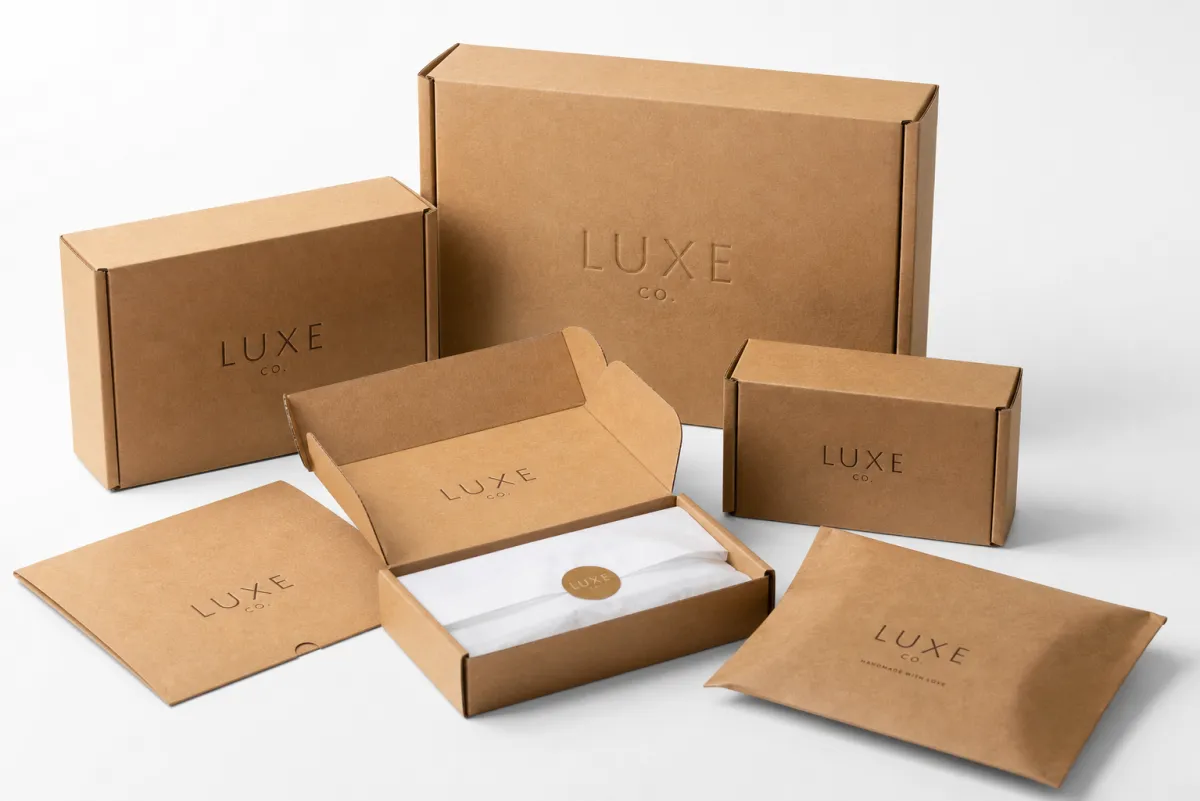
Branded kraft boxes for ecommerce usually fall into three practical buckets: mailer boxes, tuck-top cartons, and corrugated shippers with a kraft liner or kraft-finish board. The format matters, but not as much as fit, closure, and print behavior. A box that looks premium in a render and folds like wet cardboard in real life is not premium. It is a refund waiting to happen.
Most buyers choose branded kraft boxes for ecommerce because the material already does part of the brand work. Kraft reads as natural, restrained, and purposeful. It also handles minimal print coverage well, which helps because heavy ink on kraft can turn muddy fast. Clean design usually wins here. Annoying, but true.
These boxes get judged on the first impression, yet that impression depends on unglamorous details: board grade, crease quality, flap fit, and whether the lid closes without a fight. A customer will not say, "Excellent compression resistance." They will just notice whether the box opens cleanly and whether the product arrived intact.
A kraft box does not need to shout. It needs to look like someone cared.
For brands moving from generic packaging to branded kraft boxes for ecommerce, the shift is bigger than decoration. The box becomes part of the product experience. It can carry the logo, a repeat pattern, a message inside the flap, or a simple one-color mark that makes the package feel deliberate. The practical side matters just as much. The box has to fit the warehouse workflow and the carrier's habits. Carriers do not care about your mood board.
The best results usually come from lining up three things at once:
- Structure - mailer, carton, or shipper based on the product's weight and fragility.
- Print - bold artwork, controlled color, and a layout that respects the kraft surface.
- Shipping conditions - compression, vibration, and moisture exposure during transit.
That is the real framework behind branded kraft boxes for ecommerce. Not trend-chasing. Not a shiny finish slapped onto thin board. Just a package that does its job, looks good while doing it, and does not gum up the packing line.
How Branded Kraft Boxes for Ecommerce Work
At a basic level, branded kraft boxes for ecommerce work because the outer kraft liner gives the box a natural look while the internal board or flute gives it structure. In a mailer-style box, the geometry holds the shape. In a corrugated shipper, the flute adds resistance against crushing and corner damage. In a folding carton, the board thickness and score accuracy decide whether the box feels crisp or flimsy.
Printing behaves differently on kraft than it does on white coated board. That catches a lot of brands off guard. Kraft is usually uncoated or lightly coated, so it absorbs ink differently and mutes some colors. Bright pastels look quieter. Fine gradients can disappear. Small type can get harder to read. If the artwork depends on tiny detail, the box will probably fight back. Strong shapes, one or two inks, and intentional negative space usually give branded kraft boxes for ecommerce a far better finish.
Construction choices matter just as much as print. Self-locking mailers are fast to assemble and good for moderate-weight products. Snap-lock bottoms add strength for heavier contents. Tuck flaps are common on cartons where presentation matters more than abuse resistance. Inserts help stop movement, and movement is where scratches, dents, and broken corners start.
The box is a mechanical object first and a marketing surface second. Branded kraft boxes for ecommerce have to survive compression from stacked pallets, vibration in transit, humidity changes, and the occasional drop from a conveyor or porch. A nice logo does nothing for corner crush. That needs proper board selection, decent scores, and sizing that does not leave the product rattling around like loose hardware.
Branding can land in several places, depending on how much visual impact the brand wants:
- Lid or top panel - the most visible area when the customer first sees the parcel.
- Side panels - useful for repeating the logo or adding a small message.
- Inside flaps - a strong place for a thank-you note, coupon code, or brand story.
- Inserts and tissue - helpful if the exterior design needs to stay restrained.
For shipping validation, many teams use basic distribution tests informed by ISTA methods or similar internal checks. That does not mean every box needs a full lab program. It does mean branded kraft boxes for ecommerce should be checked against the way your orders actually move: single parcel, multi-item ship, subscription kit, or warehouse-packed fulfillment. A box that survives your own workflow is usually a lot more useful than a pretty sample that only survives a desk.
If the print looks right, the closure works, and the product sits tight, the packaging feels intentional. That is the job of branded kraft boxes for ecommerce. Simple sentence. Harder execution.
Key Factors That Shape Branded Kraft Boxes for Ecommerce
The first factor is product size and weight. It should drive the spec, full stop. A lightweight candle does not need the same build as a ceramic mug, and a folded apparel kit does not need the same board strength as a glass bottle set. Branded kraft boxes for ecommerce work best when the product dimensions are known before the artwork starts. Design should follow the product, not the other way around.
Brand personality matters too. A minimal skincare brand usually needs less ink coverage, cleaner typography, and more open space. An outdoor brand can get away with bolder marks and rougher textures. A luxury brand may want a deep kraft tone with one accent color and a restrained inside print. A playful brand might use a patterned interior and a short message under the lid. The structure can stay similar, but the visual language changes completely.
Material choice affects both cost and performance. Lighter folding cartons can work for small, non-fragile goods and keep postage down. Thicker corrugated board is usually the safer choice for heavier, fragile, or higher-value products. If your order goes through a rough carrier network, the box needs enough rigidity to resist compression and enough board memory to hold the corners. That is not fancy. That is what keeps returns from eating your margin.
Sustainability claims need discipline. Recycled content, recyclable inks, water-based adhesives, and removable inserts only matter if they are real and documented. If a supplier says the board is FSC certified, the paperwork should back that up. FSC is not a sticker you slap on because brown paper sounds eco-friendly. It is a chain-of-custody matter, and buyers who actually check claims care about that.
For brands that want to keep the packaging story honest, the material conversation should be specific:
- Recycled kraft liner for a more natural look and lower virgin fiber use.
- Virgin kraft liner when print sharpness, consistency, or stiffness matters more.
- Single-wall corrugated for most ecommerce goods that are not absurdly heavy.
- Double-wall corrugated for bulkier or more fragile items where extra protection is worth the added board.
Inventory and storage are the quiet cost center people forget. A brilliant box that ships beautifully can still be a bad buy if it eats too much warehouse space. Large flat stacks, nested inserts, and oversized die-cuts can all create storage headaches. If the team is already tight on rack space, branded kraft boxes for ecommerce need to be compact in transit, easy to stack, and simple to assemble under pressure.
That is where operational reality beats design taste. The packaging that looks the smartest is not always the Packaging That Works the best. A fulfillment team usually prefers fewer folds, fewer loose parts, and fewer chances for misalignment. If the goal is to balance branding with speed, start with the box that is easiest to assemble correctly ten thousand times, not the one that wins a mood board contest.
Branded kraft boxes for ecommerce also need to align with the order mix. A subscription box with predictable SKUs can justify a more tailored insert. A marketplace seller with inconsistent mixes may need a more forgiving interior. The more the product changes, the more important the box tolerance becomes. Tight fit is good until it becomes impossible to pack.
Cost and Pricing for Branded Kraft Boxes for Ecommerce
Pricing for branded kraft boxes for ecommerce is driven by a handful of variables: dimensions, board grade, print coverage, color count, finishing, inserts, and quantity. Those are the main levers. Everything else is noise. If a quote looks unusually cheap, it usually means one of those levers has been pulled down so far that the box becomes someone else's problem after delivery.
As a rough market range, simple stock-size printed mailers can land around $0.35-$0.70 per unit at 5,000 pieces, depending on size and print coverage. Semi-custom die-cut mailers often sit closer to $0.55-$1.15 per unit. Fully custom corrugated shippers with an insert can move into the $0.90-$2.20 per unit range or higher if the structure is complex, the print is heavy, or the insert has multiple components. That is not a promise. It is a practical planning range. Actual pricing can move fast with board availability and freight.
For smaller runs, unit cost climbs because setup gets spread across fewer pieces. At low quantities, even a simple printed mailer can feel expensive. At larger volumes, tooling and setup become less painful, and the box price starts tracking board weight and print efficiency more than anything else. This is why branded kraft boxes for ecommerce can look cheap in a spreadsheet at scale and annoying at 500 units. Volume changes everything.
Hidden costs are where projects go sideways:
- Tooling or die charges for custom shapes and inserts.
- Sample rounds when the first structure or color proof needs changes.
- Freight for large flat cartons or heavy corrugated builds.
- Storage if the order lands all at once and sits in the warehouse.
- Damage costs if the box is underbuilt and product replacement starts piling up.
That last one is the quiet killer. A box that saves $0.05 but increases breakage by 2 percent is not a savings. It is a very expensive mistake with decent branding.
Here is a simple comparison of common options for branded kraft boxes for ecommerce:
| Option | Typical Unit Cost | Best For | Main Tradeoff |
|---|---|---|---|
| Stock-size printed mailer | $0.35-$0.70 at higher volume | Apparel, small accessories, lightweight kits | Limited sizing and less room for custom fit |
| Semi-custom die-cut mailer | $0.55-$1.15 depending on print and board | Brands that want better fit and stronger unboxing | More setup work and sometimes higher tooling cost |
| Custom corrugated shipper with insert | $0.90-$2.20 or more | Fragile, heavier, or premium products | Higher cost and longer lead time |
If you want a cleaner starting point, the range in our Custom Packaging Products catalog is easier to evaluate than guessing from a blank spec sheet. That matters because branded kraft boxes for ecommerce should be quoted against the same size, print, and quantity across vendors. Otherwise the comparison is fake, and fake comparisons are a great way to buy the wrong box.
A better budgeting method is simple:
- Quote the same box dimensions across at least two or three vendors.
- Match board grade, print colors, insert type, and quantity exactly.
- Compare setup cost, unit cost, and lead time side by side.
- Check what happens to the price if you reduce print coverage or simplify the insert.
That gives you a real picture of what branded kraft boxes for ecommerce will do to your margin. Not a guess. Not a hope. A picture.
One more practical point: spending a little more on better board or tighter sizing often pays back in fewer returns, less void fill, and better shelf appeal when the parcel is opened. Cheap packaging that increases fulfillment time or damage usually stops being cheap very quickly.
Step-by-Step: Designing Branded Kraft Boxes for Ecommerce
Start with the product audit. Measure the item carefully, not casually. Include length, width, height, accessory count, and any fragile protrusions. If the product moves, note how much. If it has a charger, jar lid, or loose component, note that too. Branded kraft boxes for ecommerce should be designed around the full packed unit, not the retail item floating in somebody's head.
Next, choose the box style. Mailer, folding carton, or corrugated shipper each serves a different purpose. A mailer is often best for presentation and moderate protection. A folding carton is useful for lighter goods and cleaner retail-style display. A corrugated shipper is the safer choice when the package needs to handle more abuse. The right answer depends on how the order moves through the warehouse, how often it gets stacked, and whether the customer opens it directly or receives it inside another outer carton.
Then build the dieline and artwork together. Too many teams treat artwork as a separate exercise, which is how logos end up trapped under glue zones or important text lands on a crease. The box net should be laid out with fold lines, bleed, barcode space, and print-safe areas already in mind. If the team is working with branded kraft boxes for ecommerce, the visual layout needs to respect the material, not fight it.
A good design on kraft usually keeps the message simple:
- One clear logo placement.
- One support color, maybe two if the print process can hold it.
- Readable type with enough contrast against the kraft tone.
- Interior branding only where it adds value, not because extra ink feels fancy.
Then request a sample or prototype. Sample time catches weak closures, awkward dimensions, and bad branding placement in real life. A flat proof can hide problems that show up the moment the box is folded. A sample also shows how the surface handles ink density. On kraft, that matters a lot. What looks rich on a screen can look muddy on paper if the print method is wrong.
If the box is being developed alongside a launch, align the packaging sample with the production schedule for the product itself. There is no point approving branded kraft boxes for ecommerce if the product itself changes a week later and the insert no longer fits. That sounds obvious. It is also one of the most common ways packaging gets delayed.
For teams trying to keep the process tidy, this is the checklist that avoids most mistakes:
- Confirm packed dimensions and product weight.
- Choose the structure based on shipping conditions.
- Build artwork around the dieline, not after it.
- Review a physical sample before mass production.
- Approve the sample only after packing real units into it, not just paper mockups.
That workflow works because branded kraft boxes for ecommerce are not just graphics. They are a fit exercise, a shipping exercise, and a brand exercise all at once. Miss one of those, and the rest gets dragged down with it.
Process and Timeline for Branded Kraft Boxes for Ecommerce
The typical workflow for branded kraft boxes for ecommerce starts with the brief, moves to quote, then artwork prep, structural proof, sample approval, production, quality check, and shipping. That is the clean version. In real projects, a few of those steps repeat because someone notices the insert is too tight or the logo is too small after the first sample. Better to catch that before the order lands.
Simple stock-based runs can move relatively quickly. Custom structures, multiple print revisions, and inserts take longer. A straightforward order might move through production in 10-15 business days after proof approval. More complex builds can stretch into 15-25 business days, especially if there are tooling changes or extra sample rounds. Freight adds more time if the boxes are shipping long distance or if the carton size is bulky. That is just how the calendar behaves. It is not personal.
What slows projects down most often?
- Missing dieline files or wrong artwork scale.
- Unclear dimensions for the packed product.
- Late feedback on color proofs.
- Sample approval getting buried under internal approvals.
- Insert changes after the box is already being tooled.
Planning backward from the launch date helps more than planning forward from the order date. If the product needs to ship on a specific day, build in buffer time for corrections, transit, and one annoying round of internal sign-off from the person who suddenly decides the logo should be larger. It happens. Every time.
One useful habit is to set checkpoints. Not romantic. Useful.
- Art checkpoint - approve layout, colors, and copy placement.
- Structure checkpoint - verify fold lines, closure, and insert fit.
- Sample checkpoint - test the physical box with real product.
- Production checkpoint - confirm quantity, finish, and shipping plan.
If the team wants examples of how different packaging decisions affect the final result, the Case Studies page is a useful way to see the tradeoffs in context. That helps people understand why two branded kraft boxes for ecommerce projects can look similar on paper and behave very differently in the warehouse.
Testing should not be theatrical. A basic compression check, a drop test, and a vibration check can reveal a lot. The point is not to build a lab on day one. The point is to avoid the most obvious failure modes before you pay for a full run. If a box fails a simple test, that is useful information, not a disaster. It is cheaper to learn early.
For more formal validation, some brands use packaging protocols informed by ISTA and related distribution methods, especially for fragile or higher-value products. That kind of check is not overkill if the product is expensive to replace. It is just common sense with nicer paperwork.
Well-run branded kraft boxes for ecommerce projects feel calm because the work happens in the right order. Specification first. Proofs second. Production last. The chaos usually begins when those steps get mashed together to save a week and cost a month.
Common Mistakes and Expert Tips for Branded Kraft Boxes for Ecommerce
The most common mistake is choosing a box that looks good on screen and fails in transit. The mockup sits there looking elegant while the real box arrives crushed, bowed, or loose around the product. That is not a branding issue. That is a spec issue. Branded kraft boxes for ecommerce need to survive real carriers, not just design software.
Another mistake is overprinting kraft. A lot of ink on a brown surface can fight the material instead of using it. Heavy gradients, tiny white type, and thin lines often look weaker than expected. Bold shapes, controlled contrast, and fewer print passes usually do more for the final result. Kraft already has personality. You do not need to shout over it.
Skipping insert fit is another classic error. If the insert is too loose, the product moves. If it is too tight, packing slows down and the team starts forcing items in, which eventually means damage or frustration. A clean insert should hold the product without adding drama. Branded kraft boxes for ecommerce work better when the interior is treated as seriously as the exterior.
Here are a few practical tips that usually improve the outcome:
- Keep the strongest branding on the lid and inside flap so the customer sees it at opening.
- Use one or two strong print colors instead of trying to fill every surface.
- Test the box with real products, not empty samples that make everything look fine.
- Ask the warehouse team whether the design slows packing or causes confusion.
- Check sustainability claims and ask for proof, especially if FSC or recycled-content language will appear in marketing.
On that last point, FSC certification is only useful if the chain of custody is real. Brands that care about sustainability should ask for the documents, not just the language. That goes for recycled claims too. Good packaging should be honest packaging. If the message says one thing and the material tells another, buyers notice faster than marketers like to admit.
Another smart move is to keep the box concept flexible. You do not always need the fanciest possible build. Sometimes the best branded kraft boxes for ecommerce are simple mailers with clean print, proper sizing, and one well-placed interior message. That can look more premium than a louder, busier box that tries too hard.
For sustainability-minded brands, sourcing from responsibly managed forests and verifying supply chain claims through FSC is a sensible step. It will not fix weak design, and it will not make a flimsy box stronger, but it does make the packaging story more credible. Packaging buyers appreciate that. So do customers who actually read the label.
Branded kraft boxes for ecommerce do not need to be complicated. They need to be honest, fit the product, survive the trip, and make the brand feel like it knows what it is doing. That sounds basic because it is. Basic is often what separates a good packaging program from an expensive mess.
In practice, the best branded kraft boxes for ecommerce protect the product, fit the warehouse, and make the brand look intentional without blowing the margin. If two sample builds are close, pick the one that handles shipping better and keeps packing simpler. The customer will notice the difference, and so will your returns team.
If you are choosing a spec right now, start with the packed product dimensions, pick the lightest structure that survives a drop test, and keep the print simple enough for kraft to do some of the brand work for you. That is the shortest path to a box that ships well and still feels on-brand.
What are branded kraft boxes for ecommerce made of?
They are usually made from kraft paperboard or corrugated board with a kraft liner on the outside. Heavier products may need thicker fluting, stronger board, or an insert to stop movement. The right material depends on the product weight, shipping method, and the visual style you want for branded kraft boxes for ecommerce.
How much do branded kraft boxes for ecommerce usually cost?
The cost depends mostly on size, board thickness, print coverage, and order volume. Simple stock-size boxes are cheaper per unit; fully custom structures and inserts raise the price fast. To compare quotes properly, match the same dimensions, print colors, and quantity across vendors so you are not comparing apples to a completely different carton.
Are branded kraft boxes for ecommerce strong enough for shipping?
Yes, if the box structure is matched to the product weight and carrier handling. Fragile items usually need inserts, tighter sizing, or a stronger board grade. A basic drop or compression test is worth doing before you place a full order, because it is cheaper to fix a weak spec than to replace damaged product later.
What print method works best for branded kraft boxes for ecommerce?
Digital and flexographic printing often work well for smaller or mid-size runs. Offset printing can make sense when color accuracy and higher detail matter more. Simple artwork usually performs best on kraft because the material tone is already doing part of the branding work, which is why overcomplicated graphics often look worse, not better.
How long does it take to produce branded kraft boxes for ecommerce?
The timeline depends on whether the box is stock-based or fully custom. Sampling, artwork approval, and shipping usually take longer than people expect. If the box needs inserts, new tooling, or structural testing, build in extra time. For branded kraft boxes for ecommerce, the biggest delay is usually not production itself. It is approval lag.

