Buyer Fit Snapshot
Use this page when ecommerce or retail teams need branded kraft mailer cartons that protect products and still look natural.
| Decision point | What to specify before quoting |
|---|---|
| Material and structure | Board or film grade, thickness, size, closure, insert fit, and durability target. |
| Brand finish | Print coverage, color, coating, barcode or copy zones, and unboxing presentation. |
| Production control | MOQ, sample approval, packing workflow, carton marks, QC checks, and reorder plan. |
Branded Kraft Mailer Cartons: Sustainable Packaging Basics
A customer can skim past a product page, forget the headline, and ignore a stack of polished marketing claims. Then the package lands on the doorstep and the story changes. That first physical touchpoint carries real weight, which is why Branded Kraft Mailer cartons matter so much. They protect the product, carry the logo, and set the tone before the item inside is even lifted out. For Custom Logo Things, they sit in that practical space between shipping supply and brand statement, doing both jobs without asking for applause.
If a mailer arrives dented, flimsy, or awkward to open, the brand feels careless. If it arrives clean, rigid, and printed with restraint, the experience feels thought through. That is the practical appeal of branded kraft mailer cartons. They do more than look natural or earthy. They shape perceived value, affect damage rates, and tell the customer something about how seriously the company handles details.
What Are Branded Kraft Mailer Cartons?
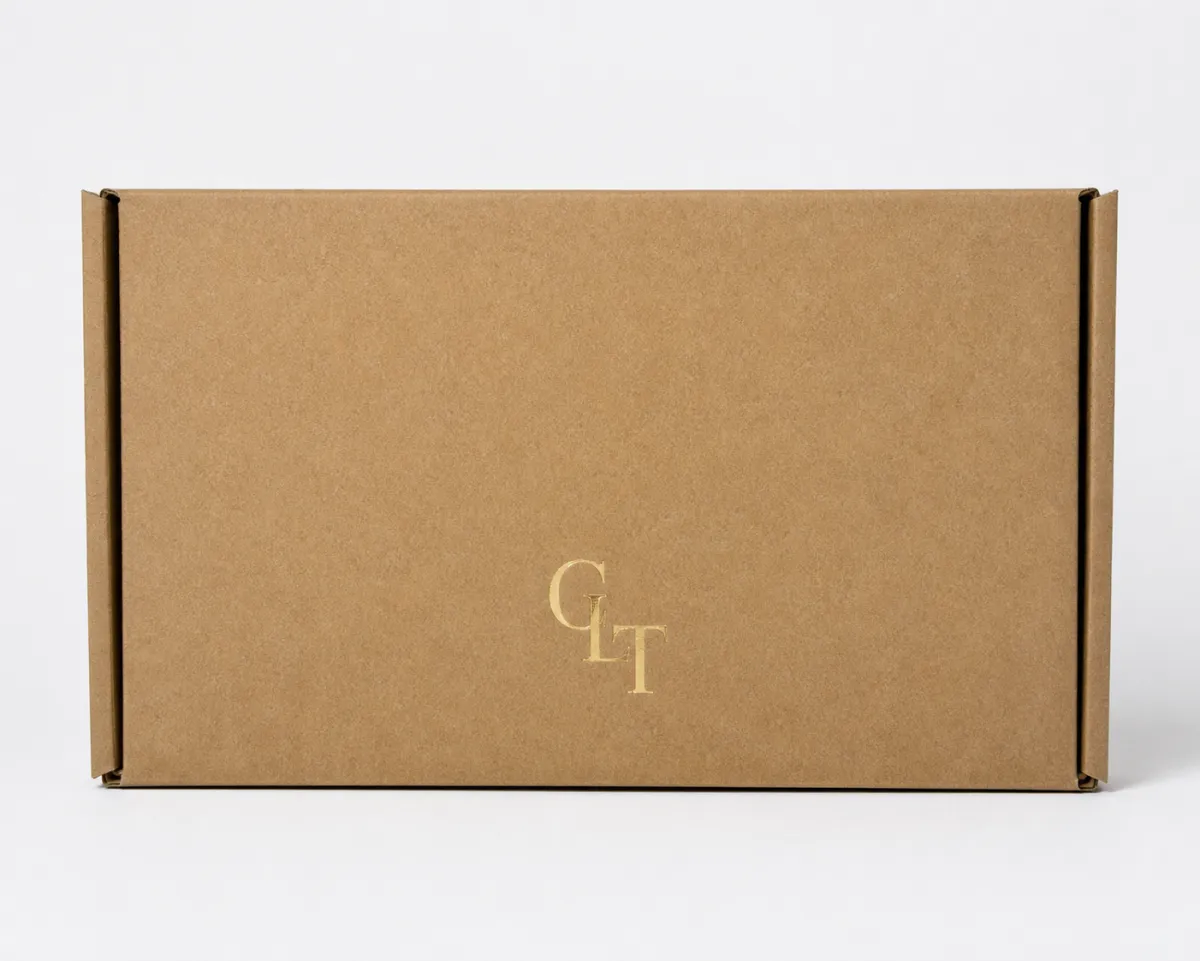
Branded kraft mailer cartons are kraft-based folding cartons or corrugated mailers designed to ship products flat, assemble quickly, and present exterior branding without a separate outer shipper. The format usually uses either paperboard or single-wall corrugate, depending on product weight, fragility, and how much crush resistance the shipment needs. That gives the carton a useful middle position between a plain mailer and a heavier retail box.
One reason these cartons stay popular is how much they do in one object. A well-made mailer can act like a shipping box, a product wrapper, and a brand introduction at the same time. Branded kraft mailer cartons work because the structure stays simple while the impression feels deliberate. That is a strong fit for apparel, accessories, subscription kits, cosmetics, candles, and other lightweight items that benefit from a tidy reveal.
Kraft carries a visual shorthand that shoppers already understand. It suggests recycled fiber, lower-waste packaging, and a more grounded look than glossy whiteboard. That association does not automatically mean the carton is better for the environment. Fiber source, coating choice, print coverage, and closure design all matter. Even so, kraft gives branded kraft mailer cartons a clear advantage: they communicate restraint, utility, and a package that is not trying too hard.
There is a commercial reason brands keep coming back to this format too. A sturdy mailer can lower complaint rates, reduce secondary packing materials, and create a more polished unboxing experience without adding much complexity to fulfillment. From the buyer's side, branded kraft mailer cartons sit in a sweet spot where protection and presentation support each other instead of competing. That is not true for every packaging category.
"The best packaging does not shout for attention. It earns trust in the first few seconds, then lets the product do the rest."
That is the real test for branded kraft mailer cartons: can they make the shipment feel intentional while still standing up to transit? For many e-commerce brands, the answer is yes, provided the board grade, dimensions, and print approach are chosen with care rather than guesswork.
How Branded Kraft Mailer Cartons Work in Shipping
The process begins flat. Branded kraft mailer cartons are usually stored and shipped collapsed, which saves warehouse cube and keeps inbound freight efficient. At packing time, the carton is folded into shape, the product goes in, and the closure is secured with a tuck flap, locking tab, adhesive strip, or mailer-style lid. That simple sequence matters because it keeps handling time down, and a few seconds saved on each box can turn into a real labor difference over a full run.
The structure does the heavy lifting. Scores define the folds. Tabs keep the box from popping open. Side walls resist bending. In corrugated versions, the flute architecture absorbs stacking pressure and protects corners from collapse. That is why branded kraft mailer cartons can handle more than their clean exterior suggests. A mailer that looks minimal may still be built to 200# test strength, 32 ECT performance, or another packaging grade suited to the route and product.
Branding rides on top of that structure. A one-color logo can feel restrained and premium. A two-color treatment can add energy without overwhelming the kraft surface. Full-surface print is possible, but it deserves caution, because heavy ink coverage can flatten the natural texture that makes kraft appealing in the first place. For many brands, branded kraft mailer cartons work best with negative space, inside-panel messaging, or a small print hit on the top panel that feels confident instead of crowded.
Think of the carton as a moving billboard with better manners. It shows up on the packing bench, in the delivery van, at the doorstep, and then in the customer's hands. Each moment says something different. In the warehouse, branded kraft mailer cartons tell the team the brand cares about presentation. In transit, they help reduce scuffing and crush damage. At unboxing, they create a cleaner reveal than a generic shipping box ever could.
Brands comparing packaging strategies usually bring other formats into the conversation here. Apparel labels often evaluate Custom Poly Mailers alongside kraft mailers, especially for soft, low-fragility, cost-sensitive goods. The choice should rest on product weight, return risk, desired perception, and whether the package needs rigid protection or only a lightweight skin around the order.
That is why logistics teams often test before scaling. A brand may run a drop check, a short transit simulation, or a simple warehouse trial with 25 to 50 packed units. If the box closes cleanly, holds its shape, and arrives without edge crush, the structure is probably close. If not, branded kraft mailer cartons need adjustment before they become the default shipper for a national rollout.
For a visual sense of how packaging decisions affect shelf and ship performance, browse the practical examples in our Case Studies library. The pattern is consistent: structure is not a background detail. It is the package.
Materials, Structure, and Sustainability Trade-Offs
Material selection is where branded kraft mailer cartons either support a credible sustainability story or weaken it. Kraft paperboard, single-wall corrugate, recycled content, and virgin fiber all behave differently in print, compression, and end-of-life recovery. A lighter board may reduce material use, which sounds ideal on paper. If that choice increases transit damage, the environmental and financial cost can rise quickly because reships, returns, and customer service recovery all consume resources too.
I prefer to think in system terms rather than slogan terms. A package is not responsible simply because it is brown. It becomes more responsible when the board grade matches the product, the carton size avoids wasted void space, and the decoration method stays friendly to recycling. Water-based inks, moderate coverage, and minimal coatings tend to align better with that goal. Heavy lamination, mixed-material windows, and unnecessary foil can complicate recovery, even when the carton still looks attractive.
Branded kraft mailer cartons also make a strong case for right-sizing. A box that is too large invites movement, which usually means more padding and more material. A box that is too small may crush corners or bulge at the panels, which hurts both presentation and transit reliability. The best mailer is often the one that hugs the product with just enough clearance for inserts, tissue, or a single protective layer where needed.
Print deserves its own practical lens. A low-coverage logo, a single ink color, or an inside-message treatment can preserve the kraft texture while keeping production simpler. That does not mean every brand should go minimal. Some products need stronger shelf impact or more detailed artwork. Still, if sustainability matters, branded kraft mailer cartons usually perform best when print is intentional rather than maximal.
For standards and recovery guidance, two resources are worth keeping nearby. The EPA recycling guidance helps explain how materials move through municipal systems, while ISTA offers packaging test frameworks that help brands validate performance before shipment. Those references do not replace a packaging engineer, but they do give buyers a better vocabulary for sharper questions.
Structure choices also affect the environmental profile. Auto-lock bottoms reduce packing time but may use more board. Tear strips improve opening but add a feature that needs careful design. Inserts can make branded kraft mailer cartons safer for fragile items, yet inserts also add material, so the real question is whether the product truly needs them. One well-fitted insert usually beats several layers of decorative filler that do nothing for protection.
FSC-certified fiber can enter the conversation too, especially for brands that need a documented sourcing claim. Certification is only one piece of the story. If the carton is overbuilt, oversized, or finished with hard-to-recycle coatings, the claim loses some of its weight. In other words, branded kraft mailer cartons are best evaluated from fiber source to closing mechanism, not just by the logo on top.
There is a brand-specific trade-off that buyers sometimes miss. A cleaner, more restrained package can feel premium because it looks deliberate. That does not mean stronger branding is wrong. It means the level of print should match the product category and the customer journey. For some labels, branded kraft mailer cartons should feel warm and understated. For others, they should feel bold and graphic. The more sustainable choice is the one that avoids waste while still doing the job.
Branded Kraft Mailer Cartons Cost, Pricing, and MOQ
Pricing is where the romantic language gives way to the math. The cost of branded kraft mailer cartons usually comes down to board grade, carton size, print complexity, finishing, and quantity. A small mailer with one-color print will sit in a very different price band from a large custom carton with inside and outside decoration, specialty coatings, or a structural insert. Size matters especially because board usage rises quickly as dimensions grow.
For rough planning, buyers often see unit pricing around $0.18-$0.28 for very simple high-volume mailers, $0.30-$0.60 for moderate custom print runs, and $0.60-$1.20+ when the carton needs heavier board, more colors, or more finishing complexity. Those ranges are directional. Branded kraft mailer cartons for a luxury product, a rigid insert, or a short-run launch can land above them, while a long run with a restrained design can fall below the middle band.
MOQ changes the picture quickly. If a supplier needs to spread setup, cutting dies, plate charges, or proofing across fewer units, the per-box cost rises. That is not a penalty. It is basic manufacturing economics. In many programs, branded kraft mailer cartons become much more efficient once the order reaches 1,000, 2,500, or 5,000 units, depending on print method and geometry. For a new product launch, the buyer has to decide whether lower inventory risk is worth the higher unit price.
A good quote should separate the variables. Ask what is included in the quoted price. Is artwork setup included? Are structural samples extra? Is freight billed separately? Are plates or cutting tools recurring or one-time charges? Those questions matter because branded kraft mailer cartons can look inexpensive at first glance and then become costly once hidden services are added. A transparent quote is much easier to compare than a bundled one.
| Option | Best Fit | Typical Unit Range | What Drives the Price |
|---|---|---|---|
| Stock kraft mailer | Fast replenishment, very simple branding | $0.12-$0.30 | Standard sizes, minimal setup, limited print |
| Custom printed mailer | Most e-commerce brands, balanced presentation | $0.30-$0.75 | Dieline setup, one to three colors, custom sizing |
| Heavier corrugated mailer | Fragile or higher-value goods | $0.60-$1.50+ | Stronger board, inserts, premium finishing, higher freight cube |
The hidden-cost comparison usually tells the real story. A slightly stronger carton may add only a few cents per unit, yet if it prevents damage, reships, and refund handling, the total landed cost can drop. That matters most for brands with fragile goods, delicate finishes, or high customer acquisition costs. Branded kraft mailer cartons should be judged by the full shipping equation, not only by the invoice line.
Returns matter too. If the package needs to be reused for exchanges or return workflows, stronger board and cleaner closure design become even more important. A brand that learns that early usually saves money later. That is why procurement teams should ask for a sample, pack a real product, and test it under realistic handling conditions before committing to a full run of branded kraft mailer cartons.
Production Steps, Timeline, and Lead Time
Production starts with the brief. The supplier needs dimensions, product weight, protection requirements, print goals, and any branding rules that shape the dieline. Once that is in place, the carton structure is mapped, artwork is placed, and proofs are reviewed. Branded kraft mailer cartons move faster when the buyer arrives with clear measurements and clean artwork. They slow down when the team is still deciding what the box should do.
After the first layout comes the sample. That may be a plain structural sample, a printed proof, or a short-run test depending on complexity. This is the point where many teams discover that the product is a little taller than planned or that the insert needs a deeper pocket. Those corrections help. They are far cheaper before production than after. For branded kraft mailer cartons, sampling is not a courtesy step. It is where assumptions become physical.
Lead time depends on the order type. Stock blanks can move quickly because the structure already exists. Custom printed mailers usually need more time for dieline creation, proof approval, and scheduling. In practice, branded kraft mailer cartons often take 12-15 business days after proof approval for straightforward production, and longer if the job requires special finishing, structural revisions, or imported materials. Freight time is separate, so buyers should not treat production completion as the final milestone.
Delays usually come from a few predictable places. Artwork changes after approval are common. Missing barcode requirements are another. Structural revisions during proofing can add days. Approval bottlenecks are usually the biggest problem, because a carton cannot enter production until someone signs off on the final version. If the launch date matters, build buffer time into the schedule and treat branded kraft mailer cartons as a lead item, not a last-minute purchase.
It helps to align packaging planning with the launch calendar from the beginning. If a seasonal drop depends on paid media, retail distribution, or subscription renewal dates, the box should be approved before campaign assets are finalized. That sounds obvious, yet it gets missed often. Brands end up designing ads around products that are ready while branded kraft mailer cartons sit in limbo waiting for one more round of changes.
Another useful habit is keeping the artwork file logic simple. Vector logos, clear black-to-spot-color separation, defined bleed, and a clean safe area reduce errors. If the carton carries compliance text, add it early. If the carton includes a peel-and-seal strip, confirm placement before proof approval. Each small decision is easier to manage in the production file than in the warehouse. That is one reason experienced buyers treat branded kraft mailer cartons like a production asset, not a design afterthought.
Brands that want to see how timing and production choices play out in practice can review the packaging examples in our Case Studies section. The recurring lesson is plain: the earlier the spec is locked, the fewer surprises appear later.
Common Mistakes to Avoid When Ordering
The first mistake is ordering before the product is fully measured. A box that looks correct on screen can be wrong by 3 to 5 millimeters in the real world, and that difference matters when the carton needs to close cleanly or hold an insert. If the dimensions are off, branded kraft mailer cartons may arrive too loose, too tight, or too weak at the corners. Measure the product in its final packed state, not in isolation.
The second mistake is overbranding. A kraft surface has a clear visual strength: it feels tactile, honest, and restrained. Covering it with too much ink, too many colors, or a crowded pattern can flatten that advantage and raise production cost at the same time. The best branded kraft mailer cartons usually use branding with restraint. That can mean a single strong logo, a side-panel message, or a subtle inside print that rewards opening without cluttering the outside.
The third mistake is ignoring usability. A carton that is hard to fold, awkward to seal, or annoying to open creates friction at every stage. Warehouse teams feel it first. Customers feel it later. If the seal tears unevenly or the closure relaxes in transit, the package stops behaving like a premium item and starts behaving like a nuisance. Well-designed branded kraft mailer cartons should save time, not create it.
The fourth mistake is forgetting compliance and recycling cues. If shipping marks are buried under graphics, if the barcode area is crowded, or if recycling instructions are printed in a faint tone that disappears on kraft, the package becomes harder to use responsibly. These are not cosmetic problems. They affect operations and recovery. Even branded kraft mailer cartons with strong branding should leave room for the information that keeps fulfillment and disposal straightforward.
The final mistake is volume forecasting. Under-ordering creates rush fees, short packs, and inconsistent packaging across channels. Over-ordering ties up cash and storage space. Neither is ideal. A more careful approach is to validate demand with a smaller pilot, then scale once the product and carton are proven together. That is one reason so many teams request sample rounds before large production runs of branded kraft mailer cartons.
There is also a subtler mistake that comes up often in buyer conversations: treating the mailer as separate from the brand experience. The box is part of the product journey. If the carton is generic, the experience feels generic. If the carton is clear, purposeful, and tidy, the brand feels more trustworthy. That is why the packaging decision should involve operations, marketing, and finance together rather than one department alone.
Expert Tips and Next Steps for Launch
Start with a packaging audit. Measure current damage rates, note the most common complaint patterns, and track where space is being wasted in the shipper. If a product is arriving with crushed corners, scuffed finishes, or too much empty space around it, branded kraft mailer cartons are not just a branding upgrade. They are a systems fix. Without that baseline, it is hard to know whether the new pack is actually better.
Request at least two board strengths and one print variation. That gives you something useful to compare. One sample may feel lighter and more cost-efficient, while another may protect the product better or hold its shape more confidently. Put the product inside, shake it, stack it, and open it repeatedly. Branded kraft mailer cartons should be judged with real handling, not just by a clean photo on a desk.
A simple decision checklist helps more than a long debate. Ask five questions: How heavy is the product? How fragile is it? What should the customer feel on unboxing? What is the realistic MOQ? How much time is left before launch? If those answers are clear, the packaging path usually becomes clearer too. Branded kraft mailer cartons are often the right answer for lightweight and medium-weight goods that need presentation and protection in one unit.
Then make the launch practical. Choose one carton style, one print approach, and one test order. Pack 25 to 50 units, ship them through the same route your customers will use, and inspect the results. If the carton performs, scale it. If it fails, adjust structure before adding decoration. That order of operations matters. A beautiful but weak box is still a weak box, and branded kraft mailer cartons should never be treated as decoration first and packaging second.
From a strategic angle, the best packaging programs are the ones that keep options open. A brand may start with kraft mailers for giftable items, then move to stronger corrugated formats for higher-value shipments or to lightweight mailers for soft goods. The point is not to choose one format forever. The point is to Choose the Right structure for the job and keep testing as the product mix changes.
If your team is comparing packaging formats, it can help to weigh branded kraft mailer cartons against other options with a clear commercial lens: protection, unboxing, inventory use, and print cost. That comparison rarely stays theoretical. It shows up in reorders, return rates, and customer feedback. For flexible goods, a more brand-forward shipping format may make more sense, while for rigid products the answer may stay with kraft.
For a better launch plan, shortlist one carton style, one print spec, and one test batch of branded kraft mailer cartons, then compare damage, labor, and customer reaction before you scale. That is the cleanest path I know. It keeps the decision grounded, protects margin, and gives the packaging a chance to earn its place instead of simply taking up space in the warehouse.
FAQ
Are branded kraft mailer cartons strong enough for e-commerce shipping?
Yes, if the board grade matches the product weight and the fit is snug. Branded kraft mailer cartons work well for items that need protection from crush, scuffing, and normal carrier handling. For heavier or more fragile products, add inserts or move to a stronger corrugated structure so the carton is not forced to do more than it was built for.
How much do branded kraft mailer cartons usually cost per unit?
Unit price depends on size, board grade, print coverage, finish, and quantity. Smaller runs almost always cost more per box because setup is spread across fewer units. Ask for a quote that separates tooling, printing, samples, and freight so you can compare suppliers fairly. For many programs, branded kraft mailer cartons fall somewhere between a low-cost stock mailer and a premium custom shipper.
What artwork files are best for branded kraft mailer cartons?
Vector files are usually the safest option because they scale cleanly and keep logos sharp. Use the supplier's dieline, then confirm bleed, safe area, barcode placement, and any fold-line restrictions before approval. If you want the kraft texture to remain visible, keep branding simple and clean so branded kraft mailer cartons print crisply without looking crowded.
How long does production take for branded kraft mailer cartons?
Lead time depends on sampling, artwork approval, material availability, and print method. Custom orders usually take longer than stocked blanks because they require setup and proofing. Build in extra time before launches or seasonal shipments so branded kraft mailer cartons do not become the last thing holding up fulfillment.
Are branded kraft mailer cartons recyclable after printing?
Often yes, if the carton uses recyclable fiber and avoids hard-to-process coatings or mixed materials. Water-based inks and minimal finishing usually support better end-of-life outcomes. Always check local recycling rules because acceptance can vary by municipality. With the right spec, branded kraft mailer cartons can support both brand presentation and practical recovery.
If you want packaging that does more than move a product from one place to another, branded kraft mailer cartons are a smart starting point. Pick the right board grade, keep the print honest, and test the real shipment route before you scale. That simple sequence saves money, reduces damage, and gives the carton a fair shot at doing the job properly.


