Buyer Fit Snapshot
| Best fit | Printed Paper Bag Supplier projects where brand print, material claims, artwork control, MOQ, and repeat-order consistency need to be specified before quoting. |
|---|---|
| Quote inputs | Share finished size, material target, print colors, finish, packing count, annual reorder estimate, ship-to region, and any compliance wording. |
| Proofing check | Approve dieline scale, logo placement, barcode or warning zones, color tolerance, closure strength, and carton packing before bulk production. |
| Main risk | Vague material claims, crowded artwork, missing packing details, or unclear freight terms can make a low unit price expensive after revisions. |
Fast answer: Printed Paper Bag Supplier: Film, Print, MOQ, and Carton Packing should be specified like a repeatable production item. The safest quote records material, print method, finish, artwork proof, packing count, and reorder notes in one written spec.
Production checks before approval
Compare the actual filled-product size with the drawing, then confirm tolerance on folds, seals, hang holes, label areas, and retail display edges. Reserve space for logos, QR codes, warning copy, and material claims before decorative graphics fill the panel.
Quote comparison points
Review material grade, print process, finish, sampling route, tooling charges, carton quantity, and freight assumptions side by side. A quote is only useful when the supplier can repeat the same color, closure quality, and packing count on the next order.
A Printed Paper Bag supplier can make a customer feel like they just bought something polished and intentional, or like they walked out with a plain grocery sack that happened to have a logo on it. That first impression carries more weight than many brands expect. In retail, gifting, and event packaging, the bag is often the first thing someone sees, holds, and judges before the product itself gets any attention. If the bag feels flimsy, the corners wrinkle badly, or the print looks off, the whole presentation slips a notch right away.
The part people miss is simple: a good printed paper bag supplier does much more than put ink on paper. They help turn a brand idea into a usable bag spec, check the artwork, prepare samples, run the production order, inspect the finished pieces, and get the cartons shipped without the handles coming loose or the bottoms splitting in transit. I have seen orders fail on details that looked tiny on screen but were very real in hand, like a too-narrow gusset or a glue line that did not leave enough bond area. Choose badly and you pay twice, once for the bags and again for the replacement order that should never have been needed in the first place.
What a Printed Paper Bag Supplier Actually Does
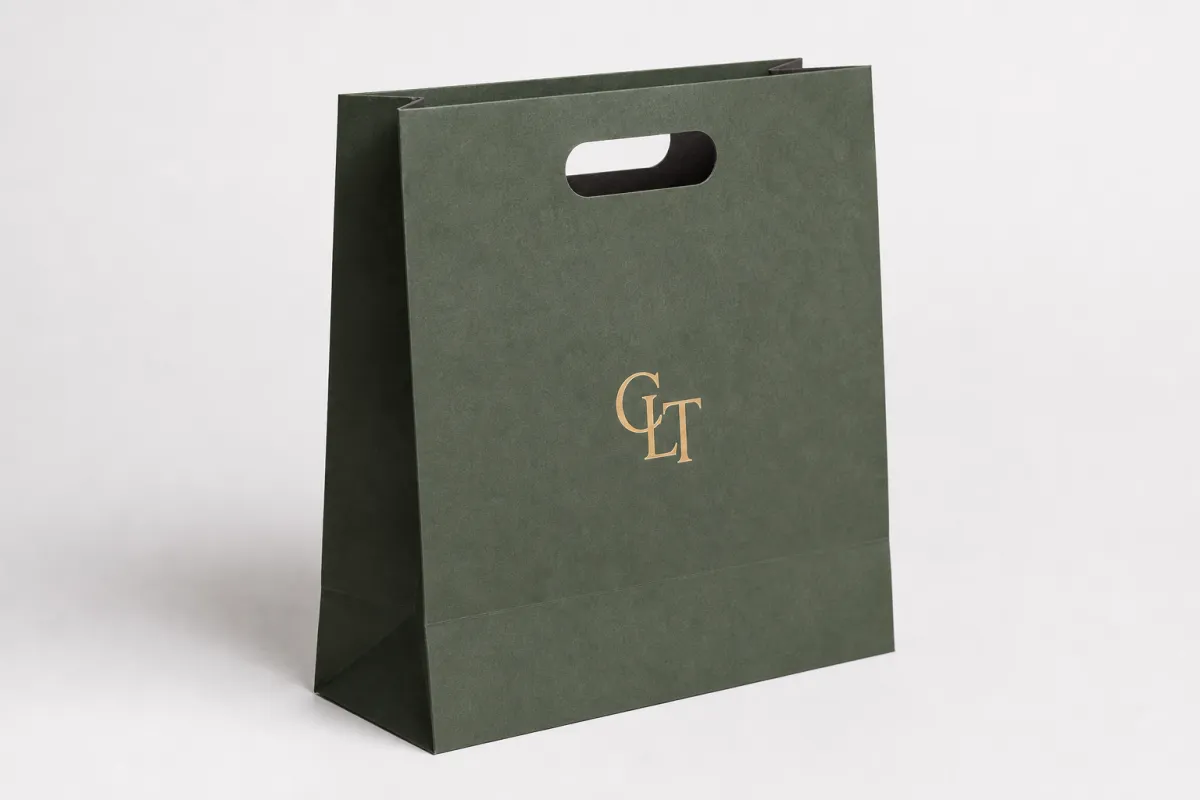
A printed paper bag supplier sits between your concept and the finished bag that lands on a counter, in a shopping cart, or inside a gift box. Their role blends production knowledge, structural thinking, and logistics discipline. The stronger suppliers know how to balance appearance, carrying strength, and unit cost without turning the process into guesswork. The weaker ones nod at every request and hope the press operator can sort it out later. That is not a production method. That is how packaging budgets go sideways.
Three models show up again and again. A reseller takes your order and passes it to another factory. A printer handles the graphics side but may hand off the converting and assembly steps. A true manufacturer manages paper selection, die-cutting, handle attachment, printing, folding, and packing. That difference affects quality control, pricing clarity, and lead time, which is why it matters more than many buyers realize. If tighter oversight and fewer handoffs matter to your project, a manufacturer usually gives you more control. If you need a standard size and want convenience, a reseller can still work, as long as the questions are sharper.
A serious printed paper bag supplier should be able to customize far more than the artwork. Size, gusset width, paper grade, handle type, finish, reinforcement, and print method all change how the bag feels and performs. A kraft bag with twisted paper handles behaves very differently from a coated art paper bag with rope handles and matte lamination. One leans practical and straightforward. The other is built to make the brand look premium from the first touch. Both have a place. They just do different jobs, and mixing those jobs up is where buyers get frustrated.
Before anyone can quote accurately, the supplier needs a real brief. Not a mood board. Not a half-finished thought. A proper brief includes logo files, exact bag dimensions or product size, estimated quantity, budget range, brand colors, and the way the bag will be used. Is it for a boutique checkout counter, a trade show giveaway, luxury gifting, or product transport? A bag carrying a 2 lb candle needs a different structure than one holding a folded T-shirt or a boxed skincare kit. If the supplier has to guess, the quote drifts and the quality usually follows. That part is kind of basic, but it gets skipped all the time.
The best printed paper bag supplier usually asks a few direct questions before the quote goes out: How much weight does the bag need to carry? Do you need a custom size or a standard one? Is the print a single color, a two-color design, or full coverage? Will the bag be handled once, or will it need to survive repeated use? Those questions save everyone from the common trap where a sample looks fine on a desk and fails in the real world. If the supplier does not ask them, you are probably dealing with a sales-first operation, not a production-first one.
Reinforcement deserves attention too. A proper top fold, board insert, gusset construction, and handle attachment method can decide whether a bag lasts through the day or tears at the fold line before the customer reaches the door. A printed paper bag supplier worth trusting will talk about those details without being asked, because the structure is where the real performance lives. Even a nice-looking bag can fail if the bottom board is too thin or the handle patch does not match the weight load.
Printed Paper Bag Supplier Process: From Artwork to Delivery
The process should feel clear and controlled, not mysterious. Inquiry, quote, artwork review, sample, approval, production, inspection, packing, shipping. That is the shape of a professional order. If a supplier makes the path sound vague or overly magical, take that as a warning sign. A capable printed paper bag supplier lays out the steps because visible steps reduce expensive mistakes.
- Inquiry: You send size, quantity, print needs, handle preference, target budget, and deadline.
- Quote: The supplier returns pricing, MOQ, lead time, and the assumptions behind the number.
- Artwork review: They check the dieline, bleed, color mode, and logo placement.
- Sampling: You approve a mockup or physical sample before the full run.
- Production: The order moves into printing, converting, and assembly.
- Inspection: Bags are checked for size, print alignment, glue integrity, and handle attachment.
- Packing and delivery: Bags are flat-packed or boxed, then shipped to your destination.
Artwork prep is where many orders lose time. Your printed paper bag supplier will usually want a vector file, outlined fonts, clear brand color references, and a dieline if the bag is custom. Use CMYK for process color work and specify Pantone references if color matching matters. If you send a low-resolution JPEG and expect crisp edges on a matte surface, the result will likely disappoint. The file may open cleanly. That does not mean it will print cleanly.
The dieline matters more than many buyers expect. It marks folds, glue points, handles, and trim edges. If the artwork ignores those boundaries, text can land under a crease or a logo can drift too close to a gusset. A careful printed paper bag supplier should flag that before production begins, not after the first cartons are done. A supplier that keeps approving broken artwork without comments is not protecting your order. They are protecting the invoice.
Sampling options
Three sample types usually show up. A digital mockup moves quickly and costs little, but it only proves layout, not material feel. A plain physical sample shows structure, strength, and dimensions, but not your branding. A printed sample comes closest to the final output, and that is the one worth reviewing before a larger order. A thoughtful printed paper bag supplier should explain which option is being offered because each sample answers a different question.
For first orders, samples are not wasted time. They are the cheapest insurance in the process. If the paper feels too thin, the handle color clashes, or the print sits a little off-center, you catch it before 5,000 bags get boxed. That kind of error looks small on a monitor and expensive in a warehouse. One overlooked sample can turn into a lot of unnecessary rework.
Turnaround depends on how clean the order is. A straightforward custom bag with ready artwork might move from proof approval to production in 10 to 15 business days. More complex runs can take 15 to 25 business days, especially if the supplier needs to source a specific paper stock or finish. Sampling can take 3 to 10 business days for a mockup, or longer for a fully printed sample. A good printed paper bag supplier separates those stages clearly instead of promising impossible speed and hoping nobody asks for details.
Shipping adds another layer. Once production ends, cartons still need to move. Domestic freight is one thing. Ocean shipping, customs checks, destination paperwork, and carrier delays are another. A bag order that is finished on Friday can still arrive late if the cartons sit in a warehouse or a port queue. If timing matters, ask for a production date, packing date, and shipping estimate as separate milestones. That gives you a real delivery window instead of a hopeful guess.
Printed Paper Bag Supplier Pricing, MOQ, and Quote Basics
Pricing is where buyers get caught most often. A quote can look attractive until you notice the supplier used a lighter paper weight, skipped reinforcement, quoted a smaller size, or left freight out of the number. A strong printed paper bag supplier gives enough detail that you can compare one offer against another line by line. If the quotes cannot be compared on equal terms, the pricing is not useful. It is just noise with numbers attached.
The main cost drivers are straightforward. Paper stock, bag size, handle type, print colors, finish, reinforcement, and packing method all affect the final price. More paper means more cost. More print coverage means more setup and ink. Rope handles cost more than flat paper handles. Matte lamination, soft-touch coatings, and foil accents push the price upward. Custom sizes usually cost more than standard ones because the converting setup is less efficient. None of this is mysterious. It is manufacturing math with a few extra variables.
MOQ matters because every printed paper bag supplier has setup costs to recover. Die-making, plate creation, press setup, and labor do not shrink just because someone orders 300 pieces and asks politely. For simple standard bags, MOQs often land around 500 to 1,000 pieces. For custom sizes and more detailed printing, 1,000 to 3,000 pieces is common. Premium finishes or highly customized construction can raise the minimum to 5,000 pieces or more. Smaller quantities nearly always mean a higher unit cost. That is not a trick. It is the reality of production.
A useful quote tells you exactly what was included and what was not. If the number looks much lower than the others, ask what changed. Was the paper thinner? Was the print limited to one side? Are the handles simple twisted paper instead of rope? Is freight missing? A good printed paper bag supplier will explain the tradeoffs rather than pretending they uncovered a secret factory shortcut nobody else knows about.
| Bag Type | Typical MOQ | Rough Unit Price at 5,000 pcs | Best Use |
|---|---|---|---|
| Standard kraft bag, 1-color print, twisted handles | 500-1,000 | $0.18-$0.35 | Retail checkout, events, simple branding |
| Custom kraft bag, 2-color print, reinforced top and base | 1,000-3,000 | $0.28-$0.60 | Boutiques, gift shops, heavier products |
| Premium art paper bag, full print, matte lamination, rope handles | 1,000-3,000 | $0.65-$1.80 | Luxury retail, fashion, premium gifting |
| High-finish custom bag with foil, spot UV, or special construction | 3,000-5,000+ | $0.90-$2.50 | Launches, prestige brands, high perceived value |
Those figures are not universal. They move with paper market pricing, region, freight, and seasonal demand. Even so, they give you a grounded place to start. If someone offers a custom printed bag with rope handles, full coverage, and no freight for a tiny fraction of those ranges, the number usually hides something. Maybe thinner stock. Maybe no reinforcement. Maybe a surprise charge later. A printed paper bag supplier should be willing to spell out the assumptions behind the quote, because pricing without assumptions is just a trap in a neat font.
Useful quotes tend to include the exact bag dimensions, paper gsm or weight, print method, handle type, finish, packing style, sample cost, tooling cost if any, freight terms, and lead time. If those details are missing, ask for them. A professional printed paper bag supplier will not mind. The ones that get defensive are usually the ones with the least to show.
If you want a fast reality check, compare the quote against the actual use. A bag carrying light cosmetics is not the same thing as a bag carrying boxed glassware. If the bag has to hold weight, pay attention to reinforcement and paper thickness before chasing a lower per-unit price. Saving six cents on a weak bag is a bad trade if the customer loses the product on the sidewalk.
Key Factors That Separate a Good Supplier From a Cheap One
Cheap is easy to find. Good takes more effort. A solid printed paper bag supplier focuses on repeatable quality, not only on a good-looking sample photo. You want consistent bag shape, straight folds, aligned print, and handles that stay attached after real use. If the first ten bags look great and the next hundred drift off-spec, the supplier does not have control of the process. They have luck on their side, which is not a production strategy.
Material quality is about more than thickness. Paper weight in gsm, fiber content, surface coating, and caliper all shape the final result. A 120gsm kraft bag can work perfectly well for lighter retail items. A 200gsm art paper bag may feel more premium but needs stronger reinforcement to carry weight properly. A skilled printed paper bag supplier will explain why one paper fits your use case and another does not, instead of pushing the highest-margin option and calling it guidance.
Print quality deserves a careful look. Ask how the supplier handles color matching, fine typography, gradients, and ink rub resistance. A logo with delicate line work may print cleanly on coated stock and turn muddy on rough kraft. A solid brand block may look crisp in offset and lose precision in flexo if the design is too detailed. If your design includes small type, metallic ink, or subtle gradients, test it. Do not assume the press will preserve every detail on instinct. It will do exactly what the setup allows.
Sustainability claims matter only when they are specific. FSC certification, recycled content percentages, and water-based inks are real signal. Vague "eco-friendly" claims are not. Ask the printed paper bag supplier whether the paper is FSC-certified and whether they can provide chain-of-custody information where applicable. You can also review the standards body directly at FSC International. If the supplier claims sustainability but cannot explain the source of the paper or the finish, that is marketing copy in a green shirt.
Shipping and distribution deserve the same level of scrutiny. If bags are being shipped in cartons for retail distribution, ask whether the supplier performs drop testing or carton testing. For reference on shipping test standards, look at ISTA. A bag that survives the press line still has to survive packing, stacking, and transit. That part is not glamorous, but it is where many orders get damaged. A good printed paper bag supplier thinks about the whole route, not just the finished print.
Communication is a quality signal too. Fast replies feel nice, but technical clarity matters more. Does the supplier answer the exact question you asked? Do they request artwork dimensions, use case, and quantity before quoting? Do they offer a sample route without pressure? A dependable printed paper bag supplier behaves like a packaging partner. The flaky one behaves like a yes-machine until payment clears.
Step-by-Step: How to Vet a Printed Paper Bag Supplier
Start with your own brief. Before you contact any printed paper bag supplier, write down the exact bag size, intended product weight, quantity, brand colors, print coverage, and deadline. If the bag needs to carry a luxury purchase, say so. If it only needs to survive checkout and a short walk home, say that too. The more concrete your brief, the easier it becomes to spot nonsense in a quote.
Then compare three to five suppliers using the same spec sheet. Not the same loose email with casual wording. The same spec sheet. That way you are comparing actual quotes, not how well each salesperson guessed what you meant. A serious printed paper bag supplier should return a quote that matches the brief closely. If one supplier gives a vague answer and another gives exact paper weights and finish options, the second one probably has better process discipline.
Ask for proof points. Real sample photos. Material choices. Print method options. Previous dimensions. Dieline examples. Testing methods. If the order matters, request a mockup before approval. A good printed paper bag supplier should not act offended by proof requests. Proof is part of the job. Faith is not a production plan.
Ask the timeline question in stages instead of one broad "how long will it take?" message. You want to know:
- How long artwork review takes
- How long sampling takes
- How long production takes after approval
- How long packing and freight take
- What happens if the artwork changes midstream
Those checkpoints matter because a printed paper bag supplier can be technically fast and still miss your launch date if approvals move slowly. If they cannot give stage-by-stage timing, that is not a small gap. It means they have not thought through the order from start to finish. Good scheduling is part of quality, even if it does not show up in the sample photo.
For larger runs, ask whether they inspect using an AQL-based process or another defined quality method. You do not need a lecture. You need to know there is a consistent check for print alignment, glue integrity, handle attachment, dimensions, and carton count. A supplier that can describe the inspection process without hand-waving usually has better control. A supplier that says "don't worry" without details is asking you to do exactly that later.
Here is a useful filter. Compare each printed paper bag supplier on five things: price, quality, responsiveness, lead time, and flexibility for future orders. If one is cheap but slow, another is fast but vague, and a third is slightly pricier but technically precise, the third one often wins in real life. Packaging buyers lose money by chasing the lowest line item and ignoring the cost of mistakes that show up after the order ships.
"The cheapest quote is usually the one with the missing details."
That line sounds blunt because it is true. Missing details create surprise charges, artwork rework, weak materials, and reorders. A practical printed paper bag supplier earns trust by making the unknowns visible up front. Once that happens, the whole order gets easier to manage.
Common Mistakes When Ordering Printed Paper Bags
The first mistake is easy to spot: choosing the cheapest quote and acting surprised when the bag feels like tissue paper with handles. A low price is fine if the spec is honest. It is not fine if the supplier trimmed paper weight, skipped reinforcement, or used a print method that cannot handle your design. A decent printed paper bag supplier will tell you what the lower price bought you. An opportunistic one will let you find out after delivery.
The second mistake is ignoring structure. Handle strength, gusset width, and base reinforcement are not decorative details. They decide whether the bag carries the product or dumps it on the floor. If the item is heavy or awkwardly shaped, ask about a reinforced top fold, bottom board, or stronger handle attachment. A printed paper bag supplier should be able to suggest those options without turning the conversation into a hard sell. If they cannot speak clearly about structure, move on.
The third mistake is sloppy artwork. Low-resolution logos, thin fonts, and last-minute file swaps create trouble. If your brand color is exacting, confirm it early. Paper absorbs ink differently from coated carton or label stock, so a color that looks right on screen can print warmer, duller, or slightly darker on the final bag. A good printed paper bag supplier will flag those shifts before production. A lazy one will blame the screen. That is not always where the issue is.
The fourth mistake is skipping the sample. Buyers do this because they want to save time. Then they receive a bag that is too small, too glossy, too flimsy, or simply wrong in hand. Sampling is cheaper than a reprint. That stays true even when the sample costs a little extra. A careful printed paper bag supplier should make sample review part of the process, not an awkward upsell.
The fifth mistake is not checking the finish under real lighting. A matte bag can look elegant in a photo and flat in a store. A glossy finish can look sharp under a studio lamp and too shiny on a retail shelf. Brand perception lives in context, not on a monitor. Test the final sample where it will actually be used. That sounds simple because it is.
One more habit helps more than most buyers expect: do not let the order rely on hope. Hope is not a substitute for a checklist. Ask the printed paper bag supplier to confirm size, print location, handle color, bag orientation, packing count, and carton labeling before the job starts. That small discipline prevents mistakes that are easy to avoid and annoying to explain later.
Expert Tips and Next Steps Before You Place an Order
If you want a cleaner order, build a tighter brief before you speak with a printed paper bag supplier. Include exact dimensions, product weight, whether the bag needs to stand upright, your preferred handle type, and the quantity breakpoints you care about. If you know the budget range, say it. A supplier can usually guide you better when they know whether they are solving for cost, feel, or a premium look.
Ask for two or three material options. That is one of the easiest ways to make a smarter decision. Compare a standard kraft stock, a heavier coated paper, and a premium laminated stock. The tradeoff shows up quickly: lighter cost, better feel, stronger presentation. A good printed paper bag supplier should not force a single answer when the project can work in more than one direction.
If this is your first retail order or your first premium gifting run, use a pilot batch. A small test order can reveal whether the bag feels comfortable to carry, whether the logo placement reads well in the hand, and whether the finish suits the brand. A pilot also shows whether the printed paper bag supplier can hit the expected quality twice, not just once on a good day. That second run is where the truth usually shows up.
Review the final proof like a skeptic. Check size marks, logo placement, copy, handle color, and any legal or product text you included. Small mistakes become loud once the order ships. A wrong phone number or a truncated slogan is not the kind of brand story anyone wants. Your printed paper bag supplier should catch obvious layout issues, but you still need to read the proof like it will be printed on 10,000 bags, because it will.
Here is a practical next-step plan that does not waste time:
- Shortlist three suppliers with relevant bag experience.
- Send each one the same spec sheet.
- Request matching quotes with the same quantity and finish.
- Ask for sample options or a proof before approval.
- Compare quality, price, and timing side by side.
- Choose the printed paper bag supplier that fits your brand, not just the one that sounds cheapest.
That last point is the one people resist. Cheap is tempting. I get it. Packaging is one of the few physical touchpoints a customer remembers right away. A bag that feels right makes the brand feel more thoughtful. A bag that fails in use makes the whole order look rushed. The smartest move is to compare the spec, ask better questions, and choose the partner who can deliver consistent quality without drama.
For a final check, focus on three things before you approve production: the bag must carry the real product weight, the artwork must stay readable after folding and trimming, and the supplier must be able to explain exactly how the order will be made, packed, and shipped. If those three pieces line up, you are in good shape. If one of them is fuzzy, fix it before the first run starts, because that is the part that saves money and prevents the kind of mistake nobody wants to explain after delivery.
How do I compare printed paper bag supplier quotes?
Use the same specs for every quote: size, paper weight, quantity, print colors, handle type, and finish. Check whether the quote includes sampling, packaging, freight, and any setup charges. Compare unit cost at the same MOQ so one printed paper bag supplier does not look cheaper just because the quantity is different. If one quote is much lower, ask which material, finish, or construction detail changed.
What MOQ should I expect from a printed paper bag supplier?
MOQ depends on bag size, print method, and customization level, so there is no single universal number. Simple standard bags often allow lower MOQs, while custom sizes and complex printing usually need higher minimums. Ask for breakpoints at different quantities so you can see where the unit price drops enough to justify ordering more from a printed paper bag supplier. In many cases, the real decision is between a small order with higher unit cost and a larger order that lowers the unit cost enough to matter.
How long does a printed paper bag supplier usually take?
Sampling can take a few days to a couple of weeks depending on artwork changes and material availability. Production time varies with order size, print complexity, and season, so ask for a clear timeline before approval. Shipping time is separate from production, which is where a lot of people get burned by bad planning with a printed paper bag supplier. If the order is tied to a launch or event, keep freight and customs in the schedule from the start.
What files should I send to a printed paper bag supplier?
Send editable vector artwork when possible, plus brand colors, logo placement, and any text that must remain legible. Include exact bag dimensions or ask for a dieline if you do not have one already. Confirm whether the supplier wants files in CMYK, Pantone references, or both before you finalize artwork for the printed paper bag supplier. If you are unsure, ask for a proof first so the layout can be checked before production.
How can I check bag quality before placing a large order?
Request a sample that matches the intended material, handle type, and print method as closely as possible. Test the bag with real product weight and check the base, seams, and handle attachment points. Review print clarity, color accuracy, and finish under normal store lighting, not just on a screen, before committing to a printed paper bag supplier. If anything feels weak or off-center in the sample, treat that as a real issue, not a small cosmetic one.
Related packaging resources
Use these related guides to compare specs, costs, quality checks, and buyer decisions before making the final call.