Buyer Fit Snapshot
| Best fit | branded packaging for subscription boxes for packaging buyers comparing material specs, print proof, MOQ, unit cost, freight, and repeat-order risk where brand print, material, artwork control, and repeat-order consistency matter. |
|---|---|
| Quote inputs | Share finished size, material target, print colors, finish, packing count, annual reorder estimate, and delivery region. |
| Proofing check | Approve dieline scale, logo placement, barcode or warning zones, color tolerance, and any recyclable or compostable wording before bulk production. |
| Main risk | Vague material claims, crowded artwork, or missing packing details can create delays even when the unit price looks attractive. |
Fast answer: Branded Packaging for Subscription Boxes: Dieline, Finish, Proof, and Buyer Review should be specified like a repeatable production item. The safest quote includes material, print method, finish, artwork proof, carton packing, and reorder notes in one written spec.
What to confirm before approving the packaging proof
Check the product dimensions against the actual filled item, not only the sales mockup. Ask for tolerance on folds, seals, hang holes, label areas, and retail display edges. If the package carries a logo, QR code, warning copy, or legal claim, reserve that space before decorative graphics fill the panel.
How to compare quotes without losing quality
Compare board or film grade, print process, finish, sampling route, tooling charges, carton quantity, and freight assumptions side by side. A lower quote is only useful if the supplier can repeat the same color, closure quality, and packing count on the next order.
Branded Packaging for Subscription Boxes That Works
Branded Packaging for Subscription boxes can look like a tiny budget line until one exact change - a $0.30 insert tweak, a shift from 16pt to 24pt SBS, or a cleaner 0.75 mm fold tolerance - turns an ordinary mailer into the kind of box customers keep on a shelf and photograph before they recycle the outer carton. I still remember standing on a Shenzhen production floor during a skincare run and watching that happen in real time: we swapped a loose 16pt divider for a die-cut 24pt SBS insert, the unit cost moved by only $0.30, and the renewal rate improved enough that the finance team visibly relaxed. That is the sort of moment that makes a long day in a factory smell like victory, even if the hot glue and recycled paper dust are doing most of the work.
The part most brands miss is that branded packaging for subscription boxes is not just a pretty outer shell. It is the full package system: the structure, the print method, the finish, the insert, the tissue, the label, the opening sequence, and the way all of it survives 10,000 shipments without turning into a disappointment. If the packaging looks amazing on day one but starts failing by the third reorder, it was never really good packaging. It was a photo prop with a tracking number and a 12- to 15-business-day production promise that nobody checked against the actual fulfillment calendar.
I have spent enough time in factories in Shenzhen, Dongguan, and Ningbo to know the difference between a package that wins applause and a package that earns repeat orders. The strongest branded packaging for subscription boxes protects the product, keeps picking and packing moving at a sane pace, and still feels consistent month after month. That consistency matters more than most founders expect. Customers notice when month four looks cheaper than month one, even if they cannot name the exact reason, and they usually notice after a 500-unit reorder lands with a slightly different board shade or a softer score line.
The rest of this piece stays on the practical side of branded packaging for subscription boxes: how it works, what Really Drives Cost, and where brands waste money trying to force a box to do ten jobs at once. If you are comparing custom printed boxes, retail packaging options, or a more restrained packaging design, the goal stays the same. Build a system that looks intentional and behaves well under pressure, whether the run is 300 units or 30,000 units split across two cartons and a tray.
What is branded packaging for subscription boxes?
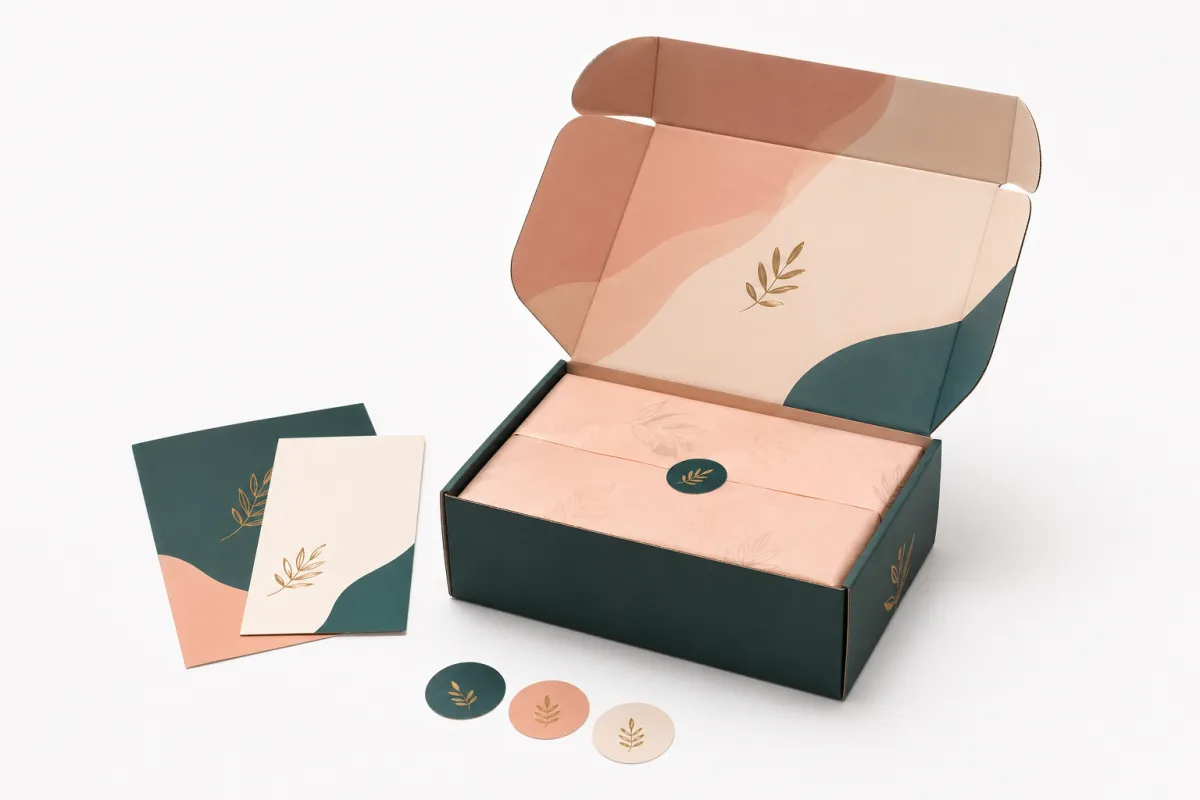
At its simplest, branded packaging for subscription boxes is the sum of everything a customer touches before they touch the product. That usually means an outer mailer, an inner retail-style box, one or two inserts, tissue or filler, and a label or print treatment that signals the brand before the lid even opens. A good setup has rhythm: open, reveal, lift, discover. A bad one leaves the product rattling around like it got packed by somebody in a hurry, which, frankly, it probably did on a line that was moving 900 units an hour.
I learned that the hard way during a meeting with a wellness brand that was absolutely fixated on foil stamping the lid. The box looked expensive, no argument there, but the product was sliding inside because the insert had been drawn from a generic template with a 2 mm sizing error. We corrected the insert, added a 1.5 mm crush allowance, and the same branded packaging for subscription boxes suddenly felt tighter, more premium, and less fragile. The founder wanted a luxury story. The insert, annoyingly enough, was the thing telling the truth.
Most people think branding lives only in graphics. It does not. In branded packaging for subscription boxes, package branding comes from structure as much as color. A rigid setup can communicate premium without shouting. A kraft mailer can feel warm and direct. A printed corrugated shipper can feel durable and practical. The right packaging design depends on what the box is supposed to say in the first 10 seconds, not just what it looks like on a mockup sheet that nobody will ever pack by hand in Los Angeles, Chicago, or a 2,000-square-foot third-party warehouse.
"We thought the ribbon was the story. The box was the story." That was a founder's line after we cut a $0.22 insert cost and fixed a 3,000-unit skincare run that kept arriving with shifted jars. I still laugh a little at that one, because they were not wrong - they were just looking in the wrong layer, and the 18mm ribbon they loved had nothing to do with the 24pt insert that actually held the serum upright.
That is why I treat branded packaging for subscription boxes as a system, not a surface. The box, print, finish, and opening sequence have to work together at scale. If one part is overdesigned, another part pays for it. If the box is gorgeous but the closure pops open in transit, the customer does not care that the embossing was expensive. They remember the damage, the delay, and the replacement email, usually in that order, especially if the shipment moved through a 1,200-mile regional line haul and sat in a 95-degree trailer for 14 hours.
A strong starting point begins with the product, the ship method, and the promise the brand makes on the website. Build the packaging backward from those three things. The cleanest custom printed boxes usually come from that kind of discipline, not from throwing six finishes at a sketch and hoping the result feels premium. For more built-for-production options, our Custom Packaging Products page is a better place to start than a mood board full of glossy dreams and impossible tolerances.
How does branded packaging for subscription boxes work in production?
The production stack for branded packaging for subscription boxes usually starts with an outer mailer, then a secondary box or tray, then inserts, then any protective components like paper crinkle, foam, or molded pulp. In one cosmetics project, the outer shipper was 32ECT corrugated, the inner tray was 350gsm CCNB, and the insert was 24pt SBS with a 2-color print. That mix cost less than a fully rigid setup, but it still felt clean when the customer lifted the lid, which is really the whole point when the monthly box lands after a 6 to 8 day domestic transit window.
From there, the workflow moves from dieline to print-ready artwork to proofing and then production. A lot of teams drift into theory right here. They pick colors in a PDF instead of on calibrated output, they approve a dieline without dropping the actual jar into the cavity, and they assume the line can make it work. A production team can make a lot of things work. It is just not free, and it is rarely elegant, which is why I get twitchy when someone says, "We'll fix it later in fulfillment," after the supplier in Guangdong has already scheduled the knife and crease forms.
Printing method changes the look of branded packaging for subscription boxes more than most founders expect. Offset gives better detail and smoother solids for larger runs. Digital helps when you need 250 or 500 units and cannot justify plates. Foil stamping adds shine, but it also adds setup and can crack if the board is too soft. Spot UV creates contrast, but only if the base coating and artwork contrast are strong enough to begin with. I have seen a $0.18 spot UV decision look like $2.00 because the color underneath was already too busy and the whole thing read like a design team argument on 350gsm C1S artboard.
Coatings matter too. A soft-touch lamination can make a mailer feel like it belongs in a premium retail packaging display, but it will show scuffs if the fulfillment team stacks boxes too aggressively. A matte aqueous coating can be cleaner for high-volume shipping, especially when you need 5,000 or 20,000 units to survive pallet movement. For sustainability-minded brands, FSC-certified board is worth asking for, especially if the packaging claim appears on the box. Here is the standard I point clients to: FSC certification.
Fulfillment logic is the other half of the story. Branded packaging for subscription boxes has to fit the product, the shipper, and the picking process. If the box needs to be assembled in 40 seconds but your line is running 1,200 units an hour, the structure should not require origami. I have watched a line in a Dongguan facility lose 18 minutes because a flap sequence was clever on paper and clumsy in real life. Clever does not ship. Fast and repeatable does, especially on a Tuesday shift with a 6:30 a.m. start time.
- Outer mailer: protects the shipment and carries the first brand impression.
- Inner box: controls the reveal and adds perceived value.
- Insert: stops movement and keeps the product centered.
- Tissue or filler: adds texture, sound, and a cleaner opening moment.
- Labels and seals: close the box, support package branding, and keep the line moving.
If you are trying to evaluate shipping durability, I would ask for test methods, not promises. The ISTA shipping test standards are worth a look before you approve a structure that has never been dropped, vibrated, or compressed in the real world. I have seen beautiful packaging fail a 24-inch drop because the corner score was too tight by 0.75 mm. That is a silly place to lose money, and it is usually the kind of silly that costs three meetings, one revised dieline, and a reprint of 2,000 units to explain.
Subscription Box Packaging stack showing outer mailer, insert, tissue, and labels on a packing line" class="blog-content-img" loading="lazy">
Key factors that shape branded packaging for subscription boxes
Structure comes first in branded packaging for subscription boxes. If the box style is wrong, everything else becomes decoration on top of a bad decision. A subscription box that ships a glass serum needs more internal restraint than a box of socks. A sample box with three items and a booklet may need a foldable insert with 4 compartments. A tea club that ships six pouches every month might need a simple tray and sleeve, not a luxury rigid box that eats $1.80 of the budget before the label is even applied.
Material choice changes the feel and the failure rate. Kraft board signals a natural, lower-ink look and can support eco-minimal package branding. SBS and CCNB give brighter print and a cleaner surface for saturated color. Corrugated board adds crush resistance, which matters if the parcel is going through a rough carrier network. I have watched brands fall in love with an uncoated, recycled stock, then discover that dark ink rubs off in humid storage in Phoenix during July. Cute choice. Expensive lesson. The warehouse manager was not amused, and honestly, neither was I.
Brand identity shapes the whole packaging design. If the brand is playful, you can use bright graphics, hidden messages, and surprise details inside the lid. If the brand is more clinical or premium, restraint often works better. A single foil line, a clean logo, and a quiet color system can outperform a box covered in every effect a vendor can sell. Honestly, I think a lot of brands confuse more decoration with more value. The customer usually sees more clutter, especially on a 6 x 9 inch mailer with three different ink colors and a crowded back panel.
Volume changes everything. A pilot run of 300 units and a monthly run of 15,000 units should not be built the same way. Branded packaging for subscription boxes has to stay repeatable, because the best idea in month one can become a headache by month four if the art files, board specs, and assembly method are too fragile. I once had a client move from 1,000 to 8,000 units and discover that a hand-applied belly band added 11 seconds per box. That little detail added nearly two full labor shifts across a quarter, which is the sort of math that wakes people up quickly in a 3PL outside Dallas.
Customer experience metrics matter more than many founders admit. A stronger unboxing sequence can improve referral screenshots, gifting behavior, and renewal intent. That does not mean every box needs a hidden compartment and three inserts. It means the packaging should support the same emotional promise the brand sells on the website. Good branded packaging for subscription boxes can lift retention because it makes the monthly delivery feel familiar, not repetitive. Familiar is underrated. Familiar with one sharp surprise is even better, particularly if that surprise is a printed card, a sleeve message, or a 1-color foil mark that costs $0.11 at 5,000 units.
For brands still deciding what to prioritize, I like to compare the box against two questions: does it protect the product, and does it earn its keep on camera? If you answer yes to both, the design is usually on the right track. If the box is gorgeous but fails either question, it is probably a cost center pretending to be strategy. The cleanest shortlists usually come from actual samples, not from a deck full of adjectives and no board specs, especially when the sample shows a 1 mm insert adjustment that a render would never have caught.
For examples of how structured packaging choices change customer perception, our Case Studies page shows a few runs where a 1 mm shift in insert sizing or a simpler print build changed the outcome more than a flashy finish ever did.
Branded packaging for subscription boxes: cost and pricing
Pricing for branded packaging for subscription boxes is driven by size, material grade, print coverage, finishes, and insert complexity. A 9 x 6 x 3 inch mailer with one-color print and no insert is not in the same category as a 12 x 10 x 4 inch rigid box with foil, embossing, and a custom molded insert. On paper they may both be one box. In practice they are two different jobs, two different setup paths, and two very different numbers on the quote sheet. I wish that were more glamorous, but manufacturing is rarely sentimental, especially in plants that quote in RMB and land product through Long Beach or Savannah.
The biggest variable is quantity. Setup costs spread out fast when you move from 500 units to 5,000 units. Plate charges, die cutting, proofing, and machine setup can make a small run feel annoyingly expensive, while a larger run often drops the per-unit cost by 20% to 45%. That is why I keep telling founders not to judge branded packaging for subscription boxes by unit price alone. A $1.80 unit cost with clean logistics can beat a $1.25 unit cost that arrives with three surprise fees and 12 days of delay. I have seen that movie, and the ending is always the same: somebody says, "Why is this invoice higher than the quote?"
There are always extra line items. Sampling is one. Tooling is another. Freight can get ugly if your packaging ships from a port 7,000 miles away and gets caught behind a container backlog. Warehousing matters too if you are not ready to receive 20 pallets of custom printed boxes. Then there are rush fees, artwork revisions, and occasional color matching charges if your Pantone target is picky enough to need a second proof cycle. That is not the supplier being difficult. That is manufacturing doing what manufacturing does, and the box usually does not care about your launch date in March or your campaign date in October.
Here is the budgeting advice I give after too many supplier calls: estimate landed cost, not just unit cost. Landed cost includes the box, inserts, freight, sampling, duty if relevant, and the labor it takes to assemble the pack. If your fulfillment center charges $0.22 to insert the product and $0.08 to apply a seal, you should count it. I have watched more than one project get approved on a $0.98 box and then quietly climb to $1.54 once all the operational pieces were counted. The quote did not lie, but it definitely did not tell the whole story either, especially after the carton moved through a 4-day inbound receiving queue.
| Packaging option | Best use | Typical unit cost at 5,000 | Main tradeoff |
|---|---|---|---|
| Kraft mailer with 1-color print | Lightweight subscriptions and eco-minimal branding | $0.58 to $1.10 | Less premium feel, limited finish options |
| SBS inner box with insert | Beauty, wellness, and retail packaging unboxings | $1.10 to $2.40 | Better print, but more sensitive to transit pressure |
| Corrugated shipper with custom insert | Fragile goods and higher shipping stress | $0.92 to $1.80 | Less luxury feel unless the print design is strong |
| Rigid box with foil and soft-touch lamination | Premium monthly drops and gift-style presentation | $2.80 to $6.50 | Highest cost and slower assembly |
You can save money without making the box feel cheap. The trick is to simplify structure before you strip away brand cues. I would rather cut a second insert than remove the one finish that makes the box feel intentional. A 2-color print on good board often looks better than a four-color mess on weak stock. Branded packaging for subscription boxes does not need every premium upgrade. It needs the upgrades that can defend their own cost, and if a finish cannot do that, I usually do not miss it, especially when the sampler is already quoting a 14-day lead time from proof approval.
Step-by-step process and timeline for branded packaging
The cleanest timeline for branded packaging for subscription boxes starts with discovery. I want product dimensions, weight, shipping method, monthly quantity, and a target price per box before anyone touches artwork. If a serum bottle is 42 mm wide and 125 mm tall, that is not trivia. That is the difference between a snug fit and a loose cavity that rattles during a 600-mile truck ride. Tiny measurements become very expensive when they are ignored, especially when the insert is cut from 350gsm C1S artboard and needs only 1.5 mm of clearance.
Next comes structural design and sample approval. This is where the box shape gets built and tested before anybody prints 10,000 of the wrong thing. I have seen founders skip this step because they were under pressure to launch. That usually ends the same way: one expensive sample, one warehouse headache, and one round of "can we fix this after the fact?" The answer is usually yes, but it costs more and takes longer. A proper sample cycle is worth the 5 to 8 business days it steals up front, even if that feels painful at the time.
Artwork and proofing come after the structure works. I always tell brands to settle color expectations early, especially if they need exact Pantone matching or a specific brand red that has to hold on multiple substrates. A solid branded packaging for subscription boxes project should have proof approval, ink drawdown, and a clear sign-off path. If the approval chain has four people and one of them works from a phone, the clock is going to suffer. I have seen a project sit still because three people liked the same color and one person was convinced it looked "slightly warmer" on an iPad. That kind of debate can eat an afternoon whole in a studio or a conference room in Brooklyn.
Most timelines run something like this: 2 to 4 days for discovery, 4 to 7 business days for structure and samples, 3 to 5 days for artwork correction, 10 to 18 business days for production depending on complexity, and 5 to 12 days for freight. Add another 3 days if you need a second proof. If the supplier says, "Sure, we can do it in a week," ask what part of the process they are skipping. Magic is not a manufacturing method, even if the salesperson says it with a straight face and a PDF that never mentions the factory in Zhejiang.
The delay points are predictable. Late artwork is the biggest one. Unclear specs is a close second. Supplier waiting on approval is a boring but common third. I once watched a project stall for 9 days because the founder wanted to compare three shades of white after the plates were already scheduled. That is not brand stewardship. That is procrastination in a nice blazer. The faster the brief is locked, the less branded packaging for subscription boxes costs in wasted motion, and the less everyone on the chain has to pretend the delay is mysterious.
A good working sequence looks like this:
- Confirm product dimensions, weight, and shipping method.
- Request a dieline and sketch the insert around the actual product.
- Approve a physical sample before print.
- Check artwork, finish, and color on press-ready files.
- Lock production, freight, and receiving dates together.
That order matters because packaging problems are usually created by skipping one of those five steps, not by a printer trying to be difficult. If you keep the sequence tight, custom printed boxes become much easier to manage. If you let the process drift, the packaging turns into a series of expensive surprises, and somehow all those surprises land in the same inbox, usually with a quote revision attached at 4:12 p.m.
Common mistakes with branded packaging for subscription boxes
The most common mistake is designing for the Instagram shot and ignoring transit. I understand the temptation. A beautiful lid reveal can make a founder feel like the box is done. But branded packaging for subscription boxes lives a hard life. It gets compressed, tossed, stacked, and sometimes stored in a humid warehouse for 6 weeks while inventory catches up. A box that looks elegant in a studio can still fail if the corners crush or the product shifts 8 mm inside the cavity. I have seen gorgeous packaging arrive looking like it lost a fight with a forklift in a Chicago cross-dock.
Another mistake is under-measuring the product. A lot of brands measure width once, round down, and send that number to the supplier. Then the insert arrives with 2 mm too little clearance and every packer on the line has to fight the fit. Loose packing leads to damage. Too tight leads to slowed fulfillment and bent corners. In both cases, the customer notices. I have seen this more than once in a monthly beauty subscription where one pump bottle kept shaving the lid edge because the tolerance was never checked against the real bottle. That kind of problem is maddening because it was preventable with a ruler, a caliper, and 10 minutes of patience.
Overcomplicating the structure is another budget killer. A box with six folds, three magnets, a ribbon pull, and a hidden flap may look clever in a concept deck. On the line, it can add 12 to 20 seconds per unit and create a pile of rejects. If the brand wants premium branded packaging for subscription boxes, there are easier ways to get there. A crisp board grade, a strong insert, and a single finish often beat a structure that requires a manual. Nobody wants to pay a human to perform gymnastics on every order, and the packers definitely know when a design was approved by someone who never held the actual board.
Approving a sample too fast is a mistake that bites later. I always ask for a shipping test, even if it is a basic one: 1 drop from 24 inches, a short vibration check, and a compression test under 30 to 40 pounds if the contents are fragile. That is not overkill. That is the minimum if the box is going into postal or courier networks. If the sample survives on a desk but fails in a carton, the approval was fake. It looked good, sure, but it was good in the same way a car is good when it is parked in a showroom with no engine heat.
"The sample looked perfect until we packed 300 units and the lid rubbed in transit." I heard that from a client after a $4,800 reprint. The fix was simple: a 1 mm board change and a smaller insert window. The bill was not simple, though. That one stung, especially because the freight to Texas had already been booked for the following Monday.
The hidden killer is not planning for reorders. First production runs often look fine because the whole team is focused and the supplier is paying close attention. The third reorder is where drift can show up: color shift, board substitution, or a finish that is slightly different because the old spec was never locked in writing. Branded packaging for subscription boxes only stays branded if it stays consistent. A box that changes from batch to batch weakens trust faster than most teams expect, particularly after the second or third month when customers begin comparing one shipment to the last.
If you want a practical filter, ask three questions before approval: does this protect the product, can fulfillment move fast enough, and will batch two match batch one? If the answer to any of those is no, keep working. It is cheaper to spend 30 extra minutes on a proof than 30 extra days cleaning up a problem across 5,000 shipments. I would take a slightly longer proof cycle over a warehouse emergency any day of the week, especially if the run is staged for a 12-business-day production slot and the truck is already scheduled.
Expert tips and next steps for branded packaging for subscription boxes
If I had to reduce branded packaging for subscription boxes to one rule, it would be this: build one hero moment, not five competing ones. Make the lid reveal good. Make the insert fit cleanly. Make the finish support the brand. Then stop. A single strong impression is usually enough. Too many effects fight each other, and the customer ends up looking at all of them and feeling none of them. I have watched a beautiful box collapse under the weight of its own ideas, which is a painful thing to say about paperboard, but there it is, especially when the lid, sleeve, and belly band all try to carry the same story.
Standardize box sizes wherever you can. I know that sounds boring, but boring saves money in real life. If one 9 x 6 x 2 inch footprint can cover three monthly configurations, your reorder process gets easier and your inventory does not balloon. I have seen a brand save nearly 14% on repeat production simply by reducing from four box sizes to two. The package looked the same to customers, which is the point. Customers do not need a different carton for every minor SKU change, even if the creative team keeps asking for "just one more version" before the 10 a.m. approval meeting.
Get at least two supplier quotes, and make them quote different material or finish options. One can price a 24pt SBS insert with soft-touch lamination, and the other can price a 350gsm board with matte aqueous coating. That gives you a real comparison instead of a fantasy one. If one quote is $0.28 lower but the assembly time is 9 seconds slower, the cheaper quote may actually cost more by the end of the month. Numbers are rude like that. They do not care how pretty the mockup is or whether the render used a bronze foil that would add 18 days to the schedule.
Here is the next-step checklist I use with founders who are ready to move:
- Audit the current box and write down the exact pain points in 3 bullets.
- Measure the product and its shipping carton in millimeters, not guesses.
- Request a dieline and a sample pack from at least 2 vendors.
- Compare landed cost, not only the unit price on the quote.
- Test the sample in a real fulfillment flow before approving production.
I also recommend revisiting the brief after the first sample run. A box that looked perfect in a render may need a 1 mm tweak, a different board grade, or a simpler insert after you see how packers handle it for 500 units. That revision is not failure. It is how better packaging gets made. The best branded packaging for subscription boxes I have seen was almost never the first draft. It was the third version, after someone in a factory pointed out what the design team could not see from a screen, usually while holding the sample up to the light and squinting like a detective in a 40,000-square-foot warehouse.
If you need a starting point for package branding decisions, ask whether the packaging should feel bold, restrained, playful, or eco-minimal. Then let that answer guide the finish, the structure, and the print coverage. The sharper the brief, the fewer wasted revisions you will pay for, and those revisions are never cheap. A round of new proofs can run $80 to $250, and if plates or tooling change, the number climbs fast, especially when the supplier is in Shenzhen and the artwork team is still debating the shade of white.
For brands comparing custom printed boxes against more refined retail packaging, the smartest move is usually not more everything. It is the right structure, the right material, and one or two details that justify the unboxing moment. That is how branded packaging for subscription boxes earns its keep without bloating the budget or turning your monthly shipment into an engineering thesis written around a 24pt insert and a $0.12 seal.
In my experience, the companies that win are the ones that treat branded packaging for subscription boxes like part of product strategy, not a decorative afterthought. If you get the fit right, keep the spec clean, and control landed cost, the box does more than look nice. It helps the product travel, helps the team pack faster, and helps customers feel like the monthly delivery was worth opening. That is the job, and honestly, it is a pretty satisfying one when it is done right, especially when the first 5,000-unit run lands on time and the reorders already make sense.
The practical takeaway is simple: start with the product dimensions, choose the fewest materials that still protect the contents, lock the insert around a physical sample, and approve the shipping test before you print the run. If a packaging idea cannot survive that sequence, it is gonna cost you later, usually in reprints, labor, or a wave of customer complaints that nobody has time to answer twice.
How much does branded packaging for subscription boxes usually cost?
Cost depends on size, material, print coverage, finishes, and order quantity. A simple kraft mailer can land around $0.58 to $1.10 at 5,000 units, while a rigid premium setup can land at $2.80 to $6.50. Ask for landed cost, because freight, sampling, and tooling can add $0.12 to $0.45 per unit before anyone notices, and somehow those small charges always gather together like they planned it.
What is the normal timeline for branded packaging for subscription boxes?
Most projects run through discovery, structure sampling, proofing, production, and freight. A realistic timeline is 2 to 4 days for discovery, 4 to 7 business days for samples, 10 to 18 business days for production, and 5 to 12 days for shipping. Revisions can add another 3 to 8 days if artwork or structure changes, especially if somebody wants to "just try one more color" after the proof is already locked.
Which materials work best for branded packaging for subscription boxes?
Kraft board, SBS, CCNB, corrugated, and rigid board each solve different problems. Kraft is lighter and often more eco-leaning, SBS prints clean and bright, and corrugated handles shipping stress better. The best choice depends on product weight, transit risk, and how premium the unboxing needs to feel. I usually start there and then work backward from the budget, the 350gsm or 24pt spec, and the target freight lane.
Can small subscription brands afford branded packaging for subscription boxes?
Yes, if they keep the structure disciplined. A small brand can start with a strong mailer, a simple insert, and one finish like matte aqueous or a single foil detail. Pilot runs of 250 to 500 units let you test customer response before you commit to a larger monthly schedule. That is usually a much smarter first move than trying to build a luxury box on a starter budget of $1,000 or less per reorder.
What should I send a supplier before quoting branded packaging for subscription boxes?
Send product dimensions, weight, shipping method, quantity, target budget, brand artwork if available, and any required finishes or sustainability goals. If you also include insert needs and the actual fulfillment flow, the quote will be cleaner and the back-and-forth will drop from 12 emails to maybe 3. I will happily take 3 emails over 12; nobody needs to spend that much time repeating themselves when a ruler, a sample, and a 2-page brief would do the job.


