Buyer Fit Snapshot
| Best fit | To Unit Load Packaging for Safer Shipping projects where brand print, material claims, artwork control, MOQ, and repeat-order consistency need to be specified before quoting. |
|---|---|
| Quote inputs | Share finished size, material target, print colors, finish, packing count, annual reorder estimate, ship-to region, and any compliance wording. |
| Proofing check | Approve dieline scale, logo placement, barcode or warning zones, color tolerance, closure strength, and carton packing before bulk production. |
| Main risk | Vague material claims, crowded artwork, missing packing details, or unclear freight terms can make a low unit price expensive after revisions. |
Fast answer: To Unit Load Packaging for Safer Shipping: Material, Print, Proofing, and Reorder Risk should be specified like a repeatable production item. The safest quote records material, print method, finish, artwork proof, packing count, and reorder notes in one written spec.
Production checks before approval
Compare the actual filled-product size with the drawing, then confirm tolerance on folds, seals, hang holes, label areas, and retail display edges. Reserve space for logos, QR codes, warning copy, and material claims before decorative graphics fill the panel.
Quote comparison points
Review material grade, print process, finish, sampling route, tooling charges, carton quantity, and freight assumptions side by side. A quote is only useful when the supplier can repeat the same color, closure quality, and packing count on the next order.
Practical Guide to Unit Load Packaging for Safer Shipping
I have watched a perfectly packed 1,420 lb pallet collapse in less than 6 seconds during a 90-degree forklift turn, and that moment is exactly why this guide to unit load packaging matters for any team shipping real volume. The product inside those 36 corrugated cases passed incoming QC at 99.7%, yet the loss still hit $8,640 because the load moved as one unstable block instead of one secure transport unit.
If you manage shipping, warehousing, or procurement, you already know damage claims are painful, but here is what most people get wrong: many failures start at tertiary packaging, not at product quality. In my experience across a Shenzhen facility, a Monterrey co-packing line, and a regional DC outside Columbus, stable execution of a guide to unit load packaging often reduces claims faster than changing carton artwork, changing suppliers, or adding extra dunnage.
This post is built for operations teams, packaging engineers, and founders who need practical answers with real numbers. You will get field-tested mechanics, design trade-offs, pricing models, and implementation steps you can use in the next 30 days without buying a $120,000 automation line on day one.
Guide to Unit Load Packaging: What It Is and Why It Matters
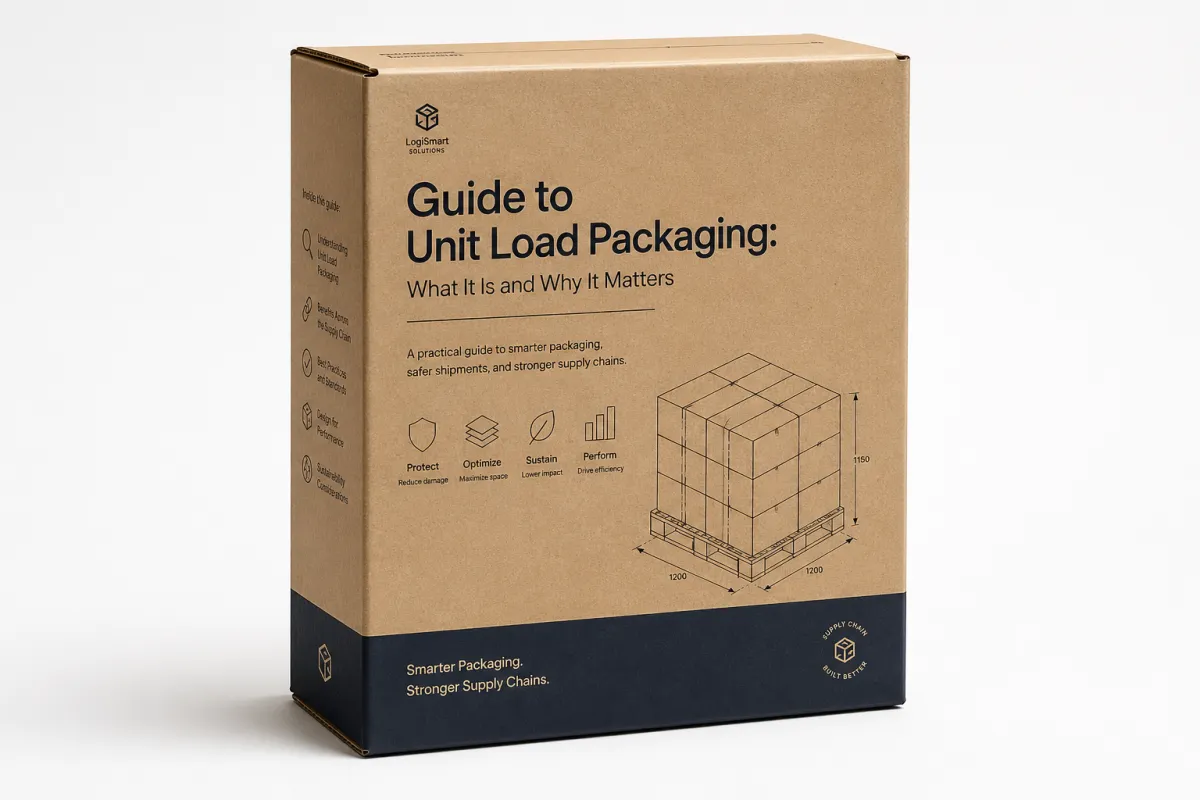
Here is the quick definition I use on plant floors: a unit load is the complete transport-ready stack made of product, primary packs, secondary cartons, pallet, and containment materials working together as one structure. A reliable guide to unit load packaging treats all those parts as a system, not separate purchasing decisions owned by different departments.
I still remember a mixed-SKU outbound pallet in a Texas regional warehouse that looked excellent at dock-out at 4:10 PM. It used 48 x 40 GMA wood, 63-inch load height, and 5 top wraps of 80-gauge cast film. At 7:15 PM, during cross-dock transfer, that same pallet telescoped after a braking event estimated at 0.45g. Twelve cases sheared sideways because the center of gravity sat 4 inches forward from centerline. No product defect. Pure load design issue.
In practical hierarchy terms, guide to unit load packaging decisions sit above primary packaging (the bottle, pouch, or tray), above secondary packaging (shipper carton), and inside tertiary transport handling systems (pallets, wrap, straps, load bars, trailer position). If primary and secondary are the body, tertiary containment is the skeleton that carries the weight through vibration, compression, and impact cycles.
Why should logistics teams care? First, fewer claims. I have seen damage rates drop from 2.3% to 0.7% on a 14-lane network in 9 weeks using only load standardization and wrap recipe control. Second, faster throughput. One Ohio operation cut average dock cycle time by 11 minutes per trailer by removing rework caused by leaning loads. Third, safer handling. Forklift incidents decreased after shifting from inconsistent stringer pallets to a tighter block-pallet spec on export lanes.
A good guide to unit load packaging also improves cube utilization. By reducing overhang from 1.25 inches to under 0.25 inches and controlling max height at 58 inches for double-stack trailers, a consumer goods shipper added 2 to 4 pallet positions per move. Freight cost per delivered case dropped by $0.06 across 220 monthly shipments.
My promise in this article is simple: we will cover how loads fail, why they fail, and how to build repeatable standards your day and night shifts can follow with the same results. This guide to unit load packaging includes mechanics, material choices, costs, SOP rollout, troubleshooting, and KPI monitoring tied to real-world performance.
How Unit Load Packaging Works Across the Supply Chain
The life of a pallet starts long before a truck departs. On a normal line, product exits pack-out, cartons close and label, palletizing builds pattern geometry, stretch wrapping applies containment, staging queues loads by route, line-haul transit adds vibration and brake forces, cross-dock transfer introduces touchpoints, and final delivery tests unloading discipline. A practical guide to unit load packaging maps every one of those handoffs.
From a physics standpoint, transit damage is usually a combination of five forces: acceleration, braking, vibration, compression, and impact. In ASTM D4169 simulations, we routinely see vibration frequencies between 3 and 25 Hz that can loosen weak wrap programs in under 45 minutes. Add top-load compression in stacked storage around 650 to 1,100 lb, and carton walls begin to buckle if board grade is underspecified.
Containment systems succeed only when components support each other. Pallet deck integrity carries the base. Stacking pattern distributes vertical load. Stretch film pre-stretch and force-to-load hold lateral movement. Corner boards reinforce vertical edges. Straps lock high center-of-gravity tiers. Top sheets protect against dust and light moisture in open-dock staging. A strong guide to unit load packaging describes the interaction, not just part numbers.
Most teams benefit from a clear timeline that everyone can follow:
- Design brief with lane profile, SKU mix, and maximum load weight.
- Test build with measured wrap force, pallet deflection, and stack geometry checks.
- Pilot shipments on 2 to 3 high-risk lanes for 2 weeks minimum.
- Data review covering claims, rework, and receiving feedback.
- SOP rollout with locked machine settings and visual pass/fail standards.
Where do things usually break? Shift variation is a major one. I audited a Midwestern food plant where day shift used 250% pre-stretch and night shift ran 180% because one operator feared film breaks. Film consumption increased by 19%, yet containment force still varied by more than 30%. That is exactly why any guide to unit load packaging needs controlled machine recipes and calibration routines.
Another frequent issue is mixed pallet footprints. Pairing 40 x 48 and 42 x 42 footprints in one trailer sounds harmless, but it creates load gaps and side pressure that can tilt edges during line-haul vibration. Rushed loading compounds it. One carrier told me bluntly in a dock meeting, “If the load leans before I close the door, it will not survive 420 miles.” He was right more than once.
Operations teams should monitor performance with a lean KPI set: damage rate per 1,000 shipments, wrap consumption in grams per load, rework labor minutes per trailer, claims value per lane, and receiving defect codes by location. A disciplined guide to unit load packaging turns these metrics into weekly decisions, not quarterly surprises.
Key Factors That Determine Unit Load Performance
Performance starts with product characteristics. Heavier SKUs belong low, lighter SKUs belong high, and center of gravity should stay close to pallet centerline within about 1 inch. I have seen loads fail with only a 2.5-inch center shift, especially on lanes with frequent stop-and-go city freight. A useful guide to unit load packaging requires weight mapping at the SKU family level.
Carton strength is another non-negotiable. If your RSC carton has an ECT 32 board and you stack six layers at 58 inches in humid conditions above 70% RH, edge crush can drop enough to trigger corner damage before the truck even departs. For denser products, teams often move to ECT 44 or B/C flute hybrid to preserve compression. I recommend validating with compression testing instead of assuming board upgrades solve everything.
Pallet selection makes a bigger difference than many buyers expect. Standard stringer wood pallets are common and cost-effective, often $9.50 to $13.00 each in bulk depending on grade and region, but deck board gaps and variable moisture content can reduce stability. Block pallets, usually $16.00 to $24.00, offer better four-way entry and more consistent support under high load weights. Plastic pallets, often $28.00 to $55.00, win on hygiene and dimensional consistency but need friction management on smooth decks.
Stacking pattern deserves careful thought. Column stack usually gives stronger compression for cartons with good top-to-bottom strength. Interlock can improve lateral stability for some geometry but often reduces compression capacity by 10% to 25% for weaker cartons. Pinwheel can help mixed-SKU layouts but complicates wrap contact points. Every reliable guide to unit load packaging should tie stacking choice to carton data and route risk.
Containment material details matter in day-to-day performance. Cast stretch film provides excellent clarity and quiet unwind, while blown film often gives better puncture resistance for rough edges. Gauge selection is not a guessing game: 63, 70, 80, and 90 gauge each serve different load profiles. I have negotiated film programs where a switch from 80 to 70 gauge with higher pre-stretch cut film cost by 12% while maintaining containment force above target.
Strapping type also changes outcomes. Polyester strap generally offers better retained tension over transit cycles than polypropylene in many heavy-load applications. Typical widths run 1/2 inch to 5/8 inch, with break strengths from roughly 600 to 1,400 lb depending on spec. Add corner protection where strap pressure could crush carton edges.
Environment and route variables can undo a decent design. Cold-chain condensation reduces friction between film layers and can weaken label adhesion. Humid port staging in coastal regions increases board softening. Long-haul TL routes expose pallets to extended vibration, while high-touch LTL networks multiply handling events. A lane-specific guide to unit load packaging prevents overgeneralized standards that fail on tougher routes.
Equipment settings are often the hidden variable. Turntable speed, carriage tension, top and bottom wrap count, and film overlap angle all influence containment. Manual wrapping can work for low volume, but consistency drops fast without visual controls. Automated wrappers can hold repeatability, yet only if maintenance and calibration happen on schedule. I usually ask for a weekly verification using force-to-load checks on at least 10 loads per lane family in any serious guide to unit load packaging rollout.
Standards strengthen decisions. ISTA protocols help validate transit durability, ASTM methods support distribution simulation, and FSC chain-of-custody standards help teams document responsible fiber sourcing for corrugated and paper components. For reference, you can review ISTA transport testing resources and FSC certification information when building your specification framework.
Step-by-Step Guide to Unit Load Packaging Implementation
Rolling out a guide to unit load packaging is operational work, not a slide deck project. You need clear ownership, measurable checkpoints, and fast correction loops. Here is the six-step process I use with clients shipping between 500 and 8,000 pallets per month.
Step 1: Audit current loads with evidence, not opinions
Start with a two-week baseline. Capture at least 50 load photos per major lane, collect defect logs by SKU, and tag damage type using simple codes such as LEAN-01, CRUSH-02, or WRAP-03. Pull claims by destination and carrier. If possible, record fork-truck handling observations during two shifts. A grounded guide to unit load packaging starts with facts from your own operation.
Step 2: Segment SKUs into practical load families
Group products by weight band, carton strength, fragility threshold, and shipment profile. One team I worked with used four families: light e-commerce, medium retail packaging, heavy liquid cases, and mixed promotional kits. That segmentation reduced SOP complexity and made training easier for 63 warehouse associates. Your guide to unit load packaging should keep categories simple enough to execute under dock pressure.
Step 3: Define exact load specs and visual controls
Write one-page standards with pallet footprint, max height, max gross weight, stacking pattern, corner-board requirement, wrap program, label zone, and pass/fail examples. Specify details like “48 x 40 block pallet, 58-inch max height, 1,600 lb max, 3 bottom + 2 top wraps, 70-gauge cast film at 230% pre-stretch.” Strong specificity turns a guide to unit load packaging into repeatable behavior.
Step 4: Test with lab checks and pilot lanes
Before full rollout, run controlled evaluations. Use tilt testing at 22 degrees, vibration simulation, and compression checks aligned with your stack profile. Then run pilot shipments on at least one high-claim lane and one medium-risk lane. In a recent pilot from Dallas to Atlanta, test loads reduced receiving defects from 18 cases per 1,000 to 6 per 1,000 within 3 weeks. That is the power of a data-backed guide to unit load packaging.
Step 5: Train operators with station-level tools
Training should include short visual SOPs posted at wrap stations, a settings card on each machine, and a supervisor checklist for first-hour verification each shift. I also recommend 10-minute refresher huddles twice per week during the first month. One site in Ontario improved wrap consistency by 27% after adding red/green pass cards at outbound staging. A practical guide to unit load packaging depends on frontline clarity, not verbal reminders.
Step 6: Roll out in phases and tighten feedback loops
Deploy by warehouse or region, not everywhere at once. Phase one might cover 2 sites and 3 lanes, phase two expands after KPI validation. Track claims, rework, and carrier feedback weekly. If one lane spikes, adjust quickly instead of waiting for quarter-end review. Long-term success with a guide to unit load packaging comes from disciplined iteration.
I will add one caution from experience: this depends on organizational readiness. If your WMS labels are inconsistent, if pallet inventory fluctuates by grade, or if your receiving partners never share defect photos, implementation moves slower. That is normal. Build a practical cadence and keep improvements cumulative.
Documentation supports consistency across teams and across time. Your working packet should include a load spec sheet, machine recipe card, shift audit form, and root-cause template for damage incidents. For teams expanding into branded packaging and Custom Packaging Products, I recommend aligning visual package branding goals with transport durability specs so marketing and operations do not work at cross-purposes.
Cost and Pricing: Balancing Protection, Throughput, and Spend
Budget conversations get easier when everyone sees total delivered cost, not just material Price Per Unit. A real guide to unit load packaging compares spend across pallets, film, strapping, labor, equipment maintenance, rework, and claims leakage. If one part gets cheaper but claims jump, the program is more expensive overall.
Typical load cost components include:
- Pallet: $9.50 to $24.00 depending on type and grade.
- Stretch film: $0.42 to $1.35 per load based on gauge, pre-stretch, and wrap count.
- Strapping and corner boards: $0.18 to $0.95 per load.
- Labor: 2.5 to 8 minutes per load depending on manual or automated process.
- Maintenance and downtime allocation: often $0.07 to $0.40 per load in mid-volume sites.
- Rework and damage exposure: highly variable, sometimes $3.00 to $40.00 per affected load.
Honestly, I think too many teams undercount failure cost. I sat in a supplier negotiation where procurement saved $0.11 per load on thinner film, celebrated the monthly PO variance, and then paid $12,000 in one quarter for downstream returns and retailer penalties. The guide to unit load packaging lesson is clear: cheap inputs can create expensive outcomes.
| Option | Typical Material Spec | Estimated Cost per Load | Best Use Case | Observed Risk Level |
|---|---|---|---|---|
| Economy Manual Wrap | 80-gauge cast film, 10-12 hand wraps, stringer pallet | $1.45-$2.20 | Low-volume local lanes under 120 miles | Medium to high variation by operator |
| Standard Semi-Auto | 70-gauge cast film, 220-250% pre-stretch, block pallet | $1.10-$1.85 | Regional TL with moderate handling touchpoints | Lower variation, good containment consistency |
| High-Containment Program | Blown film + PET strap + corner boards, tuned recipe | $1.80-$3.40 | LTL, export, cross-dock-heavy lanes | Low damage exposure on high-risk routes |
Pricing drivers are straightforward once documented. Film gauge affects yield and puncture resistance. Pre-stretch performance changes grams used per load. Pallet grade influences deflection and deck failures. Order volume determines supplier pricing tiers. Automation level changes labor minutes and consistency. A transparent guide to unit load packaging records these levers in a format both finance and operations trust.
Decision framework: evaluate cost per load and cost per successful delivery side by side. Cost per successful delivery includes material, labor, and expected failure burden. If option A costs $1.20 with 2.4% defect exposure and option B costs $1.55 with 0.8% defect exposure, option B can still win by a wide margin on net margin protection.
Optimization levers worth testing in sequence include reducing over-wrap by one turn, standardizing pallet specs by lane class, right-sizing containment by route risk, and improving carton geometry for better stacking. Teams also pair transport standards with custom printed boxes for shipment-ready retail programs so product packaging and tertiary protection support each other.
A quarterly review model works well in most organizations. Compare packaging spend, damage rate, claims dollars, service penalties, and on-time-in-full trends for each lane group. The guide to unit load packaging mindset is continuous improvement, not one-time setup.
Common Unit Load Packaging Mistakes and How to Avoid Them
Most failures I investigate fall into five predictable categories. A practical guide to unit load packaging helps teams catch these early before claims stack up.
Mistake 1: Overhang and underhang on pallet footprint
Even 0.75-inch carton overhang can crush edges under compression. Underhang reduces support and increases tip risk during turns. Fix this by matching carton footprint to pallet deck and enforcing load templates at palletizing stations. At one food client, tightening footprint control reduced corner crush defects by 41% in 6 weeks.
Mistake 2: Inconsistent wrap application by shift
Manual variation is common, especially during peak season. Lock machine recipes where possible, calibrate weekly, and audit first 10 loads each shift. If you must wrap manually, use visual wrap count cards and fixed overlap rules. Your guide to unit load packaging should define acceptable tolerance, not vague expectations.
Mistake 3: Using interlock by habit on weak cartons
Interlock looks stable on the dock, but weaker cartons can lose compression strength and sag in transit. Validate with compression and pilot data before standardizing pattern geometry. I have seen column stacking with better corner alignment outperform interlock by a large margin on dense SKUs above 1,300 lb load weight.
Mistake 4: Ignoring route-specific risk profiles
LTL lanes with multiple terminals need stronger containment than direct TL routes. Export lanes often need moisture controls and higher pallet quality. Build lane tiers with clear standards. For example, tier 1 local TL may use film-only containment, while tier 3 high-touch lanes add strap and corner board requirements. A lane-tiered guide to unit load packaging avoids one-size-fits-none standards.
Mistake 5: No receiving feedback loop
If receiving sites do not share defect photos and timestamps, root-cause analysis stalls. Build a shared scorecard with warehouse, carrier, and customer receiving teams. One retailer account I supported cut dispute cycle time from 19 days to 7 days after implementing a simple photo-and-code protocol.
Quick troubleshooting checklist for supervisors:
- Leaning load: check center of gravity shift, bottom wrap count, pallet deck integrity.
- Telescoping cases: check wrap force, interlayer friction, top-heavy SKU placement.
- Crushed corners: check overhang, compression stacking limit, board grade and humidity.
- Strap slip: check tension setting, seal quality, and corner protector placement.
- Film breaks: check sharp carton edges, film type, carriage tension, and pre-stretch level.
Many teams ask how this ties to branding work like retail packaging upgrades or premium product packaging finishes. My answer is simple: structural shipping readiness must be set first. Then enhance appearance through packaging design, package branding, and shelf presentation. If your outbound stack fails, even the best branded packaging loses value by the time it reaches the customer.
For companies expanding assortment quickly, I also suggest reviewing Custom Packaging Products for multi-SKU shipping programs so secondary carton design and tertiary standards are developed together instead of in separate projects.
Guide to Unit Load Packaging Next Steps: Expert Playbook
Strong programs follow three principles: design for real handling conditions, standardize execution at station level, and measure outcomes every week. That is the operating core of any dependable guide to unit load packaging, whether you ship 200 pallets per month or 20,000.
If you want immediate momentum, run this 30-day plan:
- Week 1: Audit one high-claim lane and collect baseline photos and defect codes.
- Week 2: Build two containment setups with different film recipes or stacking patterns.
- Week 3: Pilot both setups across at least 20 shipments each.
- Week 4: Compare claims, rework minutes, and receiving feedback, then lock the better standard.
Your documentation pack should include four pieces: one-page load spec, wrapper settings card, operator training checklist, and root-cause form for every incident above a defined threshold such as $250 claim value. Keep formats simple enough for shift supervisors to use in under 3 minutes.
Who should be involved? I recommend one packaging engineer, one warehouse supervisor per shift, a quality lead, a transportation manager, and at least one carrier contact with line-haul visibility. In client meetings, this cross-functional mix usually cuts decision delays by half because each stakeholder sees the same performance data.
Escalation should be explicit. If damage rises above 1.2% for two consecutive weeks, first verify execution: recipe settings, wrap counts, pallet grade checks, and loading discipline. If execution is stable but failures persist, adjust materials by lane tier. If failure still persists after pilot validation, redesign carton and pallet architecture. A disciplined guide to unit load packaging defines when to retrain, when to re-spec, and when to redesign.
One final story from a supplier negotiation in Long Beach: we were arguing over a $0.09 increase for better puncture-resistant blown film on export loads. Finance pushed back hard. We ran a 6-week controlled comparison over 312 shipments, and damage claims dropped by 38%, with fewer holds at destination. The net savings was $27,400 in one quarter. Data changed the conversation in one meeting.
No method guarantees zero damage every time, and this depends on product fragility, lane complexity, weather exposure, and handling discipline across multiple partners. Still, a repeatable guide to unit load packaging gives teams far better odds, better forecasting confidence, and faster corrective action when problems appear.
If your company is expanding Custom Printed Boxes, product packaging lines, or retail packaging SKUs, align those initiatives with transport stability from day one. That alignment protects margin, protects customer trust, and protects operations teams from constant firefighting.
Close this out with one commitment: document your current baseline this week, test one improvement next week, and review results before month-end. A focused guide to unit load packaging is one of the fastest ways to reduce avoidable shipping damage while improving throughput, safety, and consistency across your network.
What is the best stretch wrap strategy in a guide to unit load packaging?
The best strategy matches film type and gauge to lane risk, then locks repeatable machine settings for pre-stretch and tension. For example, many medium-risk regional lanes perform well with 70-gauge cast film at 220% to 250% pre-stretch, while higher-risk LTL or export lanes may need puncture-resistant blown film plus corner reinforcement. In any guide to unit load packaging, verify results with periodic lane-specific checks using damage rate, receiving feedback, and grams of film per load.
How do I calculate cost savings from unit load packaging improvements?
Compare baseline and post-change values across five metrics: material spend per load, labor minutes per load, damage claims per 1,000 shipments, returns processing cost, and service penalties. A complete guide to unit load packaging uses total delivered cost, not material spend alone. If you save $0.12 in film but claims rise by $4,500 per month, total performance has declined even though the PO looks better.
How long does it take to implement a new unit load packaging standard?
Most teams can complete audit, pilot, and initial rollout in 6 to 12 weeks, depending on SKU complexity and site count. A single-site operation with 20 core SKUs may move faster, while a network with 5 warehouses and 200 SKUs usually needs phased implementation. A practical guide to unit load packaging sets realistic timelines and includes retraining checkpoints after launch.
Which pallet pattern is most reliable for heavy mixed-SKU shipments?
No single pattern always wins. Column stacking often supports compression better for strong cartons, while selective interlock can improve lateral behavior for certain mixed loads. The right answer depends on carton ECT strength, center-of-gravity control, and route vibration profile. In a strong guide to unit load packaging, teams validate pattern choice with controlled test shipments before standardizing.
How can small teams follow a guide to unit load packaging without automation?
Small teams can get reliable outcomes using manual SOPs with fixed wrap counts, max load height limits, visual pass/fail photos, and weekly supervisor audits on at least 10 outbound pallets. Add simple tools like corner templates, pallet-grade checks, and defect code logs. A lean guide to unit load packaging still works well without automation if execution standards are clear and consistently enforced.


