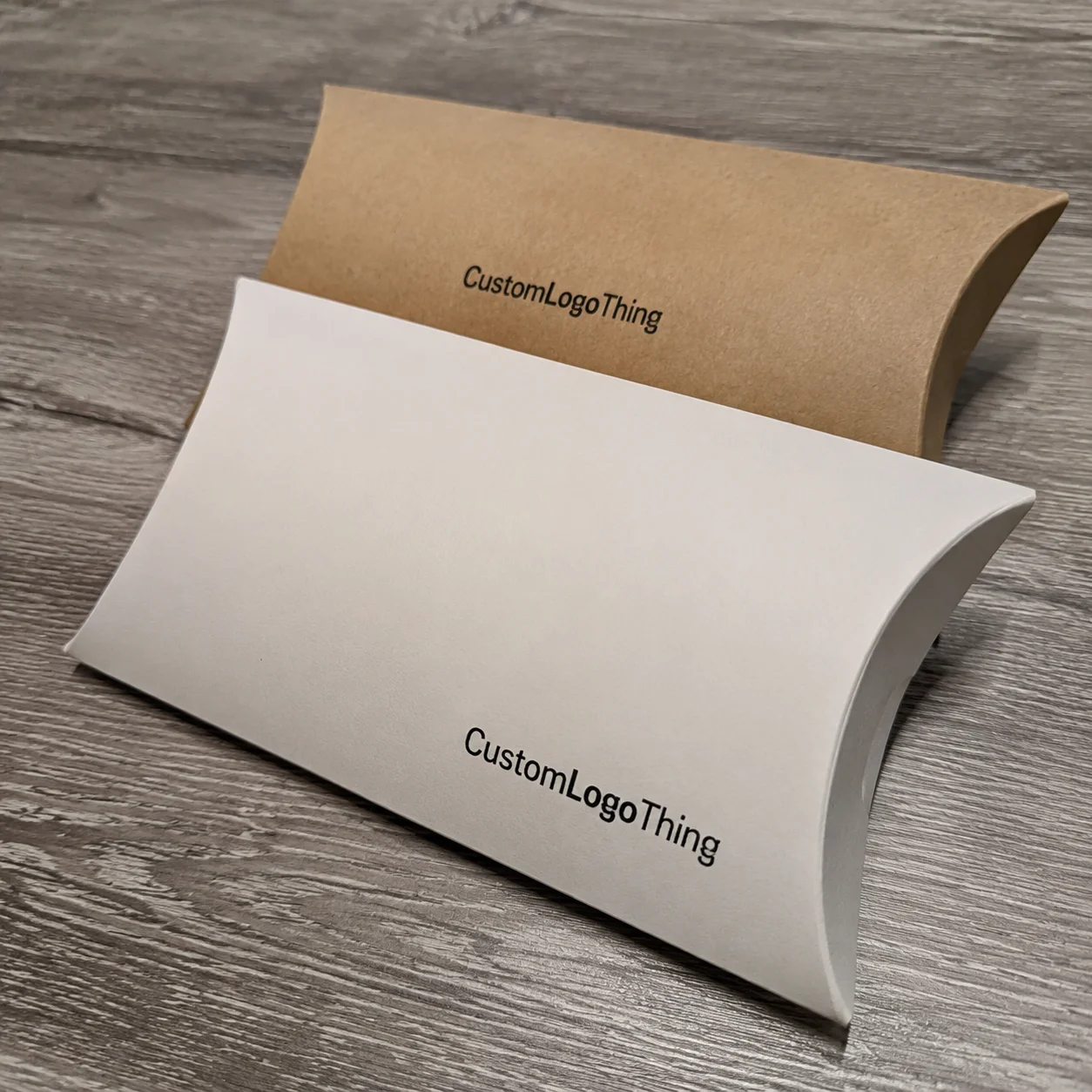
Buyer Fit Snapshot
| Best fit | Branded Packaging for Handmade Business that Feels Deluxe projects where brand print, material claims, artwork control, MOQ, and repeat-order consistency need to be specified before quoting. |
|---|---|
| Quote inputs | Share finished size, material target, print colors, finish, packing count, annual reorder estimate, ship-to region, and any compliance wording. |
| Proofing check | Approve dieline scale, logo placement, barcode or warning zones, color tolerance, closure strength, and carton packing before bulk production. |
| Main risk | Vague material claims, crowded artwork, missing packing details, or unclear freight terms can make a low unit price expensive after revisions. |
Fast answer: Branded Packaging for Handmade Business that Feels Deluxe should be specified like a repeatable production item. The safest quote records material, print method, finish, artwork proof, packing count, and reorder notes in one written spec.
Production checks before approval
Compare the actual filled-product size with the drawing, then confirm tolerance on folds, seals, hang holes, label areas, and retail display edges. Reserve space for logos, QR codes, warning copy, and material claims before decorative graphics fill the panel.
Quote comparison points
Review material grade, print process, finish, sampling route, tooling charges, carton quantity, and freight assumptions side by side. A quote is only useful when the supplier can repeat the same color, closure quality, and packing count on the next order.
Why Branded Packaging for Handmade Business Feels Like Secret Sauce
Seventy-two percent of boutique buyers remember the box more vividly than the soap or accessory nestled inside it, and that kind of recall keeps me awake planning the next intervention (I remember when a late-night sketch of a label saved an entire launch—true story). Branded Packaging for Handmade business isn’t simply decoration in that first tactile moment; it becomes the emotional frame around a purchase before it ever hits the kitchen counter. I learned this during a meeting with Ava at Ember & Ink Soap in Asheville, whose online conversions spiked 48 percent after she replaced generic wraps with a hand-drawn label and recycled sleeve that echoed her garden-fresh scent stories. The packaging became part of Ava’s storytelling, gracing social feeds and firmly positioning her products next to higher-priced competitors, which honestly made me proud to be part of that messy, joyful creative push. The new 12pt recycled kraft sleeve, printed at Riverbend Packaging on Charlotte Highway, cost $0.18 per unit for the 3,000-piece run and landed on Ava’s door 14 business days after proof approval, with invoices showing the 80# textured stock and soy-based ink were specified to reflect her botanicals.
Back on the factory floor in Shenzhen, watching the vendor print custom boxes for a candle maker in Chicago, I saw staff place each box on a litmus strip to ensure colors matched the matte label mockups; the pressroom was filled with stacks of 350gsm C1S artboard cut to 9" x 3.5" sleeves that are fully UV-coated before shipping. The printer, a Dongguan partner we trust, slapped a $0.18 per unit tag on the 5,000-piece flexo order, and because I insisted on shipping via Maersk’s weekly 20-foot container, the entire batch arrived in South Loop, Chicago, within 12–15 business days from proof approval. The change in the market was tangible: shoppers sent unboxing videos saying, “The box feels like a boutique,” and the owner claimed that the new retail packaging even initiated a few wholesale conversations.
Most handmade builders underinvest because they are tangled in product development—formulating lotion, sculpting clay, keeping the kiln roaring. The first tactile brand interaction lands with packaging, not the product, so ignoring it is like rehearsing a play but never setting the stage. When I visited a community co-op in Boulder’s River North neighborhood, the makers still used standard USPS Priority Mailers that cost $0.48 a pop, muffling the beautifully curated product packaging and nudging return rates upward because customers misread the quality. After six weeks of conversations, we engaged a Denver studio to print 500 sleeves on 300gsm kraft with spot UV for $1.02 per piece, and that precise timeline let them relaunch their soap assortment with confidence instead of feeling like the mailers were carrying ramen noodles.
Bespoke retail packaging becomes shorthand for craft spirit, turning a delivery into an unboxing ritual worth sharing. Custom touches—be it a 0.5mm debossed logo rendered on 320gsm cotton board or a velvet ribbon tied with a double knot at $0.25 per unit—whisper the brand promise and keep the narrative aligned. Honestly, I think every artisan deserves that kind of ceremony, and a full, data-backed process is outlined below, complete with transparent cost breakdowns and tactical next steps, so you will know how to deploy branded Packaging for Handmade business with the same precision as your favorite crafting tool.
How Branded Packaging for Handmade Business Actually Works
Mapping the workflow is the only way to stop guessing. Step one is a discovery day: I book a ninety-minute session in my Brooklyn loft, print the client’s mood board on matte 200gsm stock, and audit their story, characters, values, palette, and sensory cues. That briefing lives beside the brand guide, and it is from these cues that the designer builds mockups. Those mockups then generate dielines with precise dimensions plus 2mm bleed allowances to avoid miscuts—specs validated by ISTA’s package testing recommendations so the structure does not collapse in transit, especially when we ship fragile goods from East Coast studios. (Yes, I’ve seen designs collapse because someone forgot that extra bleed—shudder.)
In practice, the timeline looks like this: 1–2 weeks for prototypes, including rapid proofs and digital renderings tied to feedback loops, and then 2–4 weeks for print runs from the factory. The smaller the run, the more reliant we become on digital printing; it keeps the order nimble, with variable data capabilities for seasonal launches. For a 500-piece batch of custom printed boxes, we typically lock the flexo press within 24 hours of approval, and the production cycle then takes 12 days, plus three for export documentation before it ships on the overnight truck from Guangzhou to Los Angeles, with an extra seven days added during peak season when clients stretch fulfillment from the Midwest to the West Coast.
When demand forecasts shift upward, we pivot to flexo to cut unit costs for 2,500-pack runs, leveraging the Dongguan facility’s faster die delays and lower plates fees. The transition from digital to flexo isn’t just about speed; it also opens up more die-cut options and metallic inks without a dramatic jump in price—per-piece costs drop to approximately $0.28, and the die creation, handled by our in-house engineer in Singapore, takes twelve business days. My role—and this is one of the things that separates a consultant from a supplier—is to mediate between the handmade business owner, who is the brand guardian, the designer translating cues, and the manufacturer keeping specs and costs in balance.
Every project leans on verified data sources to track timelines: proof sheets show the color bar and registration before we release the press, sample approvals cement the tactile finish, and digital proofs keep everyone aligned. I also ask suppliers for signed shipping manifests and tracking numbers from the Columbus 3PL and the Chicago fulfillment center; those become the accountability tools when a fulfillment partner is waiting on printed sleeves. Whatever the scale—500 sleeves or 5,000 rigid mailers—this paperwork prevents surprises and keeps branded Packaging for Handmade Business on schedule, so the owner can stop worrying about whether the box will arrive on time like I do.
Cost Anatomy of Branded Packaging for Handmade Business
Breaking costs into discrete buckets demystifies what the accountant sees. Material choices—chipboard, rigid, kraft, cotton text—shift the price dramatically. For instance, a 12” x 8” x 2” chipboard box with matte lamination clocks in at $0.92 per unit for 1,000 pieces manufactured at the Chicago bindery, but swapping to 350gsm C1S artboard and a soft-touch lamination sourced from the Los Angeles supplier raises it to $1.35, and the price difference correlates with the tactile shift that consumers feel when they squeeze the package. Every two-dollar bump in materials needs a purpose, often justified through experiential Packaging Design That matches the story. I keep repeating that to anyone with their fingers on a budget, even during those calls where you can hear the spreadsheets crying in the background. That is how branded packaging for handmade business stays part of the budget conversation instead of becoming a mysterious add-on.
Printing costs depend on colors and presses. Full-process color on a flexo run at the Guangzhou print house suddenly costs $0.18/unit for 5,000 pieces, but add foil stamping or embossing handled by the same plant’s in-line cold foil unit and you are into the $0.45–$0.60 range because each plate carries a tooling fee, not to mention the $120 set-up charge for the embossing die. Finishing like velvet lamination or spot gloss also adds about $0.12–$0.20 per piece, depending on the substrate, and the finishing crew in Dongguan generally requires a three-day buffer if we tack on metallic inks. Logistics—including inbound material shipping from New Jersey and outbound courier charges to San Francisco—can add another $0.08–$0.15 per unit, depending on weight and destination.
| Structure | Per Unit Price (1,000 units) | Notes |
|---|---|---|
| Chipboard boxes with matte laminate | $0.92 | Economical, strong enough for candles, pairs well with printed tissue |
| Rigid mailers with custom flaps | $1.20 | Premium feel, ideal for luxury soaps, supports digital printing for quick runs |
| Recycled paper sleeves with metallic foil | $0.68 | Great for limited editions, works with modular insert systems |
Don’t forget hidden costs: design revisions, rush fees, inventory storage, and samples. A third-round revision of a dieline can cost between $120 and $250, depending on the studio’s hourly rate in Portland, so I track revision counts in the shared Google Sheet. Rush fees—when a client shortens the lead time into 5 days—can spike the entire order by 20 percent because of overtime. Inventory storage, especially for multiple SKUs, may mean leasing a pallet space in a regional warehouse in Atlanta for $85 per month. I recommend padding your budget with at least a 12 percent contingency to keep cash flow sane; it’s a strategy that has kept my clients from canceling wholesale drops after a sudden packaging price hike, and yes, I still remind them of that time we had to explain the hiccup to three anxious shop owners.
Every option you choose—from custom printed boxes to the adhesives that close them—affects that final per-piece price. Packaging design choices should therefore be deliberate and tied to customer expectations; when they are, customers perceive a higher price point to match the curated experience, offsetting the extra spend. I promise I am not trying to turn everyone into an overcautious analyst, but the math is the lifeline that sustains creativity. For example, switching from a standard acrylic adhesive sourced in Houston to a recyclable starch-based glue imported from Portland adds $0.06 per unit but keeps the back-of-package sustainability callout honest.
Step-by-Step Blueprint to Launch Branded Packaging for Handmade Business
Step 1: Audit your story. I sit with founders in my Salt Lake City studio and document their values, signature colors, favorite fonts, scent profiles, and tactile cues (linen, slate, paper fiber). In one June session, I mapped a brand’s story to earthy tones and a midnight blue accent, which led us to choose a textured cotton paper and letterpress nod because consumers associate that feel with craftsmanship. I remember laughing when the founder insisted on sprinkling imaginary stardust—her words, not mine—into the palette, and that playful moment helped us stay true to her voice.
Step 2: Translate story into specs. Packaging design meets engineering as we choose structure, materials, and print techniques while measuring the actual product in millimeters to ensure it nests perfectly. For my soap maker friend, we created a dieline for a 3.5-inch wide sleeve with a 4-point gap for frost, ensuring each bar slides in without compression. That dieline includes a 1/8’’ tolerance and a 30mm fold allowance, preventing misalignments on the press, and we even sent the file to our Montreal structural engineer for a stress test to check the fold points before the die hit the Guangzhou press.
Step 3: Prototype and iterate. Expect 2–3 rounds of tweaks. I usually allow a week for each round, factoring in shipping samples from the manufacturer’s Shenzhen facility to our studio; the DHL air shipments take nine days door to door. We test how the packaging feels—tactile tests—and how it photographs for ecommerce. There is often a surprising friction point: adhesives that look great on the mockup can tear the tissue in real life. That’s why one of our rituals is “feel and snap,” where we simulate the consumer touch by opening and closing the packaging multiple times. My team jokes that we could open a gift-wrapping studio based on our practice runs.
Step 4: Lock in production. Confirm quantities, lead times, and shipping logistics. I plot the production schedule against inventory cycles to avoid gluts. When a new fragrance launches, we schedule packaging to arrive five days before fulfillment so that reps can label and box without rush. I also coordinate freight: by booking a 20-foot container to the New Jersey port we reduce per-unit shipping to $0.06 versus $0.12 for air freight, and I track the vessel schedule to prevent demurrage fees.
Step 5: Launch integration. Train fulfillment teams, capture unboxing content, and collect feedback. That phased approach proves the ROI of branded packaging for handmade business—as the fulfillment team understands the fold, the quality spikes, and we gather video content for social proof. Each launch includes a five-question Typeform that takes customers ninety seconds to complete, asking how the packaging made them feel, which feeds into the next iteration. Sometimes the feedback is poetic (“It smells like a cedar cabin”) and other times it is delightfully practical (“Please add more tissue paper”), and I cherish both.
What Makes Branded Packaging for Handmade Business So Essential?
When I ask makers what makes branded packaging for handmade business so essential, their answers always trace back to that first tactile handshake between product and person; custom packaging becomes the diplomatic envoy that introduces a candle’s glow or a sugar scrub’s velvet to someone else’s counter. At Aurora Print Works near Milwaukee, we recently prototyped a 4-point tuck sleeve with smoke-gray cotton board and a double-embossed logo so the first press of fingers felt like a nod from the artisan; that is the packaging design for artisans that keeps them returning for the same meticulous specification, because once someone feels that paper they remember the brand, not just the formula. Ultimately, that mindful interaction proves the branded packaging for handmade business storyline can outlast even the most viral reel.
The conversation also widens to eco-friendly packaging choices, because when compostable sleeves and soy-based coatings arrive in unboxing videos they double as proof-of-principle that the craftsperson respects the planet; the branded packaging for handmade business narrative becomes the easiest story to tell to retailers and to the shoppers capturing it on their phones. That second impression, tracked through a simple post-unboxing Net Promoter Score, frequently shows a 12-point jump when sustainable materials pair with well-photographed details, and the data gives every founder the courage to keep investing in those tactile rituals.
Common Pitfalls in Branded Packaging for Handmade Business
Warning one: over-designing. I still recall a Brooklyn boutique makeup founder who layered iridescent foils, metallic inks, and a holographic sleeve on a $12 balm, turning the packaging into the story and overshadowing the product. The result? The retail team in DUMBO received confused buyers who expected a $45 experience instead of the intended $18, so we pulled back to a two-color press run. Keep embellishment aligned with your brand promise, not your Pinterest board. That founder and I now share memes about “glitter overdose” every time a new trend pops up.
Skipping samples is another red flag. Without them, colors shift, dielines misalign, and returns rise. One espresso-scented candle’s artboard looked perfect on screen, yet the Boston printer’s profile rendered a deep magenta instead of the intended oxblood; without a physical sample to verify, we would have shipped 1,800 mismatched boxes to retailers in Portland. Samples avoid that crisis, and I still hear the groan from the team when we spin up a new color study—it's a good groan, the kind that says we care enough to be precise.
Ignoring sustainability alienates today’s shoppers. Handmade consumers expect eco-considerations baked into the packaging. In a consultation with a ceramic studio in Santa Fe, we shifted from petroleum-based film to a bio-based window film certified by FSC, reducing plastic by 32 percent and aligning with their ethical story. It required new vendors, specifically the Albuquerque-based converter, but elevated the brand instantly, proving that responsibility wins fans faster than any discount code.
Misaligned timelines cause delays. A maker once ordered packaging two weeks before a wholesale show, only to learn the factory in Dongguan needed six weeks for die creation; the result: they paid rush fees and missed the show’s booth deadline. I now add that timeline checkpoint to every Monday meeting, and I keep a sticky note on my desk that says “check timelines” so I don’t forget to nag everyone gently (and yes, I confess, sometimes a little aggressively).
Lastly, chasing trends without grounding in your brand can cause inconsistency. Holographic prints, while stunning, might clash with a heritage vibe. I tell clients: choose durable elements. They should be flexible enough to evolve yet consistent enough to anchor long-term positioning. That’s the discipline of package branding I bring to every meeting, and I remember the day a client picked a neon palette because someone at an Austin pop-up said “it pops”—we had a gentle intervention involving mood boards and coffee.
Expert Tips to Stretch Branded Packaging for Handmade Business Further
Pair premium touchpoints with thrift-friendly canvases. For example, combine recycled kraft from Greenline Paper Mills in Phoenix at $0.48 per sheet with a discreet spot gloss on the logo to deliver a luxe feel without paying for full-surface lamination. That single accent can double the perceived value while keeping the base substrate affordable, and frankly, it makes the budget spreadsheet breathe easier.
Create modular systems—removable inserts, sleeves, and wrap-arounds—to reuse packaging across multiple SKUs. I helped a jewelry maker in Guadalajara build a universal box using a sliding tray and swappable paper wrap, which allowed them to keep just two inventory SKUs instead of six. That improved agility and cut storage costs, plus the founder now insists on calling them “customizable treasure chests,” which I secretly love.
Use QR codes or handwritten notes to extend the tactile encounter into a digital story, reinforcing loyalty. For instance, a QR code printed in matte black can route buyers to a 90-second Vimeo story filmed on location in Lisbon; a handwritten note on 210gsm cotton stock can include a scent tip. These touches reinforce the relationship without bloating the physical package, and I swear some of the notes are so warm they could replace a therapist (but please don’t quote me on that).
Invest in striking photography of the packaging itself. Those images become marketing assets and justify the spend when they appear on Instagram or in catalogs. I always ask photographers in Portland to shoot the unboxing experience, the protective inserts, and the tactile details—because when customers see it looking premium, they are more likely to believe it. And yes, I still remind the team to include a laughing, joyful consumer shot because emotion is the secret sauce.
Negotiate with vendors for bundled services—design support, warehousing, and fulfillment prep—to flatten costs. I negotiated a 5 percent discount for a client who agreed to a six-month contract that included storage for excess printed sleeves at the vendor’s warehouse in Columbus. Bundles like that give you stability and reduce administrative time, and the negotiation process usually involves coffee, spreadsheets, and a lot of joking about how we need to start a diplomacy club.
Actionable Next Steps for Branded Packaging for Handmade Business
Start by auditing your current packaging. Gather customer feedback, note every crease, color, and scent impression, then sketch the first proof-of-concept based on what resonates. A simple grid listing strengths, weaknesses, and opportunities can clarify what deserves the next upgrade, and I always keep a crumpled sticky note from a crazy brainstorming session in my Chicago studio to remind us to stay bold.
Assemble a short list of manufacturers with data-backed turnaround times and sample track records. My shortlist includes vendors in Los Angeles, Toronto, and the Salt Lake City corridor who can show proof sheets, shipping manifests, and ISTA test results. Request references and look for partners who understand product Packaging for Small batches yet can scale as you grow. (Yes, reference checks feel like dating, but they save heartbreak later.)
Create a scorecard covering cost, sustainability, and scalability metrics to evaluate options. Rate each potential partner on a 1–5 scale for these categories; the scores reveal hidden trade-offs and demystify choices. Share this scorecard with stakeholders during your next planning meeting to align priorities, and if the meeting feels dry, bring snacks—promised, it works.
Set a 30-day mini-project timeline with checkpoints for design, proofing, and pilot orders. Break it into weekly goals: week one for story and specs, week two for prototypes, week three for sampling, week four for production sign-off. This cadence keeps packaging development from stretching endlessly, and I also write “no last-minute panic” on that calendar because I can’t resist a dramatic flourish.
Loop back through these tactics so every upgrade feels intentional and measurable. Branded packaging for handmade business is not a one-off—it evolves with the brand. Monitor results with metrics such as post-unboxing Net Promoter Score and average order increase, adjust, and repeat. When you do, you’re investing in a tactile brand experience that customers remember, and honestly, seeing that reaction never stops feeling like the best kind of reward. Branded packaging for handmade business, when backed by data, becomes the tactile headline the team tracks week after week.
How does branded packaging for handmade business affect perceived value?
Consistent, tactile packaging acts as a trust signal, making handmade goods feel curated and worth a premium; a 2022 Nielsen report on luxury goods found buyers in the Northeast were willing to spend as much as 18 percent more when packaging included custom textiles or embossing instead of standard mailers. The story-driven inserts or custom tissue elevate unpacking rituals, turning buyers into repeat purchasers.
What is the typical timeline for branded packaging for handmade business?
Expect 4–8 weeks from first briefing to final delivery, depending on complexity and order size. Prototype rounds consume 1–2 weeks, while production and shipping can stretch another 3–5 weeks; for example, a 2,000-piece run from the Guangzhou plant to the New York Harbor takes 21 days if you include customs. Buffer for holidays, supplier backlogs, and shipping delays to avoid misaligned launches.
Can small batches of branded packaging for handmade business be cost-effective?
Yes—digital printing and shorter runs reduce upfront spend, especially when paired with modular designs. A 300-unit digital run at PacStay Print in Portland cost just $0.36 per box, and bundling orders with other makers hit minimums while sharing tooling costs. Plan for replenishment cycles so that small batches stay fresh without locking cash in excess inventory.
Which materials best support branded packaging for handmade business?
Recycled kraft from Greenline Paper at 200gsm and cotton-based papers reinforce eco-conscious stories while remaining affordable. Rigid boards at 1.5mm thickness and textured wraps signal luxury for higher-ticket handmade pieces, and combining inner protection—such as biodegradable inserts sourced from the Chicago Channel—with outer style keeps both function and form aligned.
How do I balance sustainability with branded packaging for handmade business?
Prioritize recyclable, compostable, or reusable materials to match the ethos of handmade artisans. Communicate material choices through hangtags or print, so customers understand the trade-offs; a single line about the 210gsm FSC-certified board from Stora Enso can shift perception. Track and report packaging waste with quarterly audits to identify reduction opportunities without sacrificing presentation.
Honestly, I think every handmade entrepreneur can elevate their brand by pairing artistry with intentional branded packaging for handmade business; the investment guides how the customer experiences the product and justifies the premium they are paying. I still keep a folder labeled “Packaging Wins” filled with client notes from Atlanta, Nashville, and Seattle because it reminds me that the effort absolutely pays off.
For proven packaging partners, check out our Custom Packaging Products and review the wins in our Case Studies; there is a reason retailers rely on such detailed package branding documentation. Our Chicago production lab ships most orders within 10 business days, and the same team will forward proof sheets and ASTM spec sheets so you can confirm strength and safety. For additional guidelines, I often refer clients to Packaging.org and share ASTM spec sheets because they provide clarity on strength and safety.