Bucket hats are not just festival merch anymore. Bucket hats wholesale for apparel brands work because one size can cover most buyers, which removes the usual size-curve drama that comes with tees, hoodies, and fitted caps.
That matters. Apparel brands already manage returns, color matching, seasonal drops, freight costs, and customers who believe “oversized” means six different things. A bucket hat is easier to buy, easier to display, easier to ship, and easier to bundle with a tee, swim short, golf polo, jacket, or resort capsule.
The catch? Simple products expose lazy decisions fast. Bad fabric, weak stitching, crowded embroidery, and vague specs can turn a decent idea into something that feels like leftover promo stock. Nobody needs more of that.
Why Bucket Hats Wholesale for Apparel Brands Still Move Units
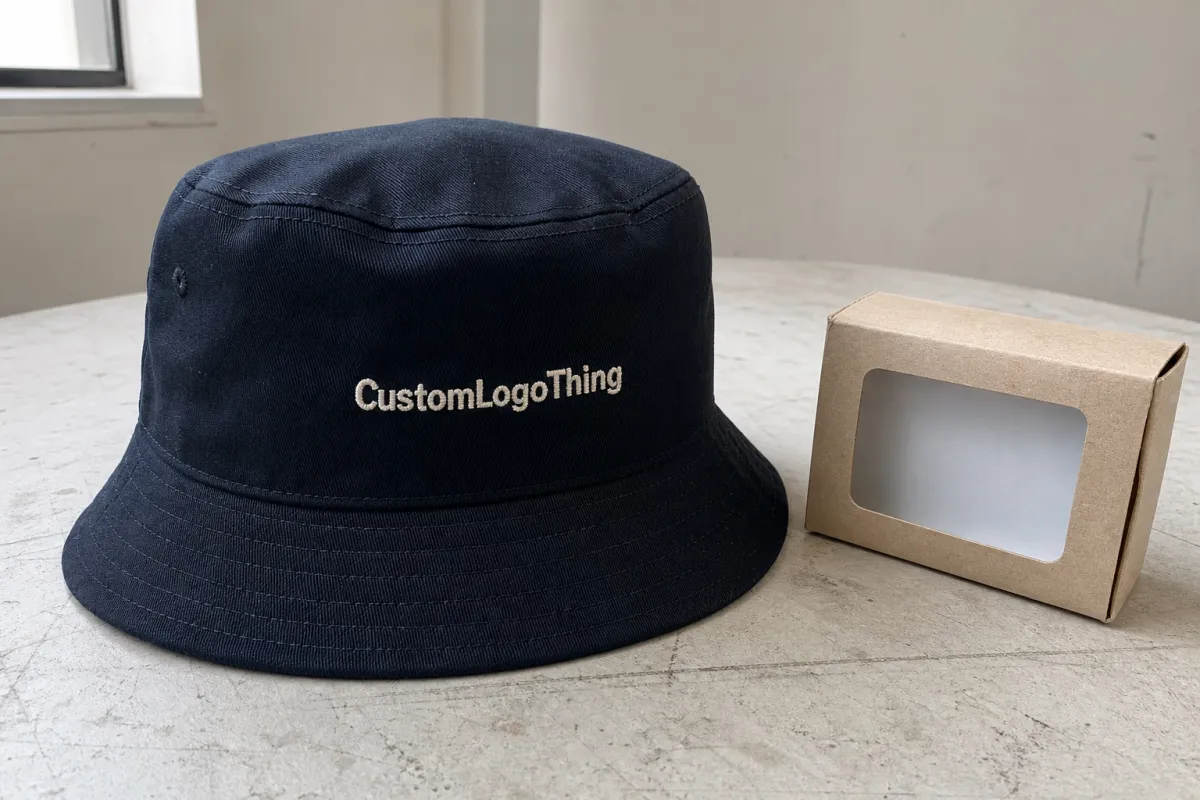
From a merchandise planning angle, hats behave like smart add-on inventory. They do not need folded size labels in five stacks. They do not require long fit notes. They can sit in a counter display, ship in a small carton, or ride inside a larger apparel order without wrecking freight math.
They also give creative teams room to test. Two colorways. One embroidery style. A patch version. A seasonal graphic. A small capsule can look finished without forcing the brand to buy six garment sizes and pray the medium does not sell out first. Revolutionary concept: less inventory chaos.
The commercial value is boring in the best way. A good bucket hat is easy for customers to justify. If the retail price sits around $24-$48, buyers often treat it as an impulse add-on, especially for streetwear drops, golf merch, outdoor collections, music capsules, resort shops, and brand collaborations.
Practical rule: wholesale production makes sense when you know your customer and have a real sales channel. Ordering three hats and calling it a launch strategy is not a plan. It is a hobby with invoices.
The best programs start with a clear role for the hat. Is it a margin-friendly accessory? A gift-with-purchase? A premium capsule item? A staff uniform piece? A resort retail product? That answer should control the fabric, decoration, packaging, and quantity. If the role is fuzzy, the spec usually gets fuzzy too.
Product Details That Affect How the Hat Feels and Sells
Style drives perceived value before the logo does. A classic soft-crown bucket hat in cotton twill feels casual and familiar. A short-brim streetwear shape feels tighter and more fashion-led. A wide-brim outdoor style says sun coverage and utility. A reversible bucket hat gives two surfaces, but it also adds labor, fabric, and bulk.
Packable travel styles usually use lighter cotton, nylon, or recycled polyester. Structured fashion bucket hats may use heavier canvas, washed denim, corduroy, or interfacing to hold shape. None of these choices are automatically better. They need to match the retail price and the customer’s reason for buying.
| Hat Style | Best Fit | Typical Buyer Signal | Cost Impact |
|---|---|---|---|
| Classic cotton twill | Merch, streetwear basics, resort shops | Easy, casual, familiar | Lowest to moderate |
| Canvas or washed denim | Fashion drops and premium capsules | Heavier hand feel, stronger shelf presence | Moderate to higher |
| Nylon ripstop | Outdoor, travel, active brands | Lightweight, functional, quick-dry look | Moderate |
| Reversible build | Retail collections with two-sided styling | Higher perceived value | Higher |
| Structured fashion bucket | Premium apparel brands | Sharper silhouette, more designed | Higher |
Fit needs numbers. “One size fits most” still means crown depth, brim width, head circumference, sweatband comfort, and tolerance. Many adult bucket hats sit around 58 cm circumference, with common tolerance around plus or minus 1 cm depending on construction. Youth sizing, oversized fits, and regional fit preferences should be called out before sampling.
Fabric choice is where buyers either save money wisely or make the hat feel cheap. Cotton twill is the safest retail basic. Canvas feels sturdier. Nylon works for active and outdoor categories. Denim sells streetwear texture. Corduroy works for fall capsules. Recycled polyester can support sustainability programs, especially if the brand already uses recycled materials elsewhere.
Fabric weight gives the supplier a useful target. Cotton twill often sits around 180-260 gsm. Canvas can run heavier, commonly 260-360 gsm. Lightweight nylon may be specified by denier, weave, coating, or finish instead of gsm. Do not obsess over the number alone. Hand feel, drape, and brim behavior matter more than a spec sheet that looks impressive but wears badly.
Cheap fabric and weak brim stitching make a bucket hat look like a giveaway from a sad conference booth. That is not “accessible.” It is flimsy. If a brand is selling the hat as retail product, it has to feel intentional in the hand.
Presentation also changes the product. Woven labels, hang tags, printed inner seam tape, branded sweatbands, paper bands, individual polybags, and carton packing all affect how the hat arrives and how it sells. For paper-based packaging claims, recognized resources such as the Forest Stewardship Council are useful reference points.
Decoration Options: Embroidery, Patches, Labels, and Prints
Decoration is not just “put the logo on the front.” That kind of thinking is how good artwork gets tortured. The main options for wholesale bucket hats are flat embroidery, 3D puff embroidery, woven patches, rubber patches, leather patches, screen printing, heat transfer, and sublimation on polyester panels.
Embroidery is the safest choice for most apparel brands. It looks retail-ready, holds up well, and works on cotton twill, canvas, denim, and corduroy. Flat embroidery handles more detail than puff embroidery. It is better for wordmarks, small icons, and logos with interior lines.
3D puff embroidery looks bold, but it needs simpler art. Thick letters, clean symbols, and fewer tiny breaks work best. If the logo has hairline text, gradients, and a detailed mascot, puff embroidery will not rescue it. It will just make the problem taller.
Woven patches are better for fine detail and small lettering. Rubber patches create a sport or outdoor feel. Leather patches skew premium, but only if the brand can support that look. A vegan streetwear label may not want leather trim. An outdoor heritage brand might.
Placement changes the whole product. Front center is standard. Side panel embroidery feels quieter. Back brim artwork can be a nice secondary hit. Reversible bucket hats can carry one loud side and one clean side. Minimalist brands often do better with small logo hits because the customer is buying the shape and color, not a billboard.
- Flat embroidery: good for clean logos, wordmarks, and standard retail hats.
- 3D puff embroidery: strong for simple, bold marks with fewer details.
- Woven patches: best for fine detail, small text, and multi-color artwork.
- Rubber patches: useful for outdoor, surf, skate, golf, and active collections.
- Sublimation: best for polyester panels or all-over printed designs.
Artwork needs limits before quoting. Thread count, stitch density, minimum line thickness, patch size, color count, and fabric compatibility all affect the result. A $16 retail hat and a $48 retail hat should not use the same trim strategy unless the brand enjoys leaving margin on the table.
There is also a practical construction issue that gets missed: bucket hats do not have the same front structure as baseball caps. The crown curves, shifts, and folds differently. Large stiff patches can fight the shape. Dense embroidery can pucker lighter fabric. Prints can distort near seams. The decoration method needs to work with the hat, not against it.
For broader merch planning, Custom Logo Things can connect bucket hats with Wholesale Programs so the hat, tee, tote, and packaging feel like one collection instead of four unrelated purchases.
Specifications to Confirm Before You Approve a Sample
A sample is only useful if the spec sheet is clear. Lock the fabric type, fabric weight, color standard, crown height, brim width, circumference, stitching rows, sweatband material, lining, eyelets, labels, embroidery or patch size, and packaging method before bulk production starts.
Color control deserves more respect than it gets. Black is not just black. Khaki is apparently a full personality disorder. Olive? Good luck unless everyone is using the same reference. For coordinated apparel collections, use Pantone references, approved fabric swatches, or lab dips where available.
Sizing also needs discipline. Wholesale bucket hats usually fit a broad adult range, but youth sizing, oversized fits, women’s fashion fits, and market-specific sizing should be requested before sampling. Do not assume the default sample matches your customer’s head size. That sentence sounds ridiculous until a carton of tight hats arrives.
Check construction closely. Brim stitching should be even. Logo placement should be centered and measured, not eyeballed by hope. Embroidery backing should be clean. Seams should sit smoothly. The crown should not collapse unless the style is meant to be packable. No puckering around the decoration area.
Basic quality-control checks are not complicated, but they need to happen. Measure a few hats from the sample or pre-shipment lot. Compare the color against the approved reference under decent light. Check loose threads, seam tension, label placement, sweatband feel, and brim symmetry. Put the hat on an actual head or form. Flat-table approval misses things.
Approval rule: if the sample is not right, production will not magically fix it. Approve only what you are comfortable receiving by the carton.
Brands with heavier retail standards should also think about transit testing and packaging durability. The International Safe Transit Association publishes packaging test procedures that can help when products move through parcel networks, warehouses, and retail distribution.
Pricing, MOQ, and Unit Cost Drivers for Wholesale Orders
Pricing depends on quantity, fabric, construction, decoration method, artwork locations, packaging, sampling needs, and shipping method. Anyone giving one universal price for bucket hats wholesale for apparel brands without specs is guessing. Maybe confidently. Still guessing.
Lower MOQs may be possible for standard cotton twill with simple embroidery. Custom dyed fabric, reversible construction, special trims, all-over print, washed finishing, or custom packaging usually push minimums higher. For planning, ask for two tiers: a test run and a restock quantity.
Practical range? Simple embroidered cotton bucket hats may land around $4.50-$8.50 per unit at moderate wholesale quantities, depending on stitch count, fabric, and shipping assumptions. More premium versions with canvas, denim, woven patches, rubber patches, reversible construction, custom labels, or specialty packing may run $8.50-$16.00+ per unit. Freight can change the final landed cost quickly.
MOQ varies widely. Some standard programs may start around 100-300 pieces. More custom work may require 500-1,000 pieces or more. Fully custom fabric, custom dye, or all-over artwork can go higher. Not always, but often enough that buyers should ask early instead of designing a dream hat that only works at a painful quantity.
| Order Type | Typical MOQ Planning Range | Common Unit Cost Range | Best Use |
|---|---|---|---|
| Standard cotton twill with flat embroidery | 100-300 pieces | $4.50-$8.50 | Test drops, merch, basic retail |
| Canvas or denim with patch | 300-500 pieces | $7.50-$13.00 | Fashion capsules and streetwear |
| Reversible bucket hat | 500+ pieces | $9.00-$16.00+ | Higher retail price points |
| Nylon or ripstop outdoor style | 300-500 pieces | $6.50-$12.50 | Outdoor, golf, travel, active |
| Custom dyed or all-over print | 500-1,000+ pieces | Varies widely | Brand-specific seasonal collections |
Cost drivers hide in small decisions. Stitch count adds machine time. Patch material can require molds, woven setup, or extra sewing. Fabric weight affects product cost and freight. Custom lining, branded sweatbands, woven labels, hang tags, paper bands, individual bags, carton packing, rush timelines, and air freight all move the number.
Margin should guide the build. If the target retail price is low, keep the hat simple: stock fabric, one embroidery location, clean packing. If the brand wants premium positioning, invest where customers notice it: better fabric, stronger silhouette, sharper trim, and a hang tag that does not feel like printer paper from someone’s garage.
Freight deserves its own math. A low unit price can look less charming after dimensional weight, customs, duties, or rushed air shipping. Ask whether pricing is based on product cost only, landed cost, or an estimate that still needs freight confirmation. Details like that prevent ugly surprises.
Production Process and Timeline From Quote to Delivery
The order flow is straightforward when the buyer sends complete information. Send artwork and specs. Confirm the quote. Approve the digital proof. Produce a sample if needed. Approve the sample. Start bulk production. Inspect, pack, ship, and deliver.
For a clean quote, provide logo files, preferred style, fabric, color, decoration method, quantity, target delivery date, packaging needs, and shipping destination. Vector artwork is best. AI, EPS, SVG, or print-ready PDF files usually give the production team more control than a low-resolution PNG.
Quoting can be fast when the specs are clear, often within 1-3 business days. Sampling can take around 7-15 business days for standard fabrics and simple decoration. Custom patches, custom fabric, washed finishes, or reversible builds may need 15-25 business days or more. Bulk production often runs 15-35 business days after approval, depending on quantity and production schedule.
Shipping is its own line item, not a magical portal. Air freight can be faster but expensive. Ocean freight is slower but can make sense for larger orders. Domestic transit after arrival still matters. If a brand needs hats for an event, retail drop, or resort opening, build in buffer time. A realistic calendar beats a dramatic email chain every single time.
Timeline killers are predictable: vague artwork, late approvals, changing colors after sampling, asking for premium custom product on a bargain-bin schedule, and pretending freight transit time is optional. Rush orders can work for standard materials and simple decoration. They do not work for every custom request.
Pre-production approval is the moment to be picky. Confirm the sample against the spec sheet, not against a memory of what someone thought the hat might look like. If the thread color is slightly off, say so. If the brim feels too soft, say so. If the logo placement needs to move 8 mm, say so before bulk production starts.
Approve samples, payment, and shipping details early. Otherwise the order sits in administrative purgatory while everyone wonders why nothing is moving. For examples of how branded products can be planned across real campaigns, review the Custom Logo Things Case Studies.
Common Buying Mistakes That Make Bucket Hats Look Cheap
The biggest mistakes are not exotic. Buyers choose the cheapest fabric, overload the front with tiny embroidery, ignore fit, skip samples, use the wrong patch material, or underestimate packaging. Then the finished hat looks flat, crooked, or flimsy.
Bucket hats have limited decoration real estate. A complicated crest, slogan, mascot, and three founding dates crammed into one small front panel is not branding. It is a cry for help.
Another mistake: ordering too many colors before sales data exists. A tight two-color launch often beats six colorways that each sell slowly. If the brand has proven demand, fine. Expand. If not, keep the first run focused and use sell-through data before placing a larger reorder.
Brand positioning should control the spec. Outdoor brands need functional fabric, clean stitching, breathable eyelets, and durability. Fashion brands need color, texture, silhouette, and trim. Merch programs may need speed and price control. Golf brands often need a cleaner look, lighter hand feel, and less aggressive branding.
Customers notice quality issues immediately. Crooked logos. Flimsy brims. Rough sweatbands. Loose threads. Warped patches. Inconsistent sizing. Nobody opens a package and says, “Great news, the margin was efficient.” They judge the product in their hand.
- Review a physical sample before bulk production when timing allows.
- Approve logo placement with measurements, not vague screenshots.
- Request pre-shipment photos for bulk orders, especially first runs.
- Choose a quantity that matches the sales channel, not wishful thinking.
- Keep the first launch tight if demand is unproven.
For bucket hats wholesale for apparel brands, the best prevention is simple: build the spec around the customer, not around the cheapest line on a spreadsheet.
Next Steps to Get a Quote That Is Actually Useful
A useful quote starts with useful information. Choose the hat style. Pick the fabric. Decide the decoration method. Set a quantity range. Confirm the target retail price. Define the delivery deadline. That is the difference between a real quote and a polite shrug with numbers attached.
Send vector artwork when possible. If you are not a design-file person, send the highest-resolution logo available. We can work with a lot. We cannot work miracles from a blurry screenshot.
Ask for two or three quote scenarios. One basic embroidered hat. One upgraded trim option. One higher-quantity reorder price. The unit cost difference between 150 pieces and 500 pieces can be painful in a useful way, especially if a restock is likely.
Custom Logo Things can help match decoration methods to budget, suggest fabrics that fit the brand category, check artwork for embroidery or patch production, and build a spec that production teams can actually follow. That last part matters more than people think. Factories do not read minds. They follow specs.
- Pick a style: classic, short brim, wide brim, reversible, packable, or structured.
- Choose fabric: cotton twill, canvas, nylon, denim, corduroy, or recycled polyester.
- Confirm decoration: embroidery, woven patch, rubber patch, leather patch, print, or label.
- Set quantities: test run, main order, and possible reorder tier.
- Share deadline and destination so shipping can be priced properly.
Start with a focused launch quantity if demand is unproven, then reorder based on sell-through instead of guessing with warehouse space. The smartest next step is to send clear specs, ask direct pricing questions, and approve the sample like your margin depends on it, because it does.
FAQ
What is the typical MOQ for wholesale bucket hats for apparel brands?
MOQ depends on style, fabric, and decoration method. Standard cotton twill hats with embroidery usually have a lower MOQ than custom dyed fabric, reversible designs, or all-over printed styles. For planning, request pricing at a test quantity and a reorder quantity so you can compare unit cost before committing.
How much do custom bucket hats cost wholesale?
Wholesale cost is driven by quantity, fabric, construction, decoration, trim, packaging, and shipping. Simple embroidered styles are usually the most budget-friendly. Premium fabrics, woven or rubber patches, reversible builds, branded labels, and custom packaging increase unit cost but can support a higher retail price.
Which fabric is best for apparel brand bucket hats?
Cotton twill is the safest all-around option for retail basics and merch drops. Canvas feels sturdier and more premium, while nylon works well for outdoor, travel, and active brands. Denim, corduroy, and washed fabrics are better for fashion-driven seasonal collections.
Can I order bucket hats wholesale with custom embroidery and labels?
Yes. Most wholesale bucket hats can include front embroidery, side embroidery, woven labels, inner tags, sweatband branding, hang tags, and custom packaging. The best setup depends on logo detail, target price, and how premium the finished product needs to feel. Send artwork and preferred placement details before quoting.
How long does wholesale bucket hat production take?
Timeline depends on sample approval, decoration method, order quantity, material availability, and shipping method. Standard styles with simple embroidery move faster than custom fabric, patches, reversible construction, or complex packaging. Approving artwork, samples, payment, and shipping details quickly is the easiest way to avoid delays.

