Buyer Fit Snapshot
| Best fit | Branded Packaging Premium Quality projects where brand print, material claims, artwork control, MOQ, and repeat-order consistency need to be specified before quoting. |
|---|---|
| Quote inputs | Share finished size, material target, print colors, finish, packing count, annual reorder estimate, ship-to region, and any compliance wording. |
| Proofing check | Approve dieline scale, logo placement, barcode or warning zones, color tolerance, closure strength, and carton packing before bulk production. |
| Main risk | Vague material claims, crowded artwork, missing packing details, or unclear freight terms can make a low unit price expensive after revisions. |
Fast answer: Branded Packaging Premium Quality: What Really Matters should be specified like a repeatable production item. The safest quote records material, print method, finish, artwork proof, packing count, and reorder notes in one written spec.
Production checks before approval
Compare the actual filled-product size with the drawing, then confirm tolerance on folds, seals, hang holes, label areas, and retail display edges. Reserve space for logos, QR codes, warning copy, and material claims before decorative graphics fill the panel.
Quote comparison points
Review material grade, print process, finish, sampling route, tooling charges, carton quantity, and freight assumptions side by side. A quote is only useful when the supplier can repeat the same color, closure quality, and packing count on the next order.
A product can be excellent and still land with a thud if the box shows up dented, the print is off, or the unboxing feels like somebody shrugged and called it done. That is the blunt reality behind branded packaging premium quality: people judge fast. Usually before they read the copy, compare features, or care about the price tag. A flimsy package makes the brand feel cheaper. A crisp structure and clean print do the opposite. Fast.
What people call premium is usually a mix of structure, print accuracy, surface finish, and repeatability across the whole run. Not one shiny trick. Not a pile of decorative extras. branded packaging premium quality comes from a long list of small decisions being done right, from board thickness to the final folded flap. Two boxes can carry the same logo and still feel like they came from different planets.
From a buyer's point of view, the question is simple: does the package make the product look more trusted, more deliberate, and more worth the money? If the answer is no, the packaging is working against the sale. Fancy is not the same thing as branded packaging premium quality. I have seen plenty of expensive-looking boxes that feel hollow the second you touch them.
Branded Packaging Premium Quality: What It Really Means
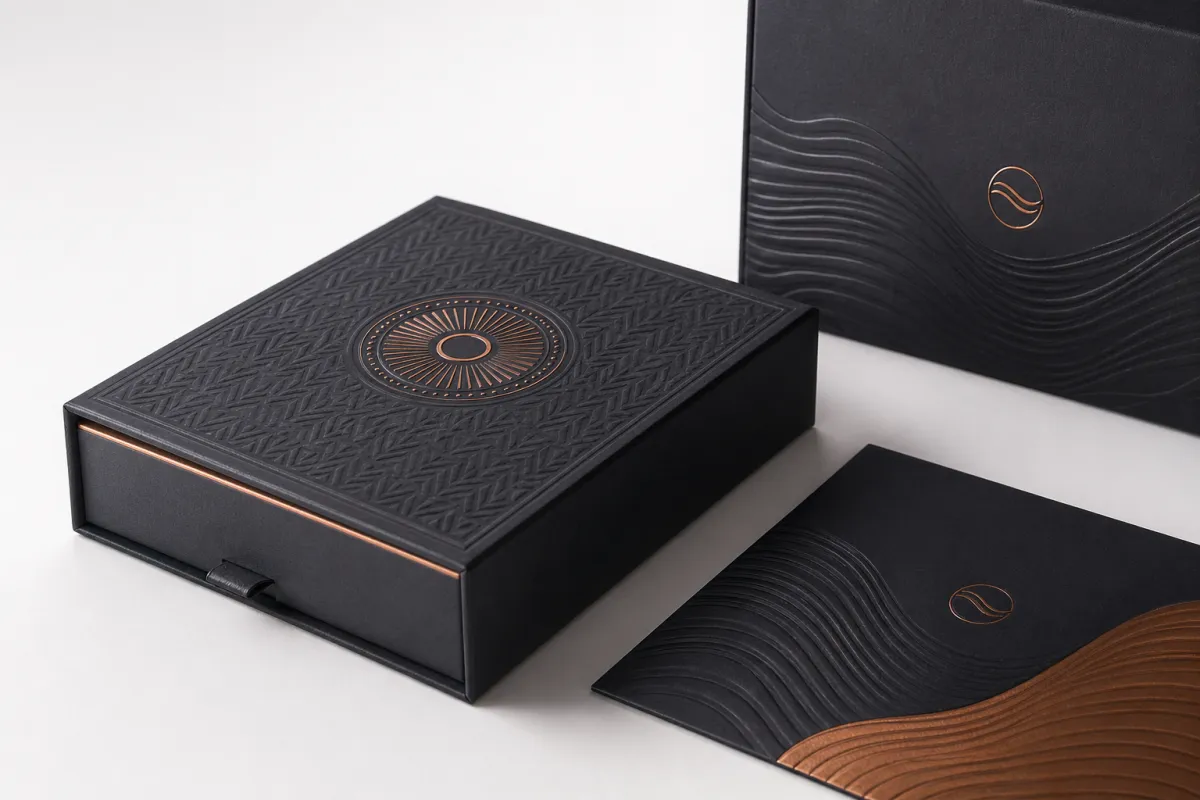
branded packaging premium quality starts with first touch. Someone picks up the box and the brain starts scoring it immediately. Are the edges square? Does the lid sit flush? Does the surface feel smooth or cheap and scratchy? That first second matters more than most brands want to admit. People do not open packages like inspectors. They react. Instantly.
In practical terms, premium quality means the package looks intentional from every angle. The print lands where it should. The fold lines are clean. The corners do not collapse under light pressure. The color on the outside matches the brand on the website, the product, and the ad that closed the sale. branded packaging premium quality is not a single feature. It is the absence of obvious mistakes.
Edge alignment matters more than buyers expect. A shifted logo on one panel, a crooked window, or a seam wandering by even 2-3 mm can make a box feel low-end. Color can do the same thing. A navy that drifts toward purple or a cream that prints too warm can make the whole package look like it belongs to another brand. branded packaging premium quality depends on consistency across the run, not just one pretty sample.
Here is the part a lot of brands miss: premium does not always mean more decoration. Sometimes it means fewer finishes, executed better. A clean matte laminated box with sharp typography can beat a crowded package with foil, embossing, spot UV, and a texture that feels chosen by committee. branded packaging premium quality often comes from restraint, especially when the structure already feels solid.
A package should survive the third touch, not just the first photo.
That is the easiest way I know to separate attractive from premium. Attractive gets attention. Premium earns confidence. branded packaging premium quality gives customers a reason to believe the brand pays attention to details they can feel, not just details they can see.
The product still matters. A beautiful box will not rescue a bad item. A weak box can drag down a good one, especially in retail packaging where customers compare options side by side. If the package does not support the product story, the brand pays for that disconnect every time the order ships.
I once watched a small cosmetics launch get praise for its visuals and then lose momentum because the lid warped after a few weeks in storage. The print was fine. The concept was fine. The board choice was not. That kind of failure is avoidable, which makes it even more annoying. Packaging is one of those places where “close enough” is usually not close enough.
How Branded Packaging Premium Quality Is Produced
branded packaging premium quality is won or lost long before the box reaches the customer. The production chain is less glamorous than the finished package, which is exactly why it matters. It starts with the dieline, moves into artwork setup, then proofing, printing, die-cutting, finishing, assembly, and packing. Each step has its own failure point. Miss one, and the final result pays for it.
The dieline is the skeleton. If the structure is wrong, everything else is decoration on a bad layout. A logo can be beautifully designed and still fall across a seam if the template is off by a few millimeters. Good packaging design respects structure first. That is how branded packaging premium quality stays intact after folding, gluing, and shipping.
Prepress is where a lot of problems should die early. Trapping, bleeds, safe zones, image resolution, and color profiles all need to be checked before a plate or digital file goes live. If the artwork is messy here, the press only makes the problem more expensive. Brands lose time because they treat prepress like a formality. It is not. It is one of the main reasons branded packaging premium quality survives the jump from screen to box.
Proofing should never be treated like a checkbox. A digital proof can confirm layout, but it does not fully show how a coating changes the feel of the surface or how dark ink behaves on a specific board. A physical sample is the better move when the project uses tight tolerances, premium coatings, or specialty board. That is especially true for Custom Printed Boxes where the finish is part of the brand story.
Printing lives in its own world. Offset does well with detail and color control on larger runs. Digital can make sense for shorter runs or artwork that changes often. Flexographic printing has its place on corrugated and shipping-focused packaging. The same artwork can look elevated in one method and flat in another. That is why branded packaging premium quality is never just about the logo file. The print method matters.
Die-cutting and folding sound simple. They are not. A dull cutting die, a misaligned crease, or an uneven glue flap can ruin an otherwise clean job. Finishing adds another layer of risk. Foil, embossing, debossing, soft-touch lamination, and spot UV all demand control. Rush one step and the final package can look expensive in the wrong way: heavy, noisy, and slightly off.
Packaging and assembly are the last check before shipping. Loose inserts, sloppy stack packing, or thin outer cartons can damage a premium box before the customer even sees it. If the outer shipper crushes, the branded packaging inside gets blamed anyway. That is why branded packaging premium quality includes the transit environment, not just the pretty shell.
For teams comparing formats before they lock a run, our Custom Packaging Products page is a practical place to sort through structures, board grades, and use cases without guessing from sales language.
Key Factors Behind Branded Packaging Premium Quality
The substrate is where many brands either save money wisely or create a future headache. Paperboard works well for retail packaging and lighter products. Rigid board gives you the denser, more substantial feel people connect with luxury presentation. Corrugated is the protection-first choice, especially when the box has to survive shipping and still look good on arrival. Specialty stocks can add texture or visual interest, but they need careful selection if branded packaging premium quality is the goal.
For paperboard, common thickness ranges are roughly 16pt to 24pt, depending on the structure and product load. Rigid boxes often use 1.5 mm to 3 mm board. Corrugated packaging might use E-flute or B-flute depending on how much protection and print surface the project needs. Those numbers matter because the material changes the feel, the stiffness, and the way the print sits. branded packaging premium quality is often more about the board under the ink than the ink itself.
Coating and lamination affect both appearance and durability. Gloss coating makes color pop, but it can also highlight scratches. Matte feels more restrained and often more premium when paired with clean typography. Soft-touch lamination gives a velvety hand-feel that many brands love, though it can show fingerprints if the package gets handled a lot. These are not just aesthetic choices. They affect how branded packaging premium quality feels after the box has been moved, stacked, and opened.
Print consistency is the quiet hero. Color drift across a run, poor registration, and weak ink coverage show up fast on large solid areas or fine type. If your logo uses small linework or a tight gradient, the process has to be controlled tightly. Pantone matching helps when a brand depends on exact color identity, while CMYK can work for many jobs if expectations stay realistic. That is how branded packaging premium quality stays believable across repeat orders.
Finishing is where brands can either add polish or create clutter. Foil stamping works best on small accent areas, not huge blocks that feel flashy for no good reason. Embossing and debossing add depth and can elevate a logo without shouting. Spot UV can work well on matte stock when used with restraint. Soft-touch is useful when the package should feel calm and expensive. More finish is not automatically better. Sometimes it just means more cost and more ways to make branded packaging premium quality look try-hard.
Think of it this way: the best packaging choices support the product story. Skincare, jewelry, electronics, apparel, and food all need different balances of protection, presentation, and budget. A heavy rigid box might make sense for a gift set. It makes less sense for a simple insert mailer. Good branded packaging premium quality looks like the right solution, not the priciest one.
For brands that care about sourcing, FSC-certified board is worth asking for because it gives a clearer chain-of-custody story for paper-based materials. The FSC system is not a magic badge, but it is a credible starting point when sustainability claims need support, not just polished copy. That is part of modern branded packaging premium quality too: the material story has to hold up.
There is also a practical reality I wish more teams would admit: premium packaging is not supposed to feel fragile in the hand. If it scuffs too easily, if the finish fingerprints after one touch, or if the insert rattles because the fit is loose, the package stops feeling premium the second it leaves the studio. Buyers may not know the technical reason, but they absolutely feel the mistake.
Cost and Pricing for Premium Branded Packaging
Pricing for branded packaging premium quality is driven by a few core variables: size, structure complexity, material grade, print method, finishing, and order quantity. Sounds obvious. People still expect a luxury-looking box at a bargain price because the quote does not match the mood board in their head. The quote is usually telling the truth. The mood board is the one pretending.
Setup fees matter more than first-time buyers expect. Dieline work, plate costs, cutting dies, embossing tools, and sample creation all add to the initial bill. Freight and customs can matter too, especially for larger or heavier orders. A unit price of $0.42 does not mean much if tooling, setup, and sampling add another few hundred dollars. branded packaging premium quality needs to be judged on total landed cost, not a single line item.
Small runs almost always look expensive per unit because fixed costs are spread across fewer boxes. At 500 units, a premium finish can feel pricey. At 5,000 units, the same finish may become much easier to justify. That is not the supplier being dramatic. That is basic manufacturing math. Brands that want branded packaging premium quality need to decide whether they are optimizing for test volume or for scale.
Here is a practical comparison of common options:
| Packaging Option | Typical Unit Range | Best For | Tradeoffs |
|---|---|---|---|
| Standard folding carton | $0.18-$0.55 | Retail packaging, lightweight products | Lower perceived weight; needs clean print to feel premium |
| Rigid box with wrap | $1.20-$4.50 | Luxury gifts, cosmetics, electronics accessories | Higher setup and material cost; strong premium feel |
| Corrugated mailer or shipper | $0.60-$2.20 | Shipping-focused branded packaging | Protection is strong, but surface finish options are narrower |
| Custom printed box with specialty finish | $0.90-$3.80 | Limited edition products, subscription kits | Foil, emboss, or spot UV can raise cost quickly |
That table is only a starting point. A simple box with a complex insert can cost more than a fancy shell with no interior fit work. A one-color job on expensive board can sometimes cost more than a four-color job on a simpler substrate. That is why branded packaging premium quality pricing should always be reviewed line by line.
Where should brands spend? On structure and print consistency. Where can they cut without damaging the result? On unnecessary finish stacking. If a box already has strong typography, a smart color palette, and a clean matte coating, it may not need three extra effects to feel premium. Spend the money where the customer will actually notice it. That is how branded packaging premium quality stays efficient instead of wasteful.
If you want examples of how different packaging formats affect cost and feel, our Case Studies page is a useful place to see how actual projects balanced budget and finish choices without turning the box into a science project.
Step-by-Step Process and Timeline
A clean process is one of the easiest ways to protect branded packaging premium quality. Start with the brief. The brief should include product dimensions, product weight, shipping method, retail display needs, brand colors, quantity, and any finishing goals. If that information is vague, the rest of the project becomes guesswork. Guesswork is expensive. It also makes everyone act surprised later, which is never charming.
Next comes the dieline. A good supplier will create or adapt a template that matches the box style and the product fit. This usually takes 1-3 business days if the structure is standard, longer if it is custom or if inserts need to be engineered. Once the dieline is approved, artwork moves into production-ready setup. That is where branded packaging premium quality becomes more predictable because the dimensions stop moving.
Artwork and proofing usually take another 1-4 business days depending on how organized the files are. Print-ready files with outlines, linked assets, correct resolution, and clear color instructions move much faster than layered artboards full of placeholders. If a brand sends a messy file, the clock slows down immediately. Clean files help branded packaging premium quality stay on schedule.
Sampling is where reality shows up. A sample can confirm fit, closure, print readability, and finish behavior. For simple jobs, a digital or flat sample may be enough. For more complex packaging, especially rigid boxes, specialty laminations, or tight tolerances, a physical pre-production sample is worth the time. Allow roughly 5-10 business days for that stage, depending on how many revisions are needed. That delay is usually cheaper than fixing a whole run.
Production itself often runs 10-20 business days after approval, though large or highly finished orders can take longer. If the job involves foil stamping, multiple-pass printing, or custom inserts, add time. Nothing ruins branded packaging premium quality like rushing the final stage and ending up with visible glue squeeze-out or scratched lamination.
Quality control should happen in more than one place. Check the first-off sample from the press. Check the die-cut pieces. Check the folded and glued cartons. Check the packed master cartons before they leave. If the product has transit risk, test it. ISTA testing standards are a practical reference point for shipping performance, especially for projects that have to survive drops, vibration, compression, or long-haul handling. That kind of testing is a real part of branded packaging premium quality, not an optional extra.
Shipping can add anywhere from a few days to several weeks depending on origin, mode, and customs handling. People love blaming production for missed deadlines and pretending freight is predictable. It is not. Build buffer time into the schedule. If the launch date is fixed, order earlier than the optimistic estimate. That is not caution for its own sake. That is how branded packaging premium quality avoids panic mode.
One more thing: the fastest projects are not the ones with the shortest production time. They are the ones that make decisions early. Finalize structure before artwork. Approve colors before sampling. Lock the finish before quote comparison. Changing the box after proofing is where schedules go to die. Simple, annoying, true.
Common Mistakes That Ruin Branded Packaging Premium Quality
The first mistake is choosing the box style before understanding the product. Size, weight, fragility, and shipping conditions should guide the structure. If those details are ignored, the box may look pretty and fail in transit. A beautiful sleeve that crushes in a courier bag is not branded packaging premium quality. It is a disappointment with good lighting.
The second mistake is stacking too many finishes because they sound luxurious. Foil, embossing, debossing, spot UV, and texture all in one package can turn into visual noise. Instead of premium, the box looks busy. Instead of confident, it looks desperate. Strong branded packaging premium quality usually comes from one or two well-chosen finishing moves, not every trick in the catalog.
The third mistake is ignoring transit testing. Packaging can pass a hand feel test and still fail a drop test. If a product ships nationally or internationally, it needs crush resistance, insert fit, and realistic handling assumptions. Do not assume a pretty custom printed box will protect itself. It will not. That is not how physics works, even if the sales sample looked perfect.
Cheap packaging is expensive the second time you ship it.
The fourth mistake is buying from the cheapest quote without checking the sample and tolerances. A low number can hide loose QC, inconsistent color, or a supplier who swaps materials to protect their margin. Ask what board is being used. Ask what finish is included. Ask what the acceptance range is for color and cutting tolerance. branded packaging premium quality depends on those answers more than on the sticker price.
The fifth mistake is using beautiful artwork on a structure that does not fit the product story. A rigid box for a low-cost item can feel inflated. A plain mailer for a premium gift set can feel stingy. The package has to match the product and the channel. Retail packaging needs shelf appeal. E-commerce packaging needs a stronger shipping story. branded packaging premium quality is about fit, not excess.
There is also a timing mistake that shows up all the time: changing structure after artwork is already approved. That forces revisions to layout, print positioning, and sometimes tooling. It adds cost and creates opportunities for error. If the package is still changing in week three, the project is not ready. Slow down, finalize the specs, then move. That is how branded packaging premium quality avoids preventable revisions.
Another common miss: brands approve a gorgeous front panel and forget the sides, the inside, or the underside of the lid. Then the box arrives and the customer sees unbalanced messaging or a half-finished interior. A premium package does not get to stop at the hero angle. People turn it around. They open it. They notice the parts nobody put in the mood board. Brutal, but fair.
Branded Packaging Premium Quality: Expert Tips and Next Steps
If you want branded packaging premium quality Without Wasting Money, build a simple checklist before you request quotes. Start with structure, product fit, board type, print method, finish, insert requirements, shipping method, and any brand standards around color or texture. Keep it short, but make it specific. Vague briefs create vague quotes, and vague quotes usually turn into expensive corrections.
Request a physical sample or a pilot run before scaling, especially if the project uses foil, texture, or narrow tolerances. A sample reveals things a PDF never will: how the coating feels, whether the lid closes cleanly, whether the insert actually holds the product, and whether the print still looks strong under normal light. That is a real test of branded packaging premium quality, not a mock-up fantasy.
Compare quotes line by line. Do not just compare totals. One supplier may include tooling and proofing. Another may charge separately for both. One may use a thicker board. Another may quietly reduce the finish spec. The cheapest quote is only cheap if it includes the same work. Otherwise, you are comparing apples to a shopping cart full of extra charges. branded packaging premium quality is easier to protect when the quote is transparent.
Use a few practical questions before you place the order:
- Does the structure protect the product during shipping and handling?
- Is the board weight appropriate for the product and the brand position?
- Are the print colors matched to a real reference, not just a screen?
- Do the finishes add value, or do they only add cost?
- Has the package been checked against a physical sample?
That checklist is boring. Good. Boring checks save money. Boring checks also make branded packaging premium quality repeatable, which is the part that actually matters for a growing brand.
If sustainability is part of the brief, ask for FSC-certified board, recyclable constructions, or reduced material usage where the product allows it. You do not need to turn every package into a manifesto, but the material story should make sense. Buyers notice when a premium box is also obviously wasteful. They notice fast.
One more practical move: review recent work samples from the supplier that match your material and finishing method. A supplier can show you a gorgeous rigid box and still struggle with your folding carton spec. Ask for evidence that matches the job. That is smarter than trusting a polished pitch deck. branded packaging premium quality should be proven in the category you need, not just admired in a showroom photo.
For brands that want a cleaner path forward, the next steps are simple: lock the specs, approve the proof, test one sample, then place the production order with clear QC expectations. If you need inspiration for structure types or finishing options, browse our Custom Packaging Products and compare them with a few Case Studies so you can see how the choices play out in real projects.
Done right, branded packaging premium quality is not about making the box louder. It is about making the brand look disciplined, trustworthy, and worth the price before the customer even opens it. That is the point. That is the job. And the practical move is simple: Choose the Right structure, approve a real sample, then hold production to that sample instead of hoping the final run magically improves on its own.
What does branded packaging premium quality actually mean?
What makes branded packaging premium quality instead of just expensive?
branded packaging premium quality comes from clean structure, accurate print, and consistent finishing, not from stacking decorative extras. A box can cost a lot and still look cheap if the edges crush, the color shifts, or the coating feels flimsy. The best test is simple: does the packaging still look intentional after handling, shipping, and opening? If yes, the package is doing its job. If not, it is just an expensive box.
How much does premium branded packaging usually cost per unit?
Cost depends on size, material, print method, finish level, and order quantity, so there is no honest one-number answer. Smaller runs usually cost much more per unit because setup and tooling get spread across fewer boxes. For many projects, folding cartons may land in the $0.18-$0.55 range, rigid boxes often sit much higher, and specialty finishes push pricing up faster than people expect. If the supplier gives you a suspiciously low quote, ask what is missing. It is usually something.
How long does branded packaging premium quality production take?
A simple job can move quickly, but proofing, sampling, and revisions are usually what stretch the timeline. A realistic schedule often looks like a few days for dieline and artwork setup, several days for proofing, about a week for samples, and 10-20 business days for production after approval. Add transit time on top. Shipping is not magic, and it does not care about your launch date.
Which materials work best for premium branded packaging?
Rigid board works well for luxury presentation, while premium paperboard suits lighter products and retail packaging. Corrugated makes sense when protection matters as much as presentation, especially for shipping-focused boxes. Specialty stocks can add texture, but they need to support the brand rather than distract from it. The right material depends on product weight, perceived value, and whether the package has to survive distribution without looking beaten up.
How do I check a supplier's premium packaging quality before ordering?
Ask for a sample, a dieline, and a clear proof so you can inspect fit, print, and finish before production. Request examples of recent work using the same material or finishing method instead of trusting a polished sales pitch. Confirm tolerances, QC steps, and what happens if the run does not match the approved sample. A supplier who can answer those questions clearly is much easier to trust than one who only talks about pretty results.


