Buyer Fit Snapshot
| Best fit | Custom Printed Boxes with Logo Design projects where brand print, material claims, artwork control, MOQ, and repeat-order consistency need to be specified before quoting. |
|---|---|
| Quote inputs | Share finished size, material target, print colors, finish, packing count, annual reorder estimate, ship-to region, and any compliance wording. |
| Proofing check | Approve dieline scale, logo placement, barcode or warning zones, color tolerance, closure strength, and carton packing before bulk production. |
| Main risk | Vague material claims, crowded artwork, missing packing details, or unclear freight terms can make a low unit price expensive after revisions. |
Fast answer: Custom Printed Boxes with Logo Design: Quote Scope, Sample Proof, MOQ, and Lead Time should be specified like a repeatable production item. The safest quote records material, print method, finish, artwork proof, packing count, and reorder notes in one written spec.
Production checks before approval
Compare the actual filled-product size with the drawing, then confirm tolerance on folds, seals, hang holes, label areas, and retail display edges. Reserve space for logos, QR codes, warning copy, and material claims before decorative graphics fill the panel.
Quote comparison points
Review material grade, print process, finish, sampling route, tooling charges, carton quantity, and freight assumptions side by side. A quote is only useful when the supplier can repeat the same color, closure quality, and packing count on the next order.
Custom Printed Boxes with logo design can shift how a product feels before anyone lifts the lid. A carton built from 32 ECT corrugated board or 350gsm C1S artboard does not just hold an item; it signals how the brand expects to be treated. I remember standing on a noisy converting floor outside Monterrey, Nuevo Leon, trying to hear myself think while a flexo press rattled through a 5,000-piece run. A plain one-color mark on a shipping box changed how buyers stacked cartons, how carefully they inspected the print, and how long they remembered the brand later on. That was not branding theater. It was a direct result of the right board, the right print method, and a box that actually knew its job.
The first question I ask on packaging projects is blunt: is the box only holding product, or is it also carrying brand identity, product protection, and a retail story at the same time? Custom printed boxes with logo design can handle all three, whether the order is a 250-unit digital sample in Shenzhen, Guangdong or a 10,000-piece folding carton run in Guadalajara, Jalisco. The catch is that structure, artwork, and production planning need to match the product, not a polished mockup that looks lovely on a screen and falls apart in a drop test at 30 inches. I have seen that exact mismatch more than once, and the mockup is always charming right up until the first pallet test.
This piece breaks down how custom printed boxes with logo design are made, what pushes price up or down, how long the process usually takes, and where the expensive mistakes hide. I keep coming back to the factory floor for a reason. I have watched folding cartons collapse at the corners in Dongguan, rigid boxes arrive with warped lids after a humid 18-hour freight leg, and shipping shippers leave pallets by the hundred. Real packaging problems announce themselves early if you know what to look for, which is why I trust production details more than pretty renderings.
Why Do Custom Printed Boxes with Logo Design Matter?
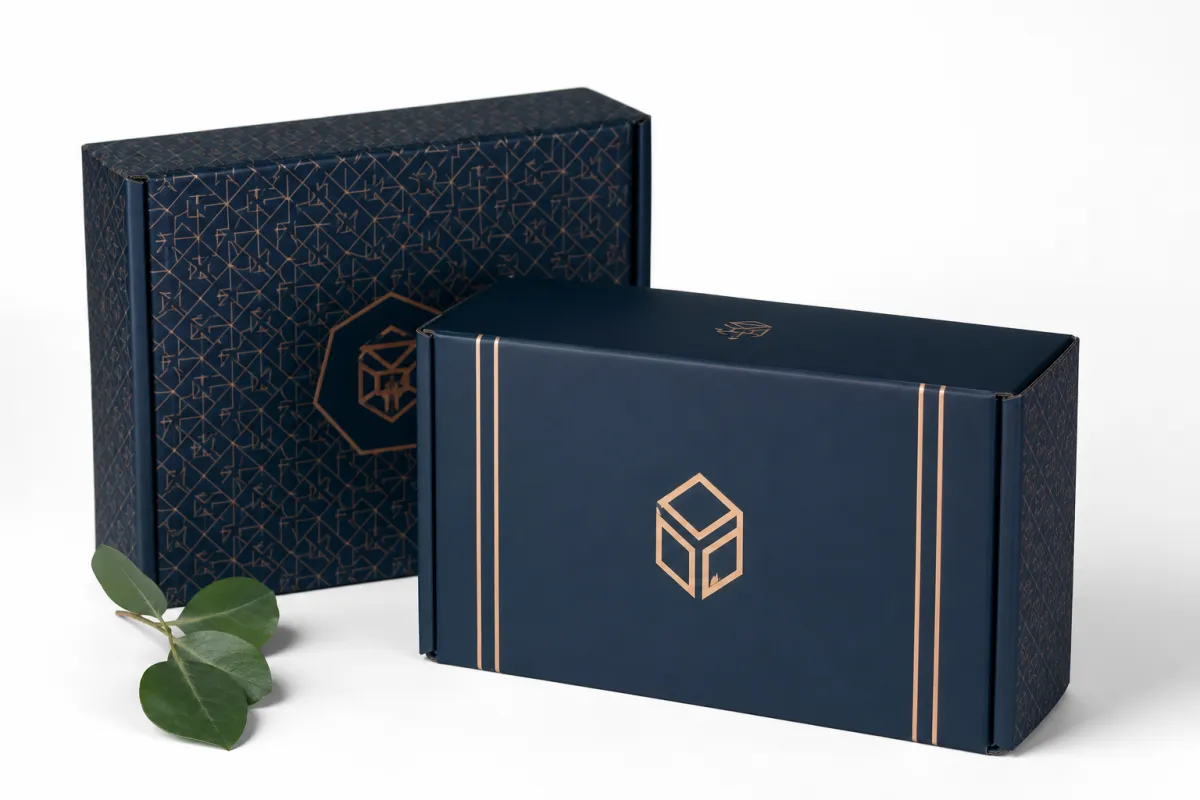
On a corrugated line I visited in central Mexico, one cosmetics client changed nothing except the logo placement. The team moved a tiny mark from the lower flap to the center panel, and the receiving crew started handling the cartons differently because the box finally looked deliberate. That sounds small. It is not. Custom printed boxes with logo design often work through that exact mechanism: a logo, a color field, and a disciplined layout make the same 32 ECT mailer look more organized, more trustworthy, and more expensive without adding a gram of board. In a warehouse shipping 800 orders a day, that visual clarity can matter more than a second ink color.
In practical terms, custom printed boxes with logo design combine a structure, a printed surface, and a brand message. The structure might be corrugated board, folding carton stock, or rigid chipboard with 2 mm greyboard wrapped in printed paper. The print could be flexographic, offset, or digital on a 300gsm to 350gsm sheet. The brand message may be a sharp logo and return address, or it may include a pattern, product claim, and compliance copy. Once those parts line up, the box becomes more than a container. It starts doing the quiet work of telling the buyer that the company pays attention. That quiet work is where most brands either win or wobble, and the difference can show up in one glance at the receiving dock.
That matters at the shelf, on the dock, and during unboxing. A plain brown carton can protect a product perfectly well, but custom printed boxes with logo design tell the buyer who shipped it, what level of care to expect, and whether the brand has the discipline to repeat the same experience next time. I have seen trade-show buyers open a sample carton in Las Vegas, smile at the print, and ask for MOQ before they asked about the product. That is package branding earning its keep, and it is a little funny how quickly a box can move the conversation from "interesting" to "send me numbers."
There is a practical side too. A thoughtful box can speed up packing because the orientation is obvious, the SKU is visible, and the warehouse team does not spend time hunting for labels. A fulfillment manager in Ohio once showed me a 12,000-unit apparel order that cut mis-picks after the company switched to cartons with a bold side panel and a color-coded variant mark in Pantone 186 C. The box was not decoration. It was an operational cue, which is a much less glamorous phrase than "brand experience" but a lot more useful when a crew is racing a truck cutoff at 4:30 p.m.
I think people underestimate how much trust comes from consistency. If the product page, the label, and the printed carton all match, the customer sees order instead of improvisation. That is why custom printed boxes with logo design work so well for branded packaging. They connect the digital promise to the physical item with one visible asset, usually the logo, placed where the eye lands in under three seconds. That is a narrow window, and it is ruthless. A 15 mm shift in logo placement can be enough to make a carton feel either exact or accidental.
Custom printed boxes with logo design do not need to be luxurious to be effective. A kraft mailer with one black logo, a 3 mm rule line, and a matte aqueous coating can communicate more confidence than a crowded carton with four inks and no hierarchy. Good packaging design usually wins by being clearer, not louder. That distinction matters when the box has to survive shipping, storage, and a quick judgment from a customer who is already one click away from moving on. I have also noticed that buyers tend to forgive simple boxes much faster than confused ones, especially when the carton arrives intact after a 600-mile truck route.
How Are Custom Printed Boxes with Logo Design Produced?
The production path for custom printed boxes with logo design usually starts with a brief, not with artwork. Product dimensions, weight, shipping method, and target quantity need to be on the table before anyone opens Illustrator. From there, the supplier or packaging engineer builds a dieline, the flat cutting pattern that shows panels, flaps, glue areas, scores, and folds. That file is the backbone of the job because the box has to fit the product in the real world, not just look centered in a mockup. A carton for a 12-ounce candle and a 3-pound supplement bottle are rarely the same once the die is cut.
Once the dieline is approved, the artwork gets dropped into the template and sent for proofing. This is the moment when file quality matters. A logo supplied as AI, EPS, or press-ready PDF stays sharp at any size, while a low-resolution PNG can blur across a 14-inch corrugated side panel or a 220 mm rigid lid. A supplier in Shenzhen once paused a job because the client sent a 400-pixel logo and expected it to stretch cleanly across a retail carton. That kind of file issue shows up often, which is exactly why custom printed boxes with logo design need prepress review before anything goes to press. If you have ever watched a proud marketing deck get reduced to pixel soup, you know my eye twitch here is justified.
Print method selection comes next. Flexographic printing is common for large corrugated runs because it is efficient and handles straightforward graphics well on shipping boxes, especially when the art uses one to three colors. Offset printing is better for crisp retail graphics on folding cartons, coated paperboard, and display packaging where fine type, gradients, or product imagery matter. Digital printing is useful for short runs, pilot launches, and quick proofs because it skips plates and can move fast on quantities like 250 to 2,000 units, often in 3 to 5 business days for a simple proof. The right method depends on quantity, detail, and finish, not on what sounds flashy in a sales pitch. I wish more quote sheets said that plainly.
Material choice changes the result too. Kraft corrugated mailers feel sturdy and natural, especially with a one-color logo and an aqueous coating. Folding cartons made from 300gsm to 350gsm C1S artboard can deliver sharper retail Packaging for Cosmetics, supplements, or accessories, and 350gsm is a common sweet spot for a 2-piece tuck-end box. Rigid boxes built from 1.5 mm to 2.0 mm greyboard wrapped in printed paper or specialty stock are common in gift sets, watches, and premium apparel because they hold shape well and give the unboxing moment more weight. Custom printed boxes with logo design can work in all three categories, but each one asks for a different board, crease, and finish strategy. The difference between 300gsm and 350gsm is not trivia when the carton has to hold 8 ounces of glass.
Finishes deserve their own scrutiny because they can lift a box or quietly damage the budget. Matte coating creates a softer, more contemporary look. Gloss coating adds shine and helps color pop. Foil stamping brings metallic contrast to logos or borders. Embossing raises the mark off the surface, while spot UV places gloss on a specific area, such as a logo or product name. Internal printing can look beautiful on a mailer flap or folding carton interior, but it adds press time and ink coverage. On a 5,000-piece run, I have seen a foil logo add $0.11 to $0.18 per unit, while a full interior print can add another $0.07 to $0.15 per unit. That is sensible if the brand needs a premium effect and hard to justify if the carton will disappear inside a shipper. The numbers are not magic; they just happen to be very stubborn.
Proof approval is where many expensive mistakes are prevented. The proof should show size, placement, color intent, bleed, and any special finishing marks. It should also show where the logo sits relative to the score line and flap, because a mark that looks centered in the artwork file can land too close to a fold once the box is built. Approve the proof without checking panel orientation, and custom printed boxes with logo design can come back with a beautiful logo in the wrong place. I have seen that happen twice in one quarter at a corrugated plant in Monterrey moving quickly on seasonal orders. Nobody enjoys explaining to a client that the logo now lives on a flap that folds under, which is a deeply unhelpful place for a brand mark.
If you want to compare structure options before you send artwork, start with Custom Packaging Products and look at how different box styles handle product weight, print coverage, and shelf impact. A good supplier will walk through the tradeoffs instead of steering every project into the same box style, especially when the order may be split between a 500-piece sample and a 10,000-piece production run.
Key Cost Drivers: Materials, Quantities, and Finishes
Pricing for custom printed boxes with logo design is usually straightforward once you split it into the pieces buyers can control. The biggest variables are board grade, box style, print coverage, number of colors, finishing, inserts, and structural complexity. A one-color kraft mailer with a simple logo can land very differently from a rigid gift box with a magnetic closure, soft-touch lamination, and foil stamping on the lid. Same brand intent. Very different factory math. I have watched people expect the same cost simply because both boxes were "white with a logo," which is a sentence that causes packaging teams to stare into the middle distance.
Quantity matters because setup costs do not vanish just because the order is small. Plates, dies, sample runs, and press setup all need to be paid for, so a 500-piece job can feel expensive on a per-unit basis even when the total invoice looks modest. A 5,000 or 10,000 unit order usually spreads those costs enough to bring the unit price down in a meaningful way. In one supplier meeting, I watched a corrugated mill in Dongguan quote $0.15 per unit for 5,000 pieces of a one-color mailer and $0.29 per unit for 1,000 pieces of the same box, with the die and ink setup explaining most of the gap. That is normal, not a mistake. The arithmetic is unromantic, but it is reliable.
Here is a simple way to think about the economics of custom printed Boxes with Logo Design: a lower-cost box is often plain kraft, one-color print, no insert, and minimal finishing. A higher-cost box adds printed interiors, specialty coatings, custom inserts, or premium rigid construction. The goal is not to buy the cheapest box possible. The goal is to buy the box that supports the product margin. If the box helps a $48 item feel like a $68 item, then spending an extra $0.27 on packaging can be a smart move. If the box is thrown away before the customer sees the print, that same $0.27 may be wasted.
Shipping and storage change the total landed cost too. An oversized carton wastes freight space. A heavy rigid box can raise carrier costs. A box that requires hand folding or nested inserts can slow fulfillment labor, especially in a warehouse packing 800 orders a day. That is why I ask clients to think about cost per box, cost per shipped order, and cost of a rejected or reprinted run. Those three numbers tell a truer story than the per-unit quote alone. The funny part is that the cheapest-looking box on paper often turns out to be the one that costs the most after labor gets involved.
Below is a comparison I often use when discussing custom printed boxes with logo design with buyers who need a practical starting point.
| Box Option | Best Use | Typical Unit Price | What Affects Cost Most |
|---|---|---|---|
| Kraft corrugated mailer, 1-color logo | Ecommerce shipping, subscription boxes | $0.15 to $0.32 at 5,000 units | Board grade, print coverage, die size |
| Folding carton, 2-color retail print | Cosmetics, supplements, accessories | $0.22 to $0.48 at 10,000 units | Coating, artwork detail, carton style |
| Rigid box with wrap and insert | Gift sets, premium launches, PR kits | $0.85 to $2.40 at 3,000 units | Board thickness, wrap material, finishing |
| Digital short-run sample box | Launch tests, sales samples, proofs | $1.20 to $4.00 at 250 units | Short-run setup, turnaround speed, revisions |
Those figures are examples rather than promises, because board markets, freight rates, and finish complexity move around. Even so, they give a useful frame for custom printed boxes with logo design. The lowest-cost box is not always the best value, and the most expensive box is not always necessary. I have seen a $0.29 mailer outperform a $1.10 rigid box simply because the mailer had the right structure for the product and the right print for the audience. That sort of thing happens more often than sales brochures would like to admit.
Another cost detail gets missed all the time: waste. If the dieline is wrong, the box may need to be re-cut. If the logo file is not supplied cleanly, a plate or proof can be redone. If the finish is too delicate for the shipping route, the whole run may need protective overpack. Those hidden costs are why custom printed boxes with logo design should be treated like a production project, not a design-only task. I can think of at least three projects where the "savings" vanished the moment the reprint quote landed on my desk, including one 2,000-piece order that needed a second die because the first one missed the tuck depth by 4 mm.
Process and Timeline for a Custom Box Order
A realistic timeline for custom printed boxes with logo design starts with measurements and artwork collection. I ask for length, width, height, weight, any insert dimensions, and the shipping environment, because a box for a 12-ounce candle traveling by parcel is not the same as a box for a 3-pound bottle shipping on a pallet. Once the specs are in hand, the supplier can build the dieline, position the artwork, and begin proofing. If the job is straightforward, a digital sample may be ready in 3 to 5 business days. If it needs custom tooling or premium finishing, the schedule stretches. Packaging has a way of pretending it is simple until the first correction appears.
Where do delays usually happen? Missing files, unclear dimensions, last-minute color changes, and late proof approvals. I once sat through a launch call where the client had approved the color on a monitor but never checked the actual ink build against the PMS target. The result was a boxed fragrance kit that looked slightly warm under store lighting, and the reprint pushed shipping by eight business days. The box itself was fine. The schedule was not. Nothing tests patience quite like a finished product sitting on a dock while everyone debates whether "close enough" is actually close enough.
For a simple digital run, seven to ten business days from proof approval is possible if the factory is not overloaded. For a corrugated flexo order with plates and die cutting, 12 to 15 business days from proof approval is a more realistic planning window. Rigid boxes with specialty wrap, foil, or embossing can take 18 to 25 business days, especially if the job needs a custom insert or a second round of sampling. That is why custom printed boxes with logo design should be ordered early when the project supports a launch date, a trade show, or a seasonal drop. A July launch booked in May usually has room; a July launch booked on June 20 usually does not.
Factories usually coordinate prepress, print, converting, inspection, and freight in sequence. Prepress checks color and panel placement. Printing handles the artwork on the chosen stock. Converting folds, glues, scores, or laminates the piece into a box. Inspection looks for scuffs, weak glue, warped boards, or misplaced logos. Freight planning matters too, because a pallet of rigid boxes can arrive on time and still cause trouble if the receiving team does not have room to unload them. That is why I always ask whether the boxes will ship flat, nested, or assembled, and whether the receiving dock is set up for 40 x 48 inch pallets or something smaller.
For brands that want to protect a launch date, I suggest aligning the artwork handoff, sample approval, and purchase order before any ad campaign is booked. A marketing calendar is easy to move on paper; a production line is not. Custom printed boxes with logo design reward the teams that plan ahead by two to three weeks, especially when they are ordering a new structure for the first time. That extra lead time is often the difference between calm and chaos, and I say that as someone who has lived through both.
One practical tip: if you are unsure about the final look, ask for a physical sample or at least a printed proof. A flat PDF cannot show board stiffness, score quality, or how the flap behaves after three open-and-close cycles. If the box will be used for subscription fulfillment, high-value retail packaging, or a media send-out, the sample step is worth it every time, even if it adds 2 to 4 business days to the schedule.
Step-by-Step Guide to Choosing the Right Box
Start with the product, not the box. Measure length, width, height, and weight to the nearest millimeter and gram if possible, then note whether the item moves inside the carton, needs tissue, or needs molded pulp, foam, or paper inserts. Custom printed boxes with logo design work best when the structure is built around the product's real behavior in transit. A 2.5-ounce jar and a 32-ounce bottle ask for very different board strength and closure styles. That mismatch is where a lot of packaging regret starts, usually after the first 200 units are packed.
Next, match the box style to the job. Mailer boxes are popular for ecommerce because they ship flat, fold quickly, and create a clean branded opening experience. Folding cartons are better for shelf display because the panel space is efficient and the print can be sharp. Rigid boxes are the right choice when the product needs a premium feel, a gift-style presentation, or a more protective shell around a fragile item. There is no universal winner here. There is only the box that does the job with the fewest compromises, and I have yet to meet a product line that escaped that rule.
Then choose print and finish based on the brand story you want to tell. A minimalist skincare line might use uncoated stock, one ink color, and a blind emboss to keep the look natural. A tech accessory brand may want bold color blocks, spot UV, and an interior print that gives the opening moment more energy. If the goal is eco-conscious packaging, the texture of recycled kraft and a restrained logo can do more than a glossy full-wrap design. Custom printed boxes with logo design are strongest when the finish matches the message instead of fighting it. I am personally biased toward restraint here; too much decoration can make a carton look like it is trying to win an argument.
Check the practical details next. Will the carton stack six high on a pallet? Does it need to survive humidity in transit? Can fulfillment staff fold it by hand in under twenty seconds? Is the closure style suitable for automated packing equipment? These details matter because they affect damage rates and labor. I have seen a beautiful box get rejected by a warehouse team simply because the lid flared open after the third fold, which meant every shipment took an extra twelve seconds to close. That is a real cost, and a maddening one. Small irritation, large invoice.
Here is the checklist I give buyers before they place an order for custom printed boxes with logo design:
- Confirm product dimensions, weight, and fragility.
- Choose box style: mailer, folding carton, or rigid box.
- Request a dieline and place the logo on the actual template.
- Approve a proof with color, bleed, and fold lines visible.
- Ask for a sample if the box is structural, premium, or time-sensitive.
- Compare lead time, finish options, and quantity tiers before signing.
When buyers follow that sequence, custom printed boxes with logo design usually come together without drama. When they skip it, the common result is a box that looks good on screen but behaves badly in production. The best packaging design is not the flashiest one. It is the one the factory can reproduce at scale without surprises, because surprises are very expensive and rarely charming.
If you are narrowing down a few structure options, the team at Custom Packaging Products can help you compare formats based on print coverage, cost, and shipment size. That kind of comparison saves time because a box style that works for one SKU may be completely wrong for a second SKU with different dimensions or weight, especially if one item ships at 4 ounces and another at 24 ounces.
Common Mistakes When Ordering Printed Packaging
The most expensive mistake I see is approving artwork before confirming the dieline. That order of operations causes logos to shift, product copy to land too close to a cut edge, and bleed areas to disappear into a score line. Custom printed boxes with logo design should always be built on the approved template first, then decorated second. If the sequence is reversed, the packaging team spends its time fixing preventable layout issues instead of finishing the run. A 2 mm margin error can be enough to turn a clean carton into a reprint.
A second mistake is trusting the mockup too much. A clean 3D render can hide a lot: a flap that will not close, a side panel that warps, or a box that rattles because the product is too small for the cavity. I once saw a client approve a beautiful ecommerce mailer, then realize at sample stage that the bottle inside could move nearly 18 mm in every direction. They had to add a paperboard insert, which changed the cost and delayed the launch by one week. The render looked perfect. The fit was not. That is the sort of moment that makes everyone in the room speak very softly.
Budget traps show up in the same way. Oversized boxes waste material and freight. Too many special finishes raise cost without adding value. Very low order quantities make setup costs feel huge. If you want custom printed boxes with logo design to stay efficient, choose one strong print feature and one supporting finish, not four decorative tricks that all compete for attention. A single foil logo on a rigid lid can be more effective than a box covered in spot UV, embossing, and interior print. More is not automatically better; sometimes it is just more.
Environmental conditions matter too. If the boxes will ship through heat, humidity, or long-distance ocean freight, the finish and board must be chosen with that route in mind. Moisture can soften some coatings and weaken some corrugated structures. Grease from food packaging can stain uncoated stock. If the supply chain is long, I suggest testing the carton against the actual journey, not just against a desk sample. That is where standards like ISTA become useful, and you can read more at ISTA if you want to understand transport testing better. A carton that survives a 600-mile route from Chicago to Dallas is not the same carton that survives a 3-week ocean trip to Rotterdam.
Another issue is ignoring the difference between printed packaging for shipping and retail packaging for display. A box meant to survive parcel handling may not need the same visual polish as a box meant to sit under store lights on a shelf. Conversely, a retail carton may need tighter graphics and a cleaner finish than a shipper ever would. Custom printed boxes with logo design should be matched to the channel, because the channel decides how the box gets seen, touched, and judged. A shelf carton in a pharmacy has about three seconds to earn attention; a shipper in a warehouse has about three seconds to avoid damage.
"The box was never the product, but the box was always part of the sale." That is something a client told me after we fixed a mis-sized fold carton for a private-label snack line in Austin, and I still think it is one of the clearest packaging truths I have heard.
There is also the compliance side. If a carton claims recycled content, FSC sourcing, or shipping performance, those claims should be verifiable. For brands that need responsibly sourced fiber, the Forest Stewardship Council is a useful reference point. A packaging supplier should be able to explain what a claim means and what paperwork supports it. Trust gets built when the printed carton and the paperwork tell the same story, which is a rare and lovely thing in a category full of small print and bigger assumptions.
Expert Tips and Next Steps for a Smoother Launch
If the box is structural, premium, or tied to a deadline, request a sample instead of relying only on a virtual proof. I know that adds a step, but it catches the problems that matter: lid tension, glue strength, corner crush, and whether the logo sits where the eye naturally lands. Custom printed boxes with logo design are easiest to correct before the first full run, not after 8,000 units are already printed and palletized. I have seen people try to "live with it" after the fact, which is a noble phrase for a very expensive compromise.
Build a one-page packaging brief before you ask for quotes. Include product dimensions, target quantity, shipping method, brand colors, finish preferences, and the role the box has to play in the customer experience. If the box needs to support retail packaging, say that. If it needs to survive a parcel network, say that too. The better the brief, the more accurate the quote, and the fewer surprises when the prototype arrives. In my experience, one page done well beats a ten-page deck full of vague adjectives every single time, especially when a supplier is quoting from a plant in Foshan or Queretaro.
Compare suppliers on more than price. Ask about board quality, print method, finishing options, lead time, and revision policy. A supplier that quotes $0.14 less per box but needs two extra rounds of proofing may cost more in the end. I learned that during a corrugated negotiation where the lowest bid looked strong until we asked about die charges, reproof fees, and freight from the plant. Once those were added, the middle quote was actually the best value because it included cleaner prepress support and a firmer delivery window. A quote from one of the mills in Milwaukee or Dongguan can look cheap until you add the second proof and pallet freight.
Plan the first order as a test run, even if the quantity is large. That does not mean you expect failure; it means you expect to learn. Check how the box packs on the line, how it survives shipping, and what customers say about the unboxing experience. On the second run, refine the carton based on actual data: damage rates, fulfillment feedback, and customer photos. That is how custom printed boxes with logo design get better over time, and it is how a packaging system becomes a brand asset instead of just a container. A 2 percent damage reduction across 20,000 shipments is 400 fewer problems to explain.
When I visited a mid-size apparel warehouse that had just switched to printed mailers, the operations team told me the best part was not the look. It was the clarity. The logo, size code, and product family were all visible in one glance, which cut packing mistakes and made returns easier to sort. That is the practical win most people miss. Custom printed boxes with logo design can make a brand look sharper, yes, but they can also make the whole operation calmer and more efficient. And calmer operations, frankly, are underrated when the shipping dock is moving 1,200 units before lunch.
If you are moving from concept to production, start by gathering measurements, pulling your vector logo files, deciding the quantity tiers, and asking for a sample. That sequence gets you much closer to custom printed boxes with logo design that are ready to sell, ready to ship, and ready to make the product feel finished the moment the customer sees the carton. A clean AI file, a clear dieline, and a 12 to 15 business day production window can save a lot of unnecessary back-and-forth.
For brands that want a simple path forward, custom printed boxes with logo design are usually best approached as a production plan, not a one-off graphic project. Once the structure, materials, and print goals are aligned, the box does its job quietly and well, which is exactly what good packaging should do. The strongest runs I have seen came from teams that treated the carton like part of the product line, not a separate afterthought. That mindset saves money, cuts confusion, and makes the final box feel intentional instead of improvised.
How do custom printed boxes with logo design improve brand value?
They make the product feel more intentional and trustworthy before the customer even opens it. A consistent logo, color palette, and finish help buyers remember the brand, especially when the same box appears on a shelf, in a shipping parcel, and again on a reorder. In my experience, that repetition is what turns packaging into package branding instead of simple transit protection. It is also one of the few times a box can do real marketing work without shouting, whether the box is a 350gsm C1S carton or a 32 ECT mailer.
What affects the price of custom printed boxes with logo design the most?
Material choice, box size, and order quantity usually have the biggest impact on unit price. Print complexity, special finishes, inserts, and structural changes can raise setup and production costs, while shipping method and fulfillment requirements affect the total landed cost. A $0.15 mailer and a $1.40 rigid box serve different jobs, so the right answer depends on the product and channel. If you want the blunt version: the more the box asks the factory to do, the more the factory will charge to do it, especially in short runs under 1,000 pieces.
How long does it take to produce custom printed boxes with logo design?
Simple digital runs can move quickly, while larger corrugated or premium rigid jobs usually need more time. Artwork approval, dieline confirmation, and sample sign-off are the most common reasons timelines stretch. I usually tell clients to protect at least 12 to 15 business days from proof approval for standard corrugated work, and 18 to 25 business days for specialty finishes or rigid construction. Add a little buffer if the launch date matters, because production schedules do not care about a brand calendar the way marketing teams do.
What file format should I use for my logo on printed boxes?
Vector files such as AI, EPS, or PDF are preferred because they stay sharp at any size. High-resolution raster files can work for reference, but they are not ideal for press-ready production. It is smart to ask for a prepress review so color, placement, and bleed are checked before printing, especially on custom printed boxes with logo design that use multiple panels. If the file is questionable, I would rather fix it early than discover the blur after 10,000 units are already moving toward a dock in Dallas or Richmond.
Which box material is best for shipping versus retail display?
Corrugated board is usually the better choice for shipping because it offers strength and cushioning. Folding cartons are common for retail display where print quality and shelf presentation matter most, while rigid boxes are often chosen when the product needs a premium feel or strong gift-style presentation. The right material depends on whether the box is mainly protecting, presenting, or both. Custom printed boxes with logo design work best when that choice is made honestly, not aspirationally, and when the board spec matches the trip.